
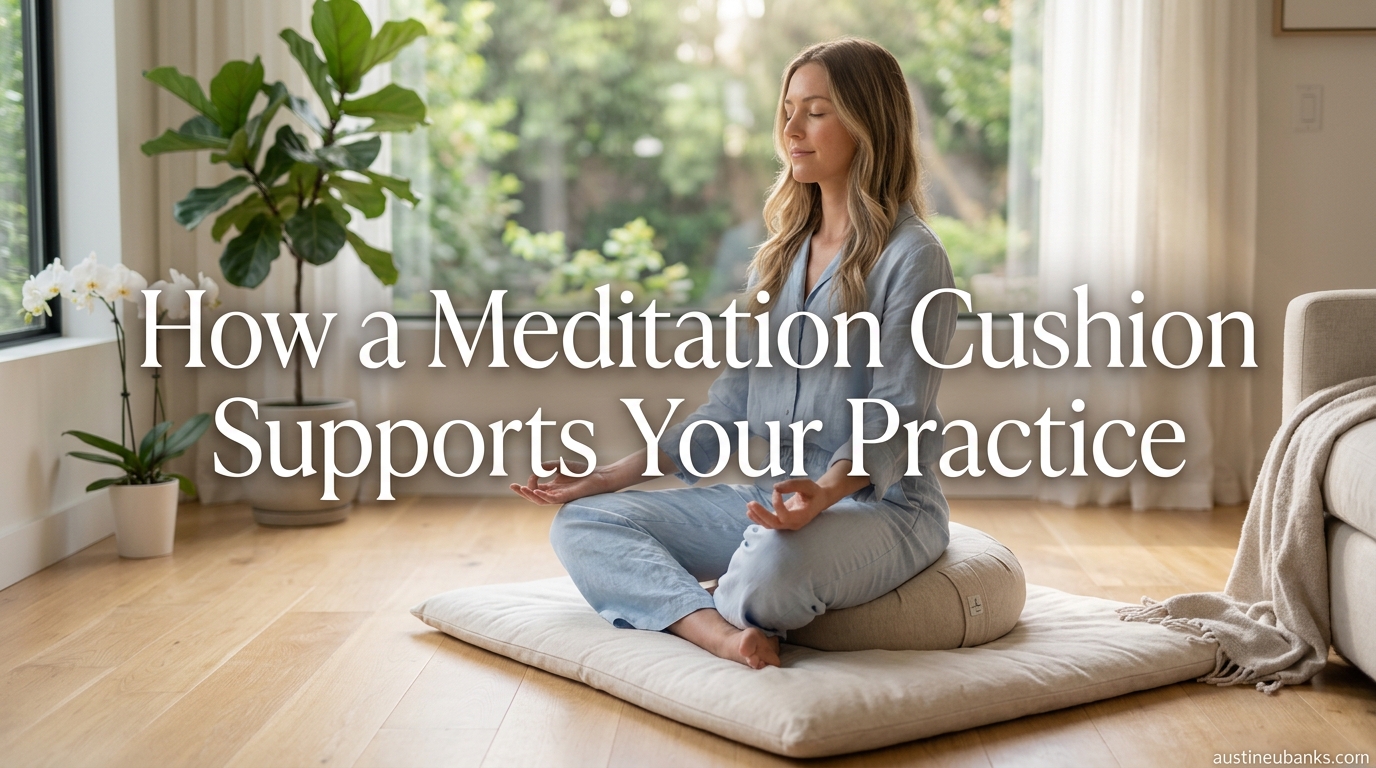
You sit down to meditate. Five minutes in, your foot goes numb. Ten minutes in, your lower back starts aching. By minute fifteen, you are not thinking about your breath anymore. You are thinking about how much longer until you can stand up.
If that sounds familiar, you are not alone. In meditation communities across Reddit and yoga forums, discomfort is the number one reason people abandon their practice before it gains momentum. The good news is that something as simple as the right cushion can change everything.
Understanding how a meditation cushion supports a comfortable practice comes down to one core principle: proper elevation of your hips relative to your knees creates natural spinal alignment. When your pelvis tilts forward slightly, your spine stacks effortlessly, your joints release pressure, and your body stops fighting gravity. That physical ease translates directly into deeper mental focus and longer, more rewarding sessions.
In this guide, we break down the anatomy of why cushions work, the types available, how to sit on one properly, and how to choose the right support for your body. Whether you are a beginner struggling through 10-minute sits or an experienced practitioner looking to extend your sessions, the right cushion could be the missing piece in your practice.
Table of Contents
What Is a Meditation Cushion?
A meditation cushion is a firm, supportive pillow designed specifically to elevate your hips during seated meditation. Unlike a regular bed pillow or couch cushion, it holds its shape under body weight and provides consistent, targeted support for your sitting bones and pelvis.
The tradition goes back centuries. Japanese Zen practitioners developed the zafu, a round, firmly stuffed cushion, to support long hours of seated meditation. Beneath it, the zabuton, a flat mat, cushioned the knees and ankles against hard temple floors. These two pieces remain the foundation of meditation seating today, though the designs have evolved significantly.
Modern meditation cushions come in multiple shapes, sizes, fillings, and materials. Some are designed for specific sitting positions like seiza (kneeling) or lotus pose. Others are versatile enough for cross-legged sitting, breathwork, or even use as floor seating during the day. You will find cushions made with organic cotton covers, natural buckwheat fillings, and materials certified by standards like GOTS and OEKO-TEX.
What unites them all is purpose: to create a stable, elevated base that lets your body rest in proper alignment so your mind can focus on the practice itself. A meditation cushion is not just a comfort accessory. It is a functional tool that directly affects how long and how deeply you can meditate.
How a Meditation Cushion Supports Proper Posture
The way a meditation cushion supports a comfortable practice is not just about softness. It is about biomechanics. Here is what happens in your body when you sit on a well-designed cushion versus the bare floor.
The Pelvic Tilt: Why Elevation Matters
When you sit cross-legged on a flat surface without elevation, your hips typically sit level with or below your knees. This forces your pelvis to tilt backward, flattening the natural curve of your lower spine. Your body responds by slouching, and your back muscles work overtime trying to hold you upright.
A meditation cushion raises your hips above your knees. This creates what is called an anterior pelvic tilt, where the front of your pelvis drops slightly forward. That tilt restores the natural inward curve of your lumbar spine, allowing your vertebrae to stack in alignment without muscular effort.
Think of it like building a tower. If the base is level and stable, the rest of the structure holds itself up. Your pelvis is that base. When it is properly positioned, everything above it naturally falls into place.
The degree of tilt matters too. Too little elevation and your pelvis stays in a posterior tilt, causing slouching. Too much elevation and you risk over-arching your lower back. Finding the right height for your body is the key to that effortless, neutral alignment.
Sitting Bones and Weight Distribution
Your sitting bones, medically known as the ischial tuberosities, are the two bony points at the bottom of your pelvis. When you sit on a cushion, these bones should rest firmly on the surface, bearing most of your body weight.
A proper cushion creates enough firmness that your sitting bones anchor securely without sinking. At the same time, it provides enough give to avoid pressure points. This balance lets the weight of your upper body transfer cleanly through your skeleton into the floor, rather than being held by tense muscles.
When your weight is distributed correctly through your bones, your muscles can relax. When your muscles relax, your nervous system gets the signal that you are safe. And when your nervous system feels safe, your meditation deepens naturally.
Hip Elevation and Joint Relief
When your hips are elevated above your knees, the angle at your hip joint opens up significantly. This reduces strain on the hip rotators and the external ligaments that work hard to hold cross-legged positions.
For people with tight hips, which includes most modern desk workers, this elevation is the difference between a painful 10-minute sit and a comfortable 30-minute session. The cushion does the work your inflexible hips cannot do alone. It essentially makes up for the range of motion your body lacks.
The joint relief extends beyond the hips. When your hips are properly elevated, your knees experience less rotational stress. Your ankles are not forced into extreme flexion. Even your shoulder girdle benefits, because a stable pelvis supports an upright spine, which in turn lets your shoulders drop naturally rather than rounding forward.
Spinal Alignment and Breathing
When your spine is properly aligned, your chest opens naturally. Your diaphragm has room to move fully. This means deeper, slower, more relaxed breathing without conscious effort.
That improved breathing directly affects your meditation quality. Shallow, restricted breathing keeps your nervous system in a mild state of stress. Full, open diaphragmatic breathing signals your body to relax, making it easier to settle into stillness.
Research on posture and breathing confirms this connection. When your ribcage is compressed by a slouched position, your lungs cannot fully expand. Your breathing becomes rapid and shallow, which activates the sympathetic nervous system. Proper alignment reverses this, creating the physiological conditions for deep meditation.
Key Benefits of Using a Meditation Cushion
The benefits of a meditation cushion go beyond physical comfort. Each advantage builds on the next to create conditions for deeper, more consistent practice.
- Proper spinal alignment: Elevates hips to create natural lumbar curve, reducing back strain.
- Reduced joint pressure: Lessens stress on knees, hips, and ankles during cross-legged positions.
- Longer, more comfortable sessions: Many practitioners report extending sessions from 10 minutes to 30 minutes or more once discomfort is removed.
- Deeper breathing: Open chest and aligned spine allow for fuller diaphragmatic breath.
- Improved focus: When your body stops sending pain signals, your mind can actually concentrate on meditation.
- Sustainable daily practice: Comfort removes the resistance that keeps people from sitting down day after day.
- Better circulation: Proper elevation reduces the numbness and tingling that cut sessions short.
- Versatility: Many cushions double as floor seating, yoga props, or reading pillows throughout the day.
The Mind-Body Connection: Why Physical Comfort Deepens Meditation
Here is something most guides skip: physical discomfort is not just a physical problem. It is a mental one. Every time your brain receives a pain signal from your aching back or numb foot, it pulls attention away from your meditation object. You might refocus, but seconds later, another signal arrives.
This creates a loop. Discomfort leads to distraction. Distraction leads to frustration. Frustration leads to tension, which creates more discomfort. The cycle feeds itself and makes each minute feel harder than the last.
A cushion breaks that cycle at the source. Remove the physical discomfort, and your nervous system can settle. When your body feels safe and supported, your parasympathetic nervous system activates. Your heart rate drops. Your breathing slows. Your mind naturally quiets.
This is why experienced meditators often say the right cushion does not just make sitting easier. It makes meditation deeper. The mind and body are not separate systems. What happens in your body directly shapes what happens in your mind.
What Happens When You Meditate Without a Cushion?
You absolutely can meditate without a cushion. People have done it for thousands of years on bare ground. But for most modern bodies, sitting without support creates specific problems that undermine practice quality.
Lower Back Strain
Without hip elevation, your pelvis tilts backward and your lower spine flattens. To compensate, your back muscles contract constantly to hold you upright. After 10 or 15 minutes, that sustained contraction turns into a dull ache that grows sharper with each passing minute.
This is the most common complaint in meditation forums. Back pain sends more people searching for cushion recommendations than any other issue. The irony is that the solution is simple: a few inches of firm elevation.
Knee and Hip Joint Pain
Sitting cross-legged on a hard floor places significant torque on the knee joints. Your hips, especially if tight, rotate outward beyond their comfortable range. The result is knee strain, hip soreness, and sometimes sharp pain that can linger after you stand up.
Over time, forcing your joints into positions they are not ready for can cause inflammation and minor injury. This sets your practice back rather than moving it forward. A cushion reduces these angles to sustainable levels.
Numbness and Poor Circulation
When your body weight presses against the floor without cushioning, it compresses the blood vessels in your legs and feet. Numbness, tingling, and the pins-and-needles sensation follow. This is one of the most common complaints in meditation forums and the primary reason people cut their sessions short.
A zabuton or folded blanket underneath your cushion adds a layer of protection between your joints and the hard floor. This simple addition dramatically reduces the circulation problems that cause your feet to fall asleep.
Mental Distraction
Every physical discomfort sends a signal to your brain that demands attention. The more discomfort, the more signals. Instead of following your breath or your mantra, you are tracking the growing ache in your lower back or counting the minutes until the numbness in your foot goes away.
This is not a willpower problem. Your brain is wired to prioritize pain signals. The solution is not to grit your teeth and push through. It is to remove the source of the pain so your brain has nothing to fixate on.
Shortened Sessions
When sitting becomes painful, you naturally shorten your sessions. Instead of 30 or 40 minutes of sustained practice, you manage 10 or 15 before giving up. Over time, the association between meditation and physical discomfort makes it harder to sit down at all.
This is how people abandon meditation entirely. Not because they lose interest in the practice, but because the physical experience becomes so unpleasant that they stop showing up. A cushion addresses this at the root.
Types of Meditation Cushions
Not all meditation cushions are the same. Each type serves a different purpose, supports different sitting positions, and works better for certain body types. Understanding the options helps you find the right support for your practice.
Zafu (Round Cushion)
The zafu is the classic meditation cushion: a round, firmly stuffed pillow about 5 to 7 inches tall. You sit on the front edge, allowing your hips to sink slightly while your sitting bones stay anchored.
Zafus work well for cross-legged positions including sukhasana (easy pose), half-lotus, and quarter lotus. They are the most versatile option and the best starting point for most beginners. The round shape allows you to adjust your angle by shifting slightly in any direction.
Traditional zafus are about 14 inches in diameter, which provides enough surface area for most body types. Some manufacturers offer larger diameters for bigger practitioners. The height is the most variable factor and should be chosen based on your flexibility and leg length.
Zabuton (Flat Mat)
The zabuton is a large, flat mat placed underneath a zafu or used on its own. It cushions your knees, ankles, and shins against the hard floor. Think of it as the foundation that protects your joints from pressure points.
Many practitioners use a zafu on top of a zabuton for the complete setup. The zabuton also keeps your cushion clean and provides a defined space for your practice area. A typical zabuton measures about 36 by 30 inches, giving you ample room for your legs and feet.
If you meditate on hardwood, tile, or thin carpet, a zabuton makes an immediate and noticeable difference. Even experienced meditators who skip the zafu often keep the zabuton for floor protection.
Meditation Bench (Seiza Bench)
A meditation bench is a low wooden or bamboo bench designed for seiza, the kneeling position. You kneel and slide the bench over your calves, then rest your weight on the seat. This position completely takes the pressure off your knees and ankles while keeping your spine aligned.
Benches are ideal for people who cannot sit cross-legged comfortably due to knee issues, hip replacements, or limited flexibility. Many meditators with chronic knee pain find seiza benches transformative. Some benches have curved legs that allow slight rocking to adjust your angle during long sits.
The main consideration with benches is that they lock you into the seiza position. If you like to alternate between kneeling and cross-legged sitting, a bench alone will not give you that flexibility.
Bolster Cushion
A bolster is a cylindrical or semi-round cushion, similar to a yoga bolster but smaller. It provides support under the knees, behind the lower back, or beneath the thighs in various resting positions.
Bolsters work well for restorative meditation practices, guided body scans, or savasana-style lying meditation. They are also useful as supplementary support alongside a primary cushion. Some practitioners place a bolster under each knee during lying meditation to release lower back tension.
V-Shaped Cushion
A V-shaped cushion has a notch cut into one side that cradles your tailbone while supporting your thighs. The design is similar to a kneeling chair pad but adapted for floor sitting.
Some meditators find V-shaped cushions more comfortable than round zafus because the notch eliminates pressure on the tailbone and perineum. They are worth trying if standard zafus cause discomfort in that area. The V-shape also provides a wider, more stable base than a round cushion.
Square Cushion
Square cushions offer a wider sitting surface than round zafus. Some meditators prefer the additional stability and the feeling of a broader base. They function similarly to zafus but with a slightly different aesthetic and weight distribution.
Square cushions often work well for larger practitioners or anyone who feels unstable on a narrow round cushion. The flat edges also make them easier to stack and store when not in use.
Cushion Materials and Fillings
What goes inside your cushion matters as much as the shape. The filling determines firmness, weight, breathability, and how well the cushion conforms to your body over time.
Buckwheat Hulls
Buckwheat hull filling is widely considered the gold standard for meditation cushions. The hulls interlock like a 3D puzzle, creating a firm surface that molds to your exact body shape. When you shift position, the hulls settle into a new configuration.
In meditation forums, buckwheat is consistently praised for its firmness and moldability. It holds its shape for years, does not compress permanently, and provides consistent support session after session. The main downside is weight: buckwheat cushions are heavier than other fillings, which matters if you travel with your cushion.
Another advantage of buckwheat is adjustability. Many buckwheat cushions have a zipper that lets you add or remove hulls to change the height and firmness. This means one cushion can adapt as your flexibility improves over time.
Kapok
Kapok is a natural fiber harvested from the kapok tree. It is the traditional filling for Japanese zafus and has been used for centuries. Kapok is lightweight, firm, and naturally water-resistant.
Over time, kapok compresses and becomes denser. Some meditators prefer this firmer feel, while others find they need to fluff or refill the cushion periodically. Kapok cushions are excellent for practitioners who want a traditional, lightweight option that connects to the historical roots of meditation practice.
Foam
High-density foam provides consistent, uniform support that does not change shape over time. It is firmer than standard pillow foam and designed to hold body weight without compressing.
Foam cushions are a good choice for people who want predictable support and do not like the shifting feel of loose fillings. They are also lightweight and easy to clean, since many foam inserts can be removed and the cover washed separately.
Cotton Batting
Cotton batting is layered cotton fiber that provides a softer, more pillow-like feel. It is less firm than buckwheat or kapok but offers a gentler surface for people who prefer cushioning over rigid support.
Cotton-filled cushions tend to compress more quickly and may need refluffing or refilling sooner. They work well as starter cushions or for practitioners who sit for shorter durations and want something affordable.
How to Sit on a Meditation Cushion
Having the right cushion is only half the equation. Sitting on it correctly makes all the difference. Follow these steps to find your optimal position.
Step 1: Place your cushion on a flat, stable surface. If you are using a zabuton, place it first, then position your zafu or bench on top. The surface beneath should be firm enough that your cushion does not slide or sink.
Step 2: Sit on the front third of the cushion. This is the most important step and the most common mistake. Do not sit in the center or on the back edge. Your sitting bones should rest on the cushion, with your tailbone hanging just off the back edge. This positions your pelvis for the anterior tilt that creates spinal alignment.
Step 3: Cross your legs comfortably. You do not need full lotus pose. Sukhasana, or easy cross-legged pose, is perfectly fine. For even more comfort, try quarter lotus, where one foot rests on the opposite calf. Your knees should ideally rest below your hips. If they do not, you need a taller cushion.
Step 4: Let your spine stack naturally. Imagine a thread pulling the crown of your head upward. Let your chin drop slightly to lengthen the back of your neck. Your shoulders should relax down and back, not forward or up toward your ears.
Step 5: Rest your hands. Place your hands on your thighs, palms down for grounding, or in your lap palms up for openness. Alternatively, rest them in the cosmic mudra position: dominant hand palm up with the other hand resting on top, thumbs lightly touching to form an oval.
Step 6: Check in and adjust. Take three slow breaths and notice how your body feels. Is there any sharp pain? Does your lower back feel supported or strained? Are your knees comfortable? Make small adjustments before you begin your meditation. Once you start, try to settle in and resist the urge to fidget.
Tips for Different Sitting Positions
For sukhasana (easy pose), a standard zafu height of 5 to 6 inches works for most bodies. If your knees lift off the floor, add a folded blanket under each knee for support. This takes the pressure off your hip rotators and lets you relax more deeply.
For seiza (kneeling position), use a meditation bench or a V-shaped cushion turned backward. Place a zabuton or folded blanket under your knees and shins to prevent bruising. This position is excellent for people with tight hips who cannot sit cross-legged comfortably.
For quarter lotus, which many forum users describe as the sweet spot for comfort, a slightly taller cushion helps your top foot rest comfortably on the opposite calf without hip strain. This position gives you the stability of a cross-legged sit with less hip flexibility required.
For half-lotus, only attempt this if your hips are open enough that your knee comes to rest without force. A firm, tall cushion is essential to prevent knee strain. Never push through knee pain in this position, as it can indicate joint stress.
Signs You Need a Meditation Cushion
Not sure if a cushion is worth it? Check these signs against your own experience.
- Your foot or leg falls asleep within 15 minutes of sitting.
- You experience lower back pain during or after meditation.
- Your knees ache from sitting cross-legged on the floor.
- You struggle to keep your spine upright and find yourself slouching.
- Your sessions rarely last more than 10 to 15 minutes because of discomfort.
- You avoid meditating because sitting is physically unpleasant.
- You have tight hips from sitting at a desk all day.
- You feel restless and fidgety rather than calm and settled.
- Your breathing feels shallow or restricted during meditation.
- You experience knee or hip soreness that lasts after you stand up.
If you checked three or more of these, a meditation cushion will likely make a noticeable difference in your practice. Beginners, people with desk jobs, and anyone with limited hip flexibility benefit most from the elevation and support a cushion provides.
Meditation teachers often recommend having multiple cushion types available for different body types and sitting positions. If you attend a sangha or meditation group, you may have noticed that experienced centers always provide cushions, benches, and blankets. They do this because proper support is essential for productive practice.
Can You Meditate Without a Cushion?
Yes, absolutely. A meditation cushion is not required to meditate. People meditate in chairs, standing, walking, and lying down. The essence of meditation is mental, not physical.
However, if you choose to sit on the floor without a cushion, you can minimize discomfort with these strategies. Sit against a wall for back support. Place a folded blanket under your sitting bones for minimal elevation. Keep sessions shorter, around 10 to 15 minutes, while your body adjusts.
Many experienced meditators alternate between floor sitting with a cushion and chair sitting for longer sessions. The key is finding what works for your body so you can practice consistently without pain. Consistency matters far more than the specific position you sit in.
Household Substitutes for a Meditation Cushion
If you want to try cushion-supported meditation before buying one, several household items work well as substitutes.
- Folded blankets: Stack two or three firm blankets and sit on the front edge. This mimics a zafu’s elevation and is the most popular starter option in meditation communities.
- Firm bed pillows: Fold a firm pillow in half for added height. Avoid soft, compressible pillows that collapse under your weight.
- Yoga blocks: Place a yoga block or two under your sitting bones for firm, stable elevation. Cork or foam blocks both work well.
- Rolled towels: Roll a large bath towel tightly and place it under your sitting bones for a makeshift bolster.
- Folded yoga mat: A thick yoga mat folded in half or thirds provides a thin but firm base for shorter sessions.
Substitutes let you test whether elevation helps your practice before investing in a dedicated cushion. Most people who try it discover the difference immediately and upgrade quickly. The transition from no support to even minimal elevation is often eye-opening.
How to Choose the Right Cushion for Your Body
Choosing a meditation cushion is a personal decision that depends on your body, your practice style, and your preferences. Here is a mindful approach to finding the right one.
Match Height to Your Flexibility
The most important factor is cushion height relative to your body. As a general rule, less flexible hips need taller cushions. If you cannot sit cross-legged with your knees close to the floor, start with a cushion that is 6 to 7 inches tall.
More flexible practitioners may find that 4 to 5 inches provides enough elevation. Your goal is to have your hips higher than your knees with both knees resting comfortably, ideally touching the floor or a supporting surface.
A simple test: sit on the floor cross-legged and notice where your knees settle. If they hover more than an inch or two above the ground, you need a taller cushion. If they rest easily on the floor, you can use a lower cushion. This test takes 30 seconds and saves you from buying the wrong height.
Consider Firmness
Firmness affects how much your body sinks into the cushion. Buckwheat hulls offer the firmest, most moldable support. Kapok starts firm and compresses over time. Foam provides consistent medium firmness. Cotton batting is the softest option.
Most practitioners prefer firm support because it keeps the pelvis stable and prevents the sinking that leads to slouching. If you are unsure, buckwheat is the safest bet since it is consistently recommended in meditation communities.
Think About Portability
If you meditate at home and never move your cushion, weight does not matter. If you travel with your practice or carry your cushion to a studio or sangha, weight becomes important. Kapok and foam cushions are lightweight and portable. Buckwheat cushions are heavier but offer superior support.
Some manufacturers offer travel-sized versions of their cushions. These smaller options sacrifice some height and width but pack easily into a bag. If you travel frequently, consider keeping a full-size cushion at home and a travel cushion for the road.
Look for Washable Covers
Removable, washable covers are important for hygiene, especially if you meditate daily. Sweat, body oils, and dust accumulate over time. A cover that unzips and machine washes saves you from needing to replace the entire cushion.
In forum discussions, washable covers are frequently cited as a must-have feature. Look for covers made from breathable natural fabrics like cotton or hemp. These materials feel comfortable against the skin and hold up well through repeated washing.
Factor in Materials and Values
Many meditation practitioners care deeply about the materials in their cushions. Organic cotton covers, GOTS-certified fabrics, and natural fillings align with the mindful, ethical values that often accompany meditation practice.
If sustainability matters to you, look for cushions made with organic materials, natural dyes, and ethical manufacturing. Many small-batch producers handcraft cushions with these values in mind. Supporting these makers can feel like an extension of your practice.
Seasonal Considerations for Meditation Comfort
Something few guides discuss is how seasonal changes affect your meditation comfort. In hot summer months, breathable covers and natural fillings like buckwheat allow better air circulation, preventing the sweaty discomfort that can break your focus. Cotton and hemp covers wick moisture and feel cool against the skin.
In cold winter months, kapok and cotton fillings retain warmth, which helps your muscles stay relaxed during long sessions. Some practitioners switch between a buckwheat cushion for summer and a kapok cushion for winter to optimize comfort year-round.
If you meditate outdoors or in an unheated space, temperature becomes an even bigger factor. A zabuton provides insulation between your body and a cold floor. Layering a blanket over your cushion adds warmth without changing your alignment.
Common Beginner Mistakes to Avoid
The most common mistake is sitting in the center of the cushion rather than the front edge. This defeats the purpose because your tailbone rests on the cushion, which prevents the anterior pelvic tilt that creates alignment. Always position yourself so your tailbone is off the back edge.
Another frequent error is choosing a cushion that is too low. Beginners often underestimate how much elevation they need. If your knees are significantly above your hips, you need more height. Start taller and remove fill if needed. It is always easier to remove material than to add it.
Many beginners also try to force themselves into full lotus or advanced poses before their bodies are ready. There is no medal for sitting in the most difficult position. Comfort and sustainability matter far more than the shape of your legs. The goal is to sit in a position you can maintain without pain for the duration of your session.
Finally, some beginners sit for too long too soon. Even with a great cushion, your body needs time to adjust to floor sitting. Start with 10 to 15 minutes and add 5 minutes each week. This gradual approach lets your joints, muscles, and connective tissue adapt without strain.
FAQs
What are the benefits of using a meditation cushion?
A meditation cushion improves posture by elevating your hips above your knees, which aligns your spine and reduces lower back strain. It also relieves joint pressure in the knees and hips, improves circulation to prevent numbness, enables deeper breathing through open chest alignment, and allows for longer, more focused meditation sessions without physical distraction.
What makes a good meditation cushion?
A good meditation cushion is firm enough to hold your body weight without collapsing, tall enough to elevate your hips above your knees, and shaped to support your sitting bones at the front edge. Buckwheat hull filling is widely preferred for its moldability and durability. A removable, washable cover and breathable natural fabric are also important features.
How do you use a meditation cushion?
Place the cushion on a flat surface, sit on the front third so your tailbone hangs off the back edge, cross your legs comfortably, and let your spine stack naturally. Your hips should be higher than your knees. Rest your hands on your thighs or in your lap, take three slow breaths, and adjust before beginning your session.
What is the best filling for a meditation cushion?
Buckwheat hulls are widely considered the best filling because they interlock to create firm, moldable support that conforms to your body. Kapok is the traditional lightweight option. High-density foam provides consistent, uniform support. Cotton batting offers a softer feel but compresses more quickly over time.
Can you meditate without a meditation cushion?
Yes, you can meditate without a cushion. You can sit in a chair, against a wall, or use household substitutes like folded blankets, firm pillows, or yoga blocks. However, most people find that a proper cushion significantly improves comfort and allows for longer, deeper sessions without back pain or numbness.
What is the difference between a zafu and zabuton?
A zafu is a round, firmly stuffed cushion that you sit on to elevate your hips. A zabuton is a large flat mat placed underneath the zafu to cushion your knees and ankles against the floor. Together, they create the traditional two-piece meditation seating setup used in Zen practice.
How do I know if I need a meditation cushion?
You likely need a meditation cushion if your legs go numb within 15 minutes of sitting, you experience lower back or knee pain during meditation, you struggle to maintain upright posture, or your sessions rarely exceed 10 to 15 minutes due to discomfort. Beginners and people with tight hips benefit most from using a cushion.
How does a meditation cushion help with back pain?
A meditation cushion helps with back pain by raising your hips above your knees, which tilts your pelvis forward and restores the natural curve of your lower spine. This alignment lets your vertebrae stack properly, reducing the muscle tension and slouching that cause lower back strain during seated meditation.
Conclusion: Building a Sustainable Practice with the Right Support
Understanding how a meditation cushion supports a comfortable practice comes down to a simple truth: your mind cannot settle when your body is fighting for comfort. The right cushion removes the physical barriers that keep pulling your attention away from your breath, your mantra, or your awareness.
By elevating your hips, aligning your spine, and distributing your weight evenly, a meditation cushion transforms sitting from an endurance test into a sustainable, comfortable foundation. The result is longer sessions, deeper focus, and a practice you actually look forward to returning to each day.
If you are just starting out, try a folded blanket or yoga block first. Feel the difference that elevation makes. When you are ready to invest in a dedicated cushion, look for firm buckwheat filling, a height that lifts your hips above your knees, and a washable cover that fits your values. Your body will tell you when you have found the right one.
Your meditation practice deserves a foundation that supports it. The right cushion is not a luxury. It is the difference between forcing yourself to sit and actually wanting to.