
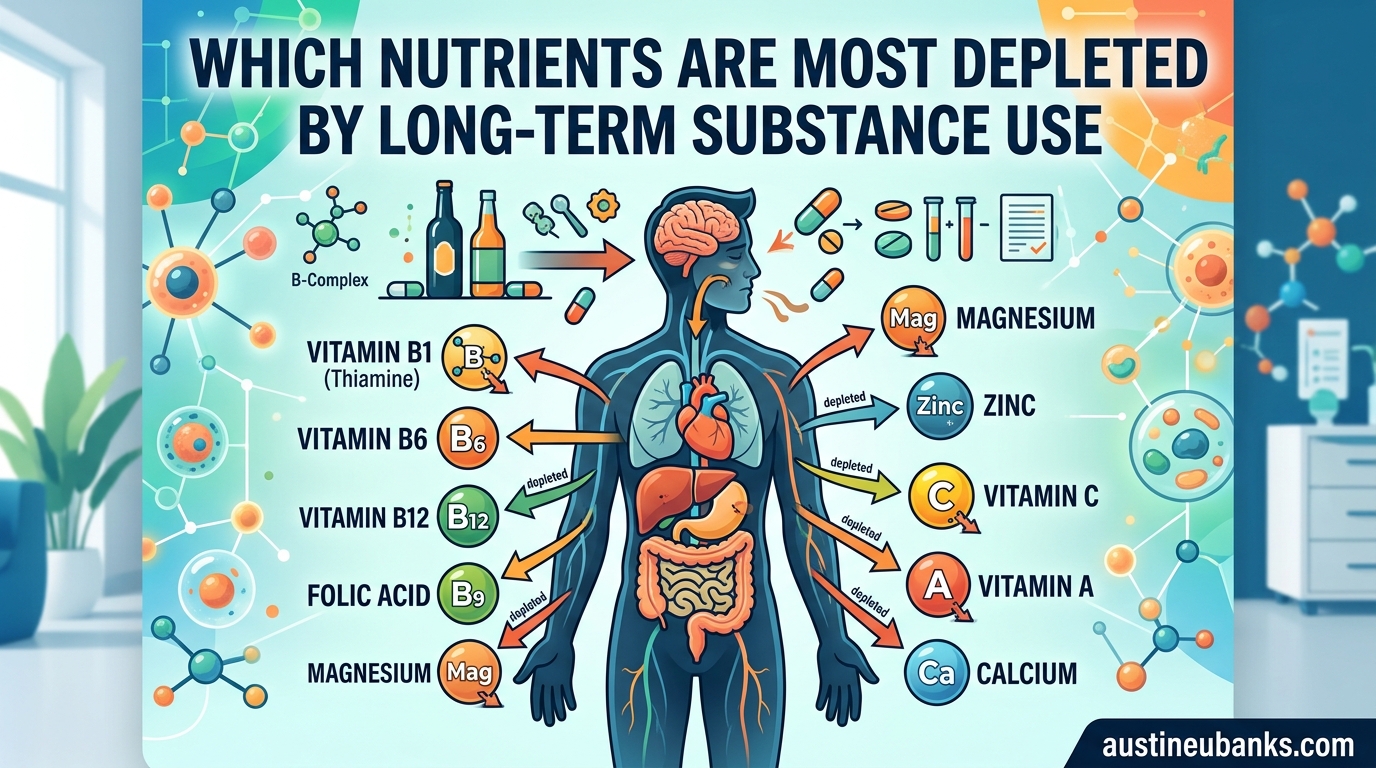
Long-term substance use drains the body of essential vitamins, minerals, and amino acids that keep your brain, organs, and immune system functioning. The nutrients most depleted by substance use include B vitamins (especially thiamine, B6, and folate), vitamin C, vitamin D, vitamin A, zinc, magnesium, calcium, potassium, selenium, iron, and critical amino acids. Research published by the National Institutes of Health found that nearly 50% of people with substance use disorders are deficient in iron or key vitamins, with low vitamin A in 21%, low iron in 18%, low potassium in 12%, and low vitamin C affecting a significant portion of subjects.
The problem goes deeper than simply not eating enough. Substance use interferes with how your body absorbs, processes, and stores nutrients at the cellular level. Liver damage from alcohol reduces nutrient storage. Opioid-induced gastrointestinal issues block absorption. Stimulants suppress appetite so severely that the body starts breaking down muscle tissue for fuel.
If you or someone you love is in recovery, understanding which nutrients are most depleted by substance use is one of the most overlooked pieces of the healing puzzle. I have spent years researching the connection between addiction and nutrition, and the evidence is clear: nutritional deficiencies worsen cravings, intensify mental health symptoms, and increase relapse risk.
This guide breaks down exactly which nutrients each substance depletes, why it happens at a biological level, what symptoms to watch for, and how to rebuild your nutritional health during recovery.
Table of Contents
How Substance Use Depletes Nutrients: The Three Core Mechanisms
Substances deplete nutrients through three primary mechanisms that work together to create a compounding deficit. Understanding these pathways helps explain why simply taking a multivitamin is not enough to fix the damage.
1. Poor Dietary Intake and Appetite Suppression
Many substances directly suppress appetite, causing users to skip meals or consume nutrient-poor foods. Stimulants like cocaine and methamphetamine can eliminate hunger entirely for days. Alcohol provides empty calories from carbohydrates but displaces real food, meaning drinkers may consume enough energy while getting almost zero nutritional value.
Opioids alter taste perception and reduce the desire to eat regular meals. Even marijuana, which increases appetite, tends to drive cravings toward high-sugar, high-fat foods rather than nutrient-dense options. Over time, consistently poor food choices create baseline deficiencies that worsen with continued use.
2. Organ Damage That Impairs Nutrient Processing
Your liver, pancreas, and gastrointestinal tract are responsible for extracting, converting, and storing the nutrients from everything you eat. Substance use damages each of these systems in specific ways.
Alcohol is particularly destructive to the liver, which stores vitamins A, D, B12, and iron. When liver function declines, the body loses its ability to store and release these nutrients on demand. Alcohol also damages the pancreas, reducing production of digestive enzymes needed to break down fats and fat-soluble vitamins.
Opioids slow gastrointestinal motility, leading to chronic constipation and altered gut bacteria that interfere with nutrient absorption. Stimulants stress the cardiovascular system and kidneys, accelerating the loss of water-soluble vitamins through urine.
3. Malabsorption and Metabolic Interference
Even when nutrients make it into the digestive tract, substances can block their absorption at the intestinal wall. Alcohol damages the cells lining the intestines, reducing their ability to absorb thiamine, folate, and vitamin B12. This is why thiamine deficiency can develop rapidly in heavy drinkers, even those who eat relatively well.
Substances also increase the metabolic demand for certain nutrients. The liver uses significant amounts of B vitamins and antioxidants to metabolize alcohol and drugs, burning through these nutrients faster than normal. Nicotine increases the turnover of vitamin C, requiring smokers to consume far more just to maintain baseline levels.
Quick Overview: Nutrients Most Depleted by Substance Type
Different substances deplete different combinations of nutrients. Here is a quick summary of the most commonly affected vitamins and minerals broken down by substance category. We will cover each one in detail in the sections below.
- Alcohol: Thiamine (B1), B6, B12, folate, vitamin A, vitamin C, vitamin D, zinc, magnesium, calcium, iron, potassium
- Opioids: B vitamins, vitamin C, potassium, selenium, zinc, calcium, magnesium, folate
- Stimulants (cocaine, methamphetamine, prescription amphetamines): B vitamins, protein, calories, electrolytes, vitamin C, magnesium
- Nicotine and tobacco: Vitamin C, vitamin D, B vitamins, selenium, zinc
- Marijuana: No significant direct nutrient depletion, but metabolic changes and poor food choices can lead to imbalances
As you can see, B vitamins, vitamin C, zinc, and magnesium appear across nearly every category. These four nutrients form the backbone of substance-related nutritional deficiencies.
Alcohol-Related Nutrient Deficiencies
Alcohol causes the most severe and wide-ranging nutrient deficiencies of any substance. This is because alcohol damages the digestive tract, liver, and pancreas simultaneously while also displacing nutritious food with empty liquid calories.
Thiamine (Vitamin B1) and Wernicke-Korsakoff Syndrome
Thiamine deficiency is the most common and dangerous nutrient deficiency caused by alcohol use. Heavy drinkers can develop dangerously low thiamine levels in as little as two to three weeks of heavy consumption because alcohol both reduces thiamine absorption and increases its breakdown.
Severe thiamine deficiency leads to Wernicke-Korsakoff syndrome, sometimes called “wet brain.” This condition causes confusion, vision problems, loss of muscle coordination, and in advanced stages, permanent memory loss and cognitive damage. Wernicke-Korsakoff syndrome is largely irreversible once it progresses, which is why emergency rooms routinely administer thiamine to anyone presenting with alcohol-related issues.
Reddit users in recovery communities consistently highlight thiamine supplementation as one of the most critical steps in early recovery. Multiple people in r/recoverywithoutAA report that thiamine supplements helped clear brain fog and improve energy within the first weeks of sobriety.
Folate, B6, and B12 Deficiencies
Alcohol interferes with the absorption of folate (folic acid), vitamin B6, and vitamin B12. These three B vitamins are responsible for red blood cell production, DNA synthesis, and nervous system function. Deficiencies lead to megaloblastic anemia, a condition where the body produces oversized, ineffective red blood cells that cannot carry oxygen efficiently.
Folate deficiency is especially common in heavy drinkers because alcohol blocks folate absorption in the intestine and increases its excretion through urine. Low folate levels also contribute to depression and cognitive decline, which can make recovery harder.
Vitamins A, C, and D
Alcohol depletes fat-soluble vitamins by damaging the liver and pancreas. Vitamin A deficiency can cause night blindness and skin problems. Vitamin C levels drop because the body uses up its antioxidant reserves fighting the oxidative stress caused by alcohol metabolism. Vitamin D deficiency weakens bones and is linked to depression, which is already a risk factor for relapse.
Zinc and Magnesium
Zinc deficiency in heavy drinkers leads to impaired wound healing, weakened immunity, and loss of appetite. Magnesium deficiency causes muscle cramps, irregular heartbeat, anxiety, and sleep disturbances. Many people in early recovery report these exact symptoms, and low magnesium is often a hidden contributor to the anxiety and restlessness of early sobriety.
Research from the journal Drug and Alcohol Dependence links these alcohol-related nutrient deficiencies to alcoholic myopathy (muscle wasting), osteopenia and osteoporosis (bone thinning), and mood disorders including anxiety and depression.
Opioid-Related Nutrient Deficiencies
Opioids, including prescription painkillers, heroin, and fentanyl, create a different but equally damaging pattern of nutrient depletion. The primary mechanism is gastrointestinal disruption, which impairs the body’s ability to absorb what you eat.
People who misuse opioids are most likely lacking sufficient B vitamins, vitamin C, potassium, selenium, zinc, calcium, magnesium, and folate. This broader pattern reflects how opioids slow the entire digestive system, reducing the efficiency of nutrient absorption across the board.
Gastrointestinal Damage and Malabsorption
Opioids dramatically slow gastrointestinal motility, leading to chronic constipation that affects up to 90% of regular opioid users. This slowed digestion alters the gut microbiome, allowing harmful bacteria to overgrow while beneficial bacteria decline. The result is a gut environment that extracts fewer nutrients from food, even when dietary intake is adequate.
This malabsorption means that opioid users can eat balanced meals and still develop deficiencies. Calcium and magnesium are particularly affected because they require active transport mechanisms in the gut that opioids suppress.
B Vitamins, Potassium, and Selenium
B vitamin deficiencies in opioid users contribute to fatigue, depression, and nerve pain. Low potassium causes muscle weakness, cramping, and irregular heartbeat. Selenium deficiency weakens the immune system and impairs thyroid function, which can deepen the fatigue and depression common during opioid withdrawal.
Vitamin D deficiency has been specifically linked to worsened opioid cravings in research studies. Low vitamin D appears to affect the same brain pathways involved in opioid dependence, making deficiency a potential barrier to recovery.
Zinc and Folate
Zinc depletion in opioid users impairs immune function and slows tissue repair, making infections and injuries harder to heal. Folate deficiency contributes to anemia and cognitive symptoms that can mimic or worsen the mental fog of withdrawal.
Stimulant-Related Nutrient Deficiencies
Stimulants, including cocaine, methamphetamine, and prescription amphetamines like Adderall, deplete nutrients through severe appetite suppression, dehydration, and accelerated metabolism. The result is rapid loss of calories, protein, electrolytes, and water-soluble vitamins.
Dehydration and Electrolyte Imbalance
Stimulants increase heart rate, body temperature, and urination, leading to significant fluid loss. This dehydration drains electrolytes, especially sodium, potassium, and magnesium. Electrolyte imbalances cause muscle cramps, heart palpitations, headaches, and in severe cases, cardiac arrhythmia.
Many people recovering from stimulant addiction report that electrolyte-rich fluids and magnesium supplementation helped reduce the physical discomfort of early withdrawal. Replenishing these minerals early in recovery can help stabilize heart rhythm and reduce anxiety.
Protein and Calorie Depletion
Stimulant users often go days without eating, causing the body to break down muscle tissue for amino acids. This catabolic state leads to significant protein depletion, muscle wasting, and weakness. Amino acids are also the building blocks of neurotransmitters like dopamine and serotonin, meaning protein depletion directly affects mood and craving regulation.
Weight loss from stimulant use is often dramatic and rapid. Reddit users in recovery from stimulant addiction frequently discuss the challenge of rebuilding lost muscle mass and learning to eat regularly again after months or years of appetite suppression.
What Nutrients Does Adderall Deplete?
Prescription amphetamines like Adderall deplete several key nutrients even when used as prescribed. The most commonly affected nutrients include B vitamins (especially B6 and B12), vitamin C, magnesium, and zinc. Vitamin C is particularly important because amphetamines increase its turnover rate, and low vitamin C can worsen the immune suppression that many users experience.
Magnesium depletion from amphetamine use contributes to jaw tension, muscle tightness, and anxiety. Many users find that magnesium supplementation helps reduce these side effects. Zinc depletion can impair immune function and reduce the effectiveness of amphetamine medications over time.
Nicotine and Tobacco-Related Nutrient Deficiencies
Nicotine and tobacco use create a more subtle but persistent pattern of nutrient depletion. While the deficiencies are less dramatic than those caused by alcohol or stimulants, they accumulate over years of use and affect hundreds of millions of people worldwide.
Vitamin C Depletion
Smokers require approximately 35 mg more vitamin C per day than nonsmokers just to maintain the same blood levels. This is because nicotine increases oxidative stress, causing the body to burn through vitamin C faster as it works to neutralize free radicals from cigarette smoke.
Chronic vitamin C depletion in smokers leads to weakened immunity, slower wound healing, and drier skin. Studies show that smokers consistently have vitamin C blood levels 30 to 40 percent lower than nonsmokers, even with similar dietary intake.
Vitamin D, B Vitamins, Selenium, and Zinc
Smoking also depletes vitamin D, which contributes to bone loss and weakened immunity. B vitamin deficiencies from nicotine use affect energy metabolism and nervous system function. Selenium and zinc depletion weakens immune defenses and impairs cellular repair.
The good news is that many of these deficiencies begin to reverse within weeks of quitting. Vitamin C levels, in particular, start recovering quickly once nicotine use stops.
Marijuana and Nutritional Changes
Marijuana presents a unique nutritional picture compared to other substances. Rather than suppressing appetite, cannabis typically increases it, a phenomenon commonly known as “the munchies.” This means that marijuana users are less likely to develop the calorie and protein deficits seen with stimulants or opioids.
However, the types of foods consumed during marijuana-induced appetite surges tend to be high in sugar, saturated fat, and refined carbohydrates. Over time, this pattern can lead to weight gain, blood sugar instability, and deficiencies in fiber, vitamins, and minerals that come from a balanced diet.
MedlinePlus, one of the few sources covering marijuana’s nutritional impact, notes that marijuana can also affect metabolism and the way the body processes certain nutrients. Long-term heavy use may alter how the body regulates blood sugar, potentially increasing diabetes risk over time.
Symptoms and Health Risks of Nutrient Deficiencies
The symptoms of nutrient deficiencies from substance use are often mistaken for withdrawal or mental health issues. Recognizing them as nutritional problems can lead to more effective treatment and faster recovery.
Neurologic and Cognitive Symptoms
Thiamine deficiency causes the most severe neurological symptoms, including confusion, memory loss, vision changes, and impaired coordination. Left untreated, it progresses to Wernicke-Korsakoff syndrome with potentially permanent brain damage. Vitamin B12 deficiency causes numbness and tingling in the hands and feet, cognitive decline, and in advanced cases, altered mental status.
Folate deficiency contributes to depression, irritability, and cognitive slowing. These symptoms overlap heavily with post-acute withdrawal syndrome (PAWS), making it difficult to distinguish between the two without bloodwork.
Physical Symptoms
Iron and folate deficiencies cause anemia, which produces fatigue, weakness, pale skin, and shortness of breath. Zinc deficiency causes hair loss, skin rashes, delayed wound healing, and loss of taste. Magnesium deficiency causes muscle cramps, insomnia, anxiety, and irregular heartbeat.
Vitamin C deficiency can cause easy bruising, bleeding gums, and joint pain. Vitamin D deficiency contributes to bone pain, muscle weakness, and increased risk of osteoporosis. Calcium depletion accelerates bone loss, leading to osteopenia and eventually osteoporosis.
Cascading Deficiency Effects
Nutrient deficiencies do not happen in isolation. When one nutrient drops, it often triggers a chain reaction. For example, magnesium deficiency impairs the activation of vitamin D, which in turn reduces calcium absorption. Thiamine deficiency reduces the body’s ability to use B6 and B12 effectively.
This cascading effect explains why nutritional recovery is rarely as simple as supplementing one vitamin. A comprehensive approach addressing multiple deficiencies simultaneously is almost always necessary for people recovering from long-term substance use.
How to Replenish Nutrients After Substance Use
Rebuilding nutritional health after addiction requires a strategic approach. The body has often been running on empty for months or years, and recovery demands more nutrients than normal, not just a return to baseline.
Step 1: Get Comprehensive Bloodwork First
The most consistent advice from both medical professionals and recovery communities is to get comprehensive bloodwork before starting any supplement regimen. Testing identifies which specific deficiencies you have, allowing you to target supplementation rather than guessing.
Ask your doctor for a panel that includes complete blood count, comprehensive metabolic panel, vitamin B12, folate, vitamin D, iron studies, thiamine, magnesium, and zinc. This gives you a complete picture of your nutritional status and helps your healthcare provider create a targeted plan.
Step 2: Focus on Nutrient-Dense Whole Foods
Food should always be the foundation of nutritional recovery, with supplements filling specific gaps. The following foods are particularly valuable for restoring common deficiencies.
B vitamins: Whole grains, eggs, leafy greens, legumes, poultry, fish, and fortified nutritional yeast.
Vitamin C: Citrus fruits, bell peppers, strawberries, broccoli, and Brussels sprouts.
Vitamin D: Fatty fish like salmon and sardines, fortified dairy products, egg yolks, and sensible sun exposure.
Zinc: Pumpkin seeds, oysters, beef, lentils, and chickpeas.
Magnesium: Spinach, almonds, black beans, avocado, and dark chocolate.
Amino acids and protein: Lean meats, fish, eggs, tofu, quinoa, beans, and Greek yogurt.
Step 3: Add Targeted Supplements Based on Bloodwork
For people in recovery, certain supplements are commonly recommended alongside a healthy diet. Thiamine (B1) is frequently prescribed for anyone recovering from alcohol use disorder, as the body cannot absorb enough from food alone when the digestive tract has been damaged. A high-quality B-complex can help address multiple B vitamin deficiencies simultaneously.
Vitamin D supplementation is recommended for many people in recovery, especially those with opioid use disorder, given the link between vitamin D and craving severity. Magnesium glycinate is often suggested for anxiety, sleep, and muscle tension in early recovery.
Always consult with a healthcare provider before starting supplements, as some can interact with medications used in medication-assisted treatment.
Step 4: Work with a Registered Dietitian
A registered dietitian who specializes in addiction recovery can create a personalized nutrition plan based on your bloodwork, substance history, and current symptoms. Leading recovery programs emphasize this as a key part of their approach because nutrition supports every other aspect of treatment.
Long-Term Nutritional Strategies for Recovery
Nutrition in recovery is not just about fixing deficiencies. It is about building sustainable habits that support long-term sobriety and prevent relapse. The way you eat in the months and years after quitting can either strengthen or undermine your recovery.
Consistent Meal Timing and Blood Sugar Stability
Irregular blood sugar levels trigger cravings, mood swings, and irritability that can mimic drug cravings. Many people in recovery report that eating consistent, balanced meals at regular intervals dramatically reduced their craving intensity. Aim for three meals plus one or two snacks daily, each containing protein, healthy fats, and complex carbohydrates.
Stable blood sugar also supports the brain’s gradual recovery of dopamine and serotonin function. After months or years of substance-driven dopamine spikes, the brain needs steady nutritional support to rebuild healthy neurotransmitter production.
Amino Acids and Neurotransmitter Repair
Amino acids from dietary protein are the raw materials your brain uses to manufacture dopamine, serotonin, GABA, and other neurotransmitters. During active addiction, these systems are severely disrupted. Providing the body with consistent, high-quality protein gives the brain what it needs to gradually restore normal mood regulation.
Some recovery programs use targeted amino acid therapy, supplementing specific amino acids like L-tyrosine (for dopamine support) and L-theanine (for anxiety reduction). Recovery community members frequently mention L-theanine as helpful for alcohol withdrawal anxiety, though it should be used under professional guidance.
Avoiding Addiction Transfer to Food and Sugar
One of the most commonly discussed concerns in recovery communities is addiction transfer, where the brain shifts its dependence from drugs or alcohol to food, particularly sugar. This pattern can lead to significant weight gain, blood sugar instability, and a new set of health problems.
Recovery treatment programs specifically warn about this cross-addiction risk. The key is building a balanced relationship with food that avoids the cycle of restriction and bingeing. This includes allowing treats in moderation rather than eliminating them entirely, which often backfires.
Gradual Changes Over Drastic Overhauls
Recovery community members consistently recommend gradual dietary changes rather than attempting a complete overhaul in early recovery. Trying to fix everything at once can feel overwhelming and increase relapse risk. Start with one meal per day, focus on hydration, and build from there as your body and mind adjust to sobriety.
FAQs
What is the most common nutrient deficiency in alcoholics?
Thiamine (vitamin B1) deficiency is the most common and dangerous nutrient deficiency in alcoholics. Heavy drinkers can develop dangerously low thiamine levels in as little as two to three weeks because alcohol both reduces thiamine absorption and increases its breakdown. Severe thiamine deficiency can lead to Wernicke-Korsakoff syndrome, also known as wet brain, which causes confusion, vision problems, loss of coordination, and potentially permanent memory loss.
How does substance abuse affect nutrition?
Substance abuse affects nutrition through three primary mechanisms: suppressing appetite and replacing nutritious meals with substance use, damaging organs like the liver and pancreas that process and store nutrients, and interfering with the intestinal lining’s ability to absorb vitamins and minerals. These three pathways work together to create compounding nutrient deficiencies that worsen over time.
What depletes nutrients in the body?
Nutrients in the body are depleted by poor dietary intake, organ damage, malabsorption, increased metabolic demand, and increased excretion. Substance use accelerates all of these processes. Alcohol damages the liver and intestines, opioids slow digestion and alter gut bacteria, stimulants suppress appetite and cause dehydration, and nicotine increases oxidative stress that burns through antioxidants like vitamin C.
What nutrients does Adderall deplete?
Adderall and other prescription amphetamines deplete B vitamins (especially B6 and B12), vitamin C, magnesium, and zinc. Amphetamines increase the metabolic turnover of these nutrients, meaning the body uses them up faster than normal. Magnesium depletion contributes to jaw tension and anxiety, while zinc depletion can impair immune function over time.
What drug causes malnutrition?
Alcohol is the substance most commonly associated with malnutrition because it provides empty calories that displace real food while simultaneously damaging the liver, pancreas, and intestines. However, all substances of abuse contribute to malnutrition in different ways. Stimulants cause the most rapid weight loss and protein depletion, opioids cause the broadest malabsorption issues, and nicotine creates chronic low-grade deficiencies in vitamin C and other antioxidants.
What vitamin deficiencies cause altered mental status?
Thiamine (B1) deficiency is the leading cause of altered mental status related to vitamin depletion, causing confusion, disorientation, and potentially permanent cognitive damage in the form of Wernicke-Korsakoff syndrome. Vitamin B12 deficiency can also cause cognitive changes, memory problems, and altered mental status. Folate deficiency contributes to depression and cognitive slowing, and severe niacin (B3) deficiency can cause psychosis.
Does sertraline deplete vitamins?
There is limited evidence that sertraline (Zoloft) directly depletes specific vitamins. However, long-term use of any SSRI medication may affect nutrient metabolism indirectly. Some research suggests that SSRIs may lower levels of certain antioxidants and affect how the body processes B vitamins. If you are taking sertraline long-term, discuss nutritional monitoring with your doctor to ensure you are not developing any deficiencies.
How long does it take to restore nutrients after quitting alcohol?
Restoring nutrient levels after quitting alcohol depends on the severity and duration of use. Some deficiencies, like thiamine and folate, begin improving within days to weeks of supplementation. Others, like liver-dependent vitamin A and D stores, may take months to fully replenish. Most people report significant improvement in energy, mood, and cognitive function within 3 to 6 months of consistent nutritional recovery. Full restoration of all nutrient levels typically takes 6 to 12 months with proper diet and targeted supplementation guided by bloodwork.
Conclusion: Nutrition as a Foundation of Recovery
Understanding which nutrients are most depleted by substance use gives you a roadmap for rebuilding your body and brain during recovery. The most commonly depleted nutrients across all substance types are B vitamins (especially thiamine, B6, and folate), vitamin C, vitamin D, zinc, and magnesium. Alcohol causes the widest range of deficiencies, while stimulants, opioids, and nicotine each create their own distinct patterns of depletion.
The key takeaway is that nutritional deficiencies are not just a side effect of addiction. They actively undermine recovery by worsening cravings, intensifying anxiety and depression, slowing cognitive healing, and increasing relapse risk. Addressing these deficiencies through diet, targeted supplementation, and professional guidance can make every other part of your recovery more effective.
If you are in early recovery or supporting someone who is, start with three steps: get comprehensive bloodwork, focus on nutrient-dense whole foods, and work with a healthcare provider or dietitian who understands addiction nutrition. The nutrients depleted by substance use can be restored, and rebuilding them is one of the most powerful investments you can make in long-term sobriety.