
You feel it before you can name it. Your jaw is tight. Your thoughts are racing. Your heart beats faster than it should for someone just sitting at a desk. This is your nervous system stuck in overdrive, and millions of people live in this state every single day without realizing there is a biological off switch hiding in plain sight.
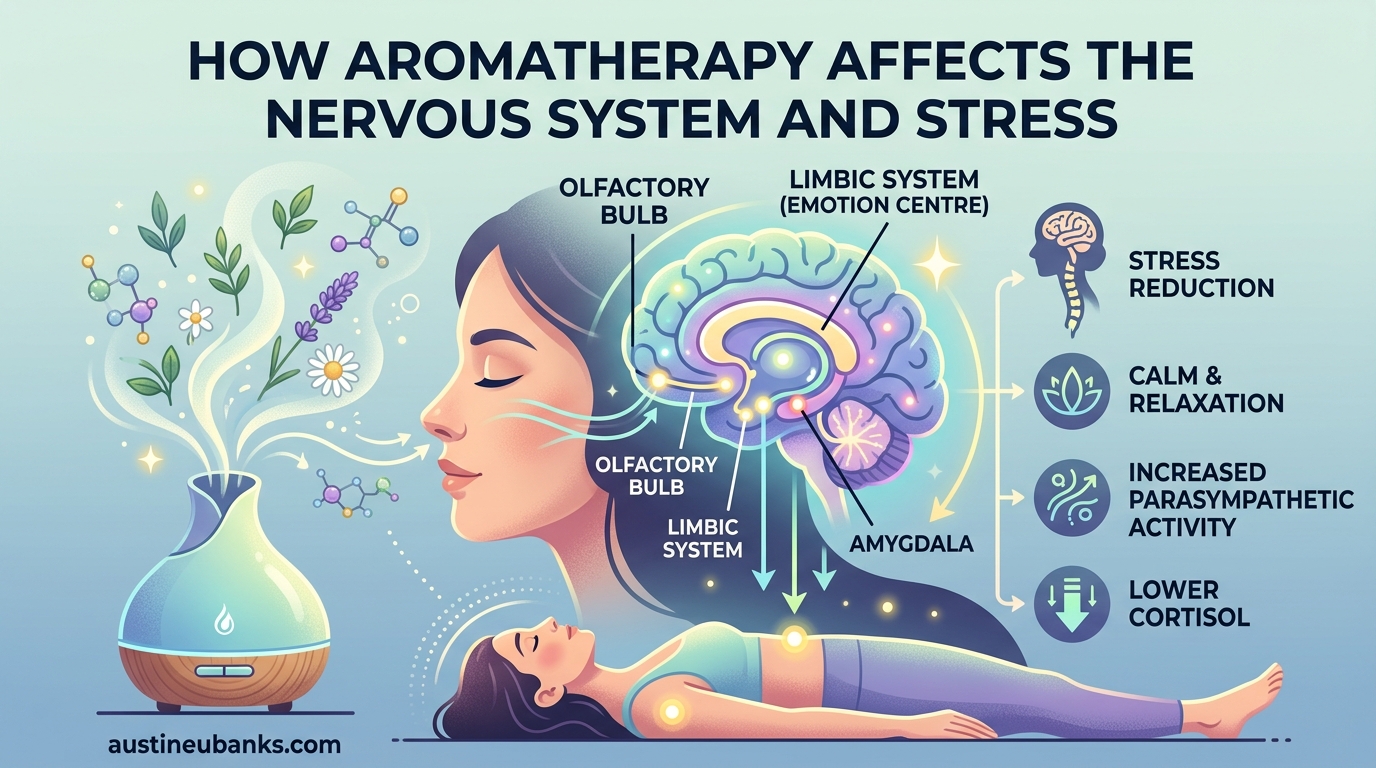
The question of how aromatherapy affects the nervous system and stress is not just academic. It is practical, urgent, and backed by more peer-reviewed research than most people realize. When you inhale essential oil molecules, they travel through your olfactory nerve directly to your brain’s limbic system, the command center for emotion, memory, and survival responses. There, those volatile compounds modulate neurotransmitter activity, reduce stress hormones like cortisol, and shift your autonomic nervous system from sympathetic fight-or-flight into parasympathetic rest-and-digest mode.
In this guide, our team breaks down the complete neurological pathway from scent molecule to stress reduction. We cover the specific brain regions involved, the neurotransmitters affected, the essential oils with the strongest clinical backing, and a practical protocol you can start using today. We also address the skepticism head on, because plenty of people wonder whether this is real science or wellness fluff.
What you will not find here is hype. We looked at forum discussions from Reddit communities like r/Anxiety and r/CPTSDFreeze, read NIH systematic reviews, and examined research from Nature and Johns Hopkins. Some people experience dramatic results from aromatherapy. Others feel nothing. We will explain why both outcomes are real and what determines which camp you fall into.
Chronic stress is not just unpleasant. It dysregulates your autonomic nervous system in ways that contribute to anxiety disorders, depression, cardiovascular disease, immune dysfunction, and cognitive decline. Understanding how a simple inhalation of lavender or bergamot can measurably alter your brain chemistry gives you a low-cost, low-side-effect tool for nervous system regulation that you can use anywhere, anytime.
Table of Contents
How Aromatherapy Affects the Nervous System and Stress: The Quick Answer
Aromatherapy affects the nervous system through a direct neurological pathway: scent molecules bind to olfactory receptors in the nasal cavity, send signals through the olfactory nerve to the olfactory bulb, and relay directly into the limbic system including the amygdala and hippocampus. This stimulation modulates GABAergic, glutamatergic, and serotonergic circuits, producing measurable anxiolytic, sedative, and neuroprotective effects while reducing cortisol and activating the parasympathetic nervous system.
That paragraph uses technical language because the mechanism is genuinely technical. But here is the plain version: when you smell certain plant compounds, your brain shifts from stressed to calm through real biological processes, not just because the scent is pleasant.
Understanding the Nervous System and Stress Response
To understand how aromatherapy works, you first need to understand what it is working on. Your nervous system has two main branches that control stress and relaxation: the sympathetic and parasympathetic nervous systems.
Sympathetic vs Parasympathetic: Fight-or-Flight vs Rest-and-Digest
The sympathetic nervous system is your body’s alarm system. When a threat appears, whether a charging predator or an angry email from your boss, it floods your system with adrenaline and cortisol. Your heart rate increases, your muscles tense, your pupils dilate, and your digestion slows. This is the fight-or-flight response, and it evolved to keep you alive in short, intense bursts.
The parasympathetic nervous system is the opposite. It is your rest-and-digest mode. When it activates, your heart rate slows, your muscles relax, your digestion resumes, and your brain shifts into a calmer state. The vagus nerve is the primary highway for this parasympathetic activation, running from your brainstem to nearly every major organ.
The problem in modern life is that chronic stress keeps the sympathetic system switched on. Deadlines, financial pressure, relationship conflict, and information overload all trigger the same alarm response as a physical threat. Your nervous system cannot tell the difference between a lion and a late mortgage payment.
Aromatherapy works primarily by activating the parasympathetic nervous system. Research published in the journal of the Restorative Sciences Department found that inhaled essential oils modulate the autonomic nervous system with a predominance of parasympathetic activation. In other words, aromatherapy helps flip the switch from stressed to calm at the neurological level.
What Is Nervous System Dysregulation?
Nervous system dysregulation happens when your body loses the ability to smoothly transition between sympathetic and parasympathetic states. Instead of responding to a stressor and then returning to baseline, your nervous system gets stuck in a chronically elevated state or swings unpredictably between hyperarousal and exhaustion.
People in Reddit’s CPTSD community describe this vividly. They talk about feeling hypervigilant, unable to relax even in safe environments, startling easily, and feeling like their body is waiting for the next threat even when nothing is wrong. This is not a character flaw. It is a nervous system that has learned to stay on high alert.
Forum users with complex PTSD and chronic anxiety specifically seek essential oils that can ground them during dysregulation episodes. This tracks with the research: essential oils like lavender have been shown to reduce amygdala reactivity, essentially telling the brain’s alarm system that it is safe to stand down.
Signs Your Nervous System Is Stuck in Overdrive
Common signs of nervous system dysregulation include chronic muscle tension, persistent restlessness or feeling on edge, difficulty concentrating, irritability, sleep disturbances, digestive issues, and fatigue that does not improve with rest.
You might also notice an inability to switch off your racing thoughts, exaggerated startle responses, feeling emotionally reactive to minor inconveniences, and a sense that your body is running in the background even when you are trying to relax.
If several of these resonate, your nervous system may benefit from targeted regulation practices, and aromatherapy is one of the most accessible tools available.
The Olfactory Pathway: How Scent Molecules Reach Your Brain
The reason aromatherapy can affect your nervous system so quickly is anatomical. The olfactory system has a direct, unmediated connection to the brain that no other sense shares. Here is the step-by-step journey.
Step 1: Scent Molecules Enter the Nasal Cavity
When you inhale essential oil vapors, volatile aromatic compounds enter your nasal cavity and dissolve in the mucus lining your olfactory epithelium. This tissue sits at the top of your nasal passages and contains millions of olfactory receptor neurons.
Step 2: Receptors Send Electrical Signals
Each scent molecule fits into specific olfactory receptors like a key in a lock. When a molecule binds to its receptor, it triggers an electrical signal that travels up the olfactory nerve fibers. These fibers pass through the cribriform plate, a bony structure separating the nasal cavity from the brain.
Step 3: The Olfactory Bulb Processes the Signal
The signals converge at the olfactory bulb, a neural structure at the base of the brain. The olfactory bulb acts like a relay station, processing and organizing the scent information before sending it to multiple brain regions simultaneously.
Step 4: Direct Projection to the Limbic System
Unlike vision or hearing, which route through a brain region called the thalamus before reaching higher processing centers, olfactory signals go directly to the limbic system. This includes the amygdala (emotional processing), the hippocampus (memory), and the anterior cingulate cortex (emotion and autonomic regulation).
This direct pathway is why a single whiff of a particular scent can instantly transport you to a childhood memory or trigger an emotional response before you even consciously register what you are smelling. It is also why aromatherapy can influence your nervous system within seconds of inhalation.
Johns Hopkins Medicine describes this mechanism plainly: when inhaled, scent molecules in essential oils travel from the olfactory nerves directly to the brain and especially impact the amygdala, the emotional center.
The Limbic System Connection: Amygdala, Hippocampus, and Emotional Processing
The limbic system is where aromatherapy does its most important work. This collection of brain structures governs emotion, memory, motivation, and the autonomic nervous system. When essential oil signals arrive here, they set off a cascade of effects.
The Amygdala: Your Emotional Alarm System
The amygdala is a small, almond-shaped structure that acts as your brain’s threat detection center. It constantly scans your environment for danger and triggers the stress response when it perceives a threat. In people with chronic anxiety or PTSD, the amygdala becomes hyperactive, firing danger signals even when no real threat exists.
Research shows that certain essential oils, particularly lavender, reduce amygdala reactivity. By calming this overactive alarm system, aromatherapy helps the brain stop sending false danger signals, which in turn reduces the physiological stress response downstream.
The Hippocampus: Scent and Memory
The hippocampus sits adjacent to the amygdala and is responsible for forming and retrieving memories. The connection between scent and memory is famously powerful because the olfactory bulb has direct neural pathways to both structures.
This explains why aromatherapy is so personal. If lavender reminds you of a comforting childhood bath, that positive association amplifies its calming effect. But if a particular scent is linked to a negative memory, it could have the opposite effect. Individual variation in scent response is not a flaw in aromatherapy. It is a feature of how the olfactory-limbic pathway works.
The Anterior Cingulate Cortex
The anterior cingulate cortex (ACC) plays a role in emotion regulation, decision-making, and autonomic nervous system control. The 2024 bergamot neural circuit research, cited in Nature, mapped a specific pathway from the anterior olfactory nucleus to the ACC. This circuit helps explain why bergamot essential oil in particular produces measurable reductions in anxiety and improvements in mood.
The discovery that a specific essential oil activates a defined neural circuit is a significant step beyond simply observing that people feel calmer. It provides the neurological mechanism for why bergamot works.
Neurotransmitter Modulation: GABA, Serotonin, and Dopamine
Neurotransmitters are the chemical messengers that allow neurons to communicate. Aromatherapy influences several key neurotransmitter systems, and this is where the biological effects become measurable.
GABA: The Brain’s Brake Pedal
GABA (gamma-aminobutyric acid) is the primary inhibitory neurotransmitter in the brain. Think of it as the brake pedal for neural activity. When GABA activity increases, your brain slows down, racing thoughts quiet, and physical tension releases. Many anti-anxiety medications, including benzodiazepines like Valium and Xanax, work by enhancing GABA activity.
Lavender essential oil has been shown to modulate GABAergic activity in a similar way. Research indicates that lavender compounds inhibit voltage-dependent calcium channels, reducing the excessive neuronal firing that drives anxiety. This is a measurable, pharmacological effect, not just a subjective feeling of relaxation.
Forum users in anxiety communities consistently report that lavender produces the most reliable calming effect, and the GABA mechanism explains why. It is working on the same neurotransmitter system as prescription anti-anxiety medication, though with a gentler effect.
Serotonin Pathways and Mood
Serotonin is often called the feel-good neurotransmitter, though its role is more complex than that nickname suggests. It regulates mood, sleep, appetite, and digestion. Low serotonin activity is associated with depression and anxiety disorders.
Essential oils influence serotonergic circuits, helping to normalize serotonin activity. This does not mean aromatherapy is a replacement for antidepressant medication. But it does mean that regular use of certain oils can support healthy serotonin function as part of a broader mental wellness strategy.
Dopamine and Reward
Dopamine is involved in motivation, reward, and pleasure. Some essential oils, particularly citrus oils like sweet orange and bergamot, appear to support dopamine activity. This may explain why citrus scents are often described as uplifting and energizing rather than sedating.
The interplay between these neurotransmitter systems is complex. Lavender primarily enhances GABA for sedation. Bergamot modulates both GABAergic and glutamatergic circuits for a balanced calming effect. Citrus oils lean toward dopamine and serotonin support for mood elevation. Choosing the right oil for your specific need matters.
The Bergamot Neural Circuit Discovery
A 2024 study mapped a specific neural circuit for bergamot essential oil that runs from the anterior olfactory nucleus through to the anterior cingulate cortex. This is one of the first times researchers have identified a complete circuit for a single essential oil rather than just observing general effects.
This finding matters because it moves aromatherapy research from correlation (people report feeling calmer) to mechanism (we can trace exactly which neurons fire). It is the kind of evidence that separates genuine science from wellness folklore.
The Autonomic Nervous System: Shifting from Fight-or-Flight to Rest-and-Digest
All of the brain-level effects we just covered cascade down into the autonomic nervous system. This is where you feel the physical changes: slower heart rate, lower blood pressure, relaxed muscles, deeper breathing.
Parasympathetic Activation and Heart Rate Variability
Heart rate variability (HRV) is one of the most reliable measures of autonomic nervous system balance. A higher HRV indicates that your body can flexibly shift between sympathetic and parasympathetic states as needed. Chronic stress lowers HRV, while relaxation practices increase it.
Studies have shown that aromatherapy inhalation can increase HRV, indicating parasympathetic activation. This is not a subjective report. It is a measurable change in how your heart and nervous system function, detectable on monitoring equipment within minutes of exposure.
Blood Pressure and Heart Rate Reduction
Ylang-ylang essential oil has been specifically studied for its cardiovascular effects. Research demonstrates that inhalation of ylang-ylang significantly reduces blood pressure and heart rate compared to controls. Lavender produces similar effects, though typically with a more pronounced sedative quality.
For people whose stress manifests physically as elevated blood pressure or a racing heart, these findings are directly relevant. The cardiovascular calming effect of essential oils is one of the most consistently replicated findings in the aromatherapy research literature.
The Vagus Nerve Connection
Here is something no major competitor covers in depth: the vagus nerve connection to aromatherapy. The vagus nerve is the longest cranial nerve in your body, running from your brainstem to your heart, lungs, and digestive tract. It is the main conduit for parasympathetic signals.
While direct research on aromatherapy and vagus nerve stimulation is still emerging, the mechanism makes sense. The olfactory system has connections to brainstem nuclei that influence vagal tone. When essential oils activate parasympathetic pathways through the limbic system, the vagus nerve is the primary carrier of those calming signals to your body.
This connects aromatherapy to the broader vagus nerve stimulation trend that has gained massive popularity. Practices like deep breathing, cold exposure, humming, and meditation all target vagal tone. Aromatherapy appears to work through a similar pathway, adding another tool to the nervous system regulation toolkit.
Stress Hormone Reduction: Cortisol and Other Biomarkers
Cortisol gets most of the attention when it comes to stress, but it is not the only biomarker that aromatherapy influences. Researchers measure several stress indicators to objectively verify whether essential oils produce real physiological changes.
Cortisol: The Primary Stress Hormone
Cortisol is released by your adrenal glands in response to stress. In acute situations, it is helpful: it mobilizes energy, sharpens focus, and suppresses non-essential functions. But chronic cortisol elevation damages nearly every system in your body, contributing to weight gain, immune suppression, cognitive decline, and cardiovascular disease.
A comprehensive 2023 NIH review found that most essential oil use decreased stress and negative emotions with a corresponding reduction in stress hormones. Lavender, in particular, has been shown to significantly reduce salivary cortisol levels after inhalation. This is not a marginal effect. Multiple studies have found statistically significant cortisol drops in aromatherapy groups compared to controls.
Salivary Chromogranin A and Alpha-Amylase
Beyond cortisol, researchers measure two other stress biomarkers that most popular articles never mention. Salivary chromogranin A (CgA) is a protein released by the sympathetic nervous system, and it responds to stress more quickly than cortisol. Salivary alpha-amylase is an enzyme that also reflects sympathetic activation.
The NIH review highlighted that essential oils reduce these biomarkers as well. When CgA and alpha-amylase levels drop, it confirms that the sympathetic nervous system is deactivating, not just that cortisol production has slowed. This multi-biomarker evidence makes a much stronger case than cortisol alone.
How Quickly Do Biomarkers Change?
Forum users frequently ask how long it takes for aromatherapy to work. The answer, based on biomarker research, is faster than most people expect. Salivary CgA and alpha-amylase can begin dropping within 5 to 10 minutes of inhalation. Cortisol changes are typically measured at 15 to 30 minutes. Heart rate and blood pressure changes can be detected within minutes.
This rapid onset makes aromatherapy particularly useful for acute stress episodes. If you feel a panic response building, inhaling lavender or bergamot can begin shifting your nervous system within minutes, not the weeks that some stress management practices require.
Brain Wave Patterns: EEG Evidence
Electroencephalographic (EEG) research provides another layer of evidence for how aromatherapy affects the nervous system. EEG measures the electrical activity of your brain through sensors on your scalp, and different brain wave patterns correspond to different states of consciousness.
Alpha and Theta Wave Increases
When you are alert and stressed, your brain produces mostly beta waves. When you relax, alpha waves increase. Deep relaxation and meditation produce theta waves. Sleep produces delta waves.
EEG studies have shown that inhaling certain essential oils increases alpha and theta wave activity while decreasing beta waves. Lavender, in particular, produces a clear shift toward alpha and theta dominance, which correlates with the subjective experience of calm relaxation.
This is significant because EEG is an objective measurement. You cannot fake or placebo your way into changing your brain wave patterns. When researchers see alpha waves increase after lavender inhalation across multiple studies, that is hard neurological evidence.
What Brain Wave Shifts Mean for You
Practically speaking, increased alpha and theta activity means your brain is shifting out of high-alert mode and into a relaxed, receptive state. This is the same brain wave profile produced by meditation, deep breathing, and other proven relaxation practices.
The difference is that aromatherapy can induce this shift passively. You do not need to learn a technique, sit in a specific posture, or clear your mind. You simply inhale, and your brain begins to shift. For people who struggle with meditation or find traditional relaxation practices frustrating, this passive pathway is a genuine advantage.
Essential Oils with the Strongest Scientific Backing
Not all essential oils are equal when it comes to stress reduction. Some have decades of clinical research behind them. Others are popular but poorly studied. Here is what the evidence actually supports.
Lavender (Lavandula angustifolia): The Most Researched Oil
Lavender is by far the most studied essential oil for stress and anxiety. Its mechanism is well understood: it modulates GABAergic activity, reduces cortisol, inhibits calcium channel activity in neurons, and decreases amygdala reactivity.
A review of 30 studies on lavender and sleep found significant improvements in sleep quality. Another review of 27 studies showed lavender aromatherapy significantly reduced pre-procedural anxiety in medical settings. Few essential oils have this volume of supporting evidence.
Reddit users in anxiety communities consistently rate lavender as the most effective oil for acute calming. If you are starting an aromatherapy protocol for stress, lavender should be your foundation.
Bergamot Essential Oil: Anxiety and Mood
Bergamot is the second most researched essential oil for nervous system effects. It is a citrus oil pressed from the rind of bergamot oranges, and it has a fresh, slightly floral scent.
The 2024 neural circuit research mapped a specific pathway from the anterior olfactory nucleus to the anterior cingulate cortex that bergamot activates. This circuit is involved in emotion regulation and autonomic control, which explains why bergamot reduces anxiety while also lifting mood.
Unlike lavender, which is primarily sedating, bergamot produces a calming effect without drowsiness. This makes it ideal for daytime use when you need to reduce stress but stay alert and functional.
Chamomile: Sedative Effects on the Central Nervous System
Roman chamomile and German chamomile both produce essential oils with documented sedative effects. Chamomile contains compounds that act on the central nervous system to reduce excitability and promote relaxation.
Chamomile oil is particularly effective for evening use and sleep preparation. Its sedative properties make it a good complement to lavender in a bedtime aromatherapy blend.
Frankincense: Anxiolytic and Grounding
Frankincense (Boswellia) has been used for thousands of years in religious and medicinal contexts. Modern research supports its anxiolytic (anti-anxiety) effects, though the mechanism is less precisely mapped than lavender or bergamot.
Forum users with CPTSD frequently mention frankincense as a grounding oil during dissociative or hypervigilant episodes. The subjective experience of grounding correlates with decreased sympathetic activation, though more clinical research is needed to confirm the specific pathways.
Ylang-Ylang: Cardiovascular Calming
Ylang-ylang stands out for its documented effects on the cardiovascular system. Studies show it significantly reduces blood pressure and heart rate, making it one of the best choices for stress that manifests physically as cardiovascular tension.
Ylang-ylang has a heavy, sweet floral scent that some people love and others find overwhelming. As with all essential oils, personal scent preference plays a significant role in effectiveness.
Other Notable Oils
Neroli (bitter orange blossom) has demonstrated effectiveness in reducing preoperative anxiety in clinical settings. Clary sage is often recommended for stress related to hormonal fluctuations. Sweet orange and other citrus oils provide uplifting effects through dopamine and serotonin support. Sandalwood produces a grounding, meditative quality. Rose oil, though expensive, has shown anxiolytic properties in limited studies.
The key insight is that different oils work through different mechanisms. Lavender enhances GABA for deep calm. Bergamot modulates specific neural circuits for balanced relaxation. Citrus oils support dopamine for mood elevation. Matching the oil to your specific need produces better results than using one oil for everything.
How to Use Aromatherapy for Nervous System Regulation
Knowing the science is only useful if you can apply it. Here is a practical framework for building an aromatherapy protocol that targets your nervous system.
Step 1: Choose Your Core Oils
Start with lavender for general stress and sleep. Add bergamot for daytime anxiety and mood support. These two oils cover the majority of stress-related needs and have the strongest research backing.
Step 2: Select Your Delivery Method
Diffusion is the most common method and works well for environmental exposure. A standard recommendation from forum users and practitioners is to run a diffuser for 15 to 30 minutes rather than continuously. This prevents olfactory fatigue, where your nose stops registering the scent after prolonged exposure.
Personal inhalers are portable and discreet. You can keep one at your desk, in your bag, or by your bed. They deliver concentrated scent directly to your olfactory receptors and are ideal for acute stress moments.
Topical application requires dilution in a carrier oil (jojoba, coconut, or sweet almond oil). Apply to pulse points like wrists, temples, or the back of your neck. Topical application provides both aromatic and absorptive benefits, though absorption through skin is slower than inhalation.
Aromatherapy massage combines essential oils with the parasympathetic benefits of touch and manual pressure. This dual approach can be particularly effective for people who carry stress as physical muscle tension.
Step 3: Time Your Sessions Strategically
Use calming oils like lavender and chamomile in the evening to signal to your nervous system that it is time to shift into rest mode. Use bergamot or citrus oils in the morning or during midday slumps for mood support without sedation.
For acute stress episodes, keep a personal inhaler within reach. Three to five deep breaths of lavender or bergamot at the first sign of rising anxiety can interrupt the stress spiral before it peaks.
Step 4: Be Consistent
Nervous system regulation is a cumulative process, not a one-time fix. Using aromatherapy consistently at key transition points (morning, midday, evening) builds a conditioning effect where your brain begins to associate certain scents with calm states. Over time, this association strengthens the parasympathetic response.
Forum users who report the best results describe using aromatherapy as part of a daily routine, not just during crises. Combining it with other regulation practices like deep breathing, meditation, or cold exposure compounds the effects.
Does Aromatherapy Actually Work? Addressing the Skepticism
Let us be honest about the skepticism. Many people dismiss aromatherapy as pseudoscience, and some of that skepticism is justified. The wellness industry has oversimplified and overhyped essential oils, making claims that go far beyond what the research supports. So let us separate what the evidence actually shows from what it does not.
The Placebo Question
Forum users in r/Anxiety regularly debate whether aromatherapy is real or placebo. The honest answer is that both are involved. The neurological mechanisms we described earlier (GABA modulation, cortisol reduction, EEG changes) are real pharmacological effects. But the subjective experience of calm is also influenced by expectation, memory, and conditioning.
This is not unique to aromatherapy. The placebo effect is a component of nearly every therapeutic intervention, including pharmaceuticals. The question is not whether placebo plays a role but whether there is also a real physiological effect. For essential oils like lavender and bergamot, the biomarker evidence says yes.
Why It Works for Some People and Not Others
Individual variation in scent response is one of the most important and least discussed aspects of aromatherapy. The olfactory-limbic pathway is deeply personal. Your scent preferences are shaped by genetics, cultural background, and personal memory associations.
If you dislike the smell of lavender, forcing yourself to use it will not produce the same calming effect. The negative emotional response to the scent can actually counteract the pharmacological benefits. This is why forum users emphasize finding scents you genuinely enjoy rather than using whatever oil is most popular.
People with CPTSD and trauma histories need to be especially thoughtful about scent selection. Scents can trigger traumatic memories as powerfully as they trigger positive ones. Start with small exposures and pay attention to how each oil makes you feel.
What Peer-Reviewed Research Actually Shows
The strongest evidence supports aromatherapy as a complementary therapy, not a standalone treatment. The 2023 NIH review, which analyzed dozens of studies, found consistent evidence that essential oils reduce stress hormones and negative emotions. Multiple meta-analyses confirm anxiolytic and sedative effects.
However, study quality varies significantly. Sample sizes are often small, standardization of oil composition is inconsistent, and many studies lack long-term follow-up. Aromatherapy is not as rigorously proven as pharmaceutical interventions. It is best understood as a valid, low-risk complementary approach that can enhance conventional stress management rather than replace it.
People with diagnosed anxiety disorders, depression, or PTSD should use aromatherapy alongside professional treatment, not as a substitute. As the Cleveland Clinic notes, this alternative therapy should not replace traditional medical care.
Safety Considerations and Contraindications
Aromatherapy is generally safe when used correctly, but it is not risk-free. Understanding the safety profile helps you use essential oils responsibly.
Who Should Be Cautious
People with asthma or respiratory conditions should be careful with diffused essential oils, as some compounds can trigger bronchospasm. Those with epilepsy should avoid certain oils, particularly rosemary and hyssop, which may lower seizure thresholds. Pregnant and breastfeeding women should consult a healthcare provider before using essential oils, as some compounds cross the placenta or pass into breast milk.
People on blood pressure medication should monitor their readings when using oils like ylang-ylang that actively lower blood pressure. The combination could produce additive effects.
Quality and Purity Guidance
Forum users consistently flag oil quality as a major concern. Bath and Body Works aromatherapy products and other retail brands are often criticized for lacking potency compared to pure essential oils. This is because many commercial products contain synthetic fragrances or are heavily diluted.
Look for oils labeled with their Latin botanical name (for example, Lavandula angustifolia rather than just lavender). Check for GC/MS reports, which are laboratory analyses that verify the chemical composition of the oil. Choose brands that provide third-party testing results.
Organic certification is a plus but not strictly necessary if the brand provides quality testing. The most important factor is purity: the oil should contain only the named plant compound, not synthetic fillers or carrier oils disguised as pure product.
Proper Dilution
Never apply undiluted essential oils directly to your skin. The standard dilution for adults is 2 to 3 percent, which means roughly 10 to 15 drops of essential oil per ounce of carrier oil. Higher concentrations increase the risk of skin irritation and sensitization.
Some citrus oils, particularly bergamot, are photosensitive. Applying them topically and then exposing your skin to sunlight can cause severe burns. If you use citrus oils on your skin, keep the area covered for at least 12 hours.
FAQs
How does aromatherapy affect the nervous system?
Aromatherapy affects the nervous system through the olfactory pathway. Scent molecules travel from the olfactory nerve to the brain’s limbic system, modulating GABA, serotonin, and glutamate activity. This triggers parasympathetic activation, reduces cortisol, and shifts the body from fight-or-flight into rest-and-digest mode.
How does aromatherapy help with stress?
Aromatherapy helps with stress by activating the parasympathetic nervous system through olfactory stimulation. Inhaled essential oil molecules trigger the limbic system to reduce cortisol production, lower heart rate and blood pressure, and increase GABA activity, producing measurable physiological changes that counteract the body’s stress response.
What essential oil calms the nervous system?
Lavender oil has the strongest evidence for calming the nervous system, with research showing it stimulates GABA activity and reduces cortisol. Other effective oils include bergamot, chamomile, frankincense, and ylang-ylang. Each works through different neurotransmitter pathways.
Does aromatherapy actually work for stress?
Yes, research supports aromatherapy for stress reduction. A 2023 NIH review found that most essential oils decrease stress hormones and negative emotions. Multiple meta-analyses confirm anxiolytic and sedative effects. However, results vary by individual, oil quality, and delivery method. It works best as a complementary approach.
How do I know if my nervous system is dysregulated?
Signs of nervous system dysregulation include chronic muscle tension, persistent restlessness, difficulty concentrating, irritability, sleep disturbances, digestive issues, fatigue despite rest, and an inability to switch off your stress response. If several of these resonate, your nervous system may benefit from targeted regulation practices.
How do I reset a dysregulated nervous system with aromatherapy?
To reset a dysregulated nervous system, use lavender or bergamot in a diffuser for 15 to 20 minutes to activate parasympathetic response. Practice deep breathing while inhaling. Apply diluted oils to pulse points for sustained exposure. Use aromatherapy consistently at key times like morning and before bed. Combine with other practices like meditation or vagus nerve exercises.
Is aromatherapy scientifically proven?
Aromatherapy has growing scientific evidence but is not as rigorously proven as pharmaceutical interventions. NIH reviews show essential oils modulate neurotransmitters and reduce cortisol. Multiple meta-analyses confirm anxiolytic and sedative effects. It is considered a valid complementary therapy, though large-scale clinical trials are still needed.
What is the most stress relieving essential oil?
Lavender (Lavandula angustifolia) is the most studied and evidence-backed stress-relieving essential oil, with research demonstrating GABA activation and cortisol reduction. Bergamot is the second most researched, followed by chamomile, frankincense, and neroli for their calming and anxiolytic properties.
Conclusion
Understanding how aromatherapy affects the nervous system and stress gives you a practical, science-backed tool for managing the chronic activation that damages so many lives. The mechanism is real: scent molecules travel through the olfactory nerve to the limbic system, where they modulate GABA, serotonin, and glutamate circuits, reduce cortisol and other stress biomarkers, and shift the autonomic nervous system from sympathetic overdrive into parasympathetic rest.
The evidence is strongest for lavender and bergamot, supported by decades of clinical research and confirmed by biomarker measurements, EEG studies, and NIH systematic reviews. But aromatherapy is not a magic cure. Individual variation in scent response matters. Oil quality matters. Consistency matters. And for anyone dealing with diagnosed anxiety, depression, or trauma, aromatherapy should complement professional treatment, not replace it.
Start simple. Get a quality lavender oil and a personal inhaler or diffuser. Use it for 15 minutes during your most stressful moments and before bed. Pay attention to how your body responds. Adjust based on what works for you, not what works for someone on the internet. Your nervous system is unique, and your approach to regulating it should be too.