
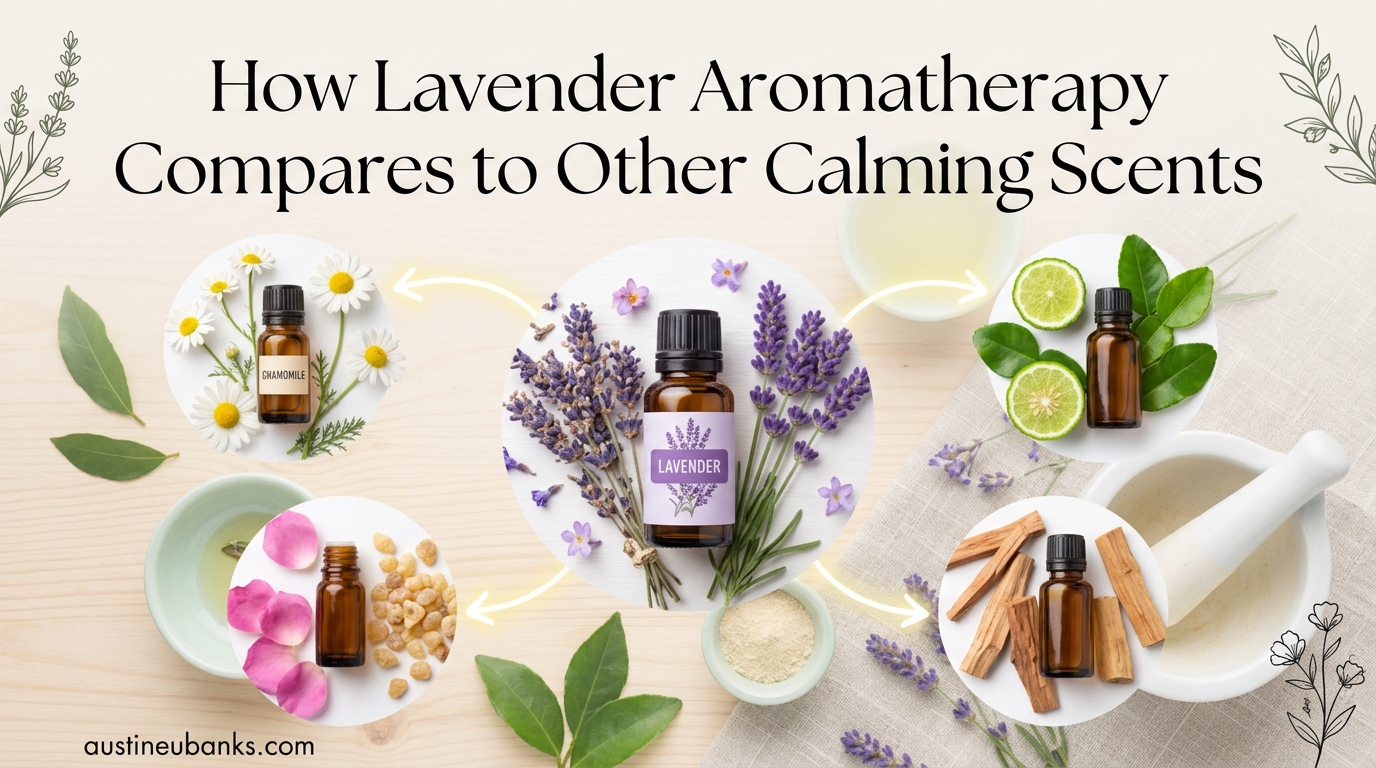
Walk into any wellness store, spa, or candle shop, and one scent dominates the shelves: lavender. It is the unofficial mascot of relaxation, the go-to recommendation for sleepless nights and frazzled nerves. But if you have ever wondered whether lavender is genuinely the best option or just the most popular one, you are asking the right question.
Our team spent weeks digging through clinical studies, forum discussions, and aromatherapy practitioner insights to understand how lavender aromatherapy compares to other calming scents. What we found surprised us. Lavender is powerful, yes, but it is not always the right choice for every person or every situation.
Some scents work faster for acute anxiety. Others are gentler for daytime use without making you drowsy. A few carry unique benefits that lavender simply cannot match, from hormonal balance to mood elevation. If you have been relying on lavender alone and feel like it has stopped working, you are not imagining things. Aromatherapy enthusiasts on Reddit frequently report building a tolerance to lavender after months of daily use.
In this guide, we break down six calming scents side by side. You will learn what makes each one work, what the science actually says, and how to choose the right scent for your specific needs. Whether you are dealing with chronic anxiety, occasional sleeplessness, or just want a calmer home environment, this comparison will help you make an informed decision.
Table of Contents
Why Your Choice of Calming Scent Matters
Scent is the only sense with a direct line to your brain’s emotional processing center. When you inhale a fragrance, odor molecules travel through your olfactory nerve straight to the amygdala and hippocampus, the regions that handle emotion and memory. This is why a single whiff of something can instantly transport you to a specific moment or shift your entire mood.
Not all calming scents affect the brain the same way. Lavender lowers heart rate and promotes drowsiness, which is ideal at bedtime but counterproductive during a work meeting. Bergamot, by contrast, calms the nervous system while keeping you alert. Choosing the wrong scent for your situation can leave you either too stimulated to sleep or too groggy to function.
Personal biology also plays a major role. Research shows that genetics influence how individuals perceive and respond to different fragrances. Some people find lavender deeply soothing, while others describe it as “soapy” or even slightly irritating. One Reddit user in the r/essentialoils community put it bluntly: lavender works wonders for their partner but does nothing for them personally.
This is why understanding the full landscape of calming scents matters. When you know what each option does and why, you can match the right scent to the right moment. You can also rotate between scents to prevent tolerance buildup, a strategy experienced aromatherapy users swear by.
How Lavender Aromatherapy Compares to Other Calming Scents
Before diving into individual scents, it helps to understand what makes lavender the benchmark that all other calming scents are measured against. Lavender earned its reputation for good reason, and understanding its strengths and limitations is key to appreciating what each alternative brings to the table.
What Makes Lavender the Gold Standard for Aromatherapy
Lavender earned its reputation for good reason. No other calming scent has been studied as extensively in clinical trials, and the evidence base is genuinely impressive. Multiple randomized controlled trials and meta-analyses have confirmed that lavender essential oil reduces anxiety, improves sleep quality, and even lowers heart rate and cortisol levels.
The secret lies in two active compounds: linalool and linalyl acetate. Linalool is a terpene alcohol that modulates glutamate receptors in the brain. Glutamate is your brain’s primary excitatory neurotransmitter, and by dampening its activity, linalool produces a measurable calming effect. Linalyl acetate works alongside it by interacting with the brain’s cAMP pathway, which influences relaxation at a cellular level.
A pharmaceutical-grade lavender oil preparation called Silexan has been studied head-to-head against benzodiazepines like lorazepam in clinical trials. In some studies, Silexan performed just as well at reducing symptoms of generalized anxiety disorder, without the sedation, dependency, or withdrawal risks associated with prescription anti-anxiety medications. This is remarkable for a naturally derived substance.
Lavender aromatherapy specifically, meaning inhalation rather than oral supplementation, has been shown to produce effects within minutes. One study found that participants who inhaled lavender oil for just 15 minutes showed significant reductions in anxiety scores compared to a control group. The effects extend to physical markers too: blood pressure drops, heart rate slows, and brain wave patterns shift toward the relaxed alpha state associated with meditation.
For sleep specifically, lavender increases the percentage of slow-wave sleep, the deepest and most restorative phase of your sleep cycle. This is not just subjective comfort. EEG measurements have confirmed that lavender changes the actual architecture of your sleep in ways that promote better recovery.
But lavender is not perfect, and understanding its limitations helps you appreciate why alternatives exist. First, the calming effect can tip into drowsiness, making it poorly suited for daytime stress management. Second, some people develop olfactory fatigue after months of daily use, meaning the scent stops registering as strongly and the relaxing effect diminishes. Third, lavender oil has been identified as a potential endocrine disruptor, particularly with prolonged topical use in children and young adolescents, an issue forum users frequently raise.
Chamomile: The Gentle, Versatile Alternative
If lavender is the heavyweight champion of calming scents, chamomile is its gentler, more patient cousin. Chamomile has been used for relaxation since ancient Egypt, and modern research confirms it deserves a place alongside lavender in any serious aromatherapy toolkit.
Chamomile’s primary active compound is apigenin, a flavonoid that binds to benzodiazepine receptors in the brain. This is the same receptor system targeted by anti-anxiety medications like Valium and Xanax. The difference is that apigenin produces a much milder effect, promoting calm without sedation or cognitive impairment. For daytime anxiety management, this gentler mechanism is actually an advantage.
Two main types of chamomile are used in aromatherapy: German chamomile (Matricaria recutita) and Roman chamomile (Chamaemelum nobile). German chamomile contains higher levels of chamazulene, a compound with anti-inflammatory properties that gives the oil its deep blue color. Roman chamomile has a lighter, sweeter scent that many people find more pleasant for daily use.
Chamomile also contains bisabolol, a terpene with antispasmodic and anti-inflammatory properties. This makes chamomile particularly effective for stress-related digestive issues, where lavender offers less benefit. If your anxiety tends to manifest as stomach discomfort, bloating, or irritable bowel symptoms, chamomile may serve you better than lavender.
For the vagus nerve specifically, which controls your parasympathetic nervous system and rest-and-digest response, chamomile is one of the most recommended scents in aromatherapy circles. Inhaling chamomile oil stimulates vagal tone, helping shift your body from a stressed fight-or-flight state into a calm, restorative mode.
The main drawback of chamomile is that its effects build more slowly than lavender’s. Where lavender can produce noticeable relaxation within minutes, chamomile often requires consistent use over days or weeks to reach its full potential. Chamomile is the tortoise to lavender’s hare in this analogy: slower to act, but steady and reliable for long-term anxiety management.
Bergamot: The Uplifting Calming Scent
Bergamot is the wild card in the calming scents lineup. Unlike lavender and chamomile, which primarily sedate, bergamot does something unique: it calms and uplifts simultaneously. This dual action makes it the single best calming scent for daytime use when you need to reduce anxiety without losing focus or energy.
Bergamot is a citrus fruit, specifically the peel of the Citrus bergamia tree, and its essential oil carries the bright, fresh character you would expect from a citrus scent. But unlike lemon or sweet orange, which are primarily energizing, bergamot contains compounds that actively reduce cortisol levels while boosting mood. It is like getting the relaxation benefit of lavender without the drowsiness.
Clinical research on bergamot is growing rapidly. A 2015 study published in the journal Phytotherapy Research found that inhaling bergamot essential oil for just 15 minutes significantly reduced salivary cortisol levels and improved negative mood profiles in a controlled trial. Participants reported feeling calmer without feeling tired, a combination that is rare among calming scents.
For workplace stress, bergamot is our top recommendation. Reddit users in aromatherapy communities frequently describe it as the oil that gets them through high-pressure workdays. One user described bergamot as “liquid confidence,” noting that it takes the edge off anxiety during meetings without making them sluggish.
One important safety note: bergamot contains bergapten, a compound that causes photosensitivity. If you apply bergamot oil topically, avoid sun exposure on the treated area for at least 12 hours. For inhalation and diffuser use, this is not a concern, but it is worth knowing if you ever switch to topical application. Look for bergapten-free (FCF) bergamot oil if you plan to use it on your skin.
Ylang-Ylang: The Exotic Stress-Reducer
Ylang-ylang is one of the most potent calming scents available, and also one of the most polarizing. Distilled from the flowers of the Cananga odorata tree, ylang-ylang produces a heavy, sweet, intensely floral fragrance that some people adore and others find overwhelming.
The strength of ylang-ylang is precisely what makes it effective. Its active compounds, including linalool, geranyl acetate, and beta-caryophyllene, work together to produce a powerful sedative effect on the nervous system. Research has shown that ylang-ylang essential oil can significantly reduce blood pressure and heart rate while increasing feelings of calm and wellbeing.
Where ylang-ylang truly stands out is in hormonal balance. Traditional medicine systems in Southeast Asia have long used ylang-ylang to support mood during hormonal fluctuations. Forum discussions frequently mention ylang-ylang as helpful for stress related to menstrual cycles and menopause, an angle that almost no top-ranking content currently covers. While clinical evidence is still emerging, the anecdotal reports are consistent enough to warrant attention.
Because ylang-ylang is so strong, it requires careful dilution. A single drop in a diffuser is often enough for a small room. Blending it with a lighter oil like bergamot or sweet orange creates a balanced aroma that is less likely to overwhelm. Many users describe pure ylang-ylang as too heavy on its own but exceptional when properly blended.
Certain people should avoid ylang-ylang or use it with caution. Its strong scent can trigger headaches in scent-sensitive individuals. Some users report that ylang-ylang causes vivid dreams or disrupted sleep when used at high concentrations before bed. If you have sensitive skin, ylang-ylang can also cause contact dermatitis, so always dilute heavily for any topical use.
Vanilla and Jasmine: Sweet Options for Gentle Calming
Vanilla and jasmine represent the softer side of calming aromatherapy. Neither produces the dramatic physiological effects of lavender or ylang-ylang, but both offer something those stronger scents cannot: a comfort factor that works on a deeply emotional level.
Vanilla is one of the most universally loved scents on the planet, and research backs up its calming properties. Studies have shown that vanilla fragrance can reduce stress-related behaviors and even decrease startle reflexes, suggesting a genuine dampening effect on the nervous system’s stress response. The mechanism is not as well understood as lavender’s, but vanilla appears to work through the brain’s reward and comfort pathways rather than through direct nervous system sedation.
For people who find lavender too medicinal or herbal, vanilla offers a warmer, sweeter alternative. It is particularly effective for children and for creating a cozy home environment. Many parents report that a vanilla diffuser blend helps wind down hyperactive children in the evening without the potential endocrine concerns associated with lavender oil.
Jasmine occupies a middle ground between vanilla’s comfort and lavender’s sedative power. Distilled from jasmine flowers, this oil carries a rich, sweet floral scent that has been shown in studies to improve mood and reduce anxiety. One notable study found that jasmine tea aroma improved participants’ mood and reduced heart rate within minutes of exposure.
Jasmine is also unique among calming scents for its potential aphrodisiac properties, which it shares with ylang-ylang. In traditional medicine across the Middle East and South Asia, jasmine has been used for centuries to promote emotional openness and reduce stress-related tension. For evening relaxation that does not immediately put you to sleep, jasmine is an excellent middle-ground option.
Frankincense: The Ancient Grounding Scent
Frankincense has been treasured for over 5,000 years, and its calming properties are not a modern wellness trend. This resin, harvested from Boswellia trees, was used in ancient Egyptian, Greek, and Roman religious ceremonies specifically for its ability to slow and deepen breathing, inducing a meditative state.
Modern aromatherapy practitioners value frankincense for its grounding effect. Where lavender relaxes the body and bergamot lifts the mood, frankincense creates a sense of mental stillness and presence. It is the scent most commonly recommended for meditation, yoga, and mindfulness practices because it helps quiet racing thoughts without altering alertness.
The primary active compounds in frankincense are incensole acetate and various triterpenes. Research has shown that incensole acetate activates TRPV3 receptors in the brain, which are involved in emotional regulation and stress response. Animal studies suggest this compound produces measurable anxiolytic effects, though human clinical trials remain limited.
Frankincense also offers respiratory benefits that other calming scents lack. Its anti-inflammatory properties can soothe irritated airways, making it a good choice for people whose stress manifests as shallow or constricted breathing. Many practitioners recommend frankincense for evening wind-down routines, as it pairs beautifully with both lavender and bergamot.
The main limitation of frankincense is its earthy, resinous scent profile, which some people find too heavy or reminiscent of incense. It is less universally appealing than vanilla or bergamot, so it may not be the best choice if you live with others who are sensitive to strong aromas. Quality also varies dramatically, with many cheaper products containing synthetic fragrance oils rather than genuine frankincense resin extract.
Side-by-Side Comparison: How Lavender Compares to Other Calming Scents
To make this comparison practical, we organized the key differences across the six scents we covered. Here is how lavender aromatherapy compares to other calming scents across the criteria that matter most:
Best for sleep: Lavender. Its ability to increase slow-wave sleep is unmatched by other scents. Chamomile is a close second for those who find lavender too strong.
Best for daytime anxiety: Bergamot. Its unique calming-without-drowsiness profile makes it the clear winner for workplace stress, social anxiety, and any situation where you need to stay functional.
Best for quick relief: Lavender. Inhalation produces measurable effects within 5 to 15 minutes, faster than any other calming scent in this comparison.
Best for long-term anxiety management: Chamomile. Its gentle, cumulative effect makes it ideal for sustained use without tolerance buildup or drowsiness.
Best for hormonal balance: Ylang-ylang. While clinical research is still emerging, traditional use and community reports consistently point to ylang-ylang for mood support during hormonal shifts.
Best for meditation and grounding: Frankincense. Its ability to deepen breathing and quiet mental chatter is why it has been used in spiritual practices across cultures for millennia.
Best for sensitive individuals and children: Vanilla. Its mild, universally pleasant aroma and low risk of adverse reactions make it the safest starting point.
Best scent profile for blending: Bergamot pairs well with almost everything. Lavender and chamomile form a classic duo. Frankincense grounds lighter florals like jasmine and ylang-ylang.
Strongest clinical evidence: Lavender leads decisively, with multiple meta-analyses and head-to-head trials against pharmaceuticals. Chamomile ranks second, followed by bergamot.
Safety considerations: All six scents are generally safe for inhalation use. Lavender requires caution with prolonged topical use in children. Bergamot causes photosensitivity on skin. Ylang-ylang can trigger headaches in sensitive individuals. Always dilute essential oils properly and consult a healthcare provider if you are pregnant, nursing, or taking medications.
How to Choose the Right Scent for Your Situation
Knowing the properties of each scent is only half the equation. The other half is matching the right scent to your specific situation. Here is a practical decision framework based on common scenarios.
If you cannot fall asleep: Lavender is your first choice. Add 3 to 4 drops to a diffuser 30 minutes before bed, or use a lavender pillow spray. If lavender feels too predictable or has stopped working for you, chamomile essential oil is an excellent substitute that works through a different receptor pathway.
If you feel anxious during the workday: Bergamot is the clear answer. Its calming-without-sedating profile makes it perfect for office environments. Keep a personal inhaler or use a desktop diffuser. Avoid lavender, which may make you drowsy during important tasks.
If you are dealing with acute stress or panic: Lavender produces the fastest measurable calming effect. For panic attacks specifically, some practitioners recommend applying a diluted drop to your wrists and inhaling deeply. Frankincense can help if the panic involves racing thoughts, as its grounding quality helps recenter your focus.
If you want to create a calming home environment: Vanilla and jasmine are ideal for shared spaces because their scents are universally pleasant and unlikely to bother family members. Diffuse vanilla in the living room during evening hours for a cozy, comforting atmosphere.
If you are preparing for meditation or yoga: Frankincense is the traditional choice for good reason. Its ability to deepen breathing and quiet the mind enhances meditative states. Pair it with a small amount of lavender for a blend that relaxes both body and mind.
If you experience stress-related digestive discomfort: Chamomile targets this better than any other scent on this list. Its antispasmodic compounds help relax the smooth muscles of the digestive tract. Peppermint is also worth considering as an add-on, though we did not cover it in depth here.
If you are sensitive to strong scents: Start with vanilla or a very dilute chamomile. Avoid ylang-ylang and frankincense, which carry the heaviest aroma profiles. Bergamot sits in the middle and is usually well-tolerated.
If you want to rotate scents to prevent tolerance: Alternate between lavender (bedtime), bergamot (daytime), and chamomile (weekends or lighter days). This rotation keeps your olfactory receptors responsive and prevents the burnout that long-term single-scent users frequently report.
Scent Blending: Combining Calming Aromas for Better Results
One of the most effective ways to use calming scents is to blend them. Blending allows you to combine the strengths of different oils while muting their individual weaknesses. Experienced aromatherapy users rarely rely on a single oil, and the forum data we reviewed confirms this: the most satisfied users blend regularly.
Bedtime sleep blend: Combine 3 drops lavender, 2 drops chamomile, and 1 drop frankincense. This trio covers all bases: lavender for sedation, chamomile for gentle relaxation, and frankincense for grounding. Diffuse 30 minutes before sleep.
Daytime focus blend: Combine 3 drops bergamot, 2 drops lavender, and 1 drop frankincense. The bergamot keeps you alert while the lavender takes the edge off anxiety. This is one of the most popular blends in aromatherapy forums for workplace use.
Mood-lifting blend: Combine 2 drops bergamot, 2 drops ylang-ylang, and 2 drops sweet orange. This blend targets low mood and stress simultaneously. The sweet orange lightens the heavy ylang-ylang, while bergamot provides the calming base.
Meditation blend: Combine 3 drops frankincense, 2 drops lavender, and 1 drop cedarwood. This woody, grounding blend is perfect for yoga, meditation, or any mindfulness practice. It quiets the mind without making you sleepy.
When blending, a good rule of thumb is to use a ratio of roughly 60 percent base oil (your primary calming scent), 30 percent supporting oil, and 10 percent accent oil. Start with small amounts and adjust based on how each blend smells and feels to you. Scent perception is highly personal, so what works beautifully for someone else may not work for you.
Practical Tips for Using Calming Scents Safely
Essential oils are powerful concentrated plant extracts, and using them safely requires some basic knowledge. The forum discussions we reviewed revealed that many users are confused about proper dilution, quality identification, and safety for vulnerable populations.
For diffuser use: Use 3 to 6 drops of essential oil in a standard diffuser filled with water. Run for 30 to 60 minutes at a time rather than continuously. Prolonged diffusion can cause headaches and olfactory fatigue, which actually reduces the calming benefit over time.
For topical application: Always dilute essential oils in a carrier oil like coconut, jojoba, or sweet almond oil. A safe dilution for adults is 2 to 3 percent, which means roughly 10 to 15 drops of essential oil per ounce of carrier oil. For children, reduce to 1 percent or less.
Quality matters enormously. The essential oil market is flooded with synthetic and diluted products. Look for oils that have been GC/MS tested (gas chromatography and mass spectrometry), which verifies purity and chemical composition. Reputable suppliers will provide these test results. If a bottle of essential oil is suspiciously cheap, it probably contains synthetic fragrance oil rather than genuine plant extract.
Pet safety is critical. Many essential oils are toxic to cats and dogs. Tea tree, eucalyptus, and citrus oils are particularly dangerous. Never apply essential oils directly to pets, and be cautious with diffusers in homes with animals. If you have pets, research each oil before using it, and provide an escape route so your pet can leave the room if the scent bothers them.
For pregnant and nursing women: Consult a healthcare provider before using any essential oils. Some oils, including clary sage and rosemary, can stimulate uterine contractions. Lavender and chamomile are generally considered safe in moderation, but professional guidance is always best during pregnancy.
Storage: Keep essential oils in dark glass bottles away from heat and sunlight. Properly stored oils can last 2 to 3 years, though citrus oils like bergamot degrade faster and should be used within 12 to 18 months.
FAQs
Does the smell of lavender help you calm down?
Yes. Clinical studies consistently show that inhaling lavender essential oil reduces anxiety, lowers heart rate, and decreases cortisol levels. The active compounds linalool and linalyl acetate interact with your nervous system to produce measurable calming effects within 5 to 15 minutes of inhalation. Most people experience noticeable relaxation, though individual responses vary based on genetics and scent perception.
What scents are similar to lavender?
Chamomile is the closest calming alternative to lavender, working through similar relaxing pathways but with a gentler effect. Other similar calming scents include bergamot (which calms without drowsiness), clary sage, and roman chamomile. For sleep-specific benefits similar to lavender, try vetiver or cedarwood. For daytime anxiety relief, bergamot is the best lavender alternative because it relaxes without causing drowsiness.
What scent is most calming?
Lavender is widely considered the most calming scent based on the strength of its clinical evidence, with multiple meta-analyses confirming its anxiety-reducing and sleep-improving effects. However, the most calming scent for you personally depends on your situation: lavender is best for sleep, bergamot for daytime anxiety, chamomile for long-term anxiety management, and frankincense for meditation and grounding.
Does lavender oil help neuropathy?
Some studies suggest lavender oil may provide mild relief from neuropathic pain when applied topically, likely due to its anti-inflammatory and analgesic properties. However, evidence is limited compared to its well-documented anxiety and sleep benefits. If you are dealing with neuropathy, consult a healthcare provider for a comprehensive treatment plan rather than relying on lavender oil alone.
What does lavender scent do to the brain?
Lavender scent affects the brain through its active compounds linalool and linalyl acetate. Linalool modulates glutamate receptors, dampening the brain’s excitatory signals. Linalyl acetate influences the cAMP pathway to promote cellular relaxation. Together, these compounds reduce activity in the amygdala (fear center), lower cortisol production, slow heart rate, and shift brain waves toward the relaxed alpha state associated with meditation.
Which is better for anxiety, chamomile or lavender?
Lavender is better for acute, fast-acting anxiety relief because its effects kick in within minutes of inhalation. Chamomile is better for long-term, sustained anxiety management because its gentler effect builds over time without causing drowsiness or tolerance. For generalized daytime anxiety, chamomile is often preferable. For panic attacks or acute stress episodes, lavender works faster. Many people benefit from using both in rotation.
What is the best essential oil for extreme anxiety?
For extreme or acute anxiety, lavender has the strongest clinical evidence and fastest onset of action. Bergamot is a strong second choice for daytime episodes where you cannot afford drowsiness. For severe chronic anxiety, consider consulting a healthcare provider, as essential oils work best as a complementary approach rather than a standalone treatment for severe anxiety disorders.
Can I use chamomile and lavender together?
Yes, absolutely. Chamomile and lavender complement each other beautifully and are one of the most popular aromatherapy blends. Lavender provides fast-acting relaxation while chamomile adds a gentler, sustained calming effect. Try a diffuser blend of 3 drops lavender and 2 drops chamomile for sleep, or combine them in a massage oil at 2 percent dilution for full-body relaxation. Using them together does not reduce the effectiveness of either oil.
Conclusion
Understanding how lavender aromatherapy compares to other calming scents gives you options that lavender alone never could. Lavender remains the most researched and reliable calming scent, particularly for sleep and acute anxiety relief. But chamomile offers gentler, longer-lasting support. Bergamot calms without drowsiness for daytime use. Ylang-ylang targets hormonal balance. Frankincense grounds the mind for meditation. And vanilla provides comfort without intensity.
The best approach is not to pick one scent and stick with it forever. Rotate between scents based on your situation, blend them strategically, and pay attention to how your body responds. Aromatherapy is a personal practice, and the most effective routine is the one that works for your unique biology and lifestyle.
Start with lavender if you are new to calming scents, but do not stop there. Experiment with bergamot for your next stressful workday, try chamomile for sustained anxiety management, or explore frankincense for your meditation practice. The world of calming aromatherapy extends far beyond lavender, and the right combination for you is waiting to be discovered.