
You wake up tired even after eight hours of sleep. Your jaw aches from clenching all night. Your stomach is in knots before you even check your phone. You tell yourself it is just a busy season, but the season has lasted two years.
If that sounds familiar, you are not imagining things. What you are experiencing is likely chronic stress, and it is doing far more to your body than making you feel frazzled. Understanding how chronic stress affects the body over time is one of the most important health topics you can learn about, because the damage builds silently for months or even years before it becomes obvious.
In this guide, our team breaks down exactly what happens to your body when stress never lets up. We cover the science of the stress response, every major body system affected, the timeline of how damage progresses, and most importantly, what you can do to reverse it. We also address the weird, lesser-known symptoms that many people experience but rarely see discussed in typical health articles.
Table of Contents
Quick Summary: What Chronic Stress Does to Your Body
Chronic stress keeps your body locked in a constant fight-or-flight state, flooding your system with cortisol and adrenaline long after any real threat has passed. Over weeks, months, and years, this constant hormonal bombardment damages nearly every organ system in your body.
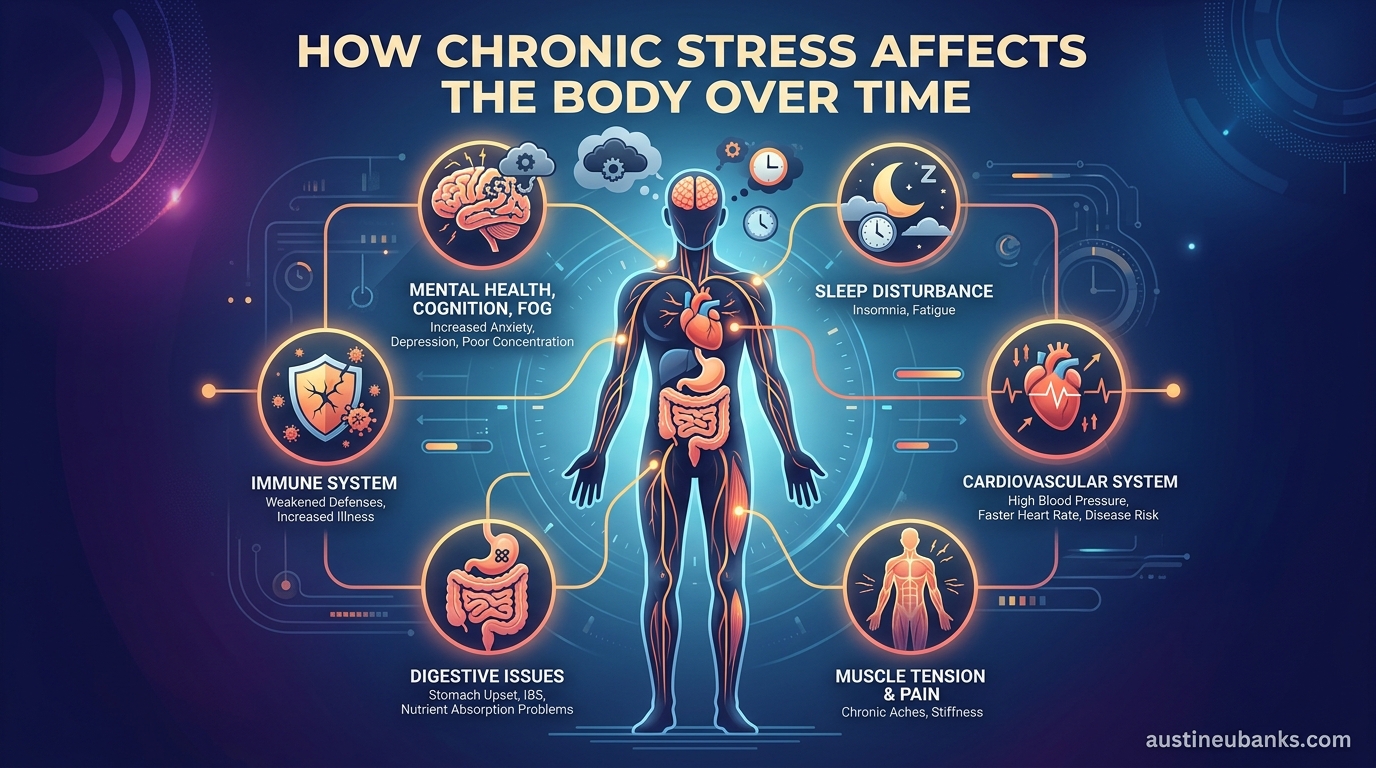
Here are the most common ways chronic stress affects the body over time:
- Cardiovascular damage: Persistent high blood pressure, inflamed arteries, and increased risk of heart attack and stroke
- Immune suppression: Reduced ability to fight infections and increased systemic inflammation that can trigger autoimmune responses
- Digestive disruption: Acid reflux, irritable bowel symptoms, gut microbiome changes, and unexplained weight fluctuations
- Brain changes: Shrinkage in memory and decision-making regions, brain fog, anxiety, and depression
- Sleep destruction: Insomnia, middle-of-the-night waking, and poor sleep quality that prevents physical recovery
- Muscle and pain issues: Chronic tension, jaw pain, tension headaches, and widespread body aches
- Accelerated aging: Shortened telomeres, skin changes, hair loss, and cellular aging that can shorten lifespan
The critical difference between acute stress and chronic stress comes down to duration and recovery. Acute stress is a short burst that your body handles and then returns to baseline. Chronic stress is a relentless, low-grade activation that never gives your body the chance to reset.
Acute stress lasts minutes to hours. Your heart races, you sweat, and then the threat passes. Your parasympathetic nervous system kicks in and calms everything down. This type of stress can actually be beneficial, sharpening focus and boosting performance.
Chronic stress lasts weeks to years. Your stress hormones never fully recede. Your body adapts to a new, unhealthy baseline where inflammation is elevated, sleep is disrupted, and repair mechanisms are suppressed. This is the type of stress that causes disease.
How the Stress Response Works: Fight-or-Flight Explained
To understand how chronic stress affects the body over time, you first need to understand the biological machinery behind the stress response. The system is called the HPA axis, which stands for hypothalamic-pituitary-adrenal axis, and it is your body’s central stress command center.
Here is how it works in a healthy scenario. When your brain perceives a threat, a small almond-shaped structure called the amygdala sends a distress signal to the hypothalamus. The hypothalamus then activates the sympathetic nervous system, which triggers your adrenal glands to release a surge of adrenaline and noradrenaline.
Within seconds, your body transforms. Your heart rate jumps. Your airways widen. Your blood vessels constrict to push blood to your muscles. Your liver dumps glucose into your bloodstream for instant energy. Your pupils dilate. You are now physically prepared to fight or flee.
Minutes later, the HPA axis triggers a second wave through a different pathway. The hypothalamus releases CRH (corticotropin-releasing hormone), which signals the pituitary gland to release ACTH (adrenocorticotropic hormone), which tells the adrenal glands to produce cortisol. Cortisol keeps your body on high alert and helps maintain that energy surge.
In an acute stress scenario, this entire system fires, resolves the situation, and then shuts down. Cortisol levels drop, the parasympathetic nervous system takes over, and your body returns to a resting state. Digestion resumes, heart rate slows, and repair processes restart.
The problem arises when the perceived threat never goes away. Work deadlines, financial pressure, relationship conflicts, caregiving demands, or unresolved trauma keep the amygdala firing distress signals day after day. The HPA axis never gets the all-clear message. Cortisol stays elevated, adrenaline keeps surging, and your body remains stuck in survival mode indefinitely.
Over time, this constant activation becomes toxic. The very hormones designed to save your life in an emergency begin destroying it when they never stop circulating. This is the core mechanism behind every effect we will discuss in the rest of this article.
How Chronic Stress Affects the Body Over Time: System by System
Now let us walk through exactly how chronic stress affects the body over time, breaking it down by each major system. The effects are cumulative, meaning they compound the longer stress remains untreated.
Cardiovascular System: Your Heart and Blood Vessels
Your cardiovascular system takes some of the heaviest hits from chronic stress. When cortisol and adrenaline remain elevated, your blood vessels stay constricted, forcing your heart to pump harder against higher resistance. Over time, this constant pressure damages the inner lining of your arteries.
That arterial damage triggers your immune system to send cholesterol to patch the injured areas, which can accelerate plaque buildup. The American Heart Association has linked chronic stress directly to hypertension, atherosclerosis, heart attack, and stroke. People in chronically stressful jobs have been shown to have significantly higher rates of cardiovascular events.
Chronic stress also promotes inflammation throughout the circulatory system. This systemic inflammation makes blood more likely to clot, increasing the risk of dangerous blockages. Even your heart rhythm can be affected, with many people reporting palpitations or irregular heartbeats during prolonged stress periods.
Digestive System: Your Gut and Metabolism
When your body is in fight-or-flight mode, digestion gets deprioritized. Blood flow is redirected away from your digestive tract toward your muscles and brain. Over time, this chronic reduction in digestive function leads to a cascade of problems.
Many people with chronic stress develop acid reflux, bloating, cramping, and irregular bowel habits. The gut-brain axis, which is the bidirectional communication network between your digestive system and your brain, means that stress directly alters your gut microbiome. Stress can reduce beneficial bacteria populations and allow harmful bacteria to flourish.
This gut disruption goes beyond discomfort. Your microbiome produces about 90 percent of your body’s serotonin, the neurotransmitter associated with mood regulation. When stress damages your gut bacteria, it can worsen anxiety and depression, creating a vicious cycle.
Weight changes are also extremely common. Some people lose their appetite entirely under stress, while others experience increased cravings for high-fat, high-sugar foods due to elevated cortisol. Stress-induced weight gain tends to accumulate around the abdomen, which is the most dangerous type of fat for cardiovascular health.
Immune System: Inflammation and Autoimmune Risk
Chronic stress profoundly disrupts immune function in ways that seem contradictory at first. In the short term, cortisol actually suppresses inflammation, which is why steroid medications work for acute conditions. But when cortisol stays elevated for months or years, your immune system becomes dysregulated.
The result is a paradox where your body becomes both more susceptible to infections and more prone to inappropriate inflammation. You might catch every cold that goes around your office while simultaneously developing chronic inflammatory conditions. Research published in the National Institutes of Health has linked chronic stress to the development of autoimmune syndromes, where the immune system begins attacking healthy tissue.
Chronic stress has been specifically associated with increased risk for rheumatoid arthritis, lupus, inflammatory bowel disease, and psoriasis. The inflammatory cascade triggered by long-term stress also plays a role in cancer development, as chronic inflammation creates an environment where cellular damage accumulates unchecked.
Muscular System: Tension and Chronic Pain
When stress hormones keep your body on high alert, your muscles remain in a state of constant guardedness. The American Psychological Association notes that chronic stress causes muscles to stay more or less perpetually tense, which leads to a range of physical problems.
The most common complaint is tension in the neck, shoulders, and upper back. Many people also develop jaw clenching or teeth grinding, known as bruxism, which causes temporomandibular joint (TMJ) pain, cracked teeth, and persistent headaches. Tension headaches are one of the most frequently reported physical symptoms of chronic stress.
Over time, this constant muscle tension can evolve into chronic pain conditions. When muscles are never allowed to fully relax, they develop trigger points, reduced blood flow, and fiber adhesions. Many people with chronic stress end up in physical therapy or pain management without realizing that stress is the root cause.
Nervous System: Sleep, Fatigue, and the Weird Symptoms
Your nervous system bears the brunt of chronic stress, and the symptoms can be some of the most alarming and confusing. Sleep disruption is nearly universal among people with chronic stress. The most common pattern is falling asleep exhausted but waking between 2 and 4 AM with a racing mind, unable to fall back asleep.
This happens because elevated cortisol disrupts your natural circadian rhythm. Normally, cortisol peaks in the morning to help you wake and drops at night to allow sleep. Chronic stress can flatten or invert this curve, leaving you exhausted in the morning and wired at night.
Beyond sleep, chronic stress can produce a range of symptoms that many people never connect to stress. In online support communities, people frequently report dizziness, vertigo, tingling or numbness in hands and feet, heart palpitations even at rest, a metallic taste in the mouth, and blurry vision. These symptoms are real and stem from an overstimulated nervous system that has become hypersensitive.
Chronic fatigue is another hallmark complaint. Unlike normal tiredness, stress fatigue does not improve with rest. People describe feeling like they are running on empty no matter how much they sleep. This happens because your mitochondria, the energy-producing structures in your cells, become impaired under chronic cortisol exposure.
Skin and Appearance: The Visible Signs of Stress
One of the most under-discussed effects of chronic stress is its impact on skin and physical appearance. No major health authority covers this topic, yet it is a significant concern for many people experiencing chronic stress.
Chronic stress accelerates skin aging through several mechanisms. Elevated cortisol breaks down collagen and elastin, the proteins that keep skin firm and youthful. This leads to premature wrinkling, sagging, and a dull complexion. Stress also increases oil production, which can trigger acne breakouts even in adults who never had skin issues before.
Hair loss is another visible effect of chronic stress. The condition, called telogen effluvium, occurs when stress pushes large numbers of hair follicles into the resting phase simultaneously. Two to three months after a period of severe stress, you may notice significant hair shedding. For many people, this is the symptom that finally prompts them to seek help.
Nail changes are also common, including brittle nails, ridges, and slowed growth. Your skin, hair, and nails are all non-essential tissues from a survival standpoint, so when your body is under chronic stress, it diverts resources away from them toward more critical functions.
Mental and Cognitive Effects of Chronic Stress
The impact of chronic stress on your brain may be the most concerning effect of all. Research has shown that prolonged exposure to high cortisol levels actually changes the physical structure of your brain over time.
Three brain regions are particularly vulnerable. The amygdala, which processes fear and emotional responses, can become enlarged and hyper-reactive, making you more anxious and reactive. The hippocampus, which is central to memory formation and learning, can shrink, leading to forgetfulness and difficulty absorbing new information. The prefrontal cortex, which governs decision-making, impulse control, and emotional regulation, also shows reduced volume in people with chronic stress.
These structural changes translate into real-world cognitive problems. Brain fog is one of the most frequently reported symptoms, and it goes beyond occasional forgetfulness. People describe difficulty concentrating, losing train of thought mid-sentence, struggling to make simple decisions, and feeling mentally sluggish all day.
Memory impairment is also common. You might walk into a room and forget why, miss appointments, lose track of conversations, or struggle to recall names and words. While these symptoms can mimic early dementia, they are often reversible once stress is addressed.
Emotionally, chronic stress dramatically increases your risk for anxiety disorders and depression. This is not simply a matter of feeling down. The neurochemical changes caused by chronic cortisol exposure alter how your brain produces and processes serotonin, dopamine, and other mood-regulating neurotransmitters. Many people first realize they have chronic stress only after being diagnosed with anxiety or depression.
Emotional dysregulation is another common effect. You may find yourself snapping at loved ones over minor issues, crying unexpectedly, or feeling emotionally numb. Your ability to manage frustration, tolerate discomfort, and respond thoughtfully rather than reactively becomes compromised when your brain has been bathed in stress hormones for months.
Long-Term Health Risks of Untreated Chronic Stress
When chronic stress goes unaddressed for years, the cumulative damage increases your risk for serious, life-altering diseases. The connections between chronic stress and major health conditions are well-documented in medical research.
Heart disease remains the leading cause of death globally, and chronic stress is a significant contributor. Long-term stress contributes to hypertension, atherosclerosis, arrhythmias, and increased risk of heart attack. Studies have shown that people with chronic work stress have a 50 percent greater risk of developing coronary heart disease.
Type 2 diabetes risk increases with chronic stress because elevated cortisol raises blood sugar levels and promotes insulin resistance. Yes, chronic stress can raise your A1c, which is the blood marker that reflects average blood sugar over three months. Even if you eat well and exercise, chronic stress can keep your blood sugar elevated through its hormonal effects alone.
Autoimmune conditions have been linked to chronic stress in multiple studies. The chronic inflammation and immune dysregulation caused by persistent stress can trigger autoimmune responses in people who are genetically predisposed. Conditions like rheumatoid arthritis, multiple sclerosis, and inflammatory bowel disease have all been associated with prolonged stress exposure.
Cancer risk is an area of ongoing research, but chronic stress has been shown to promote tumor growth through inflammation pathways and immune suppression. While stress alone does not cause cancer, it can create an internal environment that makes cancer progression more likely.
You might wonder whether chronic stress can actually shorten your life expectancy. The answer, based on current research, is yes. Chronic stress accelerates cellular aging by shortening telomeres, which are the protective caps on the ends of your chromosomes. Shortened telomeres are a biological marker of aging and are associated with earlier onset of age-related diseases and reduced lifespan.
Why People Miss the Signs of Chronic Stress
One of the most insidious aspects of chronic stress is how hard it is to recognize in yourself. Based on thousands of posts in online stress and anxiety communities, most people live with chronic stress for months or even years before connecting their symptoms to stress.
This happens for several reasons. First, we normalize stress. In a culture that treats busyness as a badge of honor, feeling stressed all the time seems normal. You tell yourself everyone feels this way, or that you just need to push through.
Second, the symptoms develop gradually. You do not wake up one day with chronic stress. The tension builds slowly, your sleep erodes incrementally, and your energy declines so gradually that you adapt to each new, lower baseline. By the time symptoms become severe enough to notice, the stress has been present for a long time.
Third, many symptoms of chronic stress mimic other conditions. Brain fog could be a vitamin deficiency. Digestive problems could be a food intolerance. Fatigue could be a thyroid issue. People frequently pursue medical workups that come back normal, leaving them feeling dismissed or that something is being missed.
If you have been told your tests are normal but you still feel terrible, chronic stress is worth considering as a root cause. The validation that your symptoms are real and stress-related is one of the most commonly sought-after pieces of information in online support communities. You are not crazy, and you are not imagining your symptoms.
The Timeline of Chronic Stress Damage
Understanding how chronic stress affects the body over time requires understanding the timeline of damage. Stress does not harm you overnight. It follows a predictable progression that accelerates the longer it continues.
Days to weeks: In the earliest stage, you experience acute symptoms that most people dismiss. Sleep quality drops. Muscle tension builds, especially in the jaw and shoulders. Digestion becomes irregular. You feel irritable and on edge. Your energy fluctuates. At this stage, the damage is entirely reversible if stress is removed.
Weeks to months: As stress continues, symptoms intensify and new ones appear. Insomnia becomes chronic. Headaches become more frequent. You start gaining or losing weight. Anxiety and mood swings emerge. Your immune system weakens, and you catch bugs more easily. Cortisol patterns become disrupted. At this stage, most effects are still reversible, but recovery takes active effort.
Months to years: This is where structural changes begin. Brain regions start showing measurable volume changes. Blood vessels sustain ongoing damage. Inflammatory markers remain chronically elevated. Digestive conditions may develop. Mental health conditions like anxiety and depression take hold. Autoimmune responses may activate. At this stage, some effects require sustained lifestyle changes and possibly professional treatment to reverse.
Years to decades: Long-term untreated stress leads to disease development. Heart disease, type 2 diabetes, autoimmune conditions, and cognitive decline become real risks. Telomere shortening accelerates biological aging. At this stage, some damage may be partially irreversible, but significant improvement is still possible with comprehensive stress management.
The recovery timeline: This is the question everyone asks, and it is one no major competitor addresses. Based on clinical evidence and community reports, recovery follows a general pattern. Within the first few weeks of consistent stress reduction, sleep typically improves first. Over the following one to three months, energy levels begin to recover and physical symptoms like headaches and muscle tension start to ease. Cognitive symptoms like brain fog often take three to six months to fully resolve. Structural brain changes can begin reversing within months but may take a year or more for full recovery.
Recovery is not linear. You will have good weeks and bad weeks. But with consistent effort, your body has a remarkable capacity to heal from the effects of chronic stress.
Evidence-Based Strategies to Reverse Stress Damage
The good news about chronic stress is that your body can heal. By activating what Harvard researchers call the relaxation response, you can counteract the effects of chronic stress and give your body the recovery time it desperately needs.
Here are the most effective, evidence-based strategies for reversing the effects of chronic stress on your body:
1. Regular aerobic exercise is one of the most powerful stress-reduction tools available. Even 30 minutes of moderate exercise five days a week can lower cortisol levels, reduce inflammation, improve sleep quality, and boost mood-regulating neurotransmitters. Exercise also stimulates the production of brain-derived neurotrophic factor (BDNF), which helps repair stress-related brain damage.
2. Mindfulness and meditation directly counteract the stress response. Research from Massachusetts General Hospital demonstrated that regular mindfulness practice produces measurable changes in brain structure, including growth in the hippocampus and shrinkage in the amygdala. Even 10 to 15 minutes daily can make a significant difference over time.
3. The 3-3-3 rule for stress is a simple grounding technique that helps interrupt acute stress spirals. When you feel overwhelmed, name three things you can see, three sounds you can hear, and move three parts of your body. This technique forces your brain out of the stress loop and back into the present moment, giving your nervous system a chance to reset.
4. Prioritizing sleep is non-negotiable for stress recovery. Your body does its most important repair work during deep sleep. Aim for seven to nine hours, maintain a consistent sleep schedule, and create a wind-down routine that avoids screens for at least an hour before bed. If middle-of-the-night waking is an issue, addressing cortisol patterns through nutrition and timing of exercise can help.
5. Social connection is one of the most underappreciated stress buffers. Research consistently shows that strong social support reduces the physiological impact of stress. Spending time with trusted friends, family, or support groups literally changes how your body responds to stressors at a hormonal level.
6. Nutrition matters more than most people realize. Chronic stress depletes key nutrients like magnesium, B vitamins, and omega-3 fatty acids. Focus on anti-inflammatory foods, adequate protein, and minimal processed sugar. Limiting caffeine and alcohol can also significantly reduce the physiological stress load on your body.
7. Professional support is sometimes necessary and always valid. If your symptoms are severe, persistent, or interfering with daily life, working with a therapist, counselor, or healthcare provider can provide structured guidance. Cognitive behavioral therapy has strong evidence for stress-related conditions, and in some cases, medication may be appropriate to help regulate your nervous system while you build other coping skills.
8. Breathing exercises are the fastest way to activate your parasympathetic nervous system. Slow, deep breathing at a rate of about five to six breaths per minute has been shown to reduce cortisol, lower heart rate, and improve heart rate variability. Box breathing, 4-7-8 breathing, and coherent breathing are all effective techniques you can use anywhere in under five minutes.
The key to all of these strategies is consistency. No single technique will fix chronic stress overnight. But combining several approaches and practicing them regularly gives your body the sustained support it needs to recover.
FAQs
What does long-term chronic stress do to your body?
Long-term chronic stress damages nearly every body system. It raises blood pressure and increases heart disease risk, disrupts digestion and gut health, weakens immune function, causes chronic muscle tension and pain, impairs memory and cognitive function, disrupts sleep, and accelerates cellular aging. Over years, untreated chronic stress significantly increases the risk of heart disease, type 2 diabetes, autoimmune conditions, anxiety disorders, and depression.
Can chronic stress raise A1c?
Yes, chronic stress can raise your A1c. Elevated cortisol levels cause your liver to release more glucose into the bloodstream while simultaneously reducing insulin sensitivity in your cells. Over months of chronic stress, this dual effect can push blood sugar levels high enough to elevate your A1c, even if your diet and exercise habits have not changed.
What is the 3 3 3 rule for stress?
The 3-3-3 rule for stress is a grounding technique that helps interrupt acute anxiety and stress spirals. When you feel overwhelmed, you identify three things you can see, three sounds you can hear, and three parts of your body you can move. This exercise forces your brain to shift attention away from stress-inducing thoughts and back to the present moment, giving your nervous system a chance to reset.
What are 7 symptoms of long-term stress?
Seven common symptoms of long-term stress include: 1) chronic fatigue that does not improve with rest, 2) persistent muscle tension especially in the jaw, neck, and shoulders, 3) sleep disruption including insomnia or middle-of-the-night waking, 4) digestive problems like bloating, cramping, or irregular bowel habits, 5) brain fog, difficulty concentrating, and memory issues, 6) frequent tension headaches, and 7) mood changes including irritability, anxiety, or feeling emotionally numb.
Can chronic stress cause permanent damage?
Most effects of chronic stress are reversible with consistent stress management, especially when addressed within months to a few years. However, prolonged untreated stress over many years can cause some partially irreversible changes, such as advanced arterial plaque buildup, certain autoimmune conditions, and significant structural brain changes. Even in these cases, comprehensive stress management can halt progression and improve symptoms significantly.
How long does it take to recover from chronic stress?
Recovery from chronic stress varies by individual and depends on how long the stress has lasted. Sleep typically improves within the first few weeks of consistent stress reduction. Physical symptoms like headaches and muscle tension often ease within one to three months. Cognitive symptoms like brain fog can take three to six months to resolve. Structural brain changes may take a year or more for full recovery. Consistency with stress management practices is the most important factor in recovery speed.
Does chronic stress age you faster?
Yes, chronic stress accelerates biological aging. Research shows that prolonged stress shortens telomeres, which are the protective caps on chromosome ends that serve as a biological aging clock. Shortened telomeres are associated with earlier onset of age-related diseases. Chronic stress also breaks down collagen in skin, causes hair loss, and depletes cellular energy production, all of which contribute to visible and invisible signs of premature aging.
Conclusion: Your Body Can Heal from Chronic Stress
Understanding how chronic stress affects the body over time gives you the power to take action before the damage becomes permanent. From cardiovascular disease and immune dysfunction to brain changes and accelerated aging, chronic stress touches nearly every aspect of your physical and mental health. But the most important takeaway is this: your body has an extraordinary capacity to heal when you give it the right conditions.
You do not need to implement every strategy at once. Start with one change, whether that is a daily 10-minute walk, a simple breathing exercise before bed, or reaching out to a friend for support. Small, consistent actions compound into significant recovery over time. If your symptoms are severe or you have been living with chronic stress for years, do not hesitate to seek professional help. Therapy, medical support, and structured stress management programs can accelerate your recovery dramatically.
Your body has been carrying the weight of chronic stress for too long. It is time to start setting it down.