
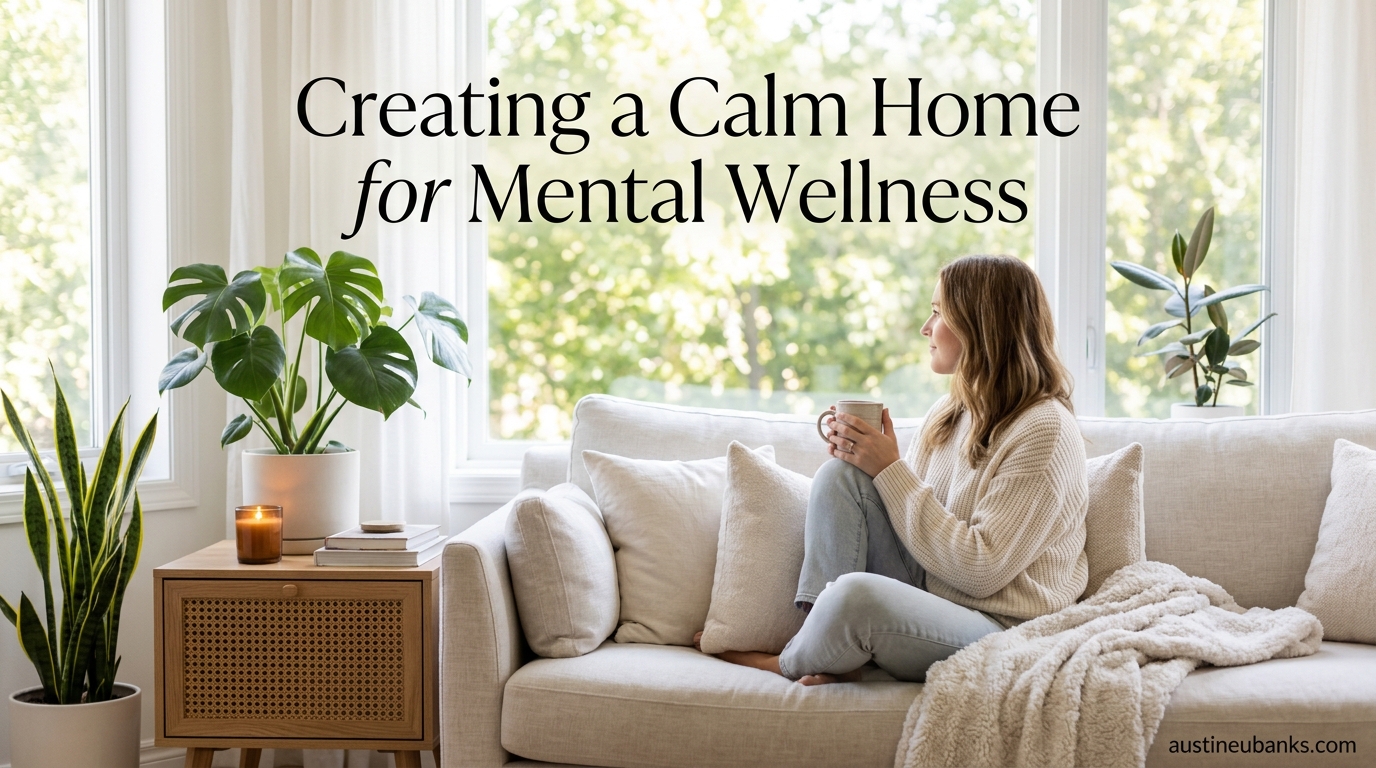
Have you ever walked through your front door and immediately felt your shoulders drop and your breathing slow? Or maybe the opposite happened. You opened the door to piles of laundry, dishes in the sink, and a blaring television, and felt your stress spike before you even set down your keys.
Your home is not just a place to sleep and store your belongings. It is the environment your nervous system lives in for hours every single day. The way your space looks, sounds, smells, and feels directly shapes your mood, your stress levels, and your overall mental wellness.
When we talk about a calm home environment for mental wellness, we are not talking about expensive renovations or magazine-worthy interiors. We are talking about simple, intentional changes that reduce sensory overload and signal to your brain that you are safe. In this guide, we will walk through exactly how creating a calm home environment supports mental wellness, with practical steps you can start today.
Table of Contents
Why Your Home Environment Shapes Your Mental Wellness
Your brain is constantly scanning your surroundings for cues of safety or danger. This process happens below conscious awareness, and it never really stops. When your home is cluttered, loud, or chaotic, your nervous system stays on high alert. Over time, that low-grade stress adds up.
Research from the Princeton University Neuroscience Institute found that physical clutter competes for your attention, drains cognitive resources, and increases stress. A study published in the Journal of Personality and Social Psychology showed that women who described their homes as cluttered had higher levels of cortisol, the stress hormone, throughout the day. They also reported more symptoms of depression and fatigue by evening.
A calm home environment works in the opposite direction. Organized spaces, soft lighting, and natural elements lower cortisol, support emotional regulation, and give your brain permission to rest. When your surroundings feel predictable and soothing, your nervous system can shift out of survival mode and into recovery mode.
This connection matters for everyone, but it is especially important if you deal with anxiety, depression, burnout, or sensory sensitivities. Your home can either work against your mental health or become one of your strongest tools for supporting it.
Decluttering: The First Step to a Calmer Mind
If you do only one thing from this guide, start here. Decluttering has the most immediate and noticeable impact on how your home feels. People on Reddit communities like r/mentalhealth and r/homemaking consistently report that clearing physical clutter provides almost instant mental relief.
One user described decluttering their bathroom shelves and feeling like a fog had lifted. Another said a clean, organized space reduced their mental clutter and improved their ability to focus during the workday. The connection between physical order and mental clarity is real, and you can experience it quickly.
A Simple Room-by-Room Decluttering Plan
You do not need to tackle your entire home in one weekend. That approach usually leads to burnout and frustration. Instead, work through these steps one small area at a time:
Step 1: Pick one surface or one small zone. A kitchen counter, a nightstand, or a single drawer is a perfect starting point. Small wins build momentum.
Step 2: Remove everything from that surface. Sort items into three categories: keep, donate or sell, and throw away. Be honest about what you actually use and what is just taking up space.
Step 3: Put the keepers back in a designated spot. Everything should have a home. If an item does not have a place, it will become clutter again within days.
Step 4: Move to the next zone. Repeat the process. Most people find that after decluttering two or three areas, they develop a rhythm and the process gets easier.
A common question people ask is how clutter affects mental health specifically. The answer comes down to sensory load. Every object in your visual field is a piece of information your brain has to process. When you remove unnecessary items, you free up mental bandwidth for things that actually matter to you.
Bringing Natural Light and Air Indoors
Natural light is one of the most powerful mood regulators available in your home. Exposure to daylight helps regulate your circadian rhythm, the internal clock that controls your sleep-wake cycle. When your circadian rhythm is aligned, you sleep better, wake up more refreshed, and experience more stable moods.
Open your curtains as soon as you wake up. Spend a few minutes near a window during morning hours. If you work from home, position your desk near natural light whenever possible. These small habits help your body produce serotonin during the day and melatonin at night, which is the hormonal balance that supports emotional well-being.
Plants and Natural Elements
Houseplants do more than look nice. A study published in the Journal of Physiological Anthropology found that interacting with indoor plants reduced both physiological and psychological stress. Participants showed lower heart rates and reported feeling more comfortable and soothed after working with plants.
You do not need a jungle. Start with two or three low-maintenance plants like a snake plant, pothos, or peace lily. Place them where you will see them often, like your desk, kitchen, or bedside table.
Natural materials like wood, stone, cotton, and linen also contribute to a calming atmosphere. These textures feel grounded and organic compared to plastics and synthetics. A wooden cutting board, a cotton throw blanket, or a stone vase are inexpensive ways to bring natural texture into your space.
Using Color Psychology to Set the Mood
The colors in your home affect your emotions more than you might realize. Color psychology is the study of how different hues influence mood, behavior, and even physical responses like heart rate.
For a calm home environment, lean toward soft, muted tones. Blues and greens are consistently linked to relaxation and stress reduction. Warm neutrals like beige, taupe, and soft white create a sense of spaciousness and simplicity. Lavender and pale gray can also promote a sense of calm.
Be cautious with high-energy colors in spaces meant for rest. Bright reds, oranges, and neon shades can feel stimulating and even agitating in large doses. If you love bold colors, use them as small accents rather than covering entire walls.
You do not need to repaint your home to apply these principles. Swap out a pillow cover, hang a piece of art with calming tones, or add a soft-colored throw to your couch. These small touches shift the emotional tone of a room without any major investment.
Creating a Designated Relaxation Space
Having a specific spot in your home dedicated to rest and self-care sends a powerful psychological signal. It tells your brain that relaxation is not just something that happens when you collapse from exhaustion. It is something you actively choose and make space for.
This space does not need to be an entire room. A corner of your bedroom, a spot by a window, or a cozy chair can work perfectly. The key is consistency. When you always go to the same spot to decompress, your brain learns to associate that place with calm.
What to Include in Your Relaxation Space
Think about what genuinely helps you unwind. For some people, that is a comfortable chair with a soft blanket and a good book. For others, it is a meditation cushion, a candle, and a few minutes of diaphragmatic breathing exercises. The items that belong in this space are the ones that make you feel grounded.
Forum users on r/AskWomenOver30 and r/homemaking frequently mention how small, inexpensive changes made a big difference. Adding a shelf with a few meaningful objects, putting a plant on a nightstand, or simply clearing a chair of clutter created a noticeable shift in how their homes felt.
Keep this space free of work materials, bills, and clutter. This is not a storage area. It is a sanctuary, however small. Even a five-foot section of a room can become a dedicated wellness corner if you treat it with intention.
Optimizing Your Sleep Environment
Your bedroom is ground zero for mental wellness. Sleep is when your brain processes emotions, repairs neural pathways, and resets for the next day. If your sleep environment is working against you, every other mental wellness effort becomes harder.
Keep your bedroom dark. Light exposure during sleep disrupts melatonin production and reduces sleep quality. Blackout curtains or a simple eye mask can make a significant difference. If you can see your hand in front of your face at night with the lights off, your room may be too bright.
Temperature matters too. Most people sleep best in a room between 60 and 67 degrees Fahrenheit. A cooler room signals to your body that it is time to rest. If you cannot control your thermostat precisely, a fan or lighter bedding can help.
Remove screens from your bedroom or set strict boundaries around their use. The blue light from phones and tablets tricks your brain into thinking it is still daytime. If you scroll before bed, try switching to a physical book or a guided meditation instead. Even ten minutes of screen-free wind-down time improves sleep quality.
Managing Sound and Air Quality for Sensory Calm
Sound is one of the most overlooked elements of a calm home environment. Constant background noise from traffic, neighbors, or appliances creates low-level stress that builds up over the course of a day. Many people do not even realize how much noise is affecting them until they experience true quiet.
You do not need a silent home. The goal is to replace jarring or unpredictable sounds with a consistent, pleasant audio background. A white noise machine, a small water fountain, or a playlist of ambient sounds can mask disruptive noise and create a soothing atmosphere. Soft instrumental music or nature sounds work particularly well in relaxation spaces.
Air Quality and Breathing
The air you breathe at home affects both your body and your mind. Poor indoor air quality can cause headaches, fatigue, and brain fog, all of which undermine mental wellness. Opening your windows for even ten minutes a day exchanges stale indoor air for fresh outdoor air.
Adding an air purifier in your bedroom or main living space can reduce dust, allergens, and pollutants. Houseplants also contribute to cleaner air, though their effect is modest compared to a purifier or good ventilation. The goal is to make every breath in your home feel clean and easy.
Sensory-Friendly Spaces
For people with sensory processing differences, ADHD, autism, or anxiety disorders, a calm home environment is not just pleasant. It is a daily necessity. Sensory overload happens when your brain receives more input than it can handle, and a chaotic home can trigger that overload constantly.
Create sensory-friendly zones by reducing visual clutter, using dimmable lighting, and keeping strong smells to a minimum. Weighted blankets, soft textures, and adjustable sound levels let you customize sensory input to match what your nervous system needs in the moment. This is an important consideration for readers who experience sensory sensitivities.
Building Daily Routines and Digital Boundaries
A calm home is not just about how it looks. It is also about how you live in it. Predictable daily routines reduce decision fatigue and give your brain a sense of rhythm and control. When your mornings and evenings follow a gentle pattern, your nervous system learns what to expect and can relax into it.
A simple morning routine might look like this: open the curtains, make your bed, spend five minutes in your relaxation space, and eat breakfast without screens. An evening wind-down might include tidying one room, dimming the lights, and doing a short breathing exercise before bed.
You do not need a rigid schedule. The point is to create gentle bookends to your day that signal when it is time to be active and when it is time to rest.
Digital Decluttering
Your physical environment is only half the picture. The devices in your home create a second environment that affects your mental wellness just as much. A phone overflowing with notifications, an inbox with thousands of unread emails, and a social media feed full of distressing content all contribute to mental clutter.
Set tech boundaries in your home. Designate screen-free zones, especially in the bedroom and dining area. Turn off non-essential notifications. Unsubscribe from email lists that add noise without value. Delete apps that you habitually check but that do not enrich your life.
One effective approach is a weekly digital reset. Spend fifteen minutes every Sunday clearing your inbox, organizing files, and reviewing which apps you actually used that week. This practice keeps digital clutter from accumulating and gives you a sense of control over your technology rather than the other way around.
What to Avoid When Creating a Calm Home Environment
Not every change moves you in the right direction. Some well-meaning efforts can actually increase stress if approached poorly. Here are the most common pitfalls to watch for.
Avoid the all-or-nothing mindset. You do not need to declutter your entire home in one weekend or buy matching organizers for every room. Trying to do too much at once leads to overwhelm, which is the exact opposite of calm. Start small and build gradually.
Avoid overstimulating decor. Too many patterns, overly bright colors, and excessive wall art can create visual noise. A few meaningful pieces displayed with space around them feel calmer than every surface covered.
Avoid ignoring your own preferences. What calms one person might bore another. If a minimalist white room feels sterile and sad to you, it is not the right choice. Pay attention to how different spaces make you feel and trust that data.
Avoid bringing work into rest spaces. If your bedroom doubles as your office, your brain will struggle to associate that room with rest. Create a physical boundary between work and relaxation, even if that boundary is just a dedicated desk in a different corner.
FAQs
What is the 3-3-3 rule in mental health?
The 3-3-3 rule is a grounding technique used to manage anxiety in the moment. You identify three things you can see, three things you can hear, and three things you can touch. This exercise pulls your attention away from anxious thoughts and anchors you in your physical environment, which is why a calm, organized home makes it even more effective.
How does a supportive home environment contribute to mental well-being?
A supportive home environment reduces daily stressors that elevate cortisol, provides predictable routines that stabilize mood, and creates a sense of psychological safety. Clutter-free spaces, natural light, clean air, and designated relaxation areas all work together to lower anxiety, improve sleep quality, and give your nervous system consistent signals that you are safe.
What are the 5 C’s of mental health activities?
The 5 C’s of mental health are connection, contribution, compassion, coping, and care. These principles guide activities that support well-being. A calm home environment reinforces all five by providing a space for meaningful connection, areas for self-care routines, and a physical setting that supports healthy coping strategies.
How do you create a calm home environment?
Start by decluttering one small area at a time, then incorporate natural light, houseplants, and calming colors like soft blues and greens. Create a designated relaxation corner, optimize your bedroom for sleep with dark, cool, quiet conditions, and set boundaries around technology use. Focus on simple, inexpensive changes rather than major renovations.
Bringing It All Together
Creating a calm home environment that supports mental wellness is not about perfection. It is about small, consistent choices that reduce stress and increase comfort. Clear a surface. Open a curtain. Put a plant on your desk. Set your phone in another room at bedtime. Every one of these actions tells your nervous system that your home is a safe place to rest.
The research is clear, and the real experiences of people who have made these changes confirm it. When your physical space feels organized, peaceful, and intentional, your mental state follows. Understanding how creating a calm home environment supports mental wellness gives you a practical, daily tool for feeling better, starting with whatever room you are sitting in right now.
Pick one thing from this guide and do it today. Then come back tomorrow and pick another. That is how a calm home gets built, one small step at a time.