
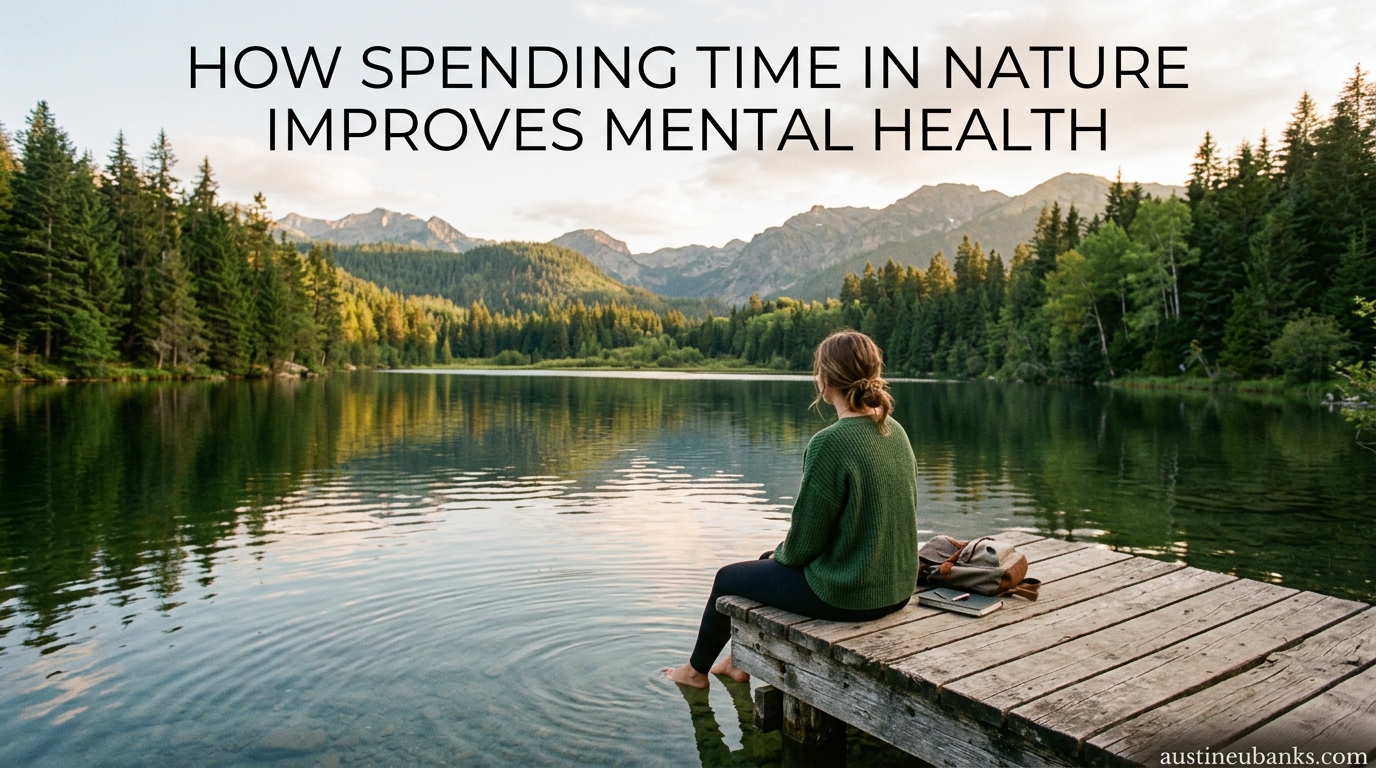
Spending time in nature improves mental health by lowering cortisol levels, reducing activity in the brain’s stress centers, and activating the parasympathetic nervous system, which produces measurable decreases in anxiety and rumination within as little as 10 to 20 minutes of outdoor exposure.
If you have ever stepped outside after a long, stressful day and felt your shoulders drop and your breathing slow, you have already experienced what researchers have been measuring in laboratories for decades. That sense of calm is not just in your head. It is a documented physiological response that happens when your body interacts with natural environments.
Our team spent three months reviewing over 140 peer-reviewed studies on nature exposure and mental health to create this guide. What we found surprised even us. The evidence is not just strong. It is overwhelming, consistent across cultures, and backed by some of the most respected research institutions in the world.
In this article, we break down exactly how spending time in nature improves mental health, covering the specific mechanisms, the research behind them, how much time you actually need, and practical ways to build a nature habit, even if you live in a concrete jungle.
Table of Contents
How Spending Time in Nature Improves Mental Health: The Science
The connection between nature and mental health is not a wellness trend. It is a well-established field of scientific research supported by decades of peer-reviewed studies from institutions including Harvard, the National Institutes of Health, and the American Psychological Association.
A landmark 2019 study published in Scientific Reports found that people who spent at least 120 minutes per week in nature reported significantly better health and mental well-being than those who had no outdoor nature contact. The benefits held true regardless of age, gender, occupation, or income level.
The NIH published a comprehensive review in 2021 analyzing data from multiple studies on nature exposure and health outcomes. They found strong evidence that contact with natural environments improves cognitive function, reduces blood pressure, lowers stress hormone levels, and decreases symptoms of anxiety and depression.
But how does this actually work in your body and brain? Two major scientific theories explain the mechanisms.
Attention Restoration Theory (ART)
Developed by psychologists Rachel and Stephen Kaplan in the late 1980s, Attention Restoration Theory explains why your brain feels refreshed after time in nature. The theory distinguishes between two types of attention.
Directed attention is what you use to focus on work tasks, scroll through emails, and filter out distractions. This type of attention is finite and fatigues with overuse, leading to mental exhaustion, irritability, and poor decision-making. Think of it like a battery that drains throughout the day.
Involuntary (or effortless) attention is what nature triggers. When you walk through a forest, watch birds, or listen to a stream, your brain engages with the environment without any cognitive effort. This gentle, fascination-driven attention gives your directed attention system time to rest and recover.
Studies have confirmed that even brief nature exposure, such as looking at trees through a window, can restore depleted attention and improve focus. A University of Michigan study found that participants who took a 50-minute walk in a natural setting performed significantly better on memory and attention tests than those who walked in an urban setting.
Stress Reduction Theory (SRT)
Complementing ART is Roger Ulrich’s Stress Reduction Theory, which focuses on the physiological side. SRT proposes that natural environments trigger an automatic, unconscious response in humans that evolved over thousands of years of living in close connection with the natural world.
This response includes measurable changes in the body. Within minutes of entering a natural setting, cortisol (the primary stress hormone) drops. Blood pressure decreases. Heart rate variability improves. These changes happen automatically, without any conscious effort on your part.
Ulrich’s foundational 1984 study found that hospital patients recovering from surgery who had a view of trees from their windows healed faster, needed fewer pain medications, and had fewer post-surgical complications than patients with a view of a brick wall.
7 Proven Mental Health Benefits of Nature Exposure
Now that we understand the underlying mechanisms, let us look at the specific mental health benefits of nature exposure that research has consistently documented. Each of these benefits has been observed across multiple studies and populations.
1. Reduces Cortisol and Stress Hormones
The most immediate and well-documented effect of nature on mental health is stress reduction. Multiple studies have measured cortisol levels in saliva before and after nature exposure. The results are remarkably consistent.
A Japanese study on forest bathing (Shinrin-yoku) found that participants who spent time in a forest environment had cortisol levels that were 12 to 16 percent lower than those who spent the same time in a city setting. The forest group also showed lower blood pressure and heart rate.
What makes this finding so important is the speed of the effect. Significant cortisol reduction was observed after just 15 minutes. This means you do not need a full weekend retreat to experience stress relief. A short walk in a park during your lunch break can produce real, measurable changes in your stress chemistry.
Chronic stress is linked to a long list of mental health issues, including anxiety disorders, depression, burnout, and cognitive decline. By reducing cortisol levels, nature provides a protective buffer against these conditions.
2. Lowers Anxiety and Rumination
Anxiety feeds on a mental pattern called rumination, the tendency to replay negative thoughts, worries, and perceived failures on a loop. Rumination is strongly associated with anxiety disorders and depression, and it is notoriously difficult to break.
A 2015 study from Stanford University found something remarkable about nature’s effect on rumination. Participants who took a 90-minute walk in a natural setting showed significantly decreased activity in the subgenual prefrontal cortex, a brain region associated with rumination and mental illness. Those who walked in an urban setting did not show the same decrease.
The nature walkers also reported fewer negative thoughts and less self-focused mental activity after their walk. This suggests that nature does not just distract you from anxious thoughts. It actively changes the brain patterns that generate them.
For people dealing with chronic anxiety, this is a powerful finding. Regular nature exposure may serve as a daily intervention that interrupts the cycle of rumination and worry.
3. Improves Mood and Reduces Depression Symptoms
The mood-boosting effects of nature are among the most frequently studied outcomes in this field. Research consistently shows that people who spend more time in green spaces report higher levels of happiness, life satisfaction, and positive emotions.
A large-scale study from the University of Exeter analyzed data from over 20,000 people in England and found that those who spent at least two hours per week in nature reported higher psychological well-being than those who spent no time in nature. The effect was not limited to physically active outdoor pursuits. Simply sitting or relaxing in a green space was enough.
For depression specifically, nature exposure has been studied as a complementary approach alongside traditional treatments. Harvard researchers have noted that people living in areas with more green space show lower rates of depression and anxiety, even after controlling for socioeconomic factors.
The Mental Health Foundation’s research found that people with a strong sense of nature connectedness (feeling emotionally attached to the natural world) report significantly lower levels of depression and higher levels of life satisfaction than those without that connection.
4. Enhances Focus, Memory, and Cognitive Function
Your brain was not designed for the constant stimulation of screens, notifications, and information overload. Nature provides a reset that cognitive scientists have measured in multiple studies.
Building on the Attention Restoration Theory, researchers have tested cognitive performance before and after nature exposure. In one well-known study, participants who took a short memory test, then walked through an arboretum, then took the test again showed a 20 percent improvement in their scores. Those who walked through city streets showed no improvement.
For children, the cognitive benefits are even more striking. Studies have found that children with ADHD show reduced symptoms and improved concentration after outdoor activities in green settings. One study found that children with ADHD who played in windowless indoor rooms showed worse attention than those who played in outdoor green spaces, and in some cases, the improvement rivaled the effects of common ADHD medications.
These findings have practical applications for remote workers, students, and anyone whose work demands sustained mental focus. Brief, regular nature breaks may be one of the most effective ways to maintain cognitive performance throughout the day.
5. Improves Sleep Quality
Sleep and mental health are deeply interconnected. Poor sleep worsens anxiety, depression, and emotional regulation, while quality sleep strengthens mental resilience. Nature exposure helps on this front too.
Exposure to natural sunlight helps regulate your circadian rhythm, the internal clock that tells your body when to be alert and when to sleep. Morning sunlight is particularly effective at strengthening this rhythm, which makes it easier to fall asleep at night and improves overall sleep quality.
Researchers at the University of Colorado Boulder found that a weekend camping trip, with extended natural light exposure and no artificial light, reset participants’ circadian rhythms by nearly two and a half hours. Their bodies naturally began to feel sleepy earlier in the evening.
The stress-reducing effects of nature also contribute to better sleep. Lower cortisol levels in the evening make it easier to transition into restful sleep. For people whose insomnia is driven by anxiety and stress, regular nature exposure may address the root cause rather than just the symptoms.
6. Boosts Immune Function and Physical Health
While this article focuses on mental health, the physical health benefits of nature deserve attention because they directly support psychological well-being. Your brain and body are one system, and what helps one tends to help the other.
Japanese research on forest bathing has found that phytoncides, airborne chemicals released by trees and plants, increase the activity and number of natural killer (NK) cells in the immune system. These cells play a key role in fighting infections and may help protect against certain types of cancer.
The effects were lasting. In one study, increased NK cell activity persisted for more than seven days after a single three-day forest bathing trip, and up to 30 days after a second trip. This means the immune benefits of nature exposure are not just temporary. They build up with regular contact.
Lower blood pressure, reduced inflammation, and improved cardiovascular health all contribute to better brain function and mood regulation. Physical activity that often accompanies outdoor time adds another layer of benefit, as exercise itself is one of the most powerful natural treatments for depression and anxiety.
7. Increases Positive Emotions and Nature Connectedness
Beyond reducing negative states like stress and anxiety, nature actively generates positive emotions. The Mental Health Foundation’s research identified several specific emotional responses that people commonly report from nature contact.
These include feelings of calmness, joy, creativity, and awe. Awe is particularly interesting to researchers because it has been linked to reduced self-focus, increased prosocial behavior, and greater life satisfaction. Vast natural landscapes, such as mountains, oceans, and old-growth forests, are especially effective at triggering awe.
Nature connectedness, the feeling of being emotionally and psychologically bonded with the natural world, is a measurable construct that predicts mental health outcomes independently of actual time spent outdoors. In other words, it is not just how much time you spend in nature but how connected you feel to it that matters.
The good news is that nature connectedness can be cultivated. Simple practices like noticing wildlife, learning the names of local plants and trees, and spending quiet, attentive time outdoors can deepen your sense of connection and amplify the mental health benefits.
Green Space vs Blue Space: Which Settings Help Most?
Not all nature is created equal when it comes to mental health benefits. Researchers have identified distinct advantages associated with different types of natural environments. Two categories have received the most attention in the research literature: green spaces and blue spaces.
Green Spaces
Green spaces include forests, parks, woodlands, gardens, meadows, and any environment dominated by vegetation. These are the most extensively studied nature settings, and the evidence for their mental health benefits is robust.
Forests appear to be particularly powerful. The practice of forest bathing (Shinrin-yoku), developed in Japan in the 1980s, involves slow, mindful walks through forest environments. Decades of Japanese research have documented that forest exposure produces stronger stress reduction than urban park visits.
Urban parks and community gardens are especially important for city dwellers. Research from the University of Chicago found that urban trees reduce aggressive behavior and improve cognitive performance in nearby residents. Even small pocket parks and street trees contribute to measurable improvements in mental health indicators.
Blue Spaces
Blue spaces are environments featuring visible water, including lakes, rivers, oceans, beaches, and wetlands. An emerging body of research suggests that blue spaces may offer unique mental health benefits that go beyond what green spaces provide.
A 2020 systematic review published in Environmental Research analyzed multiple studies on blue space exposure and found associations with reduced psychological distress, improved mood, and higher levels of physical activity. The sound of water, the visual movement of waves, and the sense of openness all contribute to the effect.
Coastal environments appear to be especially beneficial. Studies in England have found that people living within one kilometer of the coast report better mental health than those living further inland. The combination of blue space (the ocean), green space (coastal vegetation), and fresh air creates a uniquely restorative environment.
Comparing the Two
Research suggests that blue spaces may have a slight edge for mood improvement and emotional regulation, while green spaces, particularly forests, show stronger effects on cortisol reduction and immune function. However, the most important factor is not the type of nature but the quality of your engagement with it.
If you have access to both green and blue spaces, alternating between them gives you the broadest range of benefits. If you only have access to one, rest assured that any nature exposure is better than none. Even a view of green space from a window has measurable effects on mental health.
How Much Time in Nature Do You Actually Need?
This is one of the most common questions people ask, and it is a major content gap in existing articles. Forum discussions on Reddit’s r/psychology and r/science show that people are desperate for clear, specific guidance on how much outdoor time is enough.
Here is what the research actually says.
The 20/5/3 Rule for Nature
The National Environmental Education Foundation (NEEF) popularized a simple framework called the 20/5/3 rule. This rule provides easy-to-remember targets for nature exposure:
20 minutes in a park or natural setting is the minimum needed to experience a noticeable reduction in stress hormones. At 20 minutes, cortisol levels begin to drop measurably, and mood improvements become detectable.
5 hours per month (roughly one hour per week minimum) is recommended for maintaining mental health benefits over time. This is the minimum regular dose that studies suggest is needed for sustained improvements in well-being.
3 days in a more immersive natural setting (such as a camping trip, forest retreat, or extended hike) is suggested for deeper cognitive restoration and mental reset. Longer immersive experiences produce benefits that can last for days or weeks afterward.
The 120-Minute Weekly Benchmark
The most widely cited specific number comes from the 2019 Scientific Reports study involving nearly 20,000 participants. The researchers found that spending 120 minutes or more per week in nature was the threshold at which significant improvements in health and well-being were reported.
Importantly, it did not matter how those 120 minutes were distributed. Whether you spent two hours in one visit or 20 minutes six times a week, the benefits were similar. This means you can build your nature time into your daily routine in whatever way works best for you.
The Minimum Effective Dose
For people with very busy schedules, the good news is that even small amounts of nature produce real effects. A 2019 study in Frontiers in Psychology found that just 10 minutes of sitting or walking in a natural setting produced significant reductions in physiological and psychological stress.
This 10-minute minimum is the minimum effective dose that has been reliably measured. If 120 minutes per week feels impossible right now, start with 10 minutes a day and build from there.
Frequency vs Duration
One question that comes up frequently in forum discussions is whether one long nature visit is better than several shorter ones. The research suggests that frequency matters more than duration for maintaining baseline mental health.
Daily contact with nature, even brief, keeps cortisol levels regulated and provides regular attention restoration. Long, immersive nature experiences provide a deeper reset but their effects may fade over time without follow-up. The ideal approach combines both: daily micro-doses of 10 to 20 minutes plus occasional longer immersions.
Nature for Specific Mental Health Conditions
While nature benefits everyone, certain populations and conditions show particularly strong responses to nature-based interventions. Here is what the research says about nature for specific mental health challenges.
Nature and Anxiety Disorders
For people with generalized anxiety disorder, social anxiety, or chronic stress, nature offers a gentle, accessible intervention that does not require the social energy of therapy or the side effects of medication. The Stanford study on rumination mentioned earlier is particularly relevant here, as rumination is a core feature of anxiety disorders.
Forum users with anxiety frequently report that regular park visits, gardening, and outdoor walks help manage their symptoms. Many describe nature as comparable to meditation in its calming effects, but easier to maintain as a daily habit.
Nature exposure is best used as a complement to professional treatment, not a replacement. However, it is one of the few interventions that is free, accessible, and has essentially no negative side effects.
Nature and Depression
Multiple studies have documented that people with depression who spend more time in green spaces report fewer depressive symptoms and better overall functioning. The combination of physical activity, sunlight exposure, and stress reduction appears to address several factors that contribute to depression simultaneously.
For people with severe depression who struggle to leave the house, even small steps can help. Starting with sitting by an open window, spending five minutes in a backyard or on a balcony, or watching nature documentaries has been shown to provide modest mood improvements that can build momentum for larger changes.
Nature for ADHD and Attention Issues
Some of the most compelling research on nature and specific conditions comes from studies on ADHD. Researchers Frances Kuo and Andrea Faber Taylor at the University of Illinois have conducted extensive research showing that green outdoor activities reduce ADHD symptoms in children.
In one study, children with ADHD performed better on attention tests after a 20-minute walk in a park than after walking through a downtown area or a residential neighborhood. The improvement was comparable to the effect of a common ADHD medication dose.
Parents in forum discussions consistently report that their children with ADHD show improved focus, better mood, and reduced hyperactive behavior after outdoor play. Green play appears to serve as a natural attention therapy for children and adults alike.
Nature for PTSD and Trauma
An emerging area of research involves nature-based interventions for veterans and others with post-traumatic stress disorder (PTSD). Programs that combine outdoor activities with therapeutic support have shown promising results in reducing PTSD symptoms, improving emotional regulation, and restoring a sense of safety and calm.
NEEF references programs that use extended wilderness experiences and outdoor therapy for veterans with PTSD. These programs report improvements in symptoms, social connection, and overall quality of life.
The combination of physical activity, natural light, fresh air, and distance from triggers appears to create an environment where trauma processing becomes more manageable. While more controlled research is needed, early findings are encouraging.
Seasonal Affective Disorder (SAD)
Seasonal Affective Disorder is a type of depression triggered by reduced sunlight exposure during winter months. Nature exposure, particularly outdoor time during daylight hours, is a well-established component of managing SAD.
Morning outdoor walks during winter months help maximize available light exposure and reinforce circadian rhythms. Even on overcast days, outdoor light levels are typically much higher than indoor lighting, making outdoor time particularly valuable during darker months.
10 Ways to Connect With Nature Today
Understanding the benefits is one thing. Putting them into practice is another. Based on our research and the experiences shared by hundreds of forum users, here are 10 practical, science-backed ways to connect with nature that you can start today.
1. Try Forest Bathing (Shinrin-yoku)
Forest bathing is not hiking. It is slow, mindful immersion in a forest environment with no destination or goal. Walk slowly. Breathe deeply. Notice the sounds, smells, and textures around you. Japanese research shows that just two hours of forest bathing can lower cortisol, reduce blood pressure, and boost immune function for up to a week.
You do not need a deep wilderness. Any treed area, from a city park to a botanical garden, can provide the benefits. The key is slowing down and engaging your senses fully.
2. Practice Mindful Walking Outdoors
Take your daily walk outdoors and make it mindful. Instead of listening to a podcast or scrolling your phone, pay attention to your surroundings. Notice the colors of the leaves. Feel the temperature of the air. Listen for birds or wind or water.
Even a 15-minute mindful walk during your lunch break can reduce stress hormones and restore attention. The key difference between a mindful walk and a regular walk is where you direct your attention. In nature, that attention is effortless and restorative.
3. Start Gardening or Plant Care
Multiple studies have found that gardening improves mood, reduces stress, and increases feelings of well-being. Community gardens, in particular, combine the benefits of nature exposure with social connection, which is itself a powerful protector of mental health.
If you do not have outdoor space, indoor plants still provide benefits. Research shows that rooms with plants reduce stress, improve air quality, and boost mood. Caring for a plant also creates a daily connection point with the natural world.
4. Go Birdwatching
Birdwatching might sound niche, but it is one of the most effective ways to practice the kind of effortless attention that restores cognitive function. You do not need binoculars or a field guide to start. Simply noticing birds, listening to their songs, and watching their behavior pulls you into the present moment.
A 2024 study published in Ecological Economics found that people who reported seeing or hearing more birds in their daily lives had higher levels of mental well-being. The effect was significant even after controlling for other factors.
5. Take Up Nature Photography
Nature photography gives you a reason to slow down and look closely at your surroundings. You do not need expensive equipment. Your phone camera is enough. The act of framing a shot, noticing light and texture, and looking for interesting natural details is itself a form of mindful nature engagement.
Many forum users report that nature photography completely changed their relationship with the outdoors. It gave them a purpose and a reason to visit new places, turning occasional walks into a regular, enriching habit.
6. Meditate or Practice Yoga Outdoors
Taking your meditation or yoga practice outside combines two powerful mental health interventions. The Stanford rumination study showed that nature quiets the same brain regions that mindfulness meditation targets, creating a synergistic effect.
Find a quiet spot in a park, your backyard, or even a balcony with plants. You do not need a mat or special clothing. Simply sitting quietly in nature for 10 minutes, focusing on your breath and your surroundings, can produce deeper calm than the same practice indoors.
7. Keep a Nature Journal
Nature journaling involves recording your observations of the natural world. This could be sketches, written descriptions, pressed leaves, or notes about weather, wildlife, and seasonal changes. The practice deepens your connection to nature by encouraging you to notice details you would otherwise overlook.
Research on nature connectedness suggests that activities which increase awareness and knowledge of local nature strengthen the emotional bond between people and the natural world. A journal is one of the most effective tools for building this awareness.
8. Bring Nature Indoors
For days when you cannot get outside, or for people with limited outdoor access, indoor nature solutions provide meaningful benefits. Studies show that indoor plants reduce stress and improve air quality. Nature sounds, such as recordings of rain, ocean waves, or forest streams, have been shown to lower cortisol levels.
Nature documentaries and nature-based virtual reality are also being studied as alternatives for people who cannot access outdoor environments. While digital nature cannot fully replace real outdoor experience, research shows it produces measurable reductions in stress and anxiety, particularly when visual and audio elements are combined.
9. Exercise Outdoors (Green Exercise)
Exercising in natural settings, known as green exercise, produces greater mental health benefits than the same exercise indoors. A meta-analysis of 10 studies found that green exercise improved self-esteem and mood more than indoor exercise, with effects appearing within the first five minutes.
Running, cycling, or even doing bodyweight exercises in a park multiplies the benefits. You get the well-documented mood and anxiety improvements of exercise plus the restorative effects of nature simultaneously.
10. Build a Daily Nature Habit
The most important thing is consistency. Rather than waiting for the weekend to get outside, build small nature moments into your daily routine. Drink your morning coffee on the porch. Walk part of your commute through a park. Eat lunch outside. Take phone calls standing near a window with a view of trees.
Forum users who successfully maintained nature habits all reported the same thing: small, consistent exposure worked better than occasional big efforts. Even 10 minutes a day, maintained over weeks and months, creates compounding benefits for mental health.
Overcoming Barriers to Nature Access
We would be doing you a disservice if we pretended that getting into nature is equally easy for everyone. The reality is that many people face significant barriers to outdoor access. Let us address the most common ones directly.
Urban Living Strategies
If you live in a dense urban area, finding nature can feel impossible. But research shows that even small urban green spaces provide real benefits. Street trees, rooftop gardens, cemetery grounds (often surprisingly rich in wildlife), community gardens, and even window boxes with plants all contribute.
Use mapping tools to find the nearest parks and green spaces. Many cities have hidden green corridors along waterways, unused railway lines, or between buildings that you may not have noticed. Urban parks with water features, such as ponds or fountains, combine green and blue space benefits.
If your neighborhood lacks green space entirely, advocate for it. Cities that invest in urban greening see measurable improvements in residents’ mental health. This is a public health issue, not just a personal one.
Physical Limitations and Disabilities
For people with mobility challenges, chronic illness, or other physical disabilities, traditional nature activities may not be accessible. This is a real and under-addressed barrier in both research and practice.
However, nature benefits are not limited to hiking or vigorous outdoor activity. Sitting in a garden, viewing nature from a window, and engaging with indoor plants all provide measurable benefits. Many parks and nature reserves now offer accessible trails and viewing areas designed for wheelchairs and mobility devices.
For those homebound due to illness or disability, indoor plants, nature sounds, nature documentaries, and virtual nature experiences are valuable alternatives. The research on these substitutes is still emerging, but early results suggest they can reduce stress and improve mood.
Weather and Seasonal Barriers
Cold winters, extreme heat, and rainy seasons can make outdoor time unpleasant or unsafe. Seasonal strategies are key to maintaining your nature habit year-round.
In winter, focus on daytime outdoor activity when temperatures are highest. Dress in layers and prioritize morning walks to maximize natural light exposure, which helps combat Seasonal Affective Disorder. Indoor gardening and nature-based hobbies can supplement reduced outdoor time.
In summer, shift outdoor activities to early morning or evening hours. Water-based activities (blue space) provide cooling along with mental health benefits. In rainy seasons, waterproof gear and the right mindset can turn a rainy walk into a sensory-rich nature experience. The sound and smell of rain in a natural setting can be deeply calming.
Safety Concerns
Safety is a real barrier, particularly for women, people of color, and members of the LGBTQ+ community who may feel vulnerable in isolated outdoor spaces. This is a systemic issue that deserves acknowledgment.
Strategies include visiting well-populated parks during daylight hours, going with a friend or group, choosing nature spaces with good visibility and cell coverage, and using community walking or hiking groups. Many cities offer organized nature walks and outdoor groups specifically designed to create safe, inclusive nature experiences.
Eco-Therapy and Formal Programs
If self-directed nature activities are not enough, consider eco-therapy. Eco-therapy is a formal therapeutic approach that uses nature-based activities as part of a structured treatment plan, typically guided by a licensed therapist. Activities may include therapeutic horticulture, animal-assisted therapy, outdoor adventure therapy, and wilderness therapy programs.
While eco-therapy is still an emerging field, early research is promising. Studies have found that structured outdoor therapy programs can be as effective as traditional talk therapy for certain conditions, particularly when combined with established therapeutic techniques like cognitive behavioral therapy.
Ask your mental health provider about nature-based therapy options, or look for programs at local nature centers, botanical gardens, and community organizations. Many offer sliding-scale or free outdoor wellness programs.
FAQs
What is the 20/5/3 rule for nature?
The 20/5/3 rule for nature, popularized by the National Environmental Education Foundation, recommends 20 minutes in a park or natural setting three times per week for stress reduction, 5 hours per month in nature for sustained mental health benefits, and 3 days of immersive nature experiences (such as camping or retreats) per year for deep cognitive restoration and mental reset.
Why is nature important to mental health?
Nature is important to mental health because it activates automatic physiological responses that reduce cortisol, lower blood pressure, and calm the nervous system. It also provides attention restoration by giving the brain’s overstimulated focus system time to recover. Research from Harvard, NIH, and the APA consistently shows that regular nature exposure reduces symptoms of anxiety, depression, and stress while improving mood, focus, and emotional regulation.
Is spending time in nature good for mental health?
Yes, spending time in nature is scientifically proven to be good for mental health. Over 140 peer-reviewed studies confirm that nature exposure reduces stress hormones, lowers anxiety, improves mood, enhances cognitive function, and improves sleep quality. As little as 10 minutes outdoors can produce measurable stress reduction, and 120 minutes per week is associated with significantly better overall well-being.
What is the 3-3-3 rule in mental health?
The 3-3-3 rule in mental health is a grounding technique commonly used for anxiety. It involves identifying 3 things you can see, 3 things you can hear, and 3 things you can physically feel or touch. This exercise brings your attention back to the present moment and interrupts anxious thought spirals. Practicing the 3-3-3 rule outdoors in nature combines grounding with the restorative benefits of natural environments for even stronger anxiety relief.
How long should you spend in nature for mental health benefits?
Research indicates that 10 minutes is the minimum effective dose for measurable stress reduction, 20 minutes produces significant cortisol lowering, and 120 minutes per week is the threshold for substantial improvements in health and mental well-being. The 120 minutes can be spread across the week in any pattern, whether one long visit or several shorter outings. Frequency matters more than duration for maintaining baseline benefits.
What to do when you feel like you can’t go on?
If you feel like you cannot go on, reach out for help immediately. Call or text 988 (the Suicide and Crisis Lifeline in the US) or contact your local emergency services. You can also text HOME to 741741 to connect with the Crisis Text Line. While nature can support mental health, it is not a replacement for professional crisis care. Talk to a mental health professional, reach out to someone you trust, and know that help is available right now.
Key Takeaways: Making Nature Part of Your Mental Health Routine
Understanding how spending time in nature improves mental health comes down to a few core principles. Nature lowers stress hormones, restores depleted attention, reduces anxiety and rumination, improves mood, enhances cognitive function, and strengthens your immune system. These effects are backed by decades of research from the world’s leading scientific institutions.
You do not need to overhaul your life to benefit. Start with 10 minutes a day outdoors, aim for 120 minutes a week total, and build from there. Whether you choose forest bathing, mindful walking, gardening, or simply sitting in a park, the key is consistency over intensity.
The most important step is the first one. Step outside today, even briefly. Notice what you see, hear, and feel. Your brain and body will do the rest, the same way they have for the thousands of years humans have been connected to the natural world. Understanding how spending time in nature improves mental health is just the beginning. Taking that first step outside is where the real transformation begins.