
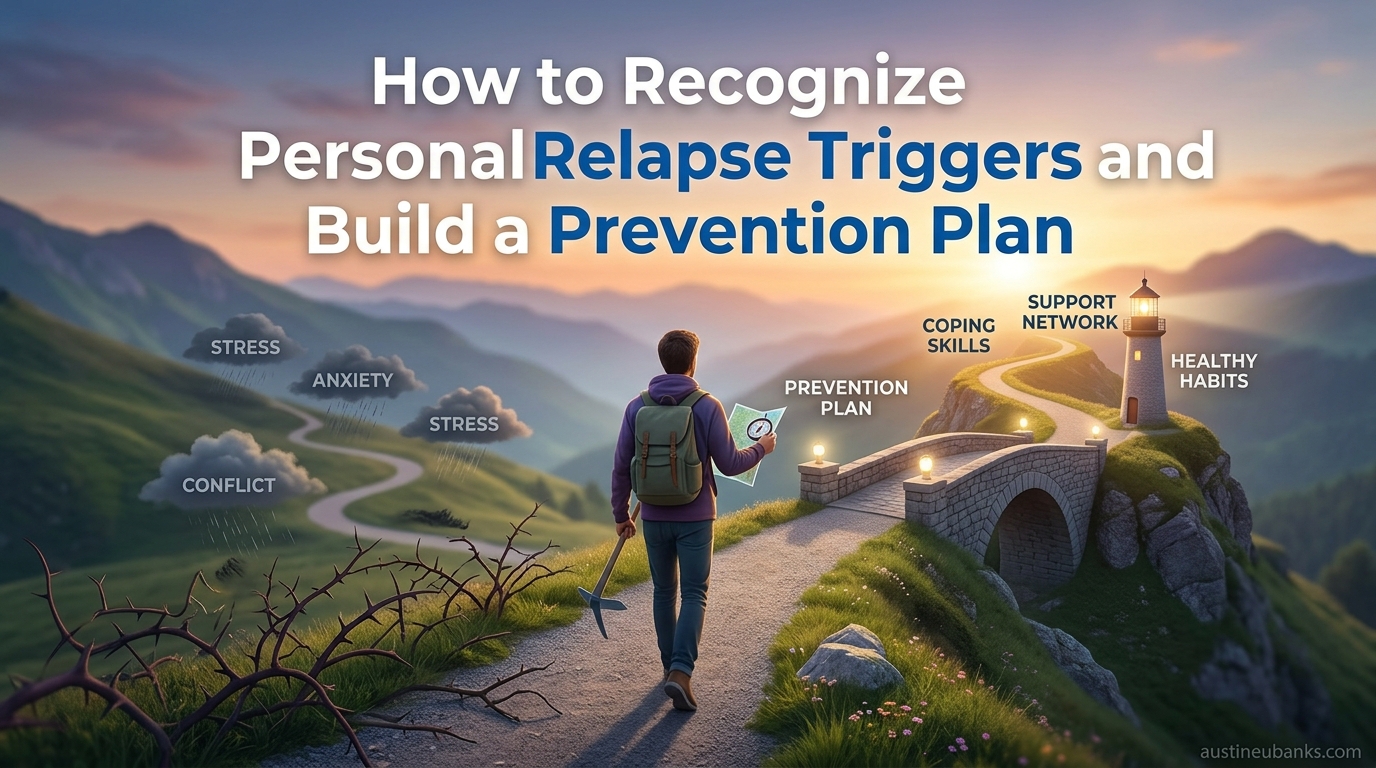
Recovery is not a straight line. Anyone who has walked this path knows that learning how to recognize personal relapse triggers and build a prevention plan is the difference between sustained progress and falling back into old patterns. I have spent years studying recovery frameworks, talking with people in recovery across online communities, and reviewing the clinical research on what actually keeps people sober long-term.
Here is the truth most articles gloss over: relapse is not a single moment of weakness. It is a gradual, predictable process that starts days or even weeks before you actually pick up a drink, use a substance, or fall back into a destructive behavior. The good news is that because it is predictable, it is also preventable.
Research published by the National Institutes of Health shows that relapse rates in the first year of recovery hover around 70 percent. That number sounds discouraging until you understand why. Most people relapse not because they lack willpower, but because they never built a written, structured prevention plan. Thinking about staying sober is not the same as having a concrete strategy ready to deploy when cravings hit.
This guide walks you through everything you need to identify your unique triggers, recognize the early warning signs of relapse before they escalate, and build a personalized prevention plan that actually works in real life. Whether you are in early recovery, supporting a loved one, or years into your journey and feeling complacent, the tools ahead are practical and field-tested.
We will also cover areas most resources ignore: workplace triggers, behavioral addictions beyond substances, the often-overlooked middle stage of recovery, and how to handle a slip without spiraling into shame.
Table of Contents
What Are Relapse Triggers?
Relapse triggers are external or internal stimuli that create cravings or urges to return to old behaviors. They can be people, places, emotions, situations, dates, or even certain times of day. Understanding your personal triggers is the foundation of any effective relapse prevention plan.
Think of a trigger like a landmine. If you do not know where the landmines are buried, you will eventually step on one. But once you map them out, you can navigate around them or prepare yourself to defuse them when contact is unavoidable.
Triggers work by activating the brain’s reward memory. Your brain remembers that a particular substance or behavior once provided relief, pleasure, or escape. When a trigger fires that memory, it creates a craving. The craving does not mean you are weak. It means your brain is doing what brains do: seeking familiar comfort.
The key insight from recovery research is that triggers fall into two main categories: internal and external. Both can derail your progress, but they require different coping strategies. Let me break them down.
Internal vs External Triggers: Know the Difference
Internal triggers come from within you. They are emotions, thoughts, physical sensations, or memories that spark a craving. External triggers come from your environment: people, places, things, situations, or events that you encounter in daily life.
External triggers are usually easier to manage because you can see them coming and sometimes avoid them entirely. Internal triggers are trickier because you carry them everywhere. You cannot simply walk away from your own thoughts. But you can learn to recognize them and respond differently.
Here is a comparison of common triggers in each category:
- External triggers: Passing a favorite bar, seeing drug paraphernalia, hanging out with friends who still use, getting a paycheck, attending a wedding, holidays like New Year’s Eve, finding cash, driving through an old neighborhood, hearing a specific song, receiving a text from a former using buddy.
- Internal triggers: Boredom, loneliness, anger, anxiety, sadness, stress from work, feeling overwhelmed, physical pain, fatigue, hunger, romanticizing past use, feeling celebratory, guilt, shame, feeling like you have things under control.
Notice that some triggers are obvious and dramatic while others are subtle. Boredom is one of the most underestimated triggers in long-term recovery. Many people in online recovery communities report that the absence of chaos feels uncomfortable because their brain became wired to expect drama and crisis.
Feeling overly confident is another internal trigger that catches people off guard. Multiple Reddit users in recovery forums describe relapsing between months 7 and 11 of sobriety because they started thinking they could handle just one drink or one use. That overconfidence is a trigger in itself.
The Three Stages of Relapse
Relapse unfolds in three distinct stages: emotional, mental, and physical. This framework, developed through clinical research on addiction recovery, is one of the most important concepts to understand. Most people only think of the physical stage, when someone actually uses a substance or engages in the behavior. By that point, the relapse process has been building for weeks.
Stage 1: Emotional Relapse
During emotional relapse, you are not thinking about using. Your mind is not on relapse at all. But your emotions and behaviors are setting you up for future trouble. You might be isolating from friends, skipping meetings, sleeping poorly, skipping meals, bottling up emotions, or refusing to talk about how you feel.
The signs are subtle: anxiety, intolerance, mood swings, poor eating habits, poor sleep, and withdrawal from your support system. You might notice yourself snapping at people or feeling resentful without knowing why.
Emotional relapse is the easiest stage to reverse. If you catch it here, you can course-correct with basic self-care: reach out to someone, eat a meal, get some sleep, attend a meeting. The problem is that most people do not recognize they are in emotional relapse because they are not consciously thinking about using.
Stage 2: Mental Relapse
This is where the internal war begins. Part of you wants to stay in recovery. Part of you is thinking about using. You might find yourself reminiscing about past use, minimizing the consequences, romanticizing the good times, or bargaining with yourself about controlled use.
Common mental relapse signs include: thinking about people and places associated with old habits, lying about where you have been or who you were with, spending time with old friends who still use, fantasizing about relapse, planning a relapse around a specific time or event, and thinking you can control it this time.
This stage is dangerous because your mind starts building a case for relapse. You may catch yourself thinking things like, “I deserve this,” “Just this once,” “No one will know,” or “I have been sober for months, I have proven I can handle it.”
If you reach this stage, reach out for help immediately. Call your sponsor, a trusted friend, or a helpline. Tell someone what you are thinking. The moment you say the thoughts out loud, they lose much of their power.
Stage 3: Physical Relapse
Physical relapse is the act of returning to the substance or behavior. Once you reach this stage, the decision has effectively been made. This is why the goal of a prevention plan is to catch the process during the emotional or mental stage, long before physical relapse becomes likely.
Understanding these stages reframes relapse entirely. It is not a sudden failure of willpower. It is a process with warning signs, and those warning signs are your window to intervene.
How to Recognize Your Personal Triggers
Everyone’s triggers are unique. What sends one person into a craving might not affect another at all. That is why generic lists of triggers are helpful as a starting point but not enough on their own. You need to identify your specific, personal triggers through deliberate self-reflection.
The most effective method people in recovery swear by is keeping a trigger journal. This is a daily log where you record your emotional state, situations you encountered, any cravings you experienced, and what was happening right before the craving hit.
Here is how to start your trigger journal today:
- Step 1: Carry a small notebook or use a notes app on your phone. Record entries at least twice a day, once in the morning and once in the evening.
- Step 2: For each entry, note your mood on a scale of 1 to 10, where you were, who you were with, and whether you experienced any cravings.
- Step 3: When a craving hits, write down what happened in the 30 minutes before it. Were you hungry? Stressed? Bored? Did you see something that reminded you of past use?
- Step 4: After two weeks, review your entries. Look for patterns. You may discover that cravings consistently follow work meetings, arguments, Sunday evenings, or interactions with specific people.
Forum users in recovery communities consistently report that journaling reveals patterns they never would have noticed otherwise. One Reddit user discovered their cravings always spiked on Thursday afternoons, which turned out to be tied to pre-weekend stress at their job. Once they identified the pattern, they built a specific coping routine for Thursday afternoons.
Beyond journaling, ask yourself these self-assessment questions to surface hidden triggers:
- What time of day do I feel most vulnerable?
- Which emotions make me want to escape or numb out?
- Which people in my life create stress or make me feel small?
- What places do I avoid because they make me uncomfortable?
- What anniversaries or dates are emotionally charged for me?
- When I feel good, do I start thinking I can handle just one?
- What situations make me feel lonely even when surrounded by people?
Be honest with yourself. The goal is not to judge your triggers but to map them. Once you know where the landmines are, you can plan your path around them.
The HALT Method: Your Daily Check-In
HALT stands for Hungry, Angry, Lonely, Tired. These four states are among the most common internal triggers for relapse. The method is simple: throughout the day, pause and ask yourself whether you are feeling any of these four things.
If the answer is yes, address it immediately. Eat a meal if you are hungry. Call someone or take a walk to process anger if you are angry. Reach out to a friend or attend a meeting if you are lonely. Rest or sleep if you are tired.
HALT works because these basic physiological and emotional needs, when unmet, create a state of physical and mental discomfort. That discomfort becomes fertile ground for cravings. Your brain starts looking for a quick fix, and in recovery, the old familiar quick fix is the substance or behavior you are trying to avoid.
I recommend doing a HALT check three times a day: mid-morning, mid-afternoon, and evening. It takes 30 seconds and can prevent hours of spiraling later. Many people in long-term recovery credit HALT as their single most reliable daily tool.
You can expand HALT to include other states. Some people add an F for Frustrated or a B for Bored. Customize the acronym to fit your own patterns. The point is building a habit of checking in with yourself before discomfort turns into a craving.
How to Recognize Personal Relapse Triggers and Build a Prevention Plan
Now we get to the core of this guide. Building a relapse prevention plan is not complicated, but it requires honest work. The goal is to create a written document that you can turn to in moments of crisis, when your thinking is clouded and your motivation is wavering.
A prevention plan that lives in your head is not a real plan. When cravings hit, your prefrontal cortex, the part of your brain responsible for rational decision-making, goes offline. You need something physical you can reach for, read, and act on without having to think.
Here is the step-by-step framework for building your plan:
Step 1: Write down your personal triggers. Use your trigger journal and self-assessment results. List every internal and external trigger you have identified, organized by category. Be specific. Instead of writing “stress,” write “Sunday evening work stress before Monday meetings.” The more specific, the more useful.
Step 2: Identify your early warning signs. List the emotional and mental signs that tell you a relapse process is starting. Pull from the three stages of relapse above. Examples: isolating from friends, skipping meetings, romanticizing past use, poor sleep, irritability, lying about your schedule.
Step 3: Create a coping strategy for each trigger. For every trigger on your list, write down at least one specific action you will take when you encounter it. If your trigger is boredom, your coping strategy might be to call a friend, go for a walk, or work on a hobby project. If your trigger is passing a certain bar, your strategy might be to take a different route home.
Step 4: Build your emergency contact list. Write down the names and phone numbers of at least three people you can call when cravings hit. Include your sponsor, a trusted friend, a family member, and a recovery helpline. Keep this list in your phone, in your wallet, and on your refrigerator.
Step 5: Write your consequences list. This is a brutally honest list of what will happen if you relapse. Include the relationships that would be damaged, the progress you would lose, the legal or financial consequences, and the emotional toll. This list is not about fear. It is about clarity.
Step 6: Write your reasons for recovery. This is the positive counterpart to the consequences list. Why are you doing this hard work? What do you stand to gain? Who is counting on you? What does your life look like in five years if you stay on this path?
Step 7: Define your daily routine. Recovery thrives on routine. Write down what a healthy day looks like for you: what time you wake up, what you eat, when you exercise, when you attend meetings, when you journal, when you sleep. Structure leaves less room for the idle moments where triggers take root.
Step 8: Plan for high-risk situations. Identify upcoming events that pose a risk: holidays, weddings, work trips, family gatherings, anniversaries. For each one, write a specific plan for how you will handle it. Who will you bring as support? What is your exit strategy? What will you say if offered a drink?
Step 9: Schedule regular plan reviews. Set a recurring calendar reminder to review and update your prevention plan once a month. Life changes, and your triggers will change with it. A plan written once and never revisited becomes stale and ineffective.
Relapse Prevention Plan Template (Fill-In)
Use this template to build your own plan. Print it, fill it in, and keep it somewhere accessible. Many people keep a copy in their phone, a copy in their car, and a copy on their nightstand.
My Personal Triggers:
External triggers I need to watch for: ____________________
Internal triggers I need to watch for: ____________________
Times of day I am most vulnerable: ____________________
People I need to be cautious around: ____________________
Places I need to avoid: ____________________
My Early Warning Signs:
Emotional signs (isolation, mood swings, etc.): ____________________
Mental signs (romanticizing, bargaining, etc.): ____________________
Behavioral signs (skipping meetings, lying, etc.): ____________________
My Coping Strategies:
When I feel a craving, I will: ____________________
When I feel isolated, I will: ____________________
When I feel stressed, I will: ____________________
When I feel bored, I will: ____________________
When I feel angry, I will: ____________________
My Emergency Contacts:
Person 1 (sponsor or mentor): Name ______ Phone ______
Person 2 (trusted friend): Name ______ Phone ______
Person 3 (family member): Name ______ Phone ______
Recovery helpline: 1-800-662-4357 (SAMHSA National Helpline)
My Consequences of Relapse:
What I would lose: ____________________
Who would be hurt: ____________________
How I would feel: ____________________
My Reasons for Recovery:
What I am working toward: ____________________
Who is counting on me: ____________________
What my best life looks like: ____________________
My Daily Recovery Routine:
Morning: ____________________
Afternoon: ____________________
Evening: ____________________
Weekly commitments (meetings, therapy, check-ins): ____________________
Coping Strategies for When Triggers Hit
Having a plan on paper is essential, but you also need in-the-moment techniques you can deploy when a craving strikes suddenly. These are the tools that work when your rational brain is struggling against the pull of addiction. I have pulled together the most effective, field-tested strategies shared across recovery forums and clinical literature.
Play the Tape Through
This is the single most frequently recommended technique in online recovery communities. When a craving hits and you start romanticizing past use, stop and play the tape forward. Do not stop at the imagined first drink or first high. Play it all the way through to the end.
Think about what happens next: the loss of control, the shame the next morning, the lying to people you love, the financial cost, the health damage, the relationships destroyed. Force yourself to remember the worst moments, not the highlighted reel your brain is trying to sell you.
One Reddit user put it powerfully: “My addicted brain only plays the trailer. When I play the tape through, I remember why I stopped.” Keep a written version of your tape on a card you carry with you.
The 5-4-3-2-1 Grounding Technique
This technique pulls you out of your thoughts and back into your body and the present moment. It works by engaging all five senses, which interrupts the craving loop in your brain. Here is how to do it:
- Name 5 things you can see around you right now.
- Name 4 things you can physically feel (your feet on the floor, the chair beneath you).
- Name 3 things you can hear in your environment.
- Name 2 things you can smell or two scents you like.
- Name 1 thing you can taste or one good thing about yourself.
By the time you finish, the peak intensity of the craving has usually passed. Cravings are like ocean waves: they rise, peak, and recede. A craving typically lasts 15 to 30 minutes. Your only job is to ride out the wave.
Box Breathing (4-4-4-4)
This is a deep breathing technique used by Navy SEALs to manage acute stress. It calms your nervous system within minutes and reduces the physiological intensity of a craving. Here is the sequence:
- Inhale slowly through your nose for 4 seconds.
- Hold your breath for 4 seconds.
- Exhale slowly through your mouth for 4 seconds.
- Hold your lungs empty for 4 seconds.
Repeat this cycle four times. Focus entirely on the count and the sensation of air moving in and out of your body. If your mind wanders back to the craving, gently bring it back to the count.
Change Your Environment
If you are sitting in a room where a craving just hit, get up and move. Go outside, walk around the block, or move to a different room. Changing your physical environment disrupts the craving loop and gives your brain new stimuli to process.
Movement is especially effective. A brisk 10-minute walk releases endorphins and reduces cortisol, the stress hormone that often fuels cravings. Many people in recovery keep their walking shoes by the door as a physical reminder.
Reach Out Immediately
Never try to ride out a craving alone if you do not have to. Pick up the phone and call someone on your emergency contact list. You do not need to have a profound conversation. Just hearing another human voice can break the isolation that cravings thrive on.
If it is late at night and no one is available, call a recovery helpline. The SAMHSA National Helpline at 1-800-662-4357 is free, confidential, and available 24 hours a day.
Urge Surfing
This mindfulness-based technique comes from the work of researcher Alan Marlatt, whose cognitive-behavioral model of relapse prevention is widely used in treatment programs. Instead of fighting the craving, you observe it. Imagine the craving as a wave in the ocean. You are a surfer riding on top of it, watching it rise and fall beneath you without being pulled under.
Notice where you feel the craving in your body. Notice the thoughts that come with it. Label them as thoughts, not commands. Watch the craving build, peak, and slowly subside. Remind yourself that no craving lasts forever.
Warning Signs Checklist by Stage
Use this checklist to monitor yourself regularly. If you notice multiple signs from any stage, it is time to take action immediately. Review this list weekly during your plan review session.
Emotional Relapse Warning Signs:
- Withdrawing from friends, family, or support groups
- Poor sleep habits (sleeping too much or too little)
- Irregular eating or skipping meals
- Bottling up emotions and refusing to talk about feelings
- Increased anxiety, irritability, or mood swings
- Skipping meetings, therapy, or recovery activities
- Poor self-care (not exercising, not showering, neglecting health)
- Intolerance or resentment toward others in recovery
Mental Relapse Warning Signs:
- Thinking about people, places, or things associated with past use
- Romanticizing past use and minimizing the consequences
- Lying about your whereabouts or activities
- Spending time with people who still use
- Fantasizing about using or planning a future relapse
- Believing you can control your use this time
- Searching for excuses or bargaining with yourself
- Feeling like recovery is too much effort
Physical Relapse Warning Signs (Immediate Action Required):
- Actively seeking out substances or old contacts
- Going to places associated with use
- Purchasing or preparing to use
- Driving toward a place to acquire substances
If you reach the physical stage warning signs, call someone immediately. Do not trust your own decision-making in this moment. Reach for your emergency contact list and dial the first number.
Building and Using Your Support System
No one stays sober alone. A robust support system is not optional. It is the scaffolding that holds your recovery up when your own motivation wavers. The people in recovery who maintain long-term sobriety all share one trait: they built and actively maintained a network of supportive people.
Your support system should include multiple layers. A sponsor or mentor who has been through recovery themselves can offer guidance drawn from experience. Support groups like AA, NA, SMART Recovery, or Refuge Recovery provide peer connection and accountability. Trusted friends and family members who understand your journey offer emotional grounding. A therapist or counselor, particularly one trained in cognitive behavioral therapy, can help you work through underlying issues.
Write your support system down. Keep phone numbers accessible. Many people program their sponsor’s number under a code name in their phone so it is always one tap away.
One critical point that forum users emphasize: do not wait for a crisis to use your support system. Call people when things are going well. Text a friend just to check in. Attend meetings consistently, not just when you are struggling. A support system is built before the crisis, not during it.
If you are in a relationship or have family members who want to support you, share your prevention plan with them. Tell them your specific warning signs and what to watch for. Many people in recovery report that their spouse or partner noticed warning signs before they did. Give the people who love you permission to speak up.
For family members and loved ones reading this: the best thing you can do is educate yourself without judgment. Avoid policing the person’s behavior, which creates resentment. Instead, ask how you can help, attend open meetings to learn more, and set healthy boundaries that protect both you and the person in recovery.
The Five Rules of Recovery
Dr. Steven Melemis, in research published by the National Institutes of Health, distilled relapse prevention into five core rules. These rules summarize the principles that underlie most successful recovery journeys. They are simple to understand but require ongoing effort to live by.
Rule 1: Change your life. Recovery is not about willpower. It is about creating a life where it is easier to stay sober. That means changing your routines, your habits, your environment, and sometimes your social circle. You cannot live the same life and expect different results.
Rule 2: Be completely honest. Addiction thrives in secrecy and deception. Recovery requires radical honesty, with yourself and others. Stop lying about small things. Stop hiding your feelings. Stop pretending everything is fine when it is not. Honesty starves the addiction of the darkness it needs to grow.
Rule 3: Ask for help. This is the rule that many people resist the most. Asking for help feels like weakness. In reality, it is the strongest thing you can do. Develop a support network and use it before you think you need it. Pride and self-reliance are common precursors to relapse.
Rule 4: Practice self-care. Self-care is not selfish. It is maintenance. Eating well, sleeping enough, exercising, managing stress, and attending to your mental health are the daily actions that keep your foundation strong. Use the HALT method daily. Treat your body and mind as the assets they are.
Rule 5: Do not bend the rules. The moment you start making exceptions, you are on the path to relapse. “Just one drink,” “just on weekends,” “just this once.” These are the stories addiction tells you. The rules exist because they work. Do not negotiate with the part of your brain that wants to use.
When You Slip: Self-Compassion After a Lapse
A lapse is a single instance of returning to use. A relapse is a return to the old pattern. The difference matters because it affects what happens next. A lapse does not have to become a relapse, but shame and self-punishment make that progression far more likely.
If you slip, the most important thing is what you do in the next 24 hours. Do not isolate. Do not spiral into shame. Do not tell yourself the whole effort was pointless. Reach out to someone immediately, be honest about what happened, and get back to your plan.
Shame is the fuel that turns a lapse into a full relapse. Self-compassion is not about excusing the slip. It is about responding to it in a way that prevents it from becoming a pattern. Treat the lapse as data: what triggered it? What warning signs did you miss? What will you do differently? Update your prevention plan with what you learned.
Workplace Triggers and Professional Life
Work-related stress is one of the most commonly cited yet rarely addressed triggers in recovery. Forum data shows that workplace stress is a major unaddressed trigger for many people. Long hours, demanding bosses, difficult coworkers, performance pressure, and the social drinking culture in many industries all create daily exposure to triggers.
If work is a trigger source, build workplace-specific strategies into your plan. Identify the specific aspects of work that create stress and address them directly. Take real lunch breaks away from your desk. Avoid after-work drinking events or bring a non-alcoholic drink and leave early. Build boundaries around work hours so you are not perpetually exhausted.
Consider whether your work environment is genuinely compatible with your recovery. Some people in recovery have changed jobs or industries because their workplace was too saturated with triggers. That is not a failure. It is a strategic decision to protect your recovery.
Beyond Substances: Behavioral Addictions
Most relapse prevention resources focus on substances, but the same principles apply to behavioral addictions. Gambling, gaming, social media, compulsive shopping, and other behavioral patterns follow the same cycle of trigger, craving, and relapse. If you are working on breaking a behavioral pattern, the tools in this guide apply to you as well.
The triggers may look different. A gaming addiction might be triggered by stress, loneliness, or having unstructured free time. Social media compulsions might spike during moments of boredom or emotional discomfort. Identify your specific behavioral triggers using the same journaling method described above.
Your prevention plan should include strategies specific to the behavior. For gaming, this might mean setting screen time limits or uninstalling certain apps. For social media, it might mean using website blockers during vulnerable hours. The framework is the same even when the substance differs.
The Middle Stage: Complacency in Years 1 to 5
The first year of recovery gets most of the attention, but the middle stage, years 1 through 5, carries its own risks. Long-term recovered individuals consistently report that complacency, not cravings, is the biggest danger after years of sobriety. You start feeling good. Life normalizes. You start thinking you have it handled.
This is the stage where people stop attending meetings, stop calling their sponsor, stop journaling, and stop reviewing their prevention plan. The plan that saved them in early recovery gathers dust. Then a major life event hits, a job loss, a breakup, a health scare, and the old coping mechanisms resurface because no active prevention system is in place.
The antidote to complacency is continued engagement. Keep reviewing your plan monthly. Keep attending meetings, even if less frequently. Keep building your support network. Recovery is not something you graduate from. It is a practice you maintain for life.
FAQs
How to build a relapse prevention plan?
To build a relapse prevention plan, write down your personal triggers, identify early warning signs of relapse, create a coping strategy for each trigger, build an emergency contact list, write your consequences list and reasons for recovery, define a daily routine, plan for high-risk situations, and schedule monthly plan reviews. A written plan you can physically reach for during a crisis is far more effective than trying to remember strategies when cravings hit.
What are the 5 D’s of relapse prevention?
The 5 D’s of relapse prevention are: Delay (wait 15 minutes and the craving will usually pass), Distract (do something that takes your mind off the craving), Deep breathing (use slow breathing to calm your nervous system), Drink water (hydration reduces craving intensity), and Discuss (call someone in your support network). These five actions give you a simple, memorable toolkit to deploy in the moment when a craving strikes.
What actions can you take when you recognize warning signs to prevent relapse?
When you recognize warning signs, take immediate action: call your sponsor or a trusted friend, attend a recovery meeting, review your written prevention plan, practice grounding techniques like 5-4-3-2-1 or box breathing, remove yourself from high-risk environments, address unmet HALT needs (eat, rest, connect), and be honest with someone about what you are experiencing. The earlier you act on warning signs, the easier they are to reverse.
What are triggers in relapse prevention?
Triggers in relapse prevention are external or internal stimuli that create cravings or urges to return to old behaviors. External triggers include people, places, objects, and situations. Internal triggers include emotions, thoughts, memories, and physical sensations. Identifying personal triggers is the first step in any effective prevention plan because you cannot manage what you have not identified.
What is a relapse prevention plan for mental illness?
A relapse prevention plan for mental illness follows the same structure as one for addiction: identify personal triggers and early warning signs of symptom escalation, document coping strategies, build a support network, and create an emergency action plan. It is particularly important for conditions like depression, bipolar disorder, and anxiety, where early intervention can prevent a full episode.
What are the 5 rules of relapse prevention?
The 5 rules of relapse prevention, developed by Dr. Steven Melemis and published by NIH, are: 1) Change your life, 2) Be completely honest, 3) Ask for help, 4) Practice self-care, and 5) Do not bend the rules. These rules distill the core principles of relapse prevention into actionable guidelines that apply across all types of recovery.
What is the 3-3-3 rule for addiction?
The 3-3-3 rule for addiction is a grounding technique: name 3 things you can see, name 3 sounds you can hear, and move 3 parts of your body. This simple exercise pulls your attention out of craving-driven thoughts and back into the present moment through sensory awareness and physical movement, interrupting the craving cycle.
Why is relapse a part of recovery?
Relapse is considered a part of recovery because it reflects the chronic, relapsing nature of addiction as a brain condition. Research shows that relapse rates for substance use disorders are similar to those for other chronic conditions like asthma or diabetes. A relapse does not mean treatment failed. It means the prevention plan needs adjustment, and the experience itself can provide valuable data for strengthening future prevention.
Conclusion
Learning how to recognize personal relapse triggers and build a prevention plan is one of the most important investments you can make in your recovery. The process is straightforward: map your triggers, learn the warning signs, build your written plan, practice your coping strategies, and maintain your support system. The work is in the consistency.
Remember that relapse is a gradual process, not a sudden event. The three stages of emotional, mental, and physical relapse give you multiple opportunities to intervene before a crisis occurs. Your job is to catch the process early and act decisively.
Start today. Open a notebook or a notes app and begin writing down your triggers. Fill in the prevention plan template. Program your emergency contacts into your phone. Every action you take now builds the safety net that will catch you when you need it most. Recovery is not about perfection. It is about preparation.
If you or someone you know is struggling, the SAMHSA National Helpline is available 24/7 at 1-800-662-4357. It is free, confidential, and staffed by people who understand what you are going through. You do not have to do this alone.