
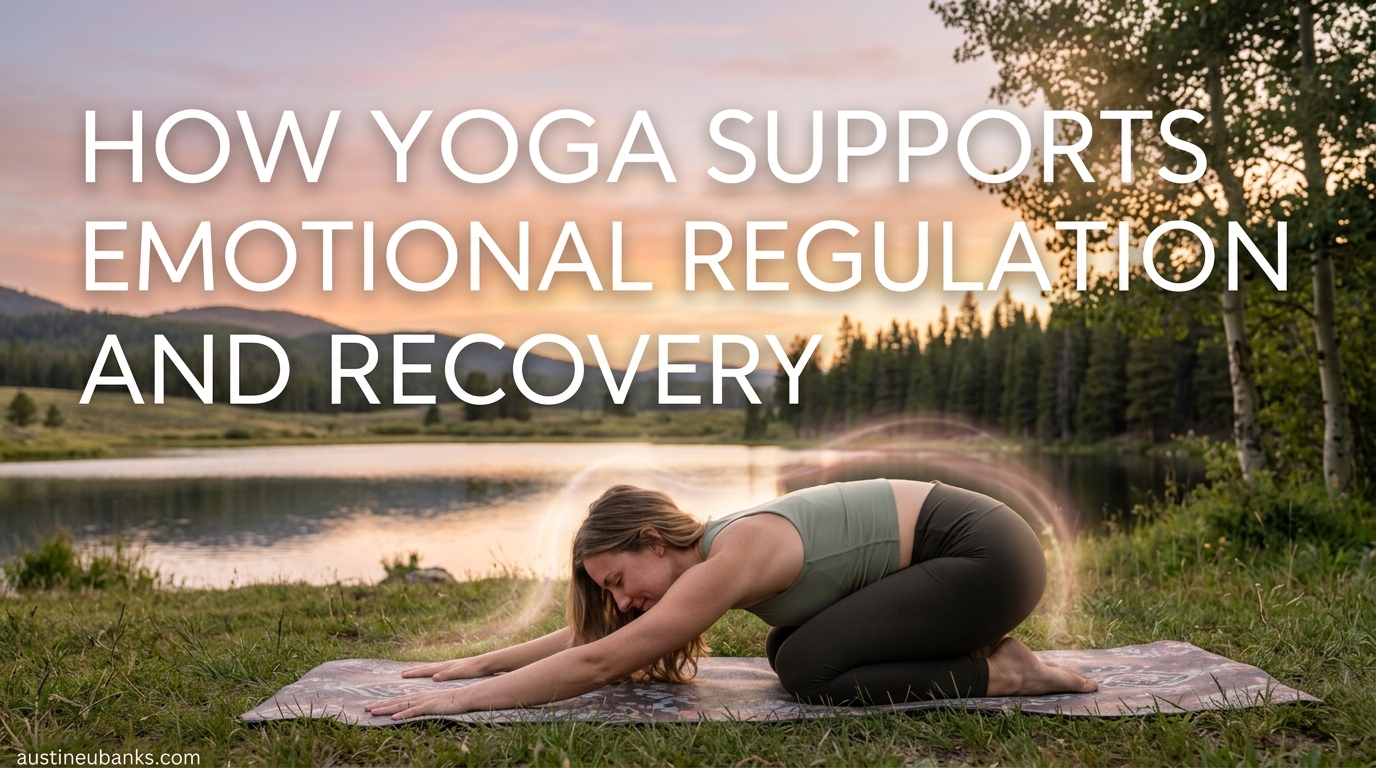
Yoga supports emotional regulation by combining physical postures, controlled breathing, and mindfulness to calm the nervous system, reduce cortisol, and increase body awareness. Through regular practice, yoga shifts the body from fight-or-flight into a parasympathetic rest-and-digest state, helping you stay grounded in the present moment and respond to emotions instead of being overwhelmed by them.
That short answer matters because a lot of people are searching for it. But in my experience, the real story goes much deeper. I have seen people walk into a yoga class carrying years of unprocessed grief, trauma, and stress, only to walk out feeling something shift that talk therapy alone had not reached. I have also been that person on the mat, surprised by unexpected tears during a simple hip-opening pose.
Our team has spent months researching the science behind how yoga supports emotional regulation and recovery, reading through dozens of peer-reviewed studies, forum discussions, and clinical reports. What we found is that yoga is not just stretching with nice music in the background. It is a systematic, evidence-based approach to retraining your nervous system.
This guide covers the brain science, specific breathing techniques you can use today, yoga postures for emotional healing, and how yoga fits into recovery from trauma, anxiety, grief, addiction, and burnout. We also address something that almost no top resource talks about: why so many people cry during yoga and what that emotional release actually means.
Whether you are dealing with a diagnosed condition or simply want to feel less reactive and more resilient in daily life, understanding how yoga supports emotional regulation and recovery can change your relationship with your own emotions.
Table of Contents
What Is Emotional Regulation and Why Does It Matter?
Emotional regulation is your ability to monitor, evaluate, and modify your emotional responses to situations. It is the difference between feeling angry and punching a wall versus feeling angry and taking three deep breaths before responding. Everyone has some capacity for emotional regulation, but some people develop stronger skills than others due to genetics, upbringing, trauma history, and life experience.
People who struggle with emotional regulation often experience rapid mood swings, intense reactions to minor triggers, difficulty calming down after getting upset, and a sense that emotions happen to them rather than through them. This is not a personal failure. It is typically a sign that the nervous system has been stuck in a chronic stress response.
Poor emotional regulation is connected to a wide range of mental health challenges. Research links it to anxiety disorders, depression, substance use, eating disorders, relationship conflicts, and even physical health problems like chronic inflammation and cardiovascular disease. When you cannot regulate your emotions effectively, your body stays in a heightened state of alert that wears down every system over time.
This is where yoga enters the picture. Unlike many approaches that work only at the cognitive level (trying to think your way out of feeling bad), yoga works simultaneously on the body, breath, and mind. It targets the physiological roots of dysregulation, which is why so many therapists and psychiatrists now recommend it alongside traditional treatment.
Think of emotional regulation as a skill you can build, not a trait you are born with. Yoga provides one of the most accessible, research-backed training grounds for developing that skill. And the best part is that you do not need to be flexible, spiritual, or experienced to start benefiting.
How Yoga Supports Emotional Regulation: The Brain Science
Understanding the neuroscience behind yoga makes the practice feel less mysterious and more practical. When I first read the research on how yoga physically changes the brain, it transformed my own practice from something I did because it felt good into something I did because I understood exactly what was happening in my body.
Lowering Cortisol and Stress Hormones
Cortisol is your primary stress hormone. Your adrenal glands release it when your brain perceives a threat, whether that threat is a physical danger, a work deadline, or an intrusive memory. Short bursts of cortisol are normal and helpful. Chronic elevation is not.
When cortisol stays high for extended periods, it damages the hippocampus (the brain region involved in memory and learning), suppresses immune function, disrupts sleep, and keeps your emotional alarm system perpetually triggered. Multiple studies have shown that regular yoga practice significantly reduces cortisol levels. One study published in the Journal of Alternative and Complementary Medicine found that a single 60-minute yoga session measurably decreased salivary cortisol in participants.
Over weeks and months of consistent practice, yoga appears to reset the baseline. Your body becomes less reactive to stressors, and when cortisol does spike, it returns to normal more quickly. This is one of the foundational ways yoga supports emotional regulation at a biological level.
Boosting GABA: Your Brain’s Natural Calming Chemical
GABA (gamma-aminobutyric acid) is a neurotransmitter that acts as your brain’s built-in brake system. When GABA levels are healthy, you feel calm, focused, and emotionally steady. When GABA is low, you feel anxious, irritable, and overwhelmed. Many anti-anxiety medications work by targeting the GABA system.
Research from Boston University School of Medicine found that a 12-week yoga intervention increased GABA levels in the brain by 27 percent. Participants who practiced yoga showed significantly higher GABA than those who spent the same time walking. The lead researcher, Dr. Chris Streeter, concluded that yoga may be more effective than traditional exercise for improving mood and reducing anxiety specifically because of its impact on the GABA system.
This is one of the reasons yoga can feel so different from a gym workout. The combination of movement, breath control, and mindful attention triggers a neurochemical response that other forms of exercise do not fully replicate.
Activating the Parasympathetic Nervous System
Your autonomic nervous system has two main branches: the sympathetic (fight-or-flight) and the parasympathetic (rest-and-digest). Most people with emotional regulation challenges spend too much time in sympathetic activation and not enough time in parasympathetic recovery.
Yoga is one of the most effective ways to shift the body into parasympathetic mode. Slow, deep breathing directly signals the vagus nerve, which in turn activates the rest-and-digest response. Heart rate drops, blood pressure decreases, digestion improves, and the brain shifts into a state where it can process emotions rather than just react to them.
This is not a subtle effect. Research using heart rate variability (a measure of autonomic nervous system balance) shows that even short yoga sessions produce measurable shifts toward parasympathetic dominance. The more regularly you practice, the more your nervous system learns to access this state on its own.
Neuroplasticity: Rewiring the Brain Through Yoga
One of the most exciting findings in neuroscience over the past two decades is neuroplasticity, the brain’s ability to reorganize itself by forming new neural connections throughout life. Yoga takes advantage of this plasticity in several ways.
Harvard Medical School researchers have documented that long-term yoga practitioners show increased gray matter volume in the hippocampus (memory and emotional regulation) and decreased volume in the amygdala (fear and threat detection). MRI scans reveal that the cerebral cortex, the brain region responsible for executive function and decision-making, tends to be thicker in regular yoga practitioners.
What this means in practice is that yoga does not just help you feel calmer in the moment. Over time, it physically reshapes the brain structures that govern emotional regulation. You become less reactive, more resilient, and better able to choose your responses rather than being hijacked by your emotions.
Serotonin and the Mood Connection
Serotonin is another neurotransmitter that yoga influences. Often called the “feel-good chemical,” serotonin helps regulate mood, sleep, appetite, and social behavior. Low serotonin levels are associated with depression and anxiety.
While the research on yoga and serotonin specifically is less extensive than the GABA studies, several trials have documented increased serotonin activity following regular yoga practice. Combined with the cortisol reduction and GABA boost, this creates a powerful neurochemical environment for emotional stability.
Vagus Nerve Regulation Through Yoga
The vagus nerve is the longest cranial nerve in your body, running from your brainstem down through your neck, chest, and abdomen. It is the primary highway of the parasympathetic nervous system, and its health (measured as “vagal tone”) is one of the strongest predictors of emotional resilience.
People with high vagal tone recover from stress more quickly, regulate their emotions more effectively, and even have better social connections. People with low vagal tone tend to stay stuck in stress responses and struggle with emotional regulation. This connection is so strong that some researchers describe vagal tone as the physiological basis of emotional regulation.
Yoga is one of the most accessible ways to stimulate and strengthen the vagus nerve. Here is how different aspects of the practice contribute.
How Yoga Stimulates the Vagus Nerve
Deep, slow diaphragmatic breathing is the most direct way yoga activates the vagus nerve. When you exhale slowly and fully, your heart rate slows and the vagus nerve signals your brain that you are safe. This is why extended exhale breathing (which we cover in detail below) is so effective for acute anxiety.
Certain yoga poses physically stimulate the vagus nerve as it passes through the neck and chest. Gentle neck stretches, shoulder openers, and chest-opening poses like fish pose (Matsyasana) and camel pose (Ustrasana) can mechanically activate the nerve through gentle pressure and stretching.
Chanting and humming are surprisingly powerful vagal stimulators. The vibration created in the throat and chest during practices like Bhramari (humming bee breath) or chanting “Om” directly massages the vagus nerve. Research has shown that the vagus nerve is literally tuned to detect and respond to the vibration of your own voice.
Signs Your Vagal Tone Is Improving
As you practice yoga consistently over weeks and months, you may notice several signs of improved vagal tone. You recover from stressful situations more quickly. Your resting heart rate may decrease. You feel less reactive to minor annoyances. Digestion often improves. Social interactions feel less draining. Sleep becomes deeper and more restful.
These changes do not happen overnight, but they compound. This is why long-term yoga practitioners consistently report feeling fundamentally different in their bodies and emotional lives compared to when they started.
Pranayama: Breathing Techniques for Emotional Regulation
Breath control, known in yoga as pranayama, is arguably the most powerful tool for emotional regulation in the entire practice. You can think of pranayama as the steering wheel of your nervous system. While postures build strength and flexibility, breathing directly and immediately changes your physiological state.
I want to walk you through four specific breathing techniques that are particularly effective for emotional regulation. Each one serves a slightly different purpose, so you can choose the right tool for whatever you are experiencing.
1. Extended Exhale Breathing (For Acute Anxiety and Panic)
This is the technique I recommend most often for people dealing with sudden anxiety, racing thoughts, or panic symptoms. It works by extending your exhale longer than your inhale, which directly activates the parasympathetic nervous system through the vagus nerve. You can feel the effects within 90 seconds.
Step 1: Sit comfortably or lie down. Close your eyes if that feels safe for you.
Step 2: Place one hand on your belly and one on your chest.
Step 3: Inhale slowly through your nose for a count of 4, feeling your belly rise.
Step 4: Exhale slowly through your nose for a count of 6 or 8, feeling your belly fall.
Step 5: Continue this 4-to-6 or 4-to-8 pattern for 3 to 5 minutes.
Step 6: If you feel lightheaded, return to your natural breathing and try again later.
The key is making the exhale longer than the inhale. This ratio signals safety to your nervous system more powerfully than almost any other technique.
2. Box Breathing (Sama Vritti) for Focus and Calm
Box breathing is used by Navy SEALs, first responders, and therapists alike. It equalizes the length of your inhale, hold, exhale, and hold, creating a sense of balance and control. I find it especially helpful during emotionally charged situations when I need to stay present and think clearly.
Step 1: Sit upright with your feet flat on the floor.
Step 2: Exhale completely through your mouth, releasing all air.
Step 3: Inhale through your nose for a count of 4.
Step 4: Hold your breath for a count of 4.
Step 5: Exhale through your mouth for a count of 4.
Step 6: Hold empty for a count of 4.
Step 7: Repeat this cycle 4 to 8 times.
If holding your breath feels uncomfortable or triggers anxiety, skip the holds and simply practice equal inhales and exhales of 4 counts each. You are still getting significant benefits.
3. Alternate Nostril Breathing (Nadi Shodhana) for Balance
This technique balances the left and right hemispheres of the brain and is one of the most deeply balancing practices in the yoga tradition. It is particularly effective when you feel emotionally scattered, overwhelmed, or caught between anxiety and exhaustion. Research has shown it can lower blood pressure and improve attention within a single session.
Step 1: Sit comfortably with your spine straight.
Step 2: Bring your right hand to your face. Rest your index and middle fingers between your eyebrows.
Step 3: Use your thumb to close your right nostril. Inhale slowly through your left nostril for a count of 4.
Step 4: Close your left nostril with your ring finger. Release your thumb and exhale through your right nostril for a count of 4.
Step 5: Inhale through your right nostril for a count of 4.
Step 6: Close your right nostril with your thumb. Release your ring finger and exhale through your left nostril for a count of 4.
Step 7: This completes one cycle. Repeat for 5 to 10 cycles.
This practice has a remarkable way of making you feel balanced when you are pulled in opposite emotional directions. Try it before a stressful meeting or after a difficult conversation.
4. Bhramari (Humming Bee Breath) for Vagal Stimulation
Bhramari uses humming during the exhale to create vibration in the throat and chest, directly stimulating the vagus nerve. It is one of the fastest ways to calm a dysregulated nervous system, and it is especially effective for people who carry tension in their jaw, throat, or neck.
Step 1: Sit comfortably and close your eyes.
Step 2: Gently place your thumbs over the cartilage of your ears to block out external sound.
Step 3: Let your remaining fingers rest lightly over your closed eyes and face.
Step 4: Inhale deeply through your nose.
Step 5: Exhale slowly while making a steady, low-pitched humming sound (like “hmmm”).
Step 6: Focus on the vibration in your throat, chest, and head.
Step 7: Repeat for 5 to 7 rounds.
Many people feel an immediate sense of calm after just two or three rounds of Bhramari. The vibration seems to reach places that conscious breathing alone cannot access.
Yoga Postures That Support Emotional Healing
While breathing is the fastest route to immediate emotional regulation, yoga postures work on a deeper, more cumulative level. Certain poses release stored tension, ground the nervous system, and help you reconnect with your body in ways that support long-term emotional healing.
Here are five postures that our team has found particularly effective for emotional regulation, along with guidance on how to use them.
Child’s Pose (Balasana) for Grounding and Safety
Child’s pose is the ultimate grounding posture. By folding forward with your forehead on the mat, you create a physical shape of safety and surrender. The pressure of your forehead against the floor stimulates the vagus nerve through the cranial base, and the compression of your belly against your thighs encourages deep diaphragmatic breathing.
Stay in this pose for 3 to 10 breaths whenever you feel overwhelmed, scattered, or emotionally flooded. It is also an excellent pose to return to during a yoga practice if emotions begin to feel too intense. You are never “cheating” by resting in Child’s pose. You are actively regulating your nervous system.
Legs Up the Wall (Viparita Karani) for Nervous System Reset
This is one of the most underrated poses in all of yoga. Lying on your back with your legs extended up a wall reverses blood flow, gently lowers your heart rate, and signals deep rest to every system in your body. It is particularly effective for anxiety, insomnia, and the kind of wired-but-tired exhaustion that comes from chronic stress.
Stay in this pose for 5 to 15 minutes. Breathe naturally. Many people report feeling a noticeable shift in their mental state after about 3 minutes. This is an excellent pose to do before bed or during an afternoon energy crash.
Pigeon Pose (Eka Pada Rajakapotasana) for Emotional Release
Hip openers like Pigeon pose are the postures most commonly associated with emotional release during yoga. The hips are a major storage site for physical and emotional tension, particularly stress-related emotions like fear, anxiety, and suppressed anger. When you hold deep hip-opening poses for extended periods, you may notice emotions surfacing.
This is not a sign that something is wrong. It is often a sign that something is working. If emotions arise in Pigeon pose, breathe through them. Stay present. You can always back off if the intensity feels like too much. Start with 5 to 8 breaths per side and work up to longer holds as your body becomes more comfortable.
Savasana (Corpse Pose) for Integration
Savasana looks like lying on the floor doing nothing, but it is actually one of the most important poses in any yoga practice. This is where your body and nervous system integrate everything that happened during the preceding poses. It is the period of consolidation, where the neuroplastic changes take root.
Skip Savasana and you skip the most important part of the practice for emotional regulation. Stay for at least 5 minutes. Let your body be completely still. If your mind races, that is normal. Simply notice the thoughts and return to the sensation of your body resting on the floor.
Cat-Cow (Marjaryasana-Bitilasana) for Releasing Stored Tension
This gentle flowing movement between arching and rounding your spine is one of the best ways to release tension stored in the back, neck, and shoulders. These are the areas where most people carry their stress. The rhythmic movement also coordinates breath with motion, which has a regulating effect on the nervous system.
Flow through 5 to 10 rounds at a slow, deliberate pace. Match each movement to a breath cycle. This is an excellent warm-up before a longer practice and a gentle way to check in with your body at the start of the day.
Which Yoga Style Is Best for Emotional Regulation?
Not all yoga is the same. The style you choose matters enormously for emotional regulation, and unfortunately, many people abandon yoga after trying a style that was wrong for their needs. A fast-paced heated vinyasa class can be wonderful for fitness, but it may leave someone with chronic anxiety feeling more dysregulated than when they walked in.
Here is a breakdown of the yoga styles most relevant to emotional regulation and recovery, with guidance on who each one serves best.
Restorative Yoga: Deep Nervous System Rest
Restorative yoga uses props like bolsters, blankets, and blocks to support your body in comfortable positions for extended holds, often 5 to 20 minutes per pose. There is minimal stretching and zero strain. The entire practice is designed to trigger the parasympathetic nervous system as deeply as possible.
This is the style I recommend most often for people dealing with burnout, chronic anxiety, trauma recovery, or emotional exhaustion. It is also the style most likely to trigger emotional release, so be prepared for that possibility. Reddit users consistently cite restorative yoga as one of the most effective practices for nervous system regulation.
Yoga Nidra: Yogic Sleep for Deep Healing
Yoga Nidra, or “yogic sleep,” is a guided meditation practice where you lie still while a teacher leads you through a systematic body scan and awareness practice. It induces a state between waking and sleeping that allows the nervous system to reach levels of rest difficult to achieve through normal sleep.
Research on Yoga Nidra has shown it can reduce PTSD symptoms, improve sleep quality, and decrease anxiety. Many Reddit users in the CPTSD community describe it as transformative, with some calling it more effective than any medication they have tried. A typical session lasts 20 to 45 minutes, and there are many free guided recordings available online.
Hatha Yoga: A Gentle Foundation
Hatha is the umbrella term for most physical yoga practiced in the West. It tends to be slower-paced than vinyasa or power yoga, with longer holds and more attention to alignment. For beginners seeking emotional regulation, a gentle Hatha class is an excellent starting point.
Hatha gives you time to feel each pose, notice your breath, and develop body awareness without the cardiovascular intensity that can trigger some people’s anxiety. Look for classes described as “gentle,” “beginner,” or “slow Hatha.”
Yin Yoga: Long Holds for Deep Release
Yin yoga involves holding seated and supine poses for 3 to 5 minutes each, targeting the deep connective tissues (fascia) rather than the muscles. The long holds and stillness make it a meditative practice that can access stored tension and emotion in ways that faster-moving styles cannot.
Yin is excellent for people who need both physical and emotional release, but it can be intense. The stillness can bring up difficult feelings. If you have a trauma history, start with shorter holds and work with a trauma-sensitive instructor if possible.
Trauma-Sensitive Yoga: Safety First
Trauma-sensitive yoga (sometimes called trauma-informed yoga) is specifically designed for people with PTSD and trauma histories. The key differences are that the instructor never touches you without explicit permission, poses are offered as choices rather than commands, the language is invitational (“you might try…” rather than “do this”), and the environment is designed to feel safe at every moment.
If you have experienced trauma, this is the style to seek out. Standard yoga classes can unintentionally trigger trauma responses through unexpected touch, dim lighting, or instructions that feel commanding. Trauma-sensitive yoga is trained to avoid these pitfalls while still delivering all the nervous system benefits of yoga.
Choosing the Right Style for Your Needs
For acute anxiety and panic, start with restorative yoga, Yoga Nidra, and breathing exercises. For depression and low energy, a gentle Hatha or slow vinyasa class can help lift your mood without overwhelming your system. For trauma and PTSD, prioritize trauma-sensitive yoga and Yoga Nidra. For burnout and chronic stress, restorative yoga and Yin are particularly effective. For general emotional resilience, any consistent practice will help, but gentler styles tend to produce faster results for regulation specifically.
Emotional Release During Yoga: Why You Might Cry on the Mat
This is the section I wish someone had written for me years ago. If you have ever started crying during a yoga class and felt confused, embarrassed, or worried that something was wrong, this is for you. It is one of the most commonly discussed experiences in yoga forums on Reddit, yet almost none of the top articles ranking for emotional regulation and yoga address it.
So let us talk about it directly. Crying during yoga is normal. It is common. And in most cases, it is a sign that something healing is happening.
Why Yoga Triggers Emotional Release
Your body stores emotional experiences in physical tissues, particularly in the fascia (the connective tissue that wraps around your muscles and organs), the hips, the jaw, the shoulders, and the chest. When you experience stress, fear, or trauma, your muscles contract to protect you. If those emotions are not fully processed and released, the physical tension can remain locked in your body for years.
Yoga, especially deep stretching and long-held poses, can release this stored tension. And when the physical tension releases, the emotional energy that was held in that tension releases too. This is why hip openers like Pigeon pose, chest openers like Fish pose, and deep forward folds are particularly likely to trigger emotional responses.
From a neurobiological perspective, the deep breathing and parasympathetic activation of yoga shift your body into a state where the protective mechanisms that were holding emotions at bay relax. When the guard comes down, the feelings come through.
The Emotional Hangover Phenomenon
Reddit users frequently describe what they call an “emotional hangover” after a deep yoga practice. They feel sore, exhausted, raw, and emotionally vulnerable for hours or even a day after class. One user described it as feeling “like the emotional equivalent of deep tissue massage soreness, but for your feelings.”
This happens because emotional release is real work for your body and nervous system. Processing stored emotions requires energy. The best response is to treat yourself as you would after any intense physical experience: hydrate, rest, eat nourishing food, and avoid making major decisions until you feel grounded again.
If the emotional hangover lasts more than a day or feels overwhelmingly intense, it may be a sign that you need to slow down your practice, work with a trauma-sensitive instructor, or pair your yoga practice with professional therapy.
How to Handle Emotional Release When It Happens
If emotions arise during yoga, the most important thing is not to fight them. Let the tears come. Let the shaking happen. Let the anger or grief move through you. Your body is doing exactly what it needs to do.
Stay with your breath. If you need to pause the physical practice, come into Child’s pose or simply lie down in Savasana. You do not need to leave the room or hide. In my experience, most people in a yoga class are either focused on their own practice or will respond with quiet compassion if they notice you at all.
After the class, take time to journal about what came up. Drink water. Move slowly. If you feel unstable, call a friend or your therapist. Emotional release is healing, but it requires integration. Do not rush back into your day as if nothing happened.
Above all, remember this: feeling worse temporarily does not mean you are getting worse. It often means the exact opposite. You are processing what has been stored, and that processing is the path to feeling better in the long run.
Yoga for Specific Recovery Contexts
Different emotional challenges require different approaches. While the general principles of yoga for emotional regulation apply across the board, understanding how yoga fits into specific recovery contexts can help you tailor your practice and set realistic expectations.
Yoga for PTSD and Trauma Recovery
PTSD keeps the nervous system locked in a state of hypervigilance and reactivity. The amygdala (the brain’s threat detection center) is overactive, while the prefrontal cortex (responsible for rational thought and emotional regulation) is underactive. Yoga directly addresses this imbalance.
Trauma-sensitive yoga has been studied extensively for PTSD, with multiple clinical trials showing significant reductions in symptoms. A study funded by the U.S. Department of Defense found that trauma-sensitive yoga was as effective as some medications for reducing PTSD symptoms in veterans. The key elements are choice, safety, body awareness, and breathing, all delivered in a non-triggering environment.
If you have PTSD, start with trauma-sensitive classes and Yoga Nidra. Avoid heated yoga, hands-on adjustments, and fast-paced styles until you feel stable. Many Reddit users in trauma recovery communities emphasize that consistency matters more than intensity. Ten minutes of daily gentle yoga will do more for your nervous system than one intense weekly class.
Yoga for Anxiety and Depression
For anxiety, the parasympathetic activation of yoga is the primary mechanism. Slow breathing, restorative poses, and meditation all shift the nervous system out of the sympathetic overdrive that characterizes anxiety disorders. The GABA-boosting effect is particularly relevant here, as low GABA is one of the neurochemical hallmarks of anxiety.
For depression, the benefits come from multiple pathways. Yoga increases serotonin and endorphins, improves sleep quality, reduces the inflammation that is now linked to depression, and builds a sense of agency and accomplishment. The physical movement also combats the lethargy and physical stagnation that often accompany depressive episodes.
For depression, slightly more active practices like gentle vinyasa or Hatha can be helpful because they gently increase energy and motivation. For anxiety, lean toward slower, more restorative practices. Many people experience both anxiety and depression, in which case alternating between active and restorative practices based on what you need each day can be an effective strategy.
Yoga for Addiction Recovery
Yoga is increasingly integrated into addiction treatment programs, and for good reason. Addiction is fundamentally a disorder of emotional regulation and nervous system dysregulation. People with substance use disorders often use substances to manage emotions they cannot regulate on their own.
Yoga addresses this root cause by building the emotional regulation skills that substances were masking. It reduces stress, decreases cravings, improves sleep, and provides a healthy coping mechanism for difficult emotions. Many addiction recovery programs now incorporate yoga alongside CBT, DBT, and trauma-informed care.
A key benefit of yoga in addiction recovery is that it teaches interoception, the ability to feel and interpret your body’s internal signals. Addiction often involves a disconnection from bodily sensations. Yoga rebuilds that connection, helping people in recovery notice cravings, emotions, and stress responses earlier, before they lead to relapse.
Yoga for Grief and Loss
Grief is one of the most under-discussed emotional experiences in both yoga and mental health literature. None of the top-ranking articles for this topic cover yoga for grief specifically, yet it is one of the most common reasons people seek out yoga as a tool for emotional regulation.
Grief lives in the body. The chest tightens. The throat constricts. The shoulders collapse. Breathing becomes shallow. Yoga directly addresses these physical manifestations of grief by opening the chest, releasing the throat, and restoring full deep breathing. Heart-opening poses like fish pose, camel pose, and bridge pose can be particularly powerful for grief, though they may also trigger emotional release.
For grief, I recommend restorative yoga and gentle heart-opening sequences combined with extended exhale breathing. Yoga Nidra can also help with the sleep disruption that almost always accompanies bereavement. Be patient with yourself. Grief moves in waves, and your yoga practice should honor that rhythm rather than trying to rush you through it.
Yoga for Burnout and Workplace Stress
Burnout is a modern epidemic that combines emotional exhaustion, physical fatigue, and a sense of cynicism or detachment. It is essentially what happens when your nervous system has been running in stress mode for so long that it starts to give out. No competitor in the top search results addresses yoga for burnout specifically, which is a significant gap.
For burnout, the most important thing is to resist the urge to do more. Burnout is not a productivity problem. It is a recovery deficit. Your yoga practice for burnout should feel like rest, not like another task on your to-do list. Restorative yoga, Yoga Nidra, and Legs Up the Wall should form the backbone of your practice.
Five minutes of Legs Up the Wall during your lunch break. Ten minutes of Yoga Nidra before bed. Three rounds of extended exhale breathing between meetings. These small interventions can start to reverse the physiological effects of burnout without adding to your mental load. The goal is not to become a yogi. The goal is to give your nervous system the rest it has been begging for.
How Yoga Complements Therapy (CBT, DBT, and Beyond)
One of the most common questions people ask is whether yoga can replace therapy. The answer, based on both research and the collective experience of mental health professionals, is no. But yoga can powerfully complement therapy, and in many cases, it makes therapy more effective.
Talk therapy works primarily at the cognitive level. You identify thought patterns, challenge beliefs, and develop new ways of thinking about your experiences. This is valuable and necessary. But trauma and chronic stress are not just stored in your thoughts. They are stored in your body, your nervous system, and your automatic physiological responses.
Yoga bridges this gap. It works at the somatic (body-based) level where talk therapy alone may not reach. Many therapists have told us that clients who begin a regular yoga practice make faster progress in therapy because they arrive at sessions more regulated, more aware of their bodies, and better able to tolerate difficult emotions.
Yoga and CBT (Cognitive Behavioral Therapy)
CBT teaches you to identify and restructure unhelpful thought patterns. Yoga enhances this process by developing the mindfulness skills you need to catch those thoughts in real time. The body awareness built through yoga also helps you notice the physical sensations that accompany negative thought patterns, giving you an earlier warning system.
Yoga and DBT (Dialectical Behavioral Therapy)
DBT includes a module on distress tolerance, which teaches skills for managing intense emotions without making things worse. The breathing techniques and grounding practices of yoga are essentially portable distress tolerance tools. Many DBT programs now incorporate yoga and mindfulness practices as part of their standard curriculum.
A Clear Disclaimer
Yoga is a complement to professional mental health treatment, not a replacement. If you are dealing with a serious mental health condition, please work with a qualified therapist or psychiatrist. Yoga can be an incredibly powerful part of your treatment plan, but it should be just that: a part, not the whole.
Getting Started: Practical Tips for Using Yoga for Emotional Regulation
Starting a yoga practice for emotional regulation does not need to be complicated or expensive. Here are practical recommendations based on research, clinical best practices, and real experiences shared by practitioners in online communities.
How Often Should You Practice?
For emotional regulation specifically, consistency beats intensity every time. Research suggests that practicing yoga 3 to 5 times per week for 20 to 30 minutes produces the most significant improvements in emotional regulation markers. However, even daily 10-minute practices can make a meaningful difference.
I would rather see you do 10 minutes every day than 90 minutes once a week. The nervous system responds to repetition. Small, regular doses of parasympathetic activation build stronger regulatory pathways than occasional intense sessions.
How Long Until You Notice Changes?
Some effects, like reduced acute anxiety after breathing exercises, are immediate. Deeper changes in emotional regulation baseline typically take 4 to 8 weeks of consistent practice. Structural brain changes, like increased hippocampal volume and decreased amygdala reactivity, have been documented after 8 to 12 weeks of regular practice.
If you do not notice dramatic changes in the first week, do not give up. The benefits are cumulative, and many people report that the most significant shifts happened after they had been practicing consistently for 2 to 3 months.
Choosing the Right Teacher or Class
If you are dealing with trauma, anxiety, or any significant emotional challenge, the quality of your instructor matters enormously. Look for teachers who describe their classes as gentle, restorative, or trauma-sensitive. Avoid classes that emphasize pushing through pain, competitiveness, or physical intensity.
A trauma-sensitive yoga instructor will use invitational language, respect physical boundaries, avoid surprise touch, and create an environment where you always feel in control. If a class ever feels unsafe or triggering, you have the right to leave. Trust your instincts.
Building a Sustainable Daily Routine
Start small. Choose one breathing technique and one posture to do each day. Five minutes in the morning, five minutes before bed. Add Yoga Nidra a few times a week using a free guided recording. As this becomes habitual, gradually expand your practice.
The most sustainable practice is one you actually do. A 5-minute daily routine you stick with for a year will transform your emotional regulation more than a 60-minute practice you abandon after two weeks.
Recommended Resources
Reddit users consistently recommend several free and low-cost resources for yoga and emotional regulation. YouTube channels like Yoga with Adriene are frequently praised for their gentle, accessible approach. Insight Timer is the most recommended app for guided Yoga Nidra and meditation. The Veterans Administration offers free trauma-sensitive yoga resources for both veterans and civilians. Many local studios now offer restorative and trauma-sensitive classes, and some community centers provide free or donation-based options.
Frequently Asked Questions
How does yoga help with emotional regulation?
Yoga helps with emotional regulation by combining physical postures, controlled breathing, and mindfulness to activate the parasympathetic nervous system, reduce cortisol, and increase GABA production. Regular practice improves body awareness, helps you stay present with difficult emotions, and physically reshapes brain structures like the amygdala and hippocampus that govern emotional responses.
How long does it take for yoga to improve emotional regulation?
You can experience immediate benefits like reduced anxiety after a single breathing session. Deeper changes in your emotional regulation baseline typically take 4 to 8 weeks of consistent practice. Structural brain changes, including increased hippocampal volume and reduced amygdala reactivity, have been documented after 8 to 12 weeks of regular yoga practice.
Can yoga help with trauma and PTSD?
Yes, trauma-sensitive yoga has been shown in multiple clinical trials to significantly reduce PTSD symptoms. A study funded by the U.S. Department of Defense found it as effective as some medications for veterans. The key is choosing trauma-informed classes that prioritize safety, choice, and body awareness without triggering elements like hands-on adjustments or commanding language.
Is it normal to cry during yoga?
Yes, crying during yoga is completely normal and very common. Your body stores emotional experiences in physical tissues, particularly in the hips, chest, and shoulders. When yoga releases this stored tension, the emotional energy releases too. Hip openers, chest openers, and restorative poses are the most likely to trigger emotional release. This is a sign of healing, not a sign that something is wrong.
Can yoga replace therapy for mental health?
No, yoga should not replace professional therapy for diagnosed mental health conditions. Yoga is a powerful complement to therapy because it works at the body and nervous system level where talk therapy alone may not reach. Many therapists report that clients who practice yoga make faster progress in treatment. Always work with a qualified mental health professional for serious conditions.
What type of yoga is best for anxiety?
For anxiety, restorative yoga, gentle Hatha, and Yoga Nidra are the most effective styles. These slower practices activate the parasympathetic nervous system without triggering the cardiovascular intensity that can worsen anxiety symptoms. Avoid heated yoga and fast-paced vinyasa until your nervous system feels more stable. Pair your physical practice with extended exhale breathing for the best results.
How often should I practice yoga for emotional regulation?
For emotional regulation, aim for 3 to 5 sessions per week of 20 to 30 minutes each. Daily 10-minute practices are also highly effective because the nervous system responds to consistency more than intensity. The most sustainable approach is a short daily routine you can maintain long-term rather than occasional long sessions.
Bringing It All Together
Understanding how yoga supports emotional regulation and recovery means recognizing that yoga is far more than physical exercise. It is a systematic practice for retraining your nervous system, reshaping your brain, and building the emotional regulation skills that allow you to navigate life with greater stability and resilience.
The science is clear. Yoga lowers cortisol, boosts GABA and serotonin, activates the parasympathetic nervous system, increases vagal tone, and produces measurable structural changes in the brain regions that govern emotional responses. These are not vague wellness claims. They are documented effects backed by research from institutions like Harvard Medical School, Boston University, and the National Institutes of Health.
The practical tools are accessible to everyone. Extended exhale breathing can calm an anxiety attack in 90 seconds. Box breathing can steady your nerves before a difficult conversation. Legs Up the Wall can reset your nervous system in 10 minutes. Yoga Nidra can address trauma symptoms that resist other treatments. These are free, portable, and available to you right now.
If you are dealing with trauma, anxiety, depression, grief, addiction, or burnout, start small. Choose one breathing technique. Choose one posture. Practice for five minutes today. Then do it again tomorrow. The nervous system responds to repetition, and the compound effects of consistent practice are where the real transformation happens.
And if you find yourself crying on the mat, let it happen. That is your body releasing what it has been holding. That is your nervous system finally getting the space to process. That is yoga doing exactly what it is supposed to do.
Yoga supports emotional regulation and recovery not by making your emotions disappear, but by helping you develop the capacity to feel them fully without being controlled by them. That capacity, built one breath and one pose at a time, is the foundation of genuine emotional resilience.