
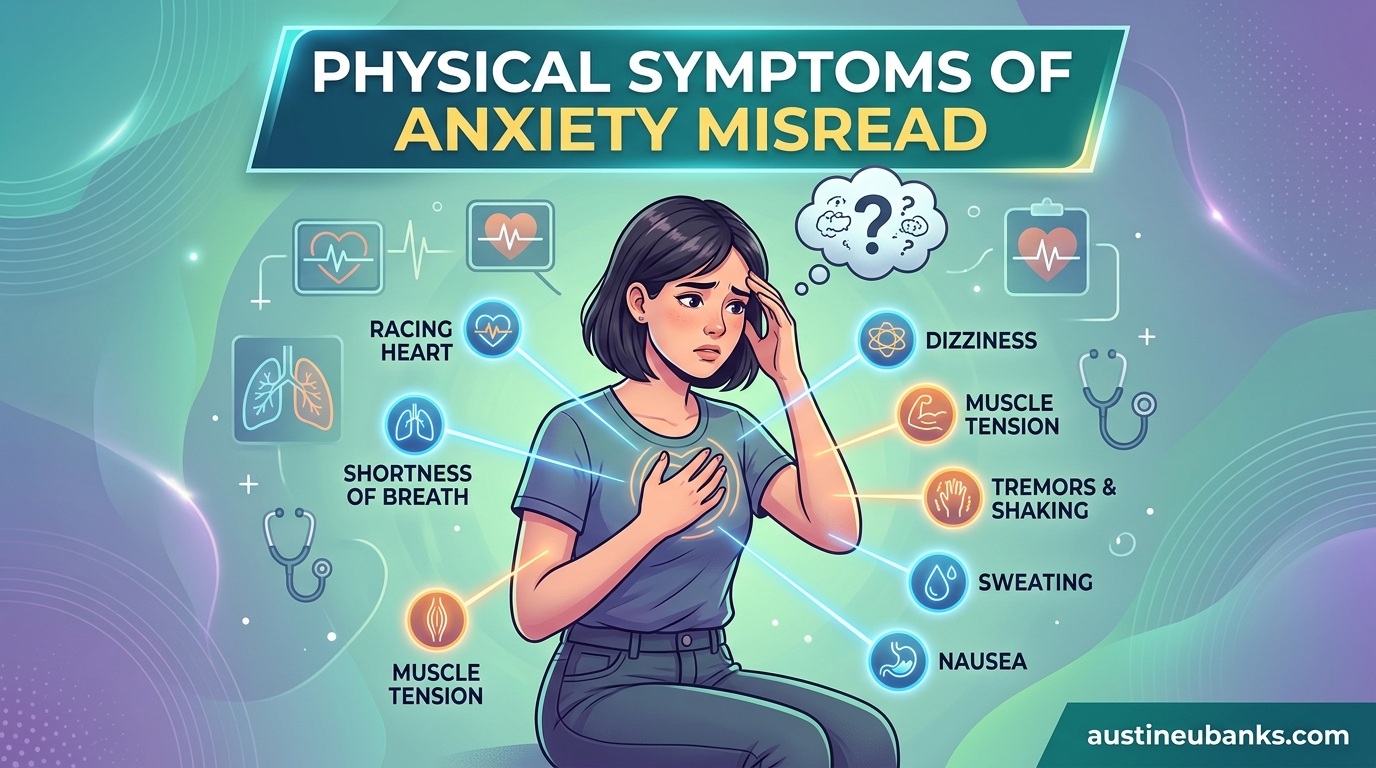
Your heart starts pounding in the middle of a work meeting. Your stomach twists into knots for no obvious reason. You feel dizzy standing up and your hands go numb. If you have been to multiple doctors who ran every test and found nothing wrong, you are not alone. These are physical symptoms of anxiety that people often misread as signs of serious medical conditions.
The truth is that anxiety does not just live in your mind. It speaks through your body in ways that feel alarming, real, and sometimes downright terrifying. Our team has spent months researching forum discussions, medical literature, and clinical reports to understand why these symptoms get misinterpreted so frequently. What we found is that millions of people go through years of unnecessary medical testing before anyone connects their physical complaints to anxiety.
One person on a popular anxiety forum described it perfectly: “Constant air hunger, insomnia, adrenaline spikes, and sometimes dizziness and a feeling of doom, especially when I have work to do.” Another wrote: “Chest pain, dizziness, nausea, headaches, breathlessness, and the list goes on. I went for countless health checkups in fear that it’s something else.” These experiences echo across thousands of similar posts, and they all share one thing in common. People do not realize their body is reacting to anxiety because the physical symptoms feel so severe and so specific that they seem like a medical emergency.
This guide breaks down every major category of physical anxiety symptoms that get misread, explains why your body produces them, and shows you how to tell the difference between anxiety and actual medical conditions. We also cover the rarely discussed phenomenon of having physical anxiety symptoms without feeling mentally anxious, a topic that dominates forum discussions but barely appears in mainstream health articles.
Table of Contents
How Anxiety Creates Physical Symptoms (The Fight-or-Flight Response)
To understand why anxiety produces such intense physical symptoms, you need to understand your fight-or-flight response. This is an ancient survival mechanism hardwired into your autonomic nervous system. When your brain perceives any threat, whether a charging predator or an overdue tax deadline, it triggers the same cascade of physical changes designed to keep you alive.
Your sympathetic nervous system springs into action, flooding your bloodstream with stress hormones including cortisol, adrenaline (also called epinephrine), and norepinephrine. These chemicals tell your heart to pump faster, your lungs to take in more oxygen, your muscles to tense up and prepare for action, and your digestive system to shut down because running from a bear is not the time to digest lunch.
The problem is that your nervous system cannot tell the difference between a real physical threat and a worried thought. A racing mind about tomorrow’s presentation produces the same adrenaline surge as a near-miss car accident. When this stress response fires repeatedly, as it does in chronic anxiety or generalized anxiety disorder, your body stays in a state of partial activation. You feel the physical effects constantly without ever connecting them to anxiety.
Key definition: The fight-or-flight response is your sympathetic nervous system’s automatic reaction to perceived danger. It releases stress hormones that speed up your heart, quicken your breathing, tense your muscles, and redirect blood flow away from digestion. This response is meant to be brief and intense. When it stays switched on due to chronic anxiety, it produces the physical symptoms people misread as illness.
Cardiovascular Symptoms People Misread
Heart-related symptoms are the most commonly misread physical signs of anxiety, and it is easy to see why. When your heart pounds, skips a beat, or races for no obvious reason, your first instinct is to fear a cardiac emergency. In reality, these sensations are textbook anxiety symptoms that cardiologists see every single day.
Heart palpitations are one of the most frequent complaints that bring people to the emergency room. You might feel your heart pounding too hard, beating too fast, or seeming to skip a beat entirely. Adrenaline directly stimulates your heart muscle, causing it to contract more forcefully and rapidly. This feels alarming but is rarely dangerous in an otherwise healthy heart.
Chest tightness and chest pain from anxiety can be especially frightening because it overlaps so heavily with heart attack symptoms. Anxiety chest pain typically feels like a tight, pressing, or aching sensation across the chest wall. It may come and go, shift location, or worsen when you press on the area. Heart attack pain tends to be more constant, crushing, and radiating to the left arm or jaw.
One forum member described their experience: “Feeling my heart beat too hard, or the lack of a heartbeat all of a sudden. Sometimes I feel like my throat is constricted.” This throat-tightening sensation, called globus sensation, often accompanies cardiac anxiety symptoms and makes people fear they are having a heart attack or their throat is closing.
When to seek emergency care: If chest pain is severe, crushing, radiating to your arm or jaw, accompanied by sweating and nausea, or worsens with physical exertion, call emergency services immediately. It is always better to err on the side of caution with chest symptoms. But if tests come back normal and the pain returns during stressful periods, anxiety is a likely explanation.
Respiratory Symptoms That Cause Panic
Breathing difficulties are another category of physical anxiety symptoms that send people to doctors and emergency rooms. The terrifying sensation of not being able to catch your breath, known clinically as air hunger, drives enormous anxiety because breathing is the most fundamental survival function.
Shortness of breath from anxiety happens because adrenaline increases your breathing rate to prepare for physical exertion. Even though you are sitting at a desk and not running from danger, your body is trying to oxygenate your muscles for action. The result is rapid, shallow breathing that feels like you cannot get a full breath.
Hyperventilation takes this a step further. When you breathe too fast and too deeply, you blow off too much carbon dioxide. This creates a cascade of secondary symptoms that people almost always misread as separate medical problems. Low carbon dioxide levels cause dizziness, tingling in the hands and face, chest tightness, and a feeling of impending doom. Each of these symptoms feeds the fear response, which increases breathing rate further.
People with anxiety often describe what they call air hunger, a constant feeling that they cannot take a satisfying deep breath. Forum members use phrases like “I feel like I can’t breathe” and “a constant need to yawn.” This sensation is caused by your chest wall muscles being held in a partially contracted state from tension, making each breath feel incomplete.
These breathing symptoms get mistaken for asthma, respiratory infections, heart failure, and even blood clots in the lungs. The key difference is that anxiety-related breathing problems tend to come and go with stress, improve with distraction, and do not worsen with physical exertion the way cardiac or pulmonary conditions do.
Digestive Symptoms Mistaken for Illness
Your gut and your brain are connected by a complex communication network called the gut-brain axis. Scientists sometimes refer to the gut as your second brain because it contains more than 100 million nerve cells. When anxiety activates your stress response, your digestive system is one of the first body systems to show the effects.
Nausea is incredibly common with anxiety. When your fight-or-flight response fires, blood flow shifts away from your digestive tract and toward your muscles. Digestion essentially pauses, and the resulting sensation feels like nausea or a churning stomach. Many people mistake this for food poisoning, a stomach bug, or a gastrointestinal disease.
Irritable bowel syndrome (IBS) and anxiety go hand in hand. Chronic anxiety alters gut motility, causing diarrhea, constipation, bloating, and abdominal pain that cycle unpredictably. Research shows that people with anxiety disorders are significantly more likely to develop IBS, and vice versa. The gut-brain connection runs in both directions.
Forum members frequently describe severe digestive symptoms they assumed were medical conditions. One person shared: “Tension headaches, debilitating stomach issues, dizziness to the point where it’s dangerous to drive, shakiness to the point where I can’t even type at work.” The stomach problems felt so severe and real that they pursued extensive medical testing before anxiety was identified as the root cause.
Loss of appetite, stress eating, and sudden food intolerances can all stem from anxiety’s effect on digestion. The butterflies-in-your-stomach sensation is literally your gut nerves reacting to adrenaline. When this becomes chronic, it mimics conditions like celiac disease, inflammatory bowel disease, and even food allergies.
Muscle and Joint Symptoms Often Ignored
Muscle tension is one of the most underappreciated physical anxiety symptoms. Your body holds tension from anxiety in predictable patterns, and over time this tension creates real pain and damage that people attribute to everything from poor posture to autoimmune disease.
Tension headaches are the most common manifestation. Anxiety causes the muscles in your neck, shoulders, and scalp to contract and stay contracted. This produces a band-like squeezing sensation around your head that many people mistake for migraines or worry indicates a brain tumor. Tension headaches from anxiety typically affect both sides of the head and feel like pressure rather than throbbing.
Jaw clenching and teeth grinding, clinically known as bruxism, is a major anxiety symptom that often goes unrecognized until a dentist notices worn enamel or cracked teeth. Many people grind their teeth in their sleep without realizing it, then wake up with jaw pain, headaches, and facial soreness. Dentists are frequently the first healthcare providers to identify chronic anxiety based on dental damage.
Neck and shoulder tension from anxiety can become so severe that it limits range of motion and causes radiating pain down the arms. People assume they have a herniated disc, pinched nerve, or cervical spine problem. In many cases, the root cause is sustained muscle contraction from months or years of chronic anxiety that has become the body’s baseline state.
Trembling and shakiness are direct effects of adrenaline and muscle tension. Your muscles vibrate between contraction and relaxation, creating a visible or internal tremor. This symptom gets mistaken for essential tremor, Parkinson’s disease, and even multiple sclerosis. The key distinction is that anxiety tremors tend to come and go with stress and often disappear completely during distraction or relaxation.
Neurological Symptoms That Alarm People Most
Neurological symptoms produce the most fear and the most misdiagnosis. When you experience dizziness, tingling, numbness, or muscle twitching, your mind immediately jumps to the scariest possible explanations. Multiple sclerosis, brain tumors, and neurodegenerative diseases top the list of conditions people fear when anxiety affects their nervous system.
Dizziness and lightheadedness from anxiety have several causes. Hyperventilation lowers carbon dioxide levels, reducing blood flow to the brain. Muscle tension in the neck can affect blood vessels supplying the inner ear. Adrenaline itself can create a spinning or floating sensation. People describe feeling like they are on a boat, like the ground is moving, or like they might faint.
One person shared on a forum: “Dizziness so severe it makes driving dangerous.” This level of dizziness is frightening and completely understandable as a reason to seek medical care. But when MRIs, balance tests, and blood work all come back normal, anxiety is often the missing piece.
Tingling and numbness, clinically called paresthesia, occur when hyperventilation reduces calcium availability at nerve endings. This typically affects the hands, feet, face, and lips. The tingling can feel like pins and needles, electrical sensations, or complete numbness. People fear nerve damage, multiple sclerosis, or stroke, but anxiety-induced paresthesia is harmless and reverses when breathing normalizes.
Muscle twitching is one of the most searched anxiety symptoms online. Forum members describe “muscle twitching all over, jerks, skin sensations, abdominal pain and many more.” These fasciculations happen when overstimulated nerves fire randomly, causing visible muscle jumps under the skin. Anxiety amplifies awareness of these twitches, which are otherwise normal and benign, and the attention makes them feel more frequent and alarming.
Brain fog rounds out the neurological symptoms. Chronic anxiety depletes cognitive resources, making concentration difficult, memory feel unreliable, and mental tasks feel exhausting. People worry about early dementia or cognitive decline when the actual cause is a nervous system that has been running in overdrive for too long.
Lesser-Known Physical Symptoms Nobody Talks About
Beyond the commonly recognized symptoms, anxiety produces a range of surprising physical effects that rarely appear in standard health articles. These are the weird symptoms that dominate forum discussions and drive people to search the internet in the middle of the night looking for answers.
Excessive sweating and temperature dysregulation happen because the sympathetic nervous system controls your sweat glands and blood vessel dilation. Anxiety can trigger sudden hot flashes, cold sweats, clammy hands, and night sweats that soak through clothing. Many people mistake these symptoms for thyroid disorders, menopause, or infections because they involve the body’s temperature regulation system.
Skin reactions are another rarely discussed anxiety symptom. Stress hormones can trigger hives, existing skin conditions like eczema and psoriasis often flare during anxious periods, and some people develop unexplained rashes. The connection between stress and skin is well-documented in dermatology research but rarely communicated to patients.
Phantom smells and vision changes represent some of the most unusual anxiety symptoms. Some people report smelling things that are not present, noticing visual snow or floaters, or experiencing sensitivity to light. These sensory distortions happen because anxiety affects how the brain processes sensory information, heightening awareness and sometimes creating false signals.
Sleep disturbances and chronic fatigue are so common with anxiety that they almost feel like the baseline state. Adrenaline and cortisol keep your nervous system activated, making it difficult to fall asleep or stay asleep. Cortisol naturally peaks in the early morning, and chronically elevated levels can cause you to wake at 3 or 4 am with a racing heart and a mind full of worries. The resulting fatigue feeds back into every other symptom, making everything feel worse.
Brain zaps are electric shock sensations that some people feel in their head, especially when falling asleep or during periods of intense anxiety. They can also occur when discontinuing certain medications. While alarming, these sensations are not dangerous and are widely reported in anxiety communities. They represent the nervous system briefly misfiring as it shifts between activation states.
Physical Anxiety Without Mental Anxiety (Somatic Anxiety)
One of the most confusing and isolating experiences is having physical anxiety symptoms without feeling mentally anxious. This is a massive topic in anxiety forums, yet almost no mainstream health article addresses it. If you have ever wondered “why do I have physical anxiety symptoms but not mental,” you are asking a question that thousands of others ask every month.
This phenomenon is sometimes called somatic anxiety or silent anxiety. Your body is producing all the classic physical symptoms, from heart palpitations to digestive distress to muscle tension, but you do not feel worried, fearful, or anxious in your mind. This disconnect is incredibly confusing because we are taught that anxiety is primarily a mental experience.
The explanation lies in how the autonomic nervous system works. Your sympathetic nervous system can become activated without conscious awareness. Chronic stress, unresolved emotions, suppressed feelings, and physical exhaustion can all keep your stress response switched on below the level of conscious thought. Your body reacts to threats your mind has not consciously registered.
Forum members describe this experience vividly. One person asked: “How can I have physical anxiety symptoms but feel completely calm mentally?” The answer is that anxiety does not require conscious worry to produce physical symptoms. The nervous system responds to perceived threats whether or not your thinking brain is on board with that assessment.
This disconnect often leads to an extended diagnostic odyssey. Because the person does not feel anxious, doctors may not consider anxiety as a potential cause. The patient undergoes test after test, all coming back normal, which deepens the confusion and fear that something serious remains undiagnosed. Understanding that physical symptoms can exist without mental anxiety is often the first breakthrough in getting appropriate help.
Symptoms vs Conditions: What Anxiety Is Mistaken For
Understanding which conditions anxiety symptoms mimic helps you make sense of the diagnostic confusion. Here is a structured breakdown of the most common misreads.
Heart palpitations and chest pain are most frequently mistaken for heart attacks and cardiac arrhythmias. The key difference is timing and pattern. Anxiety chest pain tends to come on during stress, improves with relaxation, and is often reproducible by pressing on the chest wall. Cardiac pain is more likely with exertion and does not change with position or pressure.
Rapid heartbeat and sweating mimic hyperthyroidism. An overactive thyroid produces identical symptoms, which is why thyroid function tests are standard when evaluating these complaints. If thyroid panels come back normal, anxiety becomes a primary suspect.
Trembling and muscle twitching get mistaken for essential tremor, Parkinson’s disease, and even ALS. Anxiety tremors differ because they come and go with stress levels, often disappear during distraction, and are not progressive. Neurological tremors tend to be consistent and worsen over time.
Dizziness, numbness, and tingling overlap heavily with multiple sclerosis and other demyelinating conditions. This is why MRIs are frequently ordered. The difference is that anxiety produces these symptoms through hyperventilation and muscle tension, which are reversible, while neurological diseases produce them through structural nerve damage that shows on imaging.
Digestive symptoms including nausea, diarrhea, and abdominal pain overlap with IBD, celiac disease, food allergies, and gallbladder dysfunction. Endoscopy, colonoscopy, and food sensitivity testing all come back normal when anxiety is the cause, but this process can take months or years.
Shortness of breath and chest tightness mimic asthma and other respiratory conditions. Pulmonary function tests help differentiate the two. Anxiety breathing symptoms typically do not respond to inhalers, which is often the first clue that anxiety rather than asthma is the cause.
The diagnostic odyssey is real. Forum members describe going through cardiologists, neurologists, gastroenterologists, endocrinologists, and emergency rooms before anyone suggests anxiety. One person wrote about “countless health checkups in fear that it’s something else.” This journey is exhausting, expensive, and emotionally draining, but it is the norm rather than the exception for people with significant physical anxiety symptoms.
The Anxiety-Symptom Feedback Loop
One of the cruelest aspects of anxiety symptoms is that they create their own fuel. This is called the anxiety-symptom feedback loop, and understanding it is essential for breaking free from the cycle.
It works like this. Anxiety produces a physical symptom, say a heart palpitation. You notice the palpitation and feel frightened by it. Fear triggers more adrenaline, which produces more palpitations. The increased symptoms confirm your fear that something is wrong, which triggers even more anxiety. Each loop intensifies the symptoms.
Health anxiety adds another layer. If you worry that your symptoms indicate a serious illness, that worry itself activates your stress response and produces more symptoms. You can literally think yourself into worse physical symptoms. One forum member described it: “It’s like my body is terrified to do anything. Chest pains, heart palpitations, and dizzy all day. A constant feeling of unwell, like a tea kettle.”
The tea kettle metaphor is perfect. Anxiety keeps your nervous system simmering at a low boil constantly. Every new symptom whistles louder, and the fear of what that symptom might mean turns up the heat. Breaking this loop requires understanding that the symptoms are anxiety-driven, not evidence of illness.
Health anxiety can actually create physical symptoms through somatoform processes. When you fixate on a body part or sensation, your brain amplifies awareness of normal signals. A normal heartbeat becomes a pounding sensation. Normal digestion becomes stomach distress. The attention itself changes how the body feels, which confirms the fear, which produces more attention. Recognizing this pattern is the first step toward interrupting it.
How to Break the Cycle
Breaking the anxiety-symptom cycle requires calming your nervous system and changing how you respond to physical sensations. Here are the most effective strategies, in order of accessibility.
Step 1: Learn slow breathing techniques. Since hyperventilation drives many anxiety symptoms, controlled breathing directly counteracts the cascade. Try box breathing: inhale for 4 counts, hold for 4, exhale for 4, hold for 4. Repeat for 5 minutes. This activates your parasympathetic nervous system, which is the brake pedal to the fight-or-flight accelerator.
Step 2: Practice progressive muscle relaxation. Anxiety holds tension in your muscles without your awareness. Systematically tense and release each muscle group from your feet to your head. This teaches your body the difference between tension and relaxation, making it easier to release chronic holding patterns.
Step 3: Use grounding exercises. When symptoms spike, grounding techniques pull your attention out of your body and into your environment. Try the 5-4-3-2-1 method: name 5 things you can see, 4 things you can touch, 3 things you can hear, 2 things you can smell, and 1 thing you can taste. This interrupts the fear-symptom feedback loop by redirecting your nervous system.
Step 4: Label symptoms as anxiety. When you feel a palpitation or wave of dizziness, consciously tell yourself: “This is my body’s stress response. It is uncomfortable but not dangerous.” This cognitive labeling reduces the fear that fuels the feedback loop. The more you practice, the faster your nervous system calms down.
Step 5: Address the underlying anxiety. Symptom management helps in the moment, but lasting relief comes from treating anxiety itself. Cognitive behavioral therapy (CBT) is the most studied and effective treatment for anxiety disorders. It helps identify and change the thought patterns that trigger your stress response. Other approaches include psychodynamic therapy, EMDR for trauma-related anxiety, and mindfulness-based interventions.
Step 6: Consider medication. For some people, medication provides the stability needed to engage in therapy and self-help strategies. SSRIs are commonly prescribed for anxiety disorders and can significantly reduce both mental and physical symptoms. Beta-blockers can help specifically with cardiovascular symptoms like palpitations and tremor. These decisions should be made with a healthcare provider who understands anxiety.
When to See a Doctor vs When It Is Likely Anxiety
This distinction matters more than any other in this guide. We are not suggesting you ignore physical symptoms or assume everything is anxiety. New, severe, or changing symptoms should always be evaluated by a medical professional. The goal is to help you understand the pattern that emerges after medical causes have been ruled out.
Red flag symptoms that need immediate medical attention: Sudden severe chest pain, especially radiating to the arm or jaw. Difficulty breathing that worsens with exertion. Sudden weakness or numbness on one side of the body. Sudden severe headache unlike any before. Fainting or loss of consciousness. These symptoms could indicate a true emergency and should never be assumed to be anxiety without evaluation.
Signs that symptoms are likely anxiety-related: Symptoms come and go with stress levels. Medical tests repeatedly come back normal. Symptoms improve with distraction or relaxation. Multiple body systems are affected simultaneously. Symptoms worsen when you focus on them and ease when you are absorbed in other activities. You have a history of anxiety, trauma, or chronic stress.
Tips for communicating with your doctor: Be specific about when symptoms started, what triggers them, and what makes them better or worse. Mention any stressful life events, even if you do not think they are related. Ask directly: “Could these symptoms be related to anxiety or stress?” If your doctor dismisses your concerns without proper testing, seek a second opinion. A good doctor will rule out medical causes first and then discuss anxiety as a possibility.
The diagnostic process typically involves a thorough medical history, physical examination, and targeted testing based on your specific symptoms. Blood work checks thyroid function, vitamin levels, inflammatory markers, and blood counts. An ECG evaluates heart rhythm. Imaging may be ordered based on neurological or gastrointestinal symptoms. When all results are normal, anxiety moves to the top of the differential diagnosis. This process takes time, but it is necessary for both your health and your peace of mind.
FAQs
What weird physical symptoms can anxiety cause?
Anxiety can cause surprising physical symptoms beyond the usual racing heart and nervous stomach. These include muscle twitching anywhere in the body, tingling or numbness in the hands and face, phantom smells, electric shock sensations called brain zaps, sudden hot flashes or cold sweats, skin rashes and hives, vision changes like floaters or visual snow, chronic fatigue despite sleeping, and a constant feeling of air hunger where you cannot seem to take a satisfying deep breath. All of these are caused by stress hormones and nervous system activation.
Can anxiety make you misread things?
Yes. Anxiety changes how your brain processes information by flooding it with stress hormones like cortisol and adrenaline. This heightened state makes you more likely to misinterpret neutral body sensations as signs of danger, read negative tone into innocent messages, and perceive physical symptoms as more severe than they are. Anxiety essentially tunes your brain to detect threats, so it starts finding them everywhere, including inside your own body.
What not to say to someone with anxiety?
Avoid saying things like just calm down, it is all in your head, you are overreacting, other people have it worse, or there is nothing to worry about. These phrases dismiss the person experience and often increase their anxiety. Instead, try saying I am here for you, what you are feeling is real, how can I support you right now, or simply sitting with them in silence. Validation goes much further than reassurance.
What are the long term effects of anxiety?
Chronic anxiety keeps your stress response activated for months or years, which takes a real toll on your body. Long-term effects include persistent muscle tension leading to chronic pain and dental damage from grinding, digestive disorders like IBS, increased risk of high blood pressure and cardiovascular strain, weakened immune function, chronic sleep disturbances and fatigue, and changes in brain structure affecting memory and concentration. Treating anxiety early can prevent or reverse many of these effects.
Conclusion
Understanding the physical symptoms of anxiety that people often misread can save you years of unnecessary worry, testing, and frustration. Anxiety is not just in your head. It is a full-body experience that produces real, measurable, sometimes severe physical symptoms through the activation of your fight-or-flight nervous system.
The most commonly misread symptoms include heart palpitations and chest pain mistaken for cardiac emergencies, digestive problems mistaken for gastrointestinal disease, dizziness and tingling mistaken for neurological conditions, and muscle tension mistaken for structural problems. When medical tests come back normal and symptoms track with stress, anxiety is the most likely explanation.
Remember that having physical symptoms without feeling mentally anxious is completely normal and well-documented. Your nervous system can produce physical anxiety symptoms below the level of conscious awareness. This is not a sign that something is wrong with you. It is a sign that your stress response has been activated for too long and needs support to return to balance.
If you recognize yourself in these descriptions, the most important next step is to talk with a healthcare provider who takes your symptoms seriously. Rule out medical causes, then explore anxiety treatment options like CBT, medication, or a combination of both. The anxiety-symptom feedback loop can be broken. The first step is understanding what is happening in your body and knowing that you are far from alone in experiencing it.