
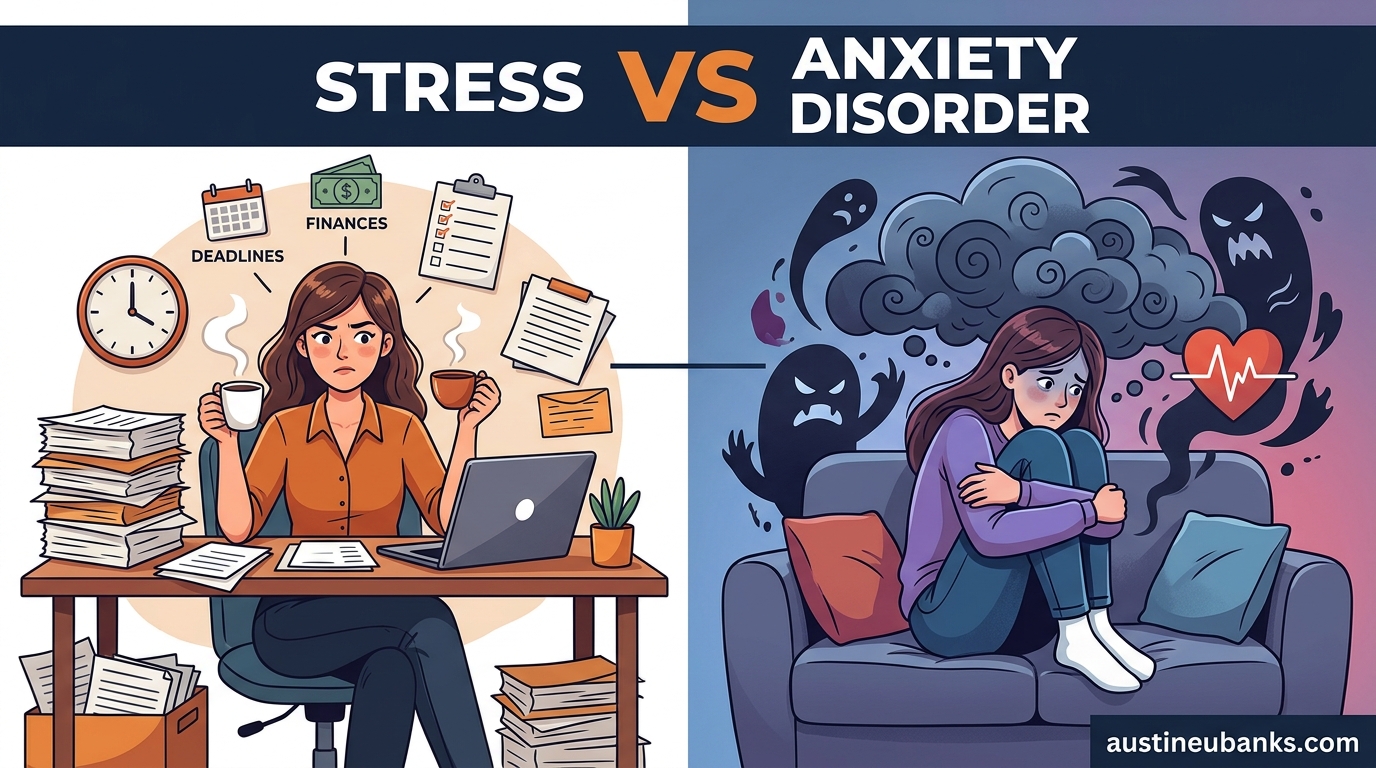
Stress and anxiety share many of the same symptoms, which makes them hard to tell apart. Understanding the difference between everyday stress and an anxiety disorder can help you decide whether what you are feeling is a normal response to life’s pressures or something that needs professional support.
Our team researched medical sources, forum discussions, and clinical definitions to put together a clear, practical guide. By the end, you will know how to identify each one, recognize the warning signs, and understand when it is time to reach out for help.
Table of Contents
What Is Everyday Stress?
Stress is your body’s natural reaction to an external trigger. When a deadline looms, a bill arrives, or an argument happens, your nervous system releases cortisol and adrenaline to help you respond. This is the fight-or-flight response in action.
Everyday stress is temporary and tied to a specific situation. Once the trigger disappears, the stress typically fades. For example, the tension you feel before a big presentation usually dissolves after you finish speaking.
Common characteristics of everyday stress:
- Caused by an identifiable external trigger (work, finances, relationships)
- Resolves when the situation improves or ends
- Feels manageable even if uncomfortable
- Does not significantly interfere with daily functioning
Stress is not inherently bad. Short bursts of stress can sharpen focus and motivate action. The problem arises when stress becomes chronic, lingering for weeks or months without relief.
What Is an Anxiety Disorder?
Anxiety, in its everyday form, is a normal emotion. Everyone feels anxious before a job interview or a medical test. But an anxiety disorder is different. It involves persistent, excessive worry and fear that continues even when there is no clear external threat.
According to DSM-5 criteria, an anxiety disorder is diagnosed when excessive anxiety and worry occur more days than not for at least six months, and the individual finds it difficult to control the worry. The symptoms must also cause significant distress or impairment in daily functioning.
The most common types of anxiety disorders include:
- Generalized Anxiety Disorder (GAD): Chronic, excessive worry about everyday things like health, money, or family, with no single identifiable cause.
- Panic Disorder: Recurrent, unexpected panic attacks accompanied by intense physical symptoms like a racing heart, shortness of breath, and a feeling of impending doom.
- Social Anxiety Disorder: Intense fear of social situations and being judged or humiliated by others.
- Specific Phobias: Extreme fear of a particular object or situation, such as heights, flying, or spiders.
Unlike stress, anxiety disorders do not simply resolve when a situation improves. The worry persists, often without a clear reason, and can take over a person’s life.
The Difference Between Everyday Stress and an Anxiety Disorder: Key Distinctions
Telling stress and anxiety apart comes down to four main factors: the trigger, the duration, the intensity, and the impact on your daily life.
1. External Trigger vs Internal State
Stress is caused by something outside of you. A demanding boss, a tight budget, or a family conflict all serve as external triggers. When the trigger goes away, the stress response typically follows.
Anxiety disorders are driven by an internal state of worry and fear. The anxiety persists even when nothing external is threatening you. As one Reddit user described it, “Anxiety is a deeper, more mournful sort of fear about bad things to come.”
2. Duration and Persistence
Stress is short-term. It spikes in response to a challenge and fades once the challenge passes. If you have been feeling on edge for months with no relief, that points more toward an anxiety disorder than everyday stress.
Clinically, anxiety disorders involve symptoms lasting six months or longer. The worry feels constant, not situational.
3. Intensity and Control
Stress feels uncomfortable but manageable. You might feel tense or irritable, but you can usually push through and complete your tasks.
Anxiety disorders feel overwhelming and uncontrollable. People with GAD often describe wanting to stop worrying but being unable to. The worry takes on a life of its own.
4. Impact on Daily Functioning
Everyday stress might slow you down, but it does not stop you from living your life. You still go to work, maintain relationships, and enjoy hobbies.
Anxiety disorders interfere with daily functioning. They can cause avoidance behavior, where you start skipping events, avoiding people, or steering clear of situations that trigger worry. Over time, your world shrinks.
Physical Symptoms: Stress vs Anxiety
Stress and anxiety share many physical symptoms because both activate the fight-or-flight response. This overlap is why people struggle to tell them apart.
Common physical symptoms of stress include muscle tension, headaches, fatigue, digestive issues, and irritability. These symptoms usually ease when the stressful situation resolves.
Physical symptoms of anxiety disorders overlap heavily but tend to be more persistent and intense. They include a racing heart, shortness of breath, chest tightness, dizziness, sleep problems, and panic attacks. Because these symptoms linger without a clear trigger, they often send people to the emergency room fearing a heart attack.
The key difference is that stress symptoms come and go with the situation, while anxiety symptoms persist regardless of what is happening around you.
The 3-3-3 Rule for Quick Stress Assessment
One tool that no major competitor covers is the 3-3-3 rule. This simple grounding technique helps you assess whether you are experiencing acute stress in the moment and gives your nervous system a chance to reset.
Here is how it works:
- Name 3 things you can see. Look around and identify three objects in your environment. This pulls your attention outward.
- Name 3 sounds you can hear. Focus on three distinct sounds, whether near or far. This engages your senses and interrupts the worry cycle.
- Move 3 parts of your body. Wiggle your toes, roll your shoulders, and clench and release your fists. This reconnects you to your physical body.
The 3-3-3 rule works because it forces your brain to shift from the internal loop of worry to external awareness. If your symptoms ease after using this technique, you were likely experiencing situational stress. If the intense worry returns immediately and will not let go, that may signal an anxiety disorder.
When Stress Turns Into an Anxiety Disorder
Chronic stress can evolve into an anxiety disorder if left unmanaged. When your body stays in fight-or-flight mode for extended periods, your nervous system becomes sensitized. Even small triggers start producing outsized worry responses.
Watch for these warning signs that stress is crossing into anxiety disorder territory:
- You worry constantly, even when nothing is wrong
- Your worry feels out of proportion to the actual situation
- You cannot control or stop the worry no matter how hard you try
- You start avoiding places, people, or activities because of fear
- Your sleep is regularly disrupted by racing thoughts
- You experience panic attacks that seem to come from nowhere
As one forum user put it, “The most important way to distinguish passing anxiety symptoms from a disorder is how long you have them and how intense they are.” If these signs persist for months, it is time to take them seriously.
Long-Term Effects of Untreated Stress and Anxiety
Both chronic stress and untreated anxiety disorders take a toll on your physical health. The constant flood of cortisol and adrenaline damages your body over time.
Long-term effects of chronic stress and persistent anxiety include:
- Heart disease: Elevated cortisol levels raise blood pressure and increase the risk of heart attacks and stroke.
- Weakened immune system: Chronic stress suppresses immune function, making you more susceptible to infections and illnesses.
- Digestive problems: Stress and anxiety disrupt gut function, leading to issues like irritable bowel syndrome, nausea, and acid reflux.
- Sleep disorders: Persistent worry interferes with falling asleep and staying asleep, creating a cycle of exhaustion and heightened anxiety.
- Mental health complications: Untreated anxiety increases the risk of developing depression, substance abuse, and other mental health disorders.
- Cognitive decline: Long-term exposure to high cortisol levels can impair memory and concentration over time.
These consequences are why early intervention matters. The sooner you address chronic stress, the less likely it is to develop into a more serious condition.
When to Seek Professional Help
Knowing when to seek help can feel tricky. Many people wonder if their symptoms are serious enough to warrant a visit to a mental health professional. A good rule of thumb is this: if your worry or stress is interfering with your daily life for more than a few weeks, it is worth getting evaluated.
Schedule an appointment with a doctor or mental health professional if you experience any of the following:
- Symptoms that last longer than six months
- Panic attacks that occur frequently or without warning
- Avoidance of situations you used to handle without difficulty
- Difficulty performing at work, school, or in relationships
- Thoughts of self-harm or feeling hopeless about your situation
- Physical symptoms like chest pain that have been cleared by a doctor but continue to cause distress
Seeking help is not a sign of weakness. Anxiety disorders are highly treatable, and early intervention leads to better outcomes.
Managing Stress and Anxiety: Practical Strategies
Whether you are dealing with everyday stress or symptoms of an anxiety disorder, these strategies can help you manage what you are feeling.
Here are practical steps you can start today:
- Identify your triggers. Keep a journal for one week noting when you feel stressed or anxious and what was happening at the time. Patterns will emerge.
- Practice the 3-3-3 rule. Use it whenever you feel worry building. Grounding techniques interrupt the anxiety cycle.
- Get regular exercise. Physical activity burns off excess adrenaline and cortisol while releasing mood-boosting endorphins. Even a 20-minute daily walk helps.
- Limit caffeine and alcohol. Both can amplify anxiety symptoms and disrupt sleep, creating a feedback loop of heightened worry.
- Build a sleep routine. Go to bed and wake up at the same time every day. Poor sleep feeds anxiety, while restful sleep builds resilience.
- Talk to someone. Sharing what you are going through with a trusted friend, family member, or therapist reduces the isolation that fuels anxiety.
- Consider professional treatment. Therapy (especially cognitive behavioral therapy) and medication are highly effective for anxiety disorders. A mental health professional can guide you.
These strategies work best as part of a consistent routine. Small daily habits add up to significant improvements over time.
FAQs
How is anxiety disorder different from everyday anxiety?
Everyday anxiety is a normal emotional response to a specific situation, like feeling nervous before a test. An anxiety disorder involves persistent, excessive worry that lasts for six months or longer, occurs without a clear trigger, and interferes with daily functioning. The key distinction is duration, intensity, and the inability to control the worry.
How to deal with extreme stress and anxiety?
Start with grounding techniques like the 3-3-3 rule, regular exercise, and a consistent sleep routine. Limit caffeine and alcohol, identify your triggers by journaling, and talk to someone you trust. If symptoms persist for weeks or interfere with daily life, seek help from a mental health professional for therapy or medication options.
What are the long term effects of stress on the body?
Chronic stress raises cortisol levels, which over time increases the risk of heart disease, high blood pressure, weakened immune function, digestive problems like IBS, sleep disorders, cognitive decline, and mental health conditions including depression. Early stress management significantly reduces these risks.
What are the treatments for anxiety disorders?
The most effective treatments include cognitive behavioral therapy (CBT), which helps reframe anxious thought patterns, and medications such as SSRIs and SNRIs prescribed by a doctor. Many people benefit from a combination of therapy and medication, along with lifestyle changes like exercise, improved sleep, and stress management techniques.
Conclusion
Understanding the difference between everyday stress and an anxiety disorder comes down to triggers, duration, intensity, and impact on your life. Stress is a temporary response to an external situation, while an anxiety disorder involves persistent worry that does not go away on its own.
If you recognize yourself in the warning signs described above, take action. Start with the self-help strategies, try the 3-3-3 rule, and do not hesitate to reach out to a mental health professional. Anxiety disorders are treatable, and you do not have to navigate them alone.