
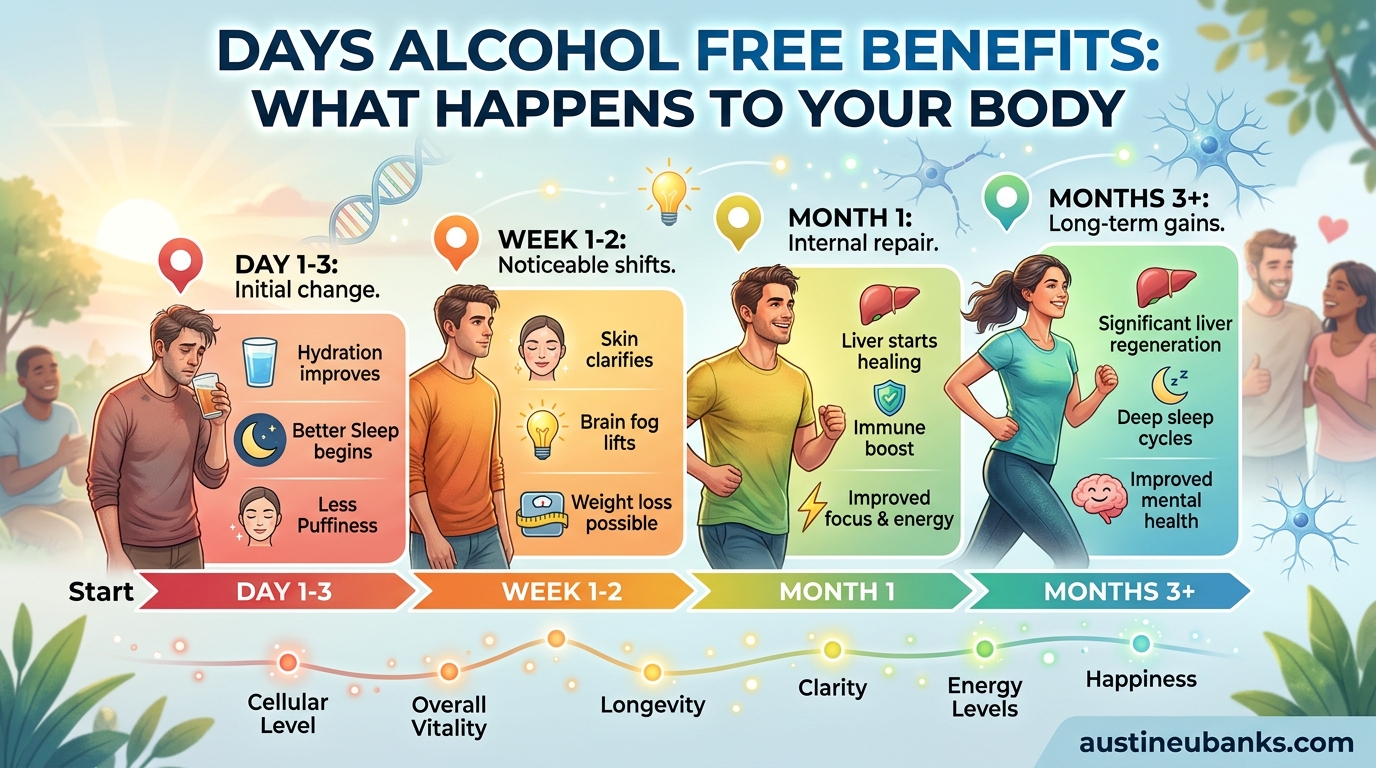
You have probably heard of Dry January, Sober October, or the broader “sober curious” movement that has swept through wellness circles over the past few years. Millions of people worldwide now take a deliberate month off from drinking each year. The health benefits of taking a thirty-day break from alcohol go far beyond saving money on bar tabs and avoiding hangovers. When you stop drinking for 30 days, your liver begins repairing itself, your sleep architecture normalizes, your blood pressure trends downward, and your mental clarity sharpens in ways that might genuinely surprise you.
Our team has spent months reviewing medical studies, forum discussions from r/stopdrinking and talkingsober.com, and clinical research from institutions like the NIH, JAMA, and the World Health Organization. What we found is that even moderate drinkers experience measurable health improvements within just one alcohol-free month. The evidence is stronger than most people realize.
A 2026 Gallup poll found that drinking in the United States has dropped to an all-time low, with only 58 percent of adults reporting they consume alcohol. Younger generations in particular are driving this shift, with many embracing the sober curious lifestyle as a permanent change rather than a temporary challenge. A 2026 JAMA study reinforced what the WHO has been saying for years: no level of alcohol consumption is completely safe, and even moderate drinking carries measurable health risks.
This guide breaks down exactly what happens to your body week by week when you stop drinking. We cover liver repair timelines, sleep quality improvements, weight loss expectations, blood sugar and A1c changes, mental health shifts, and practical tips for getting through the hardest days. Whether you are doing a structured challenge like Dry January or simply questioning your relationship with alcohol, this article gives you the full picture of what to expect and when to expect it.
Table of Contents
Quick Summary: What 30 Days Alcohol-Free Does to Your Body
Yes, 30 days without alcohol is genuinely good for you. Research from the University of Sussex found that among over 800 Dry January participants, 71 percent slept better, 58 percent lost weight, 57 percent had better concentration, and 54 percent reported healthier skin. A separate study published in BMJ Open showed that one month without alcohol improved insulin resistance, lowered blood pressure, and reduced liver fat in moderate-to-heavy drinkers.
Here is a quick rundown of the most significant health benefits of taking a thirty-day break from alcohol:
- Liver repair begins – Liver fat decreases by approximately 15 percent after just one month without alcohol
- Sleep quality improves – REM sleep normalizes after the initial withdrawal period, leading to deeper rest
- Weight loss occurs – Cutting alcohol removes 150 to 300 empty calories per drink from your daily intake
- Blood pressure drops – Even moderate drinkers see measurable reductions in systolic and diastolic pressure
- Insulin sensitivity improves – Blood sugar regulation gets better, potentially lowering A1c over time
- Mood stabilizes – Cortisol levels decrease and dopamine begins to rebalance naturally
- Skin clears up – Hydration improves, inflammation drops, and facial redness from broken capillaries fades
- Immune function strengthens – White blood cell production recovers from alcohol-related suppression
- Cancer risk factors decrease – Alcohol is classified as a Group 1 carcinogen by the WHO
- Mental sharpness returns – Brain fog lifts and concentration improves as the nervous system recalibrates
These benefits compound over time. The first week is often the hardest, but the payoff builds steadily as your body heals from the inside out. By the end of the month, most people report feeling significantly better across nearly every measure of physical and mental wellbeing.
Week-by-Week Timeline: What to Expect on a 30-Day Alcohol Break
One of the things that frustrated me when researching my own alcohol break was the lack of a detailed week-by-week guide. Most medical sites list benefits but do not tell you when to expect them. So I built this timeline from forum data, clinical research, and personal experience accounts from r/stopdrinking and r/SoberCurious. No other major health publication provides this level of week-by-week detail.
Week 1 (Days 1-7): The Adjustment Phase
The first week is typically the most challenging. Depending on how much you drank before, you may experience mild withdrawal symptoms like irritability, headaches, sweating, and disrupted sleep. This happens because your brain is recalibrating its GABA and glutamate receptors, which alcohol artificially suppresses and stimulates.
Forum users on r/stopdrinking consistently report that days 3 through 7 are the hardest. You may feel restless, bored in the evenings, and more aware of social triggers. Sleep often gets worse before it gets better, because alcohol suppresses REM sleep and your brain needs time to reestablish normal sleep architecture. Cravings peak during this period, especially around habitual drinking times like 5 PM or weekend evenings.
Physical symptoms during week 1 can include mild headaches, slight tremors, digestive changes, and increased thirst as your body adjusts. These are all normal signs that your system is recalibrating. Some people also experience vivid or unusually intense dreams during this period as REM sleep rebounds.
By day 5 to 7, many people start noticing early improvements. Morning energy is slightly better, hydration improves, and the mental fog from weekend hangovers begins lifting. Stay hydrated, lean into electrolytes, and remind yourself that this phase is temporary. Forum users who have completed multiple challenges emphasize that pushing through this week is the single most important step.
Week 2 (Days 8-14): Sleep and Energy Return
Week 2 is where the benefits start getting noticeable. Sleep architecture normalizes as REM sleep rebounds and deep sleep stages increase in duration. Many people report waking up feeling genuinely rested for the first time in months or even years. This improved sleep quality drives a cascade of other benefits throughout the day.
Energy levels rise noticeably. Afternoon energy crashes become less frequent because blood sugar stabilizes without alcohol-induced insulin spikes. Mood swings and irritability from week 1 usually subside. Many forum users describe a sense of mental clarity beginning to emerge during this period.
You may also start noticing weight changes in week 2. Cutting 200 to 500 empty calories per day from alcohol creates a natural calorie deficit. Some people drop 2 to 4 pounds during this week alone, especially if they also reduce the late-night eating that often accompanies drinking. Water retention decreases, and facial puffiness starts to visibly reduce.
This is also when many people rediscover evening routines that do not revolve around drinking. You might find yourself reading more, exercising in the evening, or going to bed earlier because you are no longer staying up late with a glass of wine or a cocktail.
Week 3 (Days 15-21): Visible Changes
Week 3 is when the physical changes become visible to you and others. Skin looks clearer and more hydrated as systemic inflammation decreases and water retention normalizes. Many people notice their face looks less puffy, under-eye bags shrink, and the ruddy complexion from broken facial capillaries begins fading.
Weight loss continues steadily. If you were a moderate drinker having 1 to 2 drinks per night, you have now eliminated roughly 2,100 to 4,200 calories over three weeks. That translates to roughly half a pound to a full pound of fat loss from alcohol alone. Liver function continues improving, with liver enzymes like ALT and AST trending downward.
Mentally, week 3 often brings a surprising sense of emotional stability. The anxiety and low mood that alcohol withdrawal from weekends was quietly causing starts disappearing. People on talkingsober.com frequently describe feeling “like themselves again” during this phase. The dopamine system has largely recalibrated, meaning everyday activities feel more rewarding and satisfying.
Exercise performance often improves noticeably during week 3. Without alcohol dehydrating your muscles and disrupting recovery, workouts feel easier and recovery times shorten. Many people report personal records in strength training or faster running times during this period. The synergy between exercise and sobriety creates a positive feedback loop that reinforces the whole experience.
Week 4 (Days 22-30): Full Benefits and New Habits
By week 4, you are experiencing the full range of 30-day benefits. Liver fat has decreased significantly for most drinkers. A study published in the Journal of Hepatology found that just four weeks without alcohol reduced liver fat by an average of 15 percent in people with fatty liver disease. Sleep quality is dramatically improved compared to baseline, and most people report consistently high energy levels.
Weight loss from the month typically ranges from 2 to 8 pounds, depending on your starting weight, drinking habits, and whether you replaced alcohol calories with food. Blood pressure readings are lower for most people. Mental clarity, focus, and mood are stable and noticeably better than when you were drinking.
Equally important, week 4 is when new routines solidify. You have proven to yourself that you can socialize, relax, and enjoy evenings without alcohol. Many people discover hobbies, exercise routines, and evening rituals that feel genuinely rewarding without the need for a drink. The identity shift from “someone taking a break” to “someone who can enjoy life without drinking” often happens during this final week.
This is also the time to reflect on what comes next. Some people decide to extend their break to 60 or 90 days. Others return to drinking but with greater mindfulness and lower volume. The key insight is that you now have a clear baseline for how good you can feel, which makes it much easier to make conscious choices going forward.
Liver Repair: How Your Liver Recovers Without Alcohol
The liver is one of the most resilient organs in the human body, and it begins repairing itself almost immediately after you stop drinking. When you consume alcohol, your liver prioritizes metabolizing ethanol over its normal functions. This means it cannot properly regulate fat metabolism, which leads to fat accumulation inside liver cells. This condition is called hepatic steatosis, or fatty liver disease.
Alcohol-related fatty liver disease develops in roughly 90 percent of people who drink more than 40 to 60 grams of alcohol per day, which is roughly 3 to 5 standard drinks. Even moderate drinking can cause low-grade fat accumulation that goes unnoticed because fatty liver disease rarely produces symptoms until it reaches an advanced stage. The good news is that fatty liver from alcohol is largely reversible when you stop drinking.
Research from the Journal of Hepatology shows that liver fat decreases by approximately 15 percent after four weeks of abstinence. Liver inflammation markers, including ALT and AST enzymes, also drop significantly. For people without advanced cirrhosis, the liver can return to near-normal function within weeks to months of stopping alcohol. This is one of the fastest and most dramatic physical recoveries your body undergoes during a 30-day break.
The key distinction is between fatty liver, alcoholic hepatitis, and cirrhosis. Fatty liver reverses quickly with abstinence, often showing improvement within just two weeks. Alcoholic hepatitis improves with extended sobriety but may cause some lasting damage depending on severity. Cirrhosis involves permanent scarring that cannot be reversed, though stopping alcohol prevents further deterioration and can extend life significantly. If you have been a heavy drinker for years, talk to your doctor about liver enzyme testing before and after your break to get objective data on your recovery.
A standard drink, as defined by the CDC, contains 14 grams of pure alcohol. That equals roughly 12 ounces of beer at 5 percent ABV, 5 ounces of wine at 12 percent ABV, or 1.5 ounces of spirits at 40 percent ABV. Knowing this measurement helps you understand how much alcohol your liver has been processing and what kind of recovery to expect.
Sleep Quality: Why You Rest Better Without Alcohol
Alcohol is one of the most common sleep disruptors in modern life, and most people do not realize how deeply it affects their rest. Alcohol may help you fall asleep faster because of its sedative effect, but it severely disrupts sleep architecture throughout the night. Specifically, alcohol suppresses REM sleep during the first half of the night and causes sleep fragmentation during the second half.
REM sleep is the stage associated with dreaming, memory consolidation, and emotional processing. When alcohol suppresses REM sleep, you miss out on critical cognitive and emotional recovery that happens during this stage. Deep sleep, the physically restorative stage, is also reduced in quality when alcohol is in your system. This is why you can sleep for 8 hours after drinking and still wake up feeling exhausted.
When alcohol wears off in the middle of the night, your brain experiences a rebound effect. Cortisol and adrenaline spike, causing you to wake up at 3 AM feeling anxious and unable to get back to sleep. This is the phenomenon that forum users call “hangxiety,” and it directly undermines the quality of your rest. The circadian rhythm disruption from regular drinking can keep your entire sleep cycle misaligned for weeks.
The first week without alcohol can be rough for sleep. Your brain needs time to recalibrate its natural sleep cycles without the sedative crutch. You may experience vivid dreams, difficulty falling asleep, and early awakenings. This is normal and temporary, and it is actually a sign that your brain is recovering its natural REM sleep patterns.
By week 2, most people experience a dramatic improvement. REM sleep rebounds and normalizes, and deep sleep stages increase. You wake up feeling actually rested instead of groggy. The University of Sussex Dry January study found that 71 percent of participants reported better sleep after one month without alcohol. This sleep improvement alone drives better mood, sharper cognition, improved metabolism, and stronger immune function.
The 2026 Alcohol and Alcoholism journal report cited by AARP confirmed these findings, showing that even moderate drinkers experience significant sleep architecture improvements after just two weeks of abstinence. If you have struggled with sleep for years and tried everything from melatonin to prescription medications, removing alcohol might be the single most effective intervention available.
Weight Loss and Metabolism: The Alcohol-Free Advantage
Alcohol is remarkably calorie-dense. Each gram of alcohol contains 7 calories, which is nearly as much as fat at 9 calories per gram. A standard drink, which the CDC defines as 14 grams of pure alcohol, contains about 98 calories from alcohol alone. Add mixers, and a single cocktail can easily reach 200 to 300 calories. A pint of craft beer can pack 250 calories or more.
For someone who drinks 2 glasses of wine per night, that is roughly 250 to 300 extra calories daily, or 1,750 to 2,100 calories per week. Over 30 days, eliminating those calories creates a deficit of 7,500 to 9,000 calories, which is roughly 2 to 2.5 pounds of fat loss from alcohol alone. If you were a heavier drinker or consumed calorie-rich cocktails, the savings are even larger. A daily martini habit of 250 calories equals 7,500 calories per month, and that is before accounting for the late-night food that often accompanies drinking.
Beyond the direct calorie reduction, quitting alcohol improves your metabolism in deeper ways. Alcohol disrupts insulin sensitivity, meaning your body becomes less efficient at regulating blood sugar. A 2018 study published in BMJ Open found that moderate-to-heavy drinkers who stopped alcohol for one month saw significant improvements in insulin resistance. Better insulin sensitivity means your body stores less fat and uses energy more efficiently. The UC Davis health blog noted that the BMJ Open study showed decreased circulating growth factors related to both cancer risk and blood pressure.
Will Quitting Alcohol Lower A1c?
This is one of the most common questions people ask, and the answer is yes for many people. A1c, or glycated hemoglobin, reflects your average blood sugar over the past 2 to 3 months. Since alcohol impairs insulin sensitivity and contributes to blood sugar dysregulation, removing it can lead to meaningful A1c improvements. This is a question that none of the top-ranking competitor articles currently answer in detail.
While a single 30-day break may produce only a modest A1c reduction because the test measures a 3-month average, the insulin resistance improvements begin almost immediately. People who maintain reduced alcohol intake over several months often see A1c drops of 0.3 to 0.5 percentage points or more, depending on their starting levels and other lifestyle factors. If you have prediabetes or elevated A1c, talk to your doctor about how reducing alcohol fits into your management plan.
The mechanism is straightforward. Alcohol causes blood sugar spikes and crashes by interfering with the liver’s ability to release glucose and by promoting insulin resistance. When you remove alcohol, blood sugar becomes more stable throughout the day. This reduces sugar cravings, supports weight loss, and helps your body maintain healthier glucose levels over time.
Alcohol also contributes to belly fat specifically. Cortisol, which alcohol elevates, promotes visceral fat storage around the midsection. This type of fat is metabolically active and drives further insulin resistance, creating a vicious cycle. Reducing alcohol and lowering cortisol together can help shrink belly fat more effectively than diet alone. Forum users frequently report that their face and midsection slim down noticeably within the first two weeks.
Heart Health and Blood Pressure Improvements
Alcohol consumption raises blood pressure through several mechanisms. It activates the sympathetic nervous system, increases cortisol production, and causes blood vessels to constrict. Over time, even moderate regular drinking can keep blood pressure chronically elevated, increasing the risk of cardiovascular disease, heart attacks, and strokes.
When you stop drinking, blood pressure begins trending downward relatively quickly. The BMJ Open study found that participants who abstained from alcohol for one month saw an average reduction of approximately 6 mmHg in systolic blood pressure. For people with borderline or stage 1 hypertension, this reduction can be clinically significant and may rival the effect of some blood pressure medications.
Alcohol also affects cholesterol in ways that go beyond simple numbers. It can lower HDL, the protective cholesterol, while promoting oxidation of LDL particles, making them more likely to form artery-clogging plaques. Free radicals generated during alcohol metabolism contribute to this LDL oxidation process. Removing alcohol helps stabilize these lipid markers. A study cited by Healthline noted that alcohol-free periods improved the ratio of HDL to LDL while reducing inflammatory markers that drive cardiovascular disease.
For heavy drinkers, the cardiovascular benefits of stopping are even more pronounced. Long-term heavy drinking can lead to dilated cardiomyopathy, a condition where the heart muscle weakens and enlarges. While 30 days will not reverse advanced heart damage, it gives the cardiovascular system a much-needed recovery period and reduces the ongoing strain alcohol places on your heart. The risk of alcohol-associated atrial fibrillation also decreases significantly with abstinence.
Mental Health: Mood, Anxiety, and Brain Function
The mental health benefits of a 30-day alcohol break are often the most surprising and impactful changes people experience. Alcohol acts as a central nervous system depressant, and while it may feel relaxing in the moment, it actually increases baseline anxiety over time. This is the cruel paradox of alcohol: it provides short-term relief while making the underlying anxiety worse.
Alcohol disrupts your brain’s neurotransmitter balance in several ways. It artificially boosts GABA, which causes the relaxed feeling, while suppressing glutamate. Over time, your brain reduces its natural GABA production and increases glutamate receptors to compensate. When alcohol is removed, this imbalance causes rebound anxiety, irritability, and restlessness. This is why the first week can feel emotionally rocky and why some people experience heightened anxiety temporarily.
The dopamine system is also heavily involved. Alcohol triggers a dopamine release that reinforces drinking behavior, creating a reward cycle that gets stronger over time. When you stop, dopamine levels temporarily drop, which can cause mild low mood and lack of motivation during early abstinence. By weeks 2 to 3, the dopamine system begins recalibrating to natural reward levels. Activities like exercise, social connection, and hobbies become more rewarding again without the need for chemical reinforcement.
Cortisol, the stress hormone, is directly affected by alcohol. Regular drinking keeps cortisol levels elevated, which contributes to anxiety, weight gain, poor sleep, and weakened immune function. When you stop drinking, cortisol levels begin normalizing within the first two weeks. This hormonal rebalancing is a major reason why so many people report feeling calmer and more emotionally stable after quitting alcohol.
The forum data from r/stopdrinking is striking on this point. A common theme is: “I did not realize how much alcohol was affecting my mood until I stopped.” People report that chronic low-grade anxiety they attributed to work, relationships, or personality was actually being driven or amplified by their drinking habits. Hangxiety, that specific Sunday-morning dread and rumination, disappears entirely. Many users describe improved relationships with partners and family members because fewer alcohol-fueled arguments occur.
Cognitive function also improves. Alcohol impairs the prefrontal cortex, which controls decision-making, concentration, and impulse control. After 2 to 3 weeks without alcohol, many people notice sharper focus, better memory, and improved ability to handle complex tasks. This cognitive clarity is one of the most celebrated benefits in the sober curious community. Forum users report productivity increases, better work performance, and the ability to think more clearly under pressure.
Skin, Immune System, Cancer Risk, and Financial Savings
Skin and Appearance
Alcohol dehydrates the body and dilates blood vessels, which over time causes broken capillaries, facial redness, and premature skin aging. Alcohol also depletes vitamin A, which is essential for skin cell turnover and collagen production. When you stop drinking, hydration improves within days, and inflammation decreases steadily. Many people report that their skin looks clearer, brighter, and less puffy within the first two weeks.
The AARP article on quitting alcohol notes that some people even see improvements in skin conditions like dandruff and eczema after stopping drinking. Facial puffiness, particularly under the eyes, decreases as water retention normalizes. The skin’s natural glow returns as circulation improves and inflammation subsides. Several forum users mention that friends and coworkers started commenting on how well they looked before they even mentioned they had quit drinking.
Longer-term skin benefits beyond 30 days include reduction in premature aging, fading of spider veins and broken capillaries, and overall improvement in skin tone and elasticity. If you invest in skincare products but drink regularly, you may find that stopping alcohol does more for your appearance than any cream or serum.
Immune System Recovery
Alcohol suppresses immune function by reducing white blood cell production and impairing the body’s ability to fight infections. Heavy drinkers are more susceptible to pneumonia, tuberculosis, and other infections. Even moderate drinking can temporarily weaken immune response for several hours after consumption, leaving you more vulnerable to whatever viruses are going around.
Within 2 to 3 weeks of stopping alcohol, immune function begins recovering. White blood cell counts normalize, and the body’s inflammatory response becomes more balanced. People often report getting fewer colds and recovering faster when they do get sick. This immune recovery is especially valuable during winter months when respiratory infections are common.
Alcohol also disrupts the gut microbiome, which plays a central role in immune function. Approximately 70 percent of your immune system resides in your gut. Alcohol promotes the growth of harmful bacteria while reducing beneficial strains. When you stop drinking, the gut microbiome begins rebalancing, which supports stronger immunity, better digestion, and even improved mental health through the gut-brain axis.
Cancer Risk Reduction
The World Health Organization classifies alcohol as a Group 1 carcinogen, the same category as tobacco and asbestos. Alcohol consumption is linked to at least seven types of cancer, including cancers of the mouth, throat, esophagus, liver, colon, rectum, and breast. The risk increases with the amount consumed, and there is no completely safe level according to the WHO position statement released in 2023.
While 30 days will not erase long-term cancer risk, it does reduce the ongoing cellular damage alcohol causes. Alcohol metabolism produces acetaldehyde, a toxic byproduct that damages DNA and prevents cells from repairing themselves. When you stop drinking, acetaldehyde production stops, and your body can focus on repairing accumulated damage. The liver can redirect resources from ethanol processing to detoxification and cellular repair.
A 2018 BMJ Open study found that one month without alcohol reduced levels of circulating growth factors related to cancer risk. This is direct evidence that even short-term abstinence has measurable cancer-preventive effects at the molecular level. For breast cancer specifically, research has shown that even light drinking increases risk, making abstinence particularly valuable for women with other risk factors.
Financial Savings
The financial aspect of quitting drinking often surprises people. If you spend $10 to $15 per drink at a bar and have 3 drinks per outing twice a week, that is $240 to $360 per month. Over a year, that adds up to $2,880 to $4,320. The University of Sussex survey found that 88 percent of Dry January participants saved money.
One forum user put it bluntly: “I did not realize how much I was spending until I stopped.” The savings go beyond the drinks themselves. Late-night food orders, rideshares, impulse purchases fueled by alcohol, and even the cost of items bought while tipsy online shopping all add up. Many people find that their alcohol-free month pays for gym memberships, new hobbies, or savings goals they had been putting off.
Bureau of Labor Statistics data shows that the average American household spends over $500 per year on alcohol. For heavier drinkers or those in expensive cities, the annual cost can easily exceed $5,000. Tracking your spending during an alcohol-free month can be a revelation that permanently changes your relationship with discretionary spending.
Benefits Comparison: What Different Drinkers Can Expect
The benefits you experience from a 30-day alcohol break depend heavily on your baseline drinking level. Here is a general comparison of what different types of drinkers can expect when they take a month off.
Moderate drinkers (1 drink per day for women, up to 2 for men): You may notice subtle but real improvements. Sleep quality gets better, energy stabilizes, and you might lose 1 to 3 pounds. Blood pressure may drop slightly. The biggest benefit for moderate drinkers is often the mental clarity and mood stability that comes from removing a daily habit. You may also discover that what you thought was your baseline for anxiety or low mood was actually being influenced by regular alcohol intake.
Binge drinkers (4+ drinks per occasion, 1 to 2 times per week): You are likely to see more dramatic changes. Weekend hangovers disappear entirely, freeing up your Saturdays and Sundays for activities you actually enjoy. Sleep quality improves significantly once the rebound effect settles. Weight loss of 3 to 6 pounds is common. Mood swings from the weekly withdrawal cycle level out, and anxiety related to drinking events decreases. You may also find that your productivity at work improves dramatically without the post-drinking fog on Mondays and Tuesdays.
Heavy daily drinkers (3+ drinks per day): You have the most to gain from a 30-day break, but also the most to navigate safely. Liver fat decreases substantially, and liver enzyme levels improve measurably. Blood pressure drops noticeably. Weight loss of 5 to 10 pounds or more is common. Mental health improvements can be profound, including reduced anxiety, improved mood, and better cognitive function. However, heavy drinkers need to be aware of withdrawal risks and should consider medical supervision, which we cover in the next section.
No matter where you fall on this spectrum, 30 days without alcohol gives your body a genuine recovery period. The more you typically drink, the more pronounced and faster the improvements will be. Even light drinkers report that the break gave them valuable perspective on their habits and relationship with alcohol.
Tips for Completing Your 30-Day Alcohol Break
Forum data from r/stopdrinking, r/SoberCurious, and talkingsober.com consistently highlights the same strategies that help people succeed. Drawing from thousands of personal experience accounts, here are the most effective tips for completing a 30-day alcohol break.
1. Find your replacement ritual. Much of drinking is habitual rather than about the alcohol itself. If your evening routine involves a glass of wine while cooking, replace it with sparkling water with lime, a kombucha, or a non-alcoholic beer. The ritual of preparing and sipping something matters more than the substance. UT Southwestern’s guidance specifically recommends having a go-to drink in hand at all times during social situations.
2. Prepare for social situations. Social pressure is the number one reason people break their alcohol-free streak. Decide in advance what you will say when offered a drink. “I am doing a health challenge this month” works well and is rarely questioned. Bring your own non-alcoholic beverage to gatherings so you always have something in hand. Volunteer to be the designated driver, which gives you a concrete reason and earns appreciation from friends.
3. Stock up on satisfying alternatives. The non-alcoholic beverage market has exploded in recent years. Non-alcoholic beers like Athletic Brewing, NA spirits like Seedlip, and ready-to-drink mocktails make it easier than ever to have a satisfying drink without alcohol. Sparkling waters with fruit infusions, kombucha, and specialty teas are also excellent options. Having a variety of appealing alternatives in your fridge removes the temptation to default to alcohol out of convenience.
4. Lean into exercise. Exercise is one of the most effective tools for managing cravings and improving mood during an alcohol break. A study published in PLOS One found that exercise during sobriety challenges significantly improved success rates. The natural endorphin release helps fill the dopamine gap that alcohol left behind. Even a daily 30-minute walk makes a meaningful difference. Many forum users credit their exercise routine as the single most important factor in their success.
5. Track your progress. Apps like Try Dry from Alcohol Change UK and the NIAAA Rethinking Drinking tool help you track days, money saved, and calories avoided. Seeing the numbers add up is genuinely motivating. Time-specific milestones like day 7, day 14, and day 30 are worth celebrating. Many forum users share these milestones publicly, which adds accountability and community support.
6. Build a support system. Having a sober buddy, joining an online community like r/stopdrinking, or telling friends about your challenge dramatically increases your chances of success. The community support aspect is cited over and over as the key factor that helped people who had tried and failed multiple times finally succeed. Being a supportive friend to others on the same journey also reinforces your own commitment.
7. Be ready for the hard days. Forum users are unanimous that days 3 through 7 are the toughest. Cravings peak, sleep is disrupted, and motivation dips. Remind yourself that this phase passes. By day 10, most people report that the hardest part is behind them. Have a list of things to do when cravings hit, such as taking a walk, calling a friend, or making a cup of tea.
8. Focus on nutrition. Eating well during your alcohol break supports your body’s recovery and reduces cravings. Alcohol depletes B vitamins, magnesium, and zinc, so focus on nutrient-dense foods that replenish these. Protein, healthy fats, and complex carbohydrates help stabilize blood sugar and reduce the sugar cravings that often replace alcohol cravings. The UT Southwestern team specifically recommends prioritizing nutrition during Dry January for better results.
9. Remember that you are still fun. One of the biggest psychological barriers is the fear that life without alcohol is boring. Forum users consistently report that this fear dissolves within the first two weeks. You discover that social connection, humor, and enjoyment do not require alcohol. Many people find they actually become more present, engaged, and genuinely fun without the fog of drinking.
Alcohol Withdrawal: What Is Normal and When to Seek Help
For most moderate drinkers, stopping alcohol for 30 days produces only mild and manageable symptoms. You might experience a few days of irritability, mild headaches, sleep disruption, and cravings. These symptoms are uncomfortable but not dangerous, and they typically resolve within a week. They are a sign that your nervous system is recalibrating.
However, for heavy drinkers and those with alcohol use disorder, alcohol withdrawal can be serious and even life-threatening. Severe alcohol withdrawal can progress to delirium tremens, which involves confusion, hallucinations, seizures, and dangerously high heart rate and blood pressure. Delirium tremens occurs in approximately 5 percent of people withdrawing from heavy, long-term alcohol use and can be fatal without medical treatment.
If you have been drinking heavily for months or years, if you have experienced withdrawal symptoms before, or if you have ever had a seizure, do not quit cold turkey without medical supervision. Talk to your doctor about a medically supervised detox program. They can provide medications to manage withdrawal symptoms safely and monitor you for complications. The AUDIT screening tool, which UT Southwestern references, can help you assess whether your drinking level puts you at risk for severe withdrawal.
Warning signs that require immediate medical attention include severe tremors, confusion, hallucinations, seizures, racing heartbeat, fever, and severe vomiting. If you or someone you know experiences these symptoms during alcohol withdrawal, seek emergency medical care immediately. Do not wait to see if symptoms improve on their own.
For everyone else, the mild withdrawal symptoms of a 30-day break are a sign that your body is recalibrating. They are temporary and they mean the reset is working. Most people find that symptoms peak around day 3 and subside noticeably by day 7.
Long-Term Benefits Beyond 30 Days
While 30 days delivers significant benefits, many people wonder what happens if they continue. The research is encouraging. Extended abstinence compounds the benefits you experience in the first month. Liver function continues improving for 3 to 6 months. Blood pressure readings stabilize at lower levels. Sleep quality continues deepening as your brain fully recalibrates its natural rhythms.
The University of Sussex research found that Dry January participation led to lasting behavioral changes. Six months after the challenge, 70 percent of participants were still drinking less than before. This suggests that a 30-day break can serve as a genuine turning point in your relationship with alcohol rather than just a temporary pause.
Forum users who extended their breaks to 60, 90, or more days report even more dramatic changes. Productivity improvements deepen. Physical fitness gains accelerate as consistent exercise becomes routine. Relationships improve as emotional regulation gets stronger. Financial savings multiply. Many people describe feeling like a completely different version of themselves after 90 days compared to day 30.
You do not have to commit to lifelong abstinence to benefit from an extended break. Many people use a longer alcohol-free period to reset their baseline, then return to occasional mindful drinking with a completely different relationship to alcohol. The key is using the break to gain clarity about what role alcohol actually plays in your life.
FAQ: Common Questions About a 30-Day Alcohol Break
Is 30 days without alcohol good?
Yes, 30 days without alcohol is genuinely good for you. Research shows that even one alcohol-free month improves liver function, sleep quality, blood pressure, insulin sensitivity, and mood. A University of Sussex study of over 800 Dry January participants found that 71 percent slept better, 58 percent lost weight, and 57 percent had improved concentration after 30 days without drinking.
What are the powerful benefits of a month without alcohol?
The most significant benefits of a month without alcohol include reduced liver fat by approximately 15 percent, improved REM sleep and deep sleep, weight loss of 2 to 8 pounds, lowered blood pressure, improved insulin sensitivity, stabilized mood from cortisol reduction, clearer and more hydrated skin, stronger immune function, reduced cancer risk factors, and significant financial savings. These benefits begin within the first week and compound throughout the month.
Will quitting alcohol lower A1c?
Yes, quitting alcohol can help lower A1c over time. Alcohol impairs insulin sensitivity and contributes to blood sugar dysregulation, so removing it improves how your body processes glucose. A 2018 BMJ Open study showed that one month without alcohol significantly improved insulin resistance. While a single 30-day break may produce only a modest A1c change because the test reflects a 3-month average, people who maintain reduced alcohol intake often see A1c drops of 0.3 to 0.5 percentage points or more.
What happens to your body after 1 month of no alcohol?
After one month without alcohol, your liver fat decreases by approximately 15 percent and liver enzyme levels improve significantly. Sleep architecture normalizes with better REM and deep sleep. Blood pressure drops by an average of 6 mmHg systolic. Most people lose 2 to 8 pounds from eliminated empty calories and improved metabolism. Skin looks clearer and less puffy, mood stabilizes, anxiety decreases, and cognitive function sharpens. Insulin sensitivity improves and immune function recovers.
How much weight can you lose in 30 days without alcohol?
Most people lose 2 to 8 pounds during a 30-day alcohol break, depending on their previous drinking habits and diet. Someone who drank 2 glasses of wine nightly eliminates roughly 7,500 to 9,000 calories over the month from alcohol alone, translating to about 2 to 2.5 pounds of fat loss. Heavier drinkers and those who reduce late-night eating alongside alcohol typically lose more. The weight loss also includes reduced water retention and decreased belly fat from lower cortisol levels.
Is it safe to quit alcohol cold turkey for 30 days?
For moderate drinkers, quitting alcohol cold turkey for 30 days is generally safe and produces only mild withdrawal symptoms like irritability, headaches, and temporary sleep disruption. However, heavy drinkers and people with alcohol use disorder should not quit abruptly without medical supervision, as severe withdrawal can cause seizures, hallucinations, and delirium tremens. If you drink heavily or have experienced withdrawal symptoms before, talk to your doctor about a medically supervised detox before starting your break.
Conclusion: What Happens After 30 Days
The health benefits of taking a thirty-day break from alcohol are real, measurable, and backed by clinical research. From a 15 percent reduction in liver fat to dramatically improved sleep, lower blood pressure, better insulin sensitivity, stabilized mood, and genuine weight loss, your body responds quickly and positively when you remove alcohol for a month. The evidence from the BMJ Open study, the University of Sussex survey data, and thousands of personal accounts on forums all point to the same conclusion: a month without alcohol is one of the most impactful health interventions available to the average person.
What happens after day 30 is just as important as what happens during it. The University of Sussex found that many Dry January participants continued drinking less even months after the challenge ended. The break gives you perspective on your habits, demonstrates that life without alcohol is genuinely enjoyable, and creates momentum for longer-term change. Some people extend to 60 or 90 days and experience even deeper benefits in energy, productivity, and emotional resilience.
Whether you are doing Dry January, Sober October, or simply taking a personal reset, 30 days is enough time to experience real transformation. Start when you are ready, use the tips in this guide, lean on community support, and see for yourself how different you can feel. Your liver, heart, brain, and bank account will all thank you.