
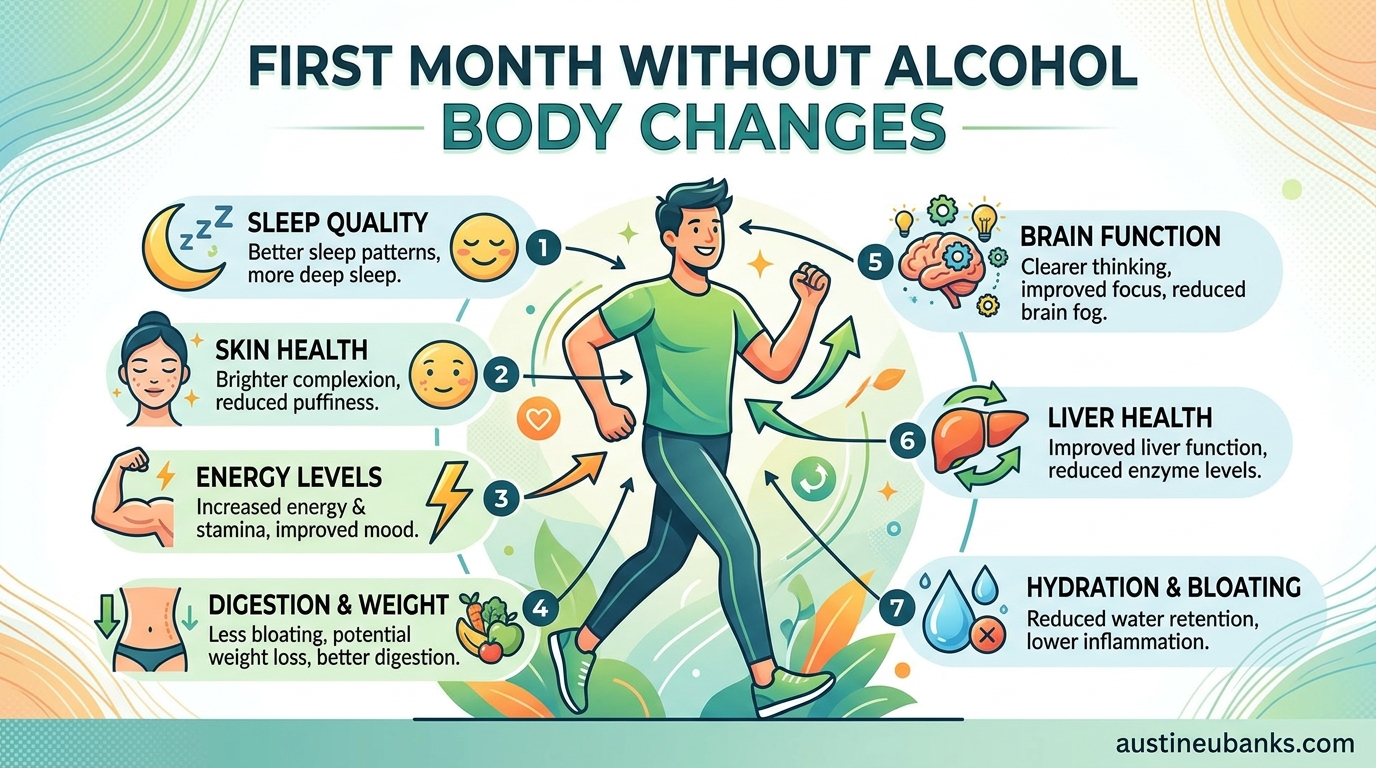
Quitting alcohol for 30 days is one of the fastest ways to reset your health. Whether you are doing a Dry January challenge, exploring the sober curious movement, or just taking a break, the changes your body goes through are remarkable. I have researched the science, sifted through dozens of forum threads from real people who quit drinking, and compiled everything you need to know about what happens to your body in the first month without alcohol.
From better sleep within the first week to measurable liver fat reduction by week two, the transformations happen faster than most people expect. But the journey is not always smooth. The first few days can be tough, weekends bring unexpected challenges, and social situations test your resolve. Understanding the timeline helps you push through the hard parts.
Here is the honest, week-by-week breakdown of how your body heals when you stop drinking, including specific health metrics, mental health changes, and practical tips for getting through each phase.
Table of Contents
What Happens to Your Body in the First Month Without Alcohol: Quick Overview
Before diving into the weekly details, here is a snapshot of what 30 days without alcohol does to your body:
- Week 1: Deeper sleep, improved hydration, steadier energy levels, and initial calorie savings
- Week 2: Liver fat begins dropping (up to 15% reduction), digestion improves, inflammation decreases
- Week 3: Blood pressure drops, heart rate normalizes, insulin sensitivity improves
- Week 4: Skin looks clearer, weight loss becomes noticeable, immune function strengthens
- Throughout: Dopamine receptors begin resetting, anxiety and depression symptoms often ease, mental sharpness returns
One important note before we continue: if you are a heavy drinker, suddenly stopping can cause serious alcohol withdrawal symptoms including seizures and delirium tremens. Always consult a healthcare provider before quitting cold turkey if you drink heavily or daily.
Days 1 to 3: The Initial Detox Phase
The first 72 hours are the most physically intense part of the process. Your body starts clearing alcohol toxins and adjusting to operating without a depressant in your system.
For light to moderate drinkers, the first few days typically bring mild symptoms. You might feel a bit irritable, have trouble sleeping the first night or two, and experience some headaches as your body rehydrates. These symptoms usually pass within 48 to 72 hours.
For heavy drinkers, the first 24 to 72 hours carry real medical risks. Alcohol withdrawal symptoms can include tremors, sweating, nausea, rapid heartbeat, anxiety, and in severe cases seizures. The brain has adapted to alcohol’s depressive effects on the central nervous system by ramping up GABA and glutamate activity. When alcohol is removed suddenly, this imbalance can become dangerous. Medical supervision is strongly recommended for anyone drinking heavily on a daily basis.
Blood Sugar and Hydration Stabilization
Alcohol disrupts blood sugar regulation and acts as a diuretic, causing your body to lose fluids rapidly. Within the first 24 to 48 hours without alcohol, your blood glucose levels begin to stabilize and your hydration status improves.
Many people report feeling dramatically less bloated in just two to three days. This is partly because alcohol causes inflammation in the digestive tract, and removing it allows swelling to reduce. Your body also stops losing excessive fluids, so that puffy feeling in your face and hands starts to fade.
Steadier blood sugar means fewer energy crashes and mood swings. If you typically reached for a drink to unwind, you may notice the first cravings hitting in the evening. These cravings are tied to both habit and the dopamine system adjusting, which we cover later.
Week 1: Sleep, Hydration, and Energy Shifts
By the end of the first week, most people notice a significant improvement in their sleep quality. This is one of the most commonly reported benefits in forums like r/stopdrinking and r/DryJanuary, and the science backs it up.
Alcohol suppresses REM sleep, the restorative stage where your brain processes emotions and consolidates memories. Even a single drink before bed can reduce REM sleep by up to 40% in the first half of the night. When you stop drinking, your brain begins restoring normal REM sleep cycles within days.
Better Sleep Architecture
During week one, your sleep architecture starts to normalize. You will likely experience more vivid dreams as REM rebound kicks in. Some people find this unsettling at first, but it is actually a sign that your brain is healing.
Falling asleep might actually be harder in the first few days since many people unconsciously relied on alcohol as a sleep aid. Your body needs time to relearn how to fall asleep naturally. Most people report that by day five to seven, they are falling asleep more easily and waking up feeling genuinely rested for the first time in months or years.
Hydration and Energy
Without alcohol dehydrating your body every evening, your overall hydration improves noticeably. People frequently report brighter eyes, less dry skin, and reduced under-eye puffiness within the first week.
Energy levels also climb. Alcohol disrupts the body’s natural cortisol rhythm, and removing it allows your hormone patterns to normalize. Instead of that sluggish, foggy morning feeling, you wake up with more natural energy. Many people in sobriety forums describe it as feeling like a fog has lifted.
Calorie Savings Add Up
A standard glass of wine contains about 120 to 130 calories. A pint of beer runs 150 to 200 calories. A single mixed cocktail can pack 200 to 500 calories. If you were drinking two or three alcoholic beverages per day, you were consuming an extra 300 to 1,000 calories daily.
Cutting those out creates an immediate calorie deficit. Even without any other dietary changes, many people notice their clothes fitting slightly better by the end of week one. The actual fat loss becomes more visible in weeks two through four.
Week 2: Liver Recovery and Gut Healing Begin
This is where things get scientifically exciting. By the second week without alcohol, your liver starts repairing itself in measurable ways.
A landmark study published in New Scientist working with researchers at University College London found that participants who gave up alcohol for one month saw an average 15% reduction in liver fat. Liver fat accumulation, also known as fatty liver disease, is one of the earliest signs of alcohol-related liver damage. The fact that it begins reversing in just two weeks shows how responsive this organ is to removing alcohol.
How Liver Recovery Works
Your liver prioritizes metabolizing alcohol over nearly every other function. When you drink, the liver stops breaking down fats and instead focuses entirely on clearing alcohol from your bloodstream. This causes fat to accumulate in liver cells.
When you stop drinking, the liver can finally return to its normal job of fat metabolism. It begins breaking down stored fats, reducing inflammation, and regenerating healthy tissue. Liver enzymes like ALT and AST, which are elevated in regular drinkers, begin dropping back toward normal ranges.
You cannot feel your liver healing, but the effects show up elsewhere. Digestion improves because the liver produces bile more efficiently. You may notice less abdominal bloating and more regular bowel movements.
Gut Microbiome Recovery
Alcohol damages the gut lining and disrupts the balance of bacteria in your digestive tract. It promotes the growth of harmful bacteria while reducing beneficial strains. This imbalance, called dysbiosis, contributes to bloating, irregular digestion, and even mood disturbances through the gut-brain axis.
Within two weeks of stopping alcohol consumption, the gut microbiome begins to rebalance. The intestinal lining starts repairing itself, reducing what is sometimes called leaky gut syndrome. Many people report less acid reflux, reduced stomach discomfort, and more predictable digestion by the end of week two.
Reduced Inflammation
Alcohol is a systemic inflammatory agent. It triggers inflammation throughout the body, affecting joints, skin, blood vessels, and organs. Within 10 to 14 days without alcohol, inflammatory markers in the blood begin to drop.
People with chronic joint pain often notice reduced stiffness. Skin conditions like rosacea, eczema flare-ups, and general redness frequently improve. This inflammation reduction is one reason so many physical benefits accelerate in weeks two and three.
Week 3: Blood Pressure and Heart Health
By the third week, cardiovascular improvements become measurable. Alcohol raises blood pressure even in moderate drinkers, and regular consumption keeps it elevated over time.
Research has shown that just four weeks without alcohol is enough to start lowering both blood pressure and resting heart rate. For people with mild hypertension related to drinking, this reduction can be significant enough to move them from elevated to normal ranges.
Blood Pressure Reduction
Alcohol increases blood pressure through multiple mechanisms. It activates the sympathetic nervous system, increases cortisol production, and causes blood vessels to constrict. Removing alcohol allows all three of these pathways to normalize.
Studies on Dry January participants have documented average blood pressure reductions of 5 to 10 mmHg after one month without alcohol. That reduction is comparable to what you might see from losing 10 pounds or cutting sodium significantly. It translates to a meaningful decrease in cardiovascular risk.
Heart Rate Normalization
Elevated resting heart rate is another effect of regular alcohol consumption. Alcohol triggers the release of adrenaline and disrupts the autonomic nervous system, keeping heart rate higher than it should be at rest.
By week three, many people notice their resting heart rate dropping by several beats per minute. Wearable fitness tracker users on sobriety forums frequently share screenshots showing this change. A lower resting heart rate means your heart is working more efficiently, which reduces long-term strain on the cardiovascular system.
Insulin Sensitivity Improvement
Alcohol consumption contributes to insulin resistance, a condition where cells become less responsive to insulin signals. This forces the pancreas to produce more insulin, eventually leading to elevated blood sugar and increased risk of type 2 diabetes.
Within three weeks of stopping alcohol, insulin sensitivity begins improving. Blood glucose levels become more stable throughout the day. This means fewer energy crashes, reduced sugar cravings, and better metabolic health overall. For anyone with prediabetes or metabolic syndrome, even a month off alcohol can produce meaningful improvements in blood sugar regulation.
Week 4: Skin, Weight, and Immune Function
The final week of a 30-day alcohol-free period is where visible, tangible results come together. People around you may start commenting on how different you look and seem.
Skin Improvements
Alcohol is notoriously harsh on skin. It dehydrates the body, dilates blood vessels causing redness, depletes vitamin A levels needed for cell turnover, and triggers inflammation that worsens conditions like acne and rosacea.
By week four, skin improvements are usually dramatic. The persistent redness and broken capillaries associated with drinking begin to fade. Skin looks plumper and more hydrated as the body maintains proper fluid balance. Under-eye circles often lighten. Many people in recovery communities describe their skin looking brighter and younger after just one month.
Alcohol also worsens skin conditions like eczema, psoriasis, and dandruff by promoting systemic inflammation. Removing it allows these conditions to calm down, sometimes reducing flare-ups significantly.
Weight Loss Patterns
Weight loss after quitting drinking follows a predictable pattern for most people. The first few pounds come off quickly as water retention decreases and the body sheds inflammation-related fluid.
By week four, actual fat loss becomes visible. The calorie deficit from eliminating alcoholic drinks adds up substantially. Someone who was consuming 500 calories per day in alcohol creates a deficit of 14,000 calories over four weeks. That equates to roughly four pounds of fat loss from alcohol calories alone, not counting any dietary changes or increased activity.
Beyond the raw calorie math, removing alcohol improves metabolism in other ways. Alcohol metabolism takes priority over fat oxidation, meaning your body stops burning fat while processing alcohol. Without alcohol interrupting this process, your body burns fat more efficiently throughout the day.
Weight loss varies based on your previous drinking habits. Heavy drinkers who stop tend to lose more weight. But even moderate drinkers typically notice a slimmer waistline and less bloating after 30 days.
Immune System Strengthening
Alcohol significantly weakens immune function. It reduces the number and effectiveness of white blood cells, impairs the gut barrier that blocks pathogens, and disrupts the lymphatic system. Regular drinkers catch colds and infections more frequently and take longer to recover.
After a month without alcohol, immune function measurably improves. White blood cell counts normalize. The gut barrier heals, preventing bacteria and toxins from entering the bloodstream. Production of cytokines, the signaling proteins that coordinate immune responses, becomes more balanced.
People who quit drinking frequently report getting sick less often. Even seasonal allergies sometimes improve as systemic inflammation decreases.
The Dopamine Reset: Mental Health and Mood
The physical changes are impressive, but the mental health benefits often surprise people the most. Understanding the dopamine reset helps explain why quitting alcohol feels so transformative for mood and mental clarity.
Alcohol artificially stimulates dopamine release, creating the pleasurable feelings associated with drinking. Over time, the brain downregulates dopamine receptors to compensate for this artificial stimulation. This means natural, everyday pleasures start feeling less rewarding. You need alcohol to feel normal, and without it, things that used to bring joy feel flat.
Neurotransmitter Rebalancing
When you stop drinking, the brain begins rebalancing its neurotransmitter systems. Dopamine receptors gradually recover their sensitivity. GABA, the brain’s primary calming neurotransmitter, normalizes after being suppressed by alcohol. Serotonin levels, which affect mood and wellbeing, begin to stabilize.
This rebalancing takes time. The first two weeks can feel emotionally flat or even low as the brain adjusts. But by weeks three and four, most people report a noticeable lifting of mood. Colors seem brighter, everyday activities feel more enjoyable, and the persistent background anxiety that many drinkers experience begins to fade.
Anxiety and Depression Reduction
Alcohol is a central nervous system depressant that disrupts the brain’s emotional regulation systems. While it provides temporary relief from anxiety, it actually worsens anxiety and depression over time. This creates a cycle where you drink to feel better, but drinking makes you feel worse, prompting you to drink again.
Breaking this cycle produces profound mental health improvements. Forum users on r/stopdrinking consistently report that anxiety and depression symptoms diminish significantly within the first month. One widely shared sentiment is that the constant low-grade anxiety they attributed to life stress was actually caused by alcohol.
Studies support these anecdotal reports. Research on Dry January participants found improvements in measures of anxiety, depression, and overall psychological wellbeing after one month without alcohol.
Mental Clarity and Focus
Alcohol creates a persistent brain fog that most drinkers do not recognize until it lifts. It impairs cognitive function, reduces concentration, and slows reaction times even when you are not actively drinking.
Within a few weeks of stopping, mental clarity returns. People describe being able to think more sharply, focus for longer periods, and process information more quickly. Work performance often improves. Many people report reading more, engaging in deeper conversations, and feeling more present in their daily lives.
Light vs Heavy Drinkers: Different Experiences
The intensity of these changes depends heavily on how much and how often you drank before quitting. The experience differs significantly between light social drinkers and heavy daily drinkers.
Light to Moderate Drinkers
If you typically drink a few times per week or have one or two drinks per sitting, your first month will likely be relatively smooth. You may notice mild cravings in the first week, especially during habitual drinking times like Friday evenings.
The physical benefits for light drinkers tend to be subtle but noticeable. Sleep improves within the first week. Skin looks slightly brighter by week two. You might lose two to four pounds over the month. The mental health benefits can be surprisingly significant even for moderate drinkers, particularly around reduced anxiety and improved mood.
Many light drinkers report that the biggest change is simply feeling more in control. Without alcohol as a default coping mechanism, they develop healthier stress management habits.
Heavy Drinkers
For heavy drinkers, the first month is more challenging but also more dramatically transformative. The initial detox phase carries medical risks, so medical supervision is essential. Withdrawal symptoms may include tremors, sweating, nausea, anxiety, insomnia, and in severe cases hallucinations or seizures.
Once through the acute withdrawal phase, heavy drinkers often experience the most dramatic improvements. Liver function can show remarkable recovery. Blood pressure drops significantly. Weight loss can be substantial. The mental health improvements are often described as life-changing.
Heavy drinkers also face the biggest lifestyle adjustments. Social routines built around drinking need to be completely restructured. This is where community support becomes critical. Groups like r/stopdrinking, local recovery communities, and professional counseling all play important roles.
Tips for Getting Through the First Month
Knowing what happens physically is one thing. Actually getting through 30 days is another challenge entirely. Forum insights from people who have successfully quit reveal consistent strategies.
Prepare for Weekend Challenges
Nearly every recovery forum mentions that weekends are the hardest part, especially Friday evenings. Years of social conditioning have wired the brain to associate the end of the workweek with a drink. Plan ahead for this. Have alcohol-free alternatives ready, schedule activities for Friday night, and consider changing your routine entirely.
Sparkling water with lime, alcohol-free beer, or kombucha can satisfy the ritual of having a drink in hand without the alcohol. The habit of the physical action is often as strong as the craving for the substance itself.
Manage Social Situations
Social events where alcohol is present are common triggers. Have a response ready for when someone offers you a drink. A simple “I am taking a break from alcohol” or “I am doing a health challenge” works well. Most people are supportive, and many are curious about your reasons.
Consider shifting some social meetups to settings that do not revolve around drinking. Coffee shops, hiking trails, fitness classes, and restaurants where the focus is on food rather than alcohol all work well.
Track Your Progress
Keeping a daily journal of how you feel physically and emotionally helps you notice improvements that happen gradually. Take photos at the start and compare them at day 30. Track your sleep quality, energy levels, and mood.
Many people find that seeing tangible evidence of improvement motivates them to keep going. The changes can be so gradual day to day that you do not notice them until you look back.
Calculate Your Savings
One often overlooked benefit is the financial savings. If you were spending $10 to $30 per day on alcohol, you are saving $300 to $900 in a month. Put that money toward something rewarding, whether it is a massage, new workout gear, or a weekend trip. Having a tangible reward at the end of 30 days gives you something to work toward.
Build a Support System
Community support significantly increases success rates. Online communities like r/stopdrinking and r/DryJanuary provide 24-hour encouragement from people going through the same experience. Local support groups, therapy, and accountability partners all help. You do not have to do this alone, and connecting with others who understand makes a measurable difference.
FAQs
How does 1 month without alcohol change the body?
One month without alcohol produces measurable changes across nearly every body system. Your liver fat can drop by up to 15%, blood pressure typically decreases by 5 to 10 mmHg, sleep quality improves as REM cycles normalize, skin becomes clearer and more hydrated, and most people lose weight from eliminated calories. Mental health benefits include reduced anxiety, improved mood from dopamine receptor recovery, and sharper mental clarity.
What can 4 weeks without alcohol do to your body?
Four weeks without alcohol allows your liver to begin regenerating healthy tissue, your gut microbiome to rebalance, your blood pressure and heart rate to normalize, your skin to clear up, and your immune system to strengthen. You will likely sleep better, feel more energized, experience less bloating, and notice improvements in anxiety and overall mood. Most people also lose several pounds from the calorie deficit alone.
How much weight will I lose in a month if I stop drinking alcohol?
Weight loss varies based on your previous drinking habits. If you were consuming 500 calories per day from alcohol, you create a monthly deficit of about 14,000 calories, which translates to roughly 4 pounds of fat loss. Heavy drinkers may lose 5 to 10 pounds or more. The total also includes water weight from reduced inflammation and bloating, which can add another 2 to 4 pounds in the first two weeks.
Is 30 days without alcohol enough to see benefits?
Yes, 30 days is enough time to experience significant benefits. Research from Dry January studies confirms that one month without alcohol produces measurable improvements in liver function, blood pressure, insulin sensitivity, sleep quality, and mental health. However, some benefits like full dopamine receptor recovery and deeper liver regeneration continue improving beyond 30 days.
What are the hardest days when quitting alcohol?
For most people, the hardest days are the first 72 hours due to physical withdrawal and cravings, and the first few Friday evenings due to entrenched social habits. Days 3 to 7 can bring mood lows as the brain adjusts. Heavy drinkers may face medically serious withdrawal symptoms during the first week. Cravings typically decrease significantly after two weeks.
What happens to your liver after one month without alcohol?
After one month without alcohol, liver fat decreases by an average of 15% according to research from University College London. Liver enzymes that indicate inflammation and damage begin returning to normal levels. The liver regenerates healthy cells and resumes efficient fat metabolism. However, full recovery from advanced liver disease may take several months to years of abstinence.
What Happens to Your Body in the First Month Without Alcohol: Key Takeaways
The human body is remarkably resilient when given the chance to heal. In just 30 days without alcohol, your liver begins shedding fat and regenerating tissue. Your blood pressure drops. Your skin clears. Your sleep deepens. Your mood lifts as dopamine and serotonin systems rebalance. You lose weight, feel more energized, and think more clearly.
These are not vague claims. They are backed by clinical research from institutions like University College London and documented across thousands of personal stories in sobriety communities. The first month sober is a real, measurable health reset that sets the stage for longer-term healing.
The first few days can be challenging, and weekends test your resolve. But understanding what happens to your body in the first month without alcohol gives you a roadmap to push through the hard moments. Each week brings new improvements that make the effort worthwhile.
Beyond 30 days, the benefits continue compounding. Months two and three bring deeper liver recovery, sustained weight loss, stronger mental health, and new lifestyle habits that replace old drinking routines. Many people who start with a 30-day challenge find that the benefits are so significant they choose to extend the break indefinitely.
If you are considering taking a month off alcohol, the best time to start is now. Prepare your environment, line up your support, plan for the tough moments, and track your progress. Your body will thank you faster than you might expect.