
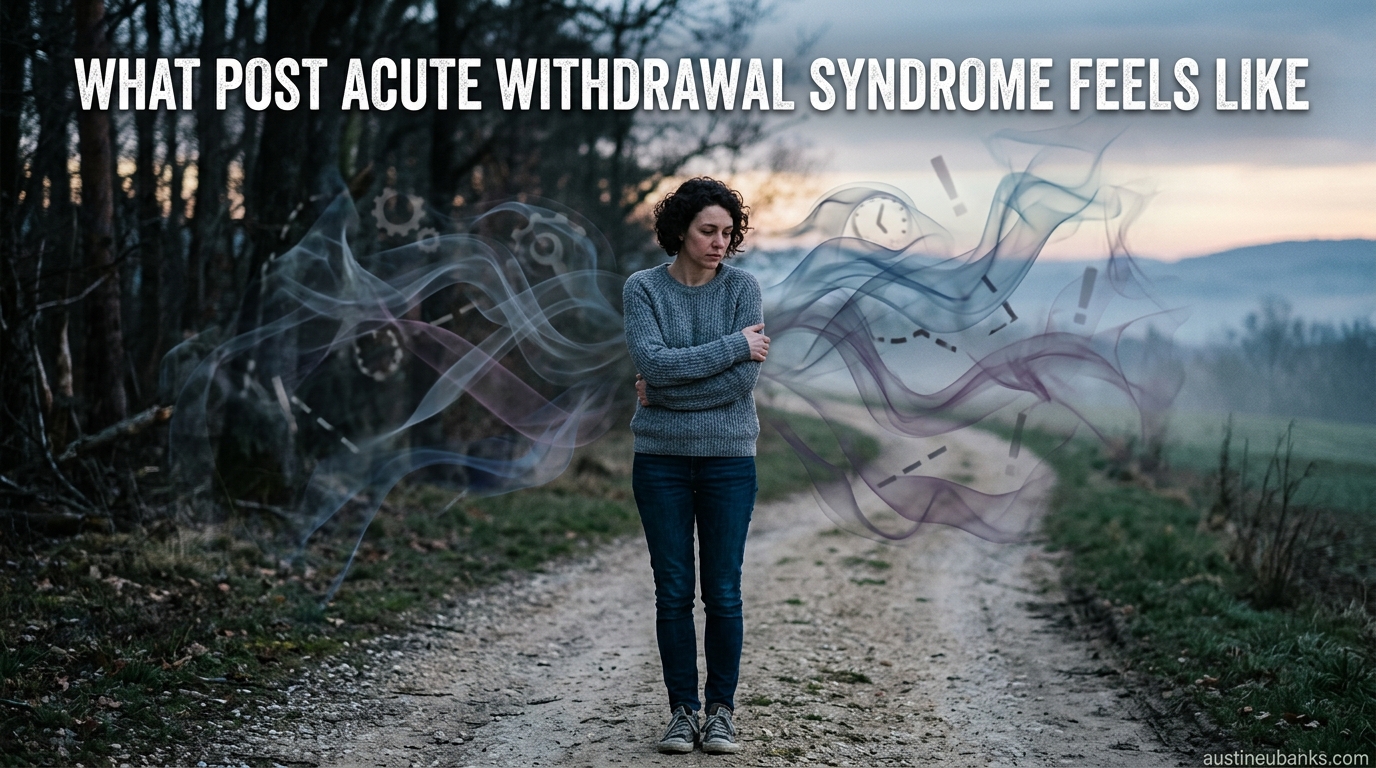
If you have recently gotten through detox and expected to feel amazing, but instead you feel anxious, foggy, exhausted, and emotionally flat, you are not broken. You are likely experiencing post-acute withdrawal syndrome, or PAWS. Understanding what post-acute withdrawal syndrome feels like and how long PAWS lasts can make the difference between staying sober and giving up in frustration. This guide walks you through the symptoms, the timeline, the science behind what your brain is doing, and practical ways to cope when the waves hit hard.
Our team has researched medical sources, recovery forums, and clinical literature to build a resource that answers the questions people in recovery are actually asking. Whether you are 3 weeks, 3 months, or 6 months into recovery and still feeling off, the information here will help you understand why this is happening and when it will end.
One of the hardest things about PAWS is how isolating it feels. Friends and family may expect you to be thriving because you got through detox. They may not understand why you still feel terrible. You may not understand it yourself. This guide exists to bridge that gap, giving you the language and the science to make sense of what you are going through.
Table of Contents
Quick Answer: What PAWS Is and How Long It Lasts
Post-acute withdrawal syndrome (PAWS) is a set of ongoing psychological and emotional symptoms that persist for weeks or months after the initial physical withdrawal phase ends. These symptoms include anxiety, brain fog, mood swings, insomnia, fatigue, anhedonia, and cravings. They come in waves, meaning some days feel nearly normal and other days feel unbearable.
For most people, PAWS lasts between 2 weeks and 6 months, depending on the substance, duration of use, and individual factors. Some people experience symptoms for up to a year, and in rare cases, certain symptoms can linger for up to 2 years. The good news is that PAWS is temporary. Every wave gets shorter and less intense as your brain continues to heal.
PAWS is not a personal failing. It is not a sign that your recovery has stalled. It is not evidence that sobriety does not work for you. It is a biological process, and it has a beginning, a middle, and an end.
What Is Post-Acute Withdrawal Syndrome (PAWS)?
Post-acute withdrawal syndrome is the second stage of withdrawal. The first stage, acute withdrawal, involves the intense physical symptoms most people associate with detox: shaking, sweating, nausea, vomiting, rapid heart rate, and in some cases seizures. Acute withdrawal typically lasts from a few days to two weeks depending on the substance.
Once acute withdrawal ends, some people assume the worst is behind them. Then, 2 to 8 weeks later, a new set of symptoms appears. These symptoms are mostly psychological and emotional rather than physical. That is PAWS.
The key thing to understand about PAWS is that it is not a sign that something has gone wrong. It is the brain’s normal healing process. After months or years of substance use, your brain’s neurotransmitter systems adapted to the presence of drugs or alcohol. Now they are recalibrating to function without them. That recalibration takes time, and the symptoms you feel are part of that process.
Some people experience a brief honeymoon period between acute withdrawal and PAWS. For a few days or weeks, they feel good. Energy returns. Optimism is high. Then the floor drops out and PAWS symptoms begin. This transition can be especially disorienting because it feels like things were getting better and then suddenly reversed.
It is worth noting that PAWS is not universally accepted as a formal medical diagnosis. It does not appear in the DSM-5 as a standalone condition. However, the phenomenon is widely recognized by addiction medicine specialists, treatment providers, and people in recovery. The clinical literature describes it as protracted withdrawal, and the symptoms are well-documented across multiple substances.
Early Signs of PAWS
PAWS does not always announce itself clearly. Many people do not realize they are experiencing it until they learn the signs. The early signs that acute withdrawal is transitioning into PAWS include:
- Persistent trouble falling asleep or staying asleep, often with vivid or disturbing dreams.
- Difficulty concentrating on tasks that used to be easy.
- Mood swings that feel out of proportion to the situation.
- A flat or numb emotional state where nothing feels enjoyable.
- Heightened anxiety or irritability without a clear trigger.
- Stronger cravings than you experienced during early detox.
- Sensitivity to stress that feels disproportionate to the stressor.
- Feeling disconnected from your own emotions or from other people.
If several of these sound familiar and you are between 2 and 12 weeks into recovery, PAWS is the likely explanation. Knowing this can help you respond with patience and self-compassion rather than alarm.
What Post-Acute Withdrawal Syndrome Feels Like
This is the section I wish more resources covered, because the most common question in recovery forums is some version of: Is what I am feeling normal, or is something wrong with me?
People describe PAWS in strikingly similar ways across different substances and recovery paths. One of the most common descriptions is that PAWS feels like being a ghost. You go through the motions of daily life, but nothing feels real or meaningful. Conversations feel distant. Food tastes flat. Activities that used to bring joy produce nothing. One person in a recovery forum described it as “the void after the hell of acute withdrawal.”
Another hallmark experience is the wave pattern. PAWS does not follow a steady decline or improvement. Instead, symptoms come in waves that can last hours or days. You might wake up feeling clear and energized, convinced the worst is over, only to feel like you cannot get out of bed by that same afternoon. These sudden shifts are disorienting and can make you doubt your progress.
The unpredictability is one of the cruelest aspects of PAWS. You cannot plan around it. You might schedule a productive day and wake up unable to focus on a single task. You might feel great on a Tuesday and despairing on a Wednesday for no identifiable reason. This makes it difficult to commit to plans, maintain work performance, or explain your experience to others.
What Anhedonia Actually Feels Like
Anhedonia is often the most distressing symptom, and it deserves its own description because it is so widely misunderstood. Anhedonia is the inability to feel pleasure. It is not sadness. It is not grief. It is not feeling down. It is the absence of feeling entirely.
Music does not move you. Time with loved ones feels like going through a script you have memorized. Food is just fuel. Nature, hobbies, humor, accomplishment, all produce the same flat response. For someone who is used to substances providing artificial dopamine spikes, the contrast is jarring. You remember that things used to feel good, and the gap between that memory and your current reality can be agonizing.
What makes anhedonia especially difficult is that it is invisible. You can appear functional. You can go to work, attend social events, and do the things you are supposed to do. But internally, nothing registers. Other people may comment on how well you seem to be doing, which can deepen the sense of isolation because you know it does not match your inner experience.
Anhedonia does lift. It is often one of the later symptoms to resolve because dopamine system recovery takes time. But it does lift. The first time you notice yourself genuinely enjoying something again, even briefly, is often described by people in recovery as a turning point.
What Brain Fog Actually Feels Like
Brain fog makes simple tasks feel impossible. Reading a book, following a conversation, or doing basic work tasks can feel like wading through wet concrete. You forget words mid-sentence. You walk into a room and forget why. Your memory feels unreliable in ways that are genuinely frightening if you do not know it is a temporary symptom.
Brain fog affects work performance, which creates a secondary source of stress. You might worry that you are falling behind, that colleagues are noticing, or that you are not as capable as you used to be. Understanding that brain fog is a known, temporary symptom of neurological recovery can reduce the anxiety that otherwise compounds the problem.
Sleep Problems: The Most Persistent Symptom
Sleep problems are often the most persistent and exhausting part of PAWS. Insomnia is common, but so is the opposite: sleeping 10 or 12 hours and still waking up exhausted. Vivid dreams and nightmares can make sleep feel like hard labor. Many people report that sleep issues outlast every other PAWS symptom by months.
The vivid dreams deserve special mention. During active substance use, REM sleep, the phase associated with dreaming, is often suppressed. When you quit, the brain rebounds with intensified REM activity. This produces vivid, sometimes disturbing dreams that can feel incredibly real. They are not a sign of psychological disturbance. They are a sign that your brain’s sleep architecture is normalizing.
Poor sleep creates a vicious cycle. Bad sleep worsens anxiety. Anxiety worsens brain fog. Brain fog worsens work performance, which increases stress, which worsens sleep. Breaking this cycle by prioritizing sleep hygiene is one of the most impactful things you can do during PAWS.
The 4-to-8-Week Wall
The 4-to-8-week mark is when PAWS typically hits hardest. This is the window where acute withdrawal is clearly over and people expect to feel good. Instead, this is often when anhedonia, brain fog, and mood swings peak. Forum users describe this period as the most dangerous for relapse, because the disconnect between expectation and reality feels unbearable.
If you are in this window right now and feeling terrible, you are right on schedule. This is the most common time for people to question whether recovery is worth it, whether something has gone wrong, or whether they will ever feel normal again. The answer is yes. This phase passes. Most people report significant improvement by the 3-month mark.
PAWS Symptoms: The Full List
Here is a comprehensive numbered list of PAWS symptoms. Not everyone experiences every symptom, and the intensity varies from person to person and from day to day.
- Anxiety ranging from mild restlessness to full panic attacks.
- Depression that can feel heavy, persistent, and resistant to positive events.
- Anhedonia, the inability to feel pleasure or interest in activities you normally enjoy.
- Brain fog including poor concentration, slow thinking, and difficulty processing information.
- Memory problems affecting short-term recall and the ability to learn new information.
- Mood swings that shift rapidly between irritability, sadness, anger, and numbness.
- Insomnia including difficulty falling asleep, frequent waking, and unrefreshing sleep.
- Vivid dreams and nightmares that can be disturbing and disrupt rest.
- Fatigue that is not resolved by rest or sleep.
- Cravings that can spike suddenly and intensely, especially during symptom waves.
- Stress sensitivity where normal daily stressors feel overwhelming.
- Poor impulse control making it harder to resist cravings or make thoughtful decisions.
- Irritability that can strain relationships and make social situations difficult.
- Apathy and low motivation where even basic self-care feels like too much effort.
- Emotional numbness where you feel disconnected from your own feelings and other people.
- Depersonalization or derealization where you feel detached from your body or surroundings.
- Sensory hypersensitivity to light, sound, or touch, particularly after benzodiazepine withdrawal.
These symptoms can overlap and feed each other. Poor sleep makes anxiety worse. Anxiety makes brain fog worse. Brain fog makes work harder, which increases stress. Understanding these connections helps you address root causes rather than chasing individual symptoms.
How Long Does PAWS Last? Timeline and Duration Factors
PAWS does not follow a single timeline because it depends on multiple factors: the substance involved, how long you used it, the dosage, your overall health, your age, and whether you have co-occurring mental health conditions. That said, a general stage-based timeline can help you set realistic expectations.
Stage 1: Acute Withdrawal Ends (Days 1 to 14)
The intense physical symptoms of acute withdrawal typically resolve within 1 to 2 weeks. For alcohol, the most dangerous physical symptoms usually peak within 72 hours. For opioids, acute withdrawal lasts 4 to 10 days. For benzodiazepines, acute withdrawal can last 2 to 4 weeks due to how the drug interacts with the nervous system.
Stage 2: The Honeymoon Period (Weeks 2 to 4)
Many people experience a brief period of feeling good after acute withdrawal ends. Energy returns, appetite improves, and optimism is high. This period is sometimes called the honeymoon phase. Not everyone experiences it, and it can last anywhere from a few days to a few weeks.
Stage 3: PAWS Onset and Peak (Weeks 4 to 12)
This is when PAWS typically hits. The honeymoon fades and symptoms like anhedonia, brain fog, anxiety, and insomnia become pronounced. The wave pattern begins, with good days and bad days alternating unpredictably. This stage is where most people in recovery forums say PAWS felt the most intense and the most discouraging.
This is also the stage where cravings are often strongest. The brain, still depleted of natural dopamine, sends powerful signals urging you to return to the substance that previously provided it. Understanding that these cravings are neurochemical, not a reflection of weak willpower, can help you resist them.
Stage 4: Gradual Improvement (Months 3 to 6)
Symptoms begin to ease in frequency and intensity. The waves become shorter and the gaps between them grow longer. Brain fog starts to clear. Sleep gradually improves. Anhedonia begins to lift as the brain’s dopamine system recalibrates. Most people notice a meaningful improvement by the 3-month mark, with continued progress through month 6.
This stage is often where people start to see glimpses of their pre-substance selves. A moment of genuine enjoyment. A clear-headed afternoon. A good night of sleep. These moments become more frequent and longer-lasting as the brain continues to heal.
Stage 5: Resolution (Months 6 to 24)
By 6 months, most people feel significantly better, though some lingering symptoms like occasional sleep disturbances or mild anxiety may persist. For a smaller percentage of people, particularly those recovering from long-term benzodiazepine or heavy alcohol use, symptoms can last up to a year or more. In rare cases, mild symptoms persist for up to 2 years.
The people who report full recovery consistently say the same thing: it happened gradually, and then one day they realized they felt normal again. The improvement is often so incremental that you do not notice it until you look back and realize how far you have come.
Why Symptoms Come and Go in Waves
The wave pattern is one of the most confusing aspects of PAWS. Many people ask why they feel fine one day and terrible the next. The answer lies in how the brain heals. Neurotransmitter systems do not recover in a smooth upward line. They fluctuate as the brain adjusts receptor density, recalibrates production levels, and re-establishes normal signaling patterns.
Think of it like a radio being tuned. As the dial moves toward the correct frequency, the signal gets clearer, but there is static along the way. Each wave of PAWS is static. As the brain gets closer to its natural baseline, the static becomes less frequent and less intense.
Factors That Affect Duration
Several factors influence how long PAWS lasts for you personally:
- Substance type: Benzodiazepines and heavy alcohol use tend to produce the longest PAWS timelines. Stimulants and cannabis typically produce shorter timelines.
- Duration and intensity of use: Longer and heavier use generally means a longer recovery for neurotransmitter systems.
- Age and overall health: Younger brains and bodies tend to recover faster. Good nutrition, exercise, and sleep hygiene support faster healing.
- Co-occurring conditions: Underlying anxiety, depression, or trauma can extend the timeline if not addressed alongside PAWS.
- Support system: People with strong recovery support, whether therapy, peer groups, or family, often report smoother PAWS timelines.
- Tapering vs abrupt cessation: Slowly tapering off a substance, especially benzodiazepines, significantly reduces PAWS severity compared to quitting abruptly.
- Polysubstance use: If you used multiple substances, recovery may take longer as multiple neurotransmitter systems heal simultaneously.
PAWS Symptoms by Substance Type
While the core PAWS symptoms overlap across substances, each substance tends to produce a distinct symptom profile. Knowing what to expect for your specific situation can reduce anxiety and help you prepare.
PAWS After Alcohol Withdrawal
Alcohol PAWS is well-documented in medical literature. Common symptoms include persistent anxiety, depression, mood swings, insomnia, and cognitive difficulties. Alcohol affects multiple neurotransmitter systems, including GABA and glutamate, so the recovery process is complex. Vivid dreams and nightmares are especially common after alcohol withdrawal. PAWS after alcohol typically lasts 3 to 6 months, with some symptoms lingering up to a year for heavy, long-term drinkers.
Alcohol also affects the prefrontal cortex, the area of the brain responsible for executive function, decision-making, and impulse control. This is why brain fog and poor impulse control can be particularly pronounced after alcohol withdrawal. These cognitive symptoms improve as the prefrontal cortex recovers, but the timeline can extend several months.
PAWS After Opioid Withdrawal
Opioid PAWS is characterized by severe anhedonia, fatigue, insomnia, and cravings. Opioids artificially flood the brain’s reward system with dopamine, so when they are removed, the brain’s natural dopamine production is suppressed. This produces the intense emotional flatness many people describe. PAWS after opioids typically lasts 1 to 6 months. Sleep disturbances and low energy are often the last symptoms to resolve.
Many people recovering from opioids describe a specific type of fatigue that is different from normal tiredness. It feels cellular, as if the body itself lacks the energy to function. This is related to the disruption of the endogenous opioid system, which regulates not just pain and pleasure but also energy and motivation. As this system recovers, energy gradually returns.
PAWS After Benzodiazepine Withdrawal
Benzo PAWS is often the most prolonged and complex. Symptoms include severe anxiety, panic attacks, insomnia, cognitive impairment, sensory hypersensitivity, and depersonalization. Because benzodiazepines directly affect the GABA system, the brain’s primary calming mechanism, withdrawal can produce intense rebound anxiety. PAWS after benzodiazepines can last 6 to 18 months, and in some cases up to 2 years. Slow tapering under medical supervision significantly reduces PAWS severity.
Sensory hypersensitivity is a distinctive feature of benzo PAWS. Lights may seem too bright, sounds too loud, and physical sensations too intense. This occurs because the nervous system’s threshold for sensory input has been altered. It improves over time but can be distressing in the early months of recovery.
PAWS After Stimulant Withdrawal (Cocaine, Methamphetamine)
Stimulant PAWS is dominated by depression, anhedonia, fatigue, and increased appetite. The brain’s dopamine system is heavily depleted after prolonged stimulant use, and natural dopamine production takes time to recover. Cravings can be intense, particularly during stress. PAWS after stimulants typically lasts 1 to 3 months for cocaine and 3 to 6 months for methamphetamine, which causes more extensive neurological changes.
Stimulant PAWS often includes a phenomenon called cue-induced craving, where environmental triggers associated with past use produce intense cravings. A specific smell, location, time of day, or social situation can trigger a powerful urge to use. Recognizing these triggers and having a plan for managing them is an important part of stimulant recovery.
PAWS After Cannabis Withdrawal
Cannabis PAWS is increasingly recognized as more people quit after long-term use. Symptoms include irritability, anxiety, sleep disturbances, vivid dreams, and decreased appetite. Brain fog and low motivation are common. PAWS after cannabis typically lasts 2 to 8 weeks, making it one of the shorter timelines. However, for heavy, long-term users, symptoms can persist for several months.
Many people are surprised to experience withdrawal from cannabis because the drug is often perceived as non-addictive. However, regular use does produce neuroadaptation, particularly in the endocannabinoid system, which regulates mood, appetite, and sleep. Quitting after years of daily use can produce real PAWS symptoms that deserve the same patience and care as withdrawal from any other substance.
PAWS After Nicotine Withdrawal
Nicotine withdrawal also has a post-acute phase that is often overlooked. After the first few days of acute withdrawal, many people experience weeks or months of intermittent cravings, irritability, low mood, and difficulty concentrating. These symptoms tend to be milder than PAWS from other substances but can still drive relapse. The nicotinic acetylcholine system, which nicotine acts on, is involved in attention, memory, and mood regulation, so its recovery affects multiple cognitive functions.
Why Does PAWS Happen? The Neurobiology of Brain Healing
Understanding the science behind PAWS can make the experience feel less frightening. When you know there is a biological explanation for what you are feeling, it becomes easier to separate the symptoms from your identity.
Substances work by hijacking the brain’s neurotransmitter systems. Alcohol amplifies GABA, the brain’s calming chemical, and suppresses glutamate, its activating chemical. Opioids bind to receptors that flood the brain with artificial dopamine. Benzodiazepines directly enhance GABA signaling. Stimulants force massive dopamine and norepinephrine release. Cannabis activates the endocannabinoid system, which regulates mood, appetite, and sleep.
Over time, the brain adapts to these artificial changes. It reduces its own production of neurotransmitters, alters receptor density, and adjusts its baseline functioning to compensate for the constant presence of the substance. This is called neuroadaptation, and it is why tolerance builds over time. The brain is not broken. It is doing exactly what it evolved to do: maintaining balance.
When you stop using the substance, the brain is suddenly operating without the chemical it has adapted to. But it cannot instantly return to its pre-substance state. The reduced neurotransmitter production, altered receptor density, and adjusted baseline functioning all need time to recalibrate. That recalibration process is what produces PAWS symptoms.
The wave pattern makes sense in this context. The brain does not heal in a straight line. As neurotransmitter systems fluctuate during recovery, symptoms come and go. A good day means your brain hit a temporary balance. A bad day means it is still adjusting. Over time, the baseline stabilizes and the waves become less frequent and less severe.
Dopamine System Recovery
This is why anhedonia is so common. Dopamine is the brain’s reward chemical, responsible for making food, activities, and social interactions feel pleasurable. Substance use floods the brain with artificial dopamine, causing the brain to reduce its own production and downregulate dopamine receptors. When you quit, natural dopamine levels are suppressed and there are fewer receptors to receive what dopamine is available.
It takes weeks or months for the brain to restore normal dopamine production and receptor density. This is why pleasure feels unreachable during PAWS and why anhedonia is often one of the last symptoms to resolve. The timeline for dopamine system recovery varies by substance, with stimulants and opioids causing the most significant disruption.
GABA and Glutamate Rebalancing
GABA is the brain’s primary inhibitory neurotransmitter. It calms the nervous system. Glutamate is the primary excitatory neurotransmitter. It activates the nervous system. Alcohol and benzodiazepines both enhance GABA and suppress glutamate, producing their characteristic calming effects.
When you quit, the brain’s GABA system is underactive and its glutamate system is overactive. This produces the anxiety, irritability, and insomnia that are central to PAWS. The brain needs time to rebalance these systems, which is why benzodiazepine and alcohol PAWS can be so prolonged and anxiety-focused.
Neuroplasticity: How the Brain Rewires Itself
The brain’s ability to reorganize itself by forming new neural connections is called neuroplasticity. This is the mechanism that allows recovery from PAWS. As you maintain abstinence and engage in healthy behaviors, the brain forms new pathways that support normal functioning without substances.
Activities like exercise, social connection, learning new skills, and mindfulness practice all promote neuroplasticity. They help the brain build alternative pathways for reward, stress regulation, and emotional processing. This is why coping strategies are not just about managing symptoms in the moment. They actively support the brain’s healing process.
PAWS vs Acute Withdrawal vs Relapse vs Depression
One of the most common questions in recovery forums is how to tell PAWS apart from other conditions. This matters because the response to each is different.
PAWS vs Acute Withdrawal
Acute withdrawal is physical and intense. It involves shaking, sweating, nausea, vomiting, rapid heart rate, and potentially dangerous symptoms like seizures. It lasts days to weeks. PAWS is psychological and emotional. It involves anxiety, brain fog, mood swings, and sleep problems. It lasts weeks to months. If you have physical symptoms like shaking or vomiting weeks into recovery, that is not typical PAWS and you should consult a medical professional.
PAWS vs Relapse
PAWS and relapse are connected but different. PAWS is a set of symptoms that occur during abstinence. Relapse is the act of returning to substance use. PAWS can trigger relapse because the symptoms are uncomfortable and cravings spike during symptom waves. But experiencing PAWS does not mean you have relapsed. It means your brain is healing. The danger is that if PAWS is not understood or managed, the temptation to relapse to escape the symptoms becomes very strong.
PAWS vs Depression
This is the trickiest distinction because PAWS symptoms and depression overlap significantly. Both involve low mood, fatigue, anhedonia, sleep problems, and difficulty concentrating. The key differences are context and timeline. If these symptoms appeared after quitting a substance and follow a wave pattern with good days and bad days, PAWS is more likely. If symptoms are constant, progressively worsening, or present before substance use began, clinical depression may be the primary issue.
It is also possible to have both. Substance use often co-occurs with underlying mental health conditions, and PAWS can mask or amplify pre-existing depression. A mental health professional can help distinguish between them and recommend appropriate treatment. This distinction matters because PAWS resolves as the brain heals, while clinical depression may require ongoing treatment.
Mini Self-Check: Could This Be PAWS?
If you are wondering whether what you are experiencing is PAWS, this informal self-check can help. This is not a diagnostic tool. It is a way to help you identify patterns and decide whether to seek professional guidance.
Answer yes or no to each question:
- Have you stopped using a substance (alcohol, opioids, benzodiazepines, stimulants, or cannabis) within the past 12 months?
- Are you experiencing anxiety, low mood, or irritability that started or intensified after quitting?
- Do your symptoms come in waves, with some good days and some very difficult days?
- Are you having trouble sleeping, or experiencing vivid dreams and nightmares?
- Do activities that used to bring you pleasure feel flat or meaningless?
- Are you experiencing brain fog, poor concentration, or memory problems?
- Are your symptoms worse than you expected given how long you have been sober?
- Do you feel emotionally numb or disconnected from the people around you?
If you answered yes to four or more of these questions, what you are experiencing is consistent with PAWS. Consider discussing your symptoms with a healthcare provider, especially if they are interfering with your daily life or making you consider relapse.
Coping Strategies for PAWS: What Actually Helps
PAWS cannot be rushed, but it can be managed. The goal of coping strategies is not to eliminate symptoms entirely but to reduce their intensity, shorten the waves, and protect your recovery during difficult periods. Here is what the evidence and recovery community suggest works.
1. Educate Yourself
Simply understanding that PAWS is real, temporary, and a normal part of brain healing can reduce its emotional impact. When a wave hits and you know what it is, you are less likely to panic or assume something is fundamentally wrong. Keep reminding yourself: this is your brain healing.
2. Prioritize Sleep
Sleep is the single most powerful recovery tool you have. Poor sleep amplifies every other PAWS symptom, from anxiety to brain fog to cravings. Establish a consistent sleep schedule, even if you cannot fall asleep right away. Avoid screens before bed. Create a dark, cool, quiet sleep environment. If vivid dreams are disturbing, remind yourself they are a normal part of neurological recovery and will fade over time.
If sleep problems persist for more than a few weeks, talk to a healthcare provider. There are non-habit-forming options that can help with sleep during recovery. Do not suffer through chronic sleep deprivation, as it significantly worsens every other PAWS symptom.
3. Move Your Body
Exercise is one of the few interventions that directly supports dopamine system recovery. You do not need intense workouts. Walking 30 minutes a day, gentle yoga, swimming, or cycling can all help. Exercise releases endorphins, reduces anxiety, improves sleep quality, and supports the brain’s natural neurotransmitter production. Start small and build gradually.
For people experiencing severe fatigue, even a 5-minute walk or gentle stretching counts. The goal is consistent movement, not athletic performance. Over time, as energy returns, you can increase the duration and intensity of your activity.
4. Eat for Brain Health
Your brain needs nutrients to rebuild neurotransmitter systems. Focus on protein-rich foods, which provide amino acids needed for dopamine and serotonin production. Include healthy fats from fish, nuts, and olive oil, which support brain cell health. Stay hydrated. Limit sugar and processed foods, which can worsen mood swings and energy crashes.
Specific nutrients that support brain recovery include omega-3 fatty acids, B vitamins, magnesium, and zinc. If your appetite is suppressed, as it often is in early recovery, focus on nutrient-dense foods like smoothies, nuts, eggs, and lean proteins that are easy to eat even when you do not feel hungry.
5. Build a Routine
PAWS thrives on unpredictability. A daily routine provides structure and reduces decision fatigue, which is especially helpful when brain fog makes every decision feel exhausting. Include time for meals, movement, social connection, and rest. Keep the routine simple and repeatable.
Write your routine down and post it somewhere visible. When brain fog hits and you cannot remember what you are supposed to do next, the routine serves as an external scaffold that supports you through the day.
6. Connect with Others
Isolation makes PAWS worse. Connecting with people who understand what you are going through, whether through a support group, therapy, or trusted friends, reduces the loneliness that comes with PAWS. You do not have to explain everything. Simply being around others can help regulate your nervous system and reduce the intensity of symptoms.
If in-person support is not available, online recovery communities can be a valuable resource. Forums like Reddit’s r/stopdrinking, r/recoverywithoutAA, and r/leaves have active communities of people sharing their PAWS experiences in real time. Reading about others going through the same thing can reduce the sense that you are alone.
7. Practice Stress Reduction
PAWS makes your stress response hypersensitive. Techniques like deep breathing, meditation, progressive muscle relaxation, and mindfulness can help calm an overactive nervous system. Even 5 minutes of slow, deliberate breathing can reduce a wave of anxiety. Find what works for you and practice it daily, not just when symptoms spike.
One simple technique is box breathing: inhale for 4 seconds, hold for 4 seconds, exhale for 4 seconds, hold for 4 seconds. Repeat for 2 to 5 minutes. This activates the parasympathetic nervous system, which counteracts the fight-or-flight response that PAWS triggers.
8. Track Your Progress
Because PAWS comes in waves, it is easy to lose sight of overall progress. Keep a simple journal tracking your mood, sleep, and energy each day. Over weeks, you will start to see patterns and improvements that are invisible day to day. Seeing that the bad days are getting shorter and less frequent can be deeply encouraging.
Rate each day on a simple 1-to-10 scale. You do not need to write paragraphs. A single number and a brief note about what you noticed is enough. Over time, the trend line will show you that you are moving in the right direction, even when individual days feel discouraging.
9. Avoid Major Life Changes If Possible
During PAWS, your stress tolerance is reduced and your decision-making may be impaired by brain fog. If possible, avoid major life changes like switching jobs, moving, or ending relationships during the first 3 to 6 months of recovery. Give your brain the stability it needs to heal.
10. Consider Professional Support
Therapy, particularly cognitive behavioral therapy, can help you manage PAWS symptoms and develop coping skills. In some cases, medication may be appropriate, especially if you have a co-occurring condition like anxiety or depression. A healthcare provider can help you determine what level of support is right for your situation.
Non-addictive medications, including certain antidepressants, can be helpful during PAWS, particularly for managing anxiety and depression symptoms. If anhedonia or low mood is severe, talk to a provider about whether medication might be appropriate for your situation.
First 24 Hours: What to Do When PAWS Hits Hard
When a PAWS wave hits with full force, having a plan can prevent a spiral. Here is a step-by-step action plan for the first 24 hours of an intense symptom episode.
- Recognize it for what it is. Tell yourself out loud: “This is a PAWS wave. It is temporary. It will pass.”
- Cancel non-essential obligations. Reduce your load for the day. Rest is not weakness during PAWS.
- Drink water and eat something simple. Dehydration and low blood sugar worsen anxiety and brain fog.
- Move gently. Even a 10-minute walk outside can shift your nervous system state.
- Reach out to one person. Text or call someone in your support network. You do not have to explain everything. Just connecting helps.
- Avoid making big decisions. Do not act on impulses to relapse, quit a job, or end a relationship during a wave. Wait until symptoms ease.
- Use grounding techniques. Focus on your breathing, name objects in the room, or hold something cold. These techniques bring your nervous system back to the present moment.
- Remind yourself of previous waves. You have survived every previous wave. This one will end too.
- Remove access to substances. If cravings are intense, put distance between yourself and any substances. Go to a public place or be around supportive people.
- Use distraction. Watch a familiar show, listen to music, or do a repetitive physical task like cleaning or organizing. These activities can help you ride out the wave without dwelling on symptoms.
Common Myths About PAWS
Misinformation about PAWS can create unnecessary fear. Let me address some of the most common myths.
Myth: PAWS Means You Will Feel Like This Forever
This is the most damaging myth. PAWS is temporary. Every clinical source, every recovery forum, and every person who has been through it confirms the same thing: it ends. The timeline varies, but the outcome is the same. Your brain heals, and you feel normal again.
Myth: PAWS Means Recovery Is Not Working
PAWS means recovery is working. It is the brain actively healing. The discomfort is the healing process itself. If you are experiencing PAWS, your brain is doing exactly what it needs to do.
Myth: PAWS Means You Need to Use Again to Feel Normal
This is the most dangerous myth, and it is the one that drives relapse. Using again would provide temporary relief by artificially stimulating depleted neurotransmitter systems, but it would reset the healing process. The symptoms would return, often worse, once the substance wears off.
Myth: PAWS Only Happens to People Who Used Heavily
PAWS can happen to anyone who has used substances regularly, even at moderate levels. The severity and duration are influenced by the intensity and length of use, but the phenomenon itself is not limited to heavy users.
Myth: If You Still Have Symptoms at 6 Months, Something Is Wrong
Six months is within the normal PAWS timeline for many substances, especially benzodiazepines and heavy alcohol use. Having symptoms at 6 months does not mean something is wrong. It means your brain needs more time. Some people do not feel fully recovered until 9, 12, or even 18 months.
For Families: How to Support Someone With PAWS
If someone you love is going through PAWS, your support matters more than you may realize. Here is what helps and what does not.
Do not say they should be feeling better by now. Do not suggest that if they were truly committed to recovery, they would feel good. Do not compare their experience to someone else who recovered quickly. These comments, even when well-intentioned, increase shame and isolation.
Instead, acknowledge that what they are experiencing is real. Use their language. If they say they feel flat, do not try to talk them out of it. Simply say, “That sounds really hard. I am here.” Offer practical support like bringing meals, helping with household tasks, or just sitting quietly nearby.
Be patient with mood swings and irritability. They are symptoms, not character traits. Understand that a good day does not mean PAWS is over, and a bad day does not mean things are getting worse. The wave pattern is part of the process.
Encourage professional support without being pushy. If symptoms seem severe or if there are any signs of self-harm, help them connect with a healthcare provider immediately.
When to Seek Professional Help
PAWS is a normal part of recovery, but there are situations where professional help is necessary. Knowing when to escalate can protect your safety and your sobriety.
When to Call a Doctor or Therapist
Contact a healthcare provider if your symptoms are severe enough to interfere with daily functioning for more than a few days at a time, if you are unable to work or care for yourself, or if your anxiety or depression feels unmanageable. A provider can evaluate whether you have a co-occurring condition that needs separate treatment and can recommend therapy or medication if appropriate.
Also contact a provider if your symptoms are not improving at all by the 6-month mark, or if they are getting progressively worse. While PAWS can last beyond 6 months, the overall trend should be toward improvement. A professional can help determine whether something else is going on.
When to Get Urgent Help
If you experience thoughts of self-harm or suicide, get help immediately. Call or text 988 to reach the Suicide and Crisis Lifeline, available 24 hours a day, 7 days a week. You can also go to the nearest emergency room. If you experience severe physical symptoms like chest pain, difficulty breathing, or seizures, call 911.
These resources exist because what you are going through is hard, and you do not have to face it alone. Reaching out for help is a sign of strength, not weakness.
Treatment Options That Can Help
Several levels of care can support PAWS recovery, depending on the severity of symptoms and your individual needs:
- Outpatient therapy: Regular sessions with a therapist trained in addiction and recovery. This is appropriate for most people experiencing PAWS.
- Intensive outpatient programs (IOP): Structured treatment several hours per day, several days per week. Provides more support than traditional outpatient therapy.
- Partial hospitalization programs (PHP): Full-day treatment programs that provide intensive support while allowing you to sleep at home.
- Support groups: Peer-led groups like SMART Recovery, LifeRing, or 12-step programs. These provide ongoing community and accountability.
- Medication management: Non-addictive medications prescribed by a psychiatrist or physician to help manage specific symptoms like anxiety, depression, or insomnia.
- Dual diagnosis treatment: Integrated treatment for both substance use and co-occurring mental health conditions. This is important if PAWS symptoms overlap with a pre-existing condition.
FAQ
How long does it take for PAWS to go away?
For most people, PAWS lasts between 2 weeks and 6 months. Symptoms typically peak between weeks 4 and 12, then gradually improve. For heavy or long-term substance use, especially benzodiazepines and alcohol, symptoms can last up to a year and in rare cases up to 2 years. The waves become shorter and less intense as the brain heals.
What are the early signs of PAWS?
Early signs of PAWS include difficulty sleeping, trouble concentrating, mood swings, emotional numbness or anhedonia, heightened anxiety or irritability, and stronger cravings than during early detox. These signs typically appear 2 to 8 weeks into recovery as acute withdrawal ends.
What does post-acute withdrawal feel like?
Post-acute withdrawal feels like a wave-like pattern of anxiety, brain fog, emotional flatness, fatigue, and sleep problems that come and go unpredictably. Many people describe feeling like a ghost going through the motions of life without emotional connection. Symptoms can shift from day to day or even hour to hour.
How long does withdrawal syndrome last?
Acute withdrawal syndrome typically lasts 1 to 2 weeks depending on the substance. Alcohol acute withdrawal peaks within 72 hours, opioids last 4 to 10 days, and benzodiazepines can last 2 to 4 weeks. Post-acute withdrawal syndrome, the second phase, can last weeks to months after acute symptoms resolve.
Conclusion
Understanding what post-acute withdrawal syndrome feels like and how long PAWS lasts removes the fear of the unknown from early recovery. PAWS is real, it is temporary, and it is your brain doing the hard work of healing. Every wave you ride out brings you closer to the other side. The symptoms will pass. The anhedonia will lift. The brain fog will clear. You are not broken, and you are not alone in this experience.
If you are in the middle of PAWS right now, take it one day at a time. Use the coping strategies that resonate with you, reach out for support when you need it, and trust that the timeline is on your side. Recovery is not linear, but it does move forward. The clarity and emotional connection on the other side of PAWS are worth every difficult day.