
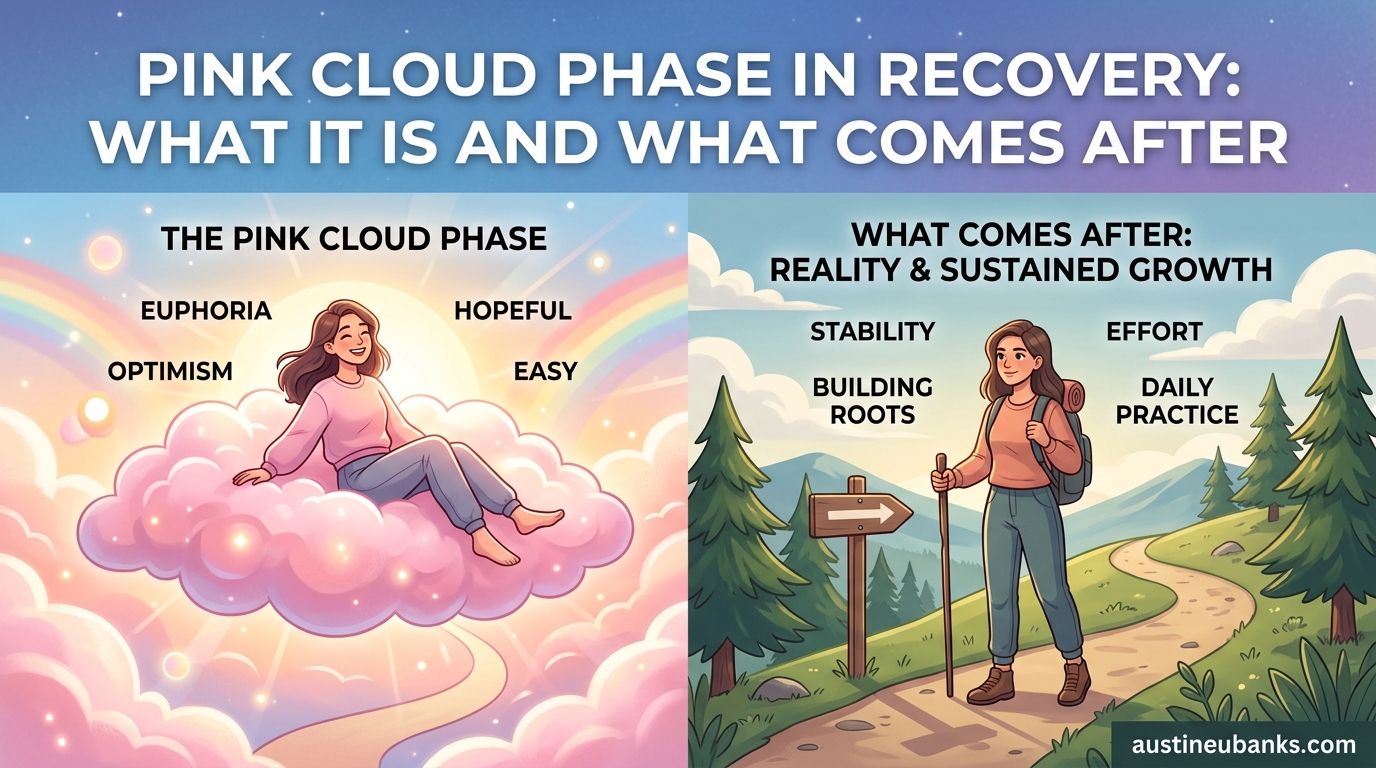
If you have recently gotten sober, you might feel like you are floating. The world looks brighter. Your problems feel manageable. Every sober morning feels like a gift. You feel confident that this time, recovery will stick.
This feeling has a name. It is called the pink cloud phase in early recovery, and it is one of the most common, most confusing, and least discussed parts of getting clean and sober.
The pink cloud feels amazing. But it does not last forever. And when it fades, the emotional crash can catch you completely off guard if no one warned you about it.
I have spent years studying the recovery process, talking with people in recovery communities, and examining the psychological research behind early sobriety. What I have learned is that understanding the pink cloud phase is not just helpful. It can be the difference between lasting recovery and an unexpected relapse.
In this guide, we will break down exactly what the pink cloud is, why it happens, how long it lasts, and most importantly, what comes after. Whether you are in early recovery yourself or trying to support someone who is, this information will help you prepare for every stage of the journey.
Table of Contents
The Pink Cloud Phase in Early Recovery: Quick Answers
What is the pink cloud? The pink cloud phase is a period of intense euphoria, optimism, and confidence that many people experience during the first weeks to months of addiction recovery. It is sometimes called pink clouding or the honeymoon phase of sobriety.
How long does it last? The pink cloud typically lasts anywhere from a few days to several months. Most people experience it for roughly 30 to 90 days after getting sober, though individual experiences vary widely.
What comes after? When the pink cloud fades, many people experience an emotional crash marked by anxiety, disappointment, and sometimes depression. This transition is a normal part of recovery, but it can increase relapse risk if you are unprepared.
Is it dangerous? The pink cloud itself is not dangerous. The danger lies in the overconfidence it creates. People may stop attending meetings, abandon their treatment plans, or believe they no longer need support, which sets them up for relapse when the euphoria fades.
What Is the Pink Cloud Phase in Early Recovery?
The pink cloud phase is a temporary state of emotional euphoria that occurs early in addiction recovery. After the initial physical withdrawal and detox subside, many people suddenly feel an intense sense of joy, hope, and confidence about their new sober life.
The term has its roots in Alcoholics Anonymous and the broader 12-step recovery community. Long before researchers studied it formally, people in recovery were describing this honeymoon phase where everything felt possible. The phrase “pink cloud” captures that dreamy, unreal quality of the experience.
People going through this phase often describe feeling high on life. The world feels fresh and exciting. Old problems seem solvable. Relationships that felt damaged now seem fixable. The future looks bright in a way it has not looked in years.
This is not a hallucination or a delusion. The feelings are real. But they are also chemically driven and temporary. The brain, starved of normal pleasure responses during active addiction, begins producing dopamine and serotonin again at elevated levels as substances leave the system. This creates a natural euphoria that can feel remarkably similar to the highs once provided by drugs or alcohol.
The problem is not the feeling itself. Joy and optimism are genuine assets in recovery. The problem is that the pink cloud creates a false sense of security. It makes recovery feel easy. And when that ease disappears, many people are caught completely unprepared.
One Reddit user in the r/stopdrinking community described it this way: “I felt like I had discovered a secret that nobody else knew about. Being sober felt like a superpower. I could not understand why everyone was not doing it.”
That sense of invincibility is the hallmark of pink cloud syndrome. And it is exactly why understanding what comes after matters so much.
Signs You Are Experiencing Pink Cloud Syndrome
Recognizing the pink cloud while you are in it can be difficult. The feelings are so positive that questioning them feels ungrateful or pessimistic. But self-awareness during this phase is one of the most powerful tools you can develop in early recovery.
Here are the most common signs of pink cloud syndrome:
- Intense euphoria and elevated mood that feels disproportionate to your actual circumstances. You feel fantastic even if your life is still objectively difficult.
- Excessive optimism about the future. You believe everything will work out perfectly and that recovery will be easy from here on out.
- Overconfidence in your ability to stay sober. You feel certain you will never relapse, even though you are only weeks or months into recovery.
- Neglecting your recovery routine. You start skipping meetings, canceling therapy appointments, or pulling away from your support system because you feel like you do not need them.
- Romanticizing sobriety. You focus only on the positive aspects and ignore or minimize the real challenges of rebuilding your life.
- Impatience with others who are struggling. You may feel frustrated by people in your support group who are having a harder time, because recovery feels so easy for you.
- Taking on too much too fast. You start making dramatic life changes like new relationships, career pivots, or major commitments while still very early in recovery.
- Feeling disconnected from your past struggles. Your addiction feels like something that happened to a different person, and you cannot quite access the pain of it anymore.
- A sense that you have figured it all out. You feel like you have cracked the code of life and that nothing can bring you down.
If several of these signs resonate with you, there is no need to panic. Being on the pink cloud does not mean recovery is failing. It means recovery is working, and your brain is healing. The key is recognizing it so you can prepare for what comes next.
Why Does the Pink Cloud Happen? Brain Chemistry and Recovery
To understand the pink cloud, you need to understand what addiction does to the brain. Prolonged substance use disrupts the natural balance of neurotransmitters, particularly dopamine and serotonin, which regulate mood, pleasure, motivation, and emotional stability.
During active addiction, the brain comes to rely on substances to produce these chemicals. Natural pleasure responses become blunted. Things that should feel good, like a good meal, a conversation with a friend, or a beautiful sunset, stop registering as rewarding.
When you stop using substances, the brain begins the slow process of recalibration. As normal neurotransmitter function starts to return, many people experience a surge of feel-good chemicals. This neurochemical rebound is what creates the euphoria of the pink cloud.
Think of it like a rubber band. Addiction stretches the brain’s reward system far beyond its normal range. When the substance is removed, the system snaps back, sometimes overshooting in the other direction before eventually settling at a normal baseline.
This biological explanation matters because it helps remove shame from the equation. The pink cloud is not a character flaw. It is not naivety or denial. It is a measurable, predictable neurochemical event that happens as the brain heals from substance use disorder.
It also explains why the pink cloud does not last. The brain cannot sustain elevated dopamine levels indefinitely. Eventually, neurotransmitter production normalizes, and the euphoria settles into something more sustainable. That transition point is where many people struggle.
Several factors influence how intensely someone experiences the pink cloud:
- The type of substance used. Different drugs affect different neurotransmitter systems, which can influence how the brain recovers.
- Duration and severity of addiction. Longer, more intense substance use typically means more significant neurochemical disruption.
- Overall physical health. Nutrition, sleep, and exercise all support brain recovery and can influence mood during early sobriety.
- Co-occurring mental health conditions. Anxiety, depression, and trauma can all interact with the brain chemistry of recovery.
How Long Does the Pink Cloud Phase Last?
There is no single answer to this question because the pink cloud timeline is highly individual. Some people experience it for just a few days. Others ride the euphoria for several months.
Most commonly, the pink cloud begins within the first one to two weeks after detox, once the acute physical withdrawal symptoms have passed. It typically peaks during the first 30 to 60 days of sobriety and begins to fade somewhere between 90 and 180 days.
Several factors affect how long the pink cloud lasts:
- Substance type: Recovery from alcohol, opioids, stimulants, and other substances can follow different neurological timelines.
- Length of addiction: Longer periods of substance use may mean a longer brain chemistry recovery process.
- Support system strength: People with strong support networks may transition through the phases more smoothly.
- Treatment engagement: Those actively participating in therapy, support groups, and aftercare programs tend to have more stable transitions.
- Physical health: Sleep quality, nutrition, and exercise all play a role in how quickly the brain normalizes.
It is worth noting that not everyone experiences the pink cloud at all. Some people move directly from acute withdrawal into a flatter, more neutral emotional state. If you never felt the euphoria, you are not missing out on something essential. You are simply experiencing recovery differently.
The most important thing to understand about the timeline is that the pink cloud ending is not a sign that recovery has stopped working. It is a sign that recovery is entering its next phase.
Is the Pink Cloud Good or Bad? Pros, Cons, and Risks
The pink cloud is neither purely good nor purely bad. It is a natural phase with both genuine benefits and real risks. Understanding both sides helps you make the most of the euphoria while protecting yourself from its dangers.
Benefits of the pink cloud:
- Motivation boost. The euphoria of early sobriety can give you the energy and drive to take the difficult steps recovery requires, like entering treatment, attending meetings, and rebuilding relationships.
- Positive momentum. Feeling good in early recovery reinforces the decision to get sober and helps establish healthy habits during a critical window.
- Hope and optimism. After the darkness of addiction, experiencing genuine joy can be life-affirming and can remind you what you are fighting for.
- Reduced cravings initially. The natural euphoria can temporarily suppress cravings and make early abstinence feel more manageable.
- Faster engagement with recovery. The excitement of the pink cloud often motivates people to throw themselves into meetings, therapy, and sober activities.
Risks and dangers of the pink cloud:
- False sense of security. The ease of the pink cloud can convince you that recovery is simpler than it actually is.
- Overconfidence leading to complacency. You may stop doing the very things that are keeping you sober because they feel unnecessary.
- Unrealistic expectations. The euphoria sets an emotional baseline that is impossible to sustain, making normalcy feel like a failure.
- Neglecting the recovery foundation. Skipping meetings, therapy, and self-care becomes tempting when everything feels easy.
- Increased relapse risk. When the pink cloud fades, the gap between expectations and reality can trigger a devastating emotional crash.
- Difficulty relating to others in recovery. The euphoria can make it hard to connect with people who are genuinely struggling in early sobriety.
The healthiest approach is to enjoy the good feelings while they last, but to treat the pink cloud as borrowed time. Use the energy and optimism to build a strong foundation, knowing that the real work of recovery begins when the euphoria fades.
What Happens When the Pink Cloud Fades?
When the pink cloud fades, most people experience an emotional crash that can feel overwhelming. After weeks or months of euphoria, optimism, and confidence, the sudden return of normal emotions can feel like a trapdoor opening beneath you.
This transition is completely normal. It is also the most dangerous point in early recovery if you are unprepared for it.
The crash happens because the brain’s elevated neurotransmitter levels finally normalize. Dopamine and serotonin settle back to baseline. The world stops feeling magical and starts feeling ordinary again. And ordinary can be deeply disappointing after weeks of feeling extraordinary.
Common experiences during the post-pink-cloud crash include:
- Anxiety that seems to come from nowhere, even when nothing is specifically wrong.
- Sadness or mild depression as the emotional high wears off and everyday feelings return.
- Irritability and frustration with the mundane realities of daily sober life.
- Disappointment that recovery is not as exciting or fulfilling as it initially felt.
- Doubt about whether sobriety is worth it when the initial thrill is gone.
- Return of cravings as the natural high disappears and the temptation to seek artificial relief resurfaces.
- Feeling bored or restless with the routine of recovery meetings and sober living.
One Reddit user described the experience with painful clarity: “The pink cloud has finally lifted. I am no longer enamored with every sober moment. Mornings are mornings, coffee is coffee, the sky is blue.”
That description captures the essence of the post-pink-cloud phase. Sobriety stops feeling special and starts feeling normal. And for many people, normal feels like a letdown.
This is also when many people question whether recovery is working. If getting sober felt amazing for two months and now feels flat or difficult, it is easy to conclude that something has gone wrong. Nothing has gone wrong. Your brain is simply recalibrating to a sustainable baseline.
The key message here, and the one that the recovery community emphasizes most strongly, is this: the emotional crash after the pink cloud is temporary. It is a bridge between the euphoria of early sobriety and the deeper, more stable satisfaction of long-term recovery. If you can ride out the crash without relapsing, real recovery begins on the other side.
Pink Cloud vs. PAWS: Understanding the Difference
One of the biggest sources of confusion in early recovery is the difference between the pink cloud fading and Post-Acute Withdrawal Syndrome, or PAWS. Both involve difficult emotions after the initial period of sobriety. But they are distinct experiences with different causes and timelines.
What is PAWS?
PAWS is a recognized clinical condition that occurs after acute withdrawal from substances. While the initial physical withdrawal symptoms like tremors, nausea, and sweating resolve within days to weeks, PAWS involves a longer-lasting set of psychological and emotional symptoms that can persist for months or even longer.
Symptoms of PAWS include mood swings, anxiety, irritability, sleep disturbances, cognitive difficulties like brain fog and memory problems, and periods of low motivation or anhedonia, which is the inability to feel pleasure.
How pink cloud and PAWS differ:
- The pink cloud is a temporary period of euphoria caused by the brain’s initial neurochemical rebound after substances are removed. It is characterized by abnormally elevated mood and overconfidence.
- PAWS is a prolonged withdrawal syndrome caused by the brain’s continued adjustment to the absence of substances. It is characterized by emotional difficulty, not euphoria.
In some cases, PAWS begins right after detox, with no pink cloud in between. In other cases, the pink cloud appears first, and PAWS symptoms emerge only after the euphoria fades. This is why some people describe a particularly jarring transition. They go from feeling incredible to feeling terrible with little warning.
One Reddit user shared this experience: “My pink cloud lasted only the first month, then PAWS brought six months of depression, anxiety, and insomnia. Nobody warned me that was possible.”
Understanding both conditions helps you set realistic expectations. If you are struggling months into recovery with mood swings, anxiety, or low energy, it may be PAWS rather than a personal failing or a sign that recovery is not working. Talking with an addiction specialist or medical professional can help you determine what you are experiencing and how to manage it.
Can Pink Cloud Syndrome Lead to Relapse?
Yes, pink cloud syndrome can indirectly lead to relapse. The euphoria itself does not cause relapse. The overconfidence and complacency it creates do.
Here is how the relapse cycle typically works when the pink cloud is involved:
During the pink cloud phase, recovery feels easy. Because it feels easy, you start cutting corners. You skip a meeting here and there. You stop calling your sponsor. You cancel a therapy appointment because you feel great and do not see the point. You start telling yourself that maybe you never really had a problem, or at least not one that requires ongoing work.
Then the pink cloud fades. The emotional crash hits. You feel anxious, sad, and disillusioned. And because you have already disengaged from your support system, you face that crash without the tools and connections that could help you through it.
This combination of unexpected emotional difficulty and depleted support is where relapse risk spikes dramatically. Many relapses in the first six months of recovery happen not during the pink cloud, but in the weeks immediately after it fades.
The recovery community has a common saying: “Don’t let the pink cloud fool you.” It is a reminder that the ease of early sobriety is temporary, and that the work you do during the easy phase is what carries you through the hard phase.
People who maintain their recovery long-term tend to share a common approach. They enjoy the pink cloud while it lasts, but they treat it as a window of opportunity rather than a permanent state. They use the energy and optimism of that phase to build habits and connections that will sustain them when the euphoria inevitably fades.
How to Stay Grounded During the Pink Cloud Phase
Staying grounded during the pink cloud is about enjoying the positive feelings without losing touch with reality. The goal is to use the euphoria as fuel for building a solid recovery foundation, not as a reason to coast.
Here are practical strategies for staying grounded during the pink cloud:
- Keep attending your support meetings regularly. Do not reduce your meeting attendance just because you feel great. The connections you build now will be critical when the pink cloud fades.
- Stay connected with your sponsor or recovery mentor. Share your feelings openly, including the euphoria. A good sponsor will celebrate with you while gently reminding you to stay humble.
- Maintain your therapy and counseling appointments. Professional support helps you process the emotional changes of recovery in a structured way.
- Set realistic expectations. Remind yourself regularly that the pink cloud is temporary. Talk about it openly so that when it fades, you are not blindsided.
- Avoid major life changes. Early recovery is not the time to start a new relationship, change careers, or make dramatic financial decisions. Give yourself at least a year before making big moves.
- Build healthy daily routines. Establish habits around sleep, nutrition, exercise, and self-care that will support you through every phase of recovery, not just the easy one.
- Practice mindfulness and emotional awareness. Learning to observe your emotions without being swept away by them is a skill that becomes invaluable when the pink cloud fades.
- Be honest with yourself about your recovery progress. Ask yourself whether your confidence is based on real work and real change, or whether it is riding the wave of temporary euphoria.
- Document your journey. Write down how you feel during the pink cloud so you can revisit those feelings later when recovery feels harder. A record of hope can be a powerful tool during difficult moments.
- Help others in their recovery. Sharing your experience with newcomers keeps you humble, reinforces your own commitment, and reminds you that recovery is not a solo journey.
What to Do After the Pink Cloud: Building Lasting Recovery
The period after the pink cloud fades is where real, lasting recovery is built. This is the phase where sobriety stops being a novelty and becomes a daily practice. And while it may lack the excitement of the honeymoon phase, it is where the deepest healing happens.
Here is what to focus on when the pink cloud fades:
- Acknowledge what is happening. Recognize that the emotional shift is normal and temporary. You are not failing. You are moving into the next stage of recovery.
- Recommit to your recovery routine. If you let some habits slip during the pink cloud, now is the time to rebuild them. Return to meetings, therapy, and self-care with renewed focus.
- Process your emotions honestly. Talk about the disappointment, the boredom, the anxiety. Suppressing these feelings makes them harder to manage. Sharing them with trusted people in your support network reduces their power.
- Find new sources of meaning. The pink cloud provided built-in excitement. Without it, you need to actively create purpose in your sober life. Explore hobbies, volunteer work, career development, creative projects, or deeper relationships.
- Develop a relapse prevention plan. Identify your triggers, create strategies for managing cravings, and establish a clear plan for what to do if you feel yourself slipping. Share this plan with people who can help you execute it.
- Practice self-compassion. Recovery is not a straight line upward. There will be hard days, boring days, and discouraging days. Treat yourself with the same kindness you would offer a friend going through the same thing.
- Consider deeper therapeutic work. Once you are stable in early recovery, you may be ready to address underlying issues like trauma, mental health conditions, or relationship patterns that contributed to your addiction.
- Celebrate realistic milestones. Find ways to acknowledge your progress that are grounded in real change rather than euphoric feelings. Track the days, months, and years. Note the relationships you have rebuilt and the goals you have achieved.
Another Reddit user, seven months sober, shared this perspective: “While the first month was terrible and the second and third being challenging, I am feeling better than ever.” This shows the arc of recovery clearly. The pink cloud fades, the hard work begins, and over time, a deeper and more lasting sense of well-being emerges.
That is what recovery after the pink cloud looks like. Not euphoric. Not magical. But real, earned, and sustainable.
How to Support Someone Going Through the Pink Cloud Phase
If someone you love is in early recovery and seems to be riding the pink cloud, your role is important. You want to celebrate their joy without feeding their overconfidence. You want to be supportive without being controlling.
Here are some ways to help:
- Celebrate genuinely. Acknowledge the hard work they have done to get sober. Their progress is real, and it deserves recognition.
- Listen without lecturing. If they are feeling euphoric, let them share that joy. Resist the urge to immediately warn them about what comes next.
- Gently encourage continued engagement. Ask whether they are still going to meetings or seeing their therapist. Frame it as curiosity, not criticism.
- Educate yourself about the pink cloud. The more you understand about what they are experiencing, the better equipped you will be to support them when the euphoria fades.
- Be ready for the crash. When the pink cloud fades, they may feel confused, disappointed, or scared. Let them know it is normal and that you are there for them regardless of how they feel.
- Avoid enabling behaviors. Do not let the positive mood convince you that the recovery work is done. Support continued treatment and healthy boundaries.
- Encourage patience with the process. Remind them that recovery is a marathon, not a sprint. The boring, ordinary days of sobriety are where the real transformation happens.
Understanding the pink cloud phase in early recovery is about more than knowing a term. It is about being prepared for every stage of the recovery journey, from the euphoria of early sobriety to the steady, grounded work of long-term healing.
The pink cloud is real. The euphoria is real. But so is what comes after. The emotional crash, the boredom, the anxiety, the temptation to relapse. All of it is part of the process.
What separates people who maintain lasting recovery from those who relapse is not whether they experience the pink cloud. It is whether they understand it. The people who stay sober long-term are the ones who enjoy the euphoria while it lasts, use that energy to build a solid foundation, and prepare themselves for the day when recovery stops feeling magical and starts feeling like real life.
If you are in early recovery right now and riding the pink cloud, enjoy it. Just do not forget to do the work.
If you have already passed through the pink cloud and are struggling with what comes after, know that you are not alone and you are not failing. The hard part is where the real growth happens.
And if you are supporting someone through this journey, your patience, understanding, and steady presence matter more than you know.
If you or someone you love is struggling with substance use, help is available. The SAMHSA National Helpline at 1-800-662-4357 provides free, confidential, 24/7 support and treatment referral services. You do not have to navigate recovery alone.