
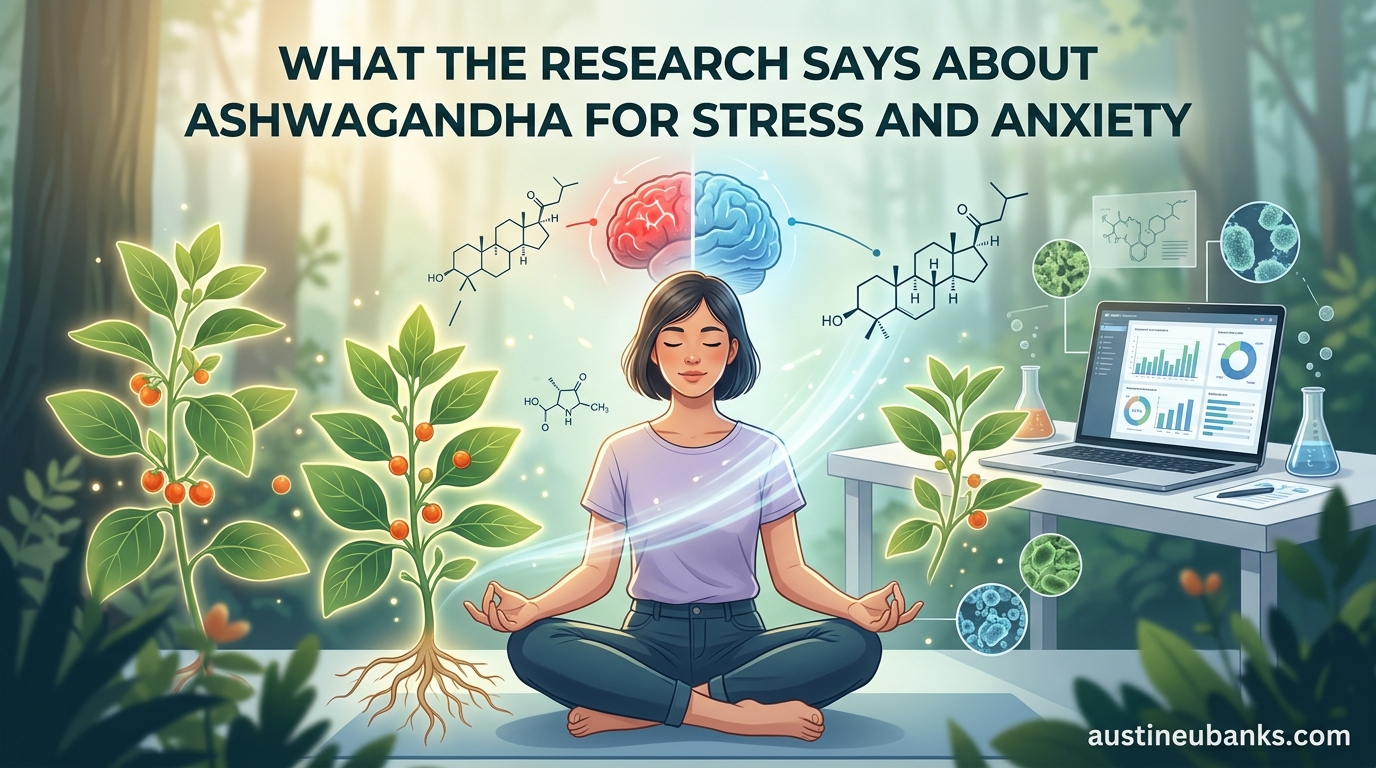
If you have ever felt overwhelmed by chronic stress or persistent anxiety, you have probably encountered ashwagandha in your search for relief. This ancient herb has exploded in popularity, but the real question is whether modern science backs up the claims. When examining ashwagandha for stress and anxiety research, the evidence is genuinely promising: multiple placebo-controlled studies and meta-analyses show significant reductions in stress hormones and anxiety scores compared to placebo.
Our team spent weeks reviewing clinical trials, meta-analyses, and user reports to separate solid evidence from marketing hype. What we found is a nuanced picture. Ashwagandha does have meaningful research support for stress and anxiety reduction, but it is not a magic pill, and it carries real risks for certain people.
In this guide, we break down what the research actually says about ashwagandha, how it works in the body, what doses studies used, and who should steer clear. Whether you are considering trying it yourself or just want evidence-based information, you will find the answers here.
Table of Contents
What Is Ashwagandha? Origins and Active Compounds
Ashwagandha (Withania somnifera) is a small shrub with yellow flowers native to India and North Africa. Its root has been used in Ayurvedic medicine for over 3,000 years, primarily as a rasayana, or rejuvenating tonic. The name translates to “smell of a horse,” referencing both its distinct odor and the traditional belief that it imparts the strength and vitality of a horse.
The herb belongs to a category of plants called adaptogens. Adaptogens are substances theorized to help the body resist physiological and psychological stress by normalizing body functions and supporting the stress-response system. While the adaptogen concept originated in Ayurvedic and Chinese medicine, modern research has begun studying these plants using clinical trial methods.
The therapeutic effects of Withania somnifera come from its active compounds called withanolides, which are naturally occurring steroidal lactones. The root also contains sitoindosides VII-X, alkaloids, and triterpenoids. Most clinical research focuses on standardized root extracts with a known withanolide concentration, typically between 2.5% and 5%, because this allows researchers to compare results across studies.
Not all ashwagandha products contain the same active compounds in the same amounts. This variability matters enormously when interpreting research, because study results depend heavily on which extract was used. We cover the two most-studied extract types, KSM-66 and Sensoril, later in this guide.
How Ashwagandha Works: Mechanism of Action
Research suggests ashwagandha reduces stress and anxiety through several interconnected mechanisms in the body. The primary pathway involves the hypothalamic-pituitary-adrenal axis, commonly called the HPA axis. This is the body’s central stress response system, controlling the release of cortisol and other stress hormones.
When you experience stress, the hypothalamus signals the pituitary gland, which then signals the adrenal glands to release cortisol. Chronic stress keeps this system activated, leading to persistently elevated cortisol levels that can contribute to anxiety, sleep problems, fatigue, and other health issues. Ashwagandha appears to moderate this response, helping the HPA axis return to a more balanced state after stress exposure rather than staying chronically activated.
Studies also indicate that ashwagandha influences neurotransmitter systems. Research published in animal models shows it can modulate GABAergic signaling, which is the brain’s primary inhibitory pathway and the target of many anti-anxiety medications. By enhancing GABA activity, ashwagandha may produce a calming effect on the nervous system without the sedation or dependency risks associated with benzodiazepines.
Serotonin pathways appear to be involved as well. One standardized root extract study found that ashwagandha with 2.5% withanolides increased serotonin levels while simultaneously reducing cortisol, suggesting a dual mechanism that addresses both the hormonal and neurochemical aspects of stress and anxiety.
Some research also points to ashwagandha’s antioxidant and anti-inflammatory properties. Chronic stress increases oxidative damage and inflammation in the brain, and the withanolides in ashwagandha have demonstrated free-radical scavenging activity. This neuroprotective effect may contribute to the mental clarity and reduced mental fatigue that users frequently report.
Research on Ashwagandha for Stress Reduction
The scientific evidence for ashwagandha as a stress reducer comes from multiple randomized, double-blind, placebo-controlled trials. These are considered the gold standard in clinical research because they minimize bias and account for placebo effects.
One landmark study published in the Indian Journal of Psychological Medicine tested a high-concentration full-spectrum ashwagandha root extract on 64 adults with chronic stress. Participants received either 300mg of the extract twice daily or a placebo for 60 days. The ashwagandha group showed a 27.9% reduction in serum cortisol levels compared to a 7.9% reduction in the placebo group. Scores on the Perceived Stress Scale dropped significantly more in the treatment group as well.
A comprehensive meta-analysis published in 2024 examined data from 9 randomized controlled trials involving 558 patients. The researchers concluded that ashwagandha significantly reduced stress, anxiety, and cortisol levels compared to placebo across all included studies. This meta-analysis is particularly important because it pooled data from multiple independent trials, increasing statistical power and reducing the impact of any single study’s limitations.
The NIH Office of Dietary Supplements reviewed the available literature and noted that studies consistently found ashwagandha significantly reduced stress and anxiety levels as measured by validated rating scales. This is a meaningful endorsement from one of the most authoritative health institutions, and it aligns with the pattern seen across individual trials.
Not every study produced identical results, and effect sizes varied. However, the consistency of direction is notable. Across trials using standardized root extracts at doses between 250mg and 600mg daily, the majority showed statistically significant stress reduction compared to placebo. Studies using higher concentrations of withanolides tended to produce larger effects, supporting the idea that the active compounds are dose-dependent.
Researchers have also measured improvements in secondary stress markers. Several studies documented reductions in blood pressure, heart rate variability improvements, and decreased self-reported fatigue in the treatment groups. These findings suggest the benefits extend beyond subjective feelings of stress to measurable physiological changes.
Research on Ashwagandha for Anxiety Reduction
While stress and anxiety are related, they are not identical. Stress typically refers to the body’s response to external pressures, while anxiety involves persistent worry or fear that can occur without an obvious trigger. Research on ashwagandha for anxiety specifically is encouraging but still developing.
A clinically significant study published in Phytomedicine evaluated ashwagandha root extract in 98 adults with generalized anxiety disorder. Participants received either 300mg or 600mg of a standardized extract daily for 12 weeks. Both groups showed significant reductions in Hamilton Anxiety Rating Scale (HAM-A) scores, with the higher-dose group showing a 56.5% reduction in anxiety symptoms compared to baseline.
Another randomized, double-blind study tested a standardized ashwagandha root extract standardized to 2.5% withanolides on individuals with moderate-to-severe anxiety. After 6 weeks, the treatment group showed significantly greater improvements on both the HAM-A scale and the Beck Anxiety Inventory compared to placebo. The researchers noted that the extract effectively improved stress and anxiety by reducing cortisol and increasing serotonin.
These findings matter because they used validated psychiatric assessment tools rather than just self-reported mood questionnaires. The HAM-A scale is widely used in clinical drug trials for anxiety medications, which allows for some degree of comparison between ashwagandha and pharmaceutical interventions, although direct head-to-head trials remain limited.
The 2024 meta-analysis mentioned earlier also pooled anxiety-specific data across its 9 included studies. The analysis found that ashwagandha produced statistically significant reductions in anxiety scores compared to placebo, with an effect size that the researchers described as moderate. This puts the evidence in a category of promising but not conclusive, especially for diagnosed anxiety disorders.
It is worth noting that most anxiety studies to date have been relatively small, typically enrolling between 30 and 100 participants. Larger trials are needed to confirm these findings across diverse populations and to identify which types of anxiety respond best to ashwagandha. No published trials have yet compared ashwagandha head-to-head with prescription anxiolytics like SSRIs or buspirone.
Ashwagandha and Cortisol: What the Data Shows
Cortisol reduction is one of the most consistently reported effects of ashwagandha across clinical trials. Cortisol, often called the stress hormone, is produced by the adrenal glands in response to stress. Chronically elevated cortisol is associated with anxiety, weight gain, sleep disruption, immune suppression, and cognitive difficulties.
In the 64-person study mentioned earlier, the treatment group saw serum cortisol drop by nearly 28% over 60 days, compared to just under 8% in the placebo group. Multiple other trials have replicated this finding with varying magnitudes of effect, typically showing cortisol reductions between 11% and 28% depending on dose, duration, and extract type.
The relationship appears dose-dependent. Studies using 600mg per day of a high-concentration extract generally produced larger cortisol reductions than those using 250mg to 300mg. This suggests that finding the right dose matters, and that underdosing may limit results.
Timing of cortisol measurement also influences results. Some studies measured morning cortisol, which is typically highest upon waking, while others measured cortisol throughout the day. The pattern of reduction varied between studies, but most showed meaningful decreases regardless of when cortisol was measured.
One interesting finding from cortisol research is that ashwagandha appears to normalize rather than simply suppress cortisol production. This means that in individuals with abnormally high cortisol, levels dropped toward normal ranges. This normalizing effect is consistent with the adaptogen theory, where the herb helps the body maintain balance rather than pushing hormone levels in one direction.
Ashwagandha Research for Sleep and Stress-Related Insomnia
Sleep problems and stress are deeply interconnected. Chronic stress elevates cortisol at night, making it difficult to fall asleep and stay asleep. Poor sleep then increases stress reactivity the next day, creating a vicious cycle. Research suggests ashwagandha may help break this cycle.
A double-blind, placebo-controlled study published in Cureus evaluated ashwagandha root extract in 80 adults with insomnia and anxiety. After 8 weeks of treatment with 300mg twice daily, participants showed significant improvements in sleep quality as measured by the Pittsburgh Sleep Quality Index. They also fell asleep faster and reported feeling more rested upon waking.
Another study focused specifically on sleep quality in healthy adults without diagnosed insomnia. After taking a standardized extract for 6 weeks, participants showed improvements in sleep efficiency, sleep onset latency, and overall sleep quality scores compared to placebo. This suggests the sleep benefits are not limited to those with severe sleep disorders.
The sleep research is particularly relevant for anxiety sufferers because improving sleep quality independently reduces anxiety symptoms. When your brain gets adequate restorative sleep, your stress tolerance improves and your amygdala, the brain’s fear center, becomes less reactive. Ashwagandha may therefore help anxiety partly through its indirect effects on sleep quality.
Notably, the sleep benefits appear to build over time rather than producing immediate sedation. This distinguishes ashwagandha from prescription sleep medications, which typically induce sleepiness acutely. The gradual improvement pattern suggests ashwagandha is normalizing the underlying stress response rather than simply sedating the nervous system.
KSM-66 vs Sensoril: Which Extract Has More Research?
When reviewing ashwagandha for stress and anxiety research, you will encounter two extract names repeatedly: KSM-66 and Sensoril. Both are patented, standardized extracts, but they differ significantly in how they are produced and what research supports them.
KSM-66 is a full-spectrum extract made exclusively from ashwagandha roots, processed using a specialized 14-day extraction method. It is standardized to 5% withanolides. Because it uses only roots and avoids leaves, it tends to have a milder, less harsh profile. The majority of recent clinical trials on stress and anxiety have used KSM-66 or similar root-only extracts, making it the most research-backed option for these specific applications.
Sensoril, also known as NT, is made from both roots and leaves and is standardized to a higher withanolide concentration of at least 8%. The higher concentration means a smaller dose is needed, but some users report stronger effects, which can include more pronounced drowsiness. Sensoril has been studied for stress reduction and shows significant cortisol-lowering effects, though fewer anxiety-specific trials exist compared to KSM-66.
For stress and anxiety specifically, the bulk of placebo-controlled evidence comes from root-based extracts similar to KSM-66. Studies using root-only full-spectrum extracts at 250mg to 600mg daily have consistently shown reductions in perceived stress, anxiety scores, and cortisol levels. If you are choosing based on research volume for anxiety, KSM-66 has the edge.
However, Sensoril may be preferable if you want a smaller pill or are also targeting sleep, as its higher withanolide concentration may produce more noticeable calming effects. Both extracts have safety data supporting short-term use at recommended doses.
Research-Based Dosage and Timeline for Results
Clinical studies on ashwagandha for stress and anxiety have used a fairly consistent range of doses. The most common protocol across trials is 300mg to 600mg per day of a standardized root extract, typically divided into two doses taken morning and evening.
The 60-day landmark study used 300mg twice daily, totaling 600mg per day. The 12-week generalized anxiety study used either 300mg or 600mg daily, with the higher dose producing better results. Most positive trials fall within the 250mg to 600mg daily range, and there is little evidence that exceeding 600mg daily provides additional benefit for stress or anxiety.
Timeline matters a great deal with ashwagandha. Unlike caffeine or prescription anti-anxiety medications, ashwagandha does not produce immediate effects. In most studies, participants did not report noticeable improvements until weeks 2 to 4, with maximum benefits appearing around weeks 6 to 8.
This delayed onset is consistent with the herb’s mechanism of action. Rather than directly stimulating or sedating the nervous system, ashwagandha gradually normalizes cortisol patterns and supports HPA axis regulation. These biological changes take time to manifest as perceptible improvements in mood and stress levels.
Taking ashwagandha with food may improve absorption and reduce the risk of stomach upset, which is the most commonly reported side effect. Some users find taking the evening dose with dinner helps with sleep, while morning doses may support daytime stress resilience. There is no strong evidence that timing dramatically affects outcomes, so consistency matters more than precise scheduling.
Researchers have not established an optimal duration for ashwagandha use. Most clinical trials run 8 to 12 weeks, and there is limited data on effects beyond 12 weeks of continuous use. Some practitioners recommend cycling, such as 8 weeks on followed by 2 to 4 weeks off, though this practice is based on clinical experience rather than controlled studies.
Safety, Side Effects, and Who Should Avoid Ashwagandha
Ashwagandha is generally well-tolerated in clinical trials at recommended doses. The most commonly reported side effects are mild gastrointestinal symptoms including stomach upset, nausea, and diarrhea. These effects are typically dose-dependent and often resolve when ashwagandha is taken with food or the dose is reduced.
Drowsiness and sedation are reported by some users, particularly at higher doses or with extracts like Sensoril that have higher withanolide concentrations. While this can be beneficial for those with sleep problems, it may interfere with daytime functioning for others. Starting with a lower dose and assessing your individual response is advisable.
A subset of users report paradoxical reactions, meaning they experience increased anxiety rather than reduced anxiety. Forum discussions on Reddit’s anxiety and supplements communities include numerous accounts of users feeling more anxious, experiencing panic attacks, or developing new anxiety symptoms after starting ashwagandha. One user shared that they had never experienced anxiety before but developed anxiety episodes after starting supplementation. Another reported that their panic attacks intensified.
The exact mechanism behind these paradoxical reactions is not well understood. It may relate to individual differences in neurotransmitter sensitivity, interactions with existing medications, or the stimulant-like effects that some withanolides can produce in certain people. If you experience increased anxiety after starting ashwagandha, discontinue use and consult a healthcare provider.
Certain populations should avoid ashwagandha entirely. Pregnant and breastfeeding women should not take it, as animal studies suggest it may cause miscarriage and its safety during lactation has not been established. Individuals with autoimmune conditions such as lupus, rheumatoid arthritis, or Hashimoto’s thyroiditis should exercise caution, because ashwagandha can stimulate immune activity and potentially worsen autoimmune symptoms.
People with thyroid conditions need particular caution. Ashwagandha can increase thyroid hormone levels, which may benefit those with hypothyroidism but could be dangerous for those with hyperthyroidism. If you take thyroid medication, consult your endocrinologist before considering ashwagandha.
Medication interactions are a significant concern. Ashwagandha may interact with sedatives and central nervous system depressants, potentially amplifying their effects. It may also interact with immunosuppressant drugs, blood sugar medications, and blood pressure medications. Forum discussions have highlighted concerns about interactions with psychiatric medications, particularly SSRIs and other antidepressants, though controlled interaction studies remain limited.
One forum account referenced a healthcare provider reporting a patient who experienced a psychotic episode potentially triggered by ashwagandha. While this appears to be a rare event, it underscores the importance of treating ashwagandha as a biologically active substance rather than a harmless supplement. Anyone with a history of psychiatric conditions should consult a psychiatrist before use.
Frequently Asked Questions
Does ashwagandha actually work for anxiety?
Multiple placebo-controlled studies and a 2024 meta-analysis of 9 trials involving 558 patients found that ashwagandha significantly reduced anxiety scores compared to placebo. One study showed a 56.5% reduction in anxiety symptoms on the Hamilton Anxiety Rating Scale after 12 weeks of treatment. The evidence is promising and consistent in direction, though larger trials are still needed to confirm effects across diverse populations.
Why do I feel more anxious after taking ashwagandha?
A subset of users experience paradoxical anxiety reactions from ashwagandha. The exact cause is unknown but may relate to individual neurotransmitter sensitivity, stimulant-like effects of certain withanolides, or interactions with other substances. If you notice increased anxiety, panic, or restlessness after starting ashwagandha, stop taking it and consult a healthcare provider. This reaction is uncommon but well-documented in user reports.
What is the dark side of ashwagandha?
Potential downsides of ashwagandha include gastrointestinal side effects, drowsiness, paradoxical anxiety reactions, thyroid hormone elevation, immune stimulation that can worsen autoimmune conditions, and interactions with sedatives, blood pressure medications, blood sugar medications, and psychiatric drugs. It should be avoided during pregnancy and breastfeeding. Rare serious adverse events have been reported in forum discussions, including a potential psychiatric episode, though such cases appear uncommon.
How fast does ashwagandha kick in for anxiety?
Most clinical studies show that noticeable anxiety reduction begins around weeks 2 to 4 of consistent daily use, with maximum benefits appearing around weeks 6 to 8. Ashwagandha does not produce immediate effects like prescription anti-anxiety medications. It works gradually by normalizing cortisol levels and supporting HPA axis function, which requires sustained use at doses of 300mg to 600mg daily.
Can ashwagandha help with panic attacks?
Some users report that ashwagandha reduced the frequency and intensity of their panic attacks over several weeks of use, likely due to its cortisol-lowering and GABA-modulating effects. However, no clinical trials have specifically evaluated ashwagandha for panic disorder. If you experience panic attacks, ashwagandha should not replace evidence-based treatments like therapy or prescribed medication without consulting your healthcare provider.
How long should I take ashwagandha?
Most clinical trials run 8 to 12 weeks, and there is limited safety data on continuous use beyond that period. Some practitioners recommend cycling, such as 8 weeks on followed by 2 to 4 weeks off, based on clinical experience rather than controlled studies. Long-term safety data is currently insufficient, so periodic breaks and regular check-ins with a healthcare provider are advisable.
Conclusion: What the Evidence Tells Us
When we look at the full body of ashwagandha for stress and anxiety research, a clear picture emerges. Multiple placebo-controlled trials and at least one well-conducted meta-analysis show that standardized ashwagandha root extract, taken at 300mg to 600mg daily for 6 to 12 weeks, significantly reduces stress, anxiety scores, and cortisol levels compared to placebo.
The evidence is strongest for stress reduction and cortisol normalization. For diagnosed anxiety disorders, the data is promising but still preliminary, with most trials being relatively small and short in duration. No studies have yet directly compared ashwagandha to prescription anxiolytics.
Equally important is understanding the risks. Paradoxical anxiety reactions, thyroid effects, autoimmune stimulation, and medication interactions are all documented concerns. This herb is biologically active and deserves the same caution you would apply to any substance that affects your nervous system.
If you are considering trying ashwagandha, talk to your healthcare provider first, especially if you take any medications or have a medical condition. Start with a lower dose, choose a well-researched extract like KSM-66, and give it at least 4 to 8 weeks before judging the results. The research is genuinely encouraging, but it works best as part of a comprehensive approach to stress and anxiety management that includes sleep, exercise, and professional support when needed.