
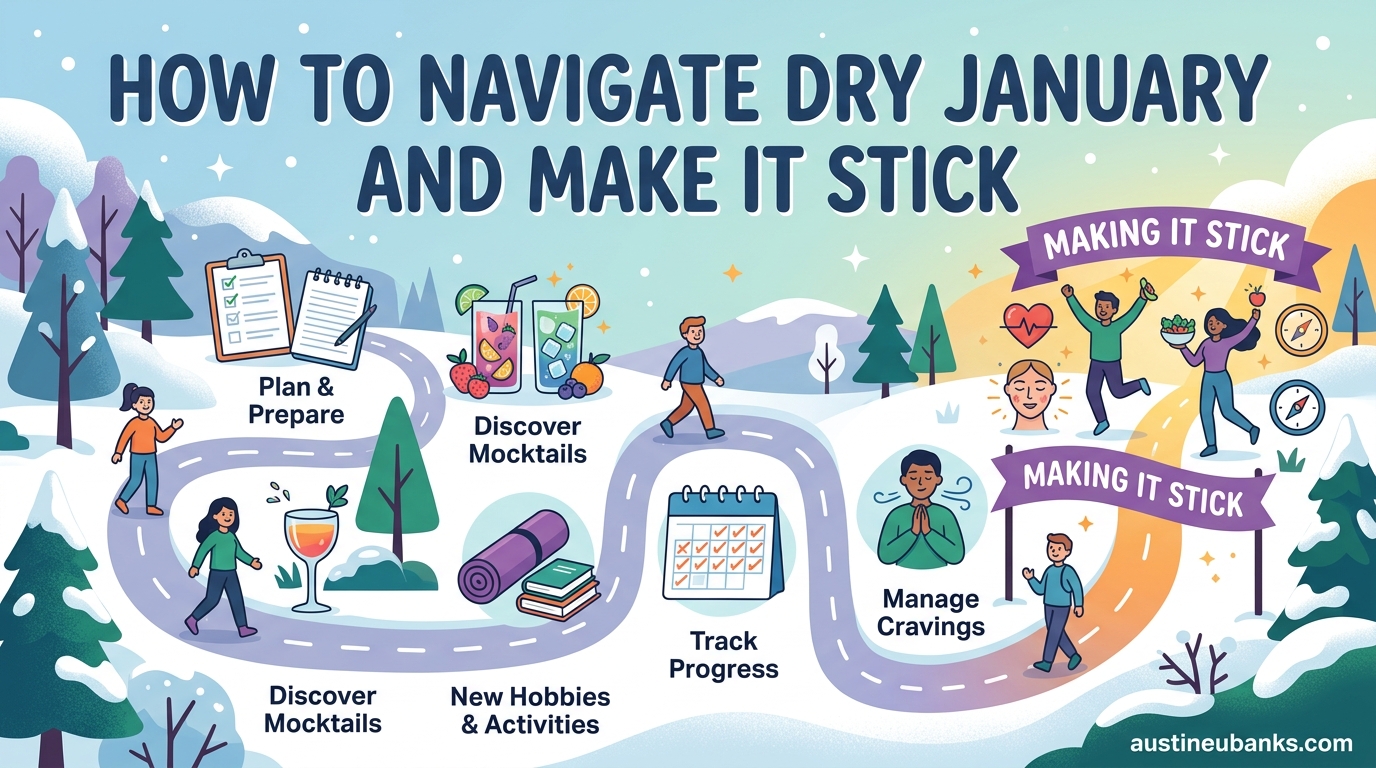
Every January, millions of people commit to giving up alcohol for 31 days. Some make it to the finish line feeling incredible. Others cave by the second Friday and feel like they failed. If you have ever wondered why some people succeed while others struggle, it usually comes down to preparation, strategy, and mindset rather than willpower alone.
Learning how to navigate Dry January and make it stick is not about white-knuckling your way through a month of misery. It is about understanding your relationship with alcohol, anticipating the tricky moments, and building a toolkit that carries you through each day. When you approach it that way, the month becomes genuinely enjoyable rather than something you endure.
In this guide, I will walk you through everything you need to know to complete Dry January successfully and, more importantly, make the changes last well beyond the 31st. We will cover the science behind what happens to your body week by week, practical strategies that real people use to stay on track, how to handle social pressure without feeling awkward, and what to do if you slip up.
Table of Contents
What Is Dry January and Why It Matters
Dry January is a month-long challenge where participants abstain from alcohol for the entire month of January. The concept originated in 2013 through a UK-based health charity called Alcohol Change UK, and it has since grown into a global movement with millions of participants each year.
The goal is not necessarily to quit drinking forever. Instead, it is an opportunity to hit the reset button after a holiday season that often involves heavy drinking. Think of it as a structured break that lets you step back, evaluate your habits, and experience what life feels like without alcohol in the picture.
What makes Dry January different from other health challenges is the emphasis on mindfulness. Participants are encouraged to reflect on why they drink, when they reach for a glass, and how alcohol fits into their daily routine. This reflective approach is what separates a successful Dry January from simply counting down the days.
The concept of mindful drinking sits at the heart of this challenge. Mindful drinking means being intentional about your choices rather than operating on autopilot. You might discover that your Friday night drink is a habit born from routine rather than genuine desire. Recognizing that distinction is often the first real breakthrough of the month.
Dry January matters because even a temporary break from alcohol can produce measurable changes in your physical and mental health. Research from institutions like the University of Sussex has shown that participants experience better sleep, increased energy, weight loss, and improved liver function. Many people also report saving a significant amount of money, which adds a financial incentive to the health benefits.
What Happens to Your Body: Week-by-Week Benefits Timeline
One of the most motivating aspects of Dry January is that you can feel and measure the changes happening in your body. Here is a breakdown of what typically happens each week when you stop drinking alcohol.
Week 1: The Adjustment Period
During the first few days, your body begins processing and eliminating the alcohol still in your system. You may experience disrupted sleep as your brain adjusts to falling asleep without the sedative effect of alcohol. This is completely normal and typically resolves within a week.
By day three or four, many people notice improved hydration. Alcohol is a diuretic, which means it causes your body to lose water. Without it, your body retains moisture more effectively, and your skin may start to look less puffy and more refreshed.
Blood sugar levels begin to stabilize during this first week. Alcohol can cause spikes and crashes in blood sugar, so removing it helps even out your energy throughout the day. You might also notice an increase in sugar cravings as your body seeks alternative sources of quick energy.
Week 2: Sleep and Energy Improvements
By the second week, most people experience noticeably better sleep quality. Alcohol suppresses REM sleep, the restorative phase where dreaming occurs and memories are processed. Without alcohol interfering, your sleep cycles normalize, and you wake up feeling more genuinely rested.
Your energy levels take a noticeable jump during this period. The morning grogginess that often follows even a single drink starts to fade. Many people report waking up with more clarity and motivation, which makes mornings feel significantly easier.
Your liver also begins to recover during this window. The liver is remarkably resilient, and even a short break from alcohol allows it to start reducing fat accumulation. While significant liver healing takes longer, the early stages of recovery begin within the first two weeks.
Week 3: Visible Changes
By the third week, the benefits become more visible. Skin often looks clearer and brighter because alcohol causes inflammation and dehydration, both of which affect complexion. The reduction in cortisol, your body’s primary stress hormone, contributes to a calmer, less irritated appearance.
Many participants notice weight loss by this point. Alcohol is calorie-dense, with a single pint of beer containing around 200 calories and a glass of wine roughly 120. Over three weeks, those saved calories add up. Combined with better food choices that often accompany an alcohol break, the scale may shift noticeably.
Mental clarity sharpens significantly during week three. The brain fog that many people attribute to aging or stress often turns out to be alcohol-related. Without it, concentration improves, decision-making feels easier, and mood tends to stabilize.
Week 4: Feeling Like Yourself Again
By the final week, most people report feeling like a transformed version of themselves. Sleep is consistently deep, energy is steady throughout the day, and mood swings are far less frequent. Digestion improves as the gut microbiome begins to rebalance without alcohol disrupting it.
Many participants describe a sense of pride and accomplishment that goes beyond the physical benefits. Completing a full month without alcohol builds confidence and proves that you can socialize, relax, and enjoy life without relying on a drink. This psychological shift is often the most lasting outcome of the entire challenge.
How to Navigate Dry January: Proven Strategies for Success
If you want to know how to navigate Dry January effectively, preparation is everything. The people who succeed are not necessarily the ones with the most willpower. They are the ones who planned ahead, anticipated challenges, and built systems to support themselves. Here are the strategies that consistently work.
1. Define Your Why Before Day One
Before January begins, take time to write down exactly why you are doing this. Is it for better sleep? To save money? To prove to yourself that you can? To lose weight? Having a clear, specific reason gives you something to return to when motivation dips around day ten. Write it on a sticky note, save it in your phone, or tell a friend. The clearer your why, the easier it becomes to stay committed when cravings hit.
2. Tell People What You Are Doing
Announcing your Dry January plans to friends, family, and coworkers serves two purposes. First, it creates accountability because people will ask how it is going. Second, it eliminates the awkwardness of having to explain yourself at every social event. When people know in advance, they are less likely to pressure you or offer drinks repeatedly.
3. Identify Your Triggers and Plan Around Them
Most people drink in response to specific triggers. It might be the end of a workday, a stressful phone call, a particular group of friends, or simply the habit of sitting on the couch at 7 PM. Spend a few days before January noting when you typically reach for a drink. Then, build a replacement routine for each trigger.
If your trigger is unwinding after work, plan a walk, a workout, or a cup of tea in a favorite chair. If it is social gatherings, decide in advance what you will drink instead. The key is having a plan before the trigger fires, not relying on willpower in the moment.
4. Stock Up on Satisfying Alcohol-Free Alternatives
Forum communities like r/DryJanuary and r/stopdrinking consistently share what works, and one tip comes up over and over: have something that provides a satisfying sensation. Many people swear by ice-cold sparkling water because it bites the throat and mimics the physical experience of drinking. Others fill the gap with kombucha, alcohol-free beer, mocktails, or herbal teas.
The trick is making sure your alternatives feel like a treat, not a punishment. Invest in quality options you actually look forward to. If your replacement drink feels like a consolation prize, you will resent it. If it feels like an upgrade, you will enjoy the month.
5. Track Your Progress Daily
Keeping a journal during Dry January serves multiple purposes. It lets you document the physical and emotional changes you experience, which becomes powerful motivation on hard days. It also helps you identify patterns in your cravings and energy levels. Several free apps exist specifically for tracking Dry January, but a simple notebook works just as well.
Real users from Dry January forums recommend tracking specific metrics: sleep quality, energy levels, anxiety, weight, and mood. Seeing the data shift over weeks reinforces that the discomfort is producing tangible results.
6. Have an Accountability Partner or Community
Going it alone is significantly harder than having support. Find a friend who is also doing Dry January, or join an online community like the Dry January subreddit or the official Alcohol Change UK community. When you have a rough day, having someone to text who understands exactly what you are going through makes a massive difference.
7. Be Prepared for Sugar Cravings
This is one of the most common surprises for first-time participants. Forum users consistently report intense sugar and carbohydrate cravings during the first two weeks. Alcohol converts to sugar in the body, and when you remove it, your body looks for replacements. Instead of fighting this, plan for it.
Stock up on fruit, dark chocolate, yogurt, and other satisfying but healthier sweet options. Users on r/DryJanuary note that when they were drinking, they craved salty snacks. Without alcohol, the craving shifted to sweets. Understanding this is a physiological response, not a weakness, helps you manage it without guilt.
8. Use Supplements to Support Recovery
Many people in Dry January communities recommend supplements that support the body’s recovery process. Zinc, magnesium, and Vitamin B6 are frequently mentioned for their role in sleep regulation, energy production, and nervous system support. While supplements are not a replacement for the benefits of simply not drinking, they can help ease the transition, especially for sleep.
As always, check with a healthcare provider before starting any supplement routine, particularly if you take other medications.
Handling Social Situations and Peer Pressure
Social situations are where most Dry January attempts derail. The pressure is rarely overt. It is usually subtle, a friend sliding a glass toward you or someone asking why you are not drinking. Here is how to handle these moments with confidence.
Practise Your No Before You Need It
Have a response ready so you do not have to think on the spot. Keep it simple and confident. Phrases like “I am doing Dry January this year” or “I am taking a break from alcohol for a bit” work perfectly. You do not owe anyone a long explanation. The more matter-of-fact you are, the less likely people are to push back.
If someone continues to press, redirect the conversation. Ask them a question about themselves. People love talking about their own lives, and shifting the spotlight away from your drink choice usually ends the pressure.
Always Have a Drink in Your Hand
This is a strategy that experienced Dry January participants swear by. When you are at a party or dinner, always have something to drink, even if it is sparkling water with lime. People are less likely to offer you alcohol if you already have a glass in your hand. It also gives you something to do with your hands, which reduces the psychological pull toward drinking.
Host Instead of Attending
If going to bars or parties feels too challenging in the early weeks, take control of the social calendar. Host a dinner party where you control the drink options. Suggest activities that do not revolve around alcohol, like a hike, a movie night, or a cooking class. When you set the agenda, the alcohol question becomes irrelevant.
Plan Your Exit Strategy
Some events are genuinely harder than others. If you know a particular gathering will be challenging, decide in advance when you will leave. Having a set departure time gives you a clear endpoint and reduces the feeling of being trapped. You can always stay longer if you feel comfortable, but knowing you can leave removes the anxiety.
Common Challenges and How to Overcome Them
The Weekend Problem
If you ask anyone who has done Dry January what the hardest part is, most will say Friday evening. Weekends are deeply associated with drinking for many people, and the shift from a structured workweek to unstructured free time creates a vacuum that alcohol used to fill.
The solution is to fill that vacuum deliberately. Plan specific activities for Friday and Saturday evenings. Book a class, schedule dinner with a friend who is also doing Dry January, or start a new TV series you have been meaning to watch. The weekends that derail people are the ones with no plan. Structure eliminates the temptation born from boredom.
Boredom Without Drinking
Many people underestimate how much of their leisure time was built around drinking. Without it, evenings can feel empty. This is actually one of the most valuable discoveries of Dry January because it forces you to build new sources of enjoyment.
Use this month to try activities you have been putting off. Start a creative project, read the books on your nightstand, get back into exercise, or learn something new. Forum users consistently report that the boredom phase passes within two weeks as new routines take hold.
Sleep Disruption in Early Days
Paradoxically, some people experience worse sleep for the first week of Dry January. This happens because alcohol is a depressant that helps you fall asleep quickly, even though it destroys sleep quality. Without it, your brain has to relearn how to fall asleep naturally.
Be patient with this phase. Practice good sleep hygiene: keep your bedroom cool, avoid screens before bed, and try magnesium supplements or chamomile tea. Within seven to ten days, your sleep will typically surpass anything you experienced while drinking.
Social FOMO
The fear of missing out is real, especially when friends post photos from nights out. Remind yourself that you are not missing anything you have not experienced before. You know what a night of drinking feels like. What you have not experienced is waking up the next morning clear-headed, rested, and proud of your choice. Focus on what you are gaining, not what you are giving up.
What to Do If You Slip Up
A slip-up is not a failure. It is a data point. The difference between people who complete Dry January and those who do not often comes down to how they respond to a slip-up. Here is the approach that works.
First, do not let one drink turn into abandoning the entire month. A single slip-up does not erase the progress you have made. If you had a glass of wine on day 12, you still have 11 days of alcohol-free living behind you. That counts for something real.
Second, figure out what triggered the slip-up. Were you stressed? Was it a specific social situation? Did you have a plan in place? Understanding the circumstances helps you build a better strategy for next time. Treat it as feedback rather than evidence of weakness.
Third, get back on track immediately. The most common mistake is thinking, “Well, I already broke it, so the month is ruined.” That all-or-nothing mindset is what turns one drink into a full relapse. Forgive yourself, learn from it, and pick up where you left off the very next day.
It is also important to distinguish between a slip-up and a sign of a deeper issue. If you find that you cannot stop once you start, or if the idea of 31 days without alcohol feels impossible, that may be worth exploring with a healthcare professional. There is no shame in recognizing that your relationship with alcohol needs more support than a month-long challenge can provide.
How to Make It Stick Beyond January
Completing Dry January is an achievement, but the real value comes from what you do on February 1st. Many people finish the month, immediately drink to celebrate, and revert to their old habits within a week. Here is how to make the changes last.
Before January ends, reflect on what you learned. What did you enjoy about not drinking? What surprised you? What did you miss? Write these observations down. This self-awareness becomes the foundation for a healthier long-term relationship with alcohol.
If you choose to drink again, do so intentionally rather than automatically. You might decide to keep certain nights alcohol-free, reserve drinking for special occasions, or simply drink less when you do. Many Dry January graduates find that their tolerance has reset and they feel satisfied with far less alcohol than before.
Consider setting new rules for yourself based on what you learned. Maybe no drinking on weeknights, or a limit of two drinks at social events, or alcohol-free months scattered throughout the year. The goal is not to impose rigid restrictions but to make conscious choices rather than defaulting to habit.
Some people decide to extend Dry January indefinitely. If the month felt better than expected, there is no rule that says you must start drinking again. Listen to your body and your instincts. The best outcome of Dry January is not 31 days of sobriety but a more intentional, aware relationship with alcohol for the rest of the year.
FAQs
How to stick with Dry January?
To stick with Dry January, define a clear reason for doing it, tell friends and family for accountability, identify your drinking triggers, stock up on satisfying alcohol-free alternatives, and track your progress daily. Having an accountability partner or joining a community like the Dry January subreddit provides crucial support during the hardest days.
What are the hardest days of Dry January?
The hardest days are typically Friday and Saturday evenings during the first two weeks, especially the first Friday. Weekends are strongly associated with drinking for many people, and the shift from a structured workweek to unstructured free time creates a temptation vacuum. Planning specific weekend activities in advance is the most effective way to get through these challenging days.
How long does it take to feel the benefits of Dry January?
Most people begin feeling benefits within the first three to four days. Improved hydration and clearer skin appear early, while better sleep quality typically kicks in by the end of week one or the start of week two. By week three, most participants notice increased energy, weight loss, sharper mental clarity, and stabilized mood.
What if you fail Dry January?
A slip-up does not mean you failed. Treat it as feedback rather than a reason to quit entirely. Figure out what triggered the slip-up, forgive yourself, and resume your alcohol-free commitment the next day. The all-or-nothing mindset is what turns one drink into abandoning the whole month. Even with a slip-up, you still accumulated significant alcohol-free days and health benefits.
Does Dry January really make you healthier?
Yes. Research shows that even a month without alcohol can improve sleep quality, increase energy, support weight loss, reduce liver fat, lower blood pressure, and improve insulin sensitivity. Studies from the University of Sussex found that participants also reported better concentration, improved mood, and lasting changes to their drinking habits six months after completing the challenge.
What happens to the brain during Dry January?
During Dry January, the brain begins to rebalance neurotransmitters that alcohol disrupts. REM sleep normalizes, which improves memory processing and emotional regulation. Cortisol levels decrease, reducing anxiety and stress. Many people report sharper focus, improved decision-making, and reduced brain fog as the brain adjusts to functioning without alcohol’s depressive effects.
What is the 2 2 2 rule for alcohol?
The 2-2-2 rule is a simple guideline for moderate drinking: no more than 2 drinks per occasion, no more than 2 occasions per week, and no more than 2 drinks in any single sitting. While not a medical standard, it provides a straightforward framework for people who want to maintain mindful drinking habits after completing a challenge like Dry January.
Conclusion: Making Your Alcohol-Free Month Count
Learning how to navigate Dry January and make it stick is less about willpower and more about strategy. When you define your reasons, prepare for challenges, build a support system, and treat slip-ups as feedback rather than failures, the month becomes an opportunity for genuine growth rather than a test of endurance.
The physical benefits, better sleep, more energy, clearer skin, weight loss, improved mental clarity, are compelling on their own. But the deeper value lies in what you learn about yourself. Understanding your triggers, discovering that you can socialize without alcohol, and building new routines that actually serve you, these are the changes that last well beyond January 31st.
Start before the month begins. Write down your reasons, stock up on alternatives, tell your friends, and plan your weekends. The preparation you do on December 31st will carry you through the hardest days of January. And if you slip up, get back on track the next morning without guilt. The goal is not perfection. It is awareness, growth, and a healthier relationship with alcohol that serves you for the rest of the year.