
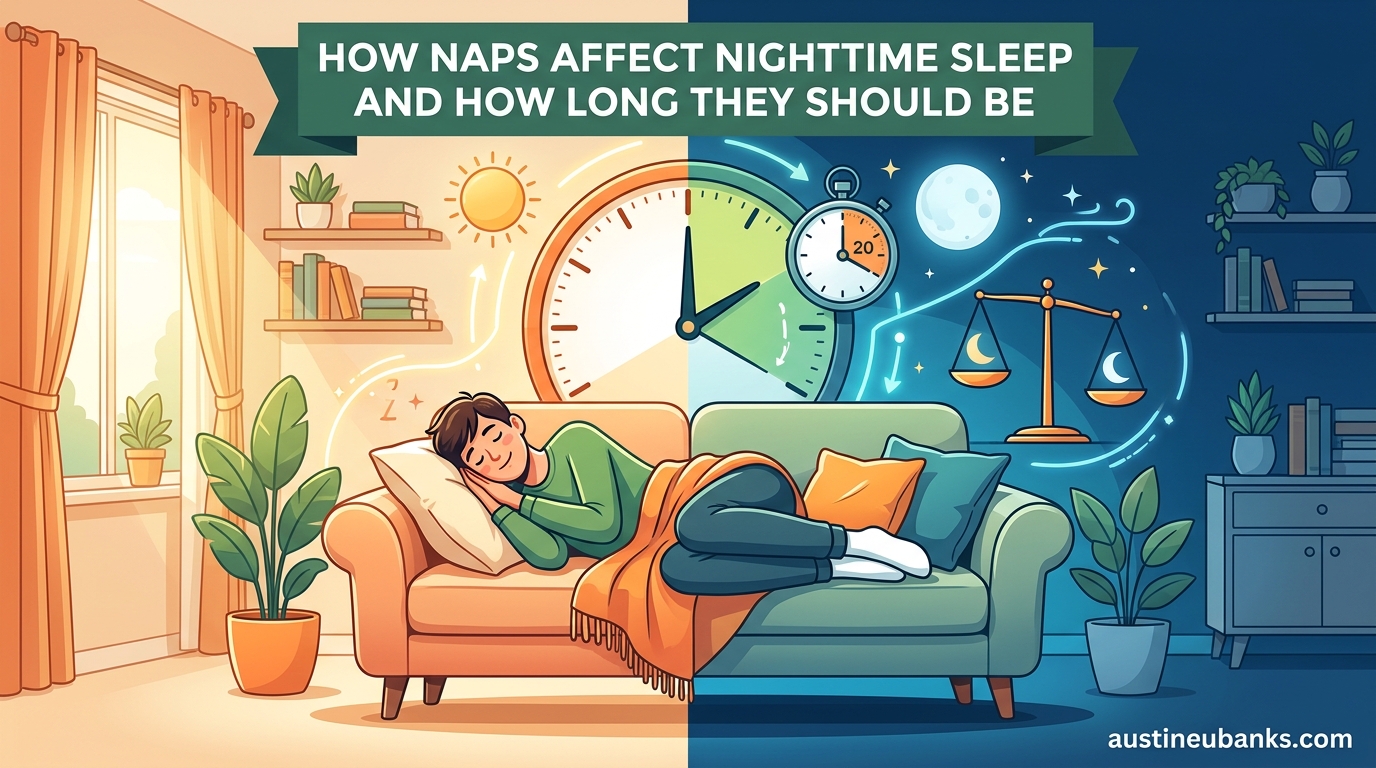
If you have ever taken a 2-hour afternoon nap and then stared at the ceiling at midnight wondering what went wrong, you are not alone. Understanding how naps affect nighttime sleep and how long they should be is one of the most practical sleep skills you can develop. The short answer is that naps reduce your sleep drive and can shift your circadian rhythm if taken too late or too long. For most adults, a 10 to 20 minute nap before 3pm provides benefits without wrecking nighttime sleep.
Our team has dug through research from the Sleep Foundation, Mayo Clinic, Cleveland Clinic, and multiple peer-reviewed studies to break this topic down into clear, actionable guidance. Whether you are a shift worker, a new parent running on fumes, or someone who just loves a midday snooze, this guide will help you nap strategically. For broader sleep hygiene tips that complement smart napping, check out our companion guide.
We will cover the science behind how naps influence your nighttime rest, the exact durations that work best for different goals, the optimal timing window, and practical tips for napping without regret. We also address common questions like whether naps can replace lost sleep and what to do if you accidentally nap for three hours. If you are curious about how circadian rhythm works in more detail, we have a dedicated breakdown of that system as well.
Table of Contents
Quick Answer: How Naps Affect Nighttime Sleep and How Long They Should Be
Naps affect nighttime sleep by reducing sleep drive, the biological pressure that builds up throughout the day and makes you tired at night. A short nap of 10 to 20 minutes taken before 3pm generally does not interfere with nighttime sleep. Naps longer than 30 minutes can trigger sleep inertia, and naps longer than 60 minutes or taken within 8 hours of bedtime can significantly disrupt your ability to fall asleep and stay asleep.
Here is the quick breakdown of nap durations and their effects on nighttime sleep:
- 10 to 20 minutes (Power Nap): Boosts alertness and mood with minimal impact on nighttime sleep. This is the sweet spot for most adults.
- 30 to 60 minutes (Recovery Nap): Can help with sleep debt but may cause grogginess from sleep inertia and slightly reduce nighttime sleep drive.
- 90 minutes (Full Cycle Nap): Completes one full sleep cycle, which can improve memory and creativity, but may reduce your ability to fall asleep at your normal bedtime.
- Over 90 minutes or after 3pm: High risk of disrupting nighttime sleep, especially for people prone to insomnia.
How Naps Affect Nighttime Sleep: The Science
To understand how naps affect nighttime sleep and how long they should be, you need to understand two biological systems that control your sleep: sleep drive and your circadian rhythm. These two systems work together to determine when you feel sleepy and when you feel alert. Napping directly affects both of them.
Sleep Drive and Adenosine
Sleep drive, also called sleep pressure, builds up from the moment you wake up. Every hour you are awake, your brain accumulates a chemical called adenosine. The more adenosine you have, the sleepier you feel. This is why you feel tired at the end of a long day.
When you nap, your brain starts clearing out some of that accumulated adenosine. A short 10 to 20 minute nap removes only a small amount, leaving plenty of sleep drive for the evening. A longer nap removes significantly more, which means you may not feel tired enough to fall asleep at your normal bedtime. This is the core reason long naps interfere with nighttime sleep.
Think of sleep drive like hunger. If you eat a full meal at 4pm, you probably will not be hungry for dinner at 6pm. But a small snack will not ruin your appetite. The same principle applies to napping and nighttime sleep.
Circadian Rhythm Disruption
Your circadian rhythm is your body’s internal 24-hour clock. It tells your body when to release melatonin, when to raise cortisol, and when to expect sleep. This rhythm is anchored by your morning light exposure and your regular sleep schedule.
Napping, especially late in the day, can confuse this system. When you sleep at an unusual time, your body may reduce melatonin production that evening or shift your sleep window later. This is why napping after 3pm is particularly risky for people who already struggle with falling asleep at night. Your circadian rhythm expects one main sleep period, and introducing a second one late in the day sends mixed signals.
Research published in PubMed shows that frequent napping and late naps are associated with increased sleep fragmentation and poorer nighttime sleep quality, reflected in longer sleep onset times. In plain terms, people who nap late or often take longer to fall asleep at night and wake up more frequently.
Sleep Inertia and Deep Sleep
Sleep inertia is that groggy, disoriented feeling you get after waking up from a deep nap. It happens when you wake up during slow wave sleep, also called delta sleep or stage 3 non-REM sleep. This is the deepest stage of sleep, and waking from it leaves you feeling mentally foggy for 30 minutes or more.
Sleep stages progress in cycles. During the first 20 minutes of sleep, you remain in lighter stages. Between 30 and 60 minutes, you enter deep sleep. At around 90 minutes, you complete one full cycle and may enter REM sleep. This is why a 20 minute nap leaves you refreshed but a 45 minute nap leaves you feeling like you were hit by a truck.
The key takeaway is that the length of your nap determines which sleep stage you wake from, and that directly affects how you feel afterward. It also affects how much your nap eats into your nighttime sleep drive.
Sleep Fragmentation
Sleep fragmentation refers to interrupted or broken sleep at night. People who nap frequently, especially for long durations, often experience more fragmented nighttime sleep. Their nighttime rest becomes lighter, with more awakenings and less restorative deep sleep.
This creates a frustrating cycle. You nap because you did not sleep well, but the nap itself reduces your nighttime sleep quality, so you need another nap the next day. Sleep specialists call this the napping vicious cycle, and it is one of the most common patterns seen in people with chronic sleep issues.
The Cleveland Clinic notes that this cycle can eventually signal an underlying sleep disorder. If you find yourself needing a nap every single day despite getting 7 to 8 hours of sleep at night, it may be time to talk to a doctor about sleep apnea, narcolepsy, or other conditions.
How Long Should a Nap Be? The Duration Guide
The ideal nap length depends on what you want to achieve. Different durations serve different purposes, from a quick alertness boost to recovering from accumulated sleep debt. Here is a detailed breakdown of each nap type and how it affects your nighttime sleep.
Power Nap: 10 to 20 Minutes
A power nap of 10 to 20 minutes is the gold standard for most adults. It is short enough to keep you in light sleep stages, which means you wake up feeling refreshed rather than groggy. You get improved alertness, better mood, and enhanced cognitive performance without significantly reducing your nighttime sleep drive.
Studies from the Sleep Foundation show that a 10 minute nap produces the most immediate improvements in alertness and performance, with benefits lasting 1 to 3 hours. A 20 minute nap offers similar benefits but may take a few extra minutes to shake off upon waking.
The Mayo Clinic recommends this duration for healthy adults who want a quick recharge. Because it barely touches your adenosine levels, a power nap taken before 3pm will have essentially zero negative impact on your nighttime sleep. This is the duration our team recommends if you want to nap safely.
Recovery Nap: 30 to 60 Minutes
A recovery nap of 30 to 60 minutes is useful when you are running on serious sleep debt, such as after a terrible night of sleep or during a period of intense work. However, this duration comes with a trade-off. You will likely enter deep sleep, which means you may experience sleep inertia upon waking.
If you choose a recovery nap, plan for 15 to 30 minutes of grogginess after waking. During this period, your brain is transitioning out of slow wave sleep and back to full alertness. You can speed up this process by getting bright light exposure and drinking water immediately after waking.
In terms of nighttime sleep impact, a 30 to 60 minute nap will reduce your sleep drive noticeably. If you take one, you may find that you need to push your bedtime back by 30 to 60 minutes to compensate. Otherwise, you may lie awake in bed feeling frustrated.
Extended Nap: 90 Minutes (Full Sleep Cycle)
A 90 minute nap allows you to complete one full sleep cycle, from light sleep through deep sleep and into REM sleep. This type of nap is associated with improved memory consolidation, enhanced creativity, and better emotional regulation. Some people find 90 minute naps deeply restorative.
The advantage of the 90 minute nap is that you wake up at the end of a sleep cycle rather than in the middle of deep sleep. This means minimal sleep inertia. You may feel refreshed rather than groggy, provided you timed the nap correctly.
The downside is that a 90 minute nap removes a substantial amount of sleep drive. If you take one in the late afternoon, you may have real trouble falling asleep at your normal bedtime. UCSB Wellness notes that 90 to 120 minute naps can be beneficial when timed well, but they are best reserved for days when you have flexibility in your sleep schedule.
The 30 60 90 Rule for Naps
The 30 60 90 rule for naps is a simple framework for choosing your nap duration based on your goals. Here is how it works:
- 30 minutes: Good for a moderate recharge. You may experience some sleep inertia, but you will get deeper rest than a power nap.
- 60 minutes: Hits peak deep sleep, which helps with memory consolidation. Expect significant grogginess upon waking that lasts 20 to 30 minutes.
- 90 minutes: Completes a full sleep cycle. Best for cognitive recovery and memory. Minimal sleep inertia but maximum reduction in nighttime sleep drive.
Use this rule as a guideline, not a strict formula. Your individual sleep architecture may vary slightly, but these ranges hold true for the vast majority of adults.
Nap Duration Comparison
Here is a quick reference comparing all nap types and their effects on nighttime sleep:
- 10 to 20 minutes: Minimal nighttime impact. Best for daily use. Improves alertness and mood.
- 30 minutes: Slight nighttime impact. Moderate sleep inertia. Good for moderate fatigue.
- 60 minutes: Noticeable nighttime impact. Significant sleep inertia. Best for memory tasks.
- 90 minutes: Substantial nighttime impact. Minimal sleep inertia. Best for full cognitive recovery.
- Over 90 minutes: High risk of disrupting nighttime sleep. Can trigger the vicious napping cycle.
Best Time of Day to Nap
Nap timing matters just as much as nap duration. Even a short 15 minute nap can cause problems if you take it at 6pm. The best time to nap falls within a specific window that aligns with your natural circadian rhythm and leaves enough sleep drive for the evening.
The Post-Lunch Dip Window
Most people experience a natural dip in alertness between 1pm and 3pm. This is called the post-lunch dip or afternoon slump, and it happens regardless of what you ate for lunch. Your circadian rhythm naturally reduces alertness during this window, making it the ideal time for a nap.
Napping during the post-lunch dip works with your biology rather than against it. Your body is already predisposed to rest during this window, so falling asleep is easier. And because it is still early in the day, you have plenty of time for sleep drive to rebuild before bedtime.
The Sleep Foundation recommends scheduling naps between 1pm and 3pm for most adults with standard daytime schedules. This window gives you the restorative benefits of a nap while preserving your ability to fall asleep at night.
How Late Is Too Late to Nap?
The general rule is to finish your nap at least 8 hours before your normal bedtime. If you go to bed at 10pm, that means wrapping up your nap by 2pm. If you go to bed at midnight, you have until 4pm.
The Mayo Clinic specifically cautions against napping after 3pm for most adults. Naps taken in the late afternoon or evening directly compete with your nighttime sleep window. They reduce sleep drive right when you need it most and can shift your circadian rhythm later, making it harder to fall asleep on time.
Late naps are the number one cause of nap-related sleep disruption that our team sees discussed in sleep forums. People consistently report that napping after 4pm leads to lying awake at bedtime, even when the nap itself was short.
Nap Timing by Chronotype
Your chronotype, whether you are a morning person or an evening person, affects your ideal nap window. Morning chronotypes, often called larks, experience their post-lunch dip earlier, typically around noon to 2pm. Evening chronotypes, called owls, may not feel their energy dip until 3pm or 4pm.
If you are a natural early riser, aim to nap between 12pm and 2pm. If you naturally stay up late and wake up late, your ideal nap window may be closer to 2pm to 4pm. Adjusting your nap timing to match your chronotype helps you fall asleep more easily during the nap and preserves your nighttime sleep drive.
This is one of the areas where individual variation matters significantly. Some people can nap at 4pm and sleep fine at night. Others cannot nap past 1pm without consequences. Pay attention to how your own body responds and adjust accordingly.
Can Naps Make Up for Lost Sleep?
This is one of the most common questions people ask about napping. If you only slept 5 hours last night, can a 2 hour nap make up the difference?
The short answer is: partially, but not perfectly. Napping can reduce acute sleep debt and improve daytime functioning after a poor night of sleep. A 90 minute recovery nap can help restore some cognitive function that was lost to sleep deprivation. However, naps do not fully replace nighttime sleep because nighttime sleep has a different structure and quality.
Nighttime sleep includes longer periods of deep slow wave sleep and REM sleep, which are essential for physical recovery and memory consolidation. Naps, even long ones, do not replicate this full architecture. Research shows that the brain needs consolidated sleep periods for optimal restoration, which is why 5 hours at night plus 2 hours during the day is not equivalent to 7 hours of continuous sleep.
That said, if you are sleep deprived, a nap is better than nothing. A 20 to 30 minute nap can take the edge off acute fatigue and improve your performance for the rest of the day. Just avoid the trap of using long daytime naps as a regular substitute for adequate nighttime sleep. Over time, this pattern can lead to a disrupted sleep schedule and chronic sleep issues.
The best strategy is to use naps as a temporary bridge during periods of sleep loss, while working to restore your nighttime sleep to a healthy 7 to 9 hours. If you consistently need long naps to function, that is a sign that your nighttime sleep needs attention. For more on building a consistent sleep routine, see our guide to healthy sleep habits.
Tips for Napping Without Ruining Your Nighttime Sleep
If you want to enjoy the benefits of napping without paying for it at bedtime, follow these practical guidelines. These tips come from sleep medicine research and real-world experience from people who nap successfully.
1. Set an alarm for 20 minutes. This is the single most important tip. A 20 minute alarm ensures you wake up before entering deep sleep. Even if you do not fall asleep immediately, the rest period itself provides benefits. Many Reddit users in sleep communities report that a strict 20 minute alarm transformed their napping from disruptive to restorative.
2. Nap before 3pm. Earlier naps preserve more of your nighttime sleep drive. If your schedule allows, aim for the 1pm to 2pm window when your body naturally wants to rest. If you must nap later, keep it under 15 minutes.
3. Try the coffee nap technique. Drink a cup of coffee, then immediately lie down for a 20 minute nap. Caffeine takes about 20 minutes to reach peak effectiveness in your bloodstream. When your alarm goes off, you get a double boost from the nap and the caffeine hitting simultaneously. The Sleep Foundation highlights this as one of the most effective nap strategies for alertness.
4. Create a nap-friendly environment. A dark, quiet, cool space helps you fall asleep faster, which means more of your 20 minutes is spent actually sleeping. Use an eye mask, earplugs, or a white noise app if needed.
5. Avoid napping if you have insomnia. If you struggle with chronic insomnia, napping during the day can reinforce the pattern of poor nighttime sleep. Sleep therapists often recommend eliminating naps entirely as part of cognitive behavioral therapy for insomnia. The goal is to build maximum sleep drive for nighttime so your body associates the bed with sleep, not wakefulness.
6. Keep naps consistent or avoid them entirely. Some people do best with a daily nap at the same time, which their body adapts to. Others do best with no naps at all. The worst pattern is irregular napping, where you nap randomly at different times and durations. This confuses your circadian rhythm and can lead to inconsistent nighttime sleep.
7. Get bright light after waking. Exposure to bright light immediately after a nap helps clear sleep inertia faster. Step outside for 2 minutes or look out a window. Light signals your brain to suppress melatonin and ramp up alertness.
Who Should Avoid Napping?
Napping is not beneficial for everyone. Certain groups of people should be cautious about or avoid daytime napping altogether because it can worsen their existing sleep problems.
People with insomnia: If you have trouble falling asleep or staying asleep at night, napping is one of the first habits sleep specialists will ask you to cut. Daytime napping reduces the sleep drive you need at night and can reinforce the anxiety-wakefulness cycle that fuels insomnia.
People with depression: Research links excessive napping, particularly naps longer than 60 minutes, with higher rates of depression. The relationship works in both directions. Depression can cause excessive daytime sleepiness, and long naps can worsen depressive symptoms by disrupting nighttime sleep and reducing daytime activity.
People with suspected sleep disorders: If you feel an overwhelming need to nap every day despite getting adequate nighttime sleep, this could signal an underlying condition. Sleep apnea, narcolepsy, and hypersomnia all cause excessive daytime sleepiness. The Cleveland Clinic notes that daily long naps can sometimes be the first sign of one of these disorders.
People with high blood pressure or cardiovascular risk: Some research links naps longer than 60 minutes per day with increased risks of high blood pressure and other cardiovascular issues. The evidence is mixed, but if you have existing heart health concerns, it is worth discussing your napping habits with your doctor.
What to Do If You Accidentally Took a Long Nap
Almost everyone has been there. You lay down for a quick 20 minute nap and wake up three hours later wondering what year it is. Here is how to recover and still get a decent night of sleep.
Do not panic. One long nap will not permanently damage your sleep schedule. The key is managing the rest of your day so you can still fall asleep at a reasonable hour.
Get bright light immediately. Step outside or sit near a bright window for 5 to 10 minutes. This helps reset your circadian rhythm and clear the sleep inertia. Your brain needs to know it is daytime.
Get some physical activity. A brisk walk, light exercise, or even stretching can help burn off the excess energy from the nap and rebuild sleep drive. Avoid intense workouts within 3 hours of bedtime.
Push your bedtime back slightly. If you took a 2 hour nap, expect to need about 1 to 2 extra hours before you feel sleepy at night. Rather than lying in bed frustrated at your normal bedtime, stay up until you feel genuine sleepiness. Then go to bed.
Set a wake-up alarm for the next morning. Do not sleep in to compensate. Wake up at your normal time the next day to reset your sleep drive and circadian rhythm. You may feel tired for one day, but your schedule will recover quickly.
Frequently Asked Questions
What is the 30 60 90 rule for naps?
The 30 60 90 rule is a nap duration framework. A 30-minute nap provides moderate rest but may cause mild sleep inertia. A 60-minute nap reaches peak deep sleep, helping with memory but causing significant grogginess upon waking. A 90-minute nap completes one full sleep cycle, offering full cognitive recovery with minimal sleep inertia but the biggest impact on nighttime sleep drive.
What is the 3-3-3 rule for sleep?
The 3-3-3 rule for sleep is a simple guideline: stop eating heavy meals 3 hours before bed, stop looking at screens 3 hours before bed, and get out of bed if you cannot sleep within 3 minutes to avoid associating your bed with wakefulness. This rule supports good sleep hygiene and complements healthy napping habits.
How long should a nap be so I can sleep at night?
To protect your nighttime sleep, keep naps between 10 and 20 minutes and finish them before 3pm. Short naps minimally reduce your sleep drive, leaving you plenty of tiredness for bedtime. If you need a longer nap, aim for 90 minutes to complete a full sleep cycle, but expect to push your bedtime back by 30 to 60 minutes.
Is it okay if I sleep 5 hours per night and take a 2 hour nap later on?
Sleeping 5 hours at night and taking a 2 hour nap is not ideal but is better than only getting 5 hours total. However, nighttime sleep and daytime naps are not interchangeable. Nighttime sleep provides deeper, more consolidated rest with longer periods of slow wave sleep and REM sleep. If you regularly need long naps to compensate for short nights, focus on improving your nighttime sleep duration to 7 to 9 hours.
Do naps count towards your 8 hours of sleep?
Naps do contribute to your total daily sleep, but they do not count equally toward your 8 hours. Nighttime sleep is more restorative because it includes longer deep sleep and REM periods in a consolidated block. A 20 minute nap plus 7.5 hours at night is great. But 5 hours at night plus 3 hours of napping is not equivalent to 8 hours of continuous sleep.
Why do I feel more tired after a long nap?
Feeling tired after a long nap is caused by sleep inertia, which occurs when you wake up during deep slow wave sleep. Naps lasting 30 to 60 minutes are most likely to cause this because they put you in the deepest sleep stage. To avoid sleep inertia, keep naps under 20 minutes or extend them to 90 minutes to complete a full sleep cycle.
Should I avoid napping if I have insomnia?
Yes, people with chronic insomnia should generally avoid daytime napping. Napping reduces sleep drive, which is the biological pressure you need to fall asleep at night. Sleep specialists often recommend eliminating naps entirely as part of insomnia treatment, especially cognitive behavioral therapy for insomnia, to rebuild strong nighttime sleep patterns.
Conclusion
Understanding how naps affect nighttime sleep and how long they should be comes down to two key principles. Keep naps short, ideally 10 to 20 minutes, and finish them before 3pm. Short, early naps boost your alertness and mood without eating into the sleep drive you need for a good night of rest.
If you need a longer nap, aim for 90 minutes to complete a full sleep cycle and accept that you may need to adjust your bedtime. Avoid naps between 30 and 60 minutes if possible, as they tend to cause the worst sleep inertia. And if you struggle with insomnia, cutting out naps entirely may be the single best change you can make.
Listen to your body, track how different nap lengths affect your nighttime sleep, and adjust your habits based on what works for you. Good sleep is one of the most important investments you can make in your health, and smart napping is a powerful tool in that toolkit.