
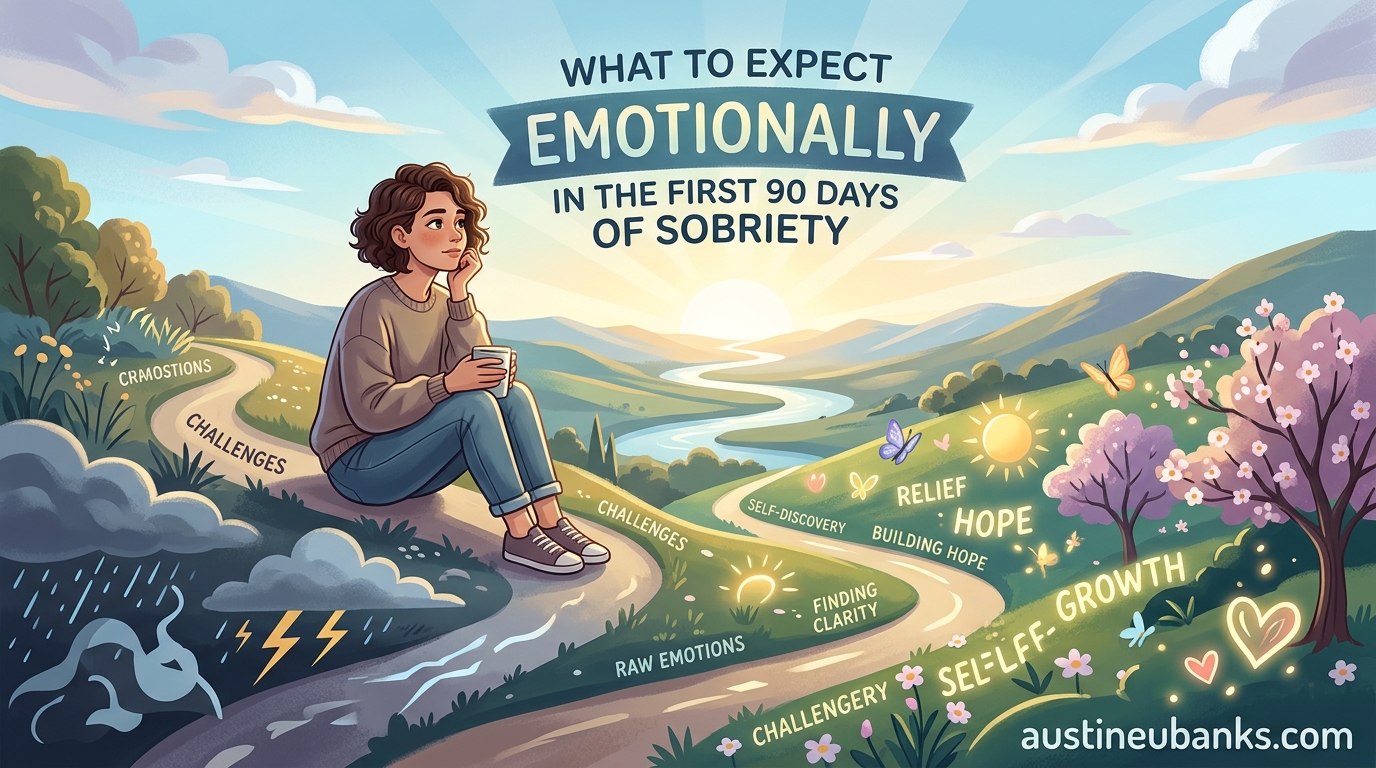
The first 90 days of sobriety bring intense emotional highs and lows as your brain heals from substance use and learns to feel emotions without numbing them. If you have ever asked yourself why everything feels so overwhelming right now, you are not weak, broken, or doing recovery wrong. You are in the most turbulent stretch of the entire journey.
The emotional first 90 days sobriety experience is unlike anything most people anticipate. The highs can feel almost euphoric, and the lows can shake you to your core. Some days you may feel more alive than you have in years. Other days, the irritability, sadness, or flat-out emptiness can make you question whether sobriety is even working.
Our team has spent years studying recovery patterns, and we want you to know one thing before we go further: every feeling you are about to read about is normal. The mood swings, the brain fog, the sudden rage, the crying at commercials, the days where you feel nothing at all. All of it. This guide walks you through exactly what happens emotionally month by month so you can stop guessing and start preparing.
Table of Contents
Why the First 90 Days Hit Differently
The first 90 days of sobriety are emotionally intense because your brain is literally rewiring itself. Substances like alcohol and opioids artificially flood your brain with dopamine and other neurotransmitters, and when you remove them, your brain has to learn how to produce and regulate those chemicals on its own again.
This process, called neural pathway recovery, takes time. According to the National Institute on Drug Abuse, the brain begins healing within days of abstinence, but full dopamine receptor recovery can take months or even longer depending on the substance, the duration of use, and individual factors.
During this recalibration period, your emotional regulation system is essentially running without shock absorbers. Everything feels louder, sharper, and more immediate than it did when substances were buffering the experience. That is why a minor inconvenience at week six can feel like a catastrophe, and why a small kindness at week two can move you to tears.
The key thing to understand is that this intensity is not a sign that something is wrong. It is a sign that your brain is working harder than it has in years to rebuild its natural emotional infrastructure.
Month 1 (Days 1-30): The Pink Cloud and the Crash
Month one of sobriety is a paradox. For many people, it begins with something recovery communities call the pink cloud, a period of unexpected euphoria, clarity, and optimism that catches people off guard in the best possible way.
The pink cloud sobriety phase typically kicks in within the first week or two after the worst physical withdrawal symptoms subside. You might wake up feeling genuinely clear-headed for the first time in years. Colors seem brighter. Conversations feel more real. You may feel a deep sense of pride and hope that borders on elation.
This phase can be wonderful, and there is nothing wrong with enjoying it. But it is important to understand that the pink cloud is not sustainable recovery. It is your brain getting a first taste of natural dopamine after a long drought, and that initial rush of feel-good chemicals creates a temporary high.
Somewhere between day 10 and day 30, most people hit what feels like an emotional wall. The pink cloud fades, and reality sets in. This is the crash, and it can feel disorienting if you are not expecting it.
During this crash, you might experience sudden mood drops, irritability, anxiety that comes out of nowhere, and a nagging sense that something is wrong. Brain fog after quitting alcohol is extremely common during this window. You might struggle to concentrate, forget simple things, or feel like your thinking is moving through molasses.
Sleep disruption makes everything harder. Your body is adjusting to falling asleep without the depressant effect of substances, and many people in early recovery deal with insomnia, vivid dreams, or waking up at 3 a.m. with their mind racing. Poor sleep amplifies every emotional challenge, creating a feedback loop where exhaustion feeds anxiety and anxiety feeds exhaustion.
If you are in this window right now, here is what we want you to hear: the crash does not mean recovery is failing. It means the pink cloud is over and the real work is beginning. The people who stay sober are not the ones who never crash. They are the ones who expected the crash and rode it out anyway.
Month 2 (Days 31-60): The Emotional Rollercoaster
Month two is, for many people, the hardest stretch of the first 90 days. This is when the emotional rollercoaster sobriety experience kicks into full gear, and it can feel like you are on a ride you did not sign up for.
The core reason month two is so challenging is that your emotions are coming back online in full force. During active use, substances numbed difficult feelings. Now, those feelings are arriving without a filter, and your brain has not yet rebuilt the coping mechanisms to handle them.
This is the month where people frequently ask, does sobriety make you more emotional? The answer is yes, and month two is usually when that intensity peaks.
Guilt and Shame
Around day 30 to 60, many people in recovery start confronting the past without the buffer of substances. Guilt and shame can arrive with crushing force. You may find yourself replaying things you said or did while using, relationships you damaged, or opportunities you let slip away.
This guilt is real, but it is not meant to be a life sentence. Recovery communities often distinguish between guilt, which says you did something bad, and shame, which says you are something bad. Guilt can motivate change. Shame destroys it. Working with a therapist or counselor during this phase can help you process these feelings constructively rather than drowning in them.
Mood Swings and Irritability
The mood swings early recovery brings can be wild. You might feel fine at noon, furious by 2 p.m., and weeping by dinner. Many people describe irritability that borders on rage, snapping at loved ones over things that normally would not bother them.
This is your nervous system recalibrating. The neural pathways that regulated emotional responses were disrupted by substance use, and they are rebuilding from scratch. Each wave of intense emotion is, in a strange way, evidence that your brain is doing the work of healing.
Identity Without Substances
Month two is also when identity questions tend to surface. If you drank or used for years, substances may have been woven into your social life, your stress relief, your celebrations, and even your sense of humor. Without them, you may find yourself wondering who you actually are.
This identity crisis in early sobriety is unsettling but profoundly important. You are not losing yourself. You are meeting yourself, possibly for the first time as an adult. The discomfort of not knowing who you are without substances is the discomfort of becoming someone new.
Anxiety and Depression
Anxiety in early sobriety is extremely common during month two. Your brain is producing stress hormones at unfamiliar levels, and without substances to dampen them, the anxiety can feel physical. Chest tightness, racing thoughts, restlessness, and a sense of impending doom are all reported frequently.
Depression after detox can also surface here. It often looks like emotional numbness, a flatness where nothing feels good or bad, or a heavy sadness that does not seem connected to any specific event. If depressive symptoms persist for more than two weeks or include thoughts of self-harm, this is the time to seek professional support without hesitation.
Boredom and Social Isolation
By month two, the novelty of sobriety has worn off and boredom becomes a genuine emotional challenge. Without substances to fill time, social gaps, or emotional voids, many people feel restless and lonely. Social situations that used to revolve around drinking now feel awkward or painful, and declining invitations can lead to isolation.
Boredom in sobriety is not just uncomfortable. It is one of the most common triggers for relapse. Building new routines, finding sober social connections, and filling time with meaningful activities is essential survival work during this phase, not optional self-improvement.
Month 3 (Days 61-90): The Plateau and the Pivot
Month three is a confusing emotional phase because it does not match the narrative most people carry into recovery. You might expect to feel dramatically better by day 90, but instead, many people hit what feels like a plateau.
This plateau is one of the most under-discussed parts of early recovery, and it is the reason so many forum posts ask variations of, why does 90 days sober feel like the worst three months of my life? The honest answer is that month three is when the initial adrenaline of quitting wears off, the pink cloud is long gone, and you are left sitting with the reality of building an entirely new life from scratch.
Why Recovery Can Feel Harder at 90 Days Than at 30 Days
At day 30, you still had momentum and novelty on your side. At day 60, the intensity of the emotional rollercoaster kept things moving. At day 90, the urgency can fade, the emotional weather can feel flat, and the sheer daily work of maintaining sobriety can start to feel exhausting.
This is also when many people realize that sobriety is not a finish line. It is a lifestyle. That realization can be freeing or it can be demoralizing, depending on the day. Both reactions are valid.
Emotional Numbness
Emotional numbness after getting sober is a distinct phase that some people experience around the 60 to 90 day mark. It can feel like you are watching your life through glass, present but disconnected, going through the motions without feeling engaged.
This numbness is not permanent. It is often the brain taking a breather after the intensity of months one and two, a kind of emotional fatigue that settles in while deeper healing continues underneath. The numbness usually lifts gradually as you build new routines, new connections, and new sources of meaning.
Building a New Life
Month three is when the foundation you have been pouring starts to set. The work shifts from surviving the early weeks to actively constructing a life that supports long-term recovery.
This is the time to invest in the structures that will carry you forward. Therapy, support groups, new hobbies, rebuilt relationships, physical exercise, creative outlets, and spiritual practices all become part of the scaffolding that holds your sobriety up when the ground shakes.
Finding Purpose
By day 90, many people begin to sense what their sober life could actually look like. The early chaos is settling. The raw emotions are becoming more manageable. And in that relative calm, questions about purpose and meaning start to surface.
What do you actually care about? What kind of person do you want to be? What did substances keep you from pursuing? These questions are not distractions from recovery. They are recovery. The emotional work of month three is about beginning to answer them.
Understanding PAWS (Post-Acute Withdrawal Syndrome)
If you are wondering why emotions stay so volatile well past the initial detox period, the answer is likely Post-Acute Withdrawal Syndrome, or PAWS.
PAWS is a set of persistent withdrawal symptoms that occur after the acute physical withdrawal phase has ended. While acute withdrawal is primarily physical and lasts days to weeks, PAWS is primarily emotional and neurological, and it can last for months.
Common PAWS symptoms include mood swings, anxiety, irritability, difficulty concentrating, memory problems, sleep disruption, emotional numbness, anhedonia or the inability to feel pleasure, and periods of feeling suddenly overwhelmed or foggy.
PAWS happens because the brain is rebuilding its neurotransmitter systems and neural pathways. The dopamine receptor recovery process is gradual, and during the months it takes to complete, your emotional baseline can swing unpredictably.
Understanding PAWS is one of the most empowering things you can do in early recovery because it reframes the emotional chaos. When you know that the mood swings, the flat days, and the brain fog have a biological cause and a finite timeline, they become easier to endure. You are not broken. Your brain is healing on a schedule that does not match your expectations.
Most people find that PAWS symptoms gradually decrease in intensity and frequency between months three and six, with significant improvement by the six-month mark. Some symptoms can persist longer, which is why ongoing support, therapy, and patience are so important.
Practical Strategies for Riding the Emotional Waves
Understanding what is happening emotionally is half the battle. The other half is having concrete tools to handle the waves when they hit. Here are the strategies that make the biggest difference during the first 90 days.
The HALT Method
HALT stands for Hungry, Angry, Lonely, Tired. These four states are the most common triggers for emotional spirals and cravings in early recovery. When you feel yourself slipping into an intense emotional state, the first question to ask is whether one of these four needs is unmet.
Are you hungry? Eat something. Angry? Pause, breathe, step away. Lonely? Call someone, even if you do not feel like it. Tired? Rest, even if your mind says to push through. Many emotional spirals in early recovery are actually basic physical or social needs in disguise, and addressing the underlying need can short-circuit the spiral before it escalates.
Name the Emotion
When an intense feeling hits, name it specifically. Not just I feel bad, but I feel ashamed about what I said to my brother last year. Not just I feel off, but I feel anxious about the social event this weekend. Naming an emotion accurately gives your brain a framework to process it instead of being overwhelmed by it.
Build a Daily Structure
Unstructured time is dangerous in early recovery. Build a daily routine that includes sleep, meals, movement, connection, and a recovery activity like a meeting, journaling, or therapy homework. Structure reduces decision fatigue, fills the time that substances used to fill, and creates a sense of momentum.
Move Your Body
Physical movement is one of the fastest ways to shift an emotional state. You do not need to run marathons. A 15-minute walk, stretching, or any movement that gets your blood flowing can interrupt anxiety spirals, burn off anger, and give your brain a natural dopamine boost during a period when it desperately needs one.
When to Seek Professional Support
There is a difference between the normal emotional turbulence of early recovery and symptoms that require professional intervention. Seek help immediately if you experience thoughts of self-harm or suicide, persistent depression lasting more than two weeks, panic attacks that interfere with daily functioning, or any urge to use that feels beyond your ability to manage alone.
Working with an addiction counselor, therapist, or psychiatrist during the first 90 days is not a sign of weakness. It is the single most effective thing you can do to protect your recovery. Some people also benefit from medication to stabilize mood during this period, and there is no shame in that either.
FAQs
Is the first 90 days of sobriety the hardest?
For most people, yes. The first 90 days are emotionally the most intense because your brain is recalibrating its dopamine and stress response systems while you simultaneously face raw emotions without the buffer of substances. The mood swings, anxiety, and flatness you feel during this period are signs of neurological healing, not signs of failure.
What is emotional sobriety in recovery?
Emotional sobriety is the ability to sit with your feelings without being controlled by them or needing to numb them. It does not mean feeling happy all the time. It means being present with anger, sadness, anxiety, and joy as they come and go, responding rather than reacting. Emotional sobriety develops gradually and is a lifelong practice, not a milestone you check off.
When does sobriety get better?
Most people notice meaningful emotional improvement between months three and six. The acute emotional chaos of the first 90 days begins to settle, PAWS symptoms decrease in frequency, and you start building genuine emotional regulation skills. However, recovery is not linear, and difficult periods can resurface. The trajectory is upward, but it is not a straight line.
What happens when you are sober for 90 days?
By 90 days sober, most people experience improved sleep quality, reduced brain fog, better concentration, more stable moods, and a growing sense of identity separate from substances. Emotionally, you may still feel raw or plateaued, but the survival-mode intensity of the first two months has usually eased. You are also building the habits and neural pathways that will support long-term recovery.
Does sobriety make you more emotional?
Yes, especially in the first 90 days. Without substances to numb feelings, emotions return in full force and often feel more intense than before. This is because your brain is recalibrating its emotional regulation systems. The heightened emotional sensitivity is temporary for most people and gradually balances out as the brain heals.
What does 3 months sober feel like?
Three months sober often feels like a plateau rather than a peak. The pink cloud is long gone, the initial crisis energy has faded, and you may feel tired of the daily work. But underneath that fatigue, real change is happening. Sleep, focus, and physical health are usually improved, and you are beginning to build a life that does not revolve around substances. It is less exciting than day 10 and more meaningful than day 30.
You Are Building the Foundation
The emotional first 90 days sobriety experience is brutal, beautiful, confusing, and foundational all at once. Every mood swing, every flat day, every moment of raw anger or unexpected tears is evidence that your brain is doing the hard work of healing.
You do not need to feel great at 90 days. You need to still be here. If you are reading this and you are sober today, that is the only metric that matters right now. Everything else, the emotional stability, the identity, the purpose, the peace, all of it is being built on the foundation you are laying in these difficult, important days.
Keep going. The version of you on the other side of this is worth meeting.