
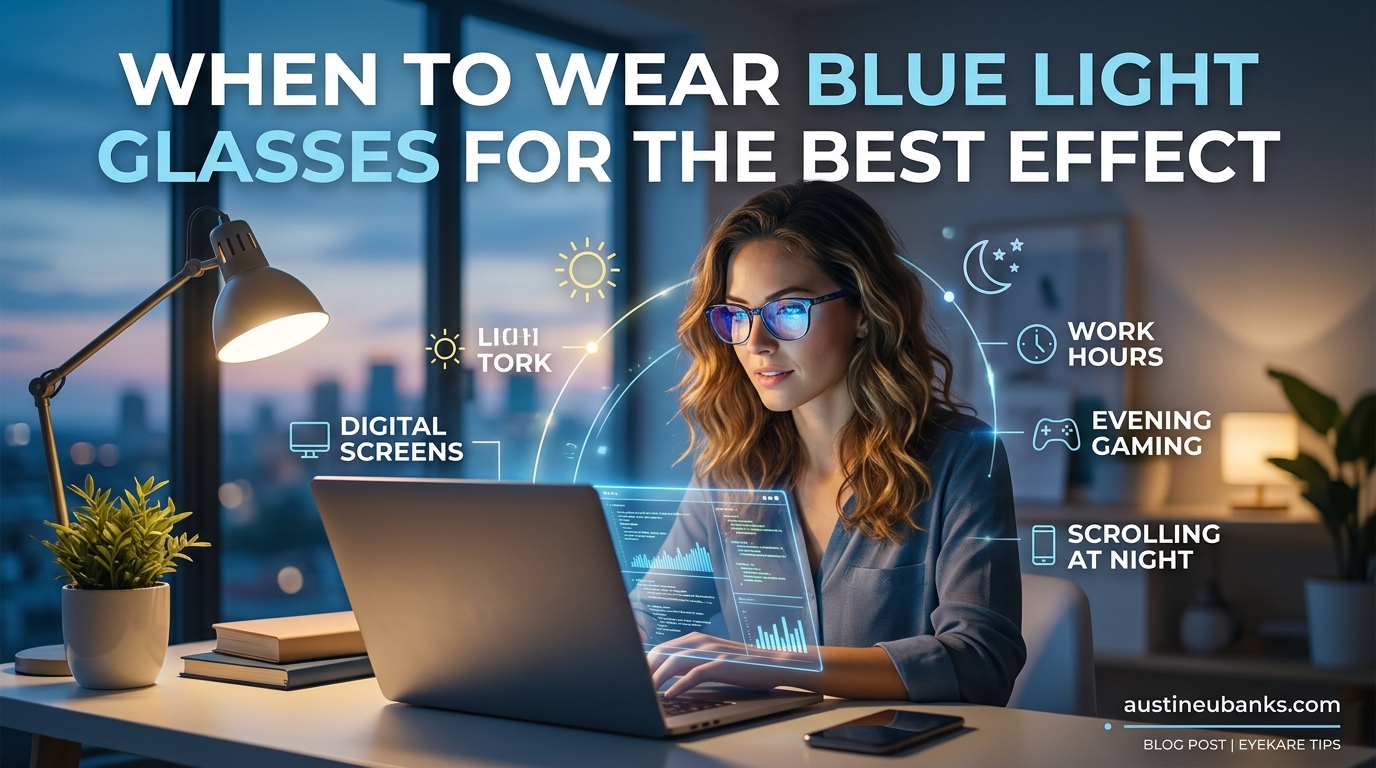
If you spend most of your day staring at screens, you have probably wondered about blue light glasses and whether timing matters. Knowing when to wear blue light glasses for the best effect can mean the difference between restful sleep and another night of tossing and turning. The truth is that these glasses are not a magic cure, but wearing them at the right moments does help.
Our team dug into the research from the American Academy of Ophthalmology, Mayo Clinic, and real user discussions across forums to separate facts from marketing hype. In this guide, we break down what blue light actually does to your body, how filtering glasses work, and the specific situations where they deliver the most value. We also address the skepticism head on, because plenty of people online question whether these glasses do anything at all.
By the end, you will have a clear, practical wear schedule you can follow starting tonight.
Table of Contents
What Is Blue Light?
Blue light is a short-wavelength, high-energy visible light that sits between 380 and 500 nanometers on the light spectrum. The biggest natural source is the sun, which is actually a good thing because daytime blue light keeps you alert, lifts your mood, and helps regulate your internal clock. The problem is not blue light itself but rather the timing and amount of exposure.
Digital screens, LED light bulbs, fluorescent lights, and televisions all emit artificial blue light at much lower intensities than the sun. Modern phones and computer monitors produce only a fraction of what sunlight delivers. However, the issue is proximity and duration. Most people hold screens inches from their faces for hours at a stretch, often late into the evening when natural blue light has already faded.
That extended, close-range exposure is what researchers believe contributes to digital eye strain and disrupted melatonin production. So while your phone screen is not blinding you, the timing of the exposure matters more than the intensity.
How Blue Light Affects Your Body
The most well-documented effect of evening blue light exposure is melatonin suppression. Melatonin is the hormone your brain releases to signal that it is time to sleep. Research cited by the Mayo Clinic and the American Academy of Ophthalmology shows that blue light wavelengths in the 446 to 477 nanometer range are especially effective at telling your brain to stay awake. When you scroll through your phone or work on a laptop at night, you are essentially sending your brain a daylight signal.
Even short exposures can have an impact. Studies suggest that as little as two hours of screen time before bed can delay melatonin onset by roughly an hour. Over time, that delay adds up to chronic sleep deprivation, which then affects everything from focus and mood to immune function.
Then there is digital eye strain, also called computer vision syndrome. Symptoms include dry eyes, headaches, blurred vision, and neck or shoulder pain. The American Optometric Association notes that these symptoms come from reduced blinking during screen use, screen glare, and viewing distance, not exclusively from blue light itself. This is an important distinction, because it explains why blue light glasses help some people but not others.
Cortisol also plays a role. Your body naturally produces cortisol in the morning to help you wake up and reduces it at night so you can wind down. Late-night blue light can throw off this cortisol rhythm, leaving you feeling wired at midnight and groggy the next morning.
How Blue Light Glasses Work
Blue light glasses use special lens coatings or tinted materials to filter out a portion of blue light wavelengths before they reach your eyes. There are two main types. Clear lenses with a blue light coating typically filter 10 to 25 percent of blue light and are designed for daytime screen use. Amber or yellow-tinted lenses can block 50 to 90 percent of blue light and are intended for evening use when you want maximum melatonin protection.
The clear daytime lenses work by reflecting a portion of blue light away from the eye while letting the rest pass through. This helps reduce glare and may ease eye strain during long computer sessions. The amber lenses absorb more blue light, which is why they shift the color of everything you see to a warmer tone. That color shift can be annoying for color-sensitive work like photo editing, but it is highly effective for sleep protection.
It is worth noting that not all blue light glasses are created equal. The American Academy of Ophthalmology does not specifically recommend blue light glasses for eye strain, noting that the evidence is mixed. However, many optometrists and users report real benefits, especially for nighttime wear. The key is matching the lens type to the situation.
When to Wear Blue Light Glasses for the Best Effect
Timing is everything when it comes to blue light glasses. Here is a breakdown of the situations where wearing them delivers the most benefit.
During Long Computer Work Sessions
If you work at a computer for more than two consecutive hours, clear blue light glasses can help reduce glare and ease digital eye strain. Put them on when you start your work session and keep them on for as long as you are looking at the screen. Many office workers report fewer afternoon headaches and less eye fatigue when they follow this routine consistently.
Two to Three Hours Before Bed
This is the single most effective time to wear blue light glasses. If you watch television, scroll social media, or read on a tablet in the evening, switch to amber or yellow-tinted lenses about two to three hours before your target bedtime. Blocking blue light during this window allows your melatonin to rise naturally, which helps you fall asleep faster and sleep more deeply.
During Late-Night Gaming Sessions
Gamers are a group that often skips blue light protection. But if you play for several hours into the night, amber lenses can make a noticeable difference in how quickly you wind down afterward. The high-intensity blue light from gaming monitors and TVs is exactly the type that suppresses melatonin most aggressively.
In Bright Indoor Environments With LED Lighting
Conference halls, classrooms, expo centers, and modern offices often use intense LED lighting that emits blue light throughout the day. If you spend hours in these environments, clear daytime blue light glasses can take the edge off the glare and reduce squinting.
When You Have Trouble Falling Asleep After Screen Use
If you have noticed that you cannot fall asleep on nights when you use your phone or laptop late, blue light is a likely culprit. Try wearing amber glasses for a week starting two hours before bed. Track whether you fall asleep faster. Many people see results within the first few nights, though some Reddit users report it can take a week or two for the body to adjust.
When NOT to Wear Blue Light Glasses
Do not wear amber or yellow-tinted blue light glasses during the morning or early afternoon. Your body needs natural blue light during daylight hours to stay alert and maintain a healthy circadian rhythm. Blocking it during the day can actually make you feel drowsy and confused. Save the strong lenses for evening use only.
Signs You Probably Need Blue Light Glasses
You might benefit from blue light glasses if you regularly experience any of the following:
- Your eyes feel dry, tired, or irritated after extended screen time
- You get headaches in the afternoon on workdays
- You have trouble falling asleep after using screens at night
- You wake up feeling groggy even after a full night of sleep
- You spend more than six hours a day looking at digital screens
- You work night shifts and need to sleep during daylight hours
- You are sensitive to bright LED lighting in your office or home
If three or more of these apply to you, blue light glasses are worth trying. Start with an affordable pair of clear lenses for daytime and a stronger amber pair for evenings. You can always upgrade later if you find them helpful.
Tips to Get the Most Out of Blue Light Glasses
Wearing blue light glasses is just one part of protecting your eyes and sleep. Here are a few habits that make them more effective.
Follow the 20-20-20 rule. Every 20 minutes, look at something 20 feet away for 20 seconds. This reduces eye strain regardless of whether you wear glasses.
Reduce screen brightness in the evening. Lowering the brightness on your phone, tablet, or monitor reduces overall light exposure and complements what your blue light glasses are doing.
Use warm or night mode on your devices. Most phones and computers have a built-in night mode that shifts the display to warmer colors after sunset. Pair this with amber blue light glasses for maximum melatonin protection.
Blink more often. People blink about half as often when staring at screens. Consciously blinking every few minutes helps prevent dry eyes, which blue light glasses alone cannot fix.
Give it time. Some Reddit users report feeling worse for the first few days before their body adjusts. Wear your glasses consistently for at least two weeks before deciding whether they work for you.
FAQs
When is the best time to wear blue light glasses?
The best time to wear blue light glasses is two to three hours before bed if your goal is better sleep, and during any screen session lasting more than two hours if your goal is reduced eye strain. Amber lenses work best at night, while clear lenses are ideal for daytime computer work.
Do blue light glasses help with cortisol?
Blue light glasses may indirectly support healthier cortisol levels by protecting your sleep cycle. Evening blue light suppresses melatonin and can disrupt the natural cortisol rhythm that helps you feel alert in the morning and relaxed at night. Wearing amber lenses before bed may help keep this rhythm balanced.
Will blue light glasses help after LASIK?
After LASIK surgery, your eyes are more sensitive to light and glare. Blue light glasses can provide a comforting filter during screen use while your eyes heal, though they are not specifically required. Consult your eye surgeon for personalized recommendations during your recovery period.
Should I wear my blue light glasses all the time?
You can wear clear daytime blue light glasses throughout the day without harm, but amber or yellow-tinted lenses should only be worn in the evening. Blocking blue light during the morning and afternoon can interfere with your natural alertness and circadian rhythm.
Do blue light blocking glasses really work?
The evidence is mixed but tilts positive for nighttime use. Blue light glasses are well supported for improving sleep when worn before bed. For daytime eye strain, results are more subjective, and some users report no noticeable difference. The American Academy of Ophthalmology notes that digital eye strain has many causes beyond blue light.
Conclusion
Figuring out when to wear blue light glasses for the best effect comes down to one simple rule. Use clear lenses during long daytime screen sessions and amber lenses in the two to three hours before bed. That combination gives you eye strain relief when you need it and sleep protection when it matters most.
Remember that blue light glasses are a tool, not a complete solution. Pair them with the 20-20-20 rule, reduced evening brightness, and good sleep hygiene for the best results. If you try them consistently for two weeks and notice no improvement, the issue may be something other than blue light, and a visit to an optometrist is a smart next step.