
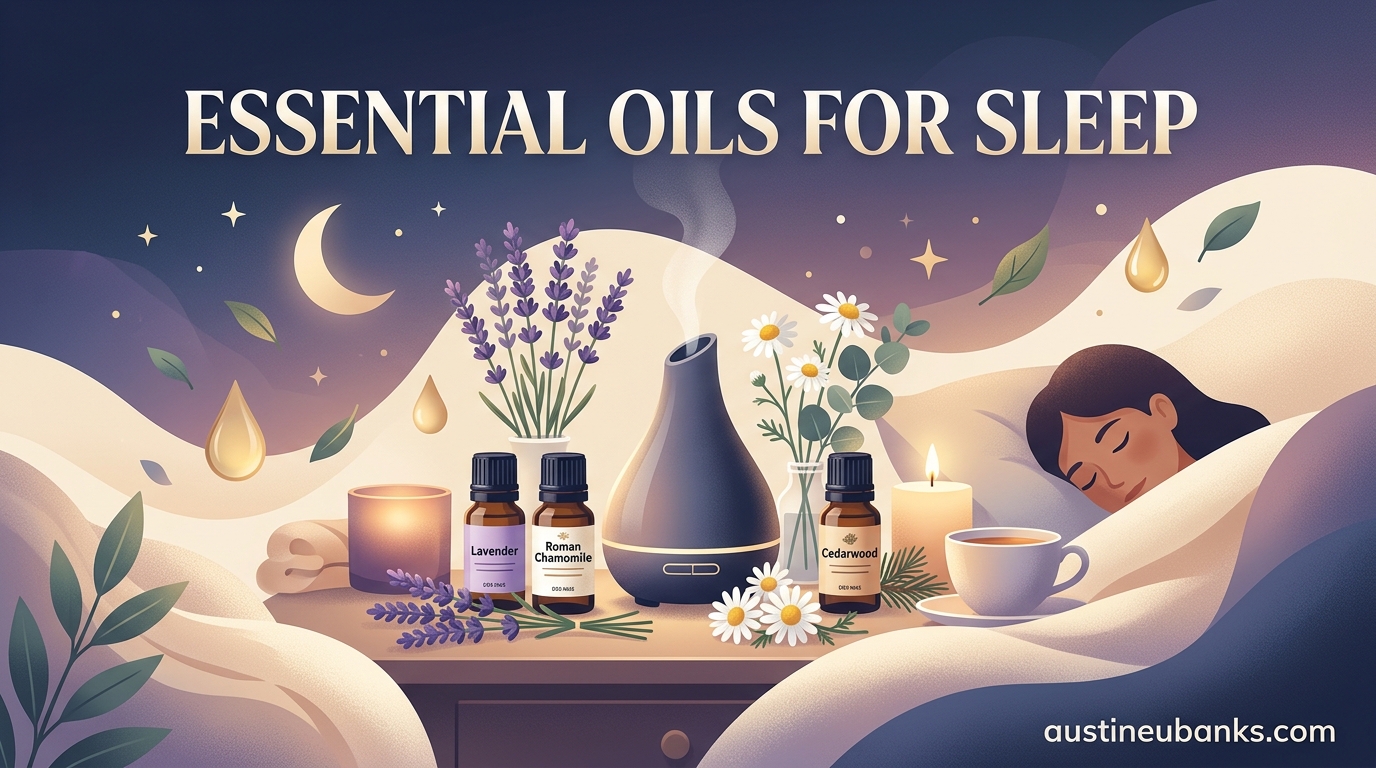
Over one-third of American adults do not get the recommended seven or more hours of sleep per night, and many are searching for natural approaches that do not leave them groggy the next morning. If you have ever wondered about the essential oils most studied for relaxation and sleep, you are in the right place. This guide breaks down what clinical research actually shows, ranks each oil by the strength of its evidence, and explains the molecular mechanisms behind why certain plant extracts seem to calm the nervous system. I have spent years reviewing aromatherapy research, and what surprised me most is how much the scientific literature has grown just in the last few years.
The short answer: lavender is the single most researched essential oil for sleep, followed by cedarwood, bergamot, Roman chamomile, and clary sage. But the full picture is more nuanced. Some oils have decades of randomized controlled trials behind them, while others rest on a handful of smaller studies. Below, I grade each oil by evidence quality and walk through what the studies found so you can make an informed choice.
Table of Contents
The Essential Oils Most Studied for Relaxation and Sleep: Quick Overview
Before diving into individual oils, here is a quick-reference ranking of the five essential oils most studied for relaxation and sleep, ordered by the strength and volume of their clinical evidence. I have assigned each an evidence grade based on study design, number of participants, and consistency of findings.
Grade A means multiple randomized controlled trials and at least one systematic review or meta-analysis support the oil for sleep or relaxation. Grade B means several studies show positive effects, but the body of research is smaller or has methodological limitations. Grade C means traditional use and a few preliminary studies exist, but firm clinical conclusions are not yet possible.
- Lavender (Lavandula angustifolia) – Grade A. The most studied essential oil for sleep by a wide margin. Multiple RCTs and systematic reviews confirm improvements in sleep quality, reduced sleep latency, and increased slow-wave sleep.
- Cedarwood (Cedrus atlantica) – Grade B+. The compound cedrol has demonstrated sedative effects in animal and human studies. Research shows increased total sleep time and reduced early morning awakening.
- Bergamot (Citrus bergamia) – Grade B. Studies show anxiety reduction and modest blood pressure lowering, both of which contribute to easier sleep onset. Several RCTs support its calming effects.
- Roman Chamomile (Chamaemelum nobile) – Grade B. Backed by studies on anxiety reduction and sleep quality, particularly in postpartum women and older adults.
- Clary Sage (Salvia sclarea) – Grade B-. Clinical studies demonstrate cortisol reduction, which may indirectly improve sleep, especially in stress-related insomnia.
Frankincense, neroli, vetiver, sweet marjoram, and ylang-ylang also appear in sleep research, but with fewer studies and smaller sample sizes. I cover these emerging oils later in this guide.
How Aromatherapy Works: The Olfactory-Brain Connection
None of the research on essential oils makes sense without understanding the mechanism. How does inhaling a plant extract actually change your sleep? The answer starts in your nose.
When you inhale essential oil vapor, aroma molecules travel through the nasal cavity and bind to olfactory receptor neurons. These neurons send signals directly to the olfactory bulb, which has a remarkably short pathway to the limbic system, the brain region that governs emotion, memory, and autonomic nervous system responses. This is why smells can trigger instant emotional reactions before you even consciously process what you are smelling.
Specific compounds in essential oils appear to influence neurotransmitter activity. Linalool, the dominant terpene in lavender, has been shown in laboratory studies to modulate GABA receptors in the brain. GABA is the primary inhibitory neurotransmitter, meaning it quiets neuronal firing. Drugs like benzodiazepines and many prescription sleep aids also target GABA receptors, which helps explain why linalool produces measurable sedative effects.
Cedrol, found in cedarwood oil, appears to work through the parasympathetic nervous system, the network responsible for the “rest and digest” state. Studies show cedrol inhalation reduces heart rate and promotes autonomic relaxation. Other compounds like linalyl acetate (also in lavender) and various citrus terpenes in bergamot contribute to anxiolytic, or anxiety-reducing, effects.
One important note: aromatherapy research consistently finds that inhalation produces stronger and more consistent effects than topical application for sleep purposes. The olfactory-brain pathway is simply more direct. Topical application may still help, especially when combined with massage, but inhalation via diffuser or pillow application appears most effective based on the current evidence.
Researchers also debate the placebo question, which comes up frequently in forums. The honest answer is that some portion of aromatherapy’s effect is likely placebo-based, particularly through conditioned relaxation responses. However, studies comparing real essential oils to odorless placebos consistently show that the active compounds produce measurable changes in heart rate variability, cortisol levels, and sleep architecture that placebo alone does not fully explain.
Lavender: The Most Researched Sleep Oil (Grade A Evidence)
Lavender essential oil, derived from Lavandula angustifolia, is the single most studied essential oil in sleep research. No competitor even comes close in terms of study count, participant diversity, or consistency of results. The Sleep Foundation specifically notes that lavender is the plant whose essential oil is “most commonly studied by scientists” for sleep.
The key active compounds are linalool and linalyl acetate, which together make up a significant portion of lavender oil’s chemical profile. These compounds have demonstrated sedative, anxiolytic, and autonomic nervous system calming effects across dozens of studies.
A 2019 systematic review and meta-analysis published in a peer-reviewed journal examined aromatherapy interventions across diverse populations and concluded that lavender-based aromatherapy significantly improved sleep quality scores. Studies have been conducted on ICU patients, postpartum women, cardiac rehabilitation patients, college students, older adults with dementia, and menopausal women. Across these groups, lavender consistently improved subjective sleep quality and, in some studies, objective measures like total sleep time and sleep latency.
Specific findings from clinical trials include reduced time to fall asleep, increased percentage of deep slow-wave sleep, reduced nighttime awakenings, and lower self-reported anxiety at bedtime. One frequently cited study found that ICU patients who inhaled lavender oil for several nights showed significantly better sleep quality scores compared to a control group.
What makes lavender stand out is not just that it works, but that it works across so many different populations and study designs. When multiple RCTs in different settings produce the same direction of effect, that is strong evidence. Some users in aromatherapy forums report that lavender does not work for them or even causes headaches, and individual variation is real. But on balance, no other essential oil has the depth of research backing that lavender has for sleep.
Dosage in studies typically involves 2 to 4 drops of lavender essential oil in a diffuser run for 30 to 60 minutes before sleep, or 1 to 2 drops on a cotton ball or tissue placed near the pillow. Concentrations higher than this did not produce better results in controlled trials and increased the risk of irritation.
Cedarwood: The Cedrol Sedative (Grade B+ Evidence)
Cedarwood essential oil, primarily from Cedrus atlantica, is the second most researched oil for sleep, and the reason comes down to one compound: cedrol. Cedrol is a sesquiterpene that has demonstrated clear sedative properties in both animal and human studies.
Research on cedarwood focuses on its effect on the autonomic nervous system. Studies show that inhaling cedrol increases parasympathetic nervous system activity, which is the branch responsible for slowing heart rate, relaxing muscles, and preparing the body for rest. Participants in cedarwood studies showed measurable decreases in heart rate and blood pressure after inhalation.
Clinical research on cedarwood for sleep specifically is smaller than lavender’s body of work but still meaningful. Studies report that cedarwood aromatherapy may increase total sleep time and reduce early morning awakening, which is a common complaint for people who wake at 4 or 5 AM and cannot get back to sleep.
Cedarwood has an earthy, woody scent that some people prefer over floral oils. For users who find lavender too strong or headache-inducing, cedarwood is often recommended as an alternative. It blends well with lavender for a layered approach, and I frequently see forum users reporting good results from combining the two.
The evidence grade for cedarwood is B+ rather than A because, while the mechanism is well understood and the studies are positive, there are fewer RCTs specifically measuring sleep outcomes compared to lavender. More large-scale trials would strengthen the evidence base, but what exists is consistently positive.
Bergamot: Anxiety and Blood Pressure Reduction (Grade B Evidence)
Bergamot essential oil, cold-pressed from the rind of Citrus bergamia fruits, is best known as the flavor in Earl Grey tea. But in sleep research, bergamot has carved out a niche as an anxiety reducer with measurable cardiovascular effects.
Multiple RCTs have shown that bergamot inhalation reduces self-reported anxiety and lowers heart rate and blood pressure. Since anxiety is one of the most common barriers to falling asleep, this makes bergamot particularly useful for people whose sleep issues stem from a racing mind at bedtime.
The active compounds in bergamot include limonene, linalyl acetate, and linalool. Notably, bergamot shares linalool with lavender, which may explain some of its calming effects. However, bergamot’s unique contribution appears to be its cardiovascular calming effect, which lavender does not produce as strongly.
Studies have examined bergamot in waiting room settings, before medical procedures, and in people with chronic anxiety. Across these contexts, bergamot consistently reduced anxiety measures. For sleep, bergamot is often used in the 30 to 60 minutes before bed to help calm the transition from wakefulness to sleep.
One caution: bergamot contains bergapten, a compound that causes photosensitivity when applied topically and exposed to sunlight. For bedtime use via inhalation, this is not a concern, but anyone using bergamot on the skin should avoid sun exposure for 12 hours. Bergapten-free (FCF) bergamot oil is available for those concerned about this issue.
Chamomile (Roman and German): Calming the Anxious Mind (Grade B Evidence)
Chamomile comes in two main varieties used in aromatherapy: Roman chamomile (Chamaemelum nobile) and German chamomile (Matricaria chamomilla). Both have a long history of traditional use for calming and sleep, and modern research has begun to validate these applications.
Roman chamomile is the variety more commonly used in essential oil form for aromatherapy. Studies on Roman chamomile have shown anxiety-reducing effects and improvements in sleep quality, particularly in postpartum women and older adults. One notable study found that postpartum women who used chamomile aromatherapy reported significantly better sleep quality than a control group.
German chamomile is more commonly consumed as a tea, but its essential oil also shows promise. Research on chamomile’s active compounds, including the flavonoid apigenin, suggests mild sedative effects. Apigenin appears to bind to benzodiazepine receptors in the brain, producing a gentle calming effect without the strong sedation of pharmaceutical alternatives.
Chamomile is frequently recommended for children, as it is considered one of the gentlest essential oils. Roman chamomile is sometimes listed as appropriate for children ages 2 and up, though you should always consult a healthcare provider before using essential oils with children.
For adults dealing with anxiety-driven sleep problems, chamomile offers a mild but consistent calming effect. It blends well with lavender and is often included in commercial sleep blend formulations.
Clary Sage: The Cortisol Reducer (Grade B- Evidence)
Clary sage (Salvia sclarea) essential oil stands out in research for its effect on cortisol, the body’s primary stress hormone. Since elevated cortisol is one of the main physiological barriers to good sleep, anything that reduces cortisol can indirectly improve sleep quality.
A clinical study examining clary sage inhalation found measurable reductions in cortisol levels along with decreased blood pressure and heart rate. The study compared clary sage to lavender and found that while both reduced stress markers, clary sage produced a stronger cortisol-lowering effect.
Clary sage is particularly studied in the context of menstrual and menopausal sleep disturbances. Women experiencing hormone-related sleep disruption may find clary sage especially helpful. Some studies have examined clary sage for PMS-related mood symptoms and found positive effects on anxiety and emotional regulation.
The evidence grade is B- because the cortisol research is solid but the direct sleep studies are limited. Most of the sleep benefit from clary sage is inferred from its stress and anxiety reduction rather than direct sleep quality measurements. Still, for people whose insomnia is clearly stress-driven, clary sage is worth considering.
Clary sage has a herbaceous, slightly floral scent that some people find grounding. It blends well with lavender, cedarwood, and bergamot.
Frankincense and Other Emerging Oils (Grade B to C Evidence)
Beyond the top five oils, several others appear in sleep and relaxation research with varying levels of evidence. These oils are worth knowing about, especially if the primary oils do not work for you or if you want to build a custom blend.
Frankincense (Boswellia carterii) has traditional use for meditation and grounding. While clinical sleep studies are limited, frankincense shows anti-depressive and anxiolytic properties in preliminary research. Its deep, resinous scent is often used in bedtime blends to promote a meditative state. Evidence grade: B.
Neroli (Citrus aurantium), also called bitter orange blossom, has been studied for anxiety reduction. One trial found neroli aromatherapy reduced anxiety and improved sleep quality in postmenopausal women. Evidence grade: B-.
Vetiver (Vetiveria zizanioides) is a thick, earthy oil with traditional use as a sedative in Ayurvedic practice. Research is preliminary, but animal studies show sedative-like effects. Some forum users report vetiver is the strongest sleep oil they have tried. Evidence grade: C.
Sweet Marjoram (Origanum majorana) has a warm, spicy scent and is traditionally used for nervous tension. Limited studies suggest vasodilatory effects that may promote relaxation. Evidence grade: C.
Ylang-Ylang (Cananga odorata) has demonstrated blood pressure lowering effects in small studies, similar to bergamot. Its heavy floral scent is polarizing. Evidence grade: C.
Mandarin (Citrus reticulata) is a gentle citrus oil sometimes recommended for children’s sleep. Research is minimal but traditional use is widespread. Evidence grade: C.
How to Use Essential Oils for Sleep
Knowing which oils have research backing is only half the equation. How you use them matters just as much. Here are the most effective methods, based on how they were administered in clinical studies.
Diffusion: This is the most common and best-supported method. Add 3 to 6 drops of essential oil to a diffuser with water and run it for 30 to 60 minutes before bed. Many users prefer diffusers with auto-shutoff so the oil does not run all night. Position the diffuser within 3 to 4 feet of your bed for best results.
Pillow application: Place 1 to 2 drops on a tissue or cotton ball and tuck it inside your pillowcase, or use a 1% dilution (1 drop of essential oil in 1 teaspoon of carrier oil) and dab a small amount on the corners of your pillow. This is a simple, no-tech approach that some forum users swear by.
Topical application: Always dilute essential oils in a carrier oil such as jojoba, sweet almond, or fractionated coconut oil. A 2% dilution (about 10 to 12 drops of essential oil per ounce of carrier oil) is standard for adults. Apply to wrists, temples, or the soles of the feet. Never apply undiluted essential oils directly to skin.
Aromatherapy inhalers: Personal nasal inhalers are portable and deliver a concentrated dose of aroma. These are convenient for travel and deliver oil directly to the olfactory receptors.
If you want to build your own sleep blend, here are two research-inspired recipes:
Calming Sleep Blend: 4 drops lavender, 2 drops cedarwood, 1 drop bergamot. Diffuse 30 minutes before bed.
Stress Relief Bedtime Blend: 3 drops lavender, 2 drops clary sage, 2 drops Roman chamomile. Dilute in 1 tablespoon carrier oil and apply to wrists and chest.
Consistency matters more than intensity. Studies show that using essential oils nightly for 1 to 2 weeks produces better results than a single night of use. The calming effect appears to strengthen over time as your brain associates the scent with sleep.
Safety and Precautions
Essential oils are generally safe when used properly, but they are concentrated plant extracts and deserve respect. Here are the key safety considerations.
Dilution is mandatory for topical use. Undiluted essential oils can cause skin irritation, burns, or sensitization. Always use a carrier oil.
Pets are sensitive to essential oils. Cats are particularly vulnerable because they lack the liver enzyme to metabolize certain oil compounds. Tea tree, eucalyptus, citrus, and pine oils are especially risky. If you have cats, research which oils are safe before diffusing.
Children require extra caution. Not all essential oils are safe for children. Roman chamomile and mandarin are considered gentler options, but consult a pediatric healthcare provider before using any essential oils with children.
Pregnancy and medical conditions. Some oils are contraindicated during pregnancy. People with asthma, epilepsy, or hormone-sensitive conditions should consult a doctor before using essential oils regularly.
Quality matters. Synthetic fragrance oils are not the same as genuine essential oils and will not produce the same effects. Look for oils labeled as 100% pure essential oil with the botanical name on the bottle.
FAQs
What are the best essential oils for relaxation and better sleep quality?
The most studied essential oils for relaxation and better sleep quality are lavender (strongest evidence with multiple RCTs and systematic reviews), cedarwood (cedrol-based sedative effects), bergamot (anxiety and blood pressure reduction), Roman chamomile (anxiety reduction), and clary sage (cortisol reduction). Lavender has the largest body of clinical research by a wide margin.
Do essential oils actually work for sleep or is it placebo?
Multiple systematic reviews and meta-analyses confirm that essential oils, particularly lavender, produce measurable improvements in sleep quality, heart rate variability, and cortisol levels. While some portion of the benefit may involve conditioned relaxation responses, studies comparing real essential oils to odorless placebos consistently show that active compounds like linalool and cedrol produce effects beyond placebo alone.
What is the strongest essential oil for sleep?
Lavender essential oil is the strongest and most evidence-backed option for sleep. Multiple randomized controlled trials show it improves sleep quality, reduces the time it takes to fall asleep, and increases deep slow-wave sleep, primarily due to its linalool and linalyl acetate content.
What essential oils reduce cortisol?
Clary sage essential oil has been shown to reduce cortisol levels in clinical studies. Bergamot and lavender also demonstrate cortisol-lowering effects as part of their broader stress-reduction properties. Clary sage appears to have the strongest direct effect on cortisol among the commonly studied oils.
How long does it take for essential oils to improve sleep?
Clinical studies suggest that using essential oils nightly for 1 to 2 weeks produces measurable improvements in sleep quality. Some studies show benefits after the first night, but consistent nightly use strengthens the effect over time as the brain builds a sleep association with the scent.
Can I apply essential oils directly to my skin before bed?
No, essential oils should always be diluted in a carrier oil such as jojoba or sweet almond oil before topical application. A 2% dilution (about 10 to 12 drops per ounce of carrier oil) is standard for adults. Undiluted essential oils can cause skin irritation or sensitization.
Conclusion
When it comes to the essential oils most studied for relaxation and sleep, lavender stands alone as the most thoroughly researched option, backed by multiple systematic reviews and RCTs across diverse populations. Cedarwood, bergamot, Roman chamomile, and clary sage round out the top five, each with a growing body of clinical evidence supporting their calming or sedative properties. Understanding the molecular mechanisms, from linalool’s GABA modulation to cedrol’s parasympathetic activation, helps explain why these oils produce measurable effects rather than just pleasant smells.
If you are just starting out, try diffusing lavender alone for one to two weeks and see how your sleep responds. From there, experiment with blends incorporating cedarwood or bergamot based on your specific sleep challenges. The research is clear that consistency matters more than any single oil choice, so build a nightly routine and give it time to work.