
Light therapy lamps have become a go-to solution for seasonal affective disorder, and millions of people use them every winter to fight the fog of shorter days. But these devices are not risk-free for everyone. If you are wondering who should be cautious about using a light therapy lamp, the answer involves several specific health conditions, medication interactions, and individual sensitivities that most people never consider.
I have spent months researching light therapy safety across medical sources, scientific studies, and real user experiences from forums like Reddit. What I found is that while bright light therapy is generally safe for healthy adults, certain groups face real risks that range from mild discomfort to serious medical events.
The problem is that most articles on this topic either gloss over the warnings or bury them at the bottom. That helps no one. Understanding the contraindications before you start using a light box can save you from headaches, eye strain, mood destabilization, or worse. This guide breaks down every group that should exercise caution, why the risk exists, and what you can do to stay safe.
Whether you have bipolar disorder, an eye condition, or you are taking certain medications, you need the full picture before sitting in front of a 10,000-lux lamp for half an hour each morning. Let us walk through everything you need to know.
Table of Contents
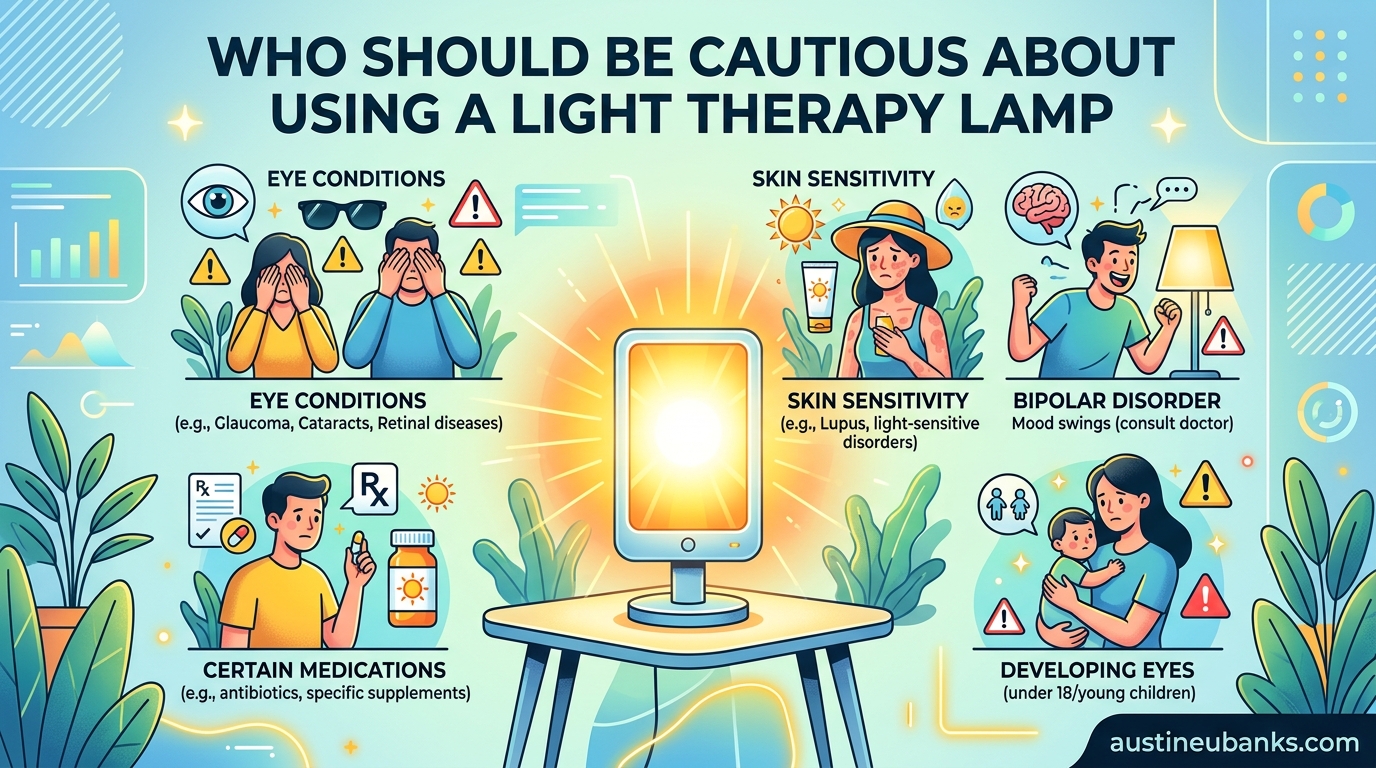
Quick Answer: Who Should Be Cautious About Using a Light Therapy Lamp?
The following groups should consult a doctor before using a light therapy lamp, as they face elevated risks of side effects or complications:
- People with bipolar disorder — bright light can trigger manic or hypomanic episodes
- Individuals with eye conditions — including glaucoma, cataracts, macular degeneration, and diabetic retinopathy
- People taking photosensitizing medications — certain antibiotics, NSAIDs, and other drugs increase light sensitivity
- Those with photosensitivity or lupus — autoimmune conditions can cause severe reactions to bright light exposure
- People who have had recent eye surgery — healing eyes are vulnerable to damage from intense light
- Adults over 65 — age-related retinal changes warrant an eye doctor consultation first
- Migraine sufferers — bright light can trigger or worsen migraine episodes
- Pregnant women — limited research means caution is warranted
- Children and teenagers — developing eyes and brains need special consideration
If you fall into any of these categories, talk to your healthcare provider before starting light therapy. A quick conversation could prevent weeks of problems.
How Light Therapy Works (and Why It Can Be Risky)
Light therapy lamps work by emitting bright artificial light, typically at 10,000 lux intensity, that mimics natural outdoor sunlight. When you sit near one of these lamps in the morning, the light enters your eyes and signals your brain to adjust its circadian rhythm. This process affects the production of serotonin (which influences mood) and melatonin (which controls sleep).
The standard recommendation is to sit 16 to 24 inches from the lamp for 20 to 30 minutes each morning. The light should reach your eyes indirectly, not through direct staring. This daily exposure helps regulate your body clock and can significantly improve symptoms of seasonal depression.
But here is where things get complicated. The same mechanism that makes light therapy effective for depression and sleep disorders is also what makes it risky for certain people. Intense light exposure affects your brain chemistry, your retinal health, and your skin sensitivity. For someone with bipolar disorder, that brain chemistry shift can swing too far in the other direction. For someone with retinal damage, the light intensity itself poses a threat.
SAD Lamps vs. Skin Therapy Lamps: A Critical Distinction
Many people confuse SAD lamps (designed for mood treatment) with skin therapy lamps (designed for psoriasis and other skin conditions). SAD lamps use UV-filtered broad-spectrum white light. Skin therapy lamps often use UV-emitting light. This distinction matters enormously for safety because UV exposure carries its own set of risks, including skin damage and increased photosensitivity reactions.
One Reddit user highlighted this confusion by asking whether they could use their SAD lamp as a regular room light. The answer is technically yes, but it also reveals how little most people understand about what these devices actually do. Always check whether your lamp is UV-filtered before using it.
Do Light Therapy Lamps Produce Vitamin D?
No, they do not. This is one of the most common misconceptions I encountered in forum discussions. SAD lamps filter out UV rays, and your body needs UV-B radiation to produce vitamin D. Light therapy lamps affect your mood through visible light exposure to your eyes, not through vitamin D synthesis. If you are deficient in vitamin D, you need supplements or actual sunlight, not a light box.
Bipolar Disorder and Light Therapy: The Number One Risk
People with bipolar disorder represent the single most important cautionary group for light therapy. This is the most universally cited risk across every medical source I reviewed, from Mayo Clinic to Yale Medicine. Bright light therapy can trigger manic or hypomanic episodes in individuals with bipolar disorder, and the risk is not theoretical.
The mechanism behind this risk is tied to how light therapy affects circadian rhythms and neurotransmitter activity. For someone with unipolar depression, boosting serotonin and shifting the circadian clock earlier can relieve symptoms. For someone with bipolar disorder, that same neurochemical shift can push mood too far in the opposite direction, triggering mania.
A landmark study by Sit and colleagues in 2007 specifically investigated light therapy in pregnant women with bipolar disorder. The researchers found that while light therapy could be effective, it required extremely careful monitoring. Morning light exposure appeared to carry the highest risk of triggering manic symptoms, which is notable because morning use is the standard recommendation for everyone else.
If you have bipolar disorder and want to try light therapy, here is what the evidence suggests. Work with a psychiatrist who can monitor your mood daily. Start with very short sessions at low intensity. Some research suggests midday light exposure may be safer for bipolar patients than morning exposure, but this should only be attempted under medical supervision.
The bipolar community on Reddit echoes these warnings. One user shared their experience of mood destabilization after starting morning light therapy without consulting their doctor first. They urged others to always get professional guidance before beginning treatment. Another user with bipolar II reported that even brief sessions triggered hypomanic symptoms that took weeks to stabilize.
Eye Conditions That Require Caution With Light Therapy
Your eyes bear the direct impact of light therapy, which means any pre-existing eye condition warrants serious caution. The 10,000 lux intensity used in standard light therapy is bright enough to potentially worsen certain retinal conditions or cause discomfort in compromised eyes.
Glaucoma
Glaucoma damages the optic nerve, often due to elevated pressure inside the eye. Bright light exposure from a therapy lamp does not directly worsen glaucoma, but the condition makes your eyes more vulnerable to strain and discomfort during treatment. If you have glaucoma, your eye specialist needs to evaluate whether light therapy is appropriate for you before you begin.
Cataracts
Cataracts cloud the lens of your eye, scattering light and increasing glare sensitivity. Sitting in front of a 10,000-lux lamp with cataracts can cause significant discomfort, increased glare, and visual disturbance. After cataract surgery, your eyes need time to heal before any intense light exposure. Most eye doctors recommend waiting until you are fully cleared post-surgery before starting light therapy.
Macular Degeneration
Macular degeneration affects the central portion of your retina, which is responsible for detailed vision. This is where the blue light toxicity concern becomes most relevant. Yale Medicine specifically highlights blue light risk to the retina, noting that broad-spectrum white light is considered safer than blue-light-only devices for people with retinal conditions. If you have macular degeneration, you should use only white light therapy lamps with proper UV filtration, and only after consulting your eye doctor.
Diabetic Retinopathy
Diabetes can damage blood vessels in the retina, leading to diabetic retinopathy. Mayo Clinic explicitly lists eye damage from diabetes as a condition that requires consultation with an eye specialist before starting light therapy. The compromised retinal tissue in diabetic patients may be more vulnerable to light-induced damage, and the risk increases with the severity of the retinopathy.
Recent Eye Surgery
If you have had any recent eye surgery, whether for cataracts, LASIK, retinal repair, or another procedure, light therapy is an absolute no-go until your eye doctor clears you. St. Catherine University’s wellness guide specifically calls out recent eye surgery as a reason to avoid light therapy lamps entirely. Healing eye tissue is highly sensitive to bright light, and premature exposure could interfere with recovery or cause permanent damage.
Photosensitizing Medications and Light Therapy
Certain medications make your skin and eyes more sensitive to light, a condition called photosensitivity. If you are taking any of these medications, light therapy can cause reactions ranging from mild rash to severe skin damage. Yale Medicine provides the most detailed list of photosensitizing medications among all sources I reviewed, and it is worth understanding which drug classes are involved.
Antibiotics
Fluoroquinolone antibiotics (including ciprofloxacin and levofloxacin) and tetracyclines (including doxycycline) are well-known photosensitizers. If you are taking a course of these antibiotics, wait until you have finished treatment before starting light therapy. Sulfonamide antibiotics also increase photosensitivity and require the same precaution.
Anti-Inflammatory Drugs
Nonsteroidal anti-inflammatory drugs (NSAIDs) can increase light sensitivity, particularly naproxen and piroxicam. While the effect is generally milder than with antibiotics, chronic NSAID users should be aware of the potential for heightened light sensitivity during therapy sessions.
Antimalarial Drugs
Chloroquine and hydroxychloroquine, commonly prescribed for lupus and rheumatoid arthritis, have well-documented retinal toxicity risks. Combined with intense light exposure, these medications could compound the risk of retinal damage. Anyone taking antimalarials should have a thorough eye exam and clearance from both their prescribing doctor and an eye specialist before using a light therapy lamp.
Other Photosensitizing Medications
Several other drug classes can increase photosensitivity. Thiazide diuretics and furosemide, commonly used for blood pressure, are known photosensitizers. Amiodarone, a heart medication, causes similar effects. Isotretinoin (used for severe acne) and methotrexate (used for cancer and autoimmune conditions) are potent photosensitizers that absolutely contraindicate light therapy use.
Some antidepressants, antipsychotics, and tricyclic medications can also increase light sensitivity. Phenothiazines, a class of antipsychotic drugs, are particularly notable. If you are taking any psychiatric medication, discuss potential photosensitivity with your prescribing physician before starting light therapy.
The safest approach is simple. Make a complete list of every medication and supplement you take. Share it with your doctor and ask specifically about photosensitivity interactions with bright light therapy. This five-minute conversation can prevent weeks of uncomfortable or dangerous reactions.
Photosensitivity Conditions and Lupus
Beyond medication-induced photosensitivity, some people have underlying conditions that make them inherently more sensitive to light. Lupus is the most well-known of these conditions, and it appears in the People Also Ask questions surrounding light therapy safety.
Systemic lupus erythematosus can cause severe photosensitivity reactions, where light exposure triggers skin rashes, joint pain, and even internal disease flares. While SAD lamps filter out UV light, the intense visible light can still cause problems for some lupus patients. The question of whether people with lupus can safely use LED light therapy or bright light therapy depends heavily on individual disease severity and the specific wavelengths involved.
Other conditions that cause photosensitivity include polymorphous light eruption, chronic actinic dermatitis, and porphyria. If you have been diagnosed with any photosensitivity disorder, treat light therapy with extreme caution. Even UV-filtered lamps can trigger reactions in highly sensitive individuals.
Connective tissue diseases like dermatomyositis can also cause significant photosensitivity. If you have an autoimmune condition that affects your skin, consult your rheumatologist or dermatologist before trying any form of light therapy.
Migraine Sufferers and Light Therapy
Migraine is one of the most overlooked contraindications for light therapy. Not a single top-ranking medical source addresses migraine as a cautionary factor, yet forum discussions reveal it as a major real-world concern. This gap between medical literature and lived experience is exactly why I wanted to include this section.
Many migraine sufferers experience photophobia (light sensitivity) as part of their condition. For these individuals, sitting in front of a 10,000-lux lamp for 30 minutes can trigger migraine attacks or worsen existing ones. The intensity of the light, even when not looked at directly, can be enough to set off the neurological cascade that leads to a migraine.
One Reddit user in the migraine community shared a story that captures this risk perfectly. They said it did not always trigger a migraine, but even one extra migraine per week from the light was too many to justify continuing. This is a deeply personal calculation, and one that only the individual can make with their doctor’s input.
If you suffer from migraines and want to try light therapy, consider starting with very short sessions at a greater distance. Some migraine-prone users report better tolerance with lower-intensity lamps or shorter sessions. Track your migraine frequency carefully during the first few weeks of use. If your attacks increase, light therapy may not be a viable treatment option for you.
Special Populations: Children, Pregnancy, Autism, and ADHD
Several groups are never mentioned in standard medical guidance about light therapy safety, yet they represent real people with real questions. I want to address these populations directly because the silence from authoritative sources leaves people guessing.
Children and Teenagers
No major medical source addresses whether light therapy is safe for children and teenagers. This is a significant gap. Children’s eyes are still developing, and their retinas may be more vulnerable to intense light exposure. Additionally, children may not be able to articulate if the light is causing discomfort or vision changes. If you are considering light therapy for a child or teenager with seasonal depression or circadian rhythm issues, this should only be done under the guidance of a pediatrician or child psychiatrist who can weigh the risks and benefits.
Pregnancy
Pregnancy is another unaddressed area in most light therapy safety discussions. The Sit et al. 2007 study actually focused on pregnant women with depression, including those with bipolar disorder, because light therapy offers a non-pharmacological treatment option. However, the research is limited, and most obstetricians have little experience with light therapy recommendations. If you are pregnant and considering light therapy for antenatal depression, discuss it with your OB-GYN and a mental health professional.
Autism and Sensory Sensitivity
The autistic community has raised important concerns about light therapy that no medical source addresses. Many autistic individuals experience sensory processing differences that make bright, intense light overwhelming. One autistic adult on Reddit described powering on a light therapy lamp and feeling like it immediately started burning their retinas, followed by a migraine with visual halo effects. They quickly turned it off.
This experience is not universal among autistic people, but it highlights a real concern. Sensory overstimulation from bright light therapy can cause significant distress, meltdown, or physical symptoms in some individuals. If you are autistic or have sensory processing differences, approach light therapy with extreme caution. Start at the lowest intensity, use the greatest comfortable distance, and limit sessions to just a few minutes initially.
ADHD and Light Therapy
The ADHD community uses light therapy extensively, and many users report positive results. One Reddit user with ADHD described seeing a huge difference in mood, energy, and motivation from morning light therapy sessions. ADHD often involves delayed circadian rhythm patterns, and morning bright light can help regulate sleep-wake cycles.
However, ADHD frequently co-occurs with bipolar disorder, and some ADHD medications can affect light sensitivity. If you have ADHD and are considering light therapy, the main caution is to rule out any bipolar features first. The light that helps your focus could trigger mania if you have undiagnosed bipolar traits.
General Side Effects of Light Therapy to Watch For
Even if you do not fall into a specific cautionary group, light therapy can cause side effects. Most are mild and resolve with adjustments to your routine, but you should know what to expect.
Common Side Effects
Eye strain is the most frequently reported side effect. Sitting too close to the lamp or using it for too long can cause tired, aching eyes. The solution is usually simple: increase your distance from the lamp or shorten your session duration.
Headaches are also common, especially during the first week of use. These typically occur when the light intensity or session duration is too high. Reducing session length to 15 minutes and gradually increasing over several days usually resolves the problem.
Some users experience nausea, jitteriness, or mild irritability after sessions. These effects often diminish as your body adjusts to the treatment. If they persist beyond the first two weeks, try reducing the intensity or moving the lamp farther away.
Rare but Serious Side Effects
In rare cases, light therapy can trigger hypomanic or manic symptoms even in people without a known bipolar diagnosis. If you notice racing thoughts, dramatically decreased need for sleep, impulsive behavior, or unusually elevated mood, stop using the lamp immediately and contact a mental health professional.
Visual disturbances that persist after stopping light therapy should prompt an immediate visit to an eye doctor. While serious retinal damage from UV-filtered light therapy is extremely rare, any persistent vision changes warrant professional evaluation.
What to Do If You Experience Side Effects
If you develop side effects, do not just push through them. Reduce your session duration to 10 or 15 minutes. Increase your distance from the lamp to 24 inches or more. Try using the lamp every other day instead of daily. If side effects persist despite these adjustments, stop using the lamp and consult your doctor.
Tips for Safe Light Therapy Use
If you have cleared the cautionary hurdles above and your doctor has given you the green light, follow these guidelines to minimize your risk and maximize the benefits of light therapy.
Use your lamp in the morning, ideally within an hour of waking up. Morning light exposure helps shift your circadian rhythm in the right direction. Evening use can disrupt your sleep by signaling your brain that it is still daytime, which suppresses melatonin production.
Position the lamp 16 to 24 inches from your face, slightly off to the side or below eye level. The light should enter your peripheral vision, not hit your eyes directly. Never stare directly into the light source.
Start with 15-minute sessions for the first week. If you tolerate it well, gradually increase to 20 to 30 minutes. Do not exceed 30 minutes per session unless your doctor specifically recommends a longer duration.
Be consistent. Light therapy works best when used daily, ideally at the same time each morning. Skipping days or using the lamp irregularly reduces its effectiveness.
Choose a lamp that delivers 10,000 lux at a comfortable distance. One Reddit user who tested over 35 different SAD lamps found that many budget models do not actually deliver their advertised lux output. Look for lamps from reputable manufacturers with clear specifications.
When to Consult a Doctor Before Starting Light Therapy
If you have read through this guide and identified with any of the cautionary groups, the next step is clear: talk to your doctor. This is not a suggestion. It is the single most important thing you can do to protect your health.
For people with bipolar disorder, a psychiatrist should be involved from day one. Mood monitoring during the first weeks of light therapy is essential. For eye conditions, an ophthalmologist or optometrist should evaluate your retinal health before and periodically during treatment.
If you take any medications, bring a complete list to your appointment and ask specifically about photosensitivity. Your pharmacist is also an excellent resource for identifying photosensitizing drugs.
For pregnant women, the conversation should involve both your OB-GYN and a mental health provider. For parents considering light therapy for a child, a pediatrician or child psychiatrist should lead the discussion.
Light therapy is not regulated by the FDA in the same way as medications, which means device manufacturers are not held to the same safety and efficacy standards. This makes it even more important to have a healthcare professional in your corner who can guide you toward safe use.
FAQs
Who should not use a light therapy lamp?
People with bipolar disorder, individuals with eye conditions like glaucoma or macular degeneration, those taking photosensitizing medications, people with lupus or other photosensitivity disorders, anyone who has had recent eye surgery, and adults over 65 should not use a light therapy lamp without first consulting their doctor.
Do you get vitamin D from light therapy lamps?
No, light therapy lamps do not produce vitamin D. SAD lamps filter out UV rays, and your body needs UV-B radiation to synthesize vitamin D. Light therapy works through visible light entering your eyes to regulate circadian rhythms and mood, not through vitamin D production. If you need vitamin D, talk to your doctor about supplements.
What are the contraindications for light therapy?
The main contraindications for light therapy include bipolar disorder (risk of mania), retinal diseases like macular degeneration and diabetic retinopathy, glaucoma, cataracts, recent eye surgery, photosensitivity disorders like lupus, and use of photosensitizing medications including certain antibiotics, NSAIDs, and antimalarials.
Why don’t doctors recommend red light therapy?
Some doctors are cautious about red light therapy because there is less clinical research supporting its effectiveness compared to bright white light therapy for SAD. Red light therapy operates at different wavelengths and is often marketed for skin and anti-aging purposes without the same level of peer-reviewed evidence. Bright white light at 10,000 lux has the strongest research backing for mood and circadian rhythm treatment.
Final Thoughts on Light Therapy Lamp Safety
Understanding who should be cautious about using a light therapy lamp comes down to respecting the power of bright light exposure. These devices change your brain chemistry, affect your retinal health, and interact with medications and medical conditions in ways that most people never consider.
The groups that need the most caution include people with bipolar disorder, anyone with eye conditions like glaucoma or macular degeneration, individuals taking photosensitizing medications, those with lupus or photosensitivity disorders, and anyone who has had recent eye surgery. Migraine sufferers, pregnant women, children, and autistic individuals also warrant special consideration based on real-world experiences that medical literature has not yet caught up with.
None of this means light therapy is dangerous for most people. For healthy adults without these risk factors, light therapy is a well-tolerated, evidence-based treatment for seasonal depression and circadian rhythm disorders. The key is knowing where you stand before you start.
Talk to your doctor. Bring your medication list. Get an eye exam if you have any vision concerns. These simple steps take minutes but can prevent weeks or months of problems. Light therapy can be life-changing when used correctly, but only when you have the full picture of your individual risk profile.