
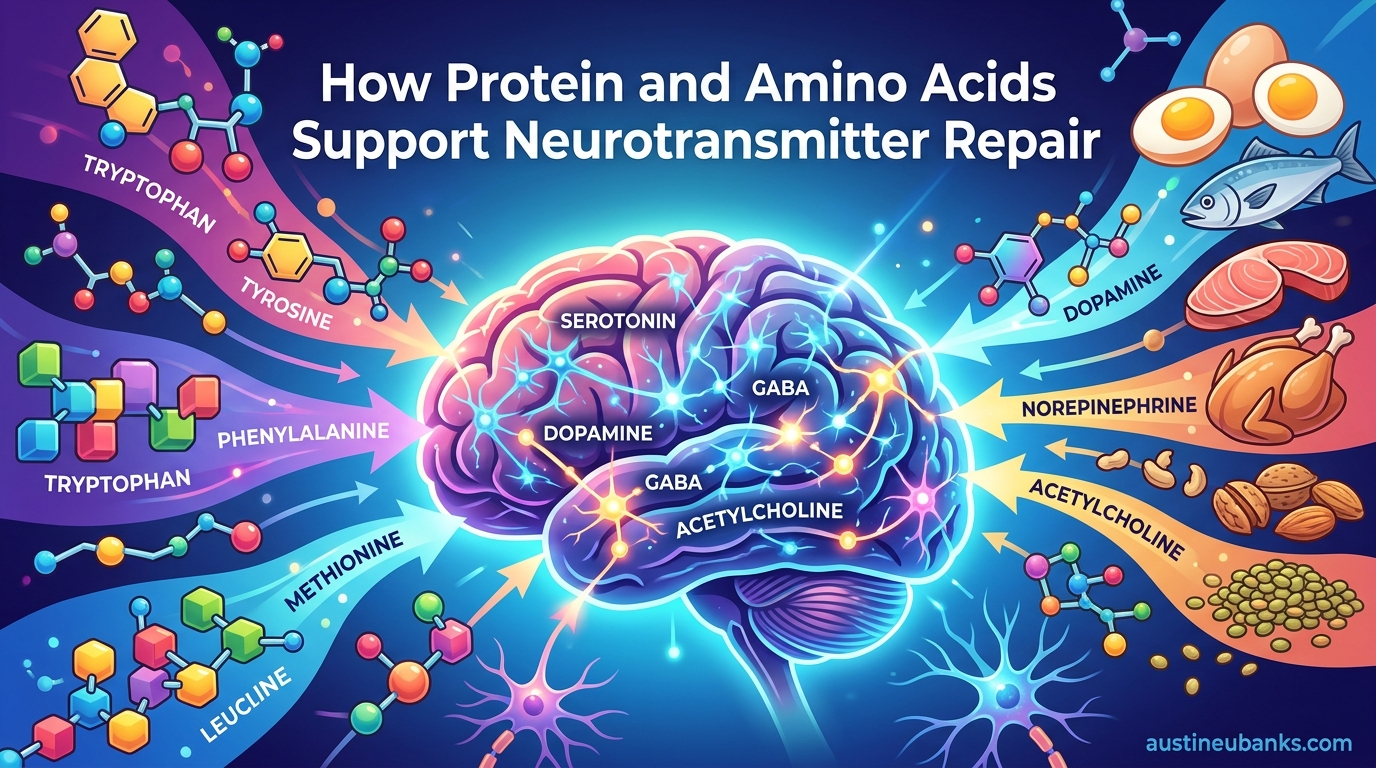
Your brain runs on chemical messengers called neurotransmitters, and those messengers are built from the protein you eat. When neurotransmitters become depleted by chronic stress, poor sleep, poor diet, or substance use, the right amino acids give your brain the raw materials it needs to rebuild them. Understanding how protein and amino acids support neurotransmitter repair can help you make smarter nutrition choices for mood, focus, sleep, and long-term brain health.
This guide walks you through the science behind amino acid-to-neurotransmitter conversion. We cover the specific pathways, the cofactors your body needs, the best food sources, and practical steps you can take starting today.
Whether you are dealing with brain fog after a stressful period, recovering from substance use, or simply trying to optimize cognitive performance, this guide breaks down the neuroscience into clear, actionable information.
Table of Contents
What Are Neurotransmitters and Why Do They Need Repair
Neurotransmitters are chemical messengers that neurons use to communicate across synapses. They carry signals that control mood, memory, focus, sleep, motivation, and nearly every other brain function you can think of.
Without enough neurotransmitters being produced and released, communication between neurons slows down or becomes irregular. This can show up as low mood, anxiety, poor concentration, disrupted sleep, or lack of motivation.
The Four Key Neurotransmitters
While the brain uses dozens of neurotransmitters, four are most commonly discussed in the context of repair and nutrition.
Serotonin regulates mood, sleep, appetite, and emotional balance. It is often called the “feel-good” neurotransmitter, and low levels are linked to depression and anxiety.
Dopamine drives motivation, reward, focus, and pleasure. It is central to goal-directed behavior and is heavily affected by stress and stimulant use.
GABA (gamma-aminobutyric acid) is the brain’s primary inhibitory neurotransmitter. It calms neural activity, reduces anxiety, and promotes relaxation.
Glutamate is the brain’s primary excitatory neurotransmitter. It drives learning, memory formation, and cognitive alertness.
How Neurotransmitters Become Depleted
Neurotransmitters are not static. They are continuously synthesized, released, recycled, and broken down. When the rate of depletion exceeds the rate of production, imbalances develop.
Chronic stress is one of the biggest culprits. Prolonged stress forces the brain to pump out catecholamines like dopamine and norepinephrine faster than they can be replenished. Over time, precursor amino acid stores run low.
Poor diet also plays a major role. A diet low in complete protein means fewer amino acids are available for neurotransmitter synthesis. Research published in Frontiers in Nutrition showed that a low-protein diet leads to reduced essential amino acid concentrations in both plasma and brain tissue, contributing to behavioral abnormalities.
Substance use, certain medications, sleep deprivation, and aging can all accelerate neurotransmitter depletion. The brain needs a steady supply of dietary amino acids to keep production rates up.
How Protein and Amino Acids Support Neurotransmitter Repair
Here is where things get interesting. When you eat protein, your digestive system breaks it down into individual amino acids through the action of stomach acid and digestive enzymes. These amino acids enter your bloodstream and travel throughout your body, including your brain.
Certain amino acids serve as direct precursors to specific neurotransmitters. The brain takes these amino acids and, through a series of enzymatic reactions, converts them into the chemical messengers it needs. This is the core mechanism of how protein and amino acids support neurotransmitter repair.
According to the National Center for Biotechnology Information, amino acids such as tryptophan, tyrosine, histidine, and arginine are used by the brain for the synthesis of various neurotransmitters and neuromodulators. Without adequate dietary protein, the brain simply does not have the raw materials to maintain healthy neurotransmitter levels.
Tryptophan and the Serotonin Pathway
Tryptophan is an essential amino acid, meaning your body cannot produce it and you must get it from food. It is the sole precursor to serotonin.
The conversion happens in two steps. First, the enzyme tryptophan hydroxylase converts tryptophan into 5-hydroxytryptophan (5-HTP). Then, a second enzyme called aromatic L-amino acid decarboxylase converts 5-HTP into serotonin.
This pathway depends on cofactors including vitamin B6, folate (B9), vitamin C, iron, and magnesium. Without these vitamins and minerals, the enzymatic reactions slow down regardless of how much tryptophan you consume.
Tryptophan has an added challenge: it competes with other large neutral amino acids (LNAAs) for transport across the blood-brain barrier. This means that simply eating more protein does not always increase brain tryptophan levels proportionally. I’ll explain this competition in more detail below.
Tyrosine and the Dopamine Pathway
Tyrosine is the amino acid precursor to the catecholamine family of neurotransmitters: dopamine, norepinephrine, and epinephrine. Phenylalanine, another essential amino acid, is converted into tyrosine first, and then tyrosine drives the rest of the pathway.
The conversion chain works like this. Tyrosine is converted to L-DOPA by the enzyme tyrosine hydroxylase. L-DOPA is then converted into dopamine by the same decarboxylase enzyme involved in the serotonin pathway. Dopamine can be further converted into norepinephrine and then epinephrine.
The rate-limiting enzyme here is tyrosine hydroxylase, which requires iron, tetrahydrobiopterin (BH4), and oxygen as cofactors. This enzyme controls how fast the entire catecholamine production line runs.
Research from PMC shows that tyrosine supplementation can help maintain catecholamine levels during periods of acute stress, when the brain’s demand for dopamine and norepinephrine spikes. This is why tyrosine is popular among people dealing with burnout, high-stress jobs, or post-stimulant fatigue.
Glutamate and GABA
Glutamate and GABA deserve special attention because they are amino acids themselves, not just precursors. Glutamate is one of the most abundant amino acids in the brain and serves dual duty as both a building block for proteins and a neurotransmitter.
GABA is synthesized directly from glutamate through the enzyme glutamic acid decarboxylase (GAD), which requires vitamin B6 as a cofactor. This is one reason B6 deficiency is associated with anxiety and seizure disorders.
The balance between glutamate (excitatory) and GABA (inhibitory) is one of the most important ratios in brain chemistry. Too much glutamate relative to GABA can lead to overstimulation, anxiety, and neurotoxicity. Adequate protein intake supports both sides of this equation.
Histidine and Arginine
Histidine is the precursor to histamine, which functions as both a neurotransmitter and immune signaling molecule in the brain. Histamine plays roles in wakefulness, appetite regulation, and learning.
Arginine is a precursor to nitric oxide, a gaseous signaling molecule that regulates blood flow to the brain and supports synaptic plasticity. While not a classical neurotransmitter, nitric oxide is essential for healthy brain circulation and cognitive function.
The Conversion Pathways Explained
Knowing which amino acids map to which neurotransmitters is only half the picture. To truly understand how protein and amino acids support neurotransmitter repair, you need to understand the conversion process itself.
Crossing the Blood-Brain Barrier
The blood-brain barrier is a highly selective membrane that protects the brain from potentially harmful substances in the bloodstream. Not everything in your blood can enter your brain.
Amino acids cross the blood-brain barrier using specific transport systems. The large neutral amino acid (LNAA) transporter carries tryptophan, tyrosine, phenylalanine, leucine, isoleucine, and valine. Because they share the same transporter, they compete with each other for entry into the brain.
This is why eating a massive amount of protein does not automatically flood your brain with tryptophan or tyrosine. The other LNAAs compete for the same transport slots. Interestingly, consuming carbohydrates can indirectly raise brain tryptophan by triggering insulin release, which causes muscles to absorb competing amino acids, leaving more tryptophan available for brain entry.
Cofactors: The Unsung Heroes
Amino acids cannot convert themselves into neurotransmitters. They need enzymes, and those enzymes need cofactors. This is one of the most overlooked aspects of neurotransmitter nutrition.
Here are the key cofactors and the pathways they support:
Vitamin B6 (pyridoxine) is required for the synthesis of serotonin, dopamine, and GABA. It is arguably the single most important cofactor for neurotransmitter production.
Folate (B9) supports the production of BH4, which is needed for both the tryptophan and tyrosine hydroxylase enzymes.
Vitamin C is needed for the conversion of dopamine to norepinephrine through the enzyme dopamine beta-hydroxylase.
Iron is a required cofactor for tyrosine hydroxylase, the rate-limiting enzyme in dopamine production. Iron deficiency can directly impair catecholamine synthesis.
Magnesium supports hundreds of enzymatic reactions in the brain, including those involved in neurotransmitter synthesis and receptor function.
Zinc modulates GABA and glutamate receptors and supports overall neurotransmitter balance.
This is why a nutrient-dense diet matters as much as protein intake. You can eat all the tryptophan-rich foods in the world, but if you are deficient in B6, your body cannot efficiently convert that tryptophan into serotonin.
Amino Acid Competition and Ratios
The competition at the blood-brain barrier means that amino acid ratios matter as much as total amounts. Taking a single amino acid supplement on an empty stomach can raise its relative concentration in the brain more effectively than taking it with a full meal.
For example, some practitioners recommend taking tryptophan or 5-HTP supplements away from other protein to maximize brain uptake. Similarly, tyrosine supplements are often taken between meals for the same reason.
However, this approach should be used thoughtfully. Taking individual amino acids in isolation can sometimes create imbalances over time. Most people benefit most from getting a full spectrum of amino acids from complete protein sources throughout the day.
Best Protein Sources for Neurotransmitter Production
Not all protein sources are equal when it comes to neurotransmitter support. The amino acid profile of your food directly affects which neurotransmitter precursors are available to your brain.
Animal Protein Sources
Animal proteins are considered complete proteins because they contain all nine essential amino acids in adequate amounts. This makes them highly efficient for neurotransmitter precursor delivery.
Eggs are one of the richest sources of tryptophan and tyrosine per gram of protein. They also contain choline, which supports acetylcholine production, another important neurotransmitter for memory and learning.
Poultry (chicken and turkey) is famously high in tryptophan. Turkey’s reputation for causing post-meal drowsiness is partly due to its tryptophan content, though the carbohydrates in a typical holiday meal play an equally important role.
Fatty fish like salmon and sardines provide high-quality protein plus omega-3 fatty acids, which support cell membrane health and neurotransmitter receptor function. This dual benefit makes fish one of the best brain foods available.
Lean beef is an excellent source of tyrosine, phenylalanine, and iron. The iron content is especially valuable since iron is a required cofactor for tyrosine hydroxylase.
Dairy products including Greek yogurt and cottage cheese provide tryptophan along with calcium and B vitamins.
Plant Protein Sources
Plant proteins can absolutely support neurotransmitter production, but they require more strategic combining because most individual plant sources are missing one or more essential amino acids.
Soy products like tofu, tempeh, and edamame are exceptions. They are complete proteins and provide solid amounts of tryptophan and tyrosine.
Legumes (beans, lentils, chickpeas) are rich in lysine but lower in methionine. Combining them with grains creates a complete amino acid profile.
Whole grains like quinoa and buckwheat provide tryptophan. Quinoa is technically a complete protein, making it one of the better plant options.
Nuts and seeds are valuable sources of tryptophan. Pumpkin seeds, sunflower seeds, and almonds are particularly good options.
Hemp seeds contain all nine essential amino acids and are one of the few plant sources that qualify as complete proteins.
Complete Versus Incomplete Proteins
A complete protein contains all nine essential amino acids in adequate proportions. Animal products, soy, quinoa, and hemp are complete proteins. Most other plant proteins are incomplete on their own.
For neurotransmitter production, the most relevant essential amino acids are tryptophan, phenylalanine, and (indirectly) threonine and histidine. If your diet is plant-based, focus on combining complementary sources throughout the day to ensure you get the full spectrum.
You do not need to eat complementary proteins at the same meal. Eating a variety of protein sources across the day gives your body the amino acid pool it needs for steady neurotransmitter synthesis.
Practical Steps to Support Neurotransmitter Repair Through Nutrition
Now that you understand the science, let’s turn it into practical action. Here is how to use protein and amino acids to support neurotransmitter repair in your daily life.
How Much Protein Do You Need
The standard RDA of 0.8 grams of protein per kilogram of body weight is the minimum to prevent deficiency. For neurotransmitter support, many functional medicine practitioners recommend higher intakes.
A common recommendation is 1.2 to 1.6 grams per kilogram of body weight for active individuals and those focused on brain health. For a 70-kilogram (154-pound) person, that translates to roughly 84 to 112 grams of protein per day.
Spread your protein intake across meals rather than loading it all at dinner. This gives your brain a steady amino acid supply throughout the day rather than a single spike followed by a long gap.
Timing Your Protein Intake
Timing matters for neurotransmitter production because amino acids are used continuously, not stored in large reserves like fat or carbohydrates.
Include 20 to 30 grams of protein at breakfast. This helps replenish amino acid stores after the overnight fast and supports morning dopamine and norepinephrine production for focus and alertness.
At dinner, including tryptophan-rich foods along with some carbohydrates can support evening serotonin and melatonin production, which helps with sleep quality.
For those using individual amino acid supplements like tyrosine or 5-HTP, taking them between meals on an empty stomach reduces competition at the blood-brain barrier and may improve brain uptake.
Supporting Cofactors Through Diet
Do not forget the cofactors. Even with perfect protein intake, neurotransmitter synthesis stalls without adequate B vitamins and minerals.
Leafy greens provide folate and magnesium. Red meat and dark leafy greens provide iron. Citrus fruits and bell peppers provide vitamin C. Seeds, nuts, and whole grains provide zinc and B6.
A diverse, whole-food diet naturally covers most cofactor needs. If you suspect deficiencies, a blood test can identify gaps that may benefit from targeted supplementation.
How Long Does Neurotransmitter Repair Take
This is one of the most common questions I see in nutrition and neuroscience forums. The answer depends on the degree of depletion and your overall health.
For mild depletion caused by short-term stress or a brief period of poor eating, improvements can be noticeable within two to four weeks of consistent dietary changes. The brain begins restoring neurotransmitter production relatively quickly when given adequate raw materials.
For deeper depletion from chronic stress, long-term poor diet, or substance use, the timeline extends to three to six months. Neurons need time to upregulate receptor sensitivity and restore normal signaling patterns.
Patience and consistency are key. Neurotransmitter repair is not an overnight process, but steady nutritional support gives your brain what it needs to rebuild over time.
When to Consider Amino Acid Supplements
Most people can meet their neurotransmitter precursor needs through food alone. However, certain situations may warrant supplementation.
Individuals recovering from substance use, those with severe digestive issues that impair protein absorption, and people following highly restricted diets may benefit from targeted amino acid supplementation. In these cases, working with a qualified healthcare practitioner is strongly recommended.
Common supplements include L-tryptophan or 5-HTP for serotonin support, L-tyrosine for dopamine and catecholamine support, and GABA for direct calming effects. Always start with diet first and use supplements as a complement, not a replacement.
FAQs
Do amino acids help neurotransmitters?
Yes, amino acids are the direct building blocks for neurotransmitters. Tryptophan is the precursor to serotonin, tyrosine is the precursor to dopamine and norepinephrine, glutamate produces GABA, and histidine produces histamine. Without adequate amino acids from dietary protein, the brain cannot synthesize sufficient neurotransmitters.
How to repair damaged neurotransmitters?
Repair neurotransmitters by eating adequate complete protein (1.2-1.6 g per kg body weight), ensuring sufficient B vitamins and mineral cofactors, spreading protein across meals, managing stress, getting quality sleep, and avoiding substances that deplete neurotransmitters. For severe depletion, targeted amino acid supplements may help under professional guidance.
Why is protein important for neurotransmitters?
Protein is important because it provides the amino acids that serve as neurotransmitter precursors. The brain cannot make essential amino acids like tryptophan and phenylalanine on its own, so they must come from food. Without adequate dietary protein, neurotransmitter synthesis slows and brain function declines.
What are the 4 healing neurotransmitters?
The four most commonly referenced neurotransmitters for brain health and recovery are serotonin (mood and sleep), dopamine (motivation and focus), GABA (calm and relaxation), and acetylcholine (memory and learning). Each is supported by specific amino acid precursors from dietary protein.
Do amino acids increase dopamine?
Yes, the amino acid tyrosine (derived from phenylalanine) is the direct precursor to dopamine. The enzyme tyrosine hydroxylase converts tyrosine into L-DOPA, which is then converted into dopamine. Supplementing tyrosine or eating tyrosine-rich foods can support dopamine production, especially during periods of high stress.
How long does it take to replenish neurotransmitters?
For mild depletion, improvements can be felt in 2-4 weeks with consistent dietary changes. For deeper depletion from chronic stress, poor diet, or substance use, repair typically takes 3-6 months. Neurotransmitter production responds quickly to adequate amino acid intake, but receptor sensitivity and normal signaling patterns take longer to restore.
Bringing It All Together
Understanding how protein and amino acids support neurotransmitter repair gives you a powerful tool for brain health. Every meal is an opportunity to give your brain the building blocks it needs for serotonin, dopamine, GABA, and other critical messengers.
Focus on complete protein sources spread across the day, pair them with adequate B vitamins and minerals, and be patient with the process. Your brain is remarkably capable of rebuilding when you provide consistent nutritional support.
Start with your next meal. Add a quality protein source, include some colorful vegetables for cofactors, and know that you are actively supporting your brain’s chemical balance with every bite.