
When nerves get damaged, the recovery process can feel painfully slow. Tingling, numbness, burning sensations, and muscle weakness do not just disappear overnight. But there is a group of nutrients that your nervous system absolutely depends on to repair itself: B vitamins.
Three specific B vitamins stand out when it comes to nerve recovery. Vitamins B1 (thiamine), B6 (pyridoxine), and B12 (cobalamin) are classified as neurotropic B vitamins, meaning they have a direct affinity for the nervous system. They fuel nerve cells, maintain the protective myelin sheath around nerve fibers, and drive the biochemical processes that allow damaged nerves to regenerate.
In this guide, I will walk you through exactly why B vitamins matter for nervous system recovery, how each one works at the cellular level, who is most at risk for deficiency, and what realistic recovery timelines look like. Whether you are dealing with peripheral neuropathy, recovering from surgery or injury, or simply trying to support long-term nerve health, understanding the role of these three vitamins gives you a concrete advantage.
Our team dug through peer-reviewed research from the National Institutes of Health, analyzed clinical studies on B vitamin combinations, and pulled real-world experiences from patient communities to build this resource. The result is a practical, science-backed guide that cuts through the noise and tells you what actually matters for nerve repair.
Table of Contents
Why B Vitamins Matter for the Nervous System in Recovery
Your nervous system runs on an enormous amount of energy. Nerve cells, or neurons, are some of the most metabolically demanding cells in your entire body. They need a constant supply of fuel to fire electrical signals, maintain their structural integrity, and repair damage. This is where B vitamins for nervous system recovery become non-negotiable.
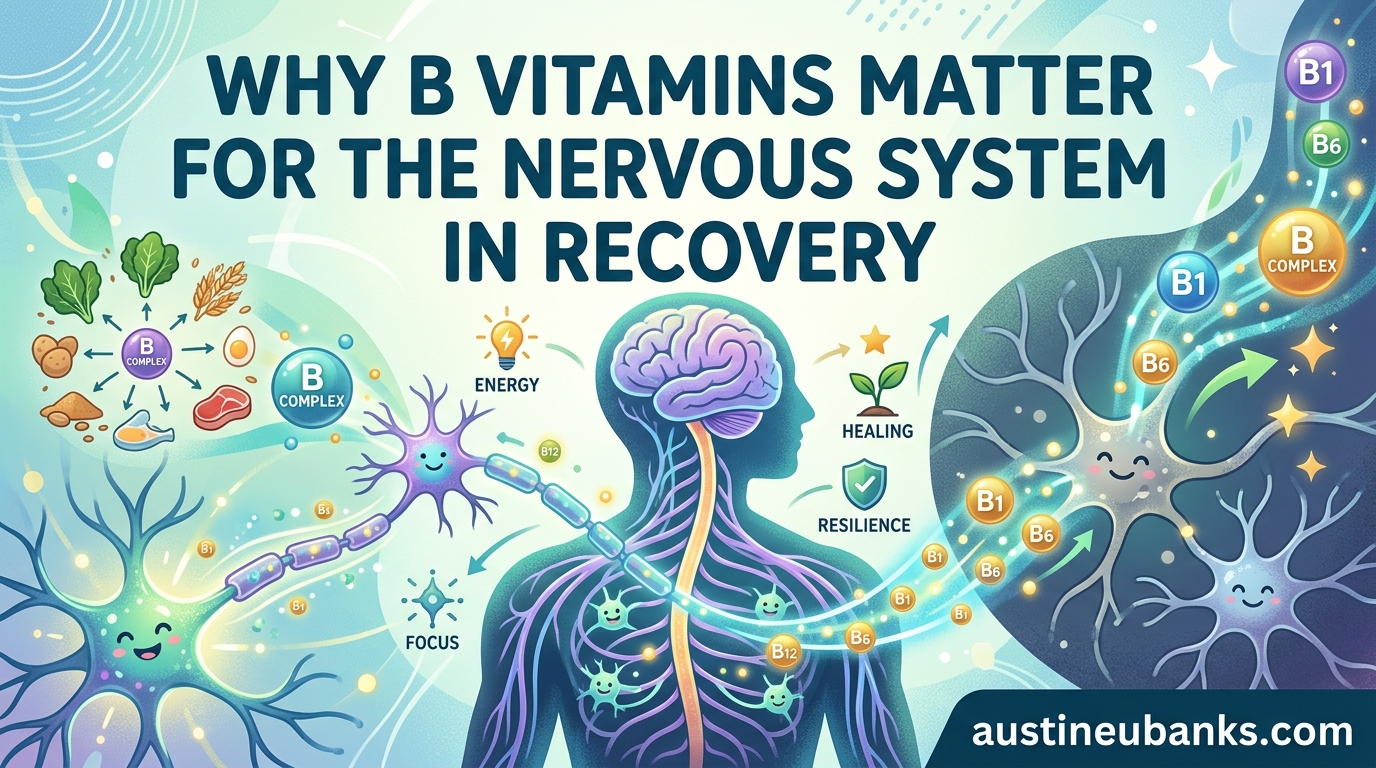
Neurotropic B vitamins serve three distinct but interconnected roles. B1 generates the energy that powers nerve cells. B6 produces the neurotransmitters that carry signals between nerves. B12 builds and repairs the myelin sheath, the protective coating around nerve fibers that speeds up signal transmission. When any one of these vitamins is deficient, nerve function suffers.
Research published in the journal Nutrients reviewed decades of clinical evidence and concluded that B vitamins collectively support nerve health through coenzyme functions in energy metabolism, neurotransmitter synthesis, and myelin formation. The combination of B1, B6, and B12 has been shown in multiple clinical trials to reduce nerve pain, improve conduction velocity, and support regeneration after injury.
What makes these vitamins so critical during recovery specifically? Nerve damage creates a surge of metabolic demand. Your body suddenly needs more energy to repair axons, rebuild myelin, and manage inflammation. B vitamins are the cofactors that make all of these processes possible. Without adequate levels, recovery stalls.
Vitamin B1 (Thiamine): The Nerve Energizer
How Thiamine Powers Your Nerves
Thiamine is the spark plug of your nervous system. Inside every nerve cell, thiamine converts into its active form, thiamine pyrophosphate (TPP). This coenzyme is essential for two critical energy pathways: the citric acid cycle and the pentose phosphate pathway.
Through these pathways, thiamine enables the production of ATP, the energy currency that nerve cells use to fire signals and maintain themselves. Neurons consume enormous amounts of ATP relative to other cells. The brain alone uses roughly 20 percent of your body’s total energy supply despite being only about 2 percent of your body weight.
When thiamine levels drop, nerve cells literally run out of fuel. ATP production declines, and nerve function deteriorates. This is why severe thiamine deficiency, as seen in conditions like Wernicke-Korsakoff syndrome, causes rapid and devastating neurological damage.
Beyond energy production, thiamine also plays a role in maintaining nerve membrane function. It helps regulate the flow of sodium and potassium ions across nerve cell membranes, which is the actual electrical signal that neurons use to communicate. Without sufficient thiamine, these signals weaken and slow down.
What Happens When Thiamine Runs Low
Mild thiamine deficiency can manifest as fatigue, irritability, poor concentration, and mild memory issues. As deficiency progresses, nerve-specific symptoms emerge. These include burning sensations in the feet and hands, muscle weakness, loss of reflexes, and difficulty coordinating movement.
Heavy alcohol users are particularly vulnerable to thiamine deficiency. Alcohol interferes with thiamine absorption and storage while simultaneously increasing the body’s demand for the vitamin. Studies estimate that up to 80 percent of people with chronic alcohol use disorder have some degree of thiamine deficiency.
People who have undergone bariatric surgery, those with chronic gastrointestinal issues, and individuals eating highly processed diets are also at elevated risk. Thiamine is water-soluble, meaning your body cannot store large amounts of it. Daily intake is essential.
Best Food Sources of Thiamine
Getting enough thiamine from food is achievable with the right choices. Some of the richest sources include:
- Pork (the single richest food source of thiamine)
- Whole grains and fortified cereals
- Sunflower seeds and macadamia nuts
- Legumes like black beans and lentils
- Yeast extract and nutritional yeast
Cooking methods matter for thiamine. Because it is water-soluble, boiling foods can leach thiamine into the cooking water. Steaming, roasting, or using the cooking liquid in soups and sauces helps preserve thiamine content.
If you eat a standard Western diet heavy in refined carbohydrates and processed foods, your thiamine intake may fall short. White rice, white flour, and refined sugars have been stripped of their natural thiamine content. Switching to whole grains is one of the simplest dietary changes to boost thiamine intake.
Vitamin B6 (Pyridoxine): The Signal Transmitter
How Pyridoxine Keeps Nerve Signals Flowing
Vitamin B6 is the communication specialist of your nervous system. Once inside the body, pyridoxine converts into pyridoxal 5-phosphate (PLP), its active coenzyme form. PLP is a required cofactor for over 140 enzymatic reactions, many of which are directly involved in brain and nerve function.
The most critical role of B6 for nerves is neurotransmitter synthesis. PLP is needed to produce serotonin, dopamine, gamma-aminobutyric acid (GABA), norepinephrine, and melatonin. These neurotransmitters regulate everything from mood and sleep to pain perception and muscle tone.
GABA deserves special attention for nerve recovery. It is the primary inhibitory neurotransmitter in the central nervous system, meaning it calms overactive nerves. When GABA levels are adequate, nerve signals remain balanced and controlled. When B6 is deficient, GABA production drops, and nerves can become hyperexcitable, leading to symptoms like anxiety, muscle spasms, and heightened pain sensitivity.
B6 also supports nerve health indirectly through homocysteine regulation. Elevated homocysteine is neurotoxic and has been linked to nerve damage, cognitive decline, and cardiovascular disease. B6, along with B12 and folate, helps convert homocysteine into harmless byproducts, protecting nerve tissue from oxidative damage.
The Danger of Too Much B6
Here is something most articles gloss over: B6 is one of the few water-soluble vitamins that can cause toxicity. Unlike B1 and B12, which your body excretes efficiently when consumed in excess, B6 can accumulate and cause nerve damage at high doses.
I found multiple reports on patient forums from people who developed sensory neuropathy from taking high-dose B6 supplements. One user shared that they were unknowingly getting excessive B6 from a combination of a multivitamin, a B complex, and an energy drink. After months of tingling and numbness, blood tests revealed toxic B6 levels.
The tolerable upper intake level for B6 is 100 mg per day for adults. Most neurological side effects from B6 have been reported at doses of 200 mg or more taken for extended periods. Some sensitive individuals experience symptoms at lower doses. If you are supplementing with B6, stay within recommended amounts and have your levels monitored if symptoms arise.
Best Food Sources of Pyridoxine
B6 is widely available in foods, making dietary deficiency relatively rare in well-nourished populations. Top sources include:
- Chickpeas and other legumes
- Salmon, tuna, and other fish
- Poultry, especially chicken and turkey breast
- Bananas and potatoes
- Pistachios and sunflower seeds
The key takeaway with B6 is that more is not better. Food sources provide B6 in amounts that are safe and well-tolerated. If you supplement, choose a B complex that keeps B6 at or near the recommended daily allowance of 1.3 to 1.7 mg for most adults.
Vitamin B12 (Cobalamin): The Nerve Regenerator
How Cobalamin Repairs Myelin and Regenerates Nerves
B12 is arguably the most important vitamin for nerve regeneration. It plays two roles that are directly tied to nerve repair: myelin synthesis and axon regeneration. Both are essential for restoring normal nerve function after damage.
Myelin is the fatty coating that wraps around nerve fibers like insulation around electrical wire. It allows signals to travel rapidly and efficiently along nerves. When myelin degrades, signals slow down, stutter, or fail entirely. This is what happens in conditions like peripheral neuropathy and multiple sclerosis.
B12, in its active forms methylcobalamin and adenosylcobalamin, is required for the synthesis and maintenance of myelin. It supports the production of fatty acids needed to build myelin and helps regulate the genes that control myelin-producing cells called oligodendrocytes in the central nervous system and Schwann cells in the peripheral nervous system.
B12 also drives methionine synthase, an enzyme critical for one-carbon metabolism. This process produces S-adenosylmethionine (SAMe), a compound needed for DNA methylation, neurotransmitter production, and phospholipid synthesis. All of these are involved in nerve cell repair and membrane integrity.
Clinical evidence backs this up. Studies on diabetic neuropathy patients have shown that B12 supplementation improves nerve conduction velocity and reduces symptoms like pain, tingling, and numbness. Research on traumatic brain injury recovery indicates that B12 supports axon repair and nerve cell regeneration in damaged brain tissue.
Methylcobalamin vs Cyanocobalamin: Which Form Is Better
One of the most common questions I see in patient forums is whether to take methylcobalamin or cyanocobalamin. The answer depends on your individual needs, but understanding the difference matters.
Cyanocobalamin is the most common form found in supplements and fortified foods. It is stable, inexpensive, and well-absorbed by most people. Once inside the body, it converts to methylcobalamin and adenosylcobalamin. For the general population, cyanocobalamin works perfectly fine.
Methylcobalamin is the active, naturally occurring form of B12. It is immediately available for use by the nervous system without requiring conversion. Some researchers argue that methylcobalamin may be more effective for nerve-specific applications because it is directly involved in myelin synthesis and methylation.
For people with MTHFR genetic mutations, methylcobalamin is generally recommended. MTHFR variants impair the body’s ability to process folic acid and related compounds, which can affect B12 metabolism. Methylated forms bypass this bottleneck. If you suspect MTHFR issues, talk to your doctor about testing and supplementing with methylated B vitamins.
Best Food Sources of Cobalamin
B12 is the one B vitamin that deserves special attention regarding dietary sources. It is found almost exclusively in animal products, which means vegans and vegetarians are at high risk for deficiency unless they supplement or eat fortified foods.
Rich sources of B12 include:
- Organ meats like liver and kidney
- Shellfish, especially clams and oysters
- Fatty fish like salmon, sardines, and mackerel
- Red meat, poultry, and eggs
- Fortified plant milks, cereals, and nutritional yeast
B12 absorption is a multi-step process that requires adequate stomach acid and a protein called intrinsic factor produced in the stomach. As we age, both stomach acid production and intrinsic factor tend to decline. This is why adults over 50 are at higher risk for B12 deficiency even when their dietary intake appears adequate.
If you have been vegan or vegetarian for years, take metformin for diabetes, or have any condition that affects digestion, getting your B12 levels checked is one of the smartest things you can do for your nervous system.
How B1, B6, and B12 Work Together for Nerve Repair
Taking individual B vitamins can help, but research consistently shows that the real magic happens when B1, B6, and B12 work together. This is not just marketing from supplement companies. Clinical studies have demonstrated that the combination of these three vitamins produces better outcomes than any single vitamin alone.
Think of nerve repair as a construction project. B1 delivers the energy needed to power the construction crew. B6 provides the communication system so the crew knows what to build and where. B12 supplies the actual building materials for myelin and nerve cell membranes. Remove any one component, and the project stalls.
A landmark clinical review published in the journal Nutrients found that the combination of B1, B6, and B12 produced synergistic effects on nerve regeneration, pain reduction, and nerve conduction velocity. The researchers noted that each vitamin addresses a different aspect of nerve health, and together they provide comprehensive support that no single vitamin can match.
This synergy explains why neurotropic B vitamin combinations have been used clinically for decades in Europe and Asia. In countries like Germany, B1/B6/B12 combinations are prescribed for diabetic neuropathy, sciatica, and post-surgical nerve recovery with substantial clinical evidence behind them.
For practical purposes, this means if you are supplementing for nerve recovery, a B complex that includes adequate amounts of B1, B6, and B12 is likely more effective than taking them separately. The key is balance. You want enough of each vitamin to support its specific function without overdoing any single one.
Who Is Most at Risk for B Vitamin Deficiency
B vitamin deficiency is more common than most people realize. You do not need to have full-blown malnutrition to experience nerve-impacting deficiencies. Subtle, long-term shortfalls can quietly erode nerve health over months and years.
Several groups face elevated risk:
People with diabetes: High blood sugar damages nerves directly through oxidative stress and impairs B vitamin utilization. Metformin, the most commonly prescribed diabetes medication, reduces B12 absorption. Studies show that up to 30 percent of metformin users have B12 deficiency.
Older adults: Aging reduces stomach acid production, which impairs B12 absorption. Thiamine absorption also decreases with age. Adults over 50 should be especially vigilant about B vitamin status.
Vegans and vegetarians: Since B12 is found almost exclusively in animal products, plant-based eaters are at significant risk unless they supplement. Some plant foods contain B1 and B6, but bioavailability can vary.
Heavy alcohol users: Alcohol depletes B vitamins across the board, particularly thiamine. It damages the intestinal lining, reducing absorption of all nutrients. Chronic alcohol use is one of the most common causes of nutrition-related nerve damage.
People with digestive disorders: Celiac disease, Crohn’s disease, ulcerative colitis, and other gastrointestinal conditions impair nutrient absorption. Anyone who has had bariatric surgery is also at high risk due to reduced stomach capacity and altered digestion.
People taking certain medications: Beyond metformin, proton pump inhibitors (PPIs) for acid reflux reduce B12 absorption. Some anticonvulsant medications deplete B6 and folate. If you take medications long-term, discuss B vitamin monitoring with your doctor.
If any of these risk factors apply to you, request a blood test for B12 and folate levels. Thiamine and B6 testing is less common but available through specialized labs. Identifying deficiency early gives you a head start on recovery.
Recovery Applications: When B Vitamins Help Most
Diabetic and Peripheral Neuropathy
Diabetic neuropathy affects roughly half of all people with diabetes at some point. High blood sugar damages peripheral nerves, causing pain, tingling, numbness, and weakness, most commonly in the feet and legs. B vitamins, particularly B12, have shown significant promise in managing this condition.
Clinical trials using B1, B6, and B12 combinations in diabetic neuropathy patients have reported improvements in nerve conduction velocity, reductions in pain scores, and decreased numbness. The effect is most pronounced when treatment begins early, before permanent nerve damage sets in.
If you have peripheral neuropathy of any cause, B vitamin status should be part of your overall care plan. Even if your deficiency is mild, correcting it can remove one obstacle to nerve recovery and improve your response to other treatments.
Post-Injury and Post-Surgical Nerve Recovery
After a physical injury or surgery that involves nerve damage, your body enters a repair phase that demands extra nutrients. Axons need to regrow, myelin needs to be rebuilt, and new nerve connections need to form. All of these processes depend on B vitamins.
Traumatic brain injury recovery is one area where B12 has received particular attention. Research from rehabilitation centers suggests that B12 supports axon repair and nerve cell regeneration in damaged brain tissue. Patients with adequate B12 levels tend to show better cognitive recovery outcomes.
For post-surgical nerve recovery, the timeline varies. Minor nerve compression injuries may recover in weeks to months with adequate nutrition. More severe injuries involving nerve transection can take a year or longer. B vitamins do not speed up recovery beyond the body’s natural rate, but deficiency can slow it down significantly.
Alcoholic Neuropathy and Wernicke Prevention
Alcoholic neuropathy is one of the most preventable forms of nerve damage. It develops because chronic alcohol use depletes thiamine to dangerous levels while simultaneously impairing absorption. The result is progressive nerve damage that causes pain, numbness, and muscle weakness.
In severe cases, thiamine deficiency progresses to Wernicke-Korsakoff syndrome, a devastating neurological condition that can cause permanent brain damage if not treated promptly. Emergency thiamine administration is standard protocol in hospitals for patients presenting with alcohol-related neurological symptoms.
For those in recovery from alcohol use disorder, B vitamin supplementation is a critical component of nutritional rehabilitation. Thiamine should be replenished first and aggressively, followed by B complex support to address broader deficiencies.
Food Sources vs Supplements: What Actually Works
Whenever possible, getting your B vitamins from food is ideal. Whole foods provide vitamins in their natural forms along with cofactors that support absorption and utilization. A diet rich in whole grains, lean proteins, legumes, nuts, and vegetables covers most B vitamin needs for healthy individuals.
However, there are clear situations where supplements are necessary. If you have a diagnosed deficiency, malabsorption issues, dietary restrictions that eliminate major food groups, or a medical condition that increases your B vitamin requirements, food alone may not be enough. B12 supplementation is essentially mandatory for vegans and long-term vegetarians.
For nerve recovery specifically, supplements often provide doses higher than what you can reasonably get from food. Clinical studies showing nerve repair benefits typically use therapeutic doses of B1, B6, and B12 that exceed standard dietary intake. This does not mean megadoses are better, but it does suggest that recovery may require more than maintenance-level nutrition.
When choosing a supplement, look for active forms of each vitamin. For B12, methylcobalamin is preferred by many practitioners. For B6, pyridoxal 5-phosphate is the active form. For B1, benfotiamine, a fat-soluble form of thiamine, has shown superior absorption in some studies. A quality B complex should provide balanced amounts without excessive doses of any single vitamin.
One important caveat from patient communities: some people feel worse when they first start taking B vitamins. Users report increased anxiety, overstimulation, and sleep disturbances, particularly with B complex supplements. This may be due to methylation effects or simply the body adjusting to increased neurotransmitter production. Starting with lower doses and gradually increasing can help minimize this effect.
Recovery Timeline: Realistic Expectations
If there is one thing I want you to take away from this article, it is this: nerve recovery takes time. A lot of time. Not days or weeks, but months and sometimes years.
Nerves regenerate at approximately 1 millimeter per day, or roughly 1 inch per month. A nerve injured in your wrist might take 3 to 6 months to regrow to your fingertips. A nerve injured in your lower back might take a year or more to reach your toes. B vitamins support this process, but they cannot accelerate it beyond the body’s natural rate.
For B12 deficiency recovery specifically, many people report feeling improvements in energy and mood within the first few weeks of supplementation. Neurological symptoms like tingling and numbness take longer. Clinical studies show measurable improvements in nerve conduction after 3 to 6 months of consistent B vitamin therapy.
Patience forums echo these timelines. Users who stick with B vitamin supplementation for 6 months or more tend to report the most positive outcomes. Those who quit after a few weeks because they did not see dramatic changes often miss the window where improvements begin to show.
Here is what a realistic recovery timeline looks like for B vitamin deficiency-related nerve symptoms:
- Weeks 1 to 4: Energy levels may improve, mood symptoms often ease
- Months 1 to 3: Nerve pain may begin to decrease, tingling intensity may reduce
- Months 3 to 6: Measurable improvements in nerve conduction become detectable
- Months 6 to 12: More noticeable reductions in numbness and improvement in sensation
- Year 1 and beyond: Continued gradual improvement, especially for chronic deficiency
Consistency is the key. Missing doses or stopping and starting interrupts the repair process. Your nerve cells need a steady supply of B vitamins day after day to rebuild. Think of it like watering a plant: occasional heavy watering is less effective than consistent moderate watering over time.
Signs of B Vitamin Deficiency to Watch For
Recognizing the signs of B vitamin deficiency early can prevent long-term nerve damage. The tricky part is that symptoms often develop gradually and can mimic other conditions.
Common early signs include persistent fatigue, brain fog, mood changes, sleep disturbances, and unexplained tingling or numbness in the hands or feet. As deficiency worsens, neurological symptoms become more pronounced.
Specific deficiency patterns include:
B1 deficiency signs: Muscle weakness, loss of appetite, irritability, poor memory, burning sensation in feet, and in severe cases, confusion and difficulty walking.
B6 deficiency signs: Depression, confusion, weakened immune function, inflamed tongue, cracks at the corners of the mouth, and peripheral neuropathy.
B12 deficiency signs: Tingling and numbness in hands and feet, balance problems, memory issues, depression, fatigue, glossitis (inflamed tongue), and jaundice.
If you experience any of these symptoms, especially tingling or numbness that persists or worsens, request a blood test. B12 deficiency is easily identified through serum B12 testing, though some practitioners also recommend methylmalonic acid testing for more accuracy in borderline cases.
FAQs
Are B vitamins helpful for nerve repair?
Yes. Vitamins B1, B6, and B12 are classified as neurotropic vitamins with direct roles in nerve health. B1 powers nerve cells through ATP production, B6 supports neurotransmitter synthesis for nerve signaling, and B12 drives myelin repair and axon regeneration. Clinical studies confirm that these vitamins reduce nerve pain and improve conduction velocity in patients with neuropathy.
Can B vitamins heal nerve damage?
B vitamins support the body’s natural nerve repair processes but cannot heal all types of nerve damage on their own. They provide the biochemical building blocks and cofactors needed for myelin synthesis, axon regeneration, and nerve cell energy production. For deficiency-related nerve damage, correcting B vitamin levels can significantly improve or resolve symptoms. For structural nerve damage from injury, B vitamins support recovery but work alongside other treatments.
How long does it take for B12 to repair nerve damage?
Nerve regeneration occurs at approximately 1 millimeter per day, so full recovery depends on the extent and location of damage. Most people with B12 deficiency notice improvements in energy and mood within the first few weeks of supplementation. Neurological symptoms like tingling and numbness typically take 3 to 6 months to show measurable improvement, with continued gains over 12 months or more.
What form of B12 is best for nerve repair?
Methylcobalamin is generally considered the best form of B12 for nerve repair because it is the active form directly involved in myelin synthesis and methylation. Cyanocobalamin also works for most people and converts to methylcobalamin in the body. People with MTHFR genetic mutations should use methylcobalamin specifically, as their bodies may struggle with the conversion process.
How much B6 should I take for nerve repair?
The recommended daily intake of B6 for adults is 1.3 to 1.7 mg. For nerve health, do not exceed the tolerable upper limit of 100 mg per day. Excess B6 can actually cause nerve damage, so more is not better. Most B complex supplements provide safe levels. If supplementing individually, stay close to the daily recommendation and consult your doctor about appropriate dosing.
Why do I feel worse after starting B vitamins?
Some people experience increased anxiety, overstimulation, or sleep disturbances when first starting B complex supplements. This may result from methylation effects, increased neurotransmitter production, or individual sensitivity. Starting with lower doses and gradually increasing can help. If symptoms persist or are severe, stop the supplement and consult your healthcare provider. This reaction is most common with methylated B vitamin forms.
Conclusion: Making B Vitamins Work for Your Recovery
Understanding why B vitamins matter for nervous system recovery comes down to three core functions: energy, communication, and repair. B1 fuels nerve cells. B6 keeps signals flowing. B12 rebuilds damaged nerves and myelin. Together, these neurotropic vitamins form the foundation of nerve health.
If you suspect deficiency, start with a blood test. If you fall into a high-risk category like diabetes, age over 50, vegan diet, or chronic medication use, proactive monitoring is even more important. Nerve damage caused by vitamin deficiency is often reversible when caught early, but permanent when left untreated.
Approach supplementation with patience and consistency. Recovery happens on a timeline of months, not days. Set realistic expectations, work with your healthcare provider to determine appropriate dosing, and give your nervous system the building blocks it needs to heal. Your nerves have a remarkable capacity for regeneration when given the right support.