
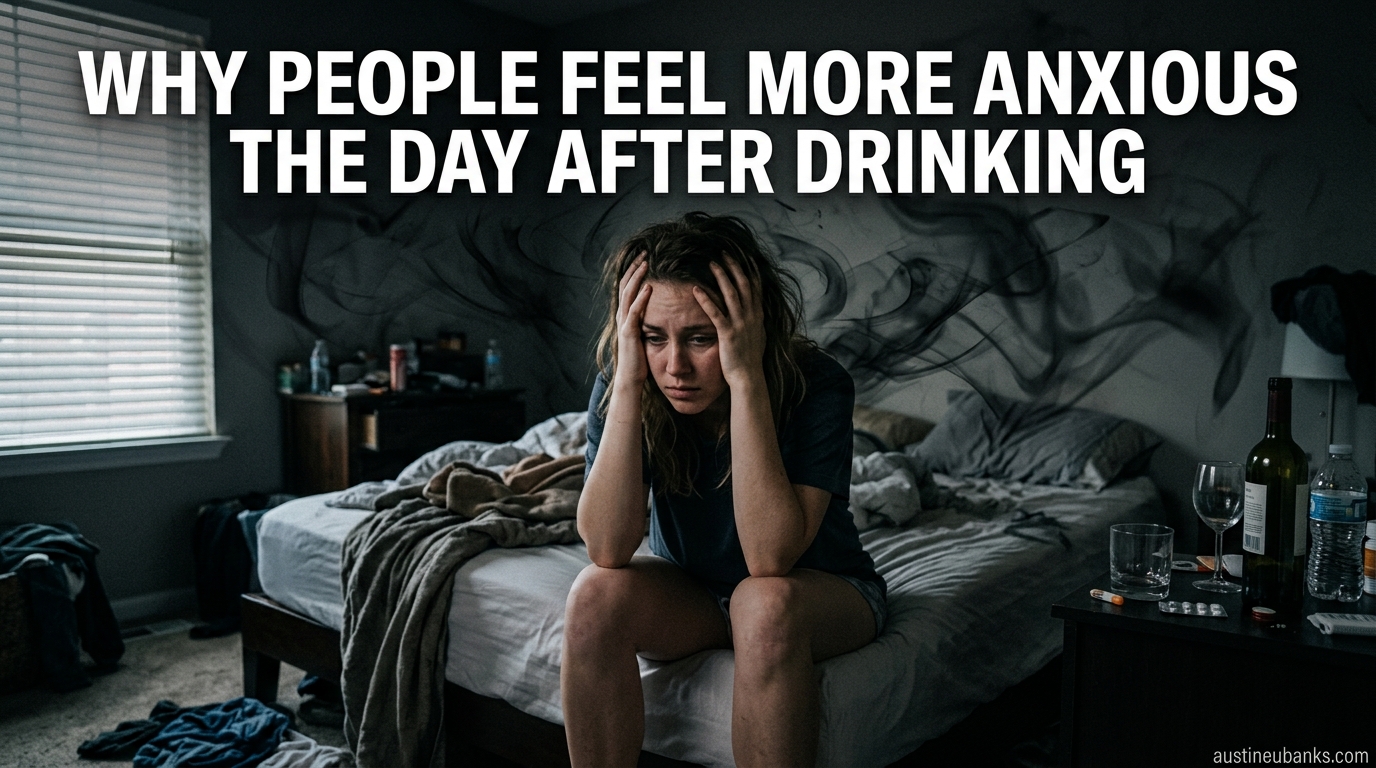
You wake up at 6 a.m. with a racing heart, a knot in your stomach, and a creeping sense that something is terribly wrong. You did not feel like this last night. If anything, you felt relaxed, social, even carefree after a few drinks. So what happened between then and now?
Hangxiety is the anxiety and unease people experience the day after drinking, caused by brain chemistry changes as alcohol wears off. When alcohol leaves your system, your brain overcorrects: calming neurotransmitters drop while excitatory ones surge, producing a rebound spike in anxiety. This explains why people feel more anxious the day after drinking than they did while actually consuming alcohol.
If you have ever experienced this, you are far from alone. Communities on Reddit’s r/Anxiety and r/stopdrinking are filled with people describing the exact same pattern: impending doom, shortness of breath, and a feeling that something is physically wrong. The good news is that this experience has a biological explanation, and understanding that explanation is one of the most effective ways to reduce the panic it causes.
In this article, we will break down exactly why people feel more anxious the day after drinking. We will cover the neuroscience of GABA and glutamate, cortisol elevation, sleep disruption, blood sugar crashes, inflammation, dehydration, and the psychological factors that compound all of it. We will also share practical strategies for managing and preventing hangxiety so you can make informed decisions about your drinking habits.
Table of Contents
What Is Hangxiety?
Hangxiety is a portmanteau of “hangover” and “anxiety.” It refers to the feelings of worry, dread, restlessness, and unease that emerge as blood alcohol concentration (BAC) returns to zero. Unlike a standard hangover, which is primarily physical (headache, nausea, fatigue), hangxiety is neurological and emotional in nature.
The term has gained traction in recent years because it describes something millions of people experience but often struggle to name. Research from the National Institute on Alcohol Abuse and Alcoholism (NIAAA) confirms that alcohol withdrawal, even mild withdrawal after a night of social drinking, produces measurable changes in brain chemistry that manifest as anxiety.
What makes hangxiety confusing is the contrast. Alcohol is a depressant that initially calms the nervous system. So how does something that relaxes you end up making you feel worse the next day? The answer lies in how your brain responds to that temporary calm and what happens when it is taken away.
Why People Feel More Anxious the Day After Drinking: GABA and Glutamate
The core answer to why people feel more anxious the day after drinking comes down to two neurotransmitters: GABA (gamma-aminobutyric acid) and glutamate. These are the brain’s primary inhibitory and excitatory neurotransmitters, respectively. Think of GABA as your brain’s brake pedal and glutamate as its accelerator.
When you drink, alcohol binds to GABA receptors and amplifies their calming effect. This is why you feel relaxed, less inhibited, and more sociable after a drink or two. At the same time, alcohol suppresses glutamate, reducing the brain’s excitatory signals. The result is a brain that is temporarily in slow mode. You feel calm.
But your brain is designed to maintain balance, a state called homeostasis. When it detects too much GABA activity and too little glutamate activity, it compensates. It reduces the number of GABA receptors available and increases glutamate production to counteract the alcohol’s effects. This is called receptor downregulation, and it begins within hours of your first drink.
Here is where the problem starts. When the alcohol leaves your system, you are left with fewer GABA receptors (less braking power) and an excess of glutamate (too much acceleration). Your brain is now running hot with no way to slow down. This is known as the excitatory rebound, and it is the primary neurological reason why anxiety spikes the day after drinking.
This rebound effect is also why anxiety often peaks not during drinking, but the morning after, when BAC hits zero. Your brain is overstimulated with excitatory neurotransmitters and under-equipped with calming ones. The result is a physiological state that closely resembles generalized anxiety: racing thoughts, jitteriness, restlessness, and a sense of unease that seems to come from nowhere.
Why Cortisol Spikes After Drinking
Cortisol is your body’s primary stress hormone. It is produced by the adrenal glands and regulated by the hypothalamic-pituitary-adrenal (HPA) axis, the system that controls your fight-or-flight response. Cortisol normally follows a daily rhythm: it peaks in the morning to help you wake up and drops at night to allow sleep.
Alcohol disrupts this rhythm significantly. Research has shown that drinking, especially heavier or binge drinking, triggers a spike in cortisol levels. Your body interprets the presence of alcohol as a physiological stressor and activates the HPA axis in response. This means that while you are drinking, your stress hormone system is actually working harder, not relaxing.
The cortisol elevation does not stop when you stop drinking. Studies indicate that cortisol can remain elevated well into the next day, particularly after heavy consumption. This means you wake up with stress hormones coursing through your body, activating the same fight-or-flight system that would respond to a physical threat.
This is why hangxiety can feel so visceral. Your body is literally in a stress response state. Your heart races, your breathing quickens, and your muscles tense. The American Addiction Centers notes that increased cortisol, combined with reduced GABA and elevated heart rate, are the three primary drivers of hangxiety. You are not imagining the physical sensations. Your body is genuinely producing them.
How Alcohol Wrecks Your Sleep Architecture
Sleep is one of the most powerful regulators of mood and anxiety. When you sleep deeply, your brain processes emotions, consolidates memories, and resets stress-response systems. Alcohol undermines almost every stage of this process.
Alcohol disrupts sleep architecture in several ways. First, it suppresses REM (rapid eye movement) sleep, the stage associated with dreaming and emotional processing. Research shows that even moderate drinking before bed can reduce REM sleep by up to 40 percent. Without adequate REM sleep, your brain cannot properly regulate mood, which directly contributes to next-day anxiety.
Second, alcohol fragments the deeper stages of non-REM sleep. While you might fall asleep faster after drinking, the quality of that sleep is poor. Your brain spends less time in restorative slow-wave sleep, which is essential for physical recovery and cognitive function.
This brings us to the infamous 3 a.m. wakeup. Many people report jolting awake in the middle of the night after drinking, heart pounding, unable to fall back asleep. This happens because as alcohol is metabolized and leaves your system, the body experiences a mild withdrawal. The excitatory rebound we discussed earlier kicks in, your cortisol rises, and your brain shifts from sedation to overstimulation. You wake up wired, anxious, and exhausted all at once.
The combination of REM suppression, sleep fragmentation, and the cortisol-driven early wakeup means your brain misses out on the recovery it needs. You wake up already in a deficit, making anxiety feel more intense and harder to manage.
Blood Sugar Crashes and Anxiety
One of the most overlooked factors in hangxiety is blood sugar. Alcohol has a significant impact on glucose regulation, and the resulting fluctuations can mimic or amplify anxiety symptoms in ways that most people never connect to what they drank.
When you consume alcohol, your liver prioritizes metabolizing it over maintaining stable blood sugar. This is because alcohol is treated as a toxin, and the body wants to clear it as quickly as possible. As a result, gluconeogenesis, the process by which the liver produces glucose between meals, is suppressed. If you have been drinking and not eating much, your blood sugar can drop significantly overnight.
Low blood sugar, or hypoglycemia, triggers a cascade of stress responses. Your body releases adrenaline and cortisol to help raise glucose levels, which means you wake up not only with alcohol-related cortisol elevation but also with an adrenaline surge from low blood sugar. This produces symptoms that are nearly indistinguishable from anxiety: shaking, sweating, racing heart, lightheadedness, and a sense of panic.
This is why eating a solid meal can sometimes feel like it dramatically reduces hangxiety. You are not just soothing your stomach. You are restoring blood sugar levels and signaling to your body that it no longer needs to release stress hormones to keep glucose stable. It is one of the simplest yet most effective interventions for post-drinking anxiety.
Inflammation: The Hidden Driver of Hangxiety
Alcohol is an inflammatory substance. When you drink, your body mounts an immune response, releasing pro-inflammatory cytokines, the same signaling molecules involved in fighting infections. This inflammatory response is a major reason you feel physically unwell during a hangover, but research increasingly shows it also affects mood and anxiety.
Cytokines can cross the blood-brain barrier and directly influence neurotransmitter activity. Studies have linked elevated inflammatory markers to increased anxiety, depression, and mood disturbances. In other words, the inflammation caused by alcohol is not just making your body ache. It is actively changing your brain chemistry in ways that promote anxiety.
This inflammatory response also helps explain why hangxiety can feel different from regular anxiety. Many people describe it as a heavier, more physical sensation of dread, as if their body is fighting something off while simultaneously panicking. In a sense, it is. The immune system is responding to alcohol as a threat, and the resulting inflammation is affecting the same brain regions involved in fear and anxiety regulation.
The inflammatory angle is something most articles on hangxiety gloss over or skip entirely. But it is an important piece of the puzzle, especially for people who experience severe hangxiety. The more you drank, the stronger the inflammatory response, and the more intense the mood disruption.
Dehydration and Its Surprising Link to Anxiety
Alcohol is a diuretic, meaning it increases urine production and causes your body to lose fluids and electrolytes faster than normal. This is why dehydration is one of the most well-known hangover symptoms. What is less commonly discussed is how dehydration directly contributes to anxiety.
Even mild dehydration, as little as a 2 percent reduction in body water, has been shown to increase anxiety, reduce cognitive performance, and worsen mood. Dehydration forces your cardiovascular system to work harder to maintain blood pressure, which can produce a faster heart rate and feelings of lightheadedness. For someone already experiencing hangxiety, these physical sensations can be misinterpreted as signs of a serious health problem, which feeds the anxiety cycle.
Electrolyte loss compounds the problem. Alcohol depletes sodium, potassium, and magnesium, minerals that play important roles in nervous system function. Low magnesium in particular has been linked to increased anxiety and irritability. Replenishing fluids and electrolytes is not just about curing a headache. It is about giving your nervous system the resources it needs to return to a calm state.
Psychological Factors: Regret, Memory Gaps, and the Moral Hangover
Not all hangxiety is purely chemical. The psychological aftermath of drinking can be just as powerful a trigger for anxiety, sometimes more so. This is especially true for people who experience memory gaps or blackouts.
When you cannot fully remember what happened the night before, your brain tries to fill in the gaps. And it rarely fills them with positive assumptions. People describe scrolling through their phone, checking social media, and replaying fragments of conversation trying to figure out if they said or did something embarrassing. This uncertainty is a breeding ground for anxiety.
Reddit users in the r/stopdrinking community frequently describe this exact experience: “Blackouts make anxiety worse due to memory uncertainty,” and “Mental health absolutely destroyed days after drinking, impending doom about having a stroke or heart attack.” The fear of what you might have said or done can keep you in a state of anxiety for hours or even days.
There is also what some call the “moral hangover,” a deep sense of guilt or shame about behaviors while intoxicated. If you are someone who already struggles with self-esteem or social evaluation fears, these feelings can be intense. Alcohol lowers inhibitions, which means you might act in ways that conflict with your values when sober. Reconciling that disconnect can trigger significant emotional distress.
It is worth noting that these psychological factors and the chemical factors feed each other. The excitatory rebound makes you more prone to anxious thoughts, and the anxious thoughts give the excitatory neurotransmitters more to work with. Breaking this cycle requires addressing both the physiology and the psychology.
Common Hangxiety Symptoms
Hangxiety can manifest differently from person to person, but some symptoms are widely reported. Recognizing these as part of a known, temporary phenomenon can help reduce the secondary anxiety that comes from not knowing what is happening to you.
Physical symptoms include a racing or pounding heart, shortness of breath, sweating, shaking or jitteriness, nausea, headaches, fatigue, and muscle tension. Some people describe a sensation of butterflies in the stomach or a feeling of impending doom, as though something terrible is about to happen.
Emotional and cognitive symptoms include restlessness, irritability, racing thoughts, difficulty concentrating, brain fog, regret or guilt about the night before, heightened self-criticism, and a general sense of unease that does not seem connected to any specific worry. Some people also experience intrusive thoughts or a feeling of being disconnected from reality.
If you have ever woken up after drinking and felt like you were dying, you are experiencing a very common hangxiety symptom. The physical sensations are real, but they are not signs of a medical emergency. They are your nervous system responding to the chemical aftermath of alcohol.
How Long Does Hangxiety Last?
For most people, hangxiety lasts between 12 and 24 hours after the last drink. Anxiety typically peaks when blood alcohol concentration reaches zero, which is usually the morning after a night of drinking. This is the point where the excitatory rebound is strongest, cortisol is elevated, and the body is most depleted of the resources it needs to self-regulate.
In some cases, hangxiety can persist for up to 48 hours, particularly after heavy or binge drinking. The inflammatory response, sleep disruption, and neurotransmitter imbalance all take time to resolve. Some people report that hangxiety gets progressively worse with age, which aligns with research showing that alcohol metabolism and recovery slow as we get older.
The key thing to remember is that hangxiety is temporary. It is a physiological response, not a permanent state. Knowing that it will pass can significantly reduce the panic that comes with it.
How to Reduce and Manage Hangxiety
While you cannot instantly undo the chemical changes caused by alcohol, there are several evidence-based strategies that can shorten the duration and reduce the intensity of hangxiety.
Hydrate immediately and throughout the day. Water is essential, but electrolyte-rich fluids like coconut water, sports drinks, or bouillon can be even more effective because they replenish the minerals alcohol depletes. Magnesium-rich foods or supplements can also help calm the nervous system.
Eat a balanced meal as soon as you can. Focus on complex carbohydrates, protein, and healthy fats to stabilize blood sugar. This is one of the single most effective interventions because it addresses the glucose crash that is driving your adrenaline response. Avoid the temptation to just eat sugar, which will cause another crash.
Move your body gently. A brisk walk, light stretching, or yoga can help metabolize stress hormones and stimulate the production of endorphins, your brain’s natural mood stabilizers. Avoid intense exercise if you are severely hungover, as it can add physical stress to an already stressed system.
Practice breathing exercises. Slow, deep breathing activates the parasympathetic nervous system, which counteracts the fight-or-flight response driving your anxiety. Try inhaling for four seconds, holding for four seconds, and exhaling for six seconds. Repeat for five to ten minutes.
Reframe your thinking. Remind yourself that what you are feeling is a temporary chemical response, not a sign that something is wrong with you. This cognitive reframing is one of the most powerful tools because it interrupts the anxiety spiral that happens when you start fearing the anxiety itself.
Avoid the “hair of the dog” approach. Drinking more alcohol to take the edge off only delays the rebound and can deepen the cycle. It may provide temporary relief, but the anxiety will return, often stronger, once the new dose wears off.
Can Hangxiety Be Prevented?
The most effective way to prevent hangxiety is to drink less or not at all. But if you do choose to drink, there are several strategies that can reduce the likelihood and severity of next-day anxiety.
Eat a substantial meal before drinking. Food in your stomach slows alcohol absorption and helps maintain blood sugar throughout the night. This single step can make a significant difference in how you feel the next morning.
Alternate every alcoholic drink with a glass of water. This slows your consumption, keeps you hydrated, and reduces the total amount of alcohol you consume over the course of the evening.
Set a limit before you start drinking and stick to it. The severity of hangxiety is directly correlated with how much you drank, so fewer drinks mean a milder rebound. If you know that two drinks is your sweet spot, do not let social pressure push you past it.
Choose drinks with fewer congeners. Congeners are byproducts of fermentation that contribute to hangover severity. Clear spirits like vodka and gin tend to have fewer congeners than dark liquors like whiskey, rum, and red wine.
Avoid mixing alcohol with other substances, particularly caffeine. Caffeine masks the sedative effects of alcohol, making it easier to drink more than you realize, and it compounds anxiety on its own.
Pay attention to patterns. If you notice that hangxiety is getting worse over time or is interfering with your daily life, that is important information. Many people in recovery communities report that escalating hangxiety was the signal that made them reconsider their relationship with alcohol.
FAQs
Does drinking make anxiety worse the next day?
Yes. Drinking alcohol disrupts brain chemistry by suppressing GABA (your calming neurotransmitter) and triggering a glutamate rebound when alcohol wears off. This, combined with elevated cortisol, poor sleep, and blood sugar crashes, makes anxiety measurably worse the day after drinking for most people.
How long can hangxiety last?
For most people, hangxiety lasts 12 to 24 hours and peaks when blood alcohol concentration reaches zero. After heavy or binge drinking, symptoms can persist for up to 48 hours as the brain restores neurotransmitter balance, inflammation subsides, and sleep patterns normalize.
What does anxiety feel like after drinking?
Post-drinking anxiety typically feels like a racing or pounding heart, shortness of breath, jitteriness, sweating, restlessness, and a sense of impending doom. Many people also experience racing thoughts, brain fog, irritability, and guilt or regret about the night before.
What is hangover anxiety?
Hangover anxiety, commonly called hangxiety, is the anxiety and unease that occurs the day after drinking alcohol. It is caused by changes in brain chemistry, specifically the rebound effect when calming GABA receptors are reduced and excitatory glutamate surges after alcohol leaves the system.
Why does drinking alcohol make you have anxiety?
Alcohol temporarily boosts GABA and suppresses glutamate, making you feel calm while drinking. But your brain compensates by reducing GABA receptors and increasing glutamate production. When alcohol wears off, you are left with too little calming activity and too much excitatory activity, producing a spike in anxiety.
How to stop hangxiety?
To reduce hangxiety, hydrate with water and electrolytes, eat a balanced meal to stabilize blood sugar, do light exercise to metabolize stress hormones, practice slow breathing to activate your calming nervous system, and remind yourself that the anxiety is a temporary chemical response that will pass.
Final Thoughts
Understanding why people feel more anxious the day after drinking is not just about satisfying curiosity. It is about giving yourself the tools to recognize what is happening, reassure yourself that it is temporary, and make informed choices about your relationship with alcohol.
Hangxiety is a real, biologically driven phenomenon. It is caused by neurotransmitter rebound, cortisol elevation, sleep disruption, blood sugar crashes, inflammation, dehydration, and psychological factors like regret and memory gaps. None of these mean something is wrong with you. They mean your brain is doing exactly what brains do when alcohol disrupts their carefully calibrated balance.
If hangxiety is a recurring problem that interferes with your quality of life, it may be worth exploring with a healthcare professional or therapist. There is no shame in reassessing your drinking habits, and for many people, understanding the science behind hangxiety is the first step toward making a change that genuinely improves how they feel.