
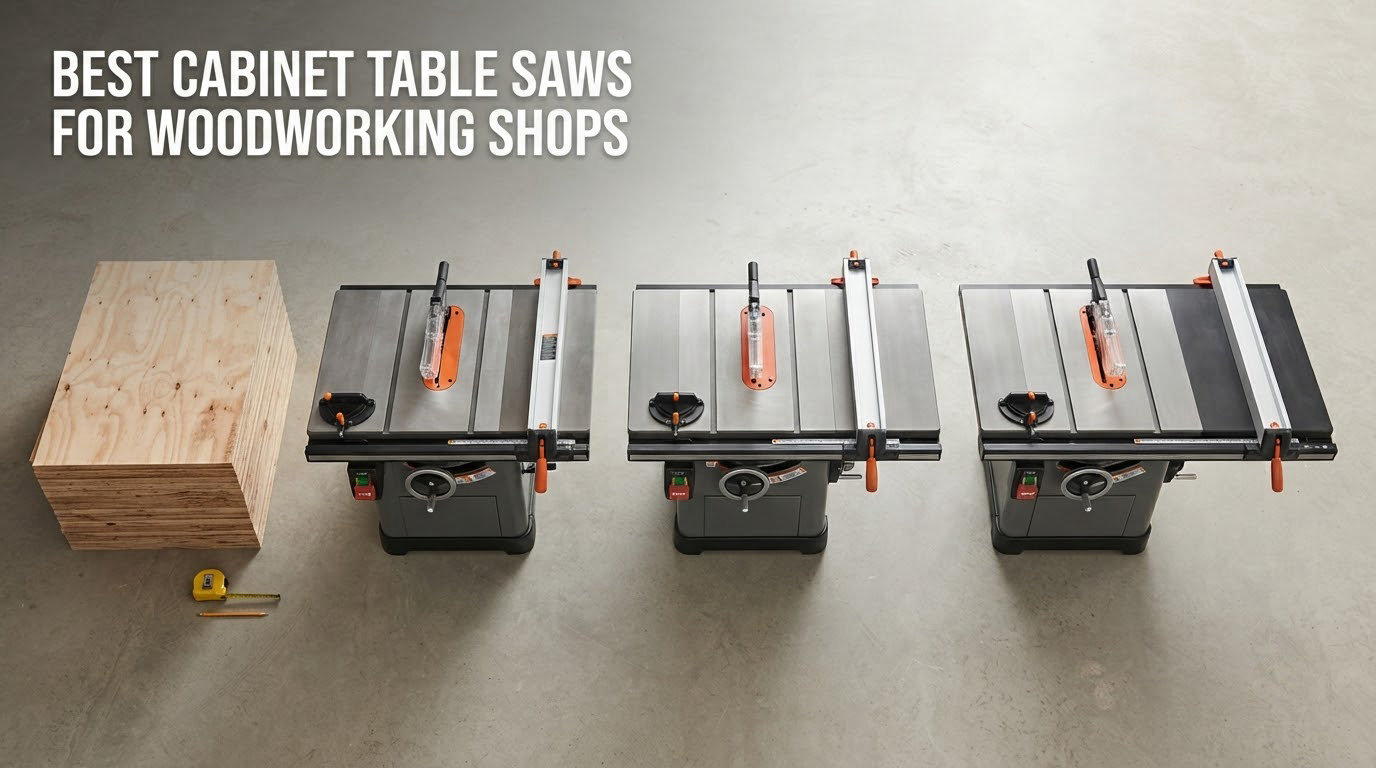
If you have ever tried to rip a 4/4 maple board on a saw that weighed 90 pounds and had a folding stand, you already know the difference a real cabinet saw makes. The best cabinet table saws for woodworking shops are not just heavier machines. They hold their blade height and their fence setting through hours of repeat cuts, swallow most of the dust they create, and stay bolted to a floor plan instead of migrating across the garage every time you need the space for something else.
That last part matters more than most buyers expect. A cabinet saw is a fixture. Our team has spent time with these machines in shops that cut production cabinetry, one-person furniture shops, and garages where the saw shares floor space with a planer and a dust collector. The pattern was consistent: the saw that keeps its alignment on day forty is the one people still trust on day four hundred.
Below I cover all eleven cabinet saws that make the cut, in the order I would consider them. Every pick has its horsepower, voltage, and circuit demand stated up front, because the single most common reason a cabinet saw disappoints is an electrical surprise on installation day. I also flag the two listings where the published specifications do not match what the model is normally known for.
If you are still assembling the rest of the shop, our guides to the [best scroll saws for woodworking](https://austineubanks.com/best-scroll-saws-for-woodworking/) and the [best band saws for woodworking](https://austineubanks.com/best-band-saws-for-woodworking/) cover the two other machines that see daily use in a shop like this.
Table of Contents
Top 3 Picks: Cabinet Table Saws for Woodworking Shops in 2026
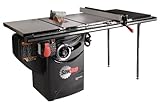
SawStop PCS175-TGP236
- 36-inch T-Glide fence
- SawStop blade-stop system
- 1.75 HP 110V
- 99% dust collection claimed
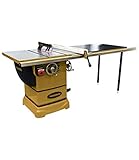
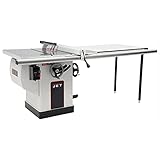
Jet XACTA JTAS-10XL50-1DX
- 50-inch rip capacity
- 3 HP 230V
- XACTA fence II
- 11-inch cast iron wings
The SawStop PCS175-TGP236 is the one I would put in a working shop first. It is the most reviewed saw in this group by a wide margin, and the safety system is a genuine difference rather than a marketing line. The Powermatic PM1000 wins on bang for the buck: 52 inches of rip capacity, a fence that clamps hard, and a machine that runs on ordinary household wiring. The 50-inch Jet XACTA is the pick when ripping thick solid wood is the whole job and you have a 230V circuit to put behind it.
Best Cabinet Table Saws at a Glance in 2026
| Product | Specifications | Action |
|---|---|---|
| SawStop PCS175-TGP236 10-Inch 1.75-HP Cabinet Saw |
|
Check Latest Price |
| Powermatic PM1000 52-Inch Rip Table Saw |
|
Check Latest Price |
| Jet XACTA JTAS-10XL50-1DX 50-Inch Rip |
|
Check Latest Price |
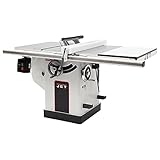 Jet XACTA JTAS-10XL30-DX 30-Inch Rip Jet XACTA JTAS-10XL30-DX 30-Inch Rip |
|
Check Latest Price |
 Laguna F2 Fusion Tablesaw Laguna F2 Fusion Tablesaw |
|
Check Latest Price |
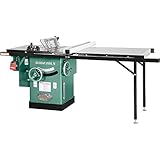 Grizzly G1023RLX 3 HP 240V Cabinet Saw Grizzly G1023RLX 3 HP 240V Cabinet Saw |
|
Check Latest Price |
 Grizzly G0651 3 HP 220V Cabinet Saw Grizzly G0651 3 HP 220V Cabinet Saw |
|
Check Latest Price |
 SawStop ICS31230-TGI252 Industrial Cabinet Saw SawStop ICS31230-TGI252 Industrial Cabinet Saw |
|
Check Latest Price |
 Powermatic PM2000B 50-Inch Rip 3 HP Powermatic PM2000B 50-Inch Rip 3 HP |
|
Check Latest Price |
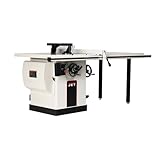 Jet JTAS-12-DX 12-Inch 5 HP Xacta Saw Jet JTAS-12-DX 12-Inch 5 HP Xacta Saw |
|
Check Latest Price |
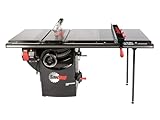 SawStop PCS31230-ATGP36 3 HP Cabinet Saw SawStop PCS31230-ATGP36 3 HP Cabinet Saw |
|
Check Latest Price |
Read the amperage column before anything else. Three machines in this table run on 110V or 115V and can be installed without an electrician. The rest need a 240V branch circuit, and the 5 HP Jet needs a 30A circuit, which is a different conversation with your panel than a 20A one.
1. SawStop PCS175-TGP236: The Safety-First Cabinet Saw
SAWSTOP 10-Inch Professional Cabinet Saw, 1.75-HP, 36-Inch Professional TGlide Fence System (PCS175-TGP236)
1.75 HP
110V
3927 watts
36-inch T-Glide fence
471.4 lb
10-inch blade
Pros
- Blade-stop safety system stops the blade in under 5 milliseconds
- Heavy-gauge 36-inch T-Glide rail holds square over repeat rips
- Gas piston elevation makes height and bevel changes smooth
- Most reviewed cabinet saw in this group
Cons
- 1.75 HP is the lowest power here
- 110V only so it cannot be moved to a 240V circuit
- Dust collection accessories sold separately
The PCS175-TGP236 is the SawStop Professional Cabinet Saw with a 36-inch Professional T-Glide fence, and it is the machine I recommend most often. Out of 76 reviews it holds a 4.4 average, which is the largest body of owner feedback any cabinet saw in this roundup has generated. That matters in a niche where a single popular model can be the difference between thirty reviews and three.
The safety system is the reason to buy it. SawStop’s patented cartridge detects flesh contact and halts a spinning blade in less than 5 milliseconds. Owners cite it constantly as the reason they chose this saw, and no other machine here can make that claim.
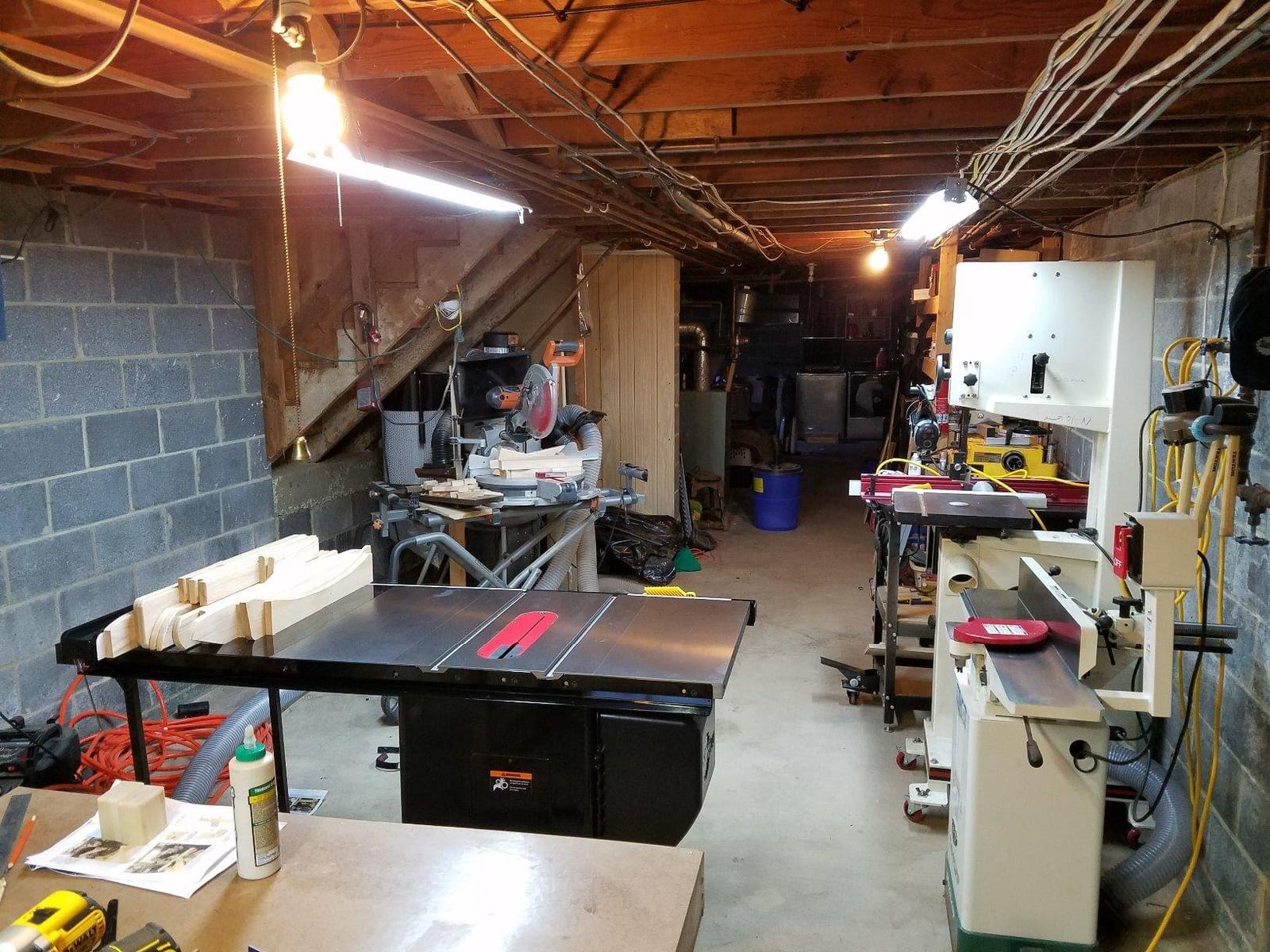
Mechanically, the rest of the saw is conventional and good. A 36-inch heavy-gauge steel T-Glide fence and rail run across the front of a cast-iron table, a gas piston assists blade elevation, and the control box runs self-diagnostics on every start to confirm the safety system is working.
Table flatness is published at a maximum diagonal gap of 0.010 inch, and the cabinet measures 39.12 by 33 by 34 inches with a weight of 471.4 pounds. At that weight you are moving a small car, not a tool.
Why the 1.75 HP motor is the real trade-off
1.75 HP is the lowest power figure in this group, and it is the reason this saw is not the answer for a shop ripping thick walnut or ash all day. Owners report the motor running out of steam on wide, deep cuts in dense hardwood. On poplar, pine, and typical cabinet-grade stock, it is more than enough.
The trade runs the other way on electrical setup. At 110V and 3927 watts, this is the easiest saw here to install. No 240V branch circuit, no electrician, no panel capacity conversation.
Who should pass on this saw
Skip it if your work is mostly solid hardwood rough dimensioning at production pace. The safety system will not help you rip faster, and the motor will not wait for you.
Also weigh the running cost. Dust collection accessories for the SawStop system are separate purchases, and if you plan to pair this with a full dust collection setup you should budget for the guard and overarm as an add-on, not an assumption.
2. Powermatic PM1000: Best Value With 52-Inch Rip Capacity
Powermatic 10-Inch Table Saw, 52-Inch Rip, 1-3/4 HP, 115/230V 1Ph (Model PM1000)
1-3/4 HP
115/230V
52-inch rip
Accu-Fence
393.8 lb
4200 rpm
Pros
- Runs on standard 115V household wiring
- Accu-Fence clamps down very hard with adjustable clamp force
- Cut quality praised from walnut and maple to 10/4 stock
- Quiet well-balanced Poly-V drive
Cons
- Some units had chipped paint and warped cast iron wings
- Factory calibration reportedly needed correcting
- Extension table legs strip easily in particle board
- Blade not included
The PM1000 is the value pick in this roundup and the one I suggest to a shop that wants real cabinet-saw performance without a 240V install. It runs on 115V out of the box and is also rated for 230V single-phase, so you can wire it either way depending on what your shop has.
Owners treat it as the entry point to the low-end professional cabinet class. Across 44 reviews at a 4.5 average, the recurring praise is fence rigidity and cut quality on hardwoods including walnut and maple at 10/4 thickness without bogging down.
Three HP-class features are worth calling out. The 7-inch ergonomic handwheels give you real momentum on height and bevel changes, the arbor lock allows one-handed blade changes with minimal tools, and the toolless guard assembly has independent side leaves. A riving knife and miter gauge are included in the box.
Measured at 83 by 43 by 44 inches and 393.8 pounds, this is the largest PM1000 footprint in the group because of the 52-inch rail set and the wood extension table. Budget the floor space before you buy.
Check the factory alignment before your first cut
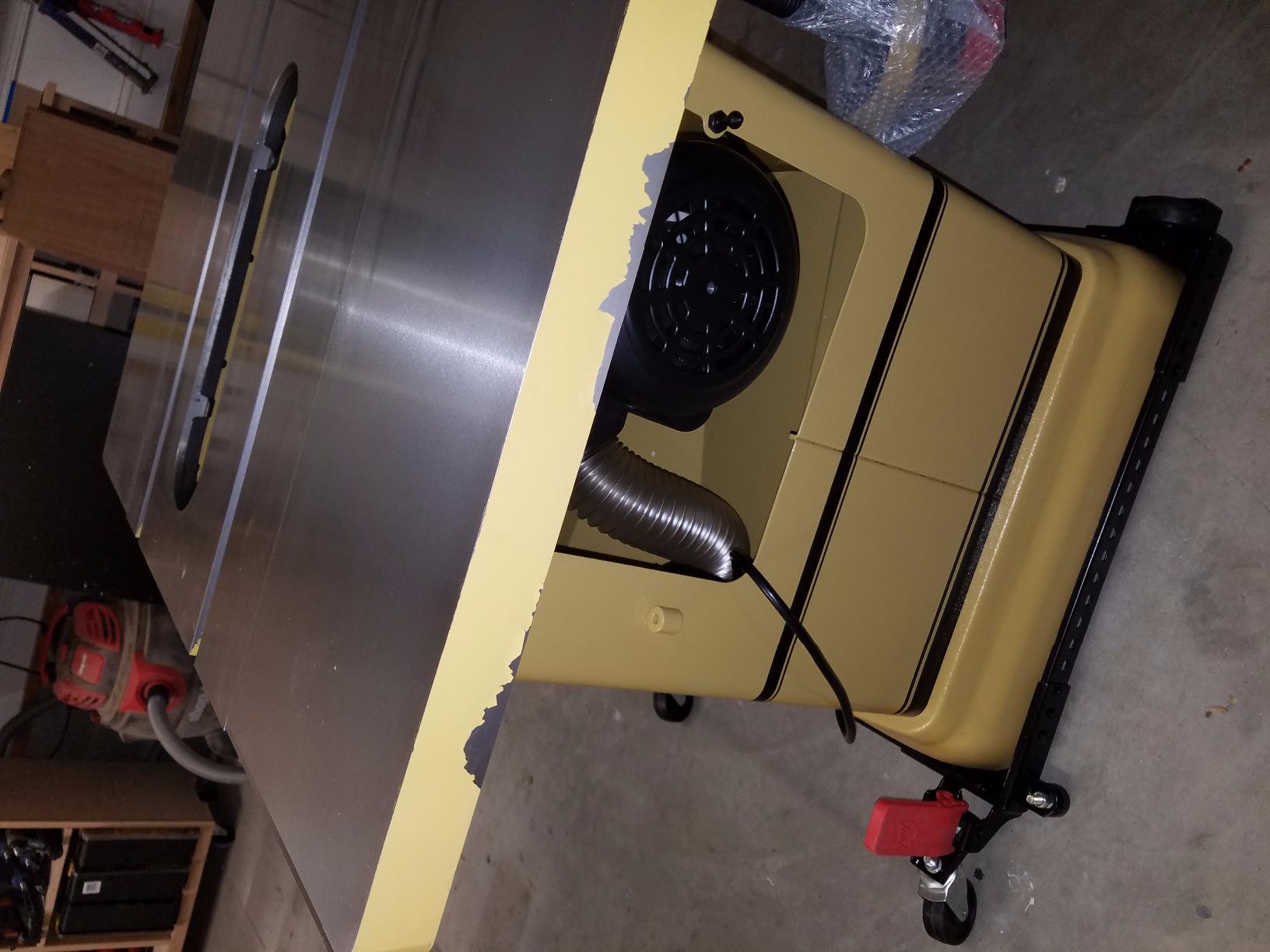
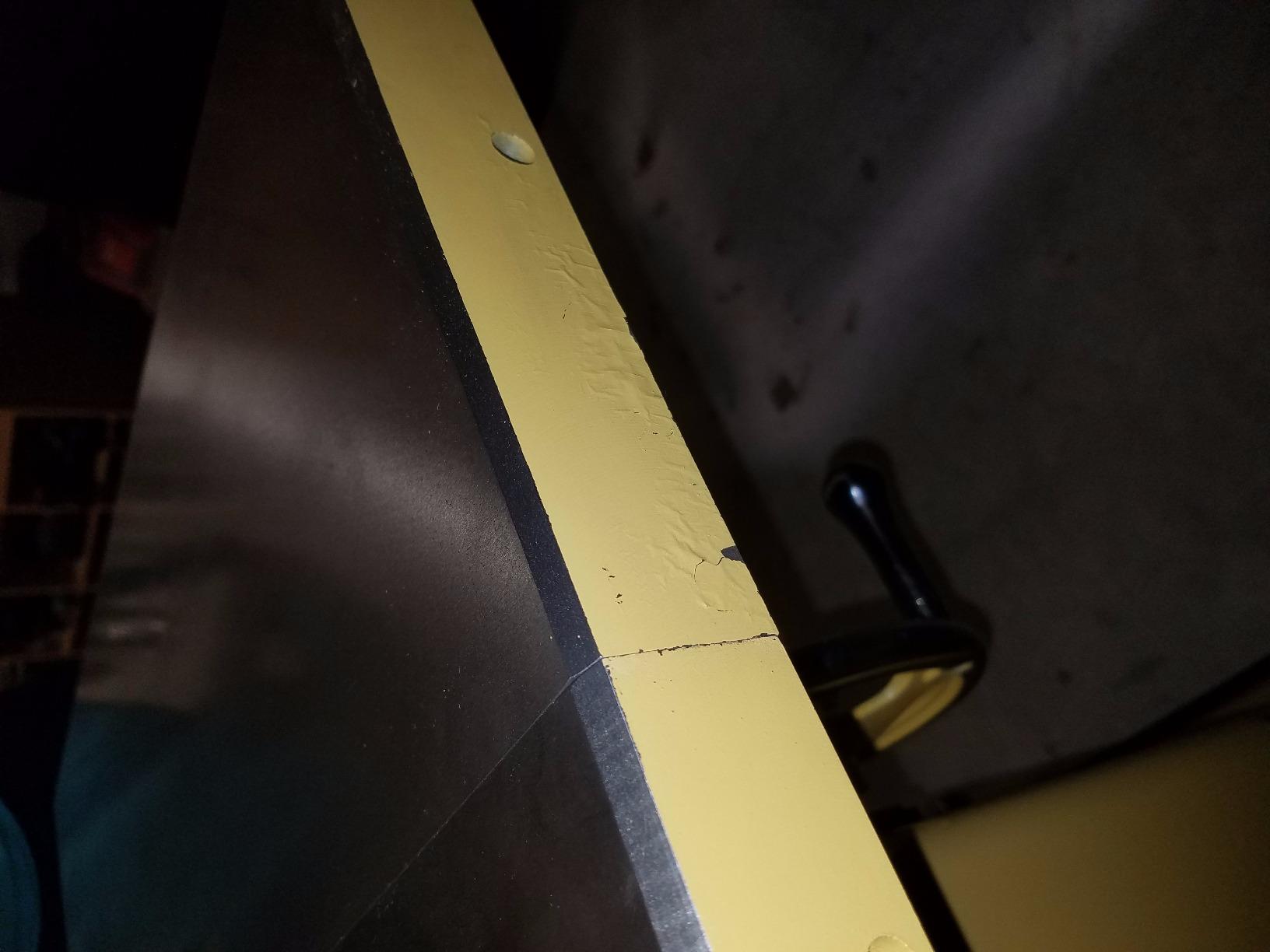
The most common complaint is not performance, it is setup. A number of buyers report recalibrating every adjustment out of the box, and others report chipped paint or warped cast-iron wings. It is a 400-pound machine, so inspect the table and wings before you rely on either one.
Two smaller notes from owners. The extension table legs screw into particle board and strip easily, so treat the extension as a convenience surface rather than structural support. And no blade is included, so add a quality blade to your real budget.
Who should pass on this saw
Pass if you are buying on reputation alone and will not spend the first afternoon calibrating. This is a machine you tune, not one that arrives perfect.
Also pass if your shop already has a 240V circuit and you plan heavy solid hardwood work. At 1-3/4 HP you are leaving power on the table when a 3 HP machine costs little more and lasts in the same package.
3. Jet XACTA JTAS-10XL50-1DX: Best for Hardwood Ripping
JET 10-Inch Deluxe XACTA Table Saw, 50-Inch Rip, 3 HP, 230V 1Ph (JTAS-10XL50-1DX)
3 HP
230V
50-inch rip
XACTA fence II
407 lb
4300 rpm
Pros
- 3 HP handles thick hardwood without bogging
- 50-inch commercial XACTA fence gives repeatable rips
- 11-inch cast iron wings on both sides add real support area
- Quiet relative to V-belt competitors
Cons
- Requires a 230V dedicated circuit
- Some units have an arbor slightly over nominal diameter
- Fence needed minor adjustment to sit parallel to the miter slots
- Over 400 pounds needs a dolly or extra hands
This is the Jet XACTA with the 50-inch commercial fence, and it is the machine I point hardwood shops toward. The 3 HP motor is the difference: it pushes through thick stock without the bogging that 1.75 HP machines show under load, which is exactly the failure mode that slows a production rip queue.
Across 43 reviews it holds a 4.4 average. Owners consistently single out the fence. The XACTA fence II uses a T-square design on a 50-inch rail set, and the reports are about repeatability rather than raw clamping force, which is what you want when you are cutting a stack of identical parts.
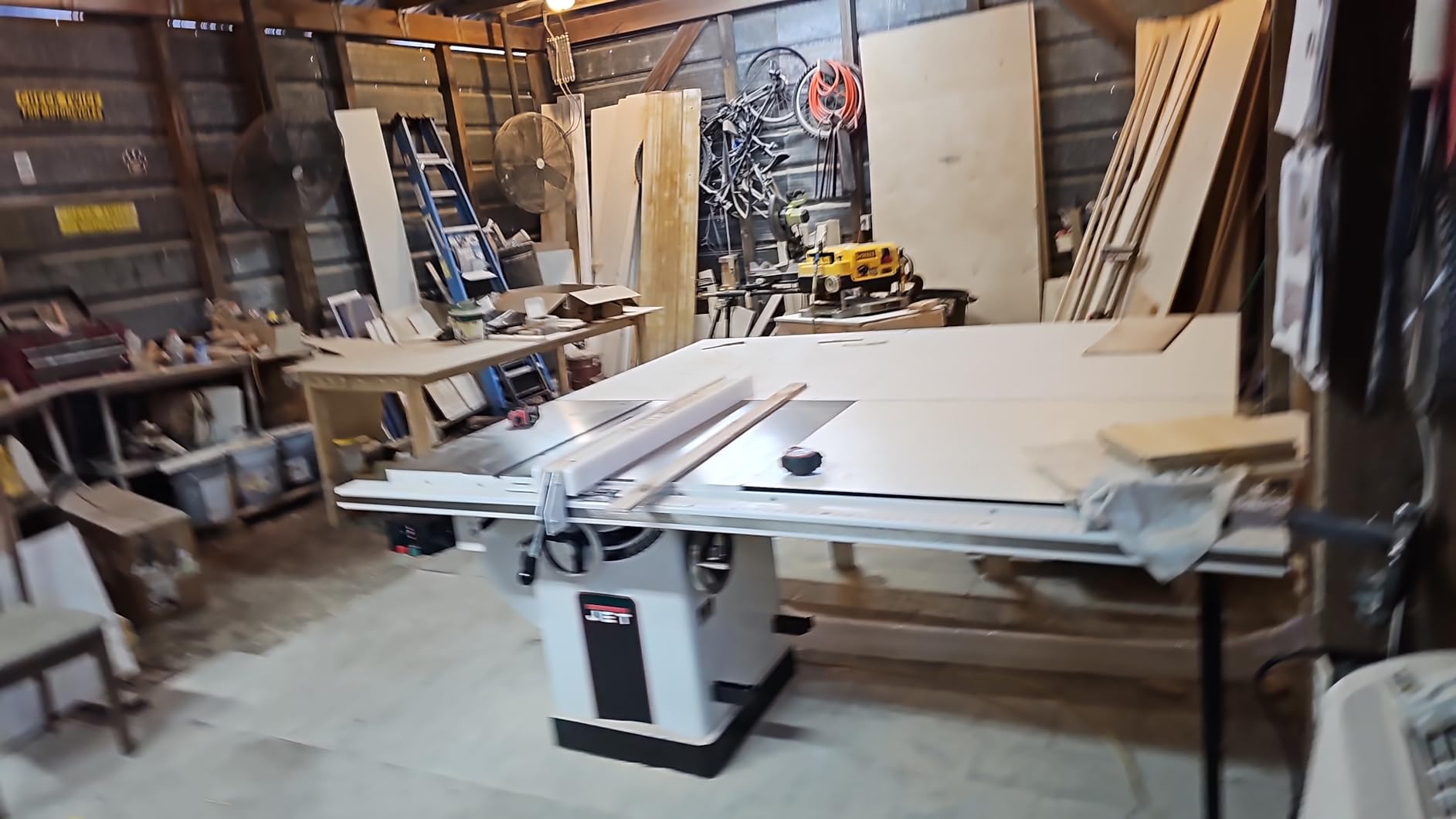
The table is the other story. Eleven-inch cast iron extension wings on both sides give you the widest support surface in this price band, which matters when a full sheet of plywood is on the saw and the offcut side has to stay flat.
A quick-release riving knife reduces binding and kickback, a push-button arbor lock speeds blade changes, and a Poly-V drive belt keeps the noise down. A blade guard, push stick, miter gauge, rails, and both cast iron wings are included.
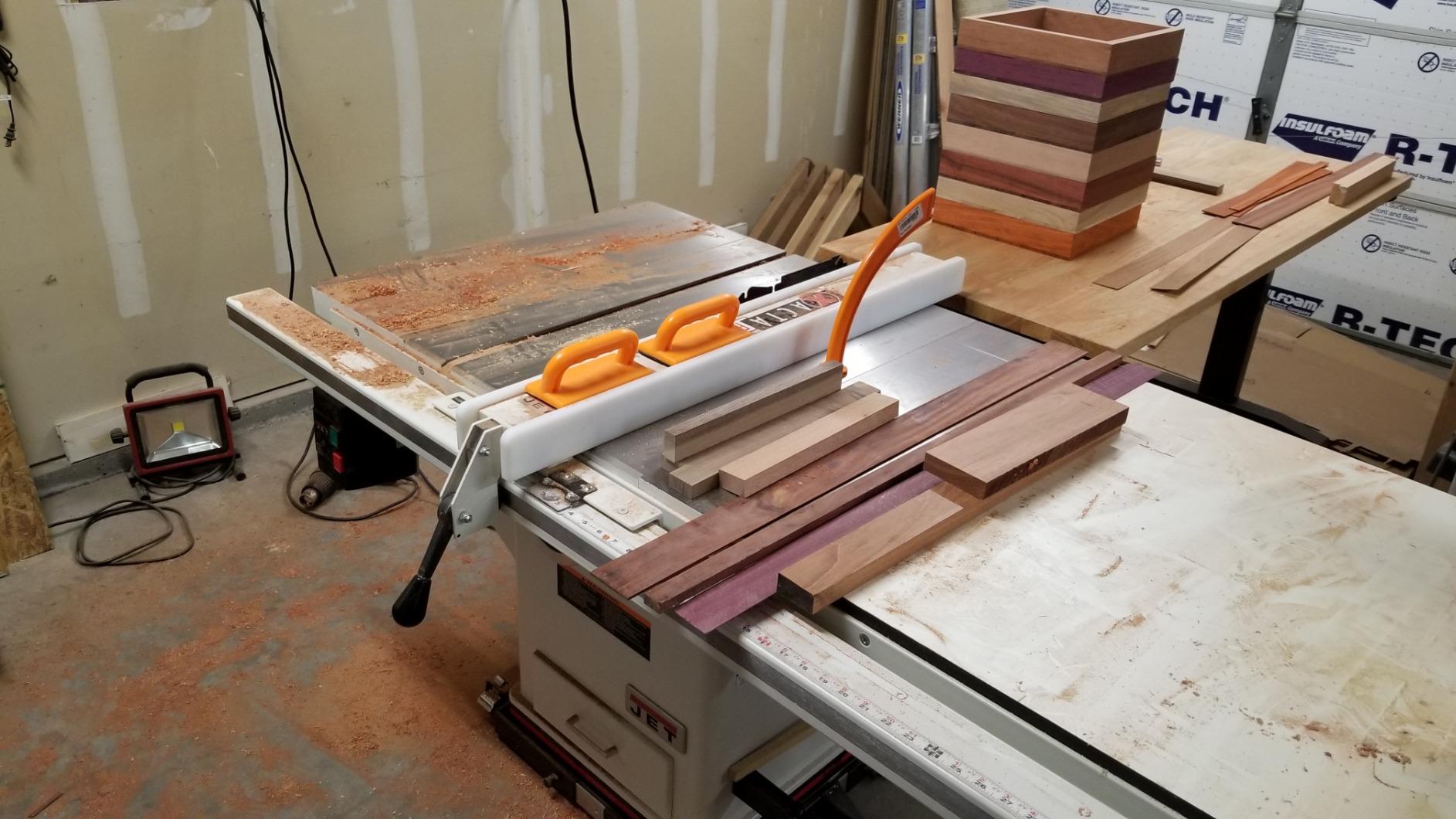
What the 230V requirement actually means for your shop
This saw draws 3335 watts at 230V single-phase, so it needs a dedicated 240V branch circuit. Before you order, look at your panel and count what else is on it. A shop with a dust collector and a planer already on 240V may need a new circuit run, and that cost belongs in your decision even though the saw listing will never mention it.
If your panel has no spare capacity, this is the wrong saw for your building, not the wrong saw for your work. The PM1000 two sections up runs on 115V for exactly that reason.
Who should pass on this saw
Pass if you have never run a dedicated circuit and are not prepared to have one installed. You can add that later. You cannot easily add panel capacity to a full panel.
Also consider the footprint. At 85 by 36 by 38 inches and 407 pounds, this saw is long. Make sure the 50-inch rail and outfeed side have somewhere to go, or you will be squeezing full sheets through a narrow bay.
4. Jet XACTA JTAS-10XL30-DX: Best for Compact Shops
JET 10-Inch Deluxe XACTA Table Saw, 30-Inch Rip, 3 HP, 230V 1Ph (JTAS-10XL30-DX)
3 HP
230V
30-inch rip
XACTA fence II
407 lb
65-inch length
Pros
- Compact 65-inch length fits shops the 50-inch version will not
- Deluxe miter gauge has adjustable positive stops and soft grip handles
- Accurate out of the box with alignments inside a thousandth in some reports
- Smooth fluid blade adjustments
Cons
- 30-inch rip is the smallest in this group
- Arbor over-tolerance and arbor-plate nut contact reported on several units
- Quality control reports including a dented cabinet and chipped paint
- Included miter gauge is fair but upgradeable
The 30-inch XACTA is the same 3 HP platform as the saw above, with a shorter commercial fence. That single change is the whole reason to pick it, and it is a real reason in a small shop where 20 inches of floor space decides whether the saw fits at all.
It rates 4.2 across 29 reviews, a step below its 50-inch sibling. The drop is not about cutting performance. It is a cluster of quality-control complaints, mostly around the arbor and cabinet finish.
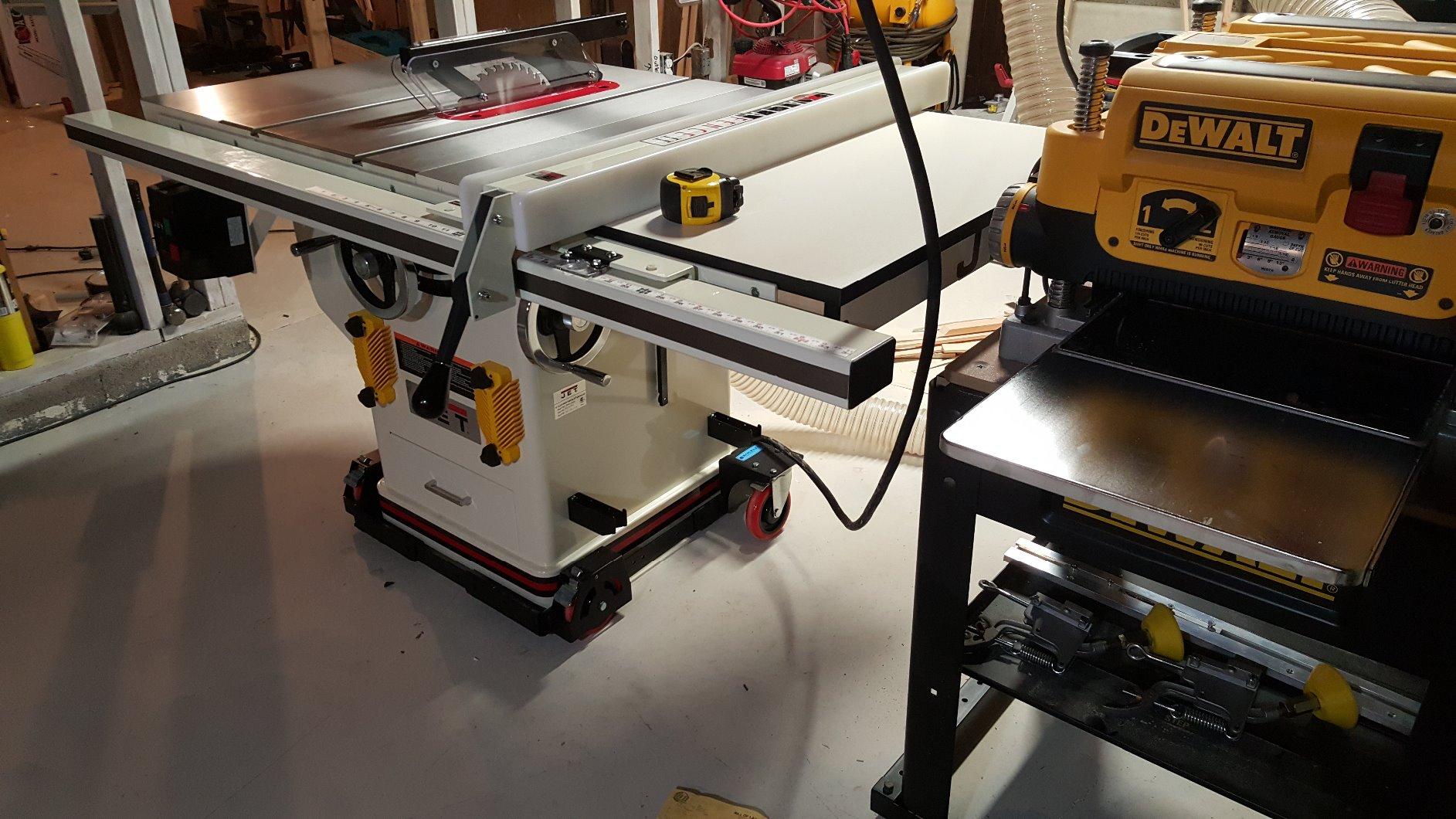
What owners like is the finish. Fit and finish are widely praised, and several buyers report alignments inside a thousandth of an inch. Chrome-plated heavy-duty handwheels give smooth trunnion and arbor movement, and an independent leaf safety guard works even at a 45-degree blade tilt.
The deluxe miter gauge has adjustable positive stops and soft grip handles. Both 11-inch cast iron wings are included, along with the riving knife, guard, push stick, rails, and an extension table.
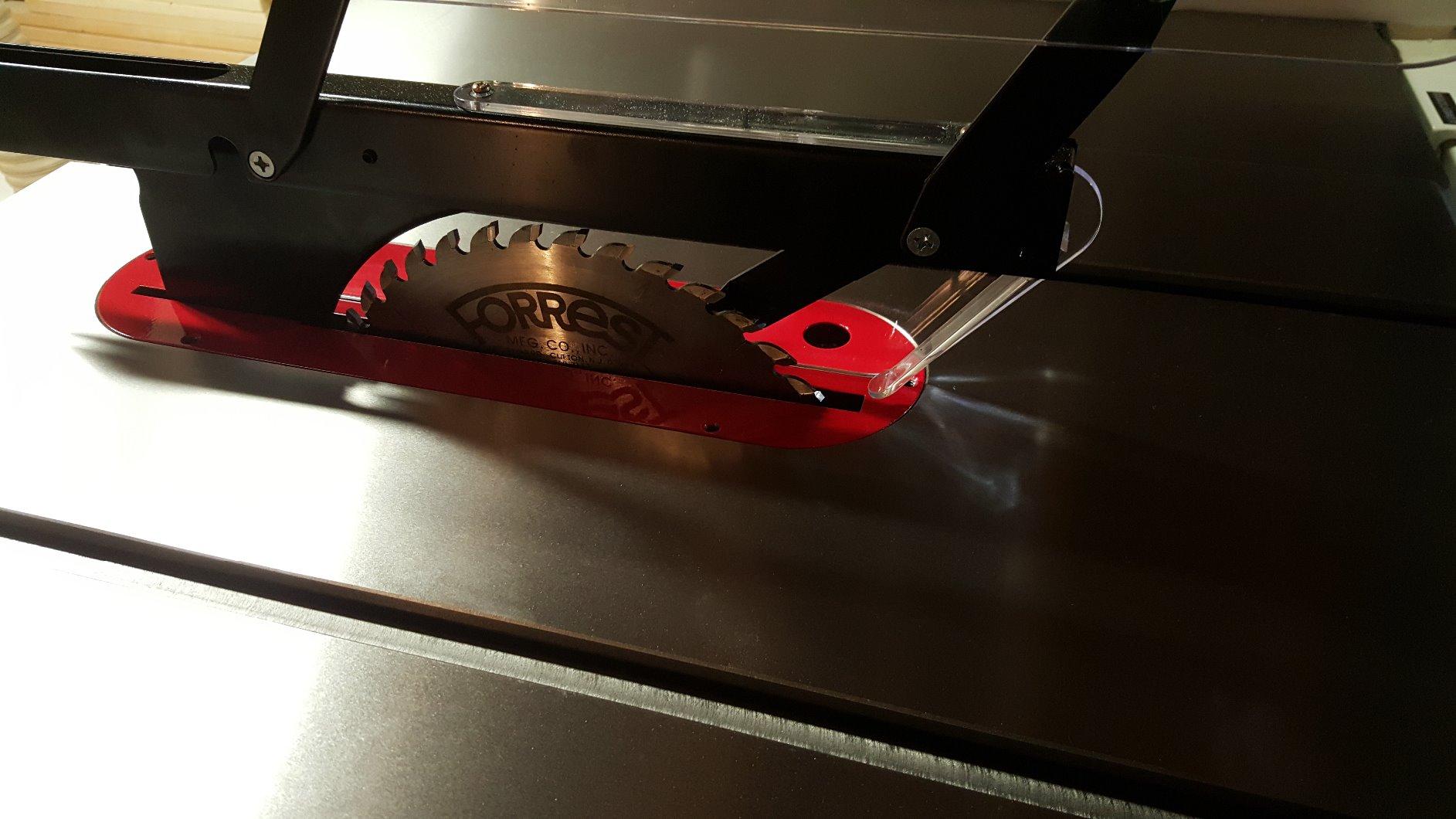
Know what 30 inches of rip capacity does and does not do
Thirty inches handles boards comfortably but will not take a full 4 by 8 sheet of plywood across the table in one pass without a jig or an outfeed roller setup. If your shop breaks down sheet goods on the saw every week, that limitation will show up as time, not as quality.
If instead you cut moulding, trim, cabinet parts, and solid lumber to width, 30 inches is genuinely enough. Most cabinet parts are well under that, and the fence stays rigid in a shorter span.
Who should pass on this saw
Pass if sheet goods are a daily part of your workflow. The 50-inch version exists for a reason, and doubling the fence length is the single biggest usability change you can make on this platform.
Also read the arbor complaints before you buy. Several buyers report an arbor slightly over nominal diameter, and on some units the arbor-plate nut contacts dado blades. Inspect the arbor and the nut the day it arrives rather than the day you need a dado cut.
5. Laguna F2 Fusion: The Entry Point With Integrated Dust Collection
F2 Fusion Tablesaw
1.75 HP TEFC
110V
1540 watts
European hi-lo fence
359 lb
10-inch blade
Pros
- Highest average rating in the group at 4.8 stars
- Lowest cost of any true cabinet saw here
- Includes a 60T carbide blade unlike most competitors
- Integrated hi-lo dust collection and tool storage in the cabinet
Cons
- 1.75 HP matches the SawStop PCS for lowest power
- European hi-lo fence needs a different technique than a front-mounted fence
- The lightest machine here
- so it still needs a dolly or extra hands
The F2 Fusion is the answer to the question people ask when they realise true cabinet saws start far above what they assumed. It is a real cast-iron cabinet saw with a cabinet-mounted arbor, not a hybrid wearing a cabinet badge, and it comes in at roughly half the cost of the premium machines on this list.
Its 4.8 average across 22 reviews is the highest in the group, with no three-star or lower feedback at all. Owners describe the value impression consistently, and the fact that a blade is included removes a real first purchase cost.
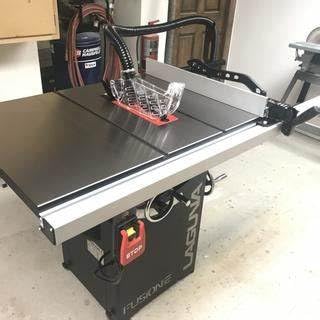
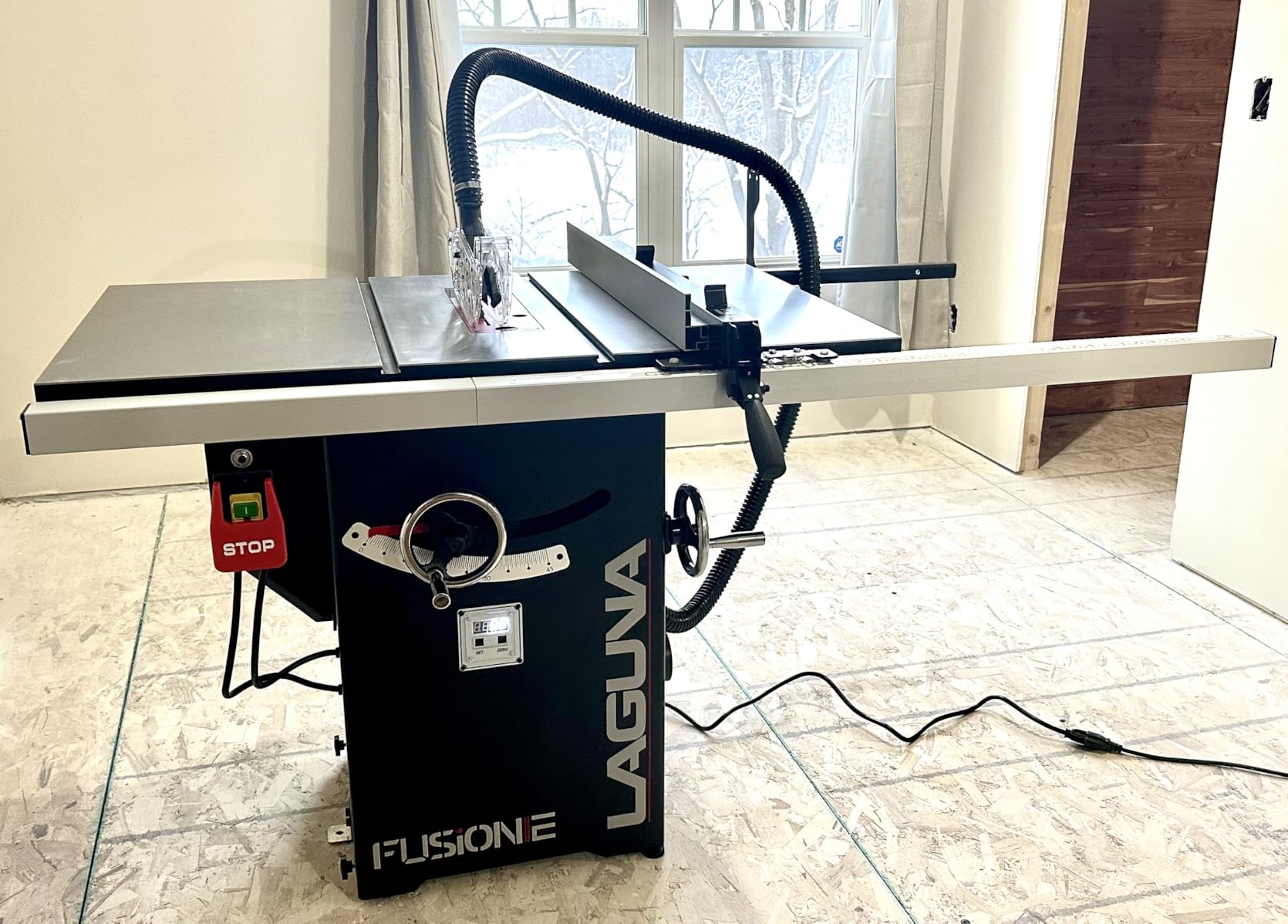
Two design choices set it apart from other entry-level saws. The European hi-lo fence moves vertically rather than front to back, which is a different cutting motion that some woodworkers adapt to in an afternoon and others never do. The integrated hi-lo dust collection is built into the cabinet rather than bolted on.
The cast iron table and wings, integrated tool storage, and ANSI/B175.1-2015 compliant miter slots round out a machine that weighs 359 pounds and measures 66.81 by 65.75 by 34.75 inches. The warranty is two years.
Decide honestly whether the hi-lo fence fits your style
A European hi-lo fence clamps to the tabletop and slides up and down as you push the board past the blade. It is very stable and very square. It is also not a front-to-back fence, and if you are used to indexing off a front rail you will be relearning where your hands go.
Try one in a showroom if there is one nearby, or watch a full setup video before committing. This is the most common reason owners return entry-level Laguna saws, and it has nothing to do with build quality.
Who should pass on this saw
Pass if you are running production solid hardwood work. A 1.75 HP TEFC motor is the same figure as the SawStop PCS, and it is the ceiling on thick stock.
Pass if you already own a strong rip fence and a well-tuned saw. You are buying a starting machine here, not an upgrade, and the right moment for it is a first cabinet saw or a shop addition for a second work area.
6. Grizzly G1023RLX: Best for Dado and Groove Work
Grizzly Industrial G1023RLX 10″ 3 HP 240V Cabinet Table Saw with 7′ Rails
3 HP
240V single-phase
14A
3450 rpm
402 lb
5/8-inch arbor
Pros
- Heat-treated and precision-milled cast iron top among the flattest in class
- 5/8-inch arbor accepts dado blades up to 13/16 inch
- T-slots keep the miter gauge from dropping when retracted
- 44 by 27 inch extension table adds support
Cons
- Lowest average rating in the group at 3.8 stars
- Support and parts responsiveness reported as an issue
- Requires a 240V circuit
- 240V single-phase limits resale in 115V shops
The G1023RLX earns its place on one specific measurement: a 5/8-inch diameter arbor long enough to accept dado blades up to 13/16 inch. If you cut dados, rabbets, or grooves in solid wood and plywood, most of the cabinet saws here make you stack two blades and accept a stepped cut. This one does not.
The table is genuinely excellent by every account. Solid cast iron, heat treated first for strength, then milled flat and ground to a mirror finish. That is a better finishing description than most competitors publish, and the owners back it up.
T-slots machined into the table keep the miter gauge from falling off when you retract it, which is a small detail that shows up every single day in cabinet work. The 3 HP motor is 240V single-phase at 14 amps and 3450 rpm, and a 44 by 27 inch extension table is included with the 7-foot rails.
Understand the 3.8 rating before you order
This is the lowest-rated saw in the roundup, and the reviews are unusually direct about why. A quarter of the ratings are one star, and the complaints cluster around Grizzly’s customer service and parts responsiveness rather than the machine itself. Buyers are asked to re-verify factory alignment before the first cut.
Set your expectation correctly. The hardware is good. The support experience is the variable, and if you are the kind of owner who needs parts this week rather than next month, that matters more than a thousandth of an inch.
Who should pass on this saw
Pass if you cut only through the throat. You are paying for dado capability you will not use, and there are higher-rated 3 HP options.
Pass if you are not patient with support. A shop running a single saw with no backup should weight the warranty and parts story more heavily than the spec sheet.
7. Grizzly G0651: Best for Sheet Material Support
Grizzly Industrial G0651-10″ 3 HP 220V Heavy Duty Cabinet Table Saw
3 HP
220V single-phase
13A
435 lb
91.5-inch length
Left-tilt blade
Pros
- Side and back tables make large sheet material a one-person job
- Plenty of power for large hardwood stock
- Excellent fence and a solid well-built table
- Digital angle readout and undercut storage for sleds and jigs
Cons
- Several units showed factory quality-control issues
- Support response to damage and parts described as lukewarm
- At least one motor failure within months of light use
- Requires a 220V circuit
The G0651 is the saw for a shop that breaks down sheet goods. A 27 by 75-3/4 inch table with the extension gives you far more support surface than the standard 27-inch cabinet top, and owners describe handling large sheets as a one-person job. That is the whole argument for this machine.
Power is not a question mark. The 3 HP motor is 220V single-phase at 13 amps, and owners report cutting large hardwood stock without bogging. The blade tilts 45 degrees, and the table sits 34-7/8 inches off the floor.
Two touches matter more than they sound. The digital angle readout helps with repeated bevel cuts, and the undercut tables create storage for sleds and jigs underneath, which is where a shop actually keeps the accessories that make a saw useful.
What the quality-control complaints mean for you
Across 15 reviews at a 4.0 average, the negatives are finish and service rather than cutting. Buyers reported a dented cabinet, underextended support legs, and a bubbling tape strip. Grizzly’s response to those issues was described as lukewarm and slow to resolve, and at least one motor failed within months of light use.
Photograph the saw and its legs the moment it is set in place, and keep those photos. That single habit resolves most damage disputes faster than any service email.
Who should pass on this saw
Pass if you cut mostly dimensional lumber and never break down sheets. You will be giving up cabinet width, buying a footprint of 91.5 by 75 inches, and accepting 435 pounds for support you do not need.
Pass if a 91.5-inch length does not fit your shop wall. Measure the space, including the side and back tables in the deployed position, before you commit.
8. SawStop ICS31230-TGI252: Best for Production Cabinet Shops
SAWSTOP 10-Inch Industrial Cabinet Saw, 3-HP, 52-Inch Industrial T-Glide Assembly (ICS31230-TGI252)
3 HP industrial
52-inch industrial T-Glide
700 lb
2-year saw and 5-year motor
Pros
- Perfect 5.0 rating across all available reviews
- Lock-out tag-out switch and access panel interlocks
- 99% dust collection with guard and below-table shrouding included
- Longest motor warranty in the group at five years
Cons
- Most expensive machine in this roundup
- About 700 pounds
- needs professional rigging or extra hands
- Only six reviews
- so the perfect score carries little weight
- 3 HP single-phase is modest for a machine this size
The ICS31230-TGI252 is the industrial SawStop, and it is built for a shop where more than one person uses the machine and access control actually matters. An integrated lock-out tag-out switch restricts operation to authorised operators, and interlock switches on the motor access panels prevent the saw from running with a door unlatched.
It is also the dust collection answer in this roundup. SawStop claims 99% collection above the table, and the below-table shrouding plus the dust collection blade guard are included rather than sold as accessories, which is the opposite of the professional PCS model.
The 52-inch industrial T-Glide advance rip fence uses heavy-gauge steel fence and rail, and the construction is close to 700 pounds of iron and steel. The warranty is two years on the saw and five years on the motor, the longest motor coverage here.
Read the 5.0 rating for what it is
Six reviews, all five stars. That is the absence of complaints rather than broad satisfaction, and you should size the sample accordingly. Nobody who owns this saw is unhappy. Six people is not the same as the 76 behind the professional PCS.
So judge it on the build. Nearly 700 pounds of iron and steel, industrial interlocks, and a five-year motor warranty are structural facts, and they are the right basis for a machine you will run eight hours a day.
Who should pass on this saw
Pass if you are a one-person shop. Lock-out tag-out and panel interlocks are features for a machine with several operators, and you are paying for controls you will disable.
Pass unless you have a plan for moving it. At roughly 700 pounds this is not a two-person lift, and getting it through a doorway or down to a basement is a separate job with a separate budget.
9. Powermatic PM2000B: Best for Repetitive Bevel Work
Powermatic 10-Inch Table Saw, Extension Table, 50-Inch Rip, 3 HP, 1Ph 230V (Model PM2000B)
3 HP
230V single-phase
4600 watts
50-inch rip
629 lb
Digital bevel readout
Pros
- Heaviest build in the group at 629 pounds with a one-piece cast iron trunnion
- Digital bevel scale with adjustable angle indicators
- Hydraulic caster system makes a 629-pound saw movable by one person
- Includes rail set
- cast iron wings
- blade and wood extension table
Cons
- Second most expensive saw in this roundup
- Only four reviews behind the 4.8 rating
- Requires a 240V circuit
- Moving it still needs care even with the casters
The PM2000B is the Powermatic for bevel work, and the reason is the digital blade tilt scale with adjustable angle indicators. Setting a compound miter once and returning to it forty times is exactly the job a repeatable readout is for, and there is no other digital bevel scale in this roundup.
Underneath, it is the most rigid machine here. A one-piece cast iron box trunnion provides the stability, and at 629 pounds there is no question about whether the machine stays put when you push a wide board through it.
It also solves the problem most heavy cabinet saws create. The integrated hydraulic caster system lets one person reposition it, which matters if your saw shares a floor with a planer and you need to change the layout. Power is 3 HP at 230V single-phase with 4600 watts.
Four reviews is not a track record
The 4.8 average comes from four reviews. Buyers who own it point to the mass, the digital bevel scale, and the casters as the features that justify the machine. Nobody who has used it reports a problem, but four is not a sample you lean on.
You are buying the trunnion, the readout, and the warranty here. A five-year manufacturer warranty gives you more confidence than four reviews would, so check the terms carefully and register the saw.
Who should pass on this saw
Pass if you are not doing repetitive bevel cuts. A standard scale on a handwheel costs a fraction of this machine and does the same job if you set the angle a dozen times rather than a hundred.
Pass if your shop cannot take a 629-pound machine with a 50-inch rail set. Measure first. The casters help with repositioning, not with getting it into the building.
10. Jet JTAS-12-DX: Best for Thick Solid Material
JET JTAS-12-DX, 12″ Xacta Saw, 5HP 1PH
12-inch blade
5 HP
30A single-phase
80-inch cast iron surface
623 lb
Pros
- Largest blade and highest power in the group at 12 inches and 5 HP
- Eighty inches of solid cast iron work surface
- Table-top accessed arbor lock speeds blade changes
- Blade collection shroud with integrated hose improves capture
Cons
- Requires a 30A 240V branch circuit
- Only two reviews
- so the 5.0 rating is uninformative
- 12-inch blades are a specialty format with fewer compatible options
- 623 pounds makes it one of the hardest machines here to reposition
The JTAS-12-DX is the only 12-inch saw in the group and the only one with a 5 HP motor. If you cut thick solid slabs, resin-treated beams, or large timbers, that combination is not a nice-to-have. It is the reason the machine exists.
The work surface is the quiet headline. Eighty inches of solid cast iron, by far the largest here, and a collection shroud wrapped around the blade with an integrated hose to pull dust down rather than blow it out.
It also has the largest electrical appetite. The 5 HP motor is 230V single-phase at 30 amps, which means a 30A branch circuit and a panel with real spare capacity. This is the one saw here that can push an older electrical service past its limits.
Confirm your electrical service will carry 30 amps
This is the single most important line in the whole roundup. A 30A 240V branch circuit is a different job than a 20A one, and if your panel is near capacity the electrician’s answer may be a subpanel rather than a new breaker.
Ask your electrician about panel capacity before you buy, not after. If the answer is complicated, the 3 HP 230V machines in this roundup all run on a lighter circuit and will serve most shops perfectly well.
Who should pass on this saw
Pass if you cut standard cabinet lumber. A 12-inch blade is a specialty format with a thinner accessory ecosystem, and you will pay a premium for capacity you do not use.
Pass if your electrical service is marginal. At 2 reviews, the 5.0 average tells you nothing, so the electrical requirement is the only real information you are working with.
11. SawStop PCS31230-ATGP36: Best for New 240V Shops
Professional 3HP Cabinet Saw with 36” Professional T-Glide Advance Rip Fence, Rails & Extension Table
3 HP
230V
13A
4000 rpm
36-inch T-Glide Advance
69.13-inch footprint
Pros
- Pairs the SawStop safety system with a 3 HP motor
- SawStop's most popular platform with well documented fit and finish
- 36-inch Professional T-Glide Advance fence with rails and extension table
- 13A draw is a lighter 240V load than the 5 HP options
Cons
- Only one review
- so the 5.0 average carries no information
- Listing describes the saw as a bare tool
- Weight is not published
The PCS31230-ATGP36 fixes the main complaint about the SawStop professional model. The 1.75 HP PCS in section one is the lowest power figure in the group, and this one runs 3 HP on 230V at 13 amps. Same safety system, more motor.
It is also SawStop’s most popular table saw platform, which matters in a narrow niche. Fit and finish are well documented across a large installed base, and parts and accessories for the PCS series are the easiest of anything here to source.
The fence is the 36-inch Professional T-Glide Advance with matching rails and an extension table. Table footprint is listed at 69-1/8 inches wide by 33 inches deep by 34 inches high, and the warranty is two years.
Confirm what is actually in the box
The listing describes this as a bare tool. That means the extension table, blade, dust collection, and mobile base may all be separate purchases, and the total you end up with is meaningfully more than the headline number suggests.
Ask the seller for a full contents list before you order, and treat dust collection as a required line item rather than an optional upgrade. A cabinet saw without extraction is an expensive dust maker.
Who should pass on this saw
Pass if you want a proven record. One review is not evidence of long-term reliability, and this listing has no weight published, which makes planning a mobile base harder than it should be.
Pass if the 1.75 HP professional model already covers your work. The safety system is identical between the two, and the extra motor only earns its place on thick stock.
What Is a Cabinet Table Saw?
A cabinet table saw is a stationary woodworking saw built on a fully enclosed cast-iron cabinet that houses the motor and supports a rigid cast-iron table. That weight and rigidity are the entire point: the machine resists the force of a cut and returns to the same blade height and bevel the next time you use it.
That is the difference from a portable or contractor saw, which sit on an open stand designed to be carried. A contractor saw is a capable machine with a much smaller motor and less mass. A cabinet saw stays where you put it and takes a heavier duty cycle.
A hybrid saw sits in between, with a partially open base and a lighter overall weight. It gives you much of a cabinet saw’s fence and table quality in a machine that two people can move without a dolly, which is why hybrids are popular in basements and small shops.
The practical differences come down to three things: mass and rigidity, dust containment, and how long you can run it before it needs to cool or be recalibrated. Only cabinet saws and hybrids have real dust containment, and only cabinet saws are meant to sit under a collector and run for a full day.
Cabinet Saw vs Hybrid vs Contractor Saw: Which Does Your Shop Need?
Choose a cabinet saw if the saw is a permanent fixture, you rip solid hardwood or plywood often, and you have a dust collector and a 240V circuit. That is the condition this entire roundup is written for.
Choose a hybrid if you want a cast-iron table and a good fence in a machine you can move, or if you are in a basement or a small shop where a 400-pound machine is a problem to solve rather than a benefit.
Choose a contractor saw if you need the fence quality but move the machine regularly, and you can live without dust containment. Choose a jobsite saw if the saw goes to the site rather than the site coming to the saw.
The honest counter-argument, and one a basement-shop guide makes forcefully, is that many hobbyists buy a cabinet saw too early. If your real cutting is a few hours a month, a hybrid will serve you and a cabinet saw will just take up the floor you needed for a workbench.
How to Choose a Cabinet Table Saw
Start with horsepower and the circuit it demands, in that order. A 1.75 HP saw on 110V or 115V installs in an afternoon with no electrician. A 3 HP saw at 230V needs a 240V branch circuit. The 5 HP Jet needs 30 amps, which is a bigger conversation with your panel than the saw listing will ever have.
Ask your electrician about panel capacity before you buy anything, and tell them the amperage. The 5 HP saws here draw 30 amps, the 3 HP machines generally sit in the 13 to 14 amp range at 230V, and the 110V machines are a completely different conversation.
Second, be honest about rip capacity. Fifty-two inches of rip only earns its floor space if you actually break down sheet goods on the saw. If you use a track saw for plywood, 30 inches handles most cabinet parts and the shorter machine leaves you more room for outfeed. Several woodworkers buying in this category over-buy the fence and then never use it.
Third, look at the fence and the miter gauge together, not separately. A front-to-back T-Glide rail and a European hi-lo fence are both accurate, and they are two different cutting motions. An included miter gauge is a starting point on most of these saws, and upgrading it is a normal first purchase.
Fourth, check the riving knife. Every saw in this roundup includes one, and on the JET models it is a quick-release design. A riving knife holds the workpiece in kerf so the offcut does not pinch and kick back, and on a saw without a finger-detection system it is your primary anti-kickback feature.
Fifth, ask what the dust collection story is before the saw arrives. The SawStop industrial model includes its guard and below-table shrouding. The professional PCS sells those accessories separately. The Laguna F2 has collection built into the cabinet. A saw with no plan for extraction will fill your shop with fines faster than you expect.
Sixth, measure the footprint with the extension and outfeed in the deployed position, not the shipping dimensions. Two saws here are over 80 inches long and one is 91.5 inches. Also check the weight against your floor and your stairs, because these machines run from 359 pounds to roughly 700 pounds.
Finally, read the warranty terms and check that the fence is covered separately if it is a third-party accessory. Parts availability matters more than any spec on the list, and a saw whose brand will not answer the phone is a problem you will pay for later. If you are building out the rest of the shop, our [best drill presses for woodworking](https://austineubanks.com/best-drill-presses-for-woodworking/) guide covers the other machine most shops buy alongside a saw.
Setting Up Dust Collection for a Cabinet Saw
Target 600 to 1,000 CFM at the machine for a stationary cabinet saw. That figure comes from shop-guidance work on dust-controlled stationary saw setups, and it is the number to take to your collector dealer rather than the tank size on the collector’s label.
Most of these saws use a 4-inch dust port at the cabinet base. A 4-inch hose is not as loud as a 2.5-inch line, and the difference in a closed shop is large enough that people notice within a day of the change.
Keep duct runs short and straight. Long runs and tight bends cut airflow more than any collector upgrade, and a splitter that sends air to two open ends delivers roughly half the static pressure of a single connected line. If you must split, close off the unused branch.
Plan dual-port collection where the saw supports it. A port above the table catches dust from the top of the cut and a shroud or elbow below the table catches what falls through the insert, and running both is the difference between a visible haze and a clean shop floor.
Finally, remember that a saw guard also acts as a dust shroud. The SawStop industrial model and the 12-inch Jet both wrap a collection shroud around the blade with an integrated hose, and that local capture does more for visibility than any single upstream change. If you also route routers and sanders through the same system, our [best wood routers for woodworking](https://austineubanks.com/best-wood-routers-for-woodworking/) guide covers the machines sharing that collector.
Safety: Finger-Detection Systems and Riving Knives
SawStop’s finger-detection system is the safest table saw safety technology on the market. It detects skin contact and stops a spinning blade in less than 5 milliseconds, which is a genuinely different category from a guard that reduces exposure. Three saws in this roundup use it.
The honest downside is rarely discussed before purchase. Every time the system fires, the cartridge has done its job and the blade has stopped, and the saw is down until the cartridge is replaced. Plan for that downtime and the per-cartridge cost as a running cost of ownership, not a surprise in year two.
A riving knife is a separate and older idea. It is a knife-shaped blade behind the saw blade that follows the cut and holds the workpiece at kerf width, so the offcut cannot pinch the blade and spin the work back at you. Every saw in this roundup includes one, and the JET models use a quick-release version for fast changes.
Is a riving knife necessary? On any saw without finger detection, yes, and on a saw with finger detection it is still good practice because the detection system only helps after contact. A saw with neither a working riving knife nor a guard is a saw we would not put in a shop with other people in it.
On older used cabinet saws, a missing or non-functional riving knife is one of the most common safety gaps, and it is one of the cheapest to fix. Check it as part of any used saw inspection, along with the guard and the arbor runout.
Frequently Asked Questions
What is the difference between a table saw and a cabinet saw?
A cabinet table saw is a stationary saw on a fully enclosed cast-iron cabinet that holds the motor and supports a rigid cast-iron table, so it stays accurate under repeated heavy cuts and captures dust. A portable or contractor saw uses an open steel stand, is lighter, and is built to be moved. A cabinet saw is a permanent fixture for a dedicated shop.
What is the difference between a hybrid table saw and a cabinet table saw?
A hybrid saw has a partially open base and a lighter overall weight, which makes it moveable by two people while still giving you a cast-iron table and a good fence. A cabinet saw is heavier, fully enclosed, and holds alignment longer under sustained production work. Hybrids suit basements and small shops; cabinet saws suit shops that cut daily.
Which table saw is considered the safest on the market?
SawStop’s finger-detection system is the safest technology available, stopping a spinning blade in less than 5 milliseconds on skin contact. Three saws in this roundup use it, including the PCS175-TGP236 and the ICS31230-TGI252. The tradeoff is the cost of replacement cartridges and the downtime after any stop.
Which table saw has the best dust collection?
For onboard collection, the SawStop ICS31230-TGI252 includes a dust collection blade guard and below-table shrouding and is rated at 99% collection, while the Laguna F2 Fusion integrates a hi-lo system into the cabinet. For shop extraction, target 600 to 1,000 CFM at the machine and run dual ports where the saw supports them.
Is a riving knife necessary on a table saw?
On a saw without a finger-detection system, a working riving knife is necessary because it holds the workpiece at kerf width so the offcut cannot pinch the blade and cause kickback. On a saw with finger detection it is still good practice, since detection only acts after contact. Every saw in this roundup includes one, and the JET models use a quick-release design.
Do I need a 240V circuit for a cabinet table saw?
It depends on the saw. The SawStop PCS175-TGP236, the Powermatic PM1000, and the Laguna F2 Fusion run on 110V or 115V. The 3 HP machines listed here run at 230V single-phase in the 13 to 14 amp range, and the 5 HP JET JTAS-12-DX needs a 30A 240V branch circuit, which may require a panel conversation with an electrician.
Which Cabinet Table Saw Should You Buy in 2026?
Pick the SawStop PCS175-TGP236 if safety is your first priority and you cut cabinet-grade lumber rather than thick hardwood. It has the most owner feedback of any saw here, the fence holds square over repeat rips, and it installs on 110V without an electrician.
Pick the Powermatic PM1000 if you want maximum rip capacity and fence quality without a 240V install. It is the value pick, it runs on household wiring, and it is the machine I suggest to a shop making its first cabinet-saw purchase.
Pick the Jet XACTA JTAS-10XL50-1DX if ripping thick solid wood is the core of your work and you have a 230V circuit ready. Pick the Laguna F2 Fusion if budget is the deciding factor and you are comfortable relearning on a European hi-lo fence. Pick the Grizzly G1023RLX if you cut dados and the G0651 if you break down sheet goods.
Whichever you choose, budget beyond the saw. A dust collector, outfeed support, a mobile base, and a dedicated circuit are what turn a machine into a working system, and they are where most of the real money goes. Measure the footprint, ask an electrician about panel capacity, and buy the saw that fits your shop rather than the biggest one on the list.
We test and compare the full range of woodworking machinery on this site, from [band saws](https://austineubanks.com/best-band-saws-for-woodworking/) to [scroll saws](https://austineubanks.com/best-scroll-saws-for-woodworking/), and we update these recommendations as 2026 brings new models and new owner data.