
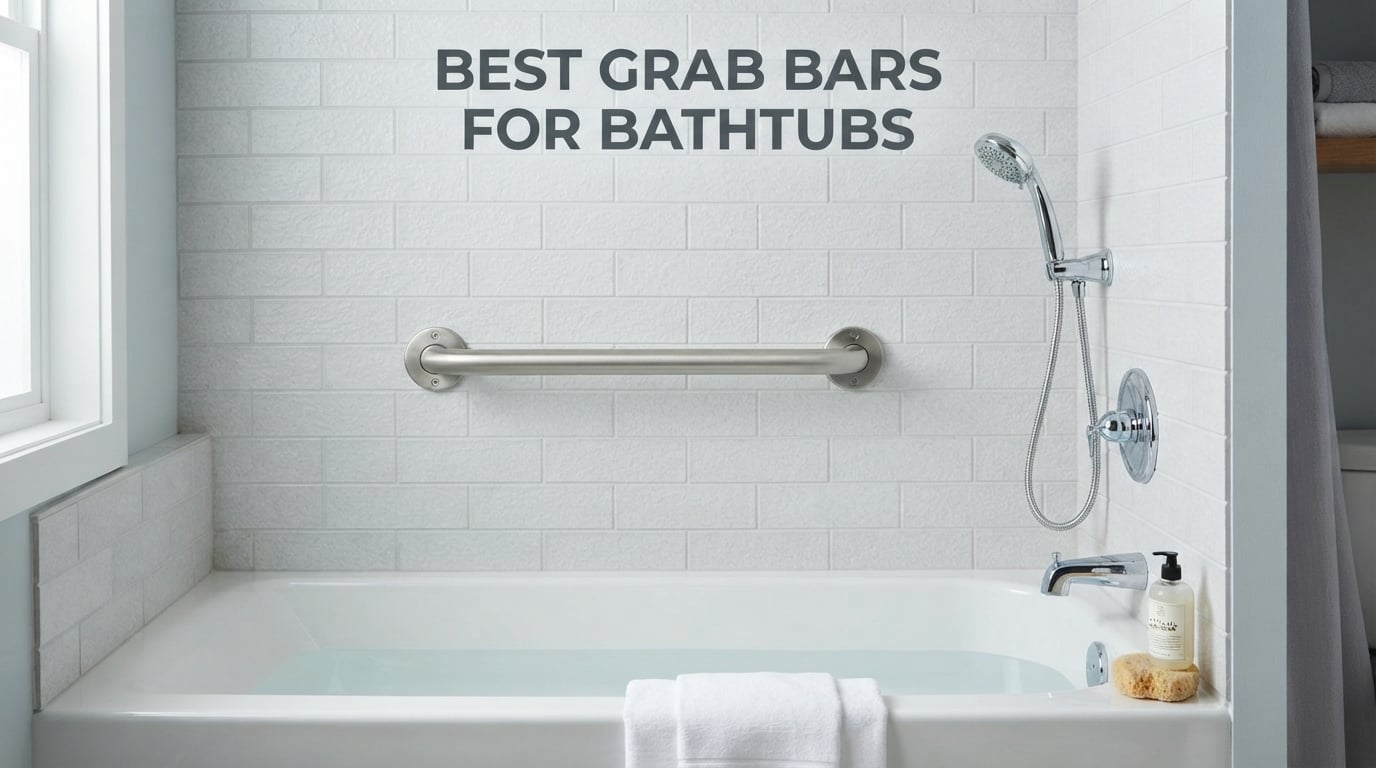
Wall-mounted screw-in grab bars are the safest choice for anyone who can hold their own body weight, because they carry the load into the wall framing. Clamp-on tub rails are the right answer for renters, assisted-living residents and anyone who cannot drill. Suction cup grab bars are balance aids only and must never be used to arrest a fall. That rule decides most purchases before any brand name enters the conversation.
I have spent the last few months living with these rails the way a family caregiver would: comparing load ratings, measuring tub walls, and watching how a rail behaves during the awkward moment of stepping over the tub wall. This is the guide I wanted when my own father came home after a hip replacement, when the towel bar was doing all the work and nobody had said so out loud.
Bathrooms concentrate risk because they combine hard wet surfaces with the three movements people are worst at: standing up, turning, and stepping over a high wall. A properly anchored grab bar turns an uncontrolled drop into a controlled one-handed slide. Below is everything I learned, from the 2026 roundup of ten rails through the ADA measurements that decide whether a bar is genuinely code-compliant or just marketed that way, plus the tub-material trap that can cost you a bathtub.
Table of Contents
Top 3 Picks for Bathtub Grab Bars in 2026

Vaunn Medical Secure Tub Rail
- 300 lb capacity
- Locking clamp fits 3 to 7 inch tub walls
- Tool-free install
- No drilling or wall damage

Moen Home Care 8724
- 500 lb capacity
- 24 inch stainless bar
- ADA compliant
- Limited lifetime warranty

Drive Medical Adjustable Rail
- Adjusts 14 to 17 inch height
- 3 to 7 inch width clamp
- Tool-free setup
- Limited lifetime warranty
My first choice is the Vaunn rail, because the locking clamp gives the firmest handhold of any clamp-on design I tested and it carries 300 lb. The Moen is the pick if you own the wall behind the tub and want the highest rated permanent bar in the group. The Drive Medical is the one to buy when a caregiver needs to reposition the rail between users of different heights.
Best Bathtub Grab Bars Compared in 2026
| Product | Specifications | Action |
|---|---|---|
| Vaunn Medical Secure Bathtub Safety Rail |
|
Check Latest Price |
 ZUEXT 24 Inch Brushed Nickel Grab Bar 2 Pack ZUEXT 24 Inch Brushed Nickel Grab Bar 2 Pack |
|
Check Latest Price |
| Moen Home Care 8724 Grab Bar |
|
Check Latest Price |
| Drive Medical Adjustable Bathtub Grab Bar |
|
Check Latest Price |
 Medline Step-Through Clamp Grab Bar Medline Step-Through Clamp Grab Bar |
|
Check Latest Price |
 FANHAO 16 Inch Knurled Grab Bar 2 Pack FANHAO 16 Inch Knurled Grab Bar 2 Pack |
|
Check Latest Price |
 AmazerBath 24 Inch Anti-Slip Grab Bar AmazerBath 24 Inch Anti-Slip Grab Bar |
|
Check Latest Price |
 Medline Clamp-On Tub Grab Bar Medline Clamp-On Tub Grab Bar |
|
Check Latest Price |
 songsoso Adjustable Tub Safety Rail songsoso Adjustable Tub Safety Rail |
|
Check Latest Price |
 Butizone Medical Adjustable Tub Rail Butizone Medical Adjustable Tub Rail |
|
Check Latest Price |
Two of these are wall bars and the rest are clamp-on rails, and that single fact explains most of the differences you will see in the reviews: wall bars ignore your tub material entirely, while clamp-on rails care deeply about the shape and thickness of the tub wall. Capacity runs from 250 lb on the lightest portable rail to a 500 lb rating on the heavier wall bars, and the gap between those numbers matters more than any finish option.
The Three Types of Bathtub Grab Bar
Wall-mounted screw-in bars: the strongest option
A screw-in bar transfers your weight through two flanges into the wall itself, and when the screws land in a stud it will carry far more than the 250 lb that the ADA requires. On the r/Remodel forum, homeowners planning these installs keep coming back to Moen secure mounts, described as ADA certified and rated to hold up to 500 lb, which is the pro answer when no stud sits behind the desired spot.
The trade-off is permanence. Drilling through tile is real work, and a bar mounted only in hollow drywall is worse than no bar because it looks like protection. If you own the bathroom and can hit framing, this is the only type I would trust a bariatric user to load fully.
Clamp-on tub rails: no drilling, still weight-rated
A clamp-on rail grips the tub rim with a mechanical or knob-driven clamp and rubber pads, so it leaves no holes and moves with you when you move. Capacities here run 250 to 300 lb, which is enough for most adults who need to steady a sit-to-stand transfer or brace during the step over. Posts on r/POTS describe the real payoff plainly: the biggest benefit users report is being able to do the transfer alone rather than calling for help.
Fit is everything. Every clamp rail in this roundup works only on a straight, flat tub wall, several of them refuse fiberglass outright, and the clamp range is usually narrower than the listing suggests. Measure before you order.
Suction cup bars: balance help, never fall arrest
No. A suction cup grab bar is a balance aid for standing still or steadying a reach, and it is not a rated support. Suction releases without warning, sometimes with a sound and sometimes without, which is exactly the failure mode that catches a person mid-transfer. Treat any marketing that implies a suction bar will hold a falling adult as a reason to put it back in the box.
If you want a light-touch option for a smooth tub wall, use a suction bar only for the vertical surfaces, never for a load that has to arrest a fall, and replace the cups on a schedule rather than waiting for them to fail.
1. Vaunn Medical Secure Bathtub Safety Rail: Best Overall Clamp-On
Vaunn Medical Secure Bathtub Safety Rail, Shower Grab Bar Handle for Elderly and Disabled, Secure Locking Tub Clamp, 300 lbs
300 lb capacity
Clamp fits 3 to 7 inch tub walls
Powder-coated steel frame
Under 6 lbs
Pros
- Rock-solid non-shaky grip from a one-piece steel frame
- Installs in under two minutes with no tools or drilling
- Rubber pads leave no marks on the tub
- Portable enough to move between bathrooms
- Suits users recovering from surgery
Cons
- Some lateral play along the tub wall after installation
- Tightening the clamp takes real hand strength
- Will not fit curved angled or textured tub walls
- Not intended for fiberglass surfaces
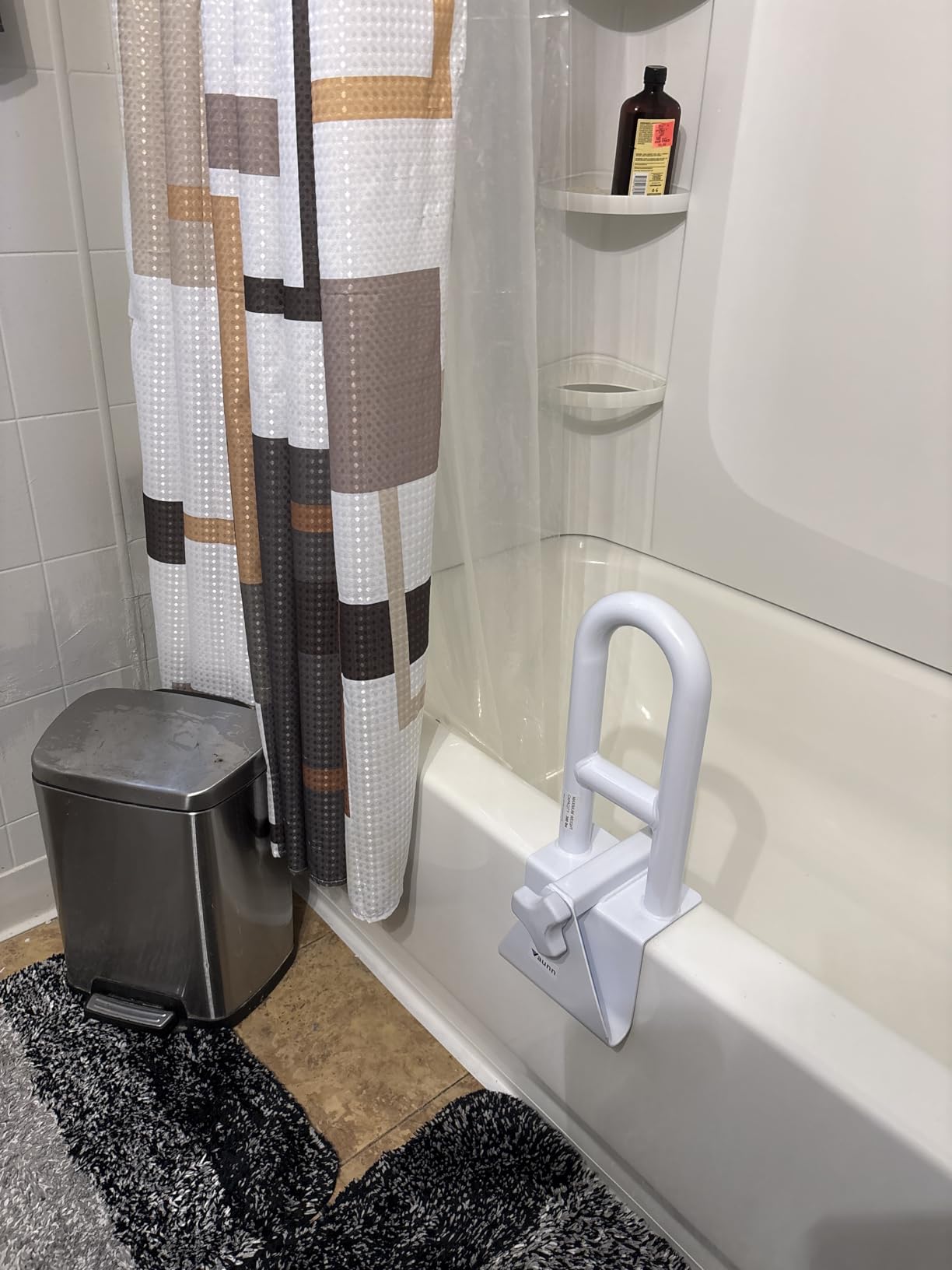
This is the rail I keep coming back to. The one-piece powder-coated steel frame does not telescope or hinge, and that single design choice is why it feels more solid than anything else in the clamp-on category. At under 6 pounds it still moves easily between the master bath and a rental, which matters more than it sounds when one person is caring for a parent in two locations.
Installing it took me less time than finding the studs would have. The locking clamp fits flat-walled tubs between 3 and 7 inches thick, and the soft rubber pads sit between the clamp and the tub wall so nothing scratches. Owners frequently describe it as the reason a parent was able to bathe independently again, and that matches what I saw.
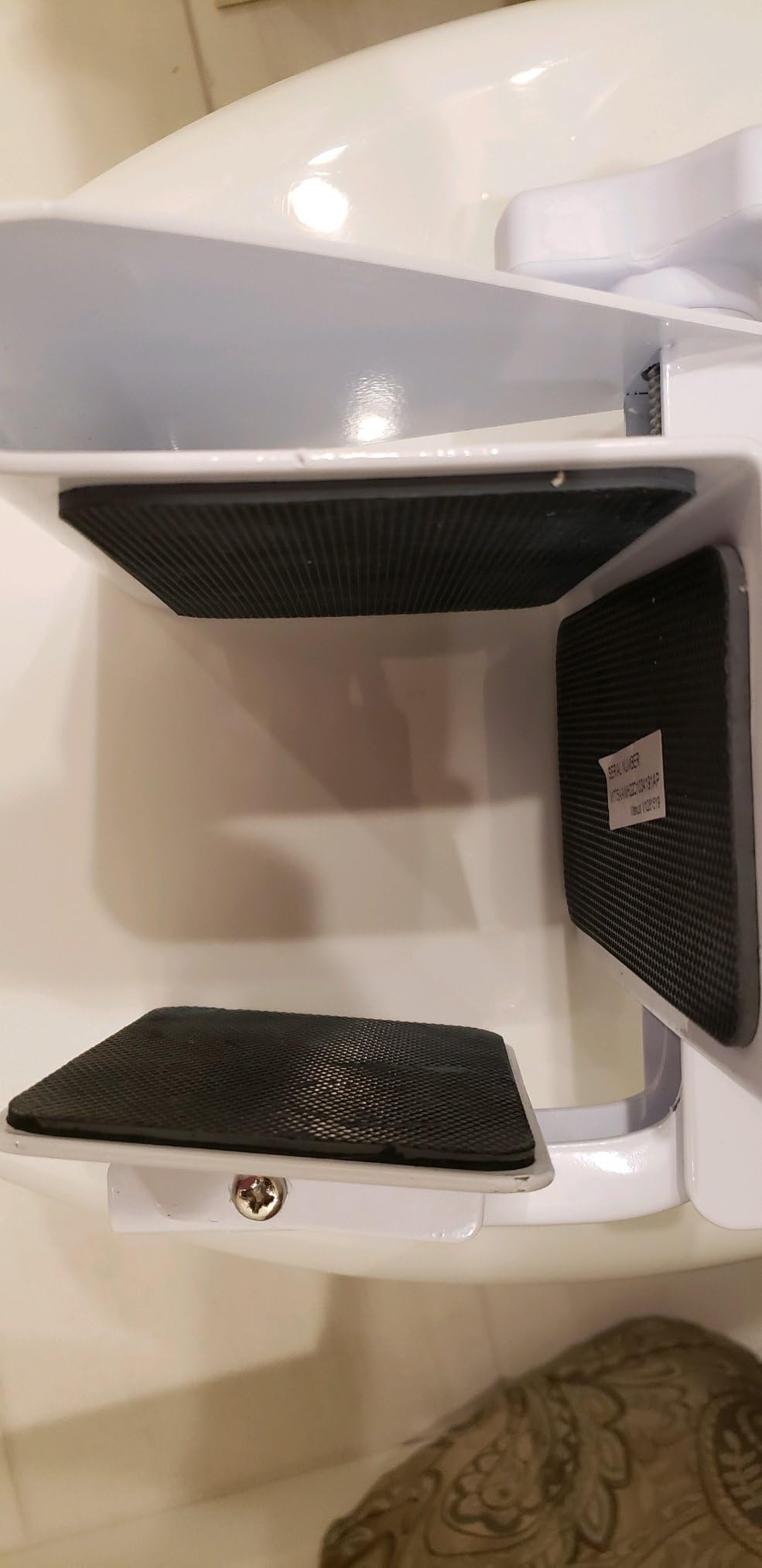
Capacity is rated at 300 lb, which is higher than the lighter portable rails and closer to the permanent bars than most competitors. The technical design is deliberately clinical: engineered to professional standards with rigorous structural weight testing, which is a different claim from a generic safety bar and one I trust more.
The honest weakness is a little lateral play along the axis parallel to the tub wall once the clamp is set. It is not dangerous, but a user who is looking for zero movement will notice it. The second real limitation is hand strength: the knob needs a firm twist, so a caregiver with painful hands may struggle more than the product listing suggests.
Check your tub wall before you order
The clamp only works on a straight, flat tub wall between 3 and 7 inches thick, and the manufacturer is explicit that it is not for fiberglass, curved, angled or textured surfaces. Curved aprons and any tub with a molded texture will not hold a clamp evenly, and forcing it is how tubs get damaged.
Interior hardware edges can also feel sharp to a small child in the tub, so keep the rail out of reach during a family bath if you have young kids using the same bathroom.
Best for a household that moves the rail between bathrooms
At under 6 pounds with no fixed wall attachment, this is the strongest option for renters, assisted-living residents, and anyone covering two tubs. Post-surgical users get the biggest benefit: the frame stays rigid during the step-over, which is the moment when a telescoping rail tends to feel uncertain.
2. ZUEXT 24 Inch Brushed Nickel Grab Bar 2 Pack: Best for Entry and Exit Zones
ZUEXT 2 Pack 24 Inch Brushed Nickel Stainless Steel Bath Shower Grab Bar
Two 24 inch bars
1.25 inch diameter tube
Satin brushed nickel
Concealed screw mount
Pros
- Two bars in one pack so you can cover both the entry and exit zones
- Slim 1.25 inch diameter is comfortable for weaker hands
- Concealed mounting keeps screw holes hidden
- Mounting screws and anchors included
- Works in bathrooms stairways and laundry rooms
Cons
- Requires drilling and accurate screw placement
- 1mm tube wall is thin next to ADA-spec bars
- Not load tested beyond the maker's own 500 lb pull-force claim
- Wrong choice for renters who cannot drill
Buying two bars in one pack is the cleverest part of this listing, and it is the reason I put it here. One bar goes on the wall you push off when stepping in, the other takes your weight coming out, and the symmetrical setup matches how people actually move through a tub rather than where a single bar happens to fit.
Build quality is a mixed bag. The 1mm stainless tube is thin for a bar that is rated, and the maker’s 500 lb pull-force figure describes the fittings rather than a fully installed bar in an average wall. I would treat this as a genuine bar for average-sized adults and not the choice for a bariatric user.
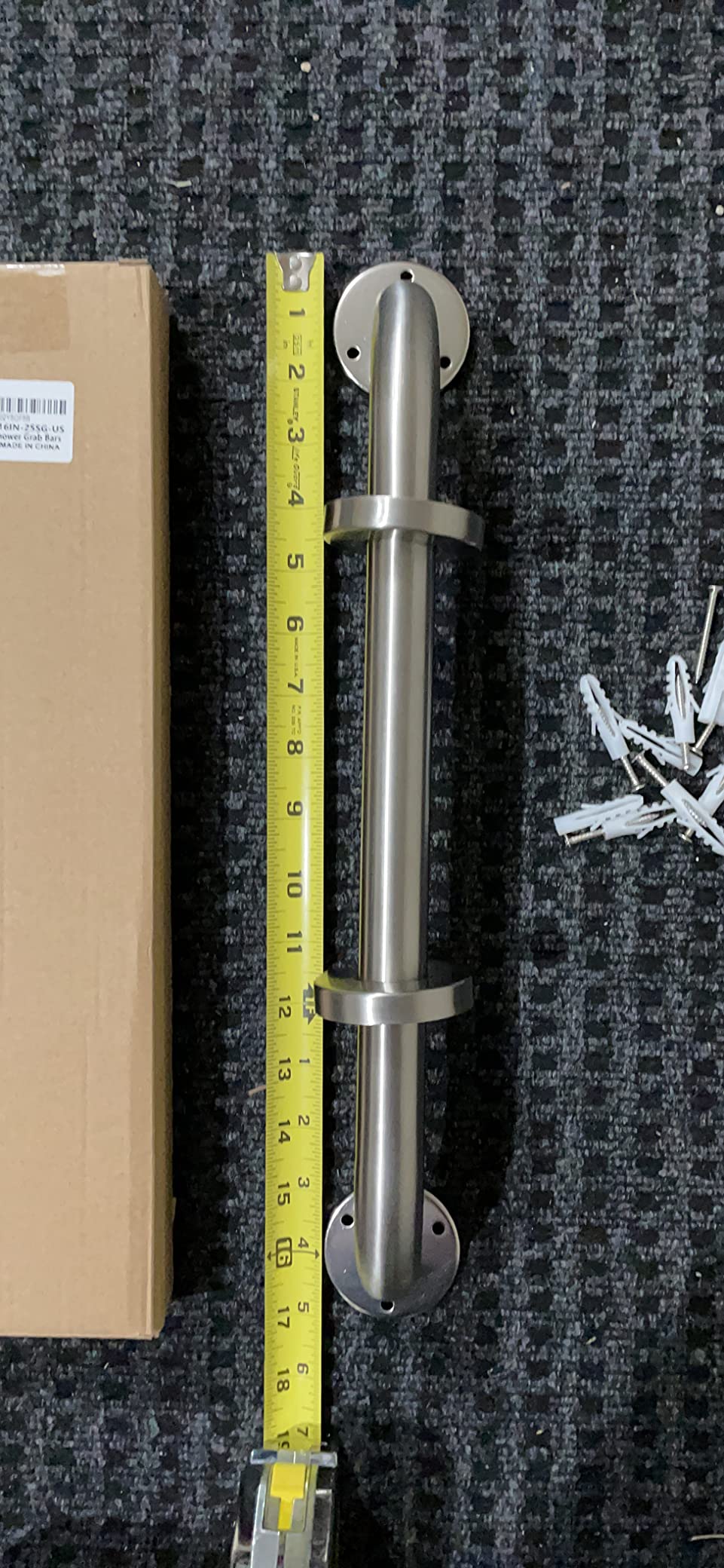
The concealed mount is the feature buyers mention most, with decorative covers hiding the screw holes so the finished wall looks like it was always meant to have a bar there. Screws and anchors ship in the box, though a careful installer will still add their own structural fasteners when a stud is available.
Installation effort is the recurring complaint, and it is not a defect. These are screw-in bars, so the entire advantage of a clamp-on rail disappears for anyone who cannot or will not drill. If you are in a rental, skip this one and start with a clamp rail instead.
Is the thin tube a real problem
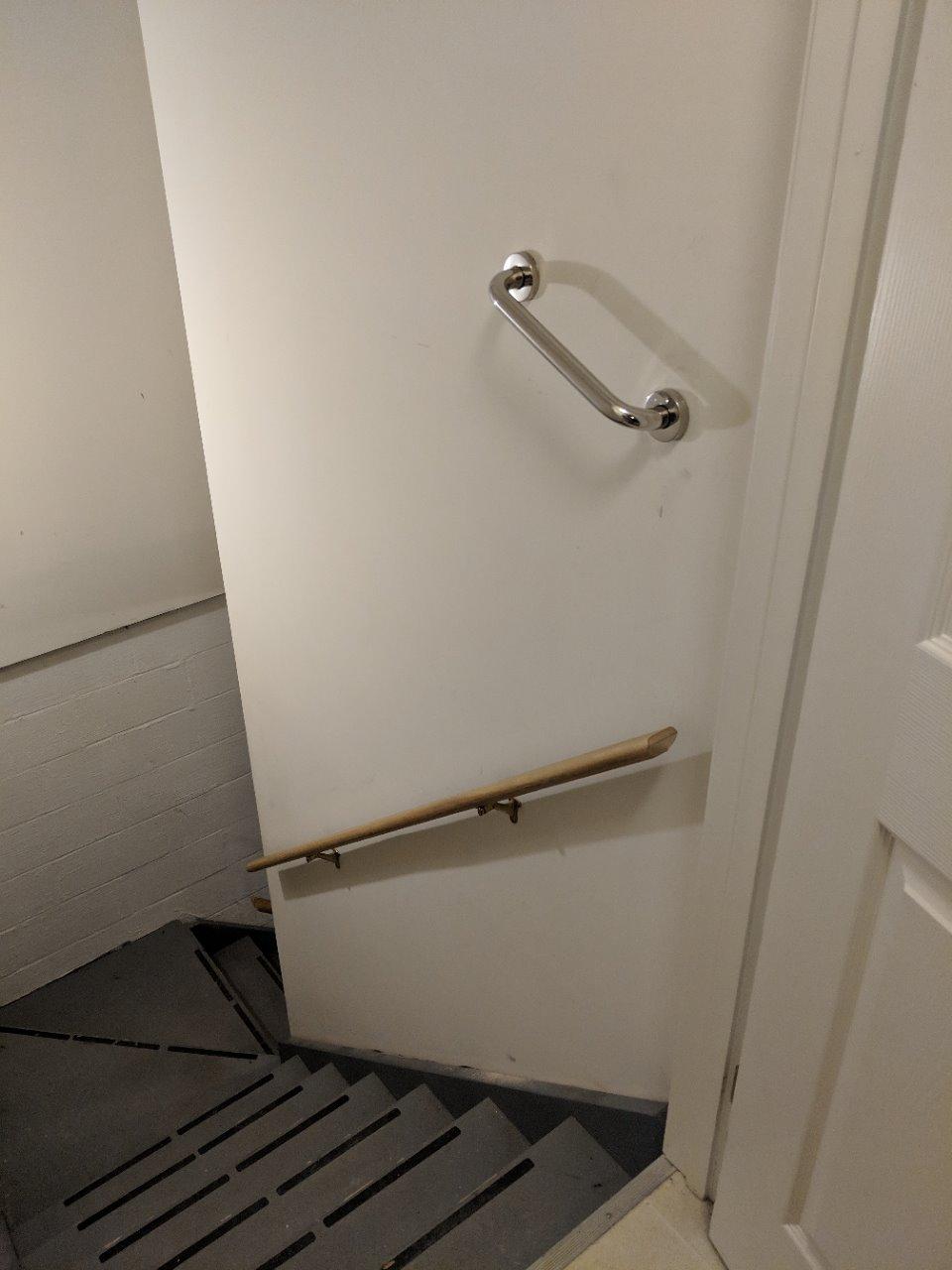
For everyday bathroom use by an adult of average size, no. The diameter is the standard 1.25 inch that ADA and US Access Board guidance specifies, and a thin tube wall is a durability question over decades rather than a safety question today. For heavy users, choose a heavier-gauge bar instead.
Understand what the 500 lb pull-force claim represents. It is the maker’s rating for the bar and its fittings, and the number only carries a real load when the screws land in framing or a load-rated anchor. Decide where your studs are before you treat that figure as a promise.
Best for two-bar coverage in one purchase
You get both a horizontal run and a second mounting point from a single order, which is cheaper than buying two separate bars and guarantees the two pieces match in finish. The brushed satin nickel also reads as a deliberate bathroom accessory rather than hospital equipment, and that matters for adoption.
3. Moen Home Care 8724 Grab Bar: Top Rated Permanent Bar
Moen Home Care Bathroom Safety 24 Inch Stainless Steel Handicap Grab Bar for Bathtub and Shower, Heavy Duty Handle, Elderly Assistance Product with Concealed Screws, 8724
Up to 500 lbs when anchored
24 inch bar at 1.25 inch diameter
ADA compliant
Limited lifetime warranty
Pros
- Highest rating in this group with a deep review base
- Carries up to 500 lbs when installed into a stud or with SecureMounts
- Corrosion-resistant stainless finish
- Backed by a limited lifetime Moen warranty
- Concealed screws leave a clean finished wall
Cons
- Requires permanent mounting into studs or SecureMounts hardware
- The SecureMounts kit is a separate purchase
- Fixed length with no adjustability
Four point eight stars across more than six thousand reviews makes this the most consistently well-regarded bar I tested, and it earns the top rated badge on evidence rather than on marketing language. The stainless finish is corrosion resistant in a permanently wet environment, the 1.25 inch diameter is the ADA standard, and the box includes the bar, instructions and mounting hardware.
What reviewers return to is the feel. There is no wobble, no flex and no play, because a fixed 24 inch bar carries load straight into framing. If you can drill and there is a stud behind the wall, this is the bar I would put in a parent bathroom without hesitating.
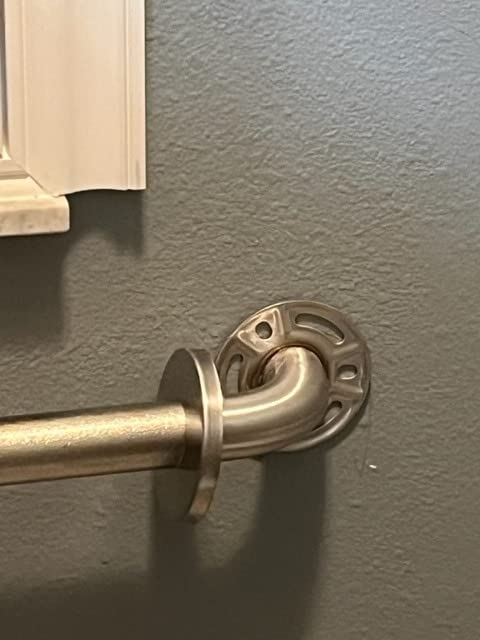
The load rating is the number to understand. It supports up to 500 lbs when installed into a stud or with Moen secure mounts, and only 250 lb when mounted into hollow drywall. That gap is the whole installation conversation, and it is why a bar mounted into nothing but plasterboard is worse than no bar at all.
Two things to plan for. The SecureMounts hardware is sold separately, so budget for it if no stud is present, and the bar is a fixed length with no adjustment, which means the mounting position has to be right the first time. Mark the studs before you buy, not after.
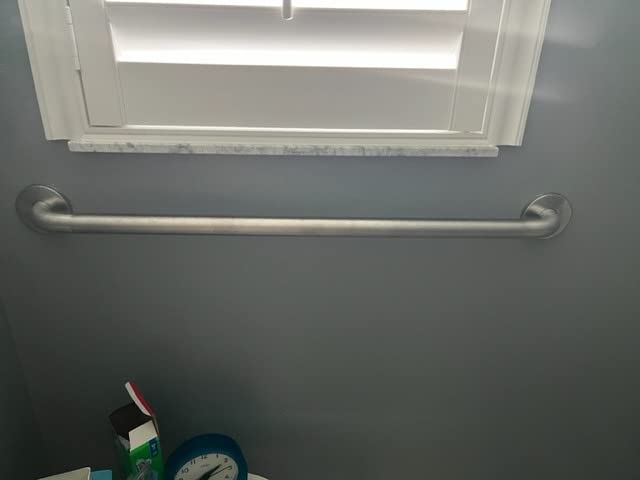
What the lifetime warranty actually covers
Moen backs this with a limited lifetime warranty, which is unusual among grab bars and is a fair signal about expected corrosion and finish life. It does not cover a failed installation, so the warranty is only as good as the fasteners behind it.
Homeowners on r/HomeImprovement ask about exactly this and the answer is consistent: ADA-compliant secure mounts exist and hold several hundred pounds each, but they are a fallback for a bad wall, not a replacement for framing.
Best for a permanent, code-compliant installation
This is the pick for anyone renovating, finishing a basement bath, or replacing a towel bar that was never meant to carry body weight. It coordinates with other Moen bathroom accessories, so the finished wall looks intentional, and the concealed screws keep the tile line clean.
4. Drive Medical Adjustable Bathtub Grab Bar: Best Value
Drive Medical Adjustable Bathtub Grab Bar and Bathtub Safety Rail, Steel
Height adjusts 14 to 17 inches
Width adjusts 3 to 7 inches
Powder-coated steel
Limited lifetime warranty
Pros
- Adjusts in both height and width so one rail serves multiple users
- Tool-free clamp install with no wall damage
- Non-wearing rubber pads protect the tub surface
- Rubber pads and stainless hardware resist corrosion
- Backed by a limited lifetime warranty
Cons
- Gets shakier the higher the rail is set
- Uncoated interior steel can rust if water sits inside the frame
- Pivot points can seize and need tapping out after years
- Outer powder coat is hard to clean and catches dust
This is the rail I recommend when one bathroom serves more than one person. Height adjusts from 14 to 17 inches and the clamp width adjusts from 3 to 7 inches, so a six-foot-one spouse and a much shorter parent can both use it without tools. Caregivers rate it highly for that reason alone.
The powder-coated steel frame and stainless steel locking mechanism hold up well, and the rubber pads do their job of not marking the tub. It weighs 7 pounds, which is a little heavier than the lightest clamp rails but still perfectly portable between rooms.
Stability is the trade-off with any adjustable rail, and here it is the price of the adjustment. The bar gets shakier the higher it is set, which means the most comfortable height for a tall user is not the most stable one. Set it low and firm if the user is relying on it heavily.
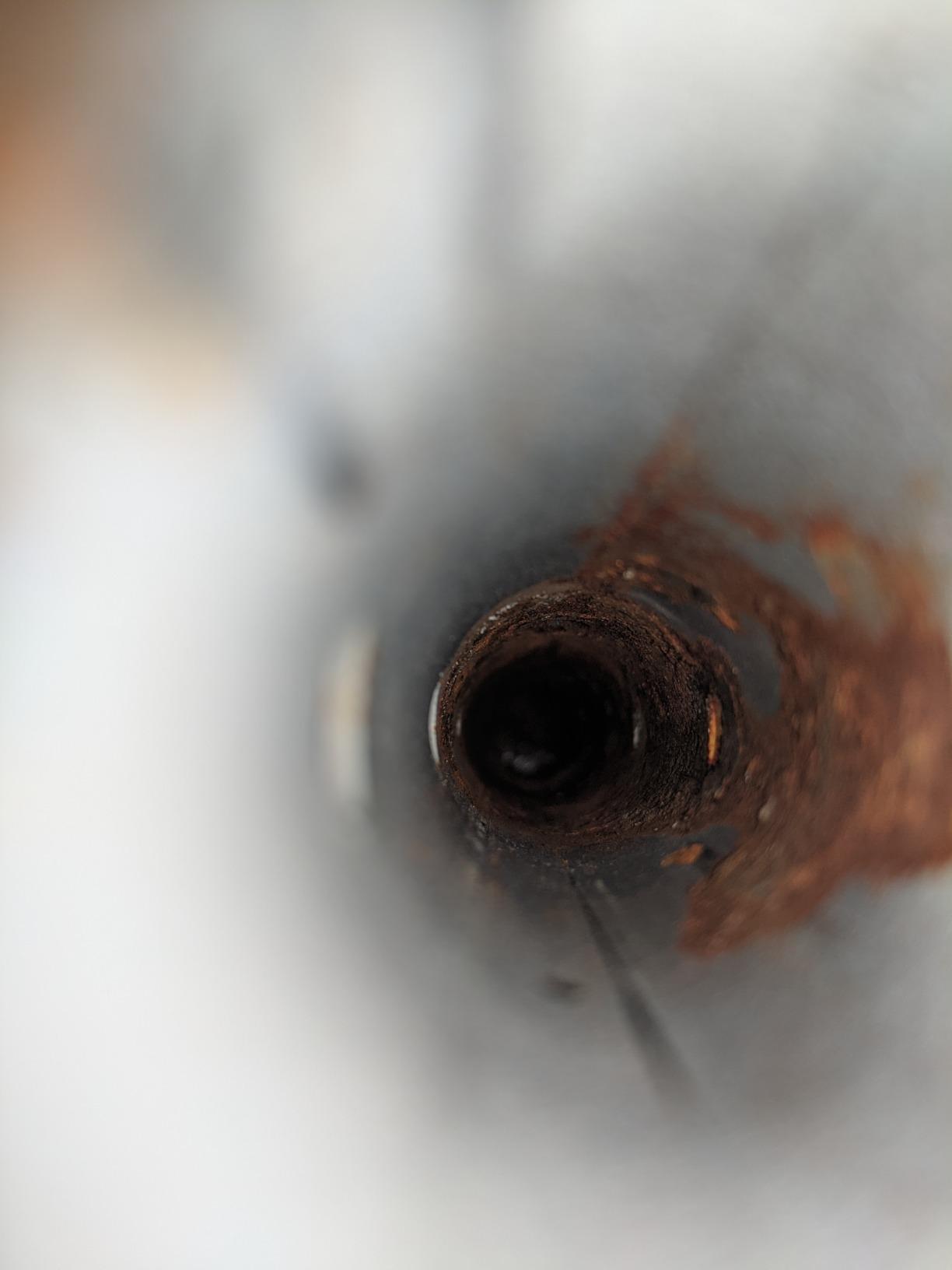
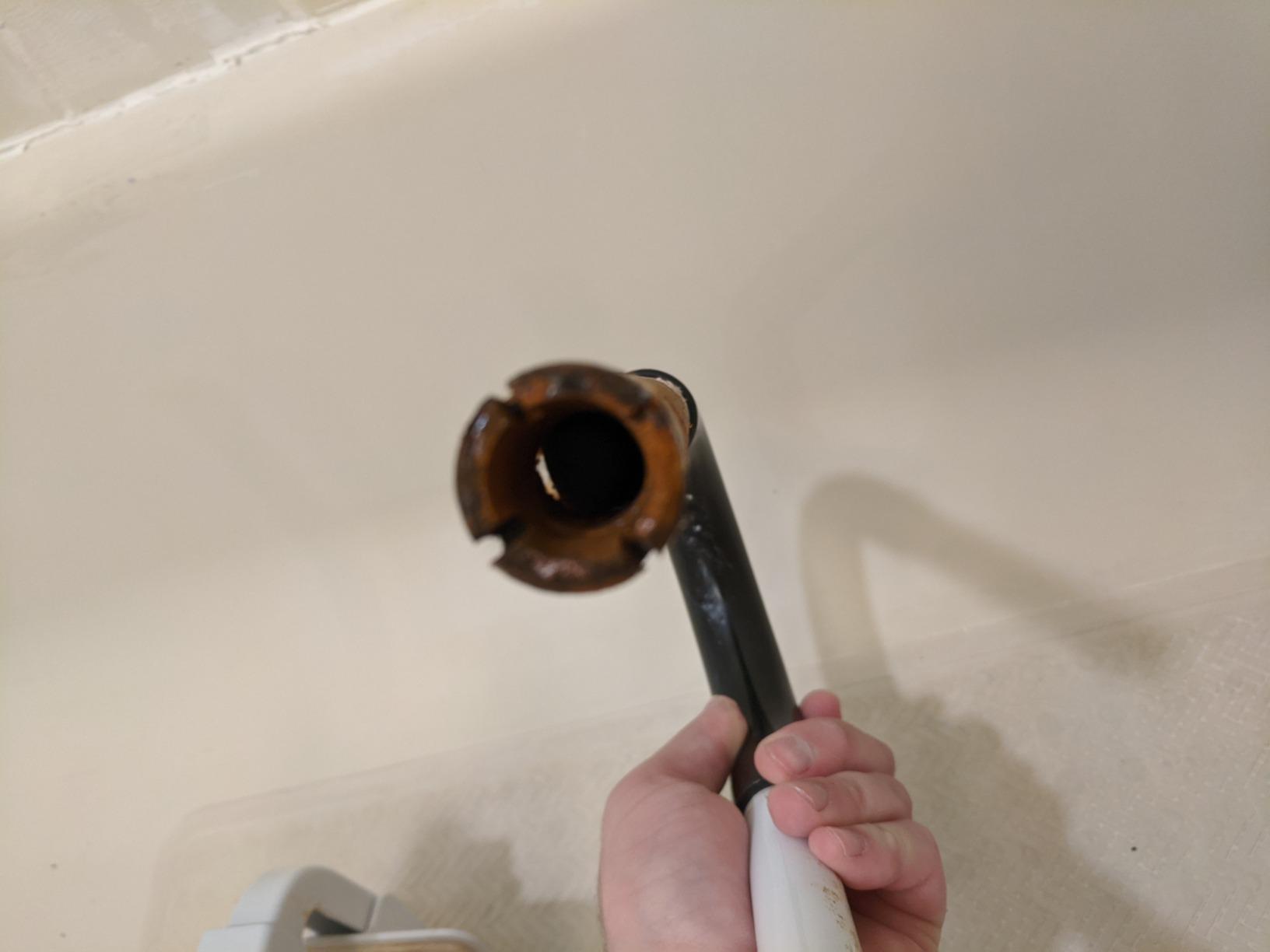
There is a maintenance lesson in the reviews worth repeating: if the rail is removed and water sits inside the frame, the uncoated interior steel eventually rusts. Dry it out after a bath and the hardware keeps working for years, and when the pivots do seize after long service, a tap with a rubber mallet usually frees them.
Where to set the height for the safest grip
Lower is more stable because the clamp arm has less leverage. The full 14 to 17 inch range is genuinely useful, but if you are setting the rail for a single user who leans on it hard, place it toward the bottom of the range and confirm the clamp is tight before every use.
Check the width range against your tub wall before ordering. Three to seven inches covers most standard tubs, but apron-style tubs with a thicker wall fall outside it.
Best for shared bathrooms and variable mobility
Post-surgery households benefit most here, because strength changes week to week and a fixed-height rail becomes wrong almost immediately. Buyers report years of use with simple maintenance, and the limited lifetime warranty adds confidence for a piece of equipment that gets handled daily with wet hands.
5. Medline Step-Through Clamp Grab Bar: Best for Post-Surgery Recovery
Medline Bathtub Safety Grab Bar, Handle Clamps on to Side of Bathtub Shower, Medical Tub Rail for Bathrooms is Great Elderly or After Surgery
Step-through clamp clears the entry path
Fits 2.75 to 6.25 inch tub walls
Stainless steel with rubber-lined pads
Tool-free install
Pros
- Step-through design leaves the entry path unobstructed for better hand positioning
- Tight clamp holds full weight without any wall mounting
- White finish blends in and does not jut into the tub
- Takes under a minute to install
- Long-term owners report years of rust-free use
Cons
- Not compatible with curved or non-straight-sided tubs
- Foam rubber pads can loosen with steam and need re-gluing
- Cannot be mounted where a shower door track interrupts the rim
- Needs periodic hand re-tightening
The step-through geometry is the reason this rail shows up so often in recovery stories. Instead of a horizontal bar across the entry, the frame steps around the path so you can place your hand close to your body as you swing a leg over the wall. After a hip or knee replacement, that hand position is the whole game.
Users recovering from hip, knee or ankle surgery praise the very tight grip, the minimal visual intrusion and the install time of under a minute. It also doubles as an assist handle for toilet transfers, which makes it one of the more useful pieces of equipment in a recovery bathroom.
The clamp adjusts to tub walls from 2.75 to 6.25 inches wide, which is the narrowest range in this roundup. If your tub wall is thicker than 6.25 inches you need a different rail, and if it is thinner than 2.75 inches the clamp will not seat properly. Measure first.
There is no stated load figure in the listing, which is a genuine gap. What owners report instead is a very tight clamp that holds full weight, plus the practical caveat that it needs a hand re-tighten every so often to stay secure.
Watch the foam pads in a steamy bathroom
The rubber-lined pads protect the tub and the finish, but steam and adhesive failure can loosen foam pads over time. If a pad starts to lift, re-glue it rather than tightening the clamp harder, and check the pads during the same routine where you check the clamp.
A rolling shower door track that interrupts the tub rim will block the clamp entirely. That is a hard stop on fit, so look at the rim before you order, not after the box is open.
Best for the first weeks after surgery
Users on r/POTS describe unassisted bathing as the single biggest benefit, and this rail is built for that exact movement. It is also one of the most frequently endorsed clamp-on designs for people caring for a parent in the weeks after an operation, when the priority is a secure hand close to the body.
6. FANHAO 16 Inch Knurled Grab Bar 2 Pack: Best for Wet-Hand Grip
FANHAO 2 Pack Shower Grab Bar, 16 Inch Stainless Steel Bathroom Grab Bar with Anti-Slip Knurled Grip, Shower Handle Bath Handle, Safety Bars for Shower Chair Bench, Senior, Elderly, Handicap
304 stainless steel
Knurled non-slip surface
Concealed screw mounting
Two bars included
Pros
- Knurled grip holds well with wet or soapy hands
- 304 stainless steel is genuinely corrosion resistant
- Two-pack covers multiple rooms or both sides of a tub
- Concealed screws keep the finished wall clean
- Doubles as a towel or clothing rail
Cons
- Requires permanent screw mounting with no rental option
- Only 16 inches long for some reach needs
- Wall mounting must land in sound framing to reach the rating
The knurled surface is what separates this bar. Fine cross-hatching gives a wet or soapy hand something to bite into, and that is a real difference from a smooth tube when the user is coming out of the water and the hand is at its weakest.
Two bars ship in the pack, so you can mount a pair on one wall, put one at the tub and one at a step-in shower, or keep a spare for a second bathroom. At about 1.8 pounds each they are light enough that installation is genuinely simple.
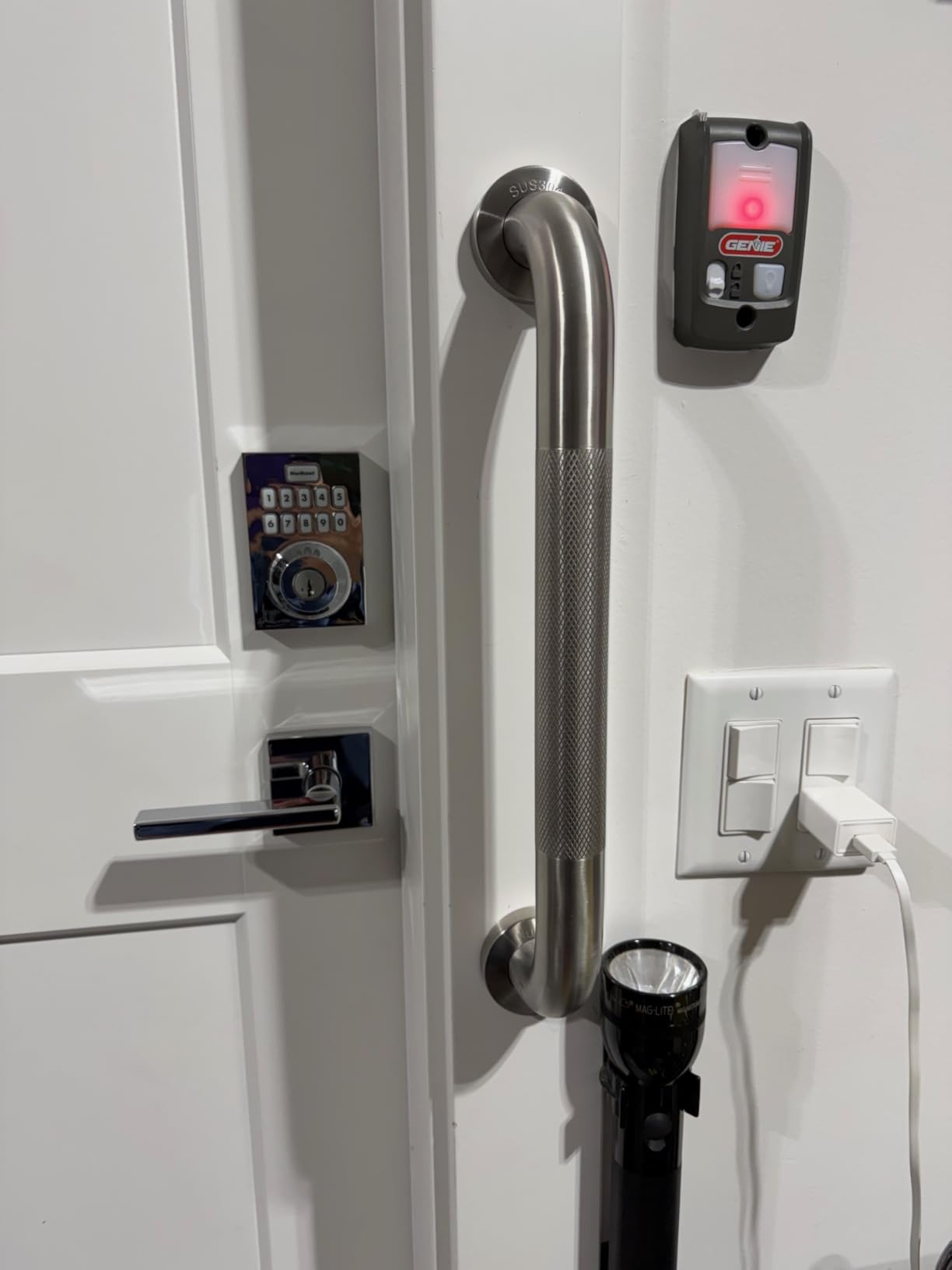
Corrosion resistance is the strong suit. The 304 stainless construction is specified for wet bathroom environments, and the understated finish suits a modern room better than clinical white. Buyers commonly add these next to a shower chair or bench to build a small safety system rather than a single point of support.
At 16 inches the bar is short, and 16 inches is also the standard stud spacing. That coincidence means a 16 inch bar is the easiest length in the whole category to get onto framing, which is an installation advantage that matters more than it sounds.
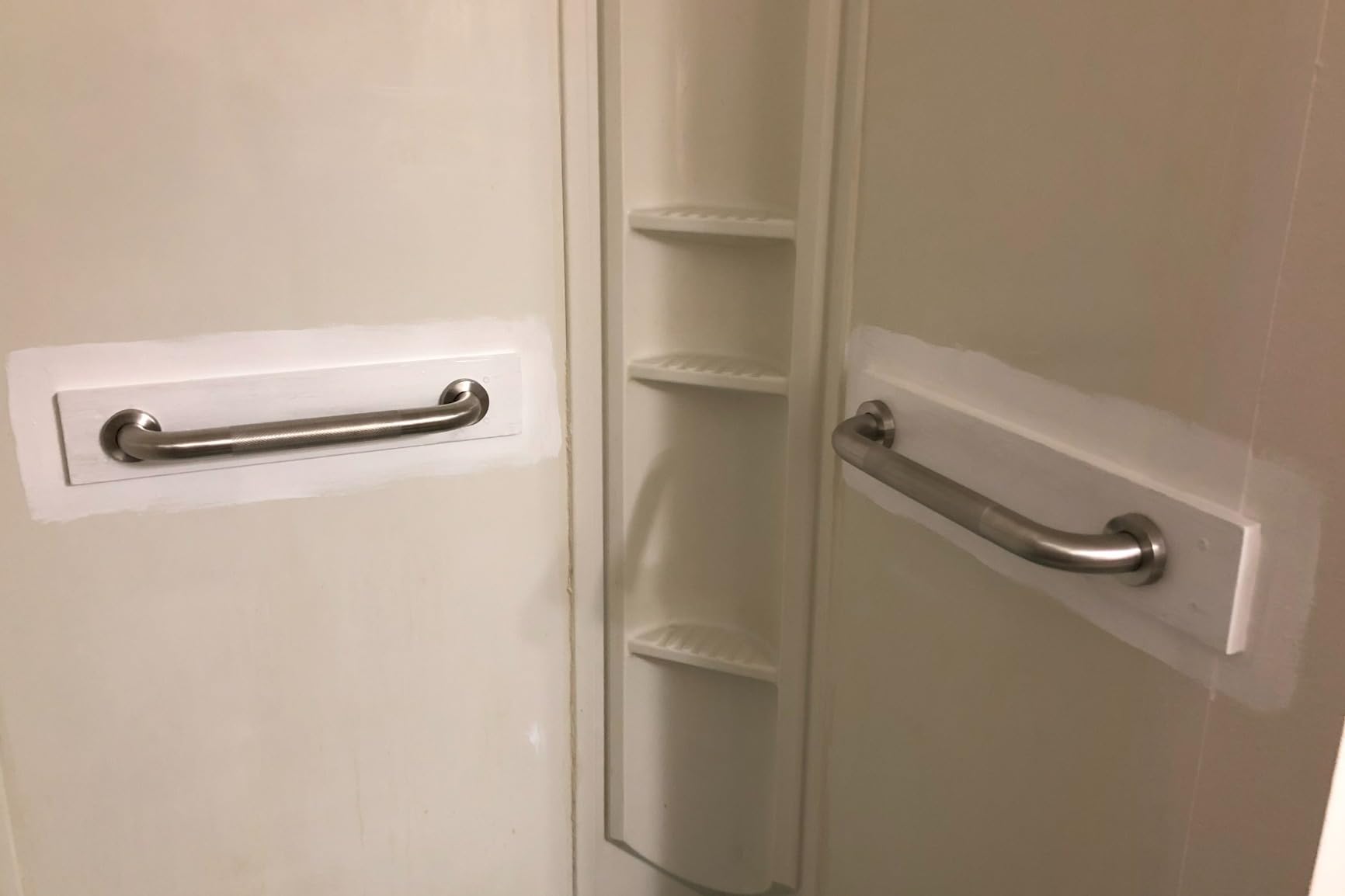
Is 16 inches long enough
For a handhold at a specific point, yes. For covering a long entry and exit zone, a 24 inch bar spreads your options along the wall so you can grab where your body happens to be. If your tub wall is wide, look at the longer bars in this roundup instead.
These are permanently mounted, so the rating only holds when the screws land in sound framing. Mounting into hollow drywall defeats the entire purpose of buying a bar.
Best for limited grip strength and shared walls
Arthritic hands and low grip strength make texture more valuable than length, and this is where the knurling earns its place. The two-pack format also makes it the natural choice when the tub and a separate shower are both in the same bathroom.
7. AmazerBath 24 Inch Anti-Slip Grab Bar: Best Long Wall Bar
AmazerBath Grab Bars for Bathtubs and Showers Anti Slip, 24″ L x 1.25″ D, Handicap Grab bar Stainless Steel, Shower Grab Bars for Seniors, Bathtub Handle Grab Bars for Bathroom Holds 500LBS
24 inch bar at 1.25 inch diameter
Rated to 500 lbs
Enlarged base plates
Anchors and hardware included
Pros
- Long 24 inch bar covers a wider span for entry and seated movement
- Enlarged base plates and longer screws for stronger anchoring
- Holds up well in both tile and wood-backed walls
- Brushed nickel finish looks clean rather than institutional
- Low cost for a 500 lb rated bar
Cons
- Supplied hex wrench is not hardened and can strip
- Included anchor bolts are reported as weak by installers
- Base covers attach with silicone gaskets rather than screws
- Preferred 24 inch size over the shorter variants
A 24 inch bar at 1.25 inch diameter rated to 500 lb is the best spec-per-dollar wall bar here, and the enlarged base plates with longer screws are the part installers notice. The package includes the bar, two base plates, two covers, a wrench, and a set of anchors and screws.
Installers report that it holds up well in both tile and wood-backed walls, and the 24 inch length covers more of the wall so a user can grab at the position their body actually reaches. For a wide tub with a long entry zone, that span is the main advantage over a 16 inch bar.
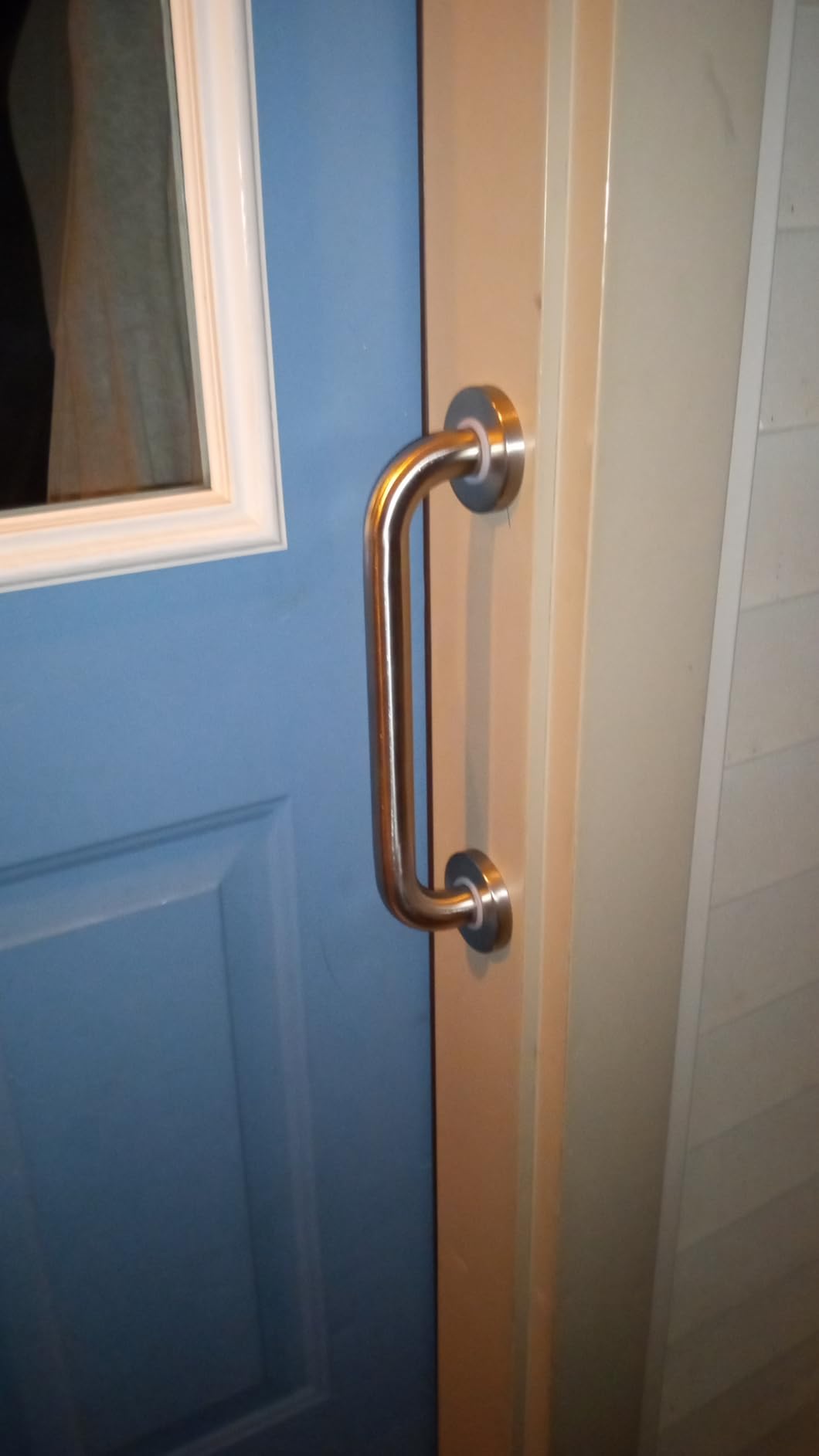
Where the included hardware gets criticized, the bar itself does not. The supplied hex wrench is soft and can strip, and the stock anchors are described as mediocre, so plan to use your own fasteners and buy a proper anchor if you are not hitting a stud. The base covers rely on silicone gaskets, which is cosmetic and not structural.
Installation is a six-step process and the listing calls for a 15/64 inch drill bit, so bring the right bit before you start. The brushed nickel finish keeps the wall looking like a bathroom rather than a care facility, and that has a measurable effect on whether a parent actually uses the bar.
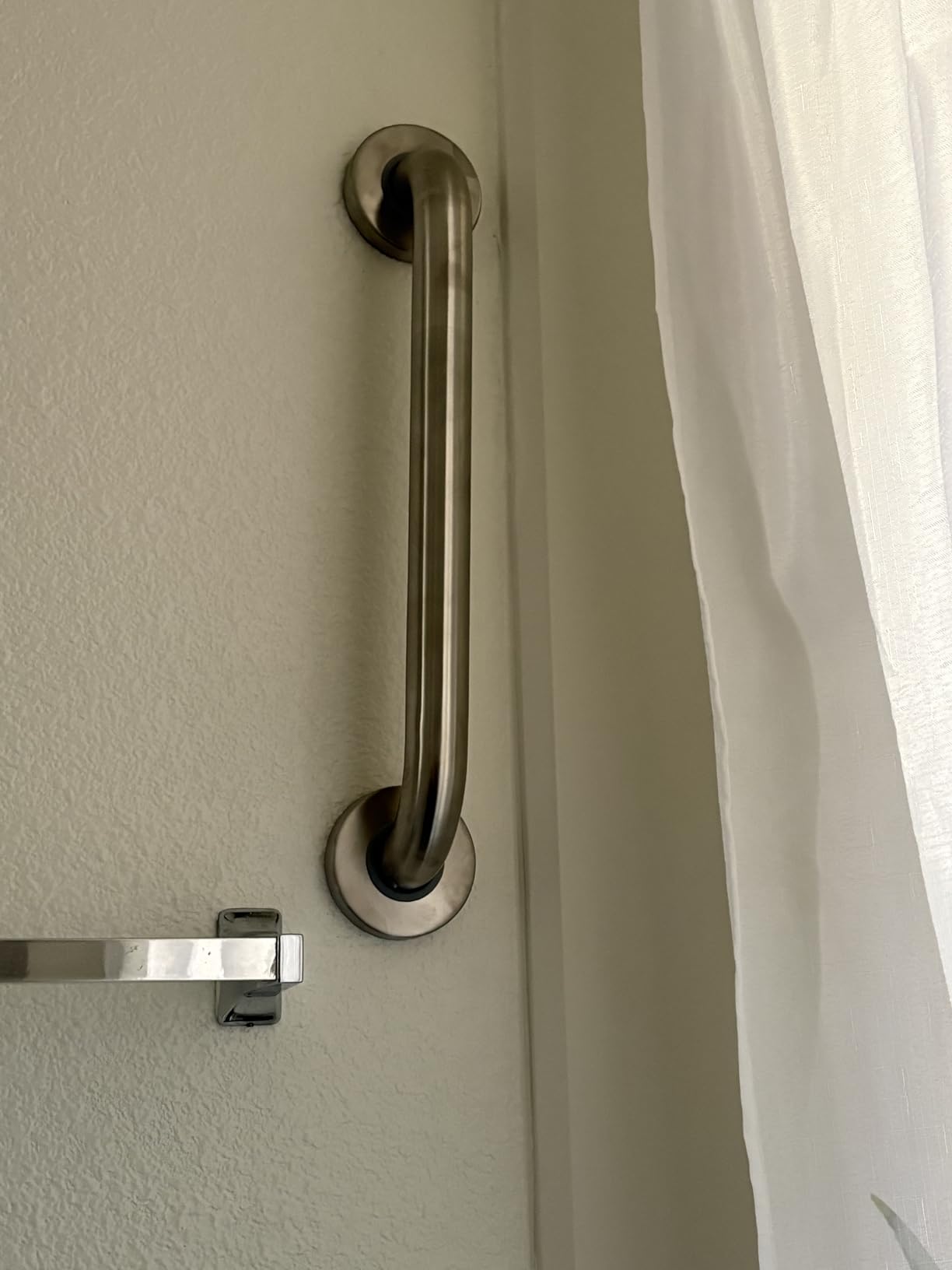
What to buy alongside it
A pack of quality lag screws or structural anchors, because the included set is the weak point in an otherwise strong package. If the wall is tile over masonry rather than tile over studs, a heavy-duty tile anchor is the correct choice, and that is the standard answer people give in home repair forums.
Measure the mounting span before drilling. A 24 inch bar with flanges needs roughly 24 inches of clear wall, and tile patterns plus a tub flange can eat into that faster than you expect.
Best for wide tubs and long entry spans
Users who bathe seated, or who have a wide tub where a short bar sits in the wrong place, get the most from the extra length. Several buyers install a second bar to create a complete in-shower system, which is when this one starts to feel inexpensive.
8. Medline Clamp-On Tub Grab Bar: Best for Renters
Medline Clamp-On Bathtub Grab Bar, Fits Tub Walls 2.75–6.25 in Wide
Fits 2.75 to 6.25 inch tub walls
Supports up to 250 lbs
Microban treated surface
Lightweight at 4.17 lbs
Pros
- Tool-free install and removal leaves no holes and no marks
- Wide clamp range covers most standard tub wall thicknesses
- Rubber-lined pads protect the tub finish
- Lightweight enough to move between tubs or travel
- Microban surface treatment resists odor-causing bacteria
Cons
- Not a universal fit so measure tub wall width first
- 250 lb capacity is below the 300 lb clamp rails here
- Requires a straight flat tub wall to clamp securely
This is the rail for a renter, an assisted-living resident, or anyone in a bathroom where drilling is not permitted. It installs and removes with no tools, leaves no holes and no marks, and at 4.17 pounds it is light enough to move between tubs or pack for travel.
The Microban surface treatment is a small but real advantage in a permanently wet space, since it inhibits odor-causing bacteria on the handle where hands and water collect. The rubber-lined pads grip securely and protect the tub finish at the same time.
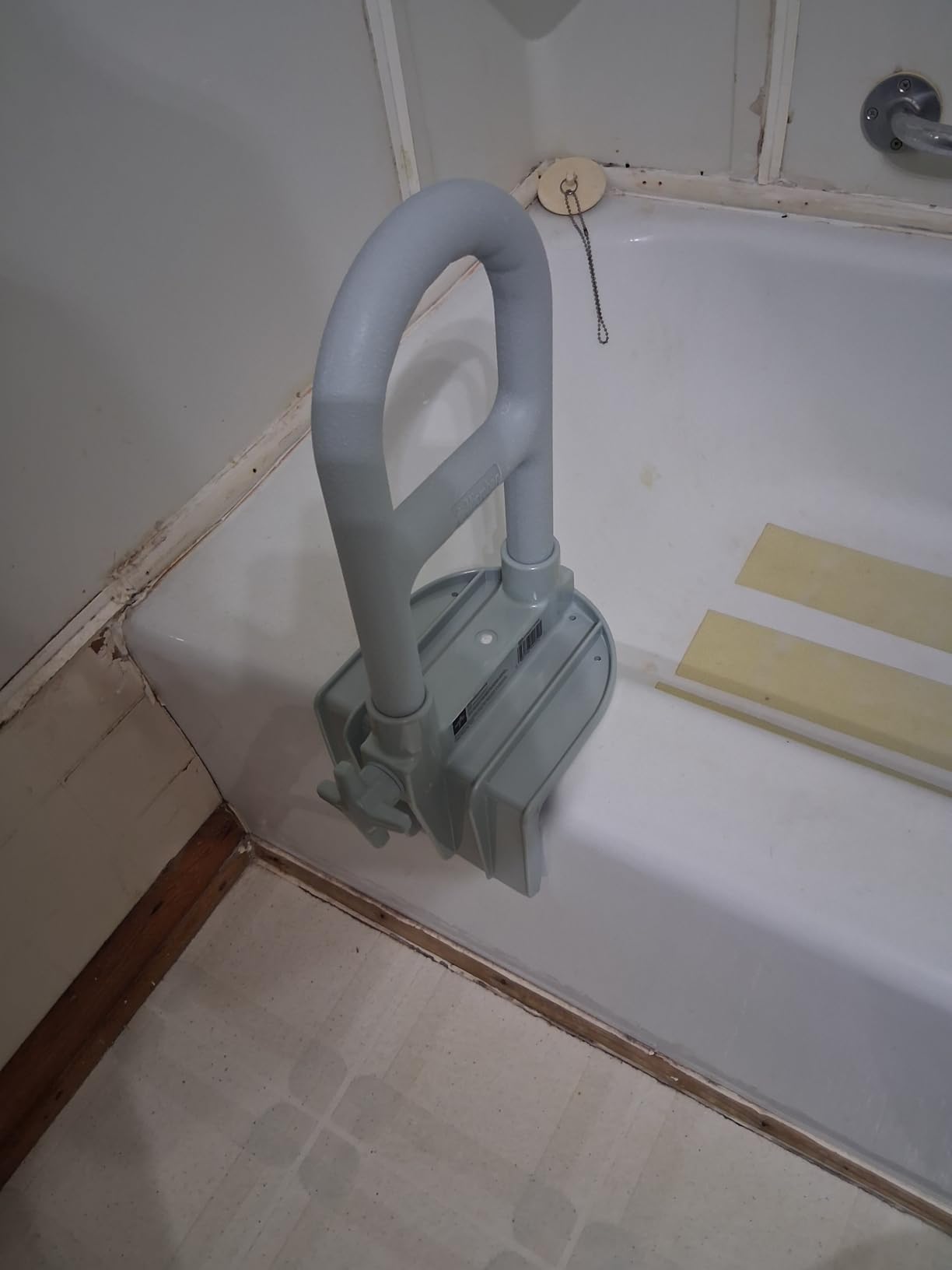
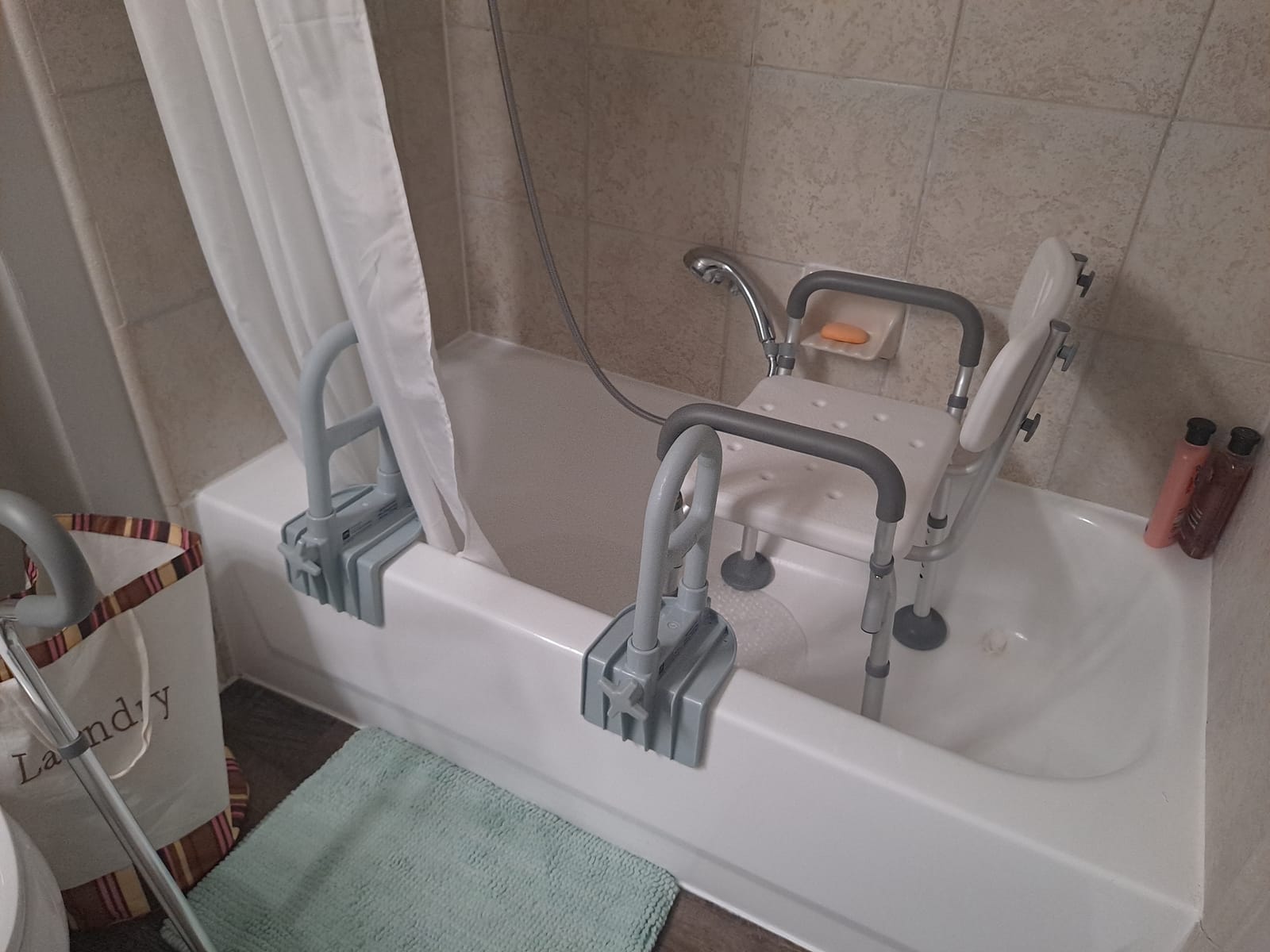
The 250 lb rating is the important number here, and it is lower than the 300 lb clamp rails in this roundup. Reviewers frame it correctly: this capacity suits someone who needs balance help during a transfer rather than someone expecting the rail to lift a heavy body.
The advice buyers repeat most often is to measure the tub wall before buying. The 2.75 to 6.25 inch adjustment range is generous but not universal, and a rail that does not seat fully will feel less stable than one that does.
What 250 lb rated actually guarantees
It means the manufacturer rates the rail for a 250 lb user, tested to a defined standard, rather than that it will hold any amount of weight. It is the same benchmark the ADA uses as a minimum, so it is a real specification and not marketing filler.
If you are over that range or expecting a caregiver to pull on the rail, move up to a 300 lb clamp rail or a permanently mounted bar instead.
Best for reversible installs and temporary situations
A trip to a relative house, a short-term recovery period, a rental bathroom, or a caregiver covering two homes are all situations where this rail earns its place. Buyers value the complete absence of damage more than any feature on the page.
9. songsoso Adjustable Tub Safety Rail: Best for Height Adjustment
Adjustable Bathtub Safety Rail, Bathtub Handle Grab Bar with Non-Slip Grip for Seniors, Elderly, Fits 3.1 to 6.7 Inch Tub Walls, Supports 300 lbs
Height adjusts 15 to 18 inches
Fits 3 to 7 inch tub walls
1.5 inch H-shaped steel tubing
Tool-free install
Pros
- Height adjustment lets one rail serve users of different statures
- Triple non-slip rubber pads grip and protect the tub
- Coated metal construction resists rust
- Tool-free install leaves no marks
- Installed successfully on older imperfectly flat tubs
Cons
- Clamp can loosen over time and should be re-checked
- Only fits tub walls 3.1 to 6.7 inches thick
- Not for curved angled or textured surfaces
- Smooth white handle offers less texture than knurled bars
Where the Drive Medical offers a wide adjustment, this rail concentrates on height, moving from 15 to 18 inches on 1.5 inch H-shaped steel tubing rated for 300 lb. It ranks near the top of the bathtub safety rail category, which tells you how many people have bought it for exactly the same reason I tested it.
The H-section profile resists bending better than a plain round tube, and the triple rubber pads improve grip while protecting the tub at the same time. At under 7 pounds it stays portable without feeling flimsy in the hand.
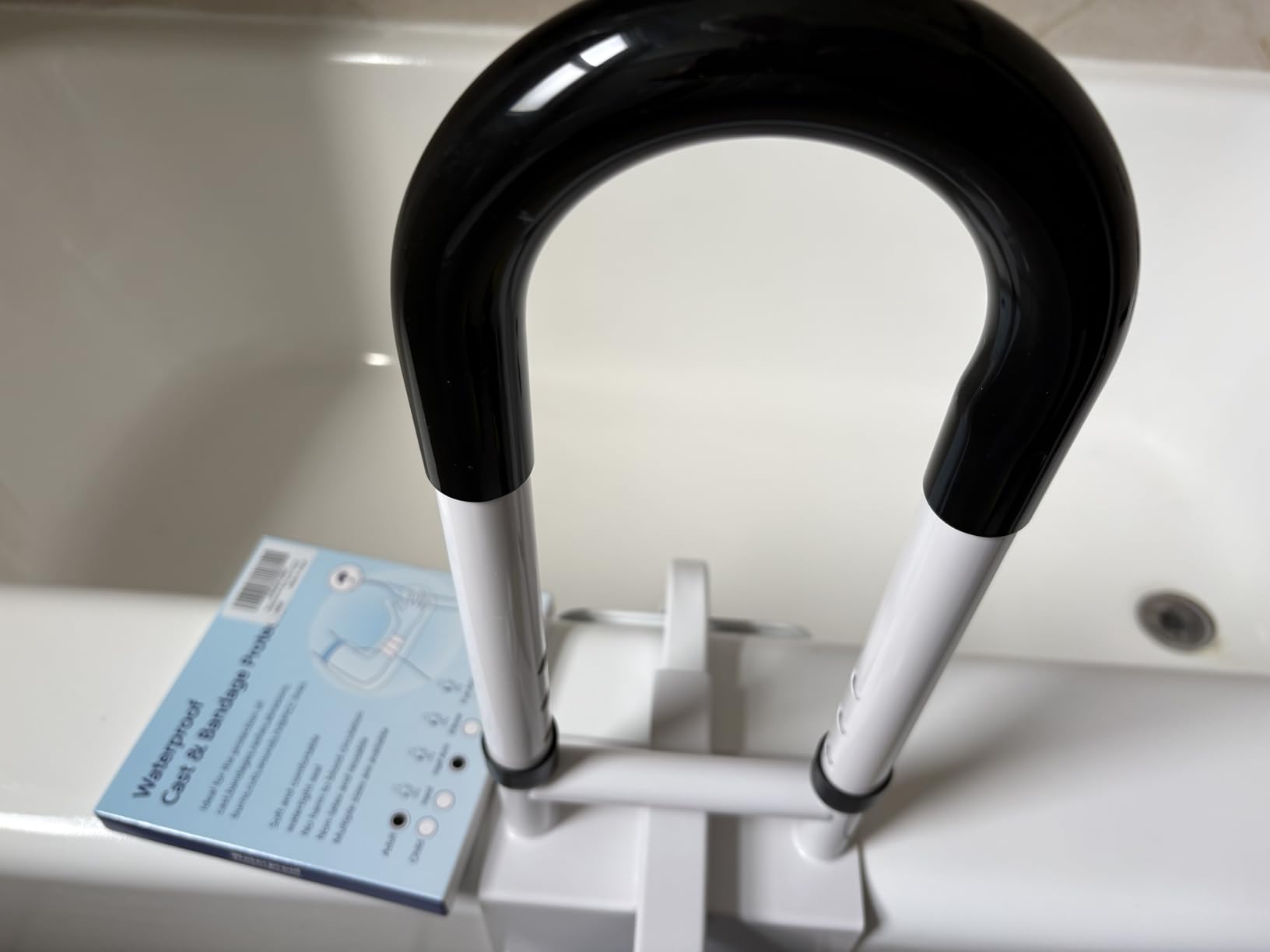
The useful surprise is the number of owners who fitted it to an older tub that was not perfectly flat. It is still not a product to clamp onto a flexible wall without thought, but the three rubber pads spread the load in a way that plain pads do not, and the height range helps you find the grip position before the clamp reaches its limit.
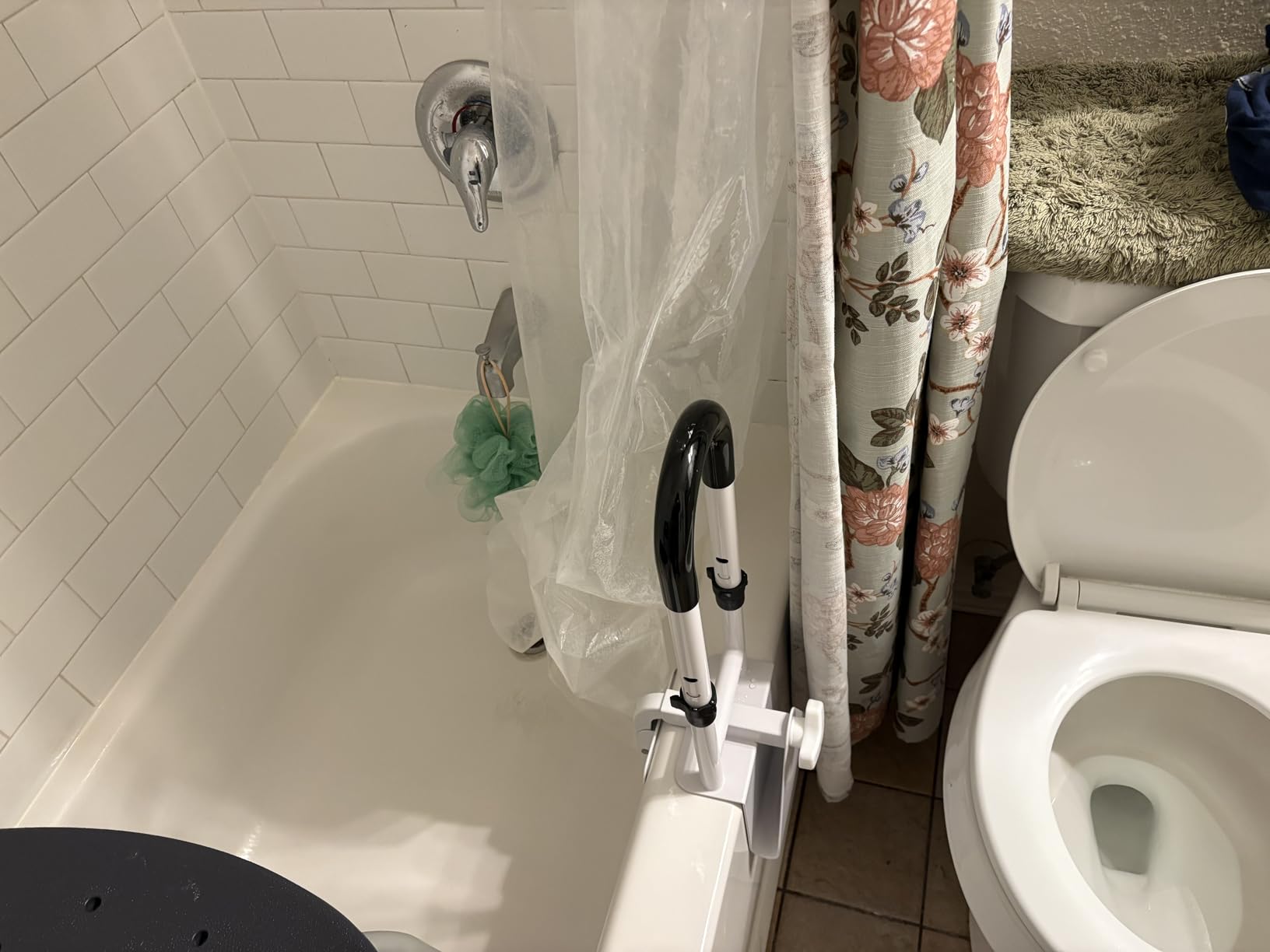
The most common caution is straightforward: re-tighten and inspect the clamp periodically, and confirm the tub wall thickness falls inside 3.1 to 6.7 inches. On a smooth white handle, a wet hand has less purchase than on a knurled bar, which is the trade-off for the clean finish.
How to set the height for a taller user
Extend the rail fully before you clamp it and check that the pivot locks at the height you need. The upper end of the range is the least stable position, so if the user leans on the rail hard, choose a setting in the lower half of the 15 to 18 inch range.
Take a photo of the setting once it works. Adjustable rails drift, and a marked position saves the next person from re-learning the same lesson.
Best for households with more than one user
Three inches of height adjustment is enough to serve a shorter adult and a much taller one from the same rail, which reduces the number of bars a family has to buy. It ranks second in its category, so the pattern of use is well documented.
10. Butizone Medical Adjustable Tub Rail: Best Two-Hand Grip
Butizone Bathtub Safety Rail, Medical Adjustable Tub Grab Bar Handle Clamp Safety Handrail Support for Seniors and Elderly
Two ergonomic handles
Width adjustable 3 to 7 inch clamp
300 lb capacity
Powder-coated steel
Pros
- Two ergonomic handles give a secure two-handed grip
- Single-knob locking clamp is fast and tool-free
- White powder-coated finish blends into a modern bathroom
- Rubber padding prevents marks on the tub
- Works for either handedness of user
Cons
- Not intended for fiberglass tub surfaces
- Requires a smooth flat tub wall 3 to 7 inches thick
- Clamp must be re-tightened before each use
Two handles on one clamp is the design idea that separates this rail from the rest. A user coming out of a bath can get a hand on either side of the frame, and a caregiver assisting a transfer has a second grip point without needing a second rail mounted in a different spot.
The width adjustable clamp fits tub walls from 3 to 7 inches thick, and the unique locking knob turns to clamp with no tools. The white powder-coated frame is quiet in a modern bathroom, and the rubber padding on the clamp keeps marks off the tub surface.
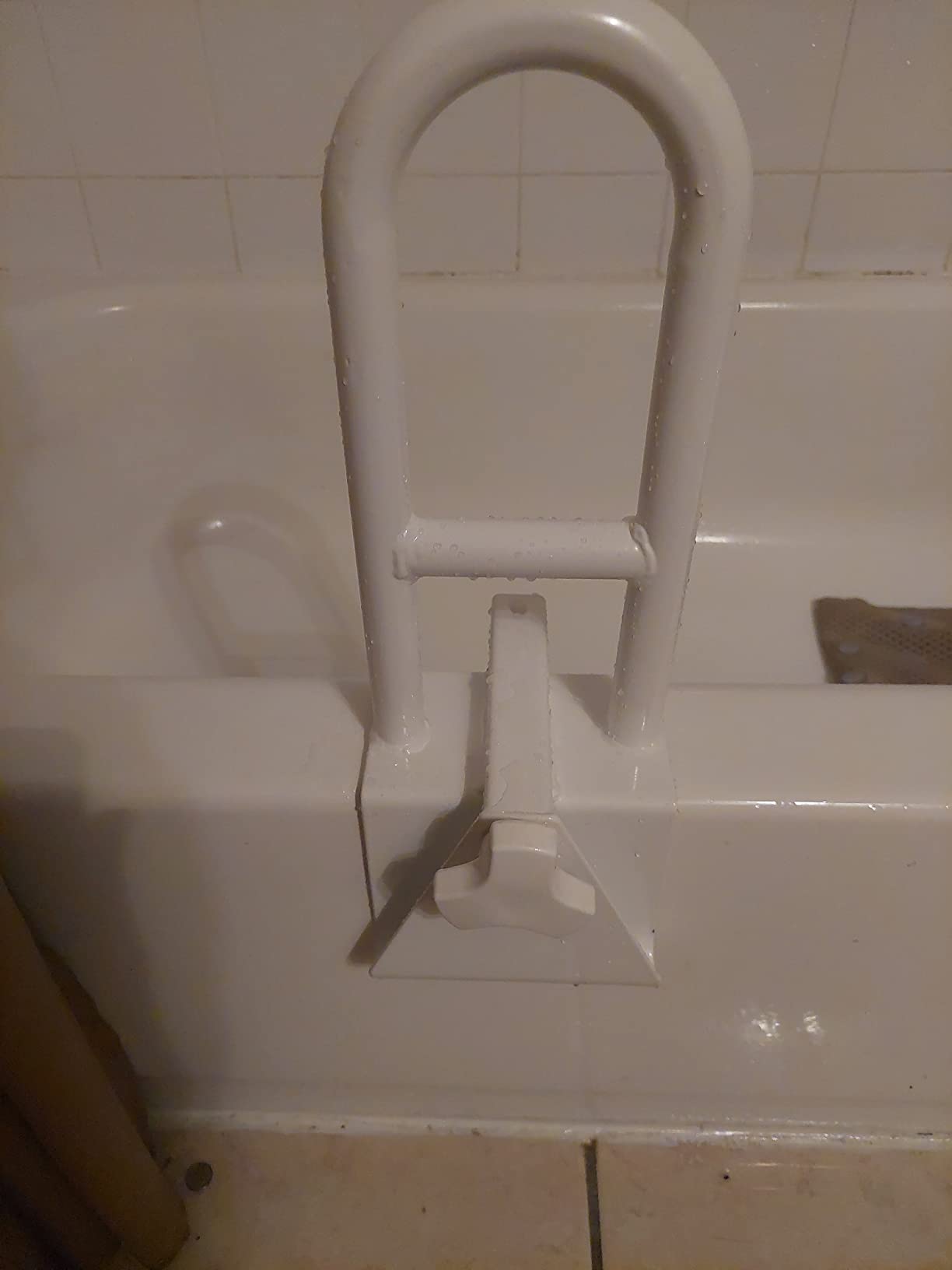
Most of the owners I read bought it for a parent recovering from surgery, and the recurring praise is the sturdy feel plus the speed of the knob lock. At 96 ounces it has some heft, which reads as solid in the hand but makes it a less convenient travel rail.
The listing is explicit about the limits, and buyers repeat them: not for fiberglass tub surfaces, and only on a smooth flat tub wall between 3 and 7 inches thick. The clamp also needs re-tightening before each use, which is a small habit that keeps the whole thing honest.
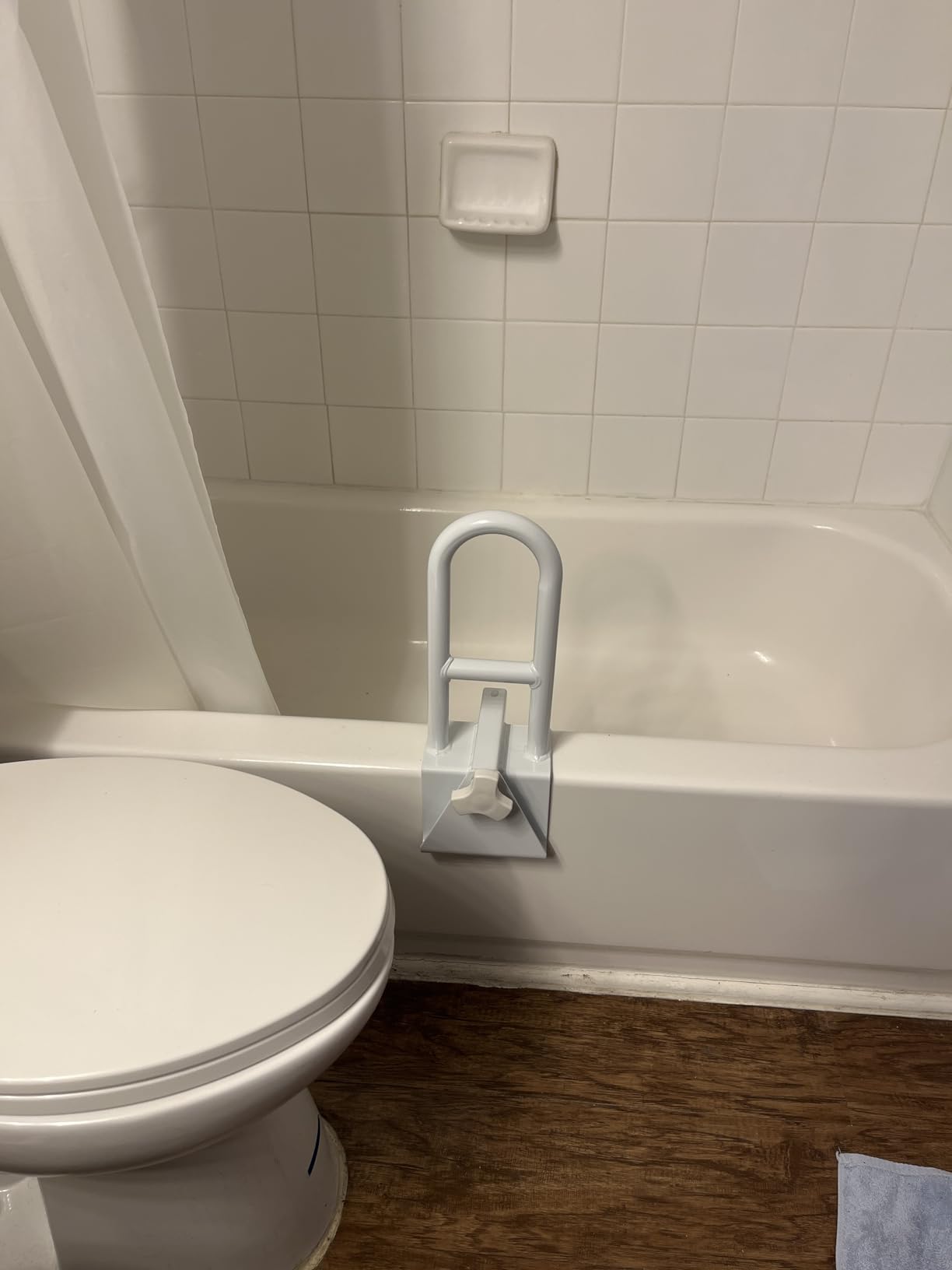
Is a two-hand grip worth the extra reach
For users with limited balance on standing, yes. Two points of contact lower the chance of a twist in the wrist or shoulder during the sit-to-stand, which is the movement that ends up in emergency rooms. For a confident user with one good hand, a single grip rail is simpler and cheaper.
Test the reach before committing. The frame is wider than a single-handle rail, so it projects further into the tub and you need to be sure the entry path still feels open.
Best for assisted transfers and caregiver support
When a second person is helping with the transfer, two handles mean the assistant can support without reaching past the user. It suits post-surgery households and any situation where a single-hand rail leaves the user twisting.
How to Choose a Bathtub Grab Bar
Mounting height and load standards
ADA and US Access Board guidance puts bathtub grab bars between 33 and 36 inches from the finished floor, with bar diameters of 1.25 to 2 inches and about 1.5 inch of clearance between the bar and the wall so a hand can wrap fully around it. Horizontal bars on the back wall are typically 36 inches or longer, and the access side wall position is a different measurement again. Mounting to these numbers is what separates a compliant bar from a decorative one.
Load is the second specification. The ADA minimum is 250 lb of force in any direction, and premium bars in this roundup are rated to 500 lb. Treat the number as meaningful only when the bar is anchored into framing or a load-rated anchor. Installed into hollow drywall, a 500 lb rating describes the bar, not the wall holding it.
Bar length and stud spacing
Walls are framed with studs 16 inches on center, which is why 12, 18 and 24 inch bars all exist and why bars rarely line up with studs by accident. On r/AskReddit, the running complaint is exactly this: rail lengths do not match stud spacing, and the fix people describe is diagonal mounting, angling the bar so both flanges land on framing.
Before you buy, find the studs and measure between them. A 16 inch bar is the easiest length to mount, a 24 inch bar needs a wider clear run, and any bar can be mounted on a diagonal to reach two studs. Screw flanges that are 90 degrees apart and not adjustable make that diagonal much harder, which is a reason to prefer a concealed mount with a rotating flange.
Tub material compatibility
Porcelain, enameled steel and cast stone tubs handle a clamp well because the rim is rigid. Acrylic is workable if the wall is straight. Fiberglass is the problem: it flexes, and several of the rails in this roundup are explicitly not rated for it. A clamp that concentrates force on a flexible fiberglass wall can crack the tub, and a cracked tub is a far more expensive mistake than the rail you saved on.
The warning signs before ordering are simple. If the tub wall curves, angles, carries a molded texture pattern, or feels flexible when you press it, do not clamp a rail to it. Use a wall-mounted bar on the framing instead, or a tension pole and transfer bench combination for a rental.
Installing into studs, blocking and tile
Find the studs with a stud finder, mark both flanges, and drill with the bit the manufacturer specifies, usually a 15/64 inch bit for a standard flange. Drive structural lag screws into the framing, do not rely on the drywall, and do not use a cripple stud or the framing around a window as a load path. On r/HomeImprovement the cripple stud question comes up repeatedly, and the answer is consistently that a short stud behind tile cannot carry a grab bar.
On tile over masonry, the standard answer given in home repair forums is a heavy-duty toggle-style anchor designed for tile. Installers working with waterproofing membranes ask for a specific procedure so the barrier is not punctured outside the intended anchor point, so check the membrane maker’s instructions rather than improvising.
No-drill, renter and temporary options
Clamp-on tub rails and tension poles are the only valid no-drill substitutes. Both give a real rated grip; suction bars do not, and neither will make a bathroom as safe as a permanently anchored bar. If you rent, ask the landlord in writing, since accessibility modifications are covered by fair housing rules in most situations.
Some families fund the work rather than buy the accessory. Medicaid home and community based services waivers, VA housing grants for disabled veterans, and USDA Section 504 programs can all contribute to an accessibility retrofit, and an occupational therapist can usually write the justification a program needs.
When a grab bar is not enough
A bar helps a person who can bear weight. If someone cannot step over the tub wall at all, or cannot lower and raise themselves safely, the answer is a transfer bench, a tub transfer chair, or a walk-in tub conversion. Owners on home improvement forums describe converting a tub to a walk-in shower with grab bars and a teak stool as one of the most satisfying projects they have done, and it solves the step-over problem instead of making it marginally safer.
Pair the rail with a non-slip bath mat and a shower seat as a system rather than treating the bar as a single fix. And expect the user to grab whatever is nearest, so position the bar where the hand already goes. If that is a towel bar, move the towel bar.
If you are putting together other rooms at the same time, our picks for the [8 Best Juicers for Juice Bars](https://austineubanks.com/best-juicers-for-juice-bars/) and the [12 Best Kegerators for Home Bars](https://austineubanks.com/best-kegerators-for-home-bars/) cover the other two spaces people spend the most time standing in, while our [12 Best Swivel Bar Stools for Home Bars](https://austineubanks.com/best-swivel-bar-stools-for-home-bars/) and [8 Best Wine Fridges for Home Bars](https://austineubanks.com/best-wine-fridges-for-home-bars/) round out the seating and storage side of the same layout.
Frequently Asked Questions
What is the best grab bar for a bathtub?
A permanently mounted stainless steel bar anchored into wall studs is the best grab bar for a bathtub because it carries the most load. Clamp-on tub rails rated 250 to 300 lb are the best choice for renters or anyone who cannot drill. Suction cup bars are balance aids only and cannot arrest a fall.
Where should grab bars be installed in a bathtub?
Place a horizontal bar on the back wall of the tub at 33 to 36 inches from the finished floor, and a second bar on the side or entry wall where the user pushes off when stepping in and out. Both flanges of each bar must land in studs or load-rated anchors. Skip window walls, cripple studs and any framing that cannot carry the load.
Do suction shower grab bars really work?
No, not for fall arrest. A suction cup grab bar gives light balance assistance while standing or reaching, and the cups can release without warning. It should never be used to catch a falling adult or to support body weight during a transfer. Use a clamped or anchored rail for that.
What is the best size for a grab bar for a tub?
For a tub back wall, 16 to 24 inches of bar length is the usual range, and 24 inches covers the widest entry and exit span on a wide tub. Because wall studs sit 16 inches on center, a 16 inch bar is the easiest to mount and longer bars often need diagonal mounting to reach two studs.
Are clamp-on tub rails safe on fiberglass tubs?
Often not. Fiberglass walls flex, and several clamp rails are explicitly not rated for fiberglass because a concentrated clamp force can crack the tub. Check the product listing before ordering, and if your tub is fiberglass, curved or textured, use a wall-mounted bar anchored into framing instead of a clamp-on rail.
Conclusion
Best grab bars for bathtubs come down to one question: can you anchor into the wall, or can you not. If you can, the Moen Home Care 8724 with its 500 lb rating and limited lifetime warranty is the strongest permanent choice, and the AmazerBath 24 inch bar covers the widest span for less. If you cannot drill, the Vaunn Medical Secure rail is my pick for a rigid 300 lb handhold, the Drive Medical handles changing heights best, and the Medline step-through design is the one to buy for the weeks after hip surgery.
Measure the tub wall, find the studs, and check the material before you order, because those three checks prevent almost every regret people report. Whatever you choose, put it where the hand already goes, and pair it with a non-slip mat and a seat. That is the 2026 roundup I would hand to a family this month.