
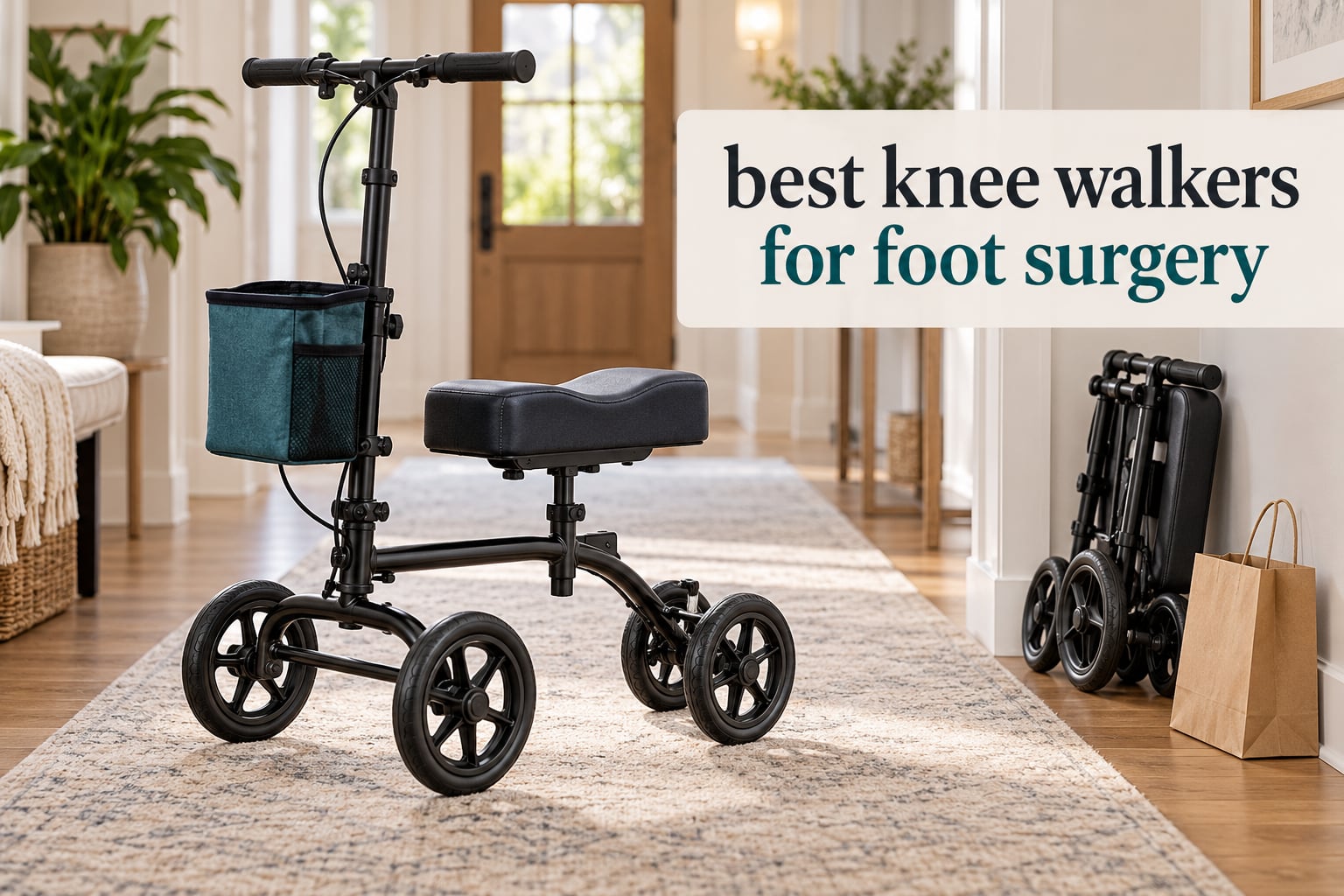
Six to twelve weeks of not putting weight on a repaired foot is a strange thing to plan for. Most people only really start thinking about it a few days before surgery, which is exactly when the wrong mobility aid becomes an expensive problem. The best knee walkers for foot surgery are not the flashiest scooters on the market, they are the ones that arrive before your nerve block wears off, fit your body, and roll over whatever is between you and the kitchen.
A knee walker is a wheeled mobility aid you ride with one leg while the other rests on a padded platform. You will also see it called a knee scooter, a knee caddy, a knee cruiser or an orthopedic scooter, and all four names describe the same four-wheel (or three-wheel) frame. It keeps the surgical site elevated and completely non-weight-bearing while you move at walking pace, and for most foot and ankle recoveries it beats crutches on comfort, speed and fall risk.
We spent October reading through thousands of buyer reviews on eight of the most-purchased knee walkers and compared the numbers that actually change a recovery: weight capacity, wheel diameter, steering type, brake design, height range and how much the thing weighs when you try to lift it into a car. This guide covers what to buy, when to buy it, how to set it up correctly, and how long you should expect to be on it. If you would rather start with walking support in general, our picks for the [best rolling walkers for seniors](https://austineubanks.com/best-rolling-walkers-for-seniors/) cover the neighbouring category.
Table of Contents
Top 3 Picks: Best Knee Walkers for Foot Surgery Recovery (October 2026)
Our three standouts cover the situations most post-op buyers face: a steerable all-rounder for indoor recovery, the strongest value in the class, and the highest-rated option for buyers who want extra padding. Each of them is a four-wheel steerable frame with dual rear brakes, which is the configuration we would pick for a living room, hallway and short trips to follow-up appointments.

Drive Medical DV8 Aluminum Steerable Knee…
- Steerable frame
- Tool-free height adjustment
- Channel leg pad
- 300 lb capacity
BodyMed Steerable Knee Walker with Basket
- Dual rear brakes
- Detachable metal basket
- Foldable frame
- 300 lb capacity

Roscoe Medical Foldable Knee Walker Scooter
- Dual padded knee rest
- Steerable tight turns
- Folds compactly
- 350 lb capacity
Best Knee Walkers for Foot Surgery at a Glance in 2026
All eight models below steer, all eight carry a basket, and every one is rated between 300 and 350 pounds. The real differences are wheel size, brake type and how the frame folds. Use this table to narrow the field, then read the full review for the model that matches your terrain and your length of recovery.
| Product | Specifications | Action |
|---|---|---|
| Drive Medical DV8 Aluminum Steerable Knee Walker |
|
Check Latest Price |
| BodyMed Steerable Knee Walker with Basket |
|
Check Latest Price |
 Vive Mobility All Terrain Knee Scooter Vive Mobility All Terrain Knee Scooter |
|
Check Latest Price |
| Roscoe Medical Foldable Knee Walker Scooter |
|
Check Latest Price |
 BlessReach Foldable All Terrain Knee Scooter BlessReach Foldable All Terrain Knee Scooter |
|
Check Latest Price |
 Aojin Knee Scooter with Storage Bag Aojin Knee Scooter with Storage Bag |
|
Check Latest Price |
 KneeRover Quad All Terrain Knee Scooter KneeRover Quad All Terrain Knee Scooter |
|
Check Latest Price |
 KneeRover GO Hybrid Knee Scooter KneeRover GO Hybrid Knee Scooter |
|
Check Latest Price |
1. Drive Medical DV8 Aluminum Steerable Knee Walker: The All-Rounder We Trust Most
Drive Medical DV8 Aluminum Steerable Knee Walker Knee Scooter
Weight capacity 300 lbs
Unit weight 22.7 lbs
Handle height 33-37.5 in
Knee pad 17.5-21.5 in high
Pros
- Steers smoothly through tight doorways and small rooms
- Channel-style leg pad adds stability
- Tool-free height adjustment on handle and pad
- Folding steering column for storage
Cons
- Heavier than compact three-wheel scooters
- Standard padding gets uncomfortable over a long recovery
This is the model we would put in the hands of someone recovering from a bunionectomy or a metatarsal fracture who is going to be non-weight-bearing for eight weeks in a small house. The frame steers through tie rods rather than a fixed column, which is the single feature that separates a knee scooter you can control from one you merely ride. Owners repeatedly single out the channel-style leg pad, which keeps the shin centred instead of letting it slide off on carpet.
The steering column folds down, so it stands against a wall rather than rolling around in the hallway, and the handle and knee pad adjust without tools. That matters when you are setting it up at 11pm on the night before surgery with a leg you cannot put weight on.
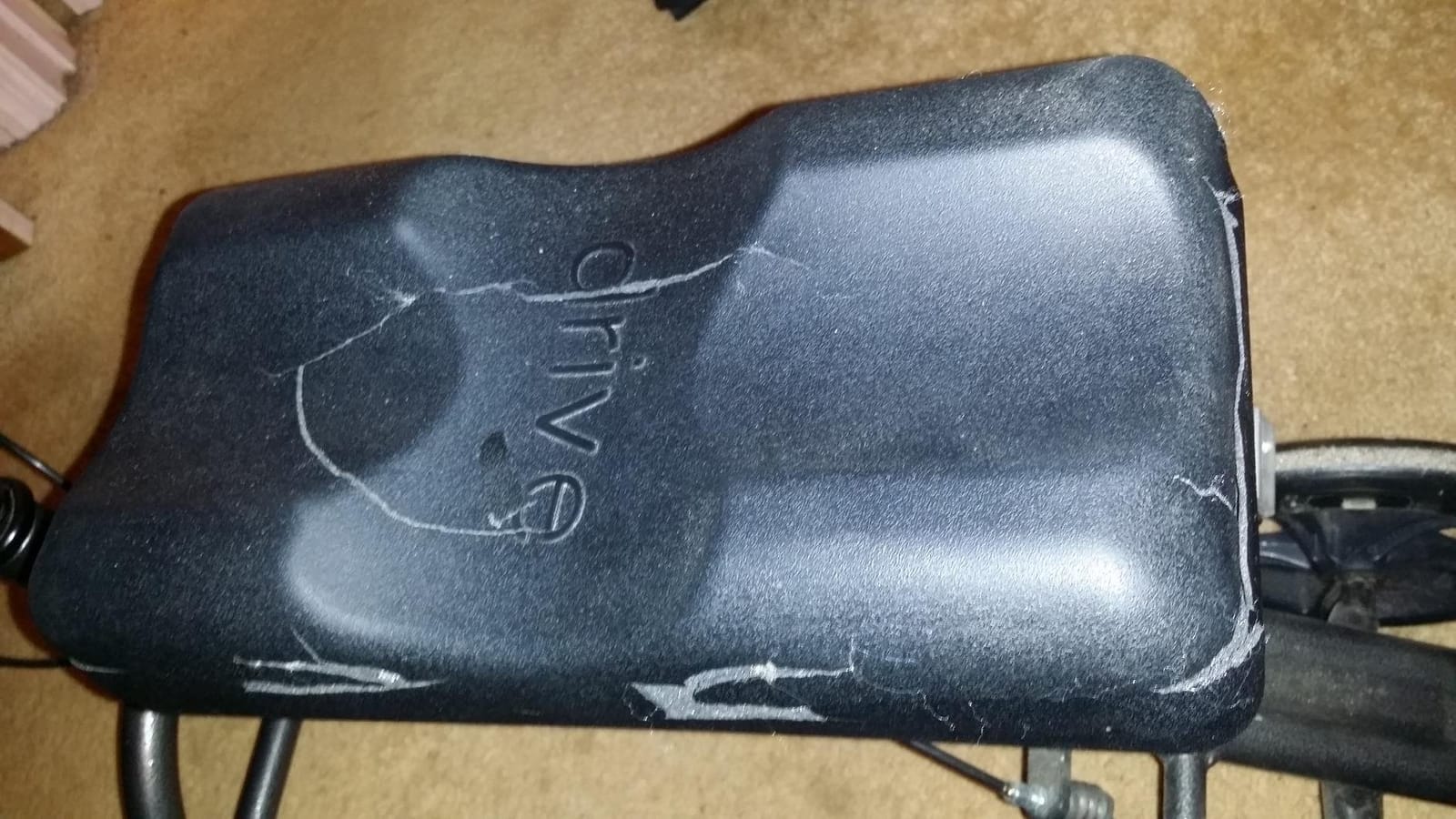
Across more than 2700 reviews the rating sits at 4.4, with 71% of buyers handing over five stars. The consistent praise is for maneuverability indoors and for the adjustment range, which covers a knee pad from 17.5 to 21.5 inches high and a handlebar from 33 to 37.5 inches. That is a genuinely useful spread for a household where the person recovering and the person helping are different sizes.
Weight capacity is 300 pounds, which is the honest limit here and worth checking against your own body weight before you commit. At 22.7 pounds the unit is not light, but it is light for a four-wheel steerable frame with a folding column, and buyers report loading it into a mid-size vehicle without drama.
Check the handlebar height before you buy
The 37.5 inch maximum handle height is the number that decides this for tall users. If you are around 6 foot 5 or taller, the handlebar will sit lower than your natural standing reach and you will ride hunched, which loads the surgical knee. The knee pad adjusts independently, so you can raise the leg high even when the handle stays low.
If you are over 6 foot 5, look instead at the KneeRover Quad or the Vive, both of which reach 6 foot 6 and adjust the steering handle higher.
Where this one is the wrong choice
The standard comfort padding is the weak point over long recoveries. Buyers recovering for many months describe the channel pad working well but wish for extra foam, and the fix is usually a padded sleeve or gel cover rather than a different scooter.
It is also a three-position ride on standard hard wheels, so it is a poor match for a garden path, gravel drive or a lawn. Buyers using it strictly indoors report no complaints at all.
2. BodyMed Steerable Knee Walker with Detachable Basket: The Best Value Pick
BodyMed Knee Walker, Steerable for Foot Injuries – Adjustable Scooter with Dual Brakes, Detachable Metal Basket & Cushioned Pad – Better Alternative to Crutches for Leg Recovery
Weight capacity 300 lbs
Unit weight 27.05 lbs
Four-wheel steerable frame
Dual rear braking system
Pros
- Largest review base in this roundup at 3082 ratings
- Dual rear brakes give short stopping distances
- Collapses for car and storage
- Detachable metal basket for carrying items
Cons
- Firm knee padding over long recoveries
- Heavier build than compact scooters
The BodyMed is the one to buy when the recovery is going to be long and the house has stairs you cannot avoid for the first fortnight. It is a four-wheel steerable frame with a detachable metal basket, and at 3082 ratings it carries the deepest review base of the eight we looked at, which means the failure points are well documented rather than surprising.
Buyers praise the collapse-and-go design. It folds down for the car or for the corner of a room, and the detachable metal basket detaches completely rather than swinging on a hinge, so you can carry a plate of food or a laundry basket without the frame hitting your doorway.
Dual rear brakes are the feature that separates it from cheaper three-wheel designs, because both rear wheels lock together and the stop is short rather than gradual. On a landing or a sloped driveway that difference is the whole safety argument, and it is why most therapists push steerable four-wheel frames for anyone who will be on one for more than a few weeks.
The knee pad is the compromise. It is firm by design and reviewers recovering over several months say so plainly. A padded cover costs very little and fixes most of the complaint without replacing the scooter.
Check whether your doorways are wide enough
At 17.4 by 28.2 by 12.8 inches, this is a full-size four-wheel frame, not a compact folder. Measure the narrowest doorway on your route between the bed, the bathroom and the kitchen before you order, because the widest wheel span is what actually has to clear.
If you live in a narrow flat and plan to store it folded between uses, the KneeRover GO is the more forgiving choice because it folds in seconds rather than requiring a multi-part collapse.
Where this one is the wrong choice
At 27 pounds it is one of the heavier frames in the group, and buyers who are not strong in their arms report it as a two-person lift into a high car boot. If you will not be driving yourself, this matters much less. If you live alone and rely on getting to follow-up appointments, it matters a great deal.
The standard wheels are also indoor-and-pavement wheels. Garden gravel will bog them down well before the frame shows any strain.
3. Vive Mobility All Terrain Knee Scooter: Best for Outdoor Terrain
Vive Mobility All Terrain Knee Scooter Walker for Foot Injuries – Adult
Weight capacity 350 lbs
Unit weight 30.51 lbs
12 inch pneumatic wheels
Fits users 5 ft 4 in to 6 ft 6 in
Pros
- 12 inch pneumatic tires handle gravel grass and dirt
- Contoured foam knee pad spreads pressure
- Dual rear friction brakes for inclines
- Removable knee platform and folding handle
Cons
- Pneumatic tires need inflation and can puncture
- Heavy at 30.5 lb
- Lowest average rating of the eight at 4.2
This is the scooter to buy if your follow-up appointments, pharmacy or a relative’s house involve anything other than pavement. The 12 inch pneumatic wheels are the largest in this roundup and they change the ride completely on gravel, grass and dirt, because a wheel that size rolls over a 2 inch stone instead of stopping dead in front of it.
It is also the tallest-adjusting model here, rated for users from 5 foot 4 to 6 foot 6, with a steering handle that runs from 38 to 46 inches and a knee platform from 20 to 26 inches. If you are tall and the standard handlebars on cheaper frames are too low, this is the fix.

At 4.2 across 2222 ratings it has the lowest average of the group and the widest spread of opinions, with 63% five-star but 7% one-star. The negatives are specific and mostly fixable: tire pressure maintenance, assembly friction, and brake adjustment that needed a second pass.
The positives are equally specific. Buyers report the contoured foam knee cushion genuinely reduces hip and knee fatigue on longer outings, which is the complaint that ends most recoveries with a sore good leg. The removable knee platform and folding handle are what make it fit in a car at all.
Think about whether you will actually leave the pavement
Buy this one for genuinely uneven ground: gravel drives, garden paths, grass, dirt tracks. If your recovery is spent entirely on carpet, tile and pavement, the extra weight and the tire maintenance buy you nothing, and a solid-wheel model will serve you better with no pumping at all.
It is also HSA and FSA eligible and carries a lifetime guarantee from the manufacturer, which matters for a purchase you will make once and keep for a decade of future injuries.
Where this one is the wrong choice
Thirty and a half pounds is genuinely heavy, and reviewers lifting it into a hatchback describe it as a two-hand job. It is the heaviest frame in the roundup, and that weight is the price of four large pneumatic tires.
Pneumatic means inflatable. A puncture mid-recovery is a bad afternoon, and a floor pump lives in the garage, not the hallway. If you live in flats with no storage for a pump, pick solid wheels.
4. Roscoe Medical Foldable Knee Walker Scooter: Tied for the Top Rating, With the Softest Pad
Roscoe Medical Knee Walker Scooter for Adults for Foot Surgery, Foldable Leg Scooter for Broken Foot, All Terrain Adjustable Knee Crutch Scooter, Burgundy
Weight capacity 350 lbs
Unit weight 22.8 lbs
8 inch wheels
Dual padded knee rest
Pros
- Tied for the highest rating at 4.5 with 74% five-star
- Dual padded knee rest spreads pressure
- Steers through tight doorways easily
- Folds compactly for car and travel
Cons
- 8 inch wheels struggle on loose gravel
- Small detachable basket
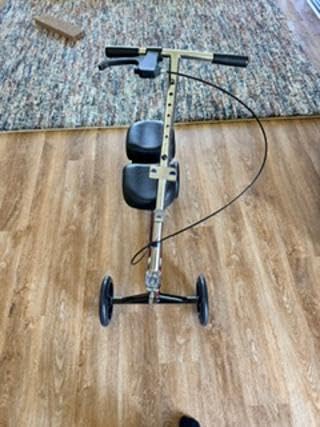
The Roscoe wins on the single detail that decides whether a long recovery is comfortable or merely tolerable: it has dual padded knee supports rather than a single flat platform. Two pads spread the load across either side of the kneecap instead of concentrating it in one spot, and buyers with longer recoveries notice the difference within days.
It also ties for the highest rating in the group at 4.5, with 74% of 1670 buyers giving five stars and only 3% giving one. In a category where heavy units routinely drag the average down, that distribution matters more than the star figure alone.
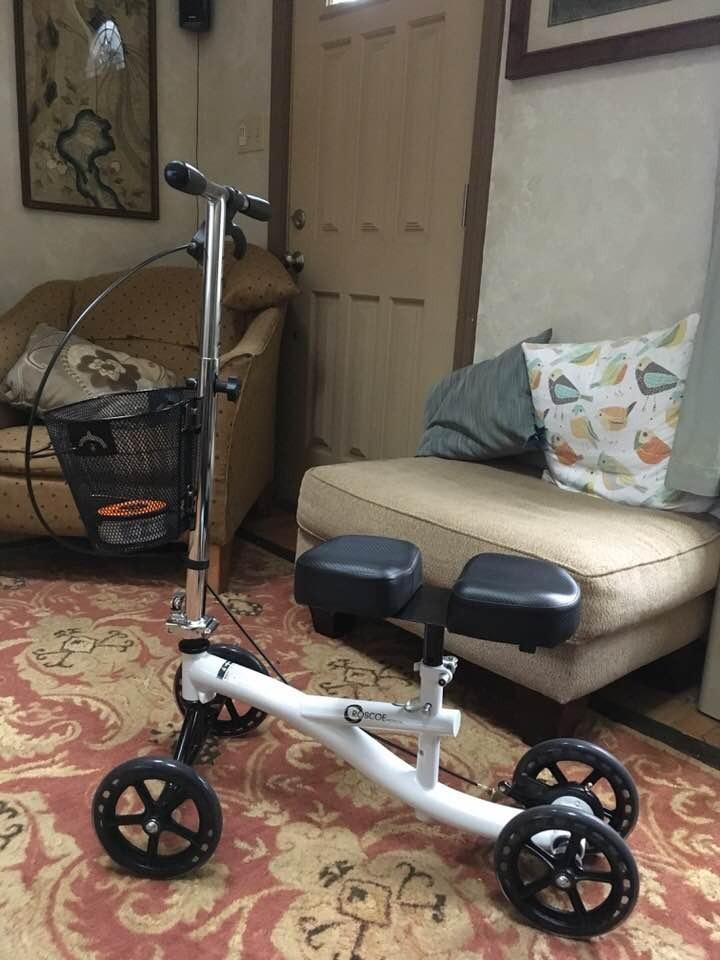
The steerable frame is narrow enough for tight indoor spaces, which is where most of a recovery is spent. The compact fold handles a car boot, and the detachable basket keeps a water bottle, medication and a phone within reach without you steering one-handed.
At 350 pounds it carries more than the 300-pound models, and at 22.8 pounds it is one of the lighter frames here despite having four wheels and a dual pad. The maths is unusually good for the rating.
Check the knee pad before anything else
If you are six weeks or more from non-weight-bearing, the knee pad is the component that will shape your experience. Dual padding is why this one earns the top rating, and it is also the reason it is our pick for anyone whose surgeon expects a long non-weight-bearing window rather than a short one.
Over the first week it will feel firm. That is normal for a new pad, and it softens. If pressure is still an issue by week three, a knee pad cover is the fix.
Where this one is the wrong choice
The 8 inch wheels are honest pavement-and-floor wheels. Buyers who tried it on a gravel drive or loose dirt report it bogging down, and the fix is bigger tires, not more effort on the handlebar.
The basket is small. It handles a phone, keys and a water bottle and nothing more, so plan on making one trip to the kitchen rather than carrying a full meal.
5. BlessReach Foldable All Terrain Knee Scooter: Best Braking and Best Load Carrying
BlessReach Foldable All Terrain Knee Scooter for Adults for Foot Injuries
Weight capacity 300 lbs
Unit weight 25.6 lbs
11 inch front and 8 inch rear wheels
Fits 5 ft 6 in to 6 ft 6 in
Pros
- Disc brakes with a locking park button
- Solid wheels need no inflation
- Detachable pouch fits a laptop and bottle
- Metal shock absorbers smooth rough ground
Cons
- Firm knee pad over long recoveries
- Wide turning radius makes reversals awkward
- Folding saves little space
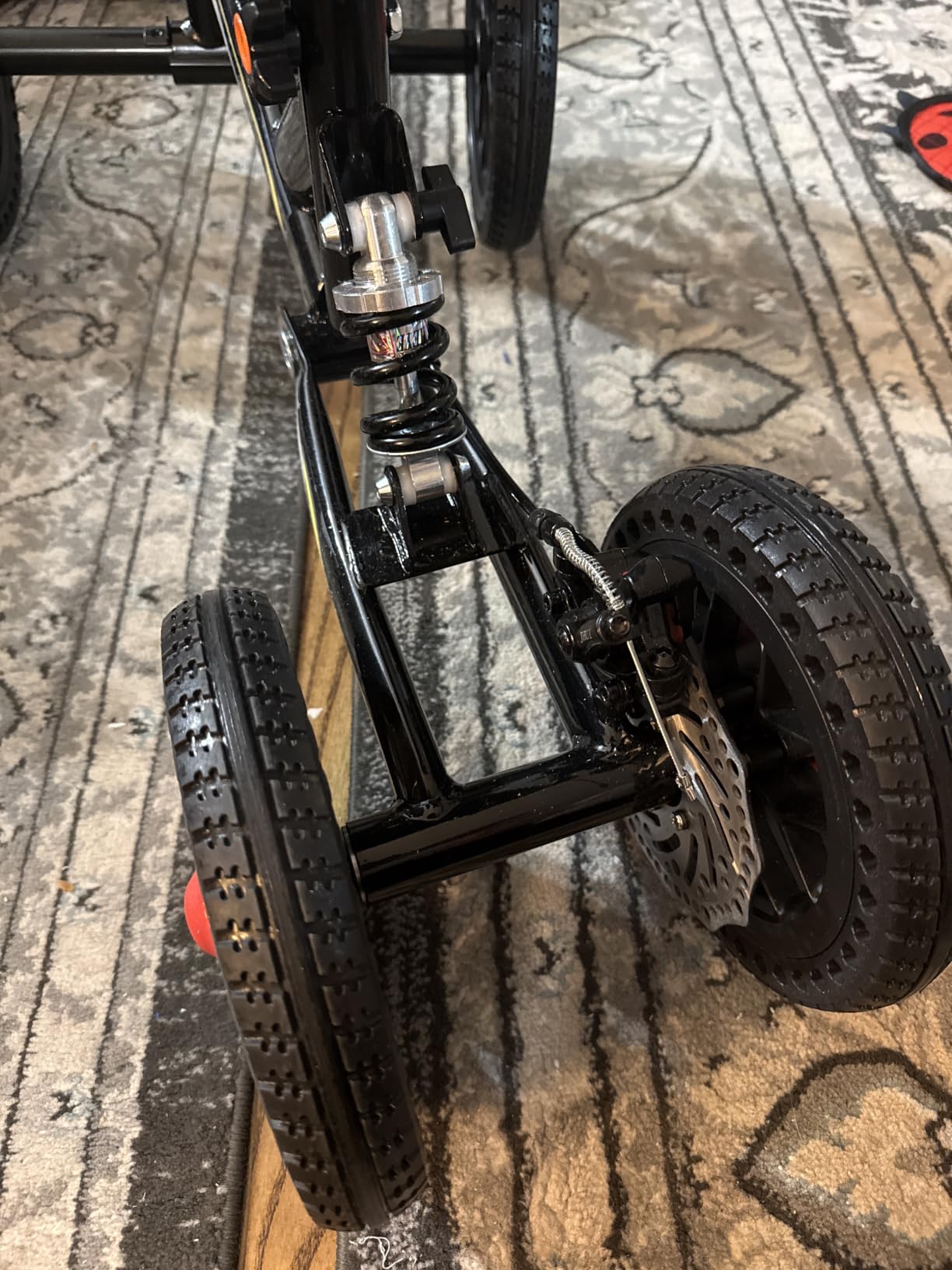
The distinguishing feature here is a genuine disc brake with a locking hand brake and a park setting, which no other budget unit in this roundup offers. Disc brakes give a short, predictable stop and the park button means you can dismount on a slope without the scooter rolling away, which is the exact scenario that undoes a lot of post-op patients.
Post-surgery buyers recovering from bunion surgery and metatarsal fractures describe the combination of solid 11 inch front wheels and no inflation requirement as the reason it works without fuss. The wheels roll over grass, gravel and cracked pavement and there is nothing to pump, which is a real advantage over the air-filled models.
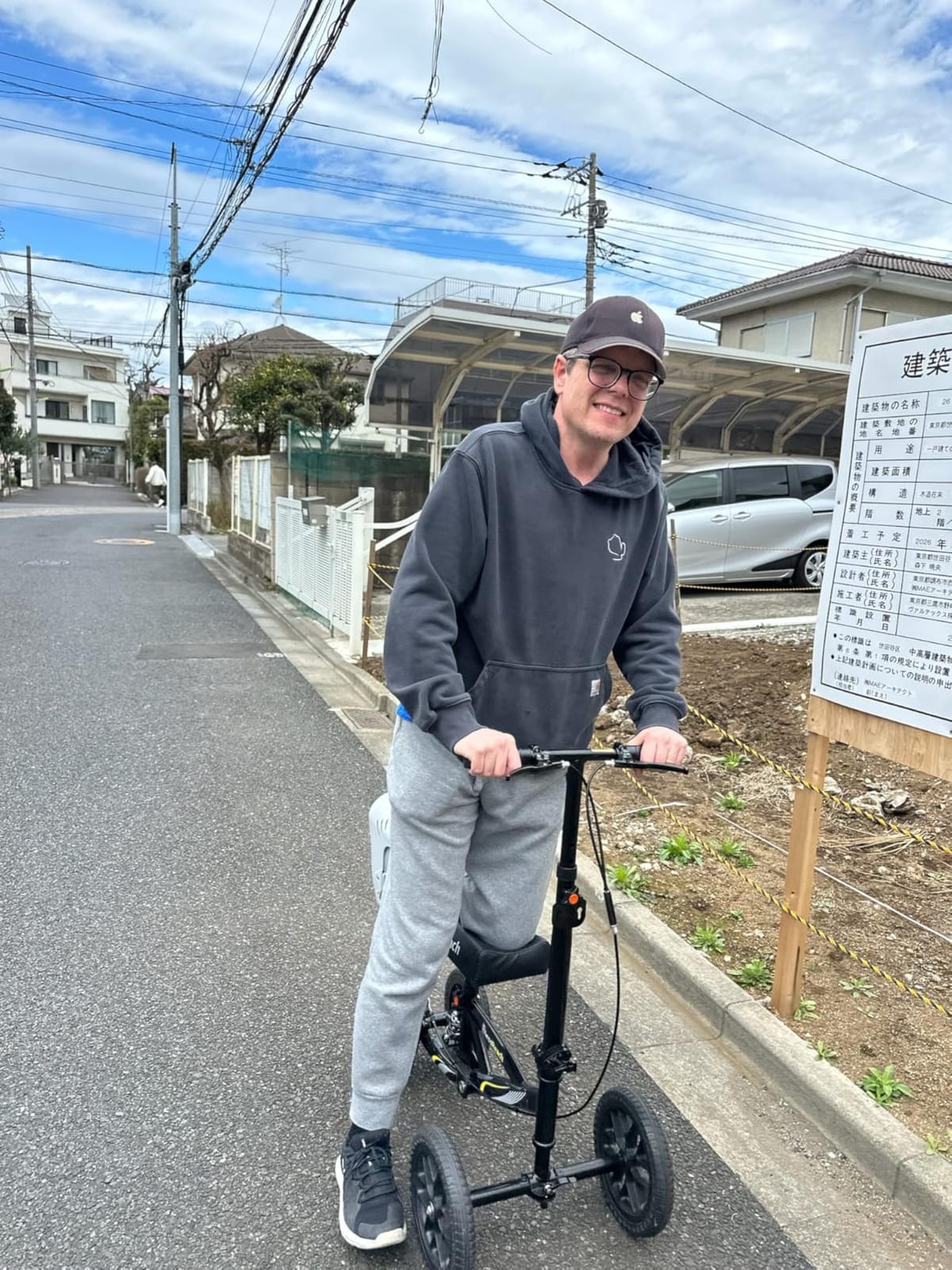
The detachable front pouch is unusually large for this category and fits a laptop, a water bottle and daily essentials, which matters if you are working remotely through a foot recovery. Six levels of adjustment on both the knee pad and the handlebars cover users from 5 foot 6 to 6 foot 6, and the metal shock absorbers take the edge out of uneven ground.
Assembly takes about half an hour, so build it before surgery rather than on the morning of. It rates 4.3 across 1595 reviews with 68% five-star.
Decide how much stopping control you need
If you will be descending any incline, crossing a driveway or stopping on a slope, disc brakes with a park lock are the feature to prioritise over wheel size. They give you a controlled stop rather than a gradual one, and the lock removes the risk of the scooter rolling away while you are getting both hands free.
For flat indoor recovery with no slopes, this advantage is real but modest, and a simpler friction-brake model is perfectly adequate.
Where this one is the wrong choice
The wide turning radius is the most common complaint. Backing up or reversing in a tight hallway requires a three-point turn, and users who need to pivot in a small space will feel it every day. Turning sharply at speed can also tip the frame, so this is not the scooter to learn on.
Steering-neck durability is a smaller concern, with a minority of buyers reporting a neck that seized over time and support contacts that were hard to reach. Keep your receipt.
6. Aojin Knee Scooter with Storage Bag: Best for Shorter Users
Aojin Knee Scooter for Adults for Foot Injuries, Storage Bag, 8” Wheels
Weight capacity 300 lbs
Unit weight 25.55 lbs
8 inch rubber wheels
Fits users 4 ft 7 in to 6 ft 1 in
Pros
- Unusually wide height range for a budget frame
- Thickened knee pad is softer than most at this level
- Widened low-centre-of-gravity chassis
- One-touch dual handbrakes
Cons
- 8 inch wheels poor on rough ground
- Adjustment range tops out near 6 ft 1 in
- Some manual adjustment needs tools
The Aojin solves a problem most budget frames ignore: height. With a handle range of 33 to 38.9 inches and a knee rest from 15.8 to 19.7 inches, it fits users from 4 foot 7 to 6 foot 1. That lower end matters more than it sounds, because a knee pad set too high is uncomfortable and a handlebar set too high means riding hunched.
Reviewers also rate the thickened knee pad as softer than most at this level, and the widened chassis with a low centre of gravity genuinely reduces rollover risk compared with a narrow frame. That is a meaningful safety difference for someone whose balance is worse than it was six weeks ago.
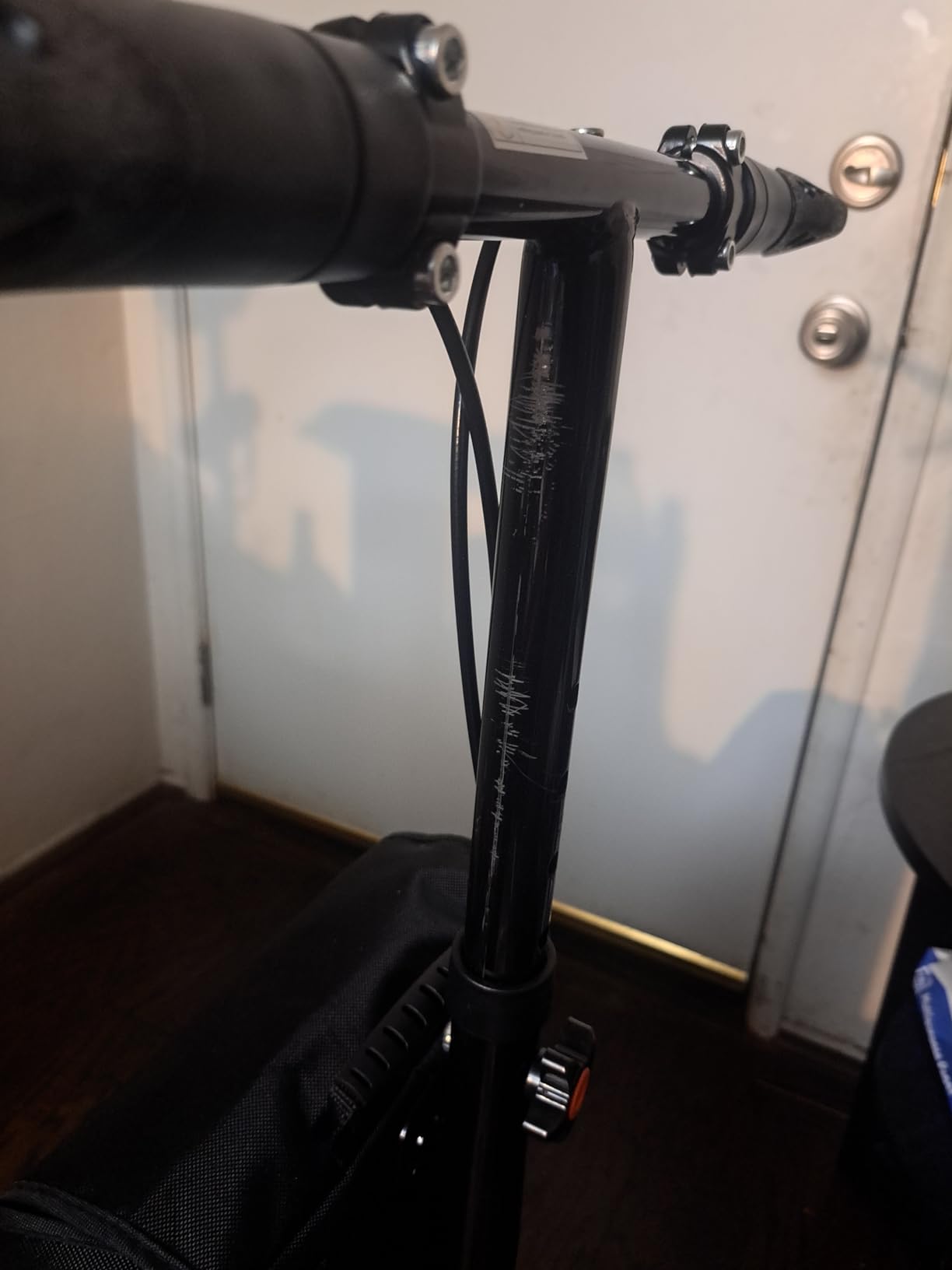
One-touch dual handbrakes and a recommended speed under 2.4 mph make it forgiving to learn on. It folds for compact storage and includes a removable bag, and it is a carbon steel frame rated to 300 pounds, which is a lot of frame for the money.
It rates 4.2 across 1565 reviews, with 65% five-star and 8% one-star. The critical reviews concentrate on the same two things: wheel size outdoors and the height ceiling.
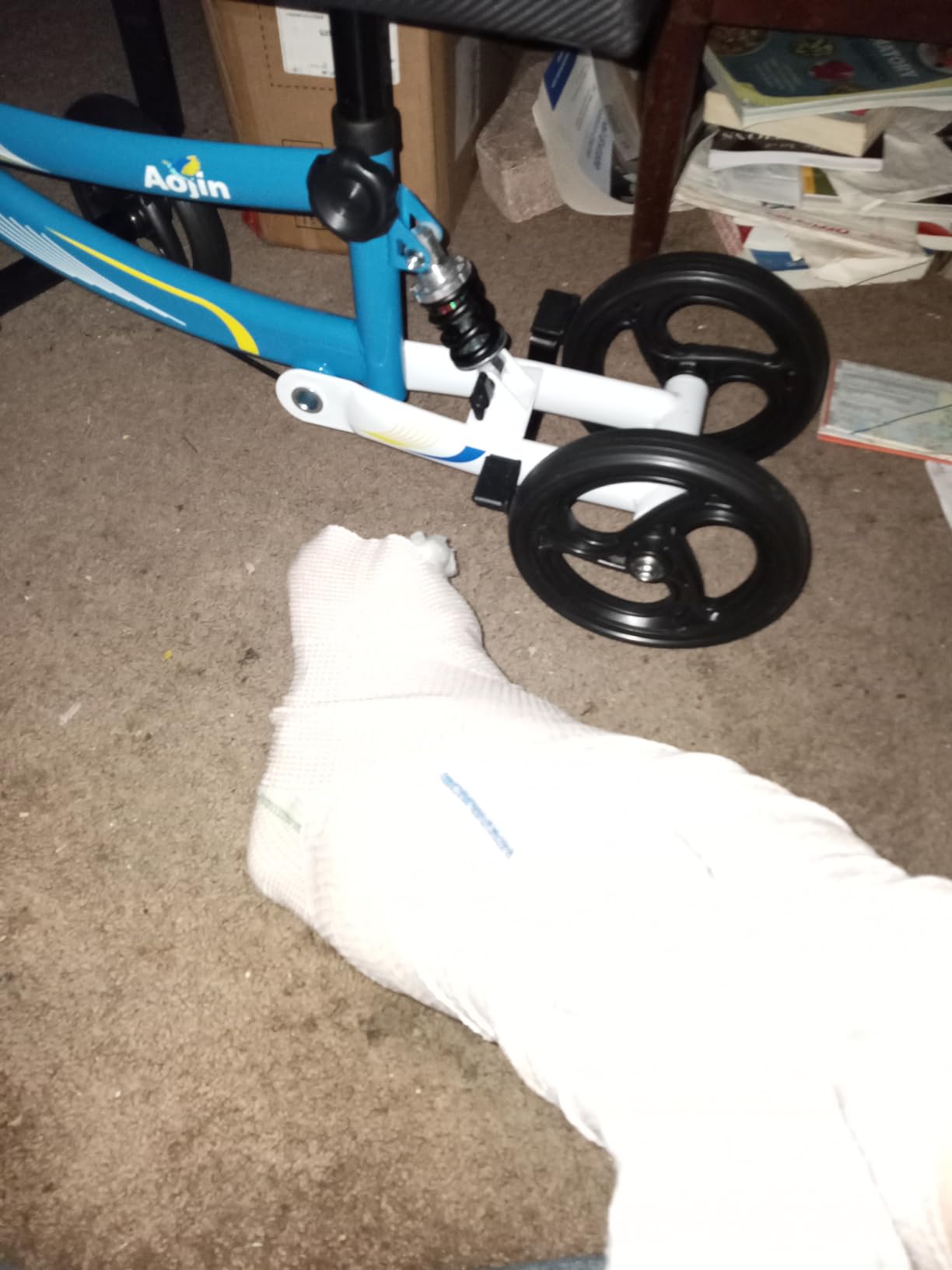
Measure your height against the adjustment range
Read the top of the range as a hard limit, not a suggestion. At 38.9 inches of handlebar height, anyone much over 6 foot 1 will ride hunched forward, which puts load through the surgical knee and the good hip. If you are above that, choose a model with a 46 inch handle range or a 6 foot 6 rating.
At the other end, if you are under 5 foot, this is one of the few frames in the roundup that genuinely reaches down to you.
Where this one is the wrong choice
The 8 inch wheels are the limit outdoors. On gravel, wet grass and dirt the frame will judder and slow you, and you will end up carrying a heavy scooter up a driveway rather than riding it.
Some adjustment points need tools, which is annoying if you have to change the height on your own. Set the height once, with help, before surgery day.
7. KneeRover Quad All Terrain Knee Scooter: Best for Rough Ground
KneeRover Quad All Terrain Knee Scooter for Adults, Metallic Blue
Weight capacity 350 lbs
Unit weight 26.9 lbs
Four air-filled tires
Fits users 4 ft 9 in to 6 ft 6 in
Pros
- Four air-filled tires handle gravel grass and dirt
- Advanced tie-rod steering gives confident control
- Rear drum brakes plus locking hand brake
- 3 inch contoured knee pad for long recoveries
Cons
- Costs more than the rest of the roundup
- Air-filled tires need pressure checks and can puncture
- 26.9 lb frame is a two-hand lift into a car
The KneeRover Quad is the one to buy when your recovery genuinely involves rough ground and you have the budget for the serious machine. Four air-filled tires roll over grass, gravel, dirt and the gaps between sidewalk slabs in a way no solid-wheel model in this roundup can match, and the thumb-release fold collapses it to 16.5 inches for a car boot.
The tie-rod steering is the part owners notice most. Rather than a single vertical post, the steering linkage runs horizontally between the front wheels, which resists the wobble that makes people nervous on a lighter scooter. For a 6 foot 6 inch user or anyone with anxious balance, that stability is the point of the machine.
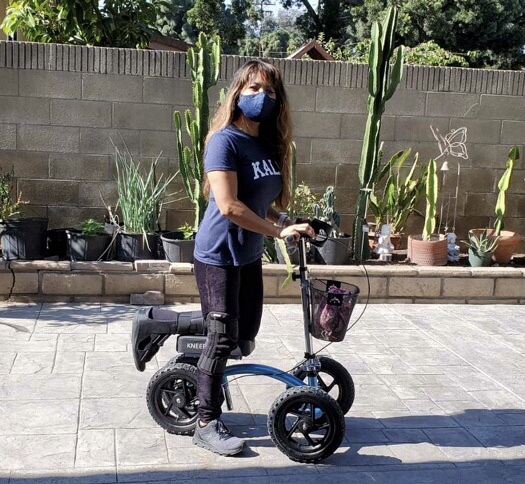
Braking is the most comprehensive here: rear drum brakes plus a locking hand brake. The 3 inch contoured knee platform is thick enough to stay comfortable over long recoveries, measures 7 by 12.5 inches, and the frame adjusts for users from 4 foot 9 to 6 foot 6 while carrying 350 pounds.
It holds 4.5 across 1167 reviews with 76% five-star, the strongest star distribution of the eight. Buyers who want genuine off-pavement capability and accept the maintenance trade-off rate it very highly.
Work out whether your ground justifies air-filled tires
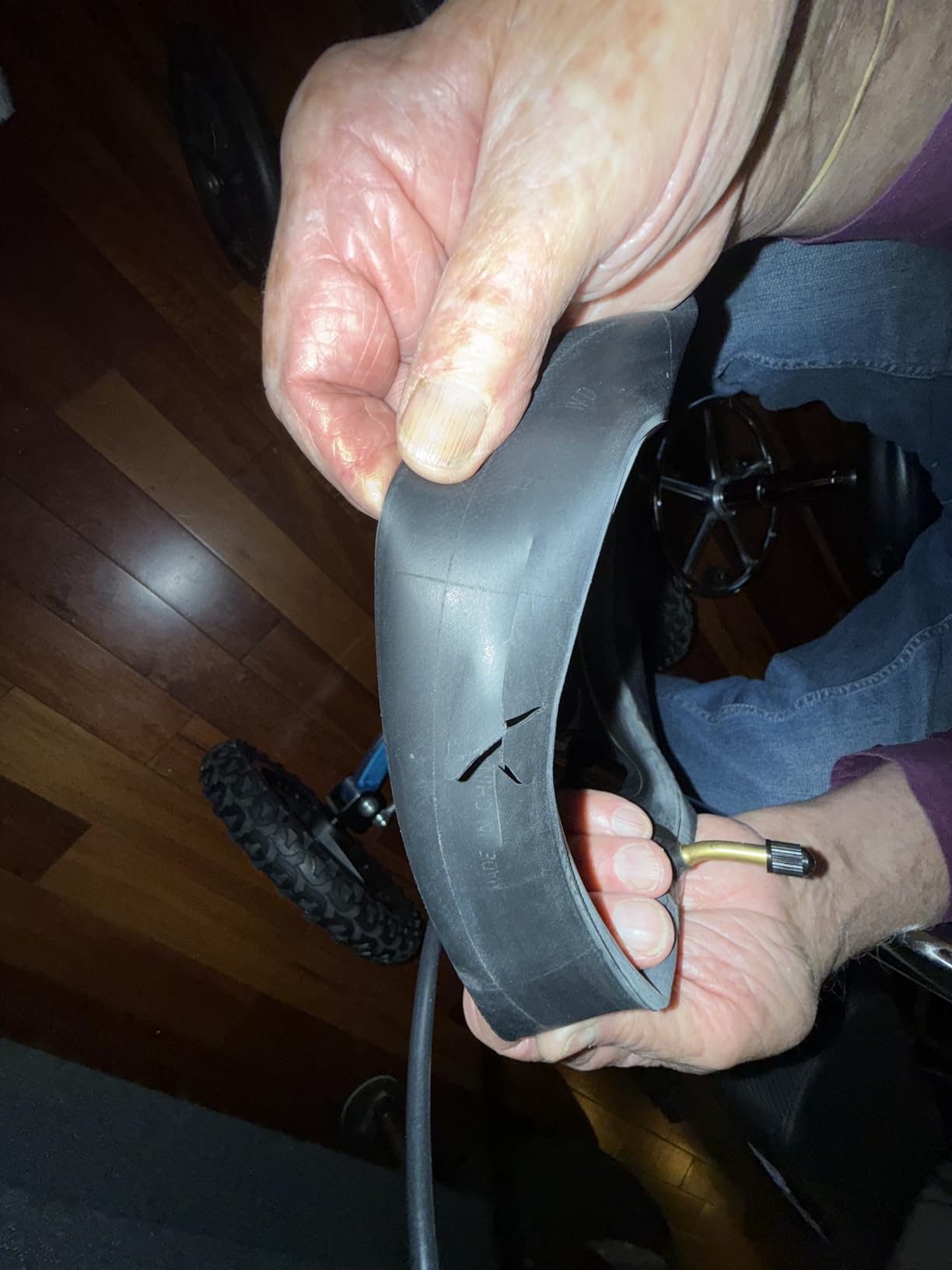
Air-filled tires are the correct choice for gravel, grass, dirt and uneven paths, because they absorb the surface instead of bouncing off it. If your recovery is entirely on carpet, tile and pavement, you are paying for tires you will never use and adding a puncture risk you do not need.
Check the pressure every couple of weeks during recovery, and keep a floor pump somewhere accessible. A soft tire on a loaded scooter feels vague and unstable.
Where this one is the wrong choice
It is the most expensive model in the roundup and the heaviest at 26.9 pounds, so budget for a deliberate two-hand lift into a car. If your recovery is indoor only, the extra capability is dead weight.
The tires can puncture, and the machine is not something you want to be diagnosing on the driveway in week two. Owners who live in flats with no storage for tools should look at a solid-wheel alternative instead.
8. KneeRover GO Hybrid Knee Scooter: Best for Travel and Folding
KneeRover GO Hybrid Knee Scooter for Adults, Green
Weight capacity 300 lbs
Unit weight 22.5 lbs
9 inch air-filled front tires
Fits users 4 ft 9 in to 6 ft 6 in
Pros
- Folds in seconds for cabs buses and under-desk storage
- Lightest air-tire frame here at about 22.5 lb
- 9 inch front tires handle mixed terrain
- 3 inch knee platform works for either leg
Cons
- 300 lb capacity is lower than several rivals
- 9 inch front tires less capable on rough ground
- Air-filled tires need pressure maintenance
The GO exists for one reason: folding. It collapses in seconds rather than in stages, which is what makes it usable on a commute, in the boot of a taxi, on a bus or under a desk at work. If you will not be spending your recovery at home, this is the model in the roundup built around a fast fold.
It is also the lightest air-tire model here at about 22.5 pounds, and it still carries a 3 inch contoured knee platform usable for either leg, which matters if you do not know in advance which side will be operated. Handlebars and knee platform adjust for users from 4 foot 9 to 6 foot 6.
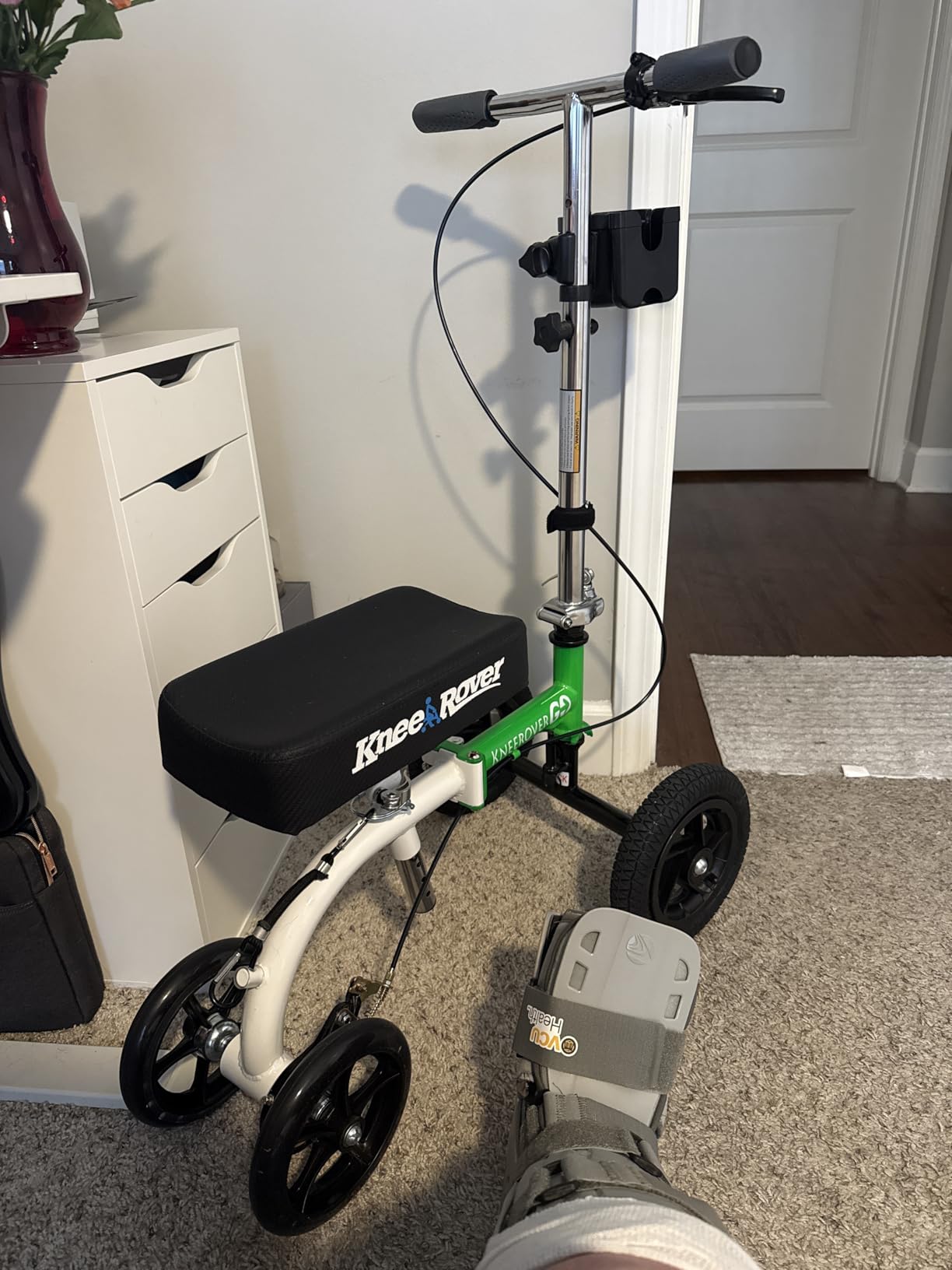
The 9 inch air-filled front tires handle pavement, garden paths and light trail terrain without the bulk of a full all-terrain machine. The fold is the headline, but the height range and the either-leg platform are quietly the more useful specifications over a long recovery.
It rates 4.4 across 679 reviews with 74% five-star. That is the smallest review base of the eight, which is the main reason it sits at number eight despite strong scores.
Plan for the trips you will actually make
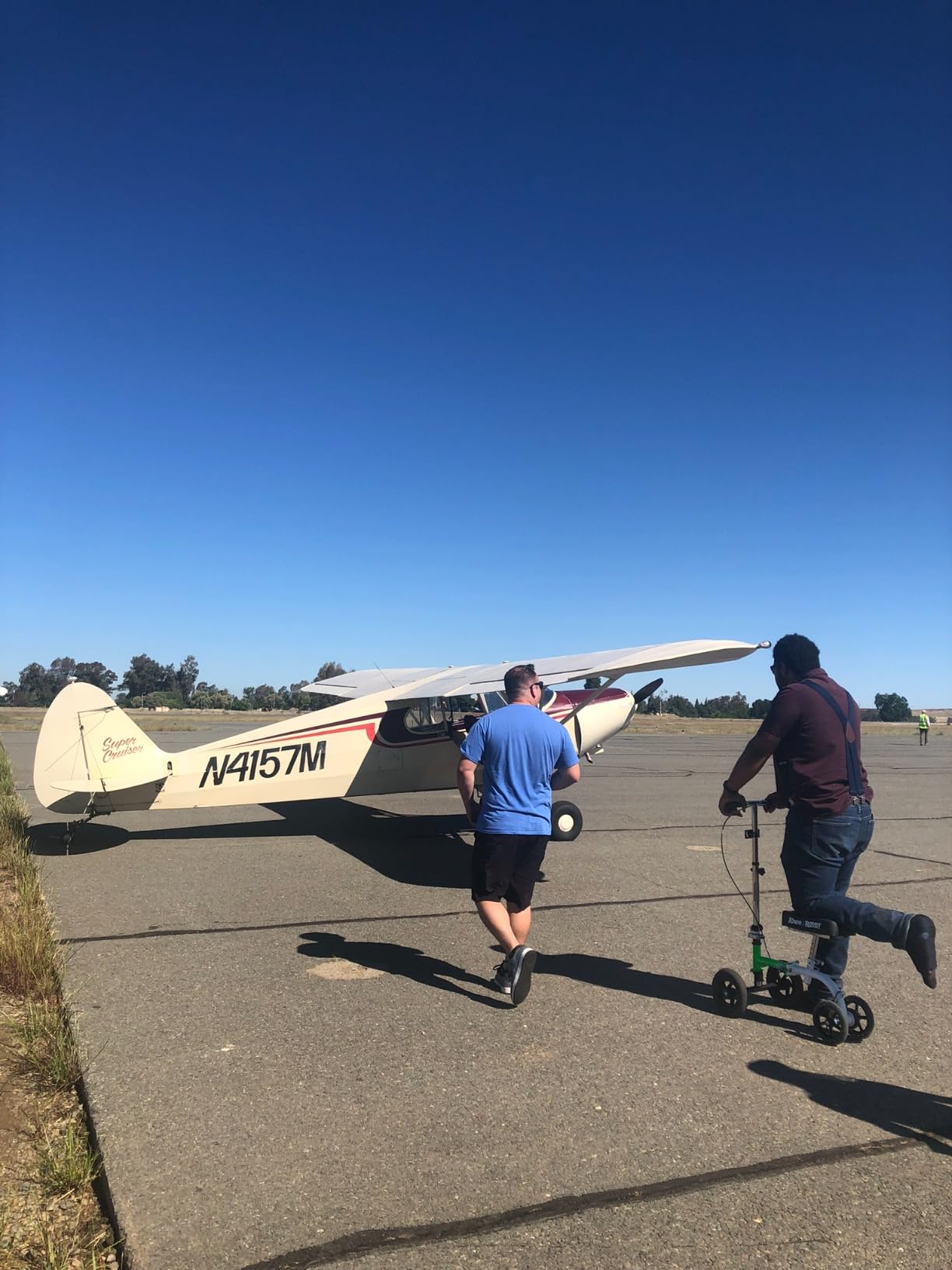
A fold that works in seconds changes which appointments you attend. If you have follow-up visits, physiotherapy or a pharmacy run in the first few weeks, work out whether the scooter has to travel with you, or whether the walking frame and crutches in your hallway will realistically get you to the car.
For anyone still working, an under-desk fold is the difference between returning to a workplace and working from a sofa for six weeks.
Where this one is the wrong choice
Capacity is 300 pounds, which is lower than several rivals here, and it is the lightest frame on the list, so it is the least stable of the eight under a heavier load. Riders approaching 300 pounds should look at a 350 pound model.
The 9 inch front tires are smaller than the Quad setup, so it is not the machine for genuinely broken ground. And with 679 ratings, the long-term durability record is shorter than the rest of the field.
Knee Walker vs Crutches vs Hands-Free Crutches
Most post-op buyers move from crutches to a knee scooter within days, and the reason is almost always control rather than comfort. On r/ORIF one patient described relying solely on a knee scooter because crutches were so hard to control that they went down on the operated foot more than once, which turned recovery into an anxiety problem. A fall on a freshly repaired foot is a serious event, and that risk is what the scooter is designed to remove.
Crutches cost almost nothing, fit in a bag and work on stairs better than any scooter. What they demand is upper-body strength and grip endurance, and both decline over a six to twelve week recovery precisely when you need them most. On r/ehlersdanlos, a long-term user put it plainly: a knee scooter is way better than crutches, and had been for almost two years after foot or ankle surgery.
Hands-free crutches, the iWALK style, are the third option and they have a real appeal: they leave both hands free. They are also the option recovery forums most often talk themselves out of. Buyers on r/bunions pre-op for surgery were leaning toward a knee scooter rather than an iWALK specifically because strapping a device on every time you get up to move around the house felt like too much friction. The scooter is already on, already rolling, and requires nothing from you to start moving.
Physical therapists also point out an underappreciated benefit: riding a knee scooter keeps the strong leg working, and patients who use one tend to stay well above average in strength and balance in the uninjured leg. That strength is what carries you when the scooter comes off at week eight.
When to Buy a Knee Walker and When to Start Using One
Buy the knee walker before your surgery date, not after. The reason is the nerve block. Patients on r/AccessoryNavicular note that the block wears off within about 24 hours for most people, and when it does the pain arrives at full strength whether or not you have a support aid in place. Ordering a scooter the same week you have surgery means spending your worst day waiting for a delivery.
Ask your surgeon’s office for a prescription at the pre-op appointment if you want insurance to cover it, and check whether the physical therapy team has a preferred supplier. Once it arrives, set the height before surgery day rather than during recovery.
Realistically you will be on it for six to twelve weeks, and users report being unprepared for how long that is. A patient on r/brokenankles at nine weeks post-op with no physical therapy still uses a scooter for longer distances and a boot for short indoor trips. Some recoveries run past three months, and if you are buying, buy the one you would be willing to keep.
Will Insurance or Medicare Cover a Knee Walker?
Yes, knee walkers are covered as durable medical equipment when a doctor documents a need for non-weight-bearing after foot or ankle surgery. Medicare Part B typically covers a knee walker at 80% of the allowed amount after your deductible, provided you have a prescription and the supplier bills Medicare directly. The prescription must state the diagnosis and the non-weight-bearing restriction.
Two practical notes. First, if you are not going through the post-operative pathway, a private purchase is often simpler than a paperwork fight, particularly for a recovery measured in weeks. Second, the 80% applies to the allowed Medicare amount, not necessarily what the retailer charges, so ask the supplier for the exact figure before you commit.
Suppliers will also rent rather than sell, and for a six to twelve week recovery renting is often the cheaper route. Buy if you want it for future injuries, rent if you want the newest model for one recovery.
How to Adjust, Ride and Safely Mount a Knee Scooter
Set the height before you need it, not during recovery. Sit on the knee pad with your operated leg straight and your good foot flat on the floor. Adjust the handlebar so your back is upright with a slight bend in the good knee, and adjust the knee pad so the leg is fully supported from the ankle to just below the knee. Anything tighter than a full-length support concentrates pressure on the kneecap and is the main cause of sore knees in week three.
Mounting is where most people get hurt. Sit down first, then swing the good leg around and place both hands on the handlebar before you push. Never step onto the scooter while hopping on the good leg alone.
Push with the good leg in short strokes rather than one long lunge, keep both hands on the handlebar, and always slow down before turning. A steering column does not turn instantly, and turning sharply at speed is the most common tip-over reported on these machines.
There are situations where a knee scooter is the wrong aid entirely. Do not use one on stairs; the risk of a fall outweighs the benefit, and a standard handrail is safer. Avoid it on steep slopes. Do not use one if both legs are involved. If you have significant balance issues or a history of falls, a standard walking frame is more stable, and a very tall rider who lacks confidence steering should test several models before buying.
Knee Walker Buying Guide: What Actually Matters
Weight capacity comes first. Check your body weight against the rated limit before anything else. Most models here are rated at 300 pounds and a few reach 350, and the gap between a 300-pound and a 350-pound frame is structural, not cosmetic. Riders approaching either limit should assume the frame feels less stable and choose the higher capacity.
Steerability determines your usable space. A steerable frame turns like a shopping trolley, which is what makes tight hallways and small bathrooms manageable. A fixed column goes in a straight line and is fine for corridors but frustrating in a kitchen. Every model in this roundup steers.
Wheel size decides your terrain. Eight-inch wheels are for carpet, tile and pavement. Eleven to twelve inch wheels, whether pneumatic or solid, handle gravel, grass and dirt. Solid wheels need no maintenance; air-filled wheels absorb rough ground better but need pressure checks and can puncture. Choose solid for flats and paths, air-filled for genuine off-pavement recovery.
Brakes matter more than most buyers expect. Dual rear friction brakes give a controlled stop. A disc brake with a lock is stronger still, and a park setting matters if you will ever dismount on a slope. This is one of the easiest places to buy a real upgrade.
Height range decides comfort. Handlebar height and knee pad height adjust separately on every model here, and the range is what determines whether you can ride upright or hunched. If you are over 6 foot 5, look for a 6 foot 6 rating and a handlebar above 40 inches. If you are under 5 foot, look for a range that starts low, around 15 to 16 inches at the knee pad.
Foldability is about your car and your job. If you will drive yourself to appointments, the collapsed size has to fit your boot. If you plan to work, under-desk storage matters. Weight is the hidden cost: 22 pounds is a one-hand lift, 30 pounds is a planned two-hand lift with a helper.
Baskets and knee pads. A basket handles a phone, a water bottle and a lunchbox, not a full meal or a laundry pile. Carry twice. And if your recovery will run past six weeks, buy a knee pad cover at the same time, because firm padding is the most common long-term comfort complaint across every review set we read.
Either-leg capability. If you do not know which side will be operated, choose a platform that works for either leg rather than one built for a single side. It costs nothing to check.
Alongside the scooter, most buyers also add compression garments for swelling, which is what our guide to the [best knee compression sleeves for joint support](https://austineubanks.com/best-knee-compression-sleeves-for-joint-support/) covers, plus a shower chair, an ice machine and a firm seat with a high arm. If a second person will be assisting, a standard walker for short indoor trips is useful, and our [rolling walker reviews](https://austineubanks.com/best-rolling-walkers-for-seniors/) cover that category.
Frequently Asked Questions
What is the best knee scooter to use after foot surgery?
The Drive Medical DV8 is our top pick for most recoveries: a steerable four-wheel frame, 300 lb capacity, tool-free height adjustment on both the handlebar and the knee pad, and a folding steering column for storage. For longer non-weight-bearing periods, the Roscoe Medical spreads the load across both sides of the kneecap with dual padded knee rests. Choose an all-terrain model with 11 to 12 inch wheels only if you will be on gravel or grass.
Are knee walkers better than crutches?
For most post-op foot and ankle patients, yes. A knee walker keeps the surgical site elevated and non-weight-bearing, moves at walking pace, and removes the upper-body strength and grip that crutches demand. Crutches cost less, fit in a bag and work better on stairs, but they tire the arms and hands over a six to twelve week recovery, which is exactly when patients report falling.
How soon after foot surgery can I use a knee scooter?
Practically, from day one. The nerve block wears off within roughly 24 hours for most patients, and that is when the pain arrives at full strength. Buy and set the scooter up before your surgery date so it is already adjusted and waiting. If your surgeon has you in a cast or a specific offloading instruction, follow their guidance over any general advice.
How much weight can a knee scooter hold?
Most models in this roundup are rated at 300 pounds, and the heavier all-terrain frames reach 350 pounds. Check the rated capacity against your body weight before buying, and if you are near the limit choose the 350-pound models, which use a heavier frame and feel more stable when loaded. The rating applies to the user plus anything carried in the basket.
Will Medicare pay for a knee walker after foot surgery?
Medicare Part B typically covers a knee walker at 80 percent of the allowed amount after your deductible, as durable medical equipment, provided a doctor documents the need for non-weight-bearing and the supplier bills Medicare directly. The prescription needs to state the diagnosis and the weight-bearing restriction. Private purchase is often simpler if you are outside the post-operative pathway.
What are the downsides of using a knee scooter?
The main drawbacks are carrying capacity, terrain limits and stairs. A basket holds a phone and a water bottle, not a full meal. Eight-inch wheel models struggle on gravel and grass. Never use a scooter on stairs, and avoid it if both legs are involved, on steep slopes, or if you have significant balance problems, since a standard walking frame is more stable in those situations.
The Verdict on the Best Knee Walkers for Foot Surgery in 2026
The Drive Medical DV8 is our pick for most people: steerable, adjustable without tools, 300 pound capacity and a folding column, with the second deepest review base in the roundup. If your recovery will run long, the Roscoe Medical’s dual padded knee rest is worth the upgrade. If you will be on gravel and grass, the KneeRover Quad handles it best, and the KneeRover GO wins if folding speed matters more than anything.
Whatever you choose, order it before your surgery date, set the height while you can still use both legs properly, and expect six to twelve weeks on it. Those three details matter more to how the recovery feels than the difference between two wheel sizes.