
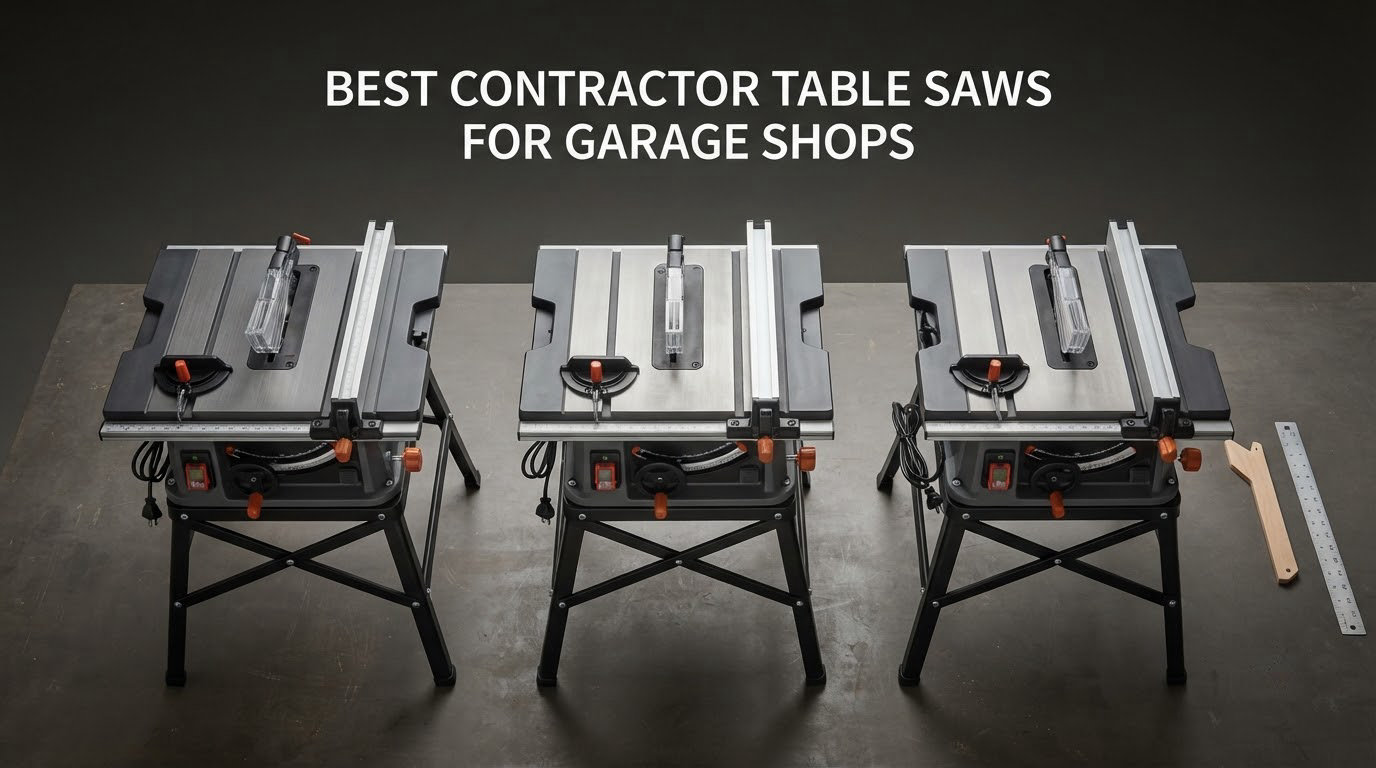
The best contractor table saw for a garage shop is the one that fits the bay, runs on the circuit you already have, and holds a square fence after a season of humidity and dust. Ten saws made the cut for this guide, and the DEWALT DWE7485 leads them because it combines the highest owner rating in the group with a footprint that still works in a single-car garage.
Most published roundups treat a garage as an afterthought. They rank saws on rip capacity and fence accuracy and ignore the three things that actually decide whether a table saw lives in your shop: floor footprint, branch circuit, and how much of the cut you can support alone. A saw that scores beautifully on a spec sheet can be unusable behind a closed garage door with a two-car bay, a car in the second stall, and a duplex receptacle already shared with the door opener.
How we picked: we compared all ten saws on motor output and no-load RPM, rip capacity, depth of cut at 90 and 45 degrees, table material and size, fence type, dust port diameter, stand footprint, warranty length, and the volume and spread of owner reviews. Anything under 100 ratings lost points for an unproven service record, and every saw here got at least two real cons rather than one line of praise. We last updated this guide in 2026.
A note for anyone building out a mixed shop: our guides on metal band saws for fabrication and pole saws for tree trimming cover the other half of a typical two-vehicle garage, where floor space is the binding constraint rather than cut capacity.
Table of Contents
Top 3 Picks: Contractor Table Saws for Garage Shops in 2026

DEWALT DWE7485 Compact Saw
- Tool-free Site-Pro guarding
- 24.5 in. rip capacity
- Rack and pinion telescoping fence
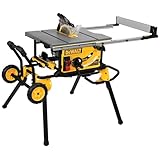
DEWALT DWE7491RS with Stand
- 32-1/2 in. rip capacity
- Cast iron table with 2-1/2 in. dust port
- Foldable rolling stand
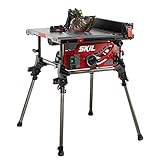
SKIL TS6307-00 Jobsite Saw
- Integrated folding stand
- 4x4 capacity at 90 degrees
- Parallel blade micro-adjust
Best Contractor Table Saws for Garage Shops in 2026
| Product | Specifications | Action |
|---|---|---|
| DEWALT 15 Amp 8-1/4 in. Compact Portable Jobsite Table Saw (DWE7485) |
|
Check Latest Price |
| DEWALT DWE7491RS 10 Inch Table Saw with Foldable Rolling Stand |
|
Check Latest Price |
| SKIL 15 Amp 10-Inch Jobsite Table Saw with Folding Stand TS6307-00 |
|
Check Latest Price |
 SKIL 10 Inch Heavy Duty Worm Drive Table Saw SPT99-11 SKIL 10 Inch Heavy Duty Worm Drive Table Saw SPT99-11 |
|
Check Latest Price |
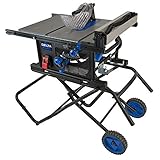 Delta 36-6023 10 Inch Table Saw with 32.5 Inch Rip Capacity Delta 36-6023 10 Inch Table Saw with 32.5 Inch Rip Capacity |
|
Check Latest Price |
 BOSCH GTS15-10 10 Inch Portable Jobsite Table Saw with Rise Wheeled Stand BOSCH GTS15-10 10 Inch Portable Jobsite Table Saw with Rise Wheeled Stand |
|
Check Latest Price |
 SKIL 15 Amp 8-1/4-Inch Compact Portable Jobsite Table Saw TS6308-00 SKIL 15 Amp 8-1/4-Inch Compact Portable Jobsite Table Saw TS6308-00 |
|
Check Latest Price |
 EVOLUTION R10TBLX 10 Inch Jobsite Table Saw with Wheeled Stand EVOLUTION R10TBLX 10 Inch Jobsite Table Saw with Wheeled Stand |
|
Check Latest Price |
 Prostormer 10 Inch Table Saw with Stand Prostormer 10 Inch Table Saw with Stand |
|
Check Latest Price |
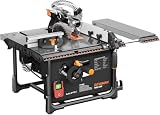 DOVAMAN 15A 8.5 Inch Dustless Portable Table Saw DTS02M DOVAMAN 15A 8.5 Inch Dustless Portable Table Saw DTS02M |
|
Check Latest Price |
What Is a Contractor Table Saw?
A contractor table saw is a mid-size saw with a cast-iron or aluminium table, an open tubular steel stand, and a motor in the 3 to 5 HP range. It sits between a jobsite saw and a cabinet saw: more stable and more accurate than the portable class, but lighter and far smaller than a full cabinet machine, which is exactly what a residential garage can hold.
That middle position is why the contractor class keeps showing up in garage-shop conversations. Jobsite saws are built to survive a truck bed and fold up small, but their thin tops and short stands flex under a full sheet of plywood. Cabinet saws stay put beautifully and simply will not fit through a garage door or between two vehicles. Contractor saws give you a bolted-down cast top, a rack and pinion fence, and a stand you can still wheel into a single bay.
The terminology is not perfectly consistent across brands. Several manufacturers now label their 10-inch jobsite saws as contractor saws, and a few compact saws with folding stands get sold under the same name. So judge by the numbers rather than the badge: table material and size, rip capacity, and stand footprint tell you what class a saw really belongs to.
Contractor vs Jobsite vs Compact vs Cabinet vs Hybrid Table Saws
These four classes plus the hybrid divide along predictable lines, and picking the wrong one is the most common garage-shop regret.
Compact saws use 8-1/4-inch or 8-5-inch blades and weigh 40 to 54 pounds. They cut thin stock beautifully and store against a wall in seconds, but an 8-1/4-inch blade limits depth of cut, so a 2×8 on edge is out of reach. Three saws in this roundup fall here.
Jobsite saws run 10-inch blades on folding or roll-cage bases, usually with 15 amp motors and 4800 to 5800 rpm. They are the default garage choice because they break down fast, yet they still flex when the load is a full 4×8 sheet. The DEWALT DWE7491RS, SKIL TS6307-00 and Bosch GTS15-10 sit in this group.
Contractor saws add a proper cast-iron top with larger working area, a heavier stand, and more substantial fence systems. Rip capacity climbs past 32 inches, and the saw stays where you put it. The Delta 36-6023 with its stacked dado capacity is the clearest example in this list.
Cabinet saws are 300 to 500 pound cast-iron machines with enclosed cabinets and 5 HP three-phase-capable drives. They are the accuracy benchmark and completely wrong for a single-car garage.
Hybrids sit between contractor and cabinet: three-phase 5 HP drives, cast tops, and a rolling base. They need 240V in most homes, so they are out of reach for a typical garage branch circuit.
1. DEWALT DWE7485 Compact Jobsite Table Saw – Best Overall for a Garage Shop
DEWALT 15 Amp 8-1/4 in. Compact Portable Jobsite Table Saw (DWE7485)
15 Amp, 5800 rpm
24.5 in. rip capacity
Site-Pro modular guard
54 lb roll cage base
Pros
- Highest owner rating in the roundup at 4.8 stars across 5812 reviews
- Tool-free modular guarding adjusts faster than bolt-on guard kits
- 24.5 in. rip capacity covers 4x8 sheet goods
- Rack and pinion telescoping fence rails move smoothly and hold position
- Power-loss reset prevents surprise restarts after an outage
Cons
- 8-1/4 in. blade caps depth of cut below 10 in. saws
- On-board accessories must be removed before folding for transport
The DWE7485 is the one I keep coming back to for garage work because it answers the space problem before the spec sheet does. At 54 pounds and 22.75 by 22.75 by 13 inches, it is the smallest footprint in this group that still rips a full sheet, and it gets there with a 15 amp motor running at 5800 rpm. That headroom is real: it is the fastest no-load speed of any saw here, and 5800 rpm is what keeps a 3/4-inch plywood edge from burning on the exit side.
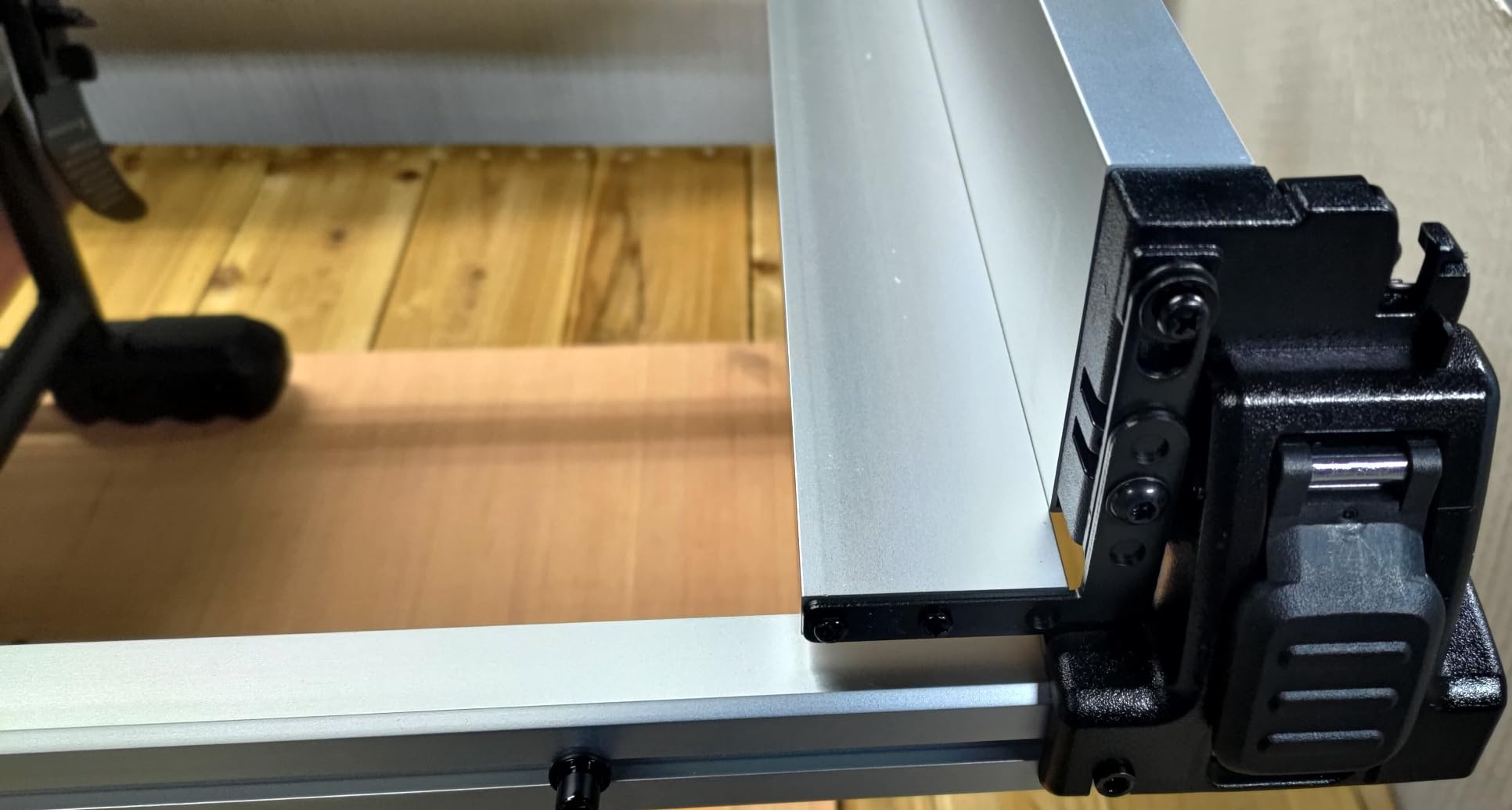
Owner feedback backs the machine up. Across 5812 reviews the saw holds a 4.8 average with 89 percent five-star ratings, and the fence rails come up again and again as the reason cuts repeat. The rack and pinion telescoping rails glide without the backlash you get on cheaper front-mounted fences, which matters more than raw rip capacity once you start cutting repeat parts for a project.
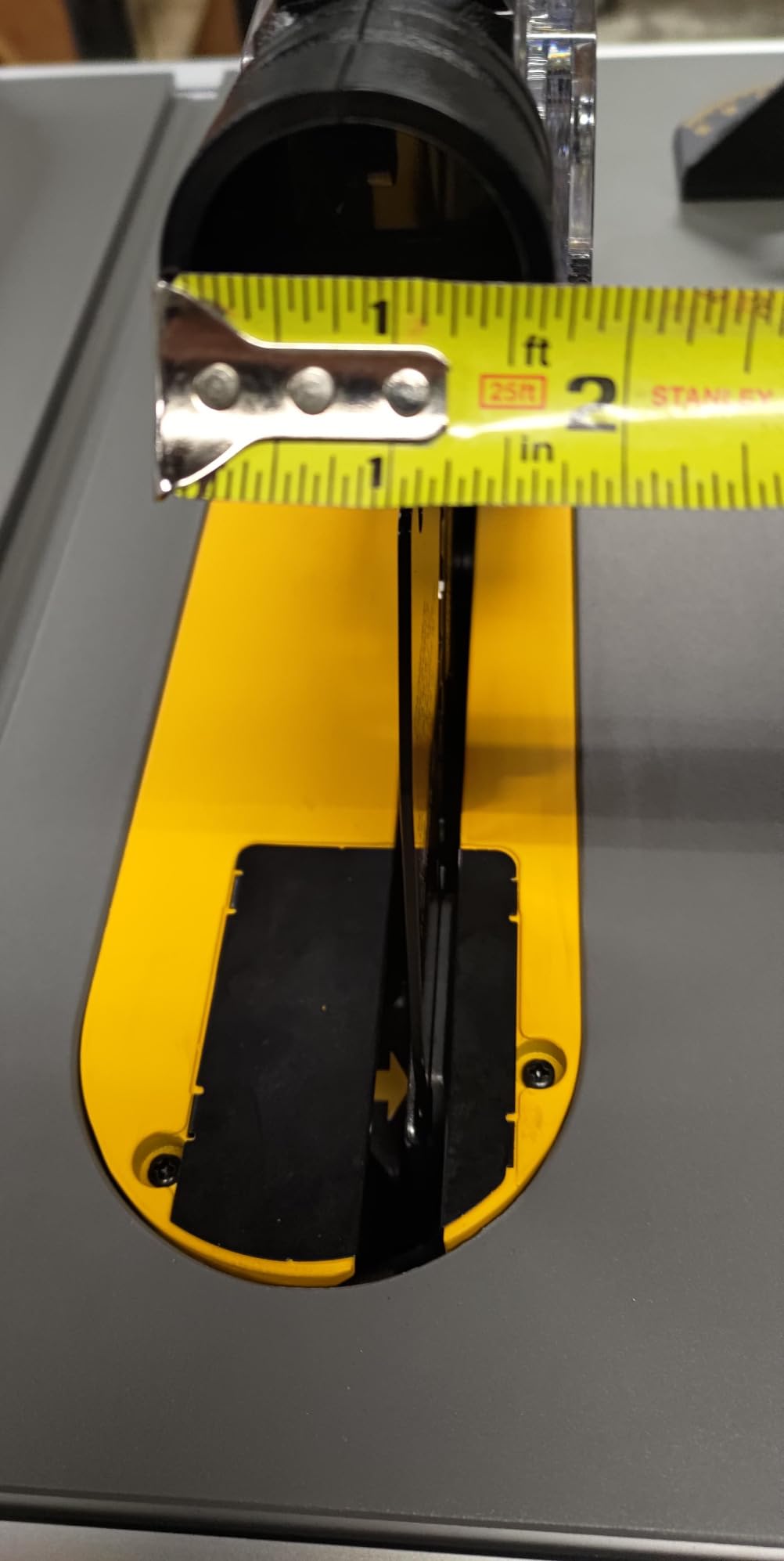
The Site-Pro modular guarding system is the detail that gets missed in spec comparisons. Because the guard mounts on a modular rail, you can reposition it without a hex key, which means you can cut tall stock with it in the way instead of removing the whole assembly. The metal roll cage base underneath takes the punishment of being dragged across a garage slab, and on-board storage keeps the guard, fence, wrenches, and miter gauge with the saw rather than scattered on a shelf.
Where it falls short is honest and predictable: an 8-1/4-inch blade cannot crosscut a 2×8 on edge, and depth of cut on thick hardwood is correspondingly smaller. If your garage projects are dimensional lumber and shelving, that is a non-issue. If you build furniture from 6/4 stock, look at the 10-inch saws further down.
How the DWE7485 handles a one-car garage
This is the saw I recommend when the bay is the constraint rather than the workpiece. It wheels out from a wall corner, sets up in a footprint you could park a bicycle in, and folds back down when you need the car. Nothing else in this roundup stores that small while keeping a sheet-goods rip capability of 24.5 inches.
The 120-volt, 15 amp draw also matters. It runs on a standard household branch circuit without needing a dedicated run, which is a genuine saving when the only available receptacle already serves the garage door opener.
Where the 8-1/4-inch blade becomes a real limit
Ripping and crosscutting sheet goods, trim, and 1x material is where this saw is strongest, and the high blade speed makes for a cleaner edge on plywood. The moment your project list includes 2x8s on edge or thick hardwood slabs, the 8-1/4-inch blade becomes the limiting factor rather than the motor.
Also worth knowing before you buy: the accessories have to come off before the saw folds for transport. It is a small annoyance, but in a tight garage you will do it more often than you expect.
2. DEWALT DWE7491RS 10 Inch Table Saw – Best for Sheet Goods and Full-Size Lumber
DEWALT Table Saw 10 Inch with Foldable Rolling Table Saw Stand, 15 Amp, 4800 RPM, 32-1/2-Inch Rip Capacity (DWE7491RS)
15 Amp, 4800 rpm
32-1/2 in. rip capacity
21-7/8 x 26-3/8 in. cast table
2-1/2 in. dust port
Pros
- 32-1/2 in. rip capacity handles full-size sheet goods and thick timbers
- 15 amp motor powers through hardwood ripping
- Patented material support enables narrow rip cuts on thin stock
- On-board storage for the full accessory set
- Foldable rolling stand simplifies setup and breakdown
- 3 year limited warranty
Cons
- 110 lb saw and stand combined is heavy to move as one unit
- Some early-production units and stands reported arriving with alignment or assembly issues
The DWE7491RS is the largest-capacity saw in this roundup by a wide margin, and 32-1/2 inches of rip capacity is the number that matters when you are standing at the end of a 4×8 sheet trying to get a usable panel out of it. The 21-7/8 by 26-3/8-inch cast table is real cast iron, and it is the difference between a fence that stays where you put it and one that creeps during a long rip.
Depth of cut is 3-1/8 inches at 90 degrees and 2-1/4 inches at 45 degrees, so a full 2×8 goes on edge without a struggle. Owners credit the 15 amp motor with handling hardwood ripping without bogging, and the 2-1/2-inch dust port is the largest port in this group, which makes connecting a shop vacuum straightforward and keeps the floor of a closed-door garage far cleaner.
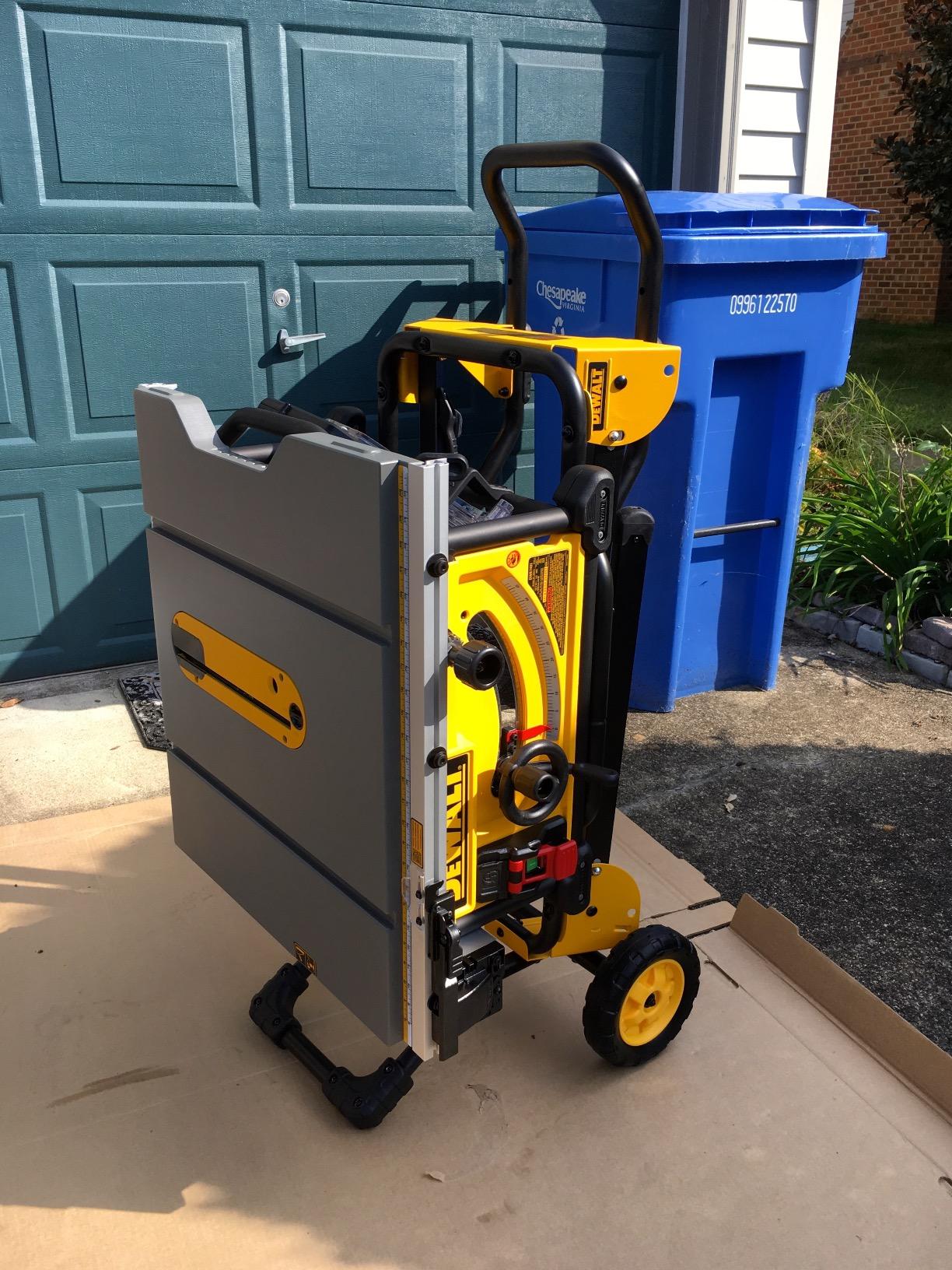
The patented material support is an underrated piece of engineering. It flips over the front rail so a thin strip has something to rest against, which turns the saw into a real narrow-rip machine. Most garage builders end up making dozens of narrow strips for face frames and trim, and that is exactly the cut where a thin offcut becomes a riving knife hazard without a support.
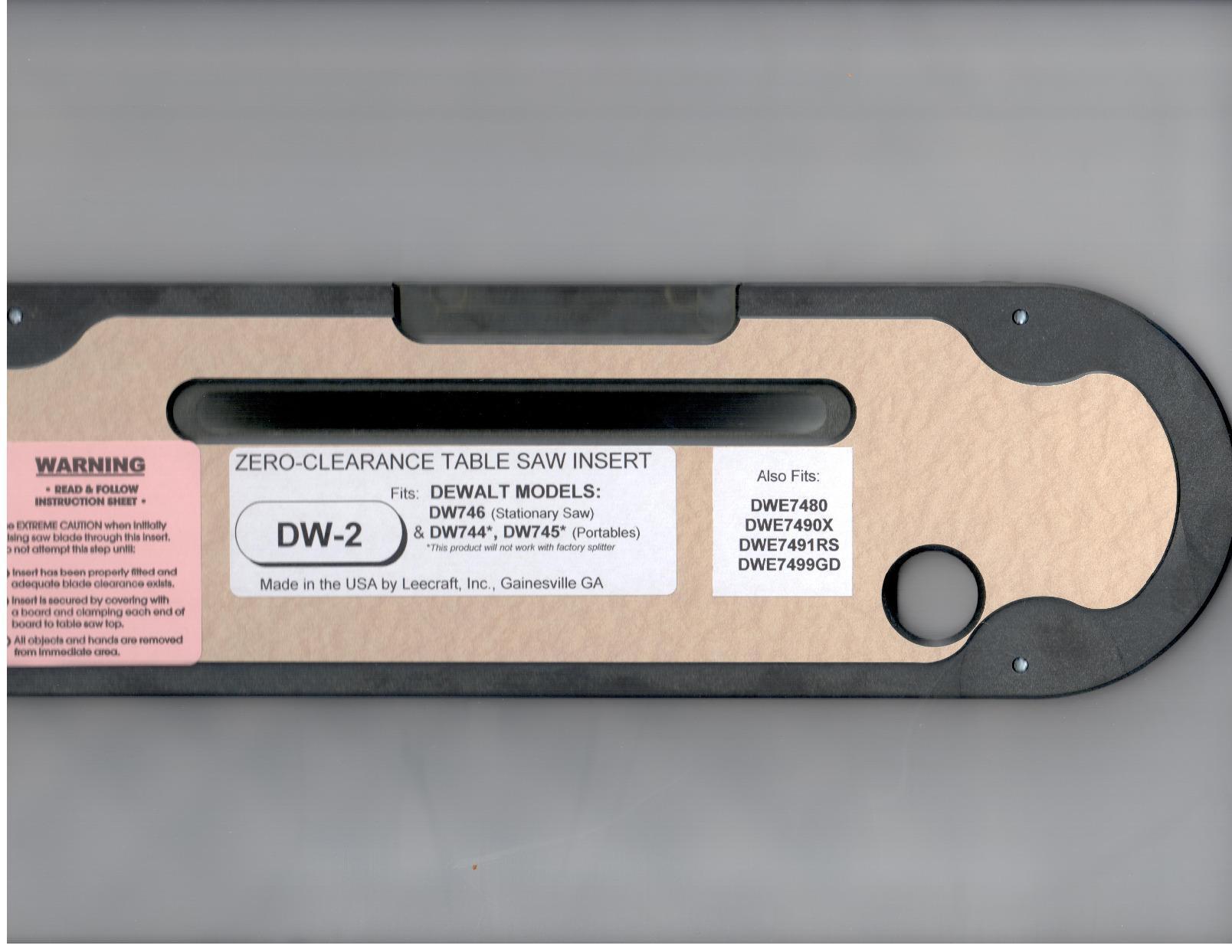
Onboard storage is unusually complete here: the blade guard assembly, rip fence, riving knife, miter gauge, wrenches, push stick, and cord wrap all ride with the saw. In a garage where bench space is measured in inches, that is worth more than it sounds.
Where this saw earns its footprint
This is the pick for a two-car garage where one stall is already a shop. At 31 by 24 by 28.52 inches for saw and stand, it occupies a corner comfortably, but you want outfeed support on the far side for full sheets, and that is where the extra floor space goes.
The rip fence system uses rack and pinion rails, so fence moves are fast and repeatable, and the 4800 rpm blade speed is a good compromise between crosscut finish and motor torque.
The weight and alignment caveats
At 110 pounds for the saw and stand together, this is a two-person repositioning job in a tight garage. Plan a fixed location near your material rack rather than moving it per project, and put the stand wheels on the smoothest slab you have.
A minority of early-production saws and stands arrive needing alignment work out of the box. That is a known issue rather than a defect, but budget an hour on the first Saturday to square the fence and check the blade parallel to the miter slot before you cut anything you care about.
3. SKIL TS6307-00 10-Inch Jobsite Table Saw – Best Value for a Garage Shop
SKIL 15 Amp 10-Inch Jobsite Table Saw with Folding Stand-TS6307-00
15 Amp, 1800 watts
4x4 capacity at 90 degrees
Integrated folding stand
51.2 lb
Pros
- Rack and pinion fence rails hold the fence parallel to the blade
- Integrated folding stand stores flat against a wall
- Parallel blade micro-adjust lets you re-square the blade yourself
- Aluminum table is flat and aligned out of the box
- Cuts full 4x4 material at 90 degrees
Cons
- Included miter gauge is weak and often replaced with an aftermarket sled
- Stock 24-tooth blade causes tear-out on hardwood
- Extensive plastic parts limit heavy-duty longevity
The TS6307-00 is the value pick of this roundup, and the reason is simple: the two things most garage builders complain about on entry-level saws, fence precision and alignment adjustability, are both standard here. The rack and pinion rails keep the fence parallel to the blade, and the parallel blade micro-adjust lets you correct drift yourself instead of calling a service technician.
It cuts 4×4 material at 90 degrees, bevels from 2 to 47 degrees with positive stops at 0 and 45, and rip capacity runs to roughly 25 inches, which handles full sheet goods with an outfeed support. At 51.2 pounds and 28.74 by 27.17 by 16.93 inches with the stand folded in, it is the easiest 10-inch saw in the group to move between a workbench and the floor.
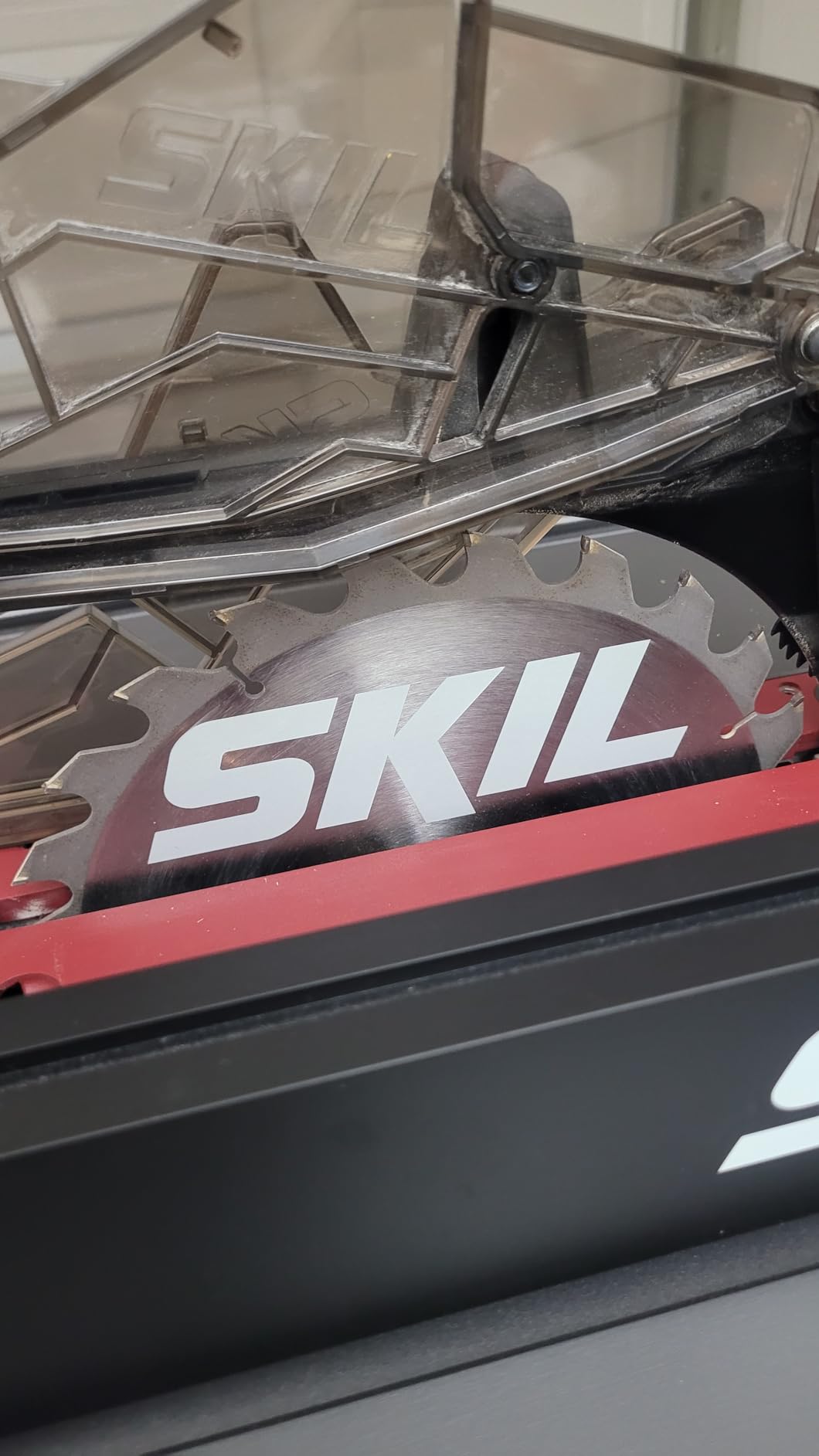
Owner feedback is strongly positive at a 4.7 average across 2947 reviews with 81 percent five-star ratings, and the fence and folding stand are the two features that come up most often as reasons it beats more expensive saws. A 3 year limited warranty is longer than most of the machines in this class.
The dust port elbow is a nice touch for a closed garage. It redirects debris to a single collection point rather than letting fines settle under the stand, which is the difference between sweeping once a week and sweeping every session.
Who this saw suits in a garage
This is the right pick for weekend builders and remodelers who move between the garage and a job site. The integrated folding stand needs no assembly to raise or lower, so setup takes under a minute and there is nothing to store separately.
It is also a sensible first saw for anyone who wants a 10-inch blade without the 100-pound weight of a full stand package, and the aluminum table is already factory aligned.
Where the cheap parts show
The bundled miter gauge is the weakest component on the machine and is the first thing most owners replace with an aftermarket crosscut sled. The stock 24-tooth blade also tears out on hardwood, so budget for a higher-tooth blade early on.
Be aware the riving knife only works with a blade that has a kerf of 0.1 inch or greater, so a very thin-kerf aftermarket blade can disable it. Check the kerf spec before you swap blades.
4. SKIL SPT99-11 Heavy Duty Worm Drive Table Saw – Best for Deep Rip Capacity on Thick Stock
SKIL 10 Inch Heavy Duty Worm Drive Table Saw with Stand – SPT99-11
Worm drive gearing
3-5/8 in. depth of cut
30-1/2 in. rip capacity
16 in. rolling stand wheels
Pros
- Worm drive gearing delivers deep cutting with less blade deflection
- 3-5/8 in. depth of cut handles thick stock on edge
- Heavy-duty build suited to sustained workloads
- Rugged rolling stand with 16 in. wheels and easy-load handles
- Outfeed and side support allow one person to handle larger cuts
Cons
- 1 year limited warranty is the shortest in this roundup
- 94.3 lb saw plus stand is bulky in tight aisles
Worm drive gearing is the reason this saw behaves differently from the direct-drive machines around it, and it is the reason it lands here. The gearbox slows the blade, which lets it push through a 3-5/8-inch depth of cut and a 30-1/2-inch rip with far less deflection than a thin, fast blade would show. If you rip thick hardwood slabs or pressure-treated lumber, that is a capability the other saws in this list approach but do not reach.
Rip capacity of 30-1/2 inches clears a full 4×8 sheet with room to spare, and the rolling stand with 16-inch wheels plus easy-load handles is the most mobile stand package here. Owners consistently cite the outfeed and side support as the reason a single person can handle a large panel without a helper on the far end.
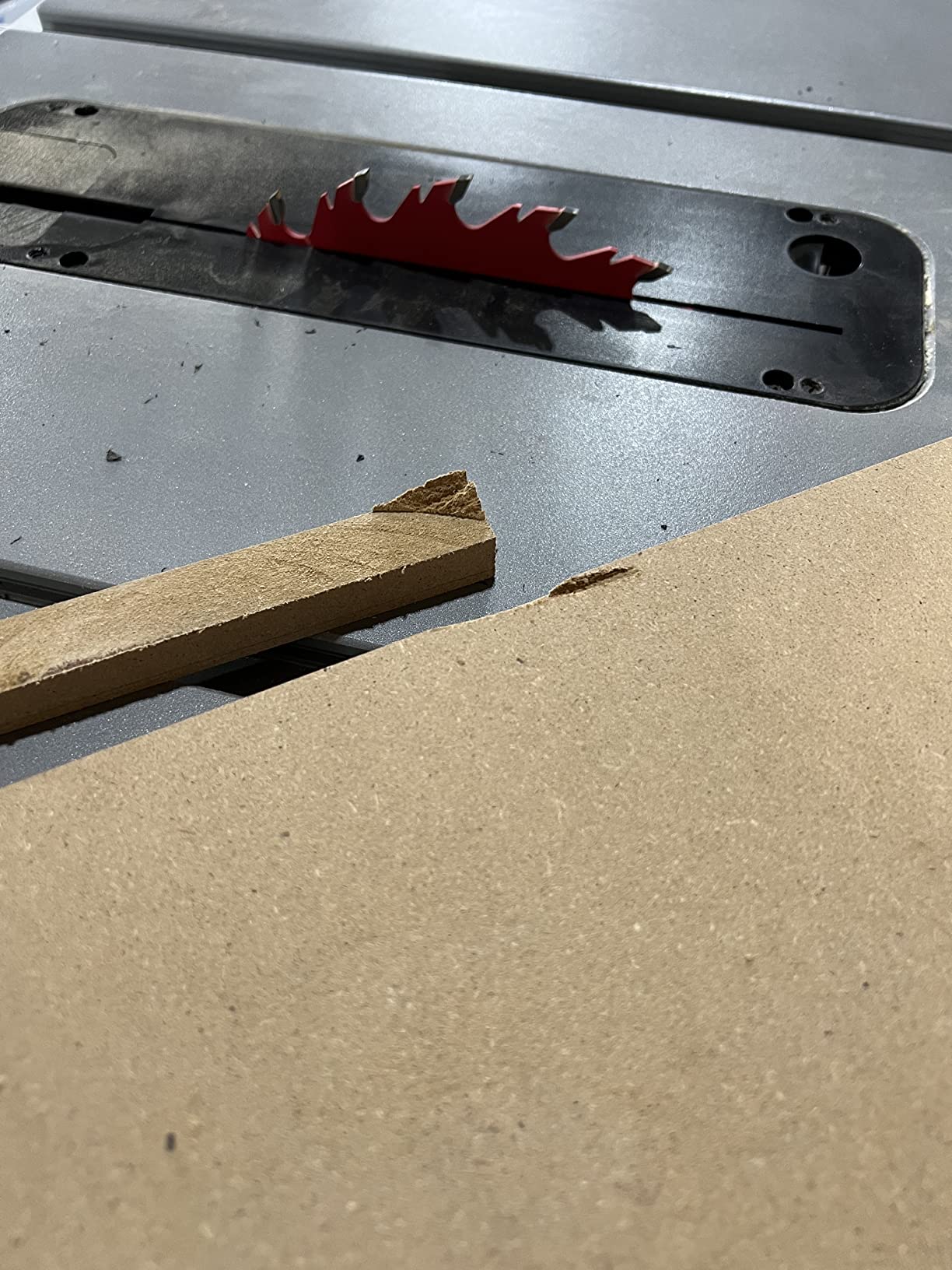
The Smart Guard System includes a riving knife, an anti-kickback device, and the guard assembly, which is a complete safety package rather than a bolt-on add. The dust port elbow again collects debris to one area, which matters if your garage door stays closed through the winter.
At a 4.6 average across 992 reviews with 78 percent five-star ratings, the ownership experience is solidly positive, and the criticism concentrates on one thing: the warranty.
Why worm drive earns its footprint
At 39.76 by 30.2 by 20.08 inches, this is the largest stand footprint in the roundup. It wants a real corner of a two-car bay, not a sliver along a wall, and the 94.3-pound weight means you will set it up once and leave it.
What you get for that floor space is the deepest cut capacity and the most stable drive in this group, plus a stand that rolls over uneven garage concrete thanks to the larger wheels.
The warranty and bulk trade-offs
A 1 year limited warranty is the shortest of any saw here, and on a machine this heavy that gap is worth thinking about. A cast-iron top that sits in an unheated garage for years is exactly the environment where cracks and corrosion show up, and a longer warranty is real protection there.
Also plan for it being bulky. In a narrow aisle between the saw and a workbench, the stand is awkward to rotate, so map the turning radius before you commit to this corner.
5. Delta 36-6023 10 Inch Table Saw – Best for Dado and Box Work
Delta 36-6023 10 Inch Table Saw with 32.5 Inch Rip Capacity
15 Amp contractor grade motor
32.5 in. rip capacity
13/16 x 8 in. stacked dado
5 year warranty
Pros
- Only saw here with 13/16 x 8 in. stacked dado capacity for box and cabinet work
- 32.5 in. rip capacity handles large material
- 15 Amp contractor grade motor takes treated lumber and hardwoods
- 5 year professional warranty is the longest in the roundup
- Rack and pinion fence rails for fast accurate moves
Cons
- Lowest rating and smallest review base in the group
- No dust collection port listed in the specifications
- Limited accessory list in the box
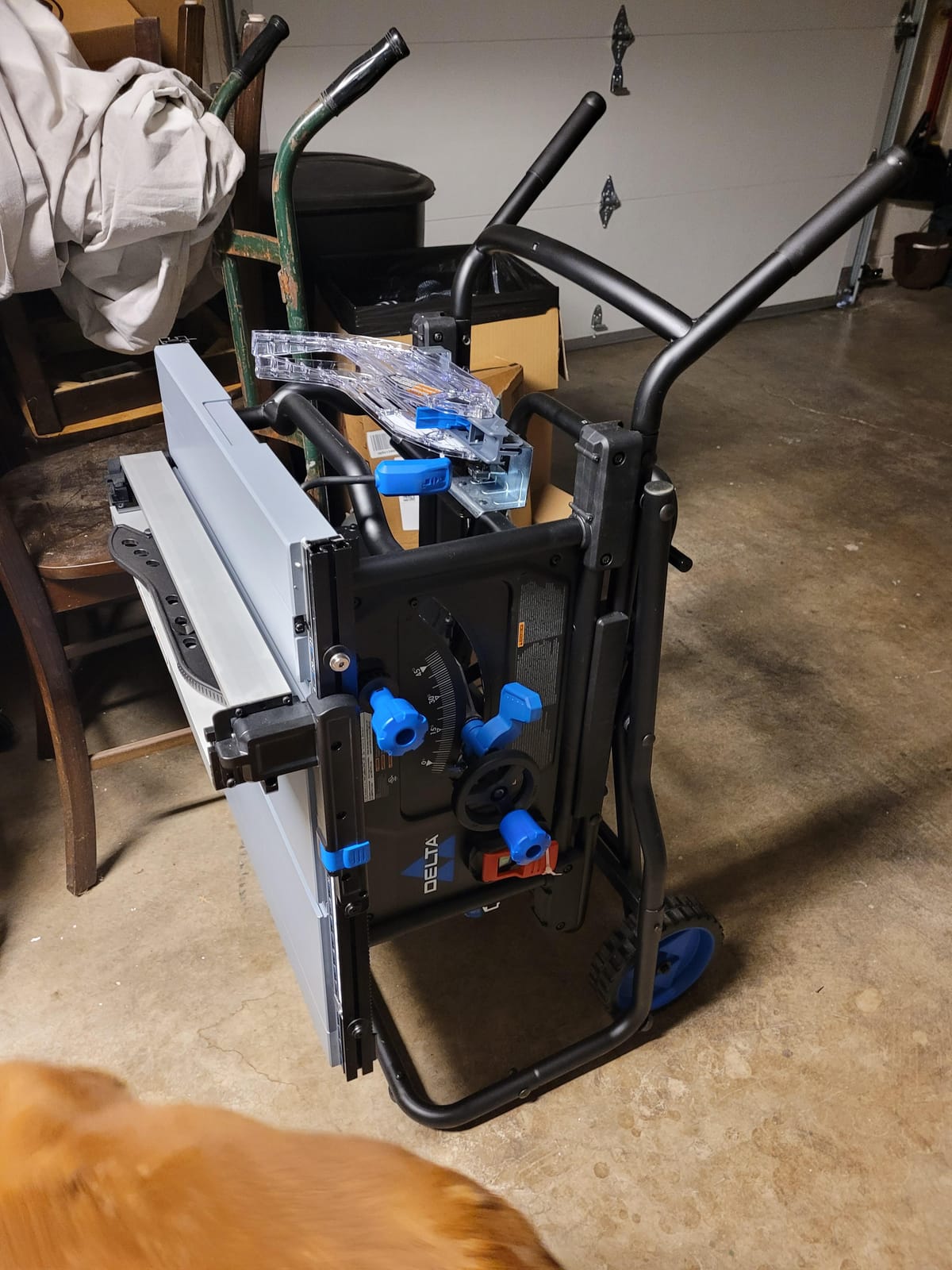
The 36-6023 is the only saw in this roundup with real dado capacity, and for a garage shop building boxes, drawer carcasses, or simple casework, that is a capability gap you cannot close with an accessory. A 13/16 by 8-inch stacked dado means you can cut joinery that the 10-inch saws here simply will not do, and the 50-tooth blade it ships with is already set up for clean joinery work.
Otherwise it behaves like a proper contractor saw. A 15 amp contractor grade motor handles treated lumber and hardwoods, rip capacity is 32.5 inches, and the rack and pinion fence rails give the same fast, repeatable fence movement as the machines costing more.

The 5 year professional warranty is the longest in this roundup by two full years, which is meaningful for a cast-iron machine living in a garage. At 77 pounds with the portable stand and measuring 27 by 19 by 35 inches, it is also lighter than most of the 10-inch saws here.
It is the bundle that arrives that you need to think about: carbide blade, miter fence, portable stand, push stick, and rip fence. There is no dust collection port listed in the specifications, and in an enclosed garage that is the feature you will miss most.
Who should buy the Delta
If your garage work is boxes, shelving with dados, or basic furniture that needs grooves and rabbets, no other saw on this list does it. The contractor grade motor also means it is not a step down in power when you switch from joinery to ripping.
The lighter 77-pound package and portable stand make it the most flexible of the full-size saws here if your shop area is shared with a vehicle.
Where the evidence is thin
This saw carries the lowest average rating and the smallest review base in the roundup, with 200 reviews and 71 percent five-star shares. That is a much thinner evidence base than the 5800-review saws above it, and it means the long-term service record is genuinely unproven rather than merely unexciting.
The lack of a listed dust port is the practical drawback in a garage where the door is closed half the year, and 7 percent one-star reviews is the highest share in the group. Buy it for the dado capacity and the warranty, not because you expect the same refinement as the DEWALT and Bosch machines.
6. Bosch GTS15-10 10 Inch Portable Jobsite Table Saw – Best for Single-Action Setup and Circuit Safety
BOSCH GTS15-10 10 Inch Portable Jobsite Table Saw with Rise Wheeled Stand
15 Amp at 3800 rpm
32-1/8 in. rip capacity
3 second convenience brake
Gravity-rise wheeled stand
Pros
- Soft-start circuitry and regulated speed reduce the chance of tripping a branch circuit
- Convenience brake stops the blade in about three seconds
- Gravity-rise wheeled stand sets up and breaks down in a single action
- Rack and pinion fence with color-coded index pins
- Smart Guard System with riving knife and anti-kickback pawls
Cons
- 1 year limited warranty is among the shortest here
- 103 lb combined weight makes it one of the heaviest saws in the group
- 3800 rpm blade speed is the lowest in the roundup
Electrical behaviour is what sets the Bosch apart, and in a garage that is not a trivial concern. The soft-start circuitry ramps the motor instead of slamming it on load, and the electronically regulated speed holds blade speed under a thick cut. Together they are the practical answer to the single most common garage complaint on the forums: a saw that trips the breaker every time you rip a wet board or a 2×8 on edge.
The convenience brake stops the blade in roughly three seconds, which matters more than it sounds in an enclosed space where you are moving between the saw and a dust collector with limited room to back away.
The GTA50W gravity-rise wheeled stand is the best one-action stand in this roundup. A single lever raises or lowers the stand, so there is no bending to pick up legs, and it is the fastest setup-to-cut time of any saw here. The rack and pinion rip fence uses color-coded index pins, so you can find common widths without a tape measure or a reading light in a dim garage.
ClampZone areas on the table turn it into a light-duty secondary work surface for assembly, and on-tool storage for the fence, miter gauge, guard, wrenches, and push stick keeps the package together. Rip capacity is 32-1/8 inches with a 50-tooth blade.
Why soft start matters in an older garage
If your garage has 15 amp circuits shared with a door opener, a freezer, or a welder, soft start plus electronic speed regulation is the single most valuable feature on this list. It does not add cutting capacity, but it removes the most annoying failure mode in a residential shop.
The convenience brake is the second safety upgrade: three seconds from full speed to stopped is short enough that you do not have to stand back and wait before crossing the room to another task.
Weight, speed, and warranty trade-offs
At 103 pounds including the stand, this is one of the heaviest machines here, and in a single-car garage the turning radius is the thing to plan around. The 1 year limited warranty is also among the shortest in the roundup.
The 3800 rpm blade speed is the lowest of the ten saws, which trades crosscut finish on hardwood for motor torque. On clean softwood that difference is invisible; on figured maple you will see it. ClampZone areas are a convenience surface, not a workbench, so do not clamp heavy assemblies to them.
7. SKIL TS6308-00 8-1/4 Inch Compact Table Saw – Best for the Smallest Footprint
SKIL 15 Amp 8-1/4-Inch Compact Portable Jobsite Table Saw (Stand SFS0001 Sold Separately)-TS6308-00
15 Amp, 1800 watts
24.5 in. blade right rip capacity
2-1/2 in. depth of cut
40 lb with parallel adjust
Pros
- Lightest saw in the roundup at 40 lb and simple to move anywhere
- Rack and pinion fence rails include a built-in scale for rip widths
- Dust port elbow accepts a standard 2-1/2 in. vacuum hose
- Parallel blade micro-adjust lets you re-square the blade yourself
- On-board storage keeps every accessory with the saw
Cons
- Compatible folding stand is sold separately
- Guard assembly obstructs the view of the blade on some cuts
- No height scale for blade or dado settings
At 40 pounds and 25.98 by 22.83 by 12.99 inches, the TS6308-00 is the machine for a garage shop that also has to park a car. It is light enough to lift onto a bench with one hand, which sounds like a small thing until your saw stand is occupying the only flat surface in the bay.
The feature that surprises people is the fence. The rack and pinion rails carry a built-in scale, so you set a rip width by reading the rail instead of measuring the fence and the blade with a tape. On a real shop floor, where your square is buried and the tape measure is two rooms away, that saves a genuine amount of setup time.
Rip capacity is 24.5 inches to the right of the blade and 12 inches on the other side, and depth of cut is 2-1/2 inches at 0 degrees, so it handles 3-inch-thick stock in a single pass. The 15 amp motor covers crosscutting 2x4s and dado joints, and the dust port elbow takes a standard 2-1/2-inch vacuum hose.
At 4.6 across 138 reviews, owners describe it as the best value table saw for a serious do-it-yourself builder, and the fence scale is the feature most often credited. The parallel blade micro-adjust means drift is correctable by the owner rather than a service call.
When 40 pounds is the deciding spec
Choose this saw when the floor is the constraint. It can live on a shelf, on a bench, or against the wall between projects, and it is the only machine here that a single person can reposition without a second set of hands.
It is also the sensible first saw for a shop that mainly builds shelving, trim, boxes, and small furniture, where 24.5 inches of rip covers a full sheet of plywood with a modest overhang.
What you give up compared with a 10-inch saw
The 8-1/4-inch blade limits depth of cut, so a 2×8 will not go on edge, and the guard assembly is fixed rather than interchangeable with a bare riving knife, which can obstruct the view of the cut line on narrow workpieces.
Two practical notes: the folding stand that makes this saw so storable is sold separately, and there is no height scale for blade or dado settings, so those are set by feel unless you measure. Inspect the guard latch carefully at delivery, since a small number of owners report plastic component failures there.
8. EVOLUTION R10TBLX 10 Inch Jobsite Table Saw – Best for Multi-Material Work
Evolution R10TBLX 10″ Jobsite Table Saw with Wheeled Stand | Zero-Clearance Throat Plate | Dado Plate Included | 15A Motor | 26” Rip | 3-3/8” Cut | 0-45° Bevel | Precision Fence | Heavy Duty Portable
15 Amp soft-start motor
40-tooth tungsten carbide blade
26 in. rip, 3-3/8 in. depth
Zero-clearance throat plate
Pros
- Included tungsten carbide blade cuts wood
- mild steel
- aluminum and composites
- Zero-clearance throat plate
- sled and dado plate are bundled rather than sold as accessories
- Geared 0-45 degree bevel adjustment gives repeatable angles
- Collapsible all-terrain stand folds quickly
- 3 year warranty
Cons
- Smallest review base in the roundup at 80 ratings
- 7 percent of ratings are three stars on consistency
- Extraction trails dedicated collectors on some setups
The R10TBLX is the odd one out in this roundup, and that is the point. The 40-tooth tungsten carbide blade that ships with it is rated for wood, mild steel, aluminum, and composites, so a garage shop that also does metal fabrication or occasional non-ferrous work can use one machine for both. The other nine saws in this list are wood tools that will be destroyed by a steel cut.
Everything else is built around cutting cleanly in wood. The zero-clearance throat plate sits flush with the table so small cutoffs do not get pinched, the crosscut sled is included rather than sold separately, and the dado plate means grooves and dados come in the box.
Rip capacity is 26 inches with a 3-3/8-inch maximum cut depth, and the 0 to 45 degree bevel uses geared adjustment rather than a lever, which produces more repeatable angles across a batch of parts. The 15 amp soft-start motor ramps in, which is the same circuit-friendly behaviour that makes the Bosch attractive in an older garage.
The safety package is complete: an electronic blade brake, anti-kickback pawls, and a riving knife. Outfeed support and onboard storage round out a package that is unusually well equipped for its size, at 29 by 29 by 15 inches.
Who this saw is actually for
If your garage work includes aluminum trim, composite panels, or light steel flashing, nothing else on this list handles it, and the carbide blade is the reason. For pure woodworking the 26-inch rip capacity is adequate rather than generous.
The bundled accessories make it good value for someone who would otherwise buy a throat plate, a sled, and a dado plate separately in the first month of ownership.
The unproven-service caveat
With only 80 ratings, the long-term record is genuinely unknown, and 7 percent three-star reviews point to real consistency complaints rather than isolated defects. A cast iron or aluminium saw that lives in an unheated garage ages through humidity cycles, and you want a service history to draw on.
Dust extraction also trails the saws with dedicated ports, so budget on a proper collector if this is your main machine. Weigh the accessory bundle against the fact that you are buying a younger product with a shorter track record than the alternatives.
9. Prostormer 10 Inch Table Saw with Stand – Budget Pick for Occasional Shop Use
Prostormer 10 Inch Table Saw with Stand
15 Amp at 5000 rpm
24-tooth carbide blade
0-45 degree bevel
22 x 23 x 33 in. with stand
Pros
- Lowest cost of any 10-inch saw in this roundup
- 5000 rpm no-load speed with a 15 amp motor handles most wood
- Blade height and angle both adjustable for crosscuts and bevels
- Four metal base brackets under the table stiffen the cutting platform
- Rear dust collector port and side storage for wrenches and push stick
Cons
- Fence system is simpler than the rack and pinion rails elsewhere
- Dust collector is not included
- Only a limited warranty
The Prostormer is the entry point here, and its job is different from the other nine. It is for the garage where cutting happens a few times a month, the budget is genuinely tight, and the saw needs to do the simple jobs correctly: 90-degree crosscuts, rip cuts in dimensional lumber, and 0 to 45 degree bevels.
On that list it performs. A 5000 rpm no-load speed with a 15 amp motor cuts most wood without complaint, and the four metal brackets under the table do real work to stiffen the platform, which is normally the weak point on a saw this size.
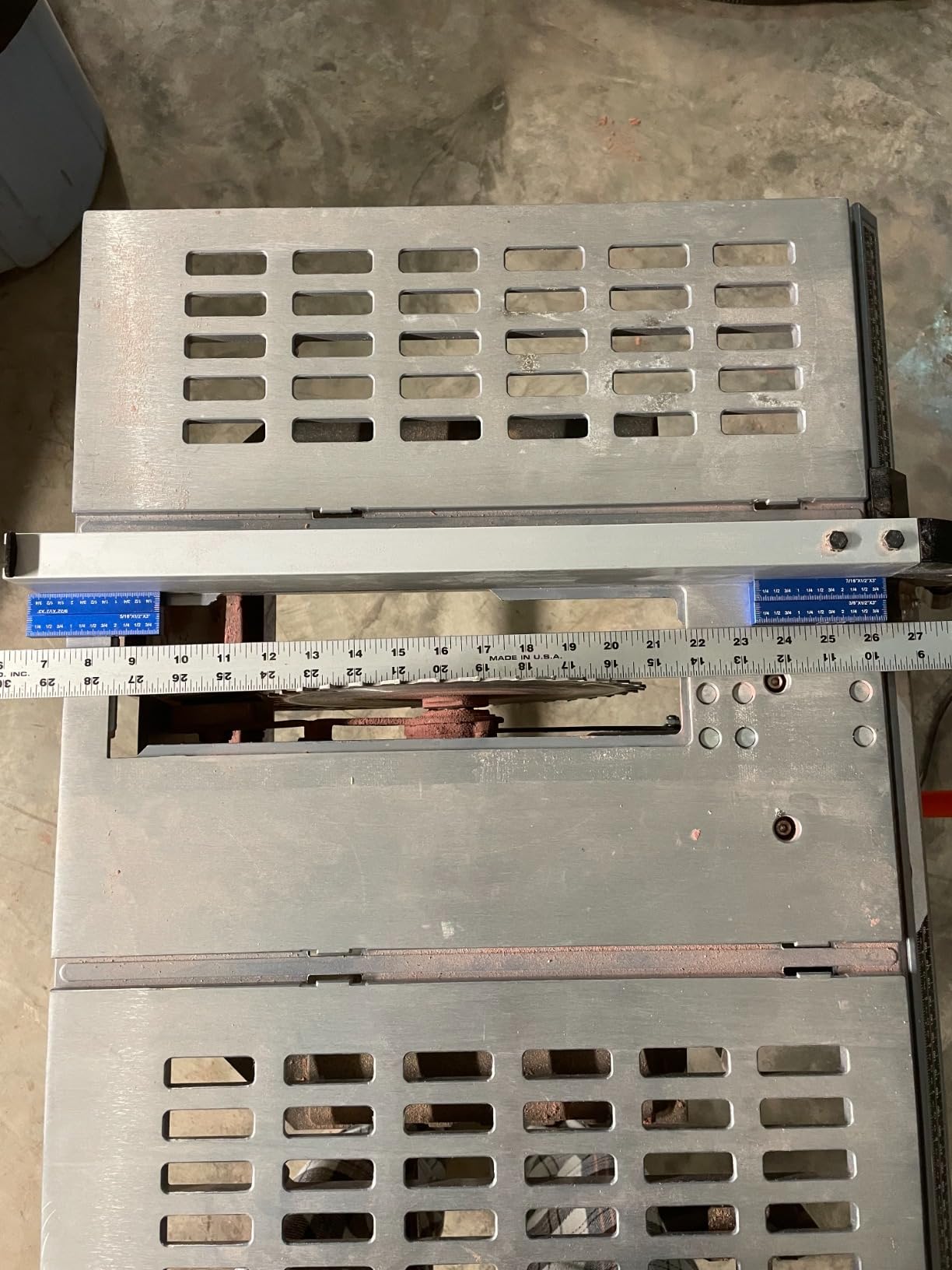
The clear blade guard gives an unobstructed view of the cut line, which is a genuine safety and accuracy benefit over the plastic guard assemblies on cheaper machines. The rear dust collector port and side storage for wrenches and push stick are thoughtful touches for a benchtop-scale saw.
At 22 by 23 by 33 inches with the stand, it is compact for a 10-inch machine. Owner satisfaction is a 4.4 average across 160 reviews with 69 percent five-star ratings.
Where a budget saw is the right call
For trim, shelving, deck framing, and general DIY work, this saw covers the cuts you will actually make. The clear guard and adjustable blade height and angle make it a safe and predictable tool for a newer builder who is still learning fence and blade setup.
If your shop budget is going mostly to dust collection or an outfeed table, this is a reasonable way to reserve money for those upgrades.
Where the savings show up later
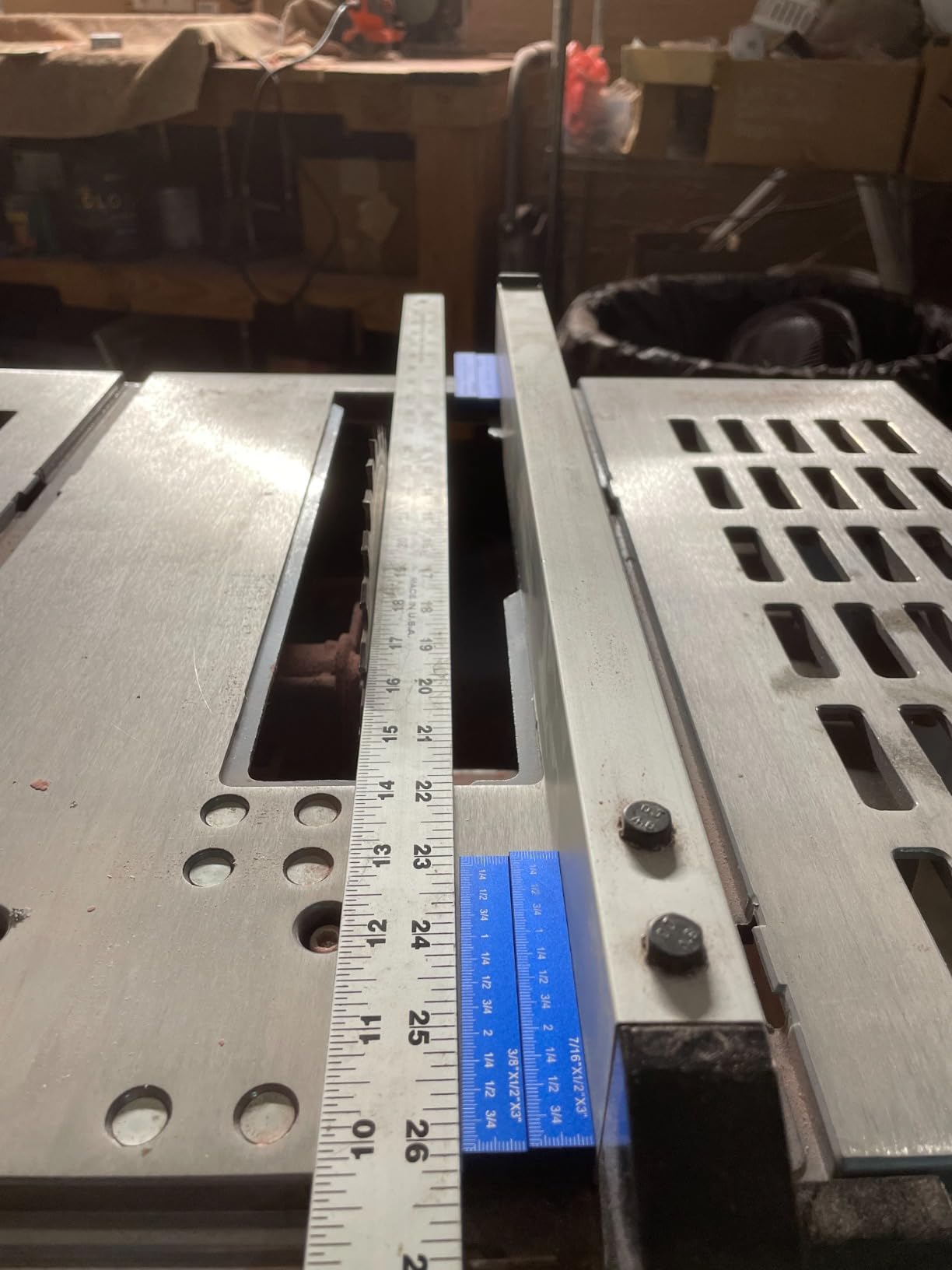
The fence is the weak point. It is a simpler mechanism than the rack and pinion rails on every other 10-inch saw here, and the flat rating spread points to fence precision being the least refined part of the machine. Expect to spend time checking squareness.
The dust collector port is there but the collector itself is not included, and the warranty is limited rather than a stated term like the 3 or 5 years elsewhere. This is a tool to learn on, not one to build a business around.
10. DOVAMAN DTS02M 8.5 Inch Dustless Portable Table Saw – Best for Dust Control
DOVAMAN 15A Table Saw, 8.5″ Dustless Portable Table Saw
15 Amp at 5000 rpm
Up to 98% dust separation
Extendable 48 to 80 cm side plate
60-tooth carbide blade
Pros
- Up to 98% dust separation with a rear vacuum connector keeps a closed garage cleaner
- Soft-start technology reduces vibration and load on the circuit
- 60-tooth carbide blade gives smooth cuts in fine woodworking
- Extendable side work plate widens the surface from 48 cm to 80 cm
- Cast aluminium table rather than sheet metal
Cons
- Riving knife or guard tends to catch on stock thicker than about 2 cm
- Vertical blade guide can sit 2-3 mm out of alignment and needs periodic squaring
- Non-standard 16 mm T-slot width limits premium fence and guide compatibility
The DOVAMAN DTS02M is included here for one reason: dust. In a residential garage, the door is open maybe half the year, and for the other half you are cutting in a space where fine dust settles on the car, the bench, and every horizontal surface. A claimed 98 percent separation rate through the rear vacuum connection is the highest collection figure of any saw in this roundup, and owners consistently single it out as a major step up from an open-top saw.
The soft-start technology delivers a controlled, low-vibration startup, which reduces load on older branch circuits and stops small workpieces from jumping at startup. The 5000 rpm motor runs an 8.5-inch 60-tooth carbide blade, and that tooth count is why cuts in fine woodworking come out smooth.
Depth of cut is 2-3/8 inches at 90 degrees and 1-3/4 inches at 45, with an adjustable bevel stop locking in angles from 0 to 45 degrees.
Why dust control changes a garage workflow
If you build in a shared garage, dust is not a cleanliness preference, it is a logistics problem. High extraction means you can run the door closed in winter, keep your vehicle covered, and still cut without a respirator, and the rear vacuum connector means your existing shop vacuum is the collector.
The extendable side work plate that widens the cutting surface from 48 cm to 80 cm is also practical: it gives panel work a supported edge without a separate outfeed table, which matters when floor space is short.
The alignment habit this saw requires
The vertical blade guide can sit 2 to 3 millimeters out of alignment, so check it with a square before each cutting session rather than assuming. The riving knife or guard also tends to catch on stock thicker than about 2 cm, which rules out cutting thick hardwood in a single pass.
Two more honest limitations: the 16 mm T-slot width is non-standard, so premium fences and guides may not fit without adapters, and the blade height is slightly under nominal with an adjustment collar that is not professional grade. Owners also report it is noticeably loud, with some recommending hearing protection or working outdoors for long sessions.
How to Choose a Contractor Table Saw for a Garage Shop
Seven criteria decide this purchase, and they matter in this order for most home shops.
1. Class before features. Decide whether you need a compact, jobsite, or true contractor saw before comparing anything else. A compact 8-1/4-inch saw will not crosscut a 2×8 on edge, and a cabinet saw will not fit through the door. Buying across classes is how people end up with a saw that is wrong twice.
2. Footprint and mobility. Measure the bay, not the saw. Add the stand dimensions plus the swing radius of the fence rail plus roughly 8 feet of standing room on the operator side. If the answer leaves less than a 30-inch walkway to your material rack, choose a folding or folding-stand model.
3. Branch circuit. Every saw in this roundup is 120-volt and 15 amp, which is the residential default. What varies is inrush: soft start and electronic speed regulation reduce the chance of tripping a breaker mid-cut, and that matters most if the receptacle is shared with the garage door opener or a freezer.
4. Dust port diameter and routing. Port sizes here range from 2-1/2 inches to 4-inch-class collectors. Match the port to your hose rather than forcing an adapter, and plan the run to your collector before you choose the saw, because that hose is often the constraint in a two-car bay.
5. Fence system. Rack and pinion rails with a telescoping fence are the standard for good reason: they hold position, they move smoothly, and they are repairable. A simple front-mounted fence needs re-checking far more often, and a fence that creeps mid-rip is the most common cause of out-of-square parts.
6. Safety hardware. Look for a riving knife, anti-kickback pawls, a functional guard assembly, and a push stick in the box. A blade brake is a meaningful upgrade in an enclosed space, since it is the difference between stepping away for a few seconds and stepping away for most of a minute.
7. Maintenance tolerance and warranty. A contractor saw needs periodic lubrication and alignment adjustment, and owners accept that as normal rather than as a defect. The warranty length matters more than usual here because a cast-iron top in an unheated garage is exposed to humidity cycles year after year.
Fitting a Contractor Saw Into a One-Car or Two-Car Garage
Floor space is the real constraint, and no competitor list addresses it. Here is how to plan it concretely.
In a single-car bay, the saw belongs on the wall opposite the door, positioned so the fence rail extends toward the door rather than into the parking space. That single orientation change is often the difference between a workable shop and a saw that is moved every time you park. Compact saws like the DEWALT DWE7485 and SKIL TS6308-00 are the right class here, because at 40 to 54 pounds they can move to a shelf between projects.
In a two-car bay with one stall committed to the shop, you have enough room for a full 10-inch saw on a rolling stand, but only if you reserve the far side for outfeed support. A contractor saw without outfeed support is a two-person tool for sheet goods, and a second person is not always available. The SKIL SPT99-11 and the DEWALT DWE7491RS both package support with the stand, which is worth more in a solo shop than another half inch of rip capacity.
Sheet goods storage is the item that actually breaks garage layouts. A 4×8 sheet rack plus a full-size saw plus a dust collector often will not coexist in one stall, and the compromise most builders make is storing sheet goods vertically on wall-mounted rollers behind the vehicle, which frees the floor entirely. If you cannot do that, the recurring forum advice about using a track saw for breakdown alongside a smaller saw for crosscuts starts to make a lot of sense.
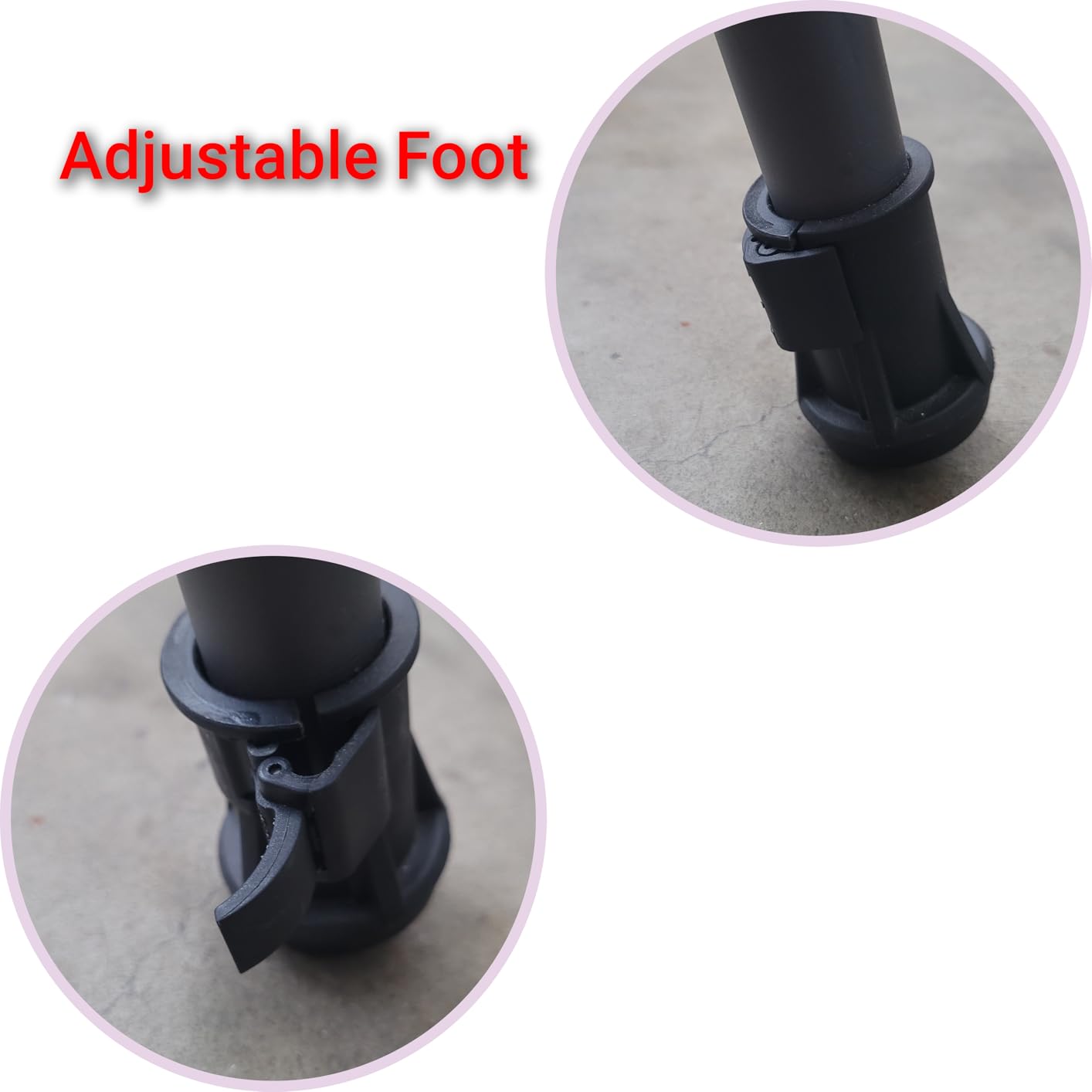
One more thing most people miss: the floor. A garage slab is not always level, and a saw that rocks will not hold a parallel blade. Check the four stand feet with a level before you set the saw down permanently, and adjust rather than shimming with scraps of plywood.
Contractor Saw vs Track Saw in a Very Tight Garage
A track saw wins in one specific situation: when sheet goods dominate your work and the floor is your only flat surface. If you are breaking down plywood, MDF, and OSB more than you are cutting dimensional lumber, a track saw guided by a clamping track across stacked sheets does the job without a 100-pound machine occupying the middle of the bay.
A contractor table saw wins in every other case. It handles ripping dimensional lumber, repeated cutoffs, joinery, and bevels with a fence that holds position, and it stays useful when the material is dimensional lumber rather than panels. Forum consensus splits cleanly on this: builders doing heavy panel work pair a track saw with a smaller saw, and builders ripping hardwood repeatedly stay with the contractor class.
Our position is that a track saw is a complement, not a replacement, unless your garage is a single-car bay where a full-size saw genuinely will not fit. In every other case the saw belongs on the floor and the track saw sits on the shelf.
Buying a Used Contractor Table Saw: What to Inspect
Used contractor saws represent the best value per dollar in this class, and also the biggest time sink. Buyers commonly look at well-known models like the Delta 36-725 and the Ridgid R4510, and the first thing worth knowing is that those two are the same machine sold under two brand names by two different retailers. If you have seen both described as different saws, that is why.
Before you commit, run this inspection:
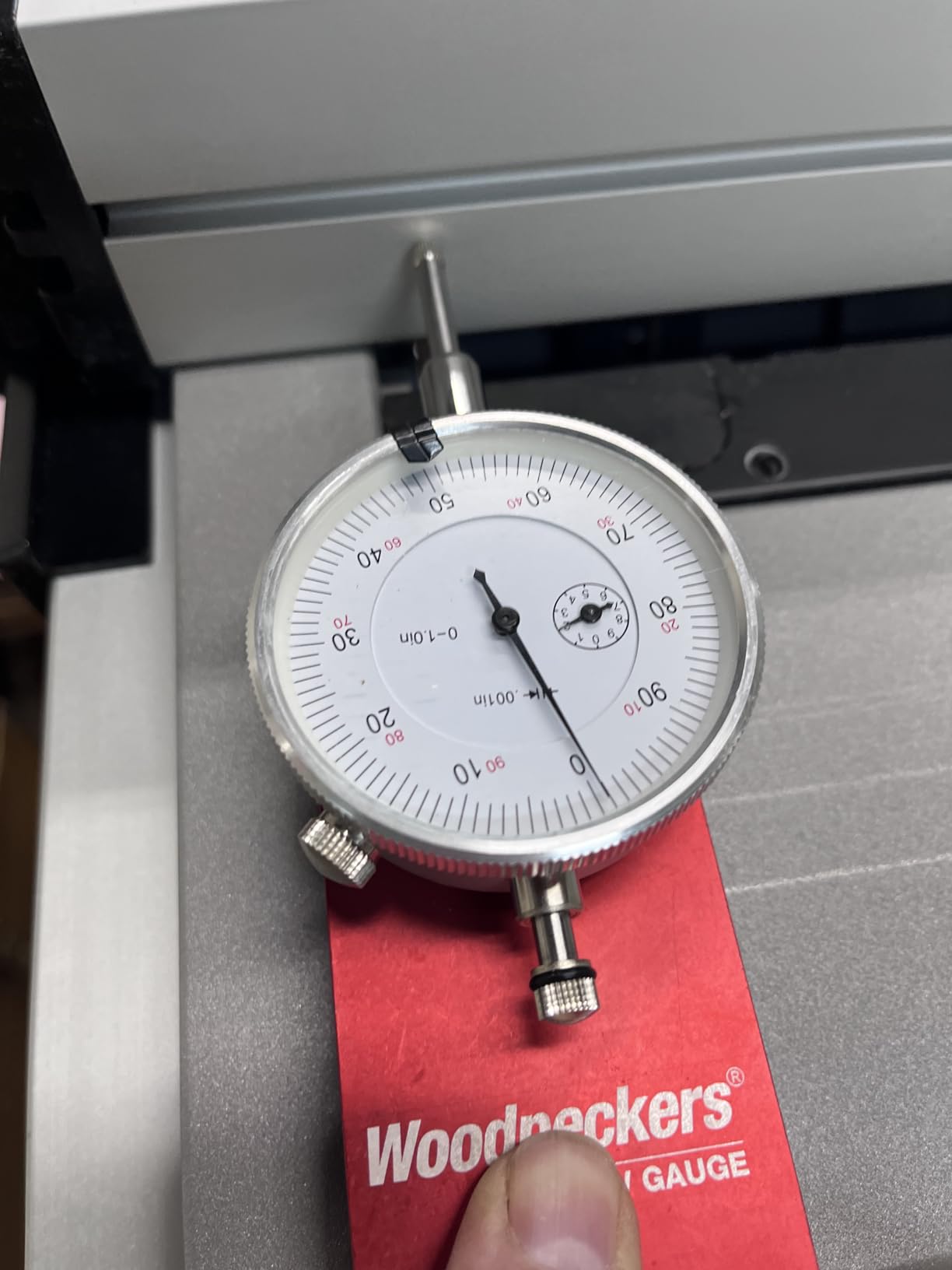
1. Blade parallel to the miter slot. Use a dial indicator or a straightedge and a square. Saws that have been moved regularly arrive out of parallel, and correction takes an hour of careful adjustment.
2. Fence squareness. Push the fence against a machinist square on the table and check the back of the fence along its length. Replacement fence hardware is available for most models, but a bent cast fence rail is not.
3. Cast iron condition. Look for rust pitting and any hairline cracks around the trunnion holes. Surface rust is cleanable. Pitting means the top has been wet and abused.
4. Missing parts. Check for the throat plate, insert plate, miter gauge, push stick, blade guard assembly, and the rip fence. Guard assemblies and cast parts are the hardest to replace and the most common missing items.
5. Stand and hardware. On tubular steel stands, check for splayed feet and stripped fastener holes. This is a recurring complaint on the Delta and Ridgid twins, and a stand that rocks will not hold the saw square.
6. Motor and belt. Listen for bearing noise and check belt condition. A belt that has sat for years often needs replacing, which is inexpensive but worth knowing before you buy.
Budget a full day of alignment and lubrication after purchase. The saw itself is the cheap part; the setup time is the real cost, and it is the same whether the saw is new or used.
Contractor Saw Maintenance in an Unheated Garage
A saw in a garage that is not heated sees large temperature and humidity swings across the year, and cast iron is the material that suffers. A short schedule prevents nearly all of it.
Monthly: Wipe the cast table and coat it with paste wax or table wax. This single step does more to prevent rust than anything else, and it also keeps plywood from bonding to the surface.
Quarterly: Lubricate the elevation threads, the tilt mechanism, and the fence rails. Use the lubricant the manufacturer specifies, applied sparingly, and wipe off the excess so it does not attract dust onto the table.
Every six months: Check blade parallel to the miter slot and check fence squareness with a square. Seasonal humidity movement is enough to shift both, and catching it early is a five-minute adjustment rather than a full alignment session.
Yearly or with any move: Inspect the arbor, check the throat and insert plates for fit, and confirm the anti-kickback pawls and riving knife are engaged and undamaged. If the saw has been transported, assume it needs alignment before the first cut.
Owners consistently accept that contractor saws require this kind of routine work. Framed as maintenance rather than as a defect, it is the same twenty minutes that keeps a saw square for a decade.
Frequently Asked Questions
Who makes the best contractor table saw?
For a garage shop, the DEWALT DWE7485 and the DEWALT DWE7491RS lead our roundup on owner satisfaction, with 4.8 and 4.7 average ratings across more than 5,700 reviews each. Bosch GTS15-10 is the strongest choice if soft-start and electronic speed regulation matter because of an older branch circuit, and the Delta 36-6023 offers the longest warranty and the only stacked dado capacity here.
What are the key differences between a table saw and a contractor saw?
A contractor saw is a specific class within table saws. Compared with a portable jobsite saw, it has a heavier cast table, a larger working area, more rip capacity, and a stand that stays put. Compared with a cabinet saw, it is far lighter, cheaper, and small enough to move through a residential garage door. The defining features are the cast top, the open tubular stand, and 3 to 5 HP of motor power.
What is the most accurate jobsite table saw?
Accuracy comes down to the fence and the table rather than the brand. The DEWALT DWE7491RS and SKIL SPT99-11 pair a cast table with a rack and pinion fence, which is the combination that holds position during a long rip. Every saw in our roundup that offers parallel blade micro-adjust can be squared by the owner, so factory alignment matters less than your willingness to check it.
What is the best small workshop table saw?
For a genuinely small workshop, a compact saw wins. The DEWALT DWE7485 at 54 pounds and the SKIL TS6308-00 at 40 pounds both store flat or on a shelf and still rip 24.5 inches of sheet goods. Pick the DEWALT for more power and guarding, and the SKIL if you need to lift the saw onto a bench with one hand or want a built-in fence scale.
What is the best table saw for value for money?
The SKIL TS6307-00 is our value pick because rack and pinion fence rails plus a parallel blade micro-adjust are standard on a machine that folds flat against a wall. The DEWALT DWE7485 is the better buy if your budget stretches further, since it carries a 4.8 average rating across 5,812 reviews. A used contractor saw is the deepest value of all if you budget a day for alignment.
Can I use a contractor table saw for plywood?
Yes, and you should check three numbers first. You need enough rip capacity to span a full 4×8 sheet, which means 26 to 32 inches on the right-hand side. You need outfeed or side support, because a full sheet unsupported will pinch the blade and can cause kickback. And you need dust extraction, since a 4-inch dust port or a good shop vacuum keeps fines off the car and out of the air.
Which Contractor Table Saw Should You Buy?
The best contractor table saw for most garage shops is the DEWALT DWE7485. It carries the highest owner rating in this roundup at 4.8 across 5,812 reviews, its 24.5-inch rip capacity handles full sheet goods, and at 54 pounds it is the only saw here that is genuinely easy to move out of the way when the car needs in.
Buy the DEWALT DWE7491RS instead if you break down a lot of 4×8 material and want maximum rip capacity, a cast iron table, and the largest dust port in the group. Buy the Bosch GTS15-10 if your garage runs an older or shared circuit and soft start plus electronic speed regulation will save you from breaker trips. Buy the SKIL TS6307-00 if budget matters more than capacity. Buy the SKIL SPT99-11 if you rip thick hardwood and need the deepest cut in this list. Buy the Delta 36-6023 if you need dado capacity, and the DOVAMAN DTS02M if dust is your biggest problem in an enclosed garage.
Whichever you choose, measure the bay before you order, confirm the fence, the guard hardware, and the dust port fit your space, and plan one alignment session before the first cut. That is what separates a saw that stays square for years from one you fight every time you use it. Our 2026 roundup covers the ten contractor-class and heavy-duty jobsite saws worth putting in a garage shop, and the space on your floor is usually the deciding factor.