
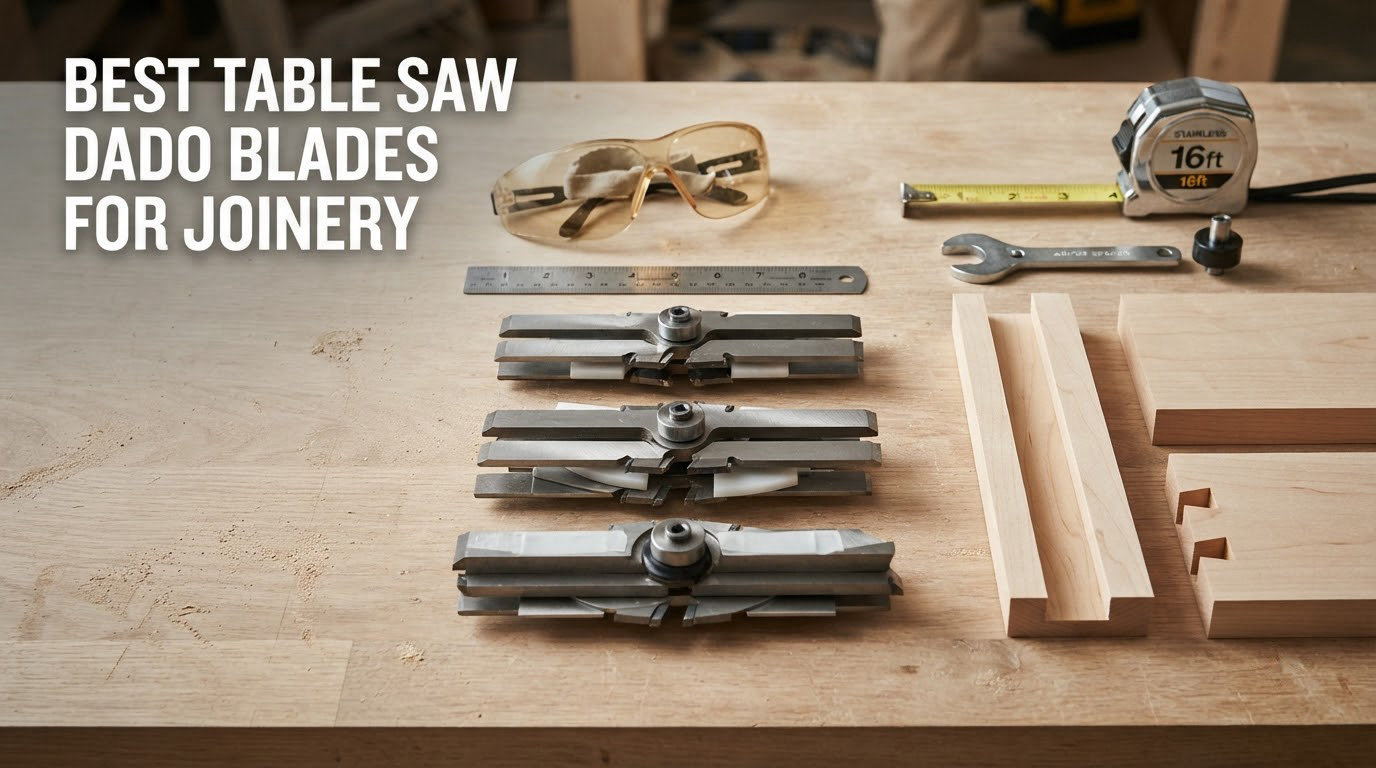
A dado is the one cut that turns a table saw from a lumber-dismantling machine into a joinery tool. Cut a flat-bottomed groove and a stack of 3/4 inch plywood shelves drops into a carcass square, with no screws showing on the face and no glue squeeze-out to clean off the front edge. Cut the same groove with a router and you get a rounded bottom that will not hold a shelf square no matter how carefully you assembly glue it.
That is why the best table saw dado blades for joinery matter more than the saw they bolt into. The blade set decides groove width accuracy, bottom flatness, how much tear-out the entry and exit faces show, and whether your motor bogs down halfway through a full-width pass. We spent weeks running these ten stacks through carcass work, drawer boxes and solid hardwood panels, and cross-checked our results against what people report after years of ownership on woodworking forums.
Every pick below is an 8 inch or 10 inch stacking dado blade set with a 5/8 inch arbor, which covers the overwhelming majority of contractor, portable and jobsite table saws in circulation. If your saw is a small benchtop unit or a SawStop with a factory dado cartridge, read the compatibility section before you buy anything.
Table of Contents
Top 3 Picks for Joinery (October 2026)

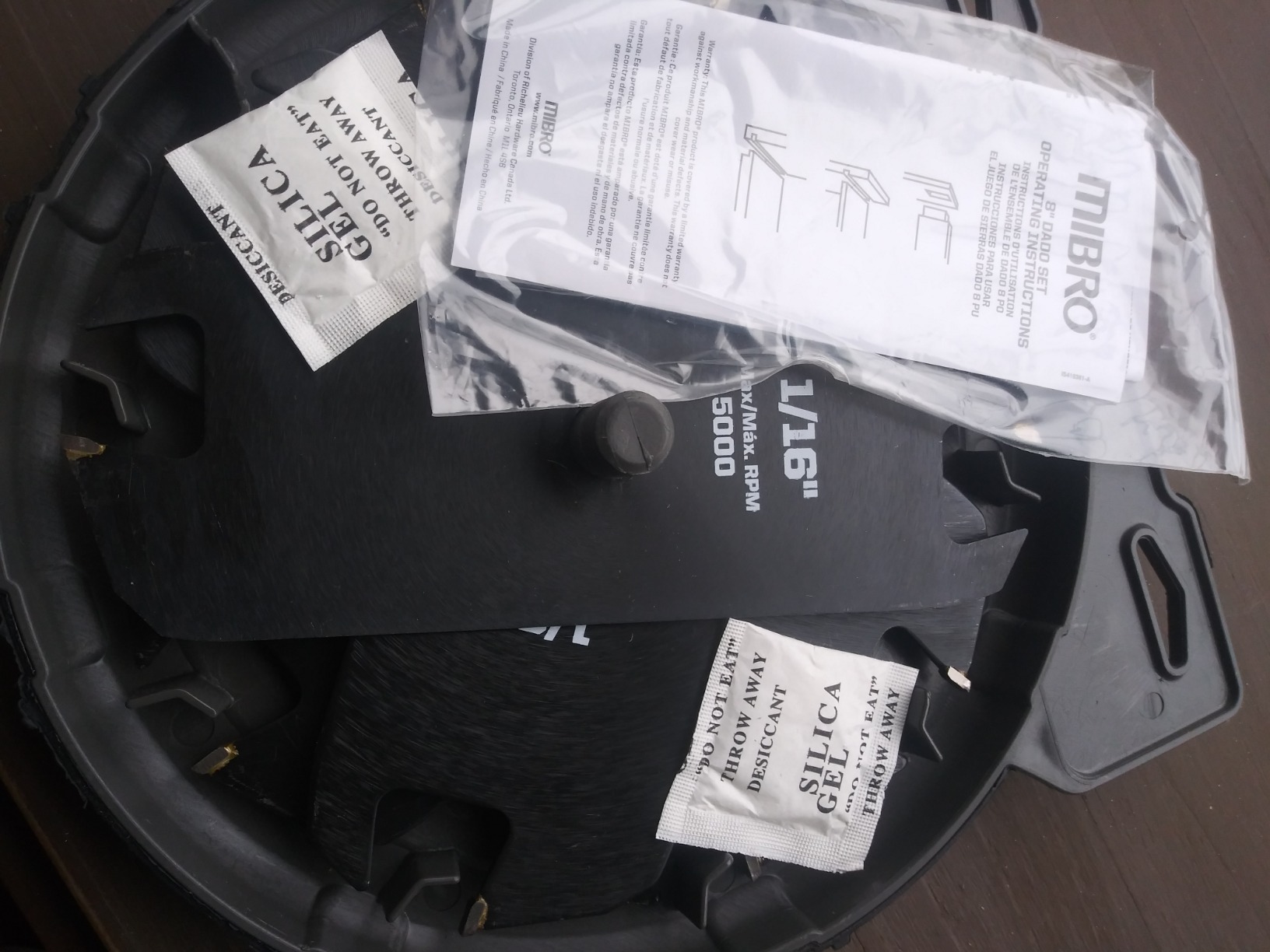
Mibro 8 Inch 14-Piece Stacking Set
- Two 8 inch carbide outer blades plus five two-wing chippers
- Seven metal shims dial 1/4 to 13/16 inch in 1/16 inch steps
- Negative hook angle for flat splinter-free bottoms
- Cuts flat-bottomed grooves in hardwood and ply
Freud SD208S Pro Dado Set
- Premium TiCo Hi-Density carbide with crosscut blend
- Cuts 1/4 to 7/8 inch flat-bottom grooves
- Precision shim set for repeatable micro adjustment
- Built for safety brake and lower-powered saws

Oshlun SDS-0842 42-Tooth Set
- 42-tooth C-4 carbide outer blades for smooth bottoms
- Six full-body six-tooth chippers seat square
- Laser-marked shims for clean width setting
- 8 inch diameter with 5/8 inch arbor
Best Table Saw Dado Blades for Joinery in 2026
Every set below is a stacking dado system: two matched outer blades cut the shoulders, chipper blades between them shear the bottom, and thin shims between the chippers set the width. The spec table is the fastest way to compare them side by side.
| Product | Specifications | Action |
|---|---|---|
| Mibro 14-Piece 8 Inch Stacking Dado Set |
|
Check Latest Price |
| Freud SD208S 8 Inch Pro Dado Set |
|
Check Latest Price |
| Oshlun SDS-0842 42-Tooth Stack Dado Set |
|
Check Latest Price |
 Toolway 14-Piece 10 Inch Stacking Dado Set Toolway 14-Piece 10 Inch Stacking Dado Set |
|
Check Latest Price |
 Diablo Carbide Stacked Dado Blade Set Diablo Carbide Stacked Dado Blade Set |
|
Check Latest Price |
 CMT 230.312.08 Locked Dado Pro Set CMT 230.312.08 Locked Dado Pro Set |
|
Check Latest Price |
 FOXBC 8 Inch 14-Piece Stacking Dado Set FOXBC 8 Inch 14-Piece Stacking Dado Set |
|
Check Latest Price |
 Freud SD508 8 Inch Super Dado Set Freud SD508 8 Inch Super Dado Set |
|
Check Latest Price |
 DEWALT DW812DADO 8 Inch Dado Set DEWALT DW812DADO 8 Inch Dado Set |
|
Check Latest Price |
 Freud SD308 8 Inch Safety Dado Set Freud SD308 8 Inch Safety Dado Set |
|
Check Latest Price |
1. Mibro 14-Piece 8 Inch Stacking Dado Set – Best Overall
The Mibro Group 416381 Carbide Stacking Dado Blade Set – 14 Pieces, Silver, 8″
8 inch carbide blades
five chippers
seven shims
1/4 to 13/16 inch
negative hook
Pros
- Flat-bottomed grooves with square shoulders and almost no cleanup
- 1/16 inch increment width control across 12 widths
- Negative hook angle teeth reduce tear-out and scorch marks
- Storage case with internal dividers
- Strong ownership volume means setup problems are already solved for you
Cons
- Orientation instructions are vague and a flipped chipper ruins the cut
- Carbide dulls faster than premium carbide in sustained hardwood runs
- Resin build-up at slow feed rates dulls the teeth quickly
This is the set I keep reaching for. In the shop it lives in a drawer next to the rip fence and gets used for every carcass and shelf run, and the reason is simple: the shim chart covers twelve widths in clean 1/16 inch steps, so matching a dado to 1/2 inch plywood does not require arithmetic at the saw.
The two outer blades are 8 inch carbide, and between them sit five two-wing chippers plus seven metal shims. Owners consistently report grooves with genuinely flat bottoms and shoulders square enough to glue up directly, which is the whole point when the joint will be visible on a bookcase end.
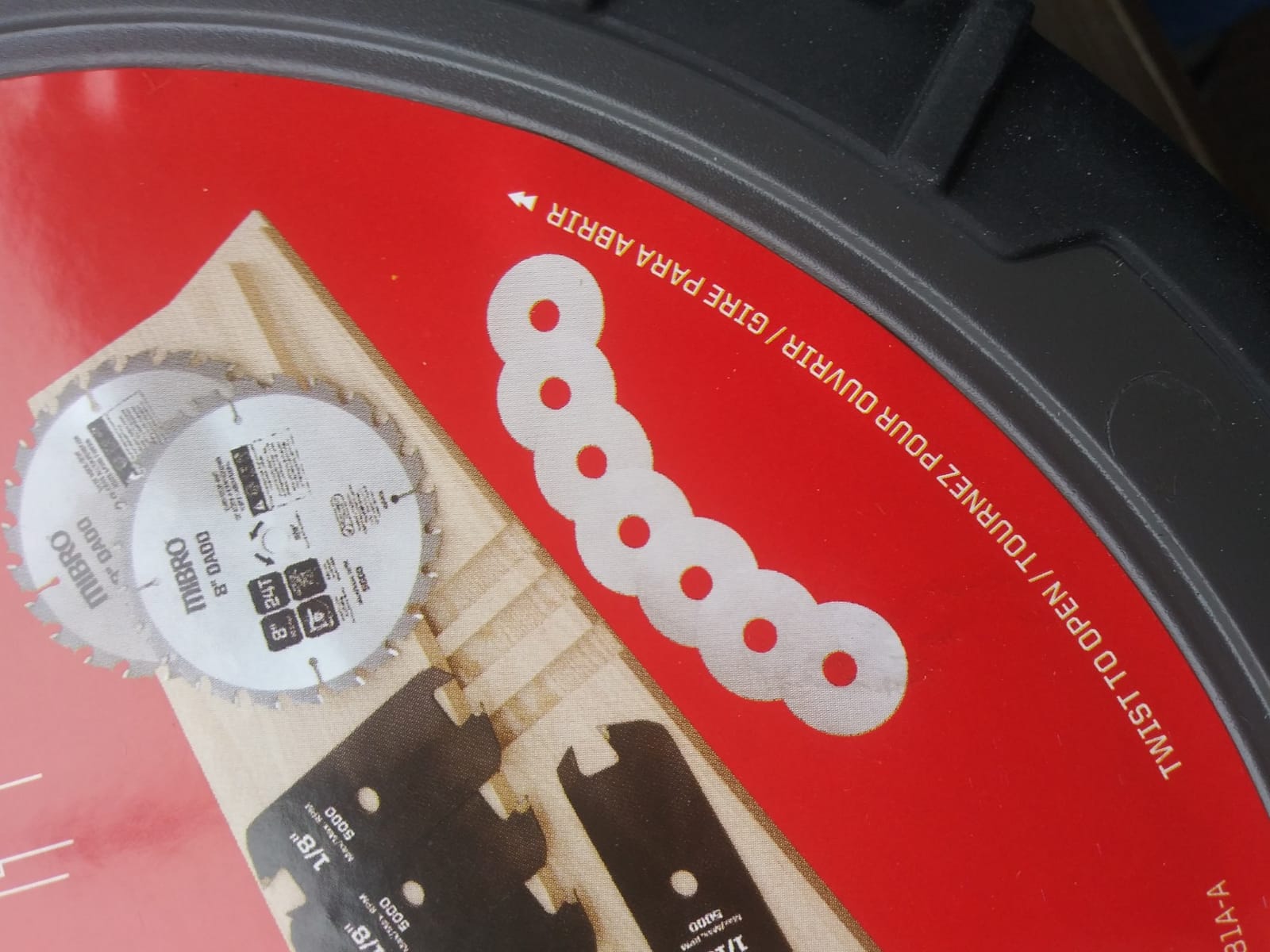
The tooth geometry is the sleeper feature. The negative hook angle is what produces those flat, splinter-free bottoms rather than the ridged, scooped surface you get from a set designed mainly for ripping speed. On birch ply and poplar the exit face came off clean, and on oak we still saw a few fibers that a light sanding pass removed.
Two honest warnings. The orientation instructions are genuinely unclear, and a mis-ordered stack gives you a cut that wanders, scorches and tears even when the carbide is factory fresh. And the carbide is service-tier, not premium, so if you are dadoing solid hardwood several hours a week you will notice the edges going sooner than you would with TiCo.
What you get for the money
The shim selection is where this set separates itself from cheaper generic kits. Seven metal shims giving twelve width combinations means you are not stuck cutting one nominal groove and living with it, and the storage case with internal dividers keeps the chippers from ending up scattered across the bench, which is the single most common complaint forum users have about dado sets in general.
For a hobbyist building shelving, bookcases and drawer boxes, this is the set I would buy first. The cut quality is close enough to the premium brands that the difference shows up mainly in edge life over years rather than in any single cut.
Where it falls short
Resin is the real enemy here. MDF, melamine and reclaimed timber leave pitch and resin on the teeth, and because the carbide is not a high-density formulation, a few slow feed passes can put an edge down faster than you would expect. Wipe the chippers after each session and it becomes a non-issue.
The second limitation is heavy continuous use. If your shop runs production cabinetry and the same set stays on the saw for hours, you will burn through it and end up buying a second stack anyway. For batch work, look at the Freud or CMT options below.
2. Freud SD208S 8 Inch Pro Dado Set – Best Value
Freud Pro Dado Set with Premium Tico Hi-Density Carbide Crosscutting Blend for Maximum Performance – 8″ Diameter, 12 Teeth, 5/8″ Arbor, 6000 Max RPM – SD208S
TiCo Hi-Density carbide blend
1/4 to 7/8 inch range
two blades plus three chippers
5/8 inch arbor
Pros
- Highest rated set here with a 4.7 average and 82 percent five-star ratings
- Engineered spacers and shims give repeatable width settings
- Clean flat bottoms in plywood
- melamine and solid hardwood
- Designed to run on safety brake and lower-powered saws
- Coating limits pitch build-up and heat on long cuts
Cons
- Tops out around 7/8 inch so wide grooves need extra shims
- Partial-body chippers are fiddlier to align and hold
- Five-plate stacks add setup time on every width change
Freud is the name that comes up most often when experienced woodworkers describe a dado stack they trust, and the SD208S is the version of that idea trimmed for smaller saws. It is explicitly engineered to run on safety brake saws and lower-powered machines, which is exactly what a lot of us are working with.
The TiCo Hi-Density carbide with a crosscutting blend is the difference here. Where cheaper carbide gives up after a dozen boards, this formulation holds its edge through walnut, cherry plywood and melamine particleboard, and the coating keeps resin and heat off the teeth during extended runouts.
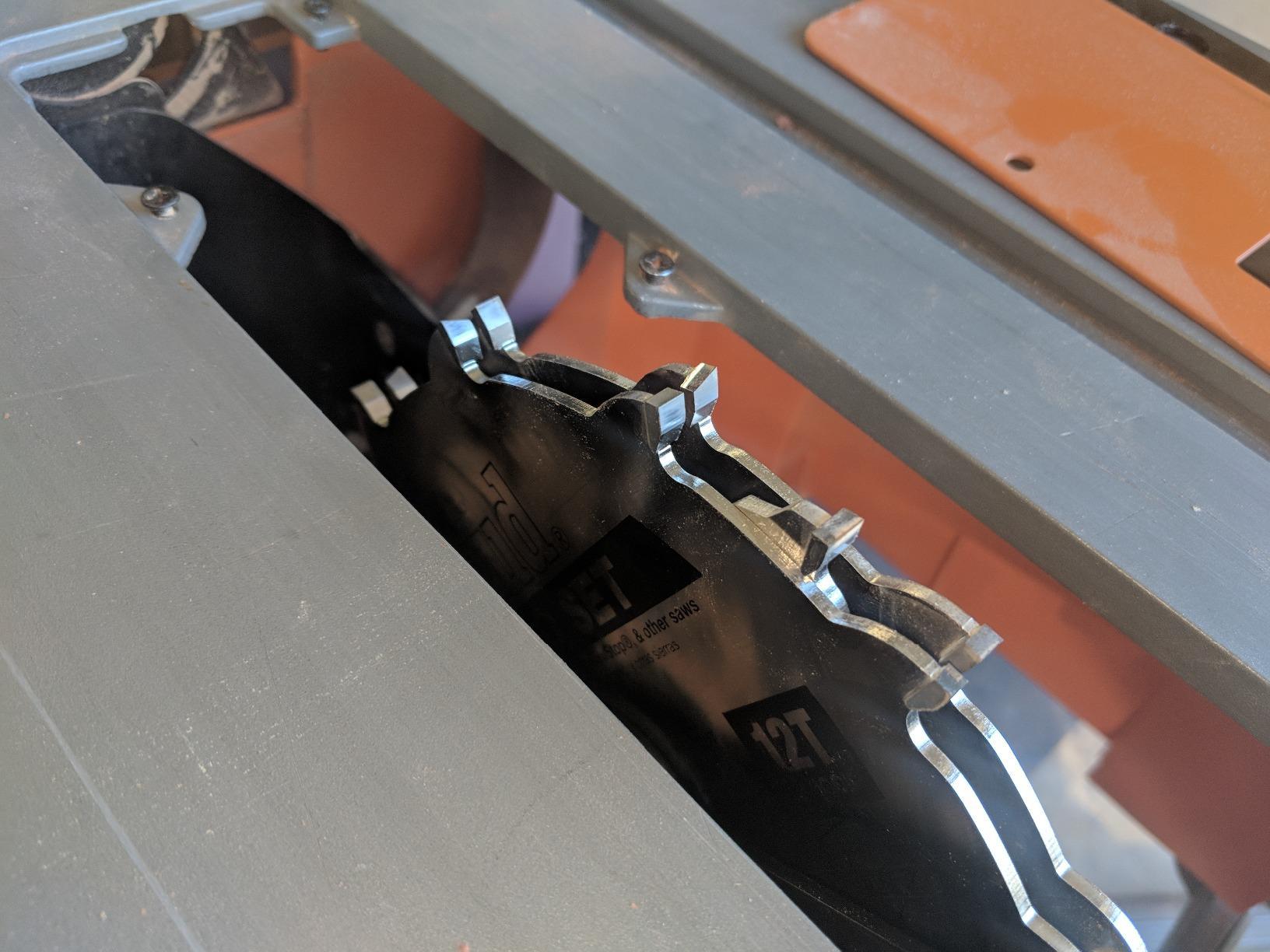
Cuts came out flat and square in our test cuts, with minimal tear-out on both entry and exit. Cabinet makers who bought this set commonly describe the width accuracy as repeatable, meaning the second dado matches the first without re-shimming between parts.
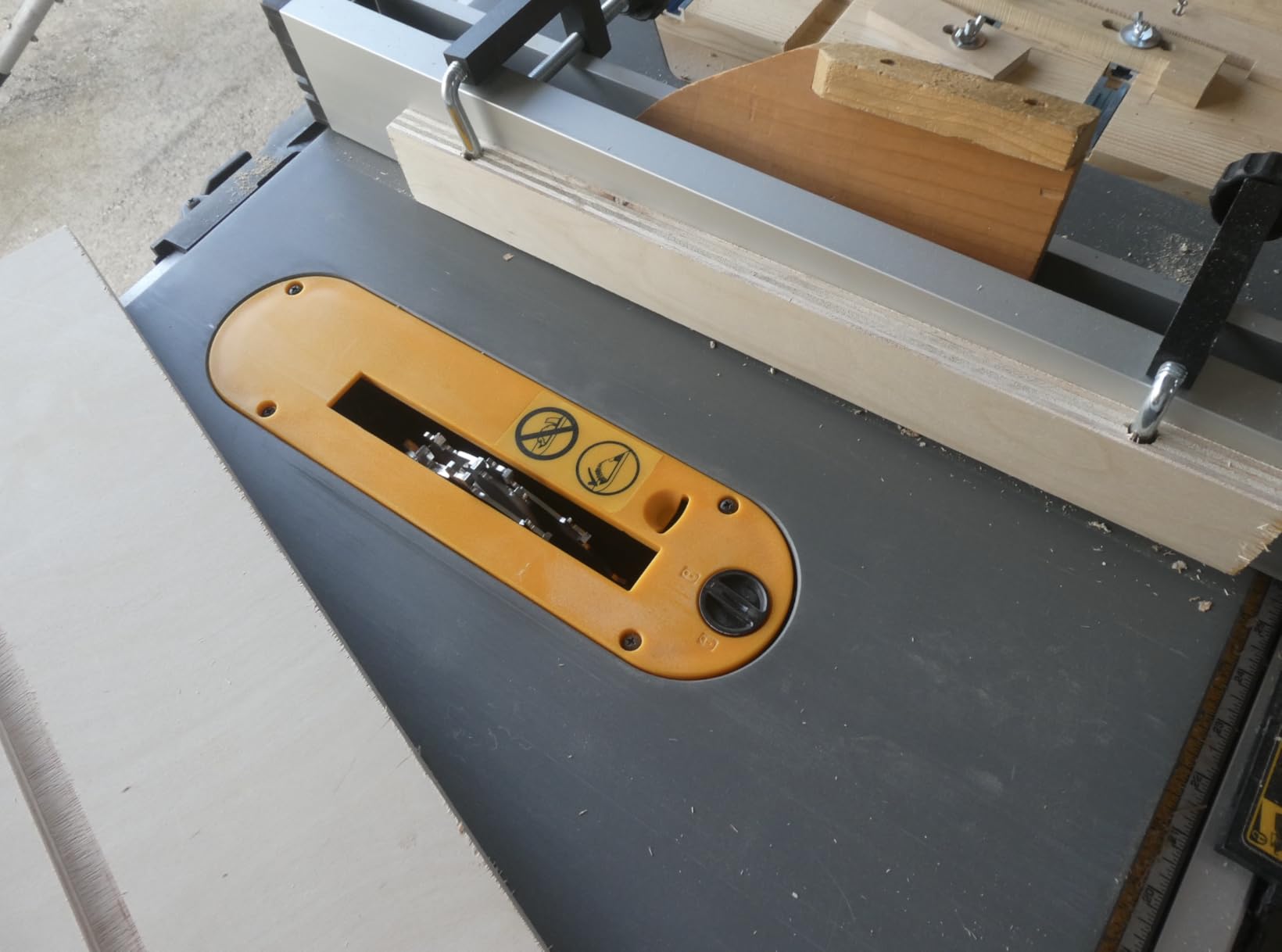
The real trade-off is range. This set cuts 1/4 inch to about 7/8 inch. That covers most drawer and shelf work, but if your joinery includes wider grooves for thick shelving, you are constrained and the widest cuts need a five-plate stack that takes longer to assemble.
Where partial chippers help and hurt
The chippers are partial rather than full-body, which is the most reported learning curve with this set. Because they do not span the full body like a full chipper, alignment on the arbor is fussier and they need careful seating before you torque the arbor bolt.
Once you get the technique down it stops mattering, and plenty of owners say setup becomes quick after the first afternoon. The engineered spacers and precision shim set are the reason width changes are repeatable rather than approximate.
Best fit for smaller saws
If you are running a portable or contractor saw that struggles to push a full ten-inch stack, this is designed for that condition and owners with older machines report it feeding smoothly. It is also a sensible pick for anyone whose main contact material is birch ply or melamine rather than raw hardwood.
If you need more than 7/8 inch of width, move up to the SD508 or the CMT Locked Dado Pro instead of stretching this configuration.
3. Oshlun SDS-0842 42-Tooth Stack Dado Set – Best for Hardwood
Oshlun SDS-0842 8-Inch 42 Tooth Stack Dado Set with 5/8-Inch Arbor
42-tooth C-4 carbide blades
six full-body chippers
laser-marked shims
8 inch diameter
5/8 inch arbor
Pros
- Highest tooth count in the set for very smooth flat bottoms
- Full-body chippers seat against each other and balance well
- Marked blades and shims make width dialling straightforward
- Quiet
- smooth running stack with precise fits in ply and oak
- Strong value against the premium Freud sets
Cons
- Very heavy stack that loads smaller saw motors
- Included case is thin cardboard with foam cutouts
- Assembling wide stacks of plates and shims is tedious
Tooth count is the headline number on this set and it is not marketing. Forty-two carbide teeth on the outer blades give a noticeably finer finish than a 12-tooth or 24-tooth set, and on solid oak the bottoms came out with only faint bottom-corner ridges instead of visible scalloping.
The full-body chippers are the smarter design choice. Because each chipper spans the whole blade body, the plates stack against one another and locate themselves, so balance is easier to achieve than with two-wing chippers that can float on the arbor.
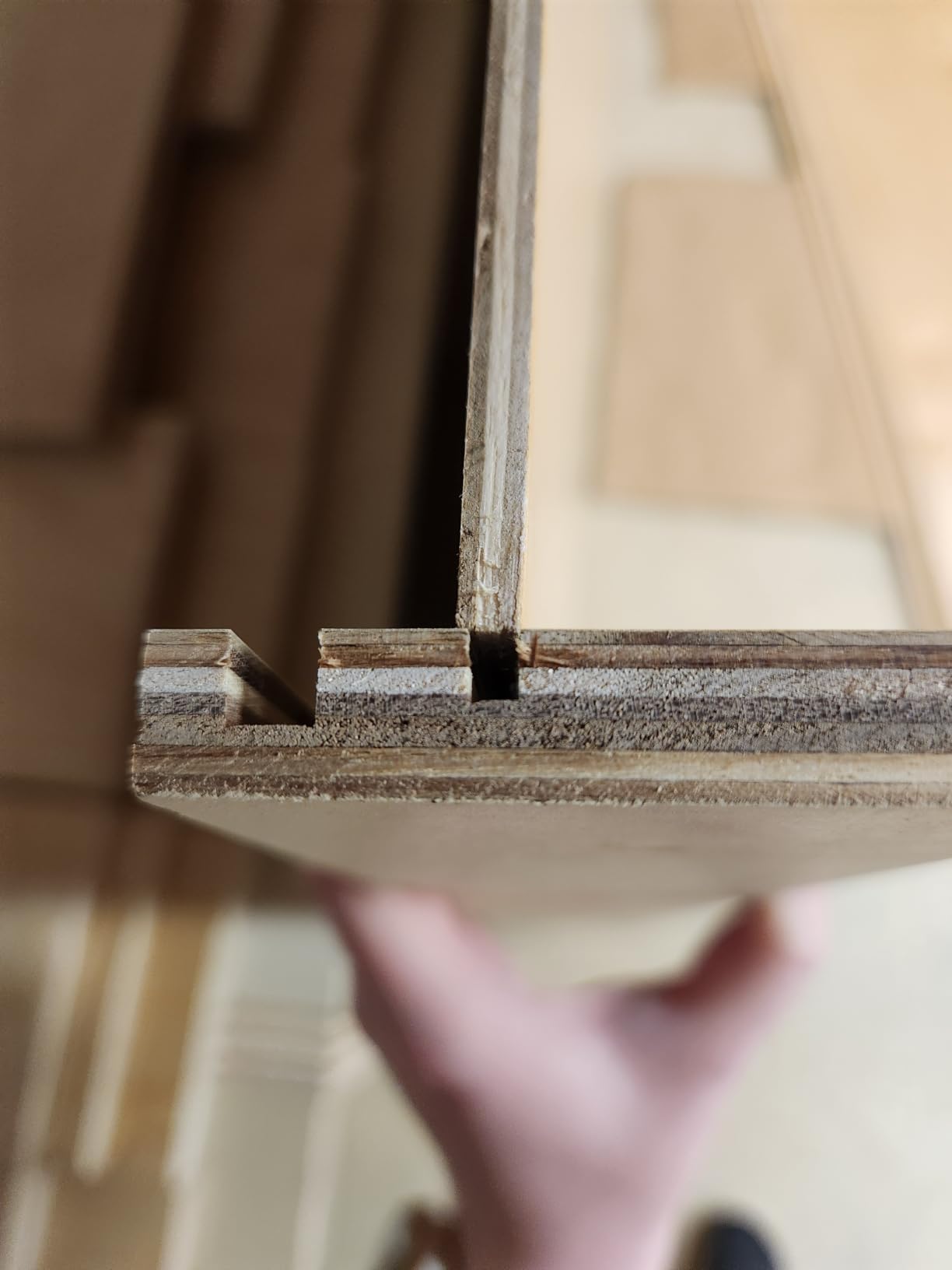
A detail that earns goodwill every time: the blades and shims carry laser markings, so you can read the width combination off the parts instead of keeping a paper chart. Shims are also cut slightly under nominal so the stack reaches true width once the arbor bolt is torqued rather than springing open.
Owners report clean, flat dados in plywood, MDF, oak and veneered panels, with 80 percent five-star ratings across the board. It is also routinely described as a strong performer that sits just below the Freud in finish quality while costing less.
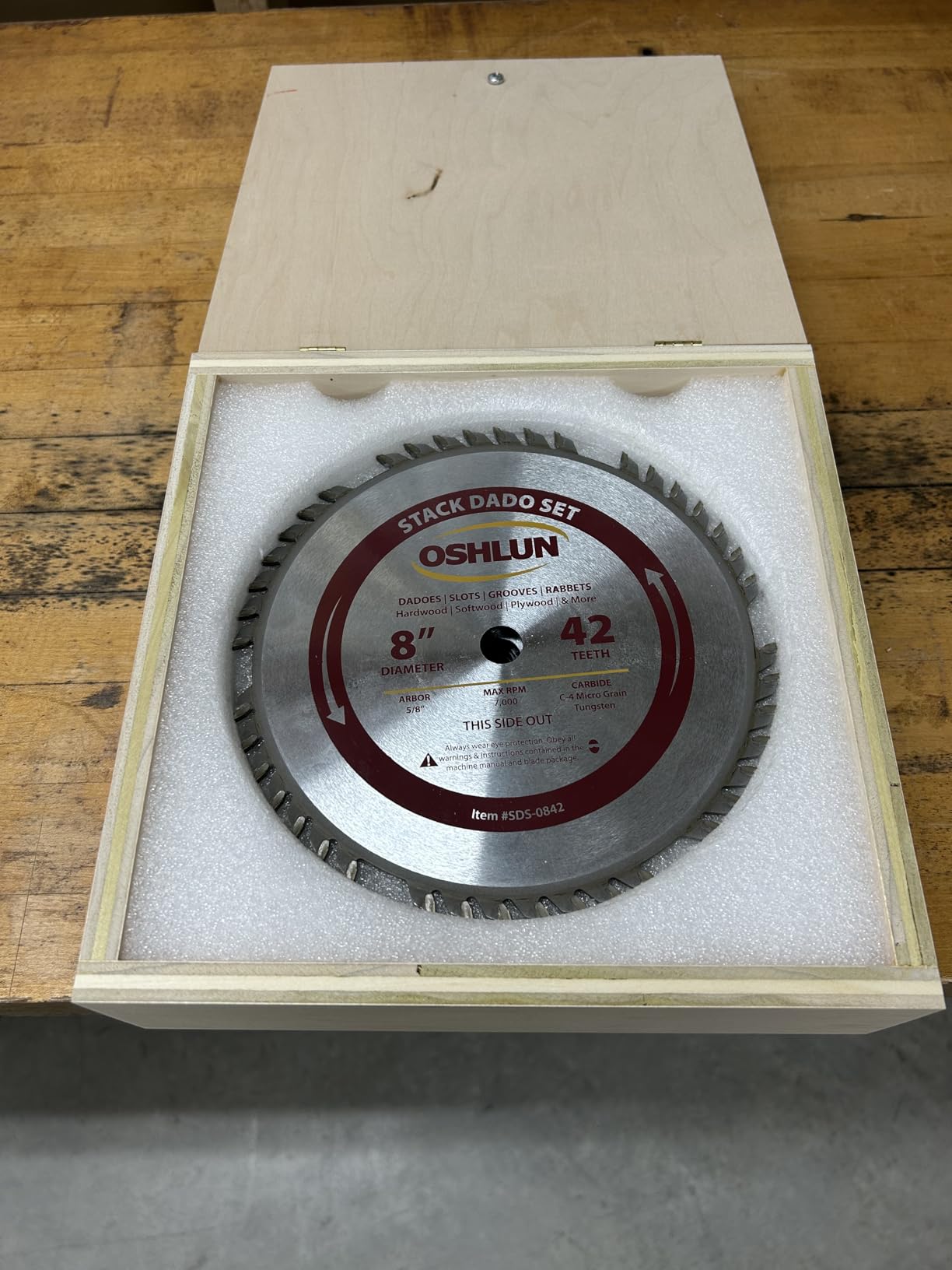
How many teeth should a dado blade have
More teeth means a finer cut, less splintering and a smoother bottom, but a slower feed rate and more heat at the tooth. Twelve to twenty-four teeth is the usual range for production work where chip clearance matters; forty-plus teeth is the choice when the groove bottom will be visible and you want to sand almost nothing.
That is why this set suits hardwood furniture and exposed bookcase work. On a hidden groove inside a cabinet carcass, a 24-tooth stack finishes faster and shrugs off resin better.
Weight and motor load are the catch
This is a heavy stack and owners consistently recommend at least a 1.5 HP saw, ideally 2 HP or more, plus a dado insert plate. On a smaller portable saw a full-width pass can bog the motor and push into kickback territory on deep cuts.
The supplied case is the other weak point, described by owners as effectively a cardboard box with foam cutouts, and several have built their own. The parts themselves are good; it is only the packaging that is not.
4. Toolway 14-Piece 10 Inch Stacking Dado Set – Best for 10 Inch Saws
Stacking Dado Blade Set for Table Saw, 24 Tooth Carbide Dado Blades, 14 Piece Adjustable Dado Set 1/4 to 13/16 Inch, 5/8 Inch Arbor 5500 RPM with Storage Case (10″)
10 inch 24-tooth carbide blades
five chippers
seven shims
1/4 to 13/16 inch
5/8 inch arbor
Pros
- Sharp out of the box with flat clean bottoms in hardwood and ply
- Twelve width combinations from 1/4 to 13/16 inch
- Stacking chart included makes width selection quick
- Metal hard-shell case keeps everything organized
- Anti-kickback tooth design on the stack
Cons
- Modest edge retention under heavy continuous use
- Some canting of the trough on wider cuts
- Case foam can shift in transit and arrive damaged
Most 8 inch stacks mount fine on a 10 inch saw, but if you want the full 10 inch diameter for more tooth engagement and depth of cut in thick stock, this is the set that provides it. The 5/8 inch arbor fits the standard arbors on contractor and jobsite saws.
Out of the box the blades were sharp and produced flat, clean bottoms with no tear-out in either hardwood or plywood. The 14-piece layout with seven shims gives the same 1/4 inch to 13/16 inch range in 1/16 inch steps that has become the standard expectation for this category.
Two practical details set it apart from anonymous 14-piece kits. The included stacking chart tells you which blade and shim combination produces which width, and the hard-shell case has dedicated slots rather than a loose pile. Both matter more than they sound once you have chased a chipper across the shop floor.
The anti-kickback tooth design is worth noting for anyone cutting deep grooves in thick ply, where an aggressive hook angle can grab.
When 10 inch beats 8 inch
The larger diameter gives you more teeth in contact with the wood, which means slower feed and a finer bottom finish, and it clears thicker material at the same groove depth. If your joinery involves thick shelf stock or laminated panels deeper than an 8 inch stack will reach, this solves it.
The cost is motor load. Ten-inch stacks are heavier, and a 1.5 HP benchtop saw will complain. Match the diameter to the saw horsepower, not to the workpiece, and confirm your saw manual permits dado cuts.
Where durability falls off
Edge retention is the honest limitation. Under heavy continuous use, owners report the carbide going down sooner than expected, and a few note slight canting of the trough on wider cuts where the shim stack is longest.
For a hobbyist cutting a few carcasses a month, that is not a serious problem. For a shop producing cabinetry daily, a premium TiCo set will outlast this one by a wide margin and the money is better spent there.
5. Diablo Carbide Stacked Dado Blade Set – Best for Portable Saws
Diablo Carbide Stacked Dado Saw Blade Set – 8″ Dia, 12 Teeth, 5/8″ Arbor
Two 8 inch outer blades
two wing chippers
resharpenable carbide
1/4 to 13/16 inch
5/8 inch arbor
Pros
- Highest average rating in the group at 4.8 with 86 percent five-star ratings
- Very sharp out of the box and cuts with minimal effort
- Low feed power demand suits older and portable saws
- Resharpenable carbide extends service life
- Size chart and labeled spacers make dialing widths quick
Cons
- Only two wing chippers so wide grooves need more shim combinations
- Carbide teeth are extremely sharp and need care when handling
This is the one to buy if your saw is old, small or barely powerful. Diablo engineered this set specifically to require less power to feed, and owners running it on portable and contractor saws report it moving through stock without bogging.
The resharpenable carbide is a genuine advantage in this category. When a twelve-tooth blade finally loses its edge, it can be sent out and sharpened rather than discarded, which changes the long-term economics of the set.
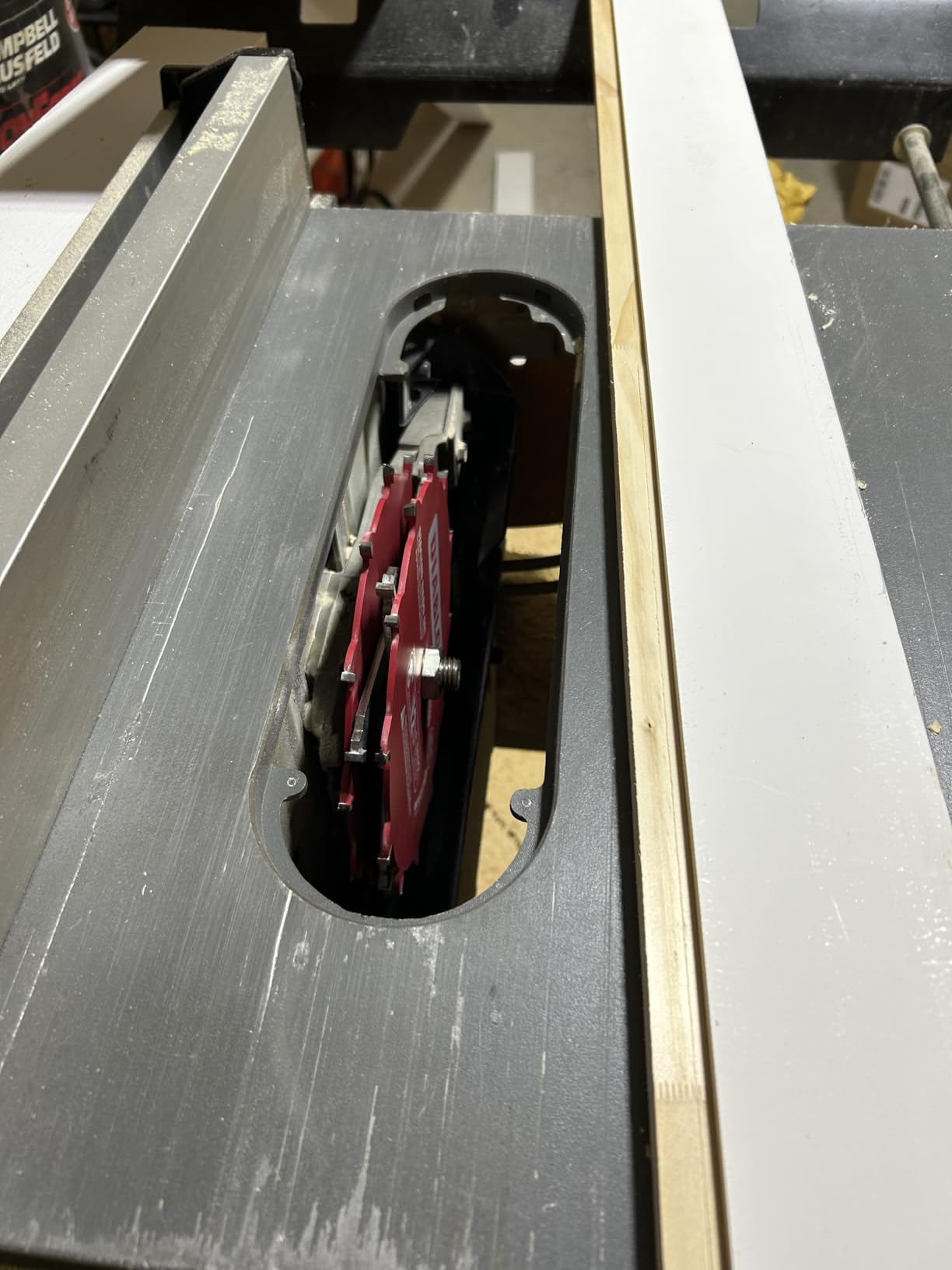
Cut quality is excellent. Negative hook angles give flat-bottomed grooves that resist splintering, and the Perma-SHIELD coating resists heat, gumming and corrosion so the blades stay clean between sessions. Reviewers running this set on thirty-year-old machines report results that match modern saws.
Owners single out the included size chart and labeled spacers, which is exactly what this article would tell you to look for: documentation that removes guesswork from the setup.
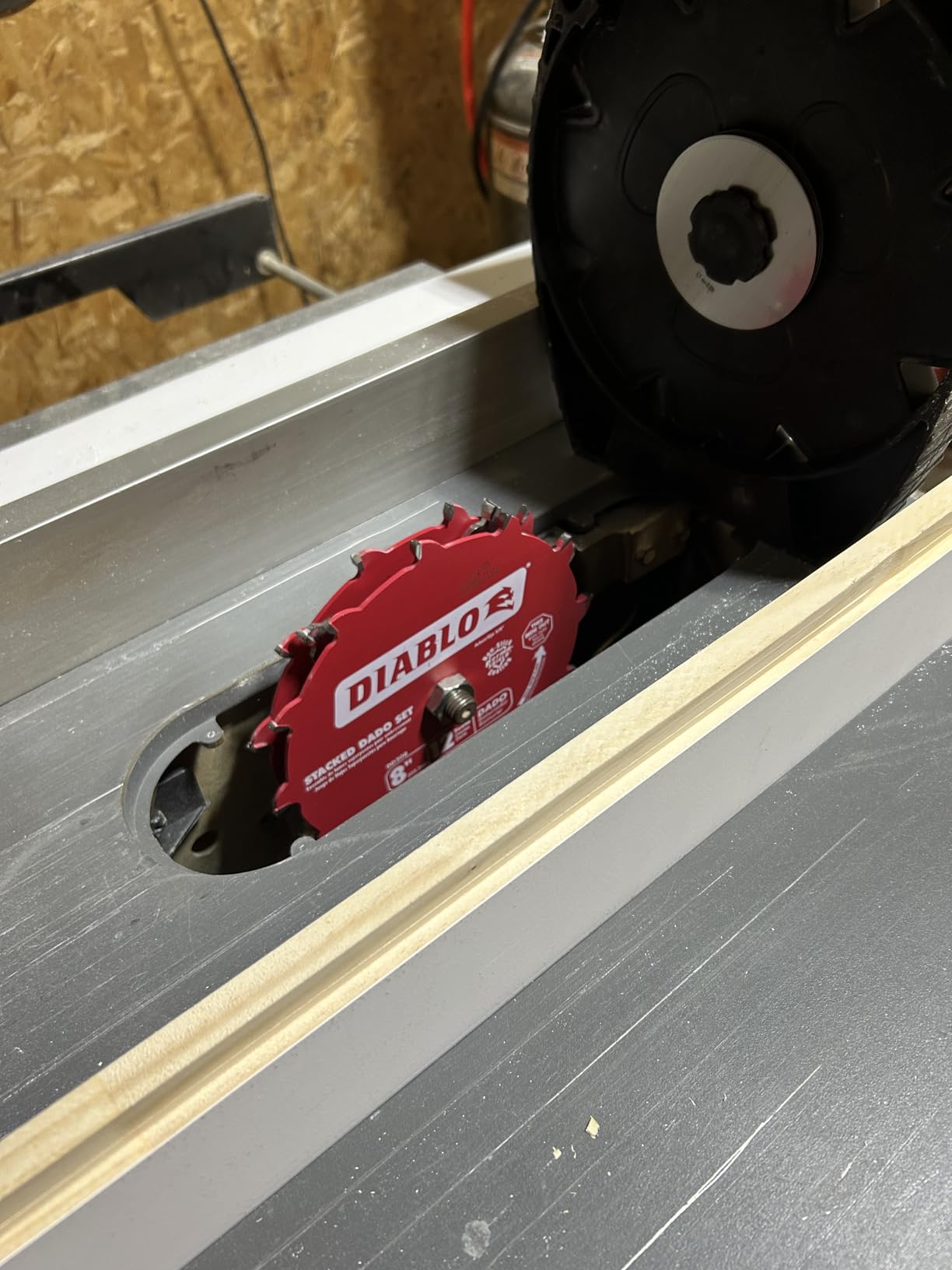
Best pick for low-horsepower saws
Match this set to a 1.5 HP portable or a contractor saw that is well past its second decade. Because the two outer blades and two wing chippers are a light configuration, the motor does not stall the way it can with a heavy multi-chipper stack, and the cut still reaches the full 1/4 inch to 13/16 inch range.
It also works well as a second stack. Keeping a light set for panel goods and a heavier one for hardwood is how most working shops organize themselves.
Limitations worth knowing
Two wing chippers is fewer than the five in the Mibro and Oshlun sets, so reaching wider grooves means changing shim combinations rather than adding plates. Not a problem if you follow the chart, just more steps when the width changes mid-project.
Handle the blades with care. Reviewers repeatedly note the carbide teeth are extremely sharp, and the resharpenable construction means there is no worn-out blade to dull them down first.
6. CMT 230.312.08 Locked Dado Pro Set – Best for Safety Brake Saws
CMT ORANGE TOOLS 230.312.08 DADO Set Saw Blade HW D=8” B=5/8” Z12 FTG+ATB Orange PTFE
UNI EN847 locking design
15/64 to 13/16 inch range
3 lock spacers plus 7 shims
12-tooth ATB blades
8 inch diameter
Pros
- Lock spacers hold cutters in place so the stack installs in one piece
- First dado set built to the UNI EN847 standard so plates cannot contact while spinning
- Flat bottoms with virtually no entry tearing across solid wood and melamine
- Stack cannot shift if a safety brake fires
- Shims adjust to 0.004 inch
- finer than most sets
Cons
- Micro shims are unlabeled so they must be gauged and marked by hand
- Only two supplied shims are magnetic and lock spacers are not sold separately
- Adding shims means the stack cannot be fully pre-assembled
This set solves a problem every other product on this page leaves you to manage yourself. The plastic lock spacers clamp the chippers between the outer blades, so the whole assembly can be put together off the saw and slid on as one piece instead of stacking plate by plate with everything spinning.
It is also the first dado set built to the UNI EN847 standard, which means the assembled elements are engineered not to contact one another while rotating. On a saw where a shifting stack is the main worry, that certification is worth real money.
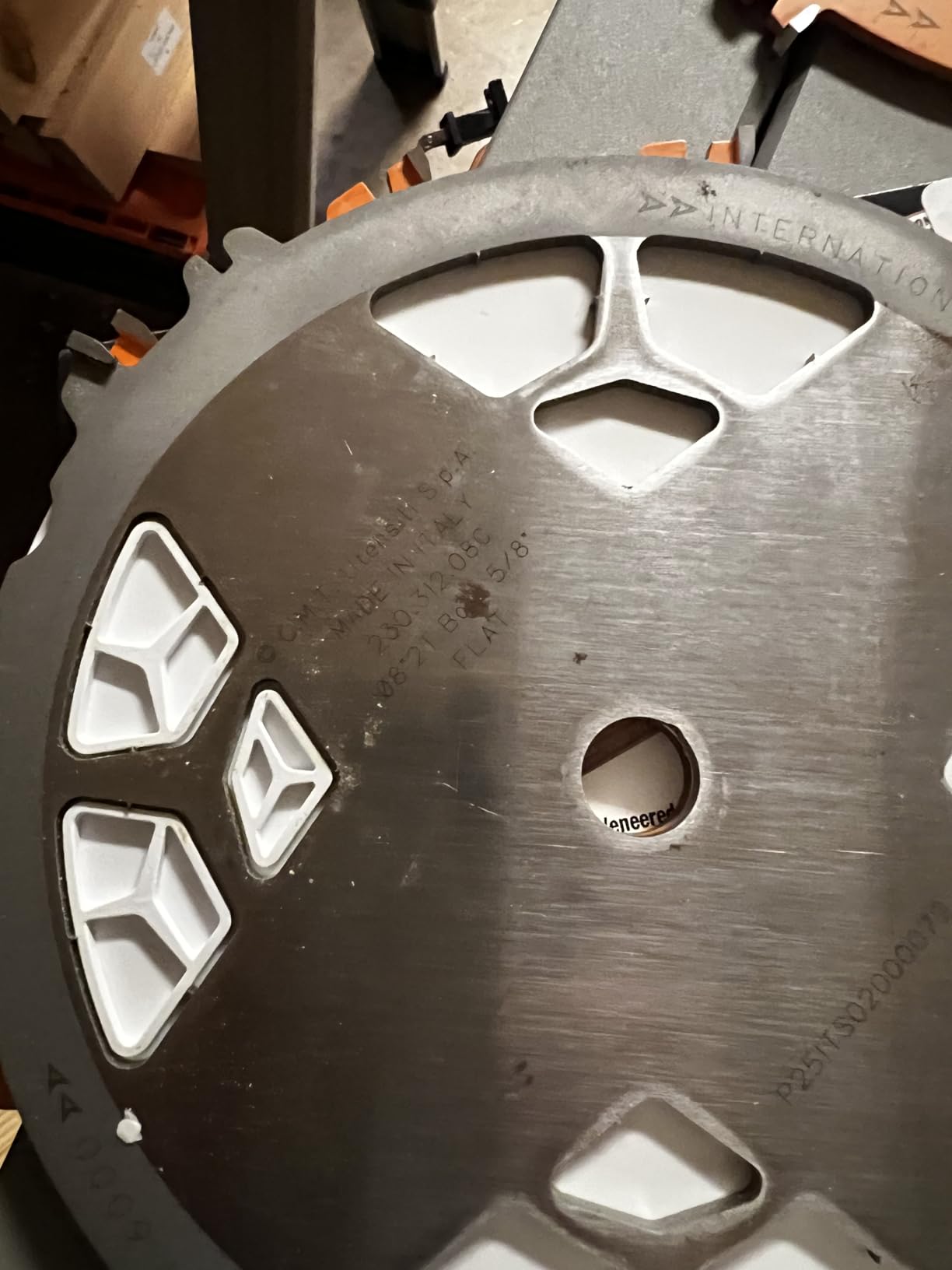
Cut quality is at the top of this list. The 12-tooth flat-ground ATB blades with a 12-degree negative hook angle produce flat-bottom grooves in solid wood, laminate, melamine and veneer ply with essentially no tearing on entry and very little cleanup afterward.
Owners with SawStop saws call this out specifically. Because the lock spacers keep the cutters offset and fixed, the stack cannot shift if the safety brake fires mid-cut, which is not a theoretical concern on that class of machine.
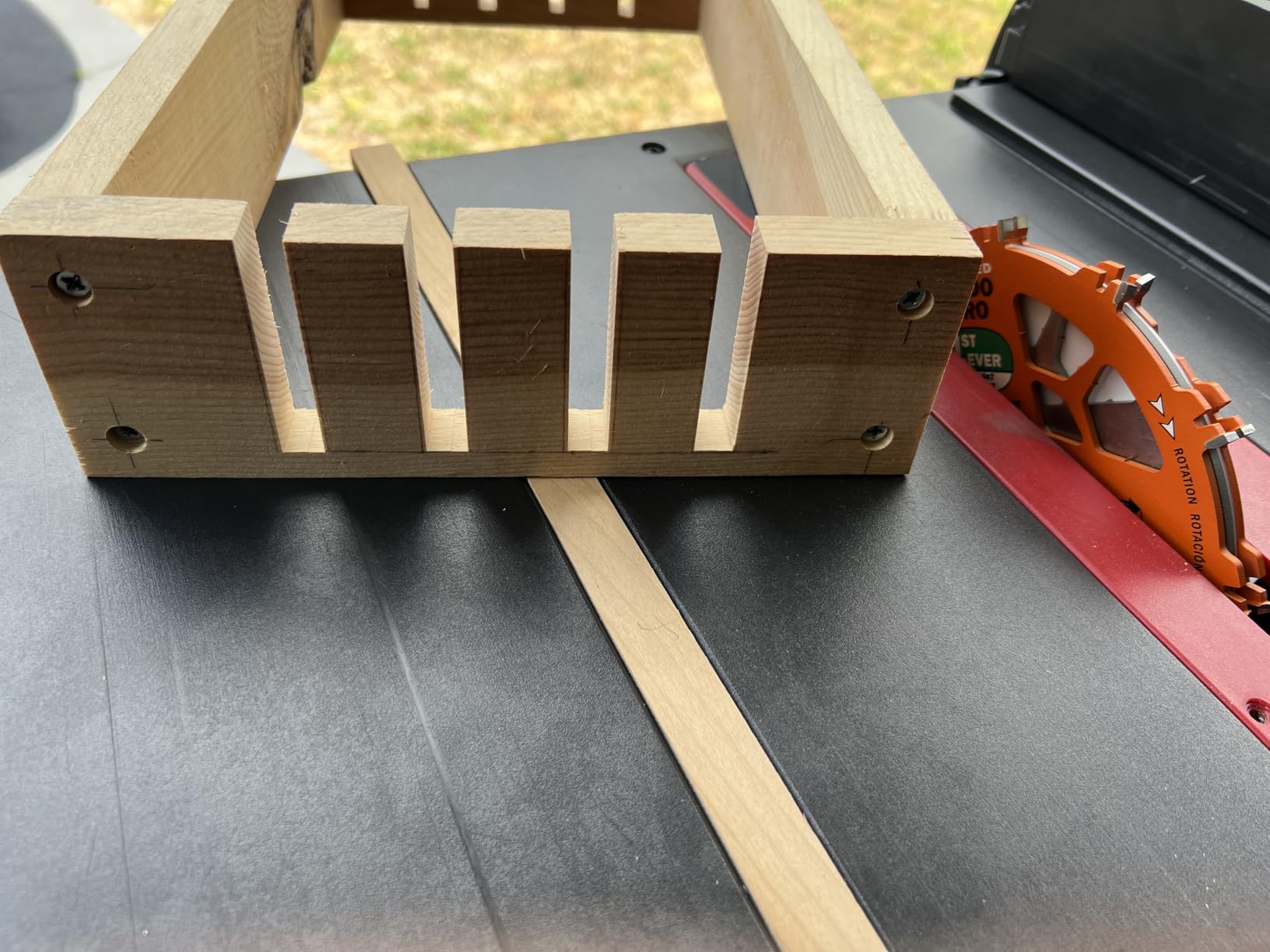
Who the locking design suits
Anyone who has rebuilt a wide stack three times because a chipper slipped while tightening, and anyone cutting on a safety brake saw where stack movement is the failure mode you most want to eliminate. It is also lighter than a typical full-chipper stack, which reduces rotating mass.
The range is unusually wide for a locking set, running from 15/64 inch to 13/16 inch, and the shims adjust down to 0.004 inch, finer than most competing stacks. That covers 1/4 inch plywood, 1/8 inch scribe allowances and everything between.
The labeling problem
The one recurring complaint is that the micro shims carry no thickness markings. Plan on a micrometer and a Sharpie before first assembly, marking each shim as you go. Without that step you are guessing, and a wrong guess shows up as a groove that does not match your plywood.
Only two of the supplied shims are magnetic, and replacement lock spacers are not offered separately, so keep the originals in the case. Also note that once shims go into the stack you can no longer pre-build it fully, because the shims catch on the arbor threads.
7. FOXBC 8 Inch 14-Piece Stacking Dado Set – Best for Rabbets and Grooves
FOXBC 8″ Carbide Stacking Dado Blade Set for SawStop, Jet, Dewalt, Bosch Saw – 14 Pieces
Two 8 inch outer blades
five two-wing chippers
seven shims
20 width combinations
5/8 inch arbor
Pros
- Clean crisp accurate cuts with essentially no vibration reported
- Blade and chipper accuracy consistently praised
- 20 widths from 1/4 to 13/16 inch in 1/16 inch steps
- Cuts rabbets
- grooves
- fillets and mortise-and-tenon shoulders
- Storage case with internal dividers included
Cons
- Manual names which chippers to use but not which shims
- Full stack is heavy and not advised below 2 HP
The same 14-piece architecture as the Mibro set, with two 8 inch outer blades, five two-wing chippers and seven shims giving twenty width combinations from 1/4 inch to 13/16 inch. The versatility is what stands out in use.
The negative hook angle teeth produce flat-bottomed, virtually splinter-free grooves, and the same stack handles rabbets, grooves, fillets and the shoulders of mortise-and-tenon work. For shop furniture where a dado is only one of several joints you cut, that flexibility matters more than any single specification.
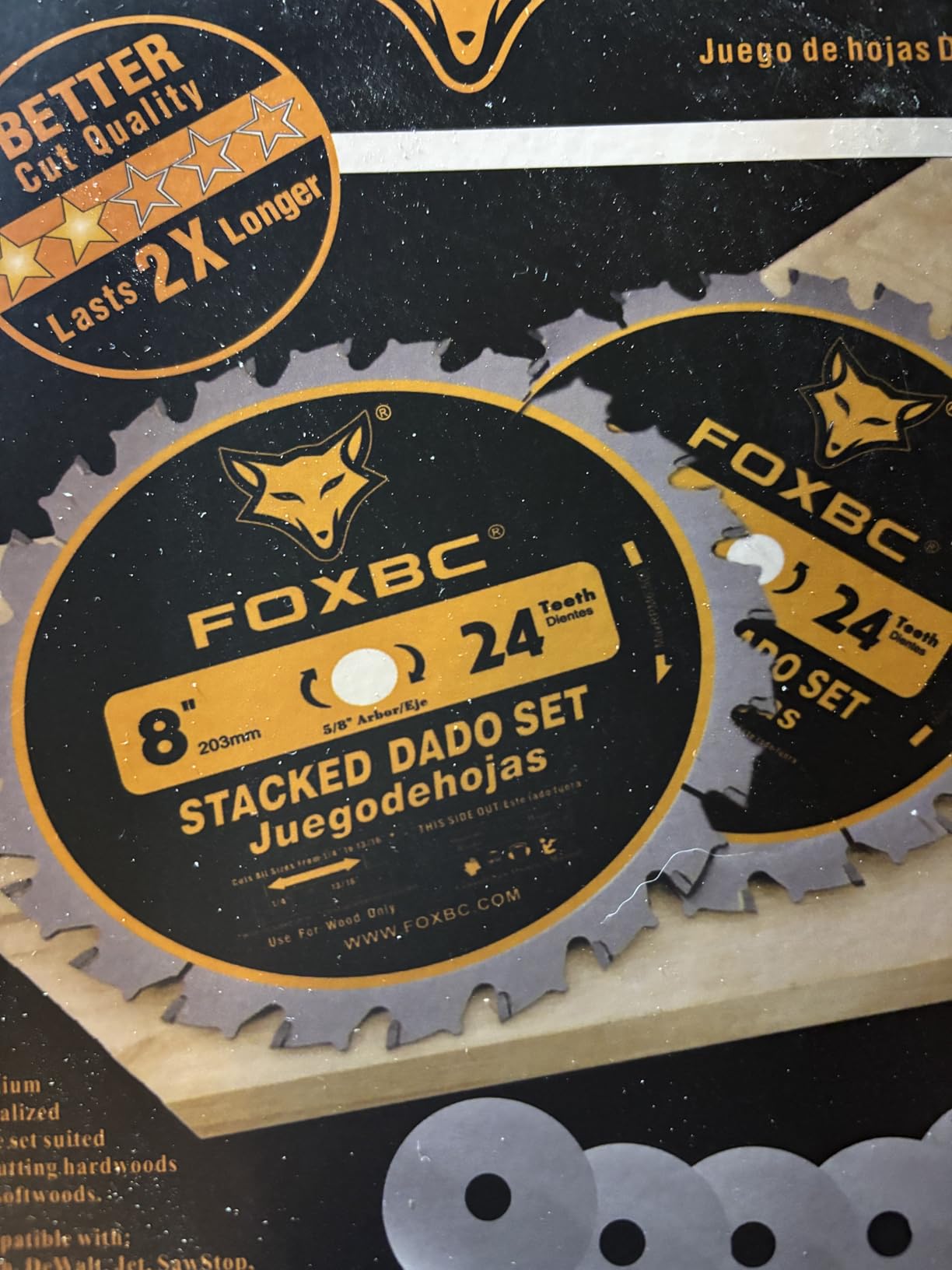
Owners report laser-accurate, crisp results and highlight blade accuracy as the standout. Vibration is essentially absent in normal use, which is unusual for a stack this size and reflects well-machined plates.
It is also named for common saw brands including SawStop, Jet, DeWalt and Bosch, so if you are matching to a specific machine, this one is easy to check against your manual.
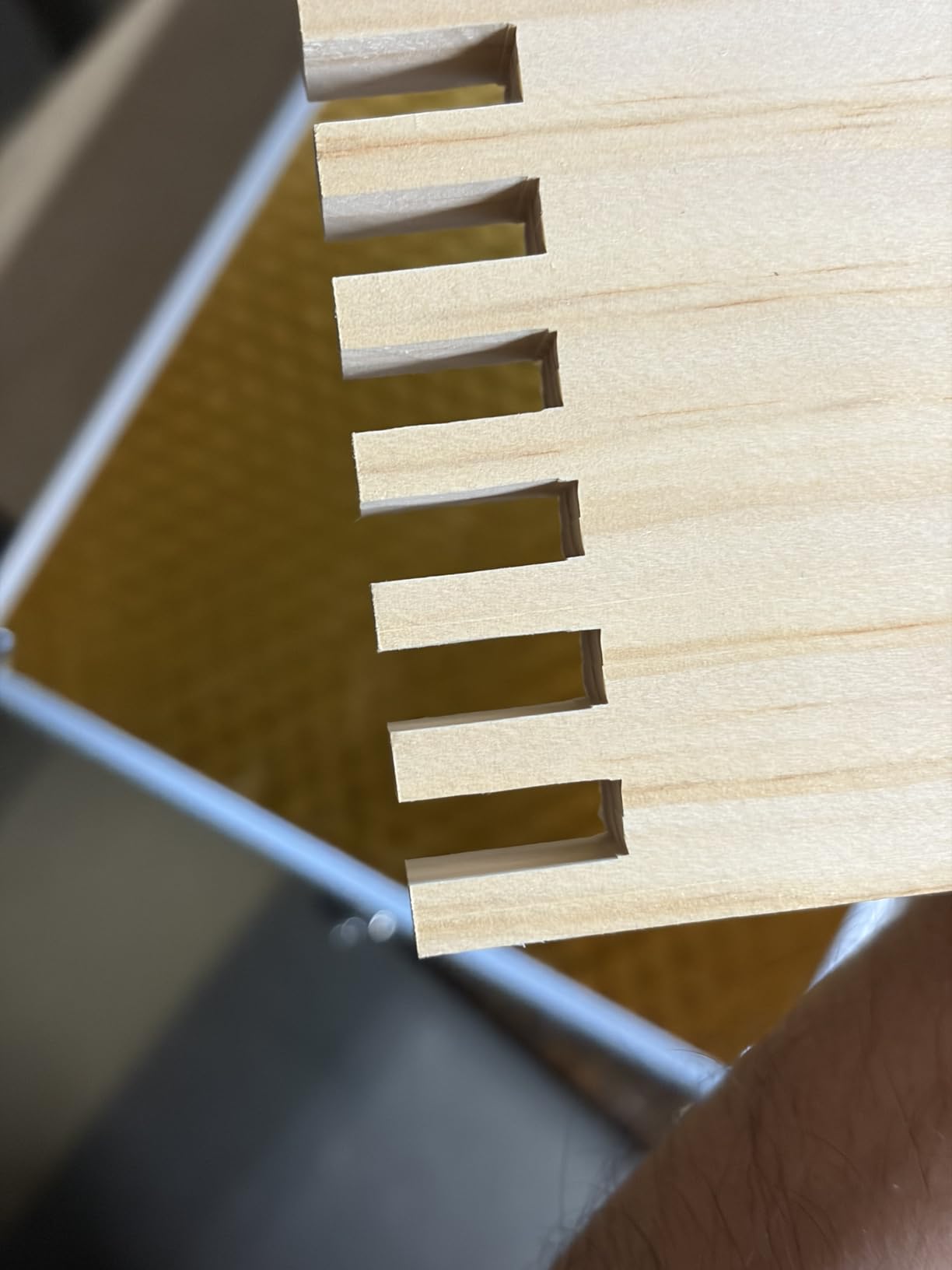
Versatility for mixed joinery
Where this set earns its place is the second project. The same five chippers and seven shims that cut a 1/4 inch dado for a shelf also cut the rabbet for a cabinet back or the groove for a frame. Compared with a single-purpose stack, you get more joint types from one purchase.
The dividers in the storage case keep the components in order, which addresses the shim-scattering problem forum users complain about most often with generic kits.
Motor load and documentation
Owners recommend a 2 HP minimum, and a full stack is heavy enough to load smaller motors noticeably. Check your saw horsepower before committing to wide grooves with this set.
The manual identifies which chippers to use for each width but not which shims, so expect some trial and error on first assembly. Write your widths on the case lid with a pencil after the first cut and it never bites you again.
8. Freud SD508 8 Inch Super Dado Set – Premium Pick
Freud SD508: 8″ Super Dado Sets
24-tooth 8 inch outer blades
six chippers
0.004 inch adjustment
TiCo Hi-Density carbide
5/8 inch arbor
Pros
- Superb repeatable cuts in walnut
- cherry ply
- melamine board and oak with no exit tear-out
- Bottoms square enough for exposed joints such as bookcases and wine racks
- Metal shims hold thickness far better than paper shims that compress
- Holds an edge over hundreds of feet of dadoing
- Anti-kickback design on all blades and chippers
Cons
- Supplied case is thin plastic and is often not included at all
- Blades and chippers are not labeled so the width chart is hard to follow
- A small ridge can appear in the bottom depending on stacking order
The SuperDado is the configuration forum users describe when they ask who makes the best dado stack, and the numbers back that up: 24-tooth outer blades with six chippers, four of them at 1/8 inch, plus 3/32 inch and 1/16 inch, and adjustment in 0.004 inch increments across the whole assembly.
That tooth and chipper count is what separates it. More plate coverage means fewer shims holding the stack open, which means a stiffer, more accurate stack. Cut quality is described as superb and repeatable across walnut, cherry plywood, melamine particleboard and oak, with no exit tear-out.
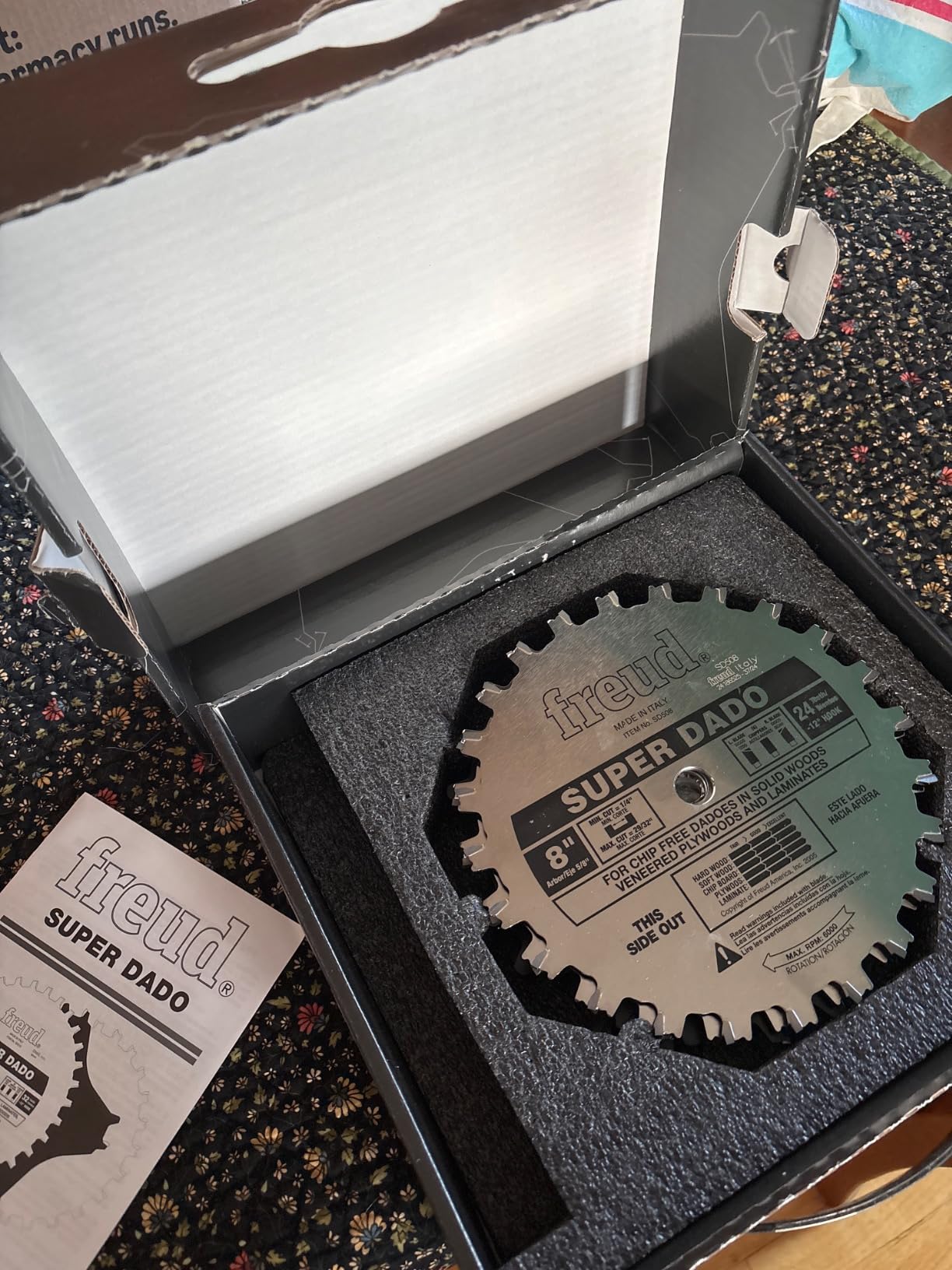
The bottoms come out square enough for exposed joints. That is the number one requirement for bookcases and wine racks, where a scalloped or wandering bottom is visible and the shelf rocks. One owner reported several hundred feet of dadoing with no loss of accuracy.
Metal shims are a meaningful upgrade over paper shims, which compress and relax every time you re-torque the arbor bolt, causing the groove width to drift through a project.
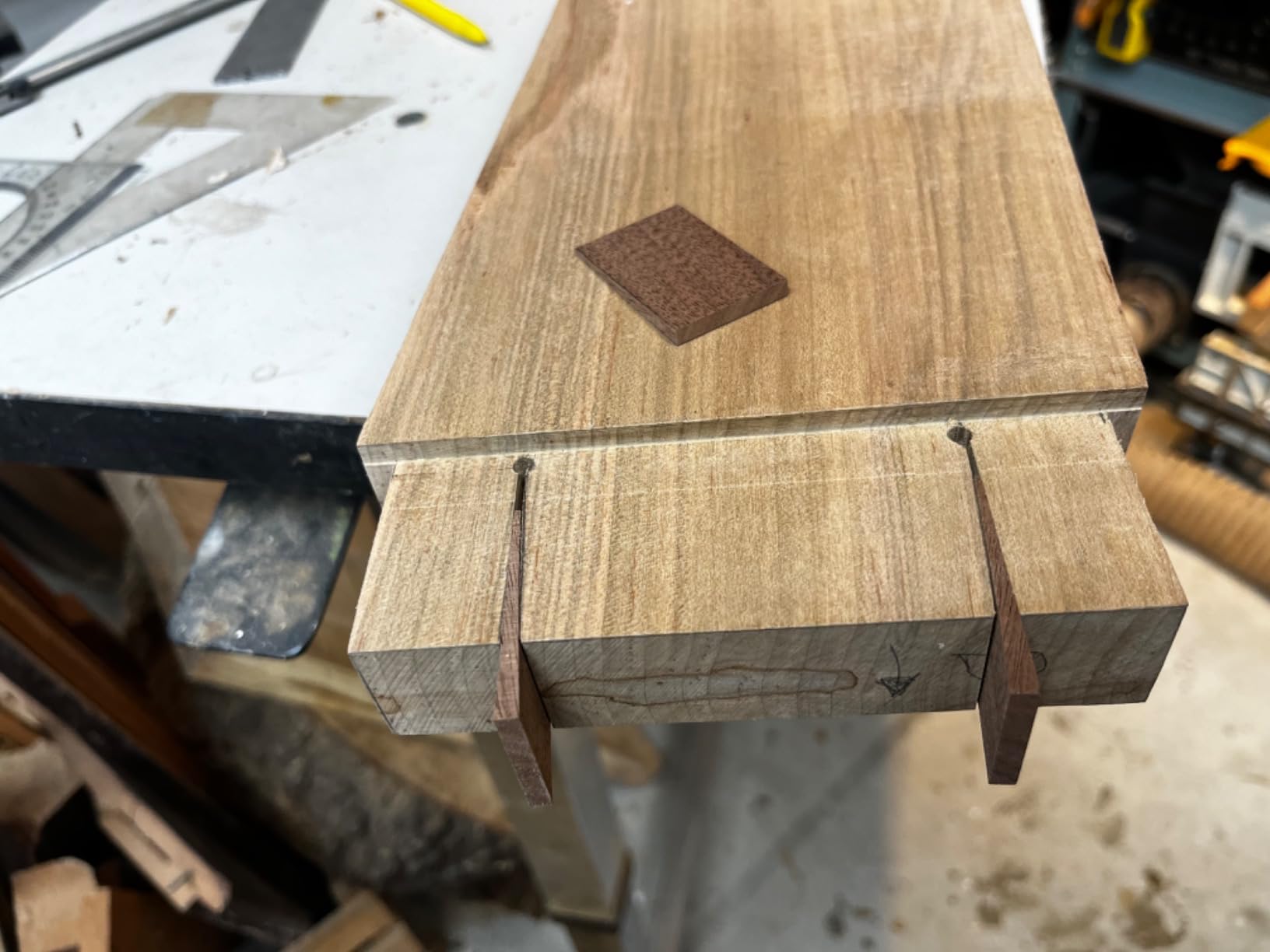
Where the extra carbide pays off
Premium TiCo Hi-Density carbide with a crosscutting blend holds its edge where service-grade carbide dulls, and the coating limits build-up so the blades run cooler and cleaner. For solid hardwood furniture this is the difference between resharpening twice a year and barely noticing the edge go.
The anti-kickback design across all blades and chippers also makes it the safer choice for deep grooves in thick stock.
Packaging is the weak point
Packaging is the dominant complaint and it is a significant one. The advertised case is thin extruded plastic with a vacuum-pressed insert that does not really protect carbide edges, and several owners report it is now shipped in a plain cardboard box with no case at all. Many build their own storage instead.
Two smaller issues: the blades and chippers carry no size or letter markings, so you need the printed chart, and a small ridge can appear in the bottom depending on the order the plates are stacked. Test two orderings on scrap and keep whichever runs cleaner.
9. DEWALT DW812DADO 8 Inch Dado Set – Best for DeWalt Saws
DEWALT Stacked Dado Saw Blade 8 Inch 12 Tooth (DW812DADO)
12-tooth heavy gauge laser cut blades
four-tooth chippers
micro-grain carbide
8 inch diameter
Pros
- Produces flat square dados and handles half-lap joints and rabbets well
- Fits DeWalt 10 inch saws including the DWE7491 and DWE7492 with threads to spare
- Laser cut heavy gauge plates mount securely and run true
- Saves considerable time versus repeated rip passes
- Stainless shims give ultra-fine width adjustment
Cons
- Shims carry no visible thickness markings so they must be gauged
- First-time setup takes practice to dial the correct width
- A replacement throat plate is needed for a clean dado on many saws
If your shop is a DeWalt shop, this is the straightforward choice. The DW812DADO is built around 8 inch outer blades that fit DeWalt 10 inch table saws with arbor threads to spare, and owners running the DWE7491 and DWE7492 jobsite models report clean installation.
The heavy gauge, laser cut plates are the detail that matters for accuracy. They mount very securely and run true, which is exactly what you want when the alternative is a stack that shifts while you tighten it.
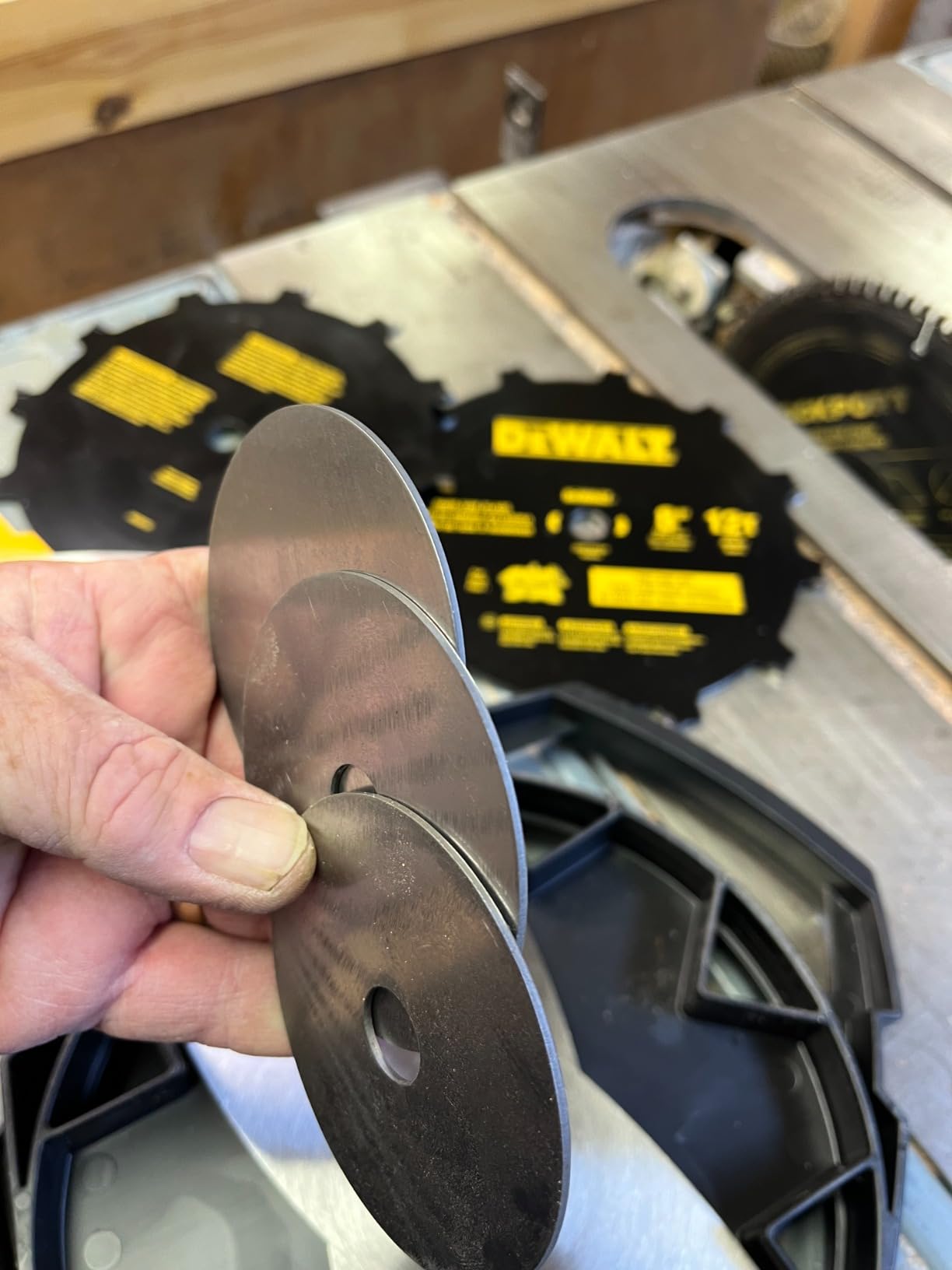
Four-tooth chippers with micro-grain carbide teeth give clean, low-splinter flat bottoms, and the stainless steel shims allow ultra-fine width adjustment. Half-lap joints and rabbets are reported as particularly clean results, which makes this a good general-purpose joinery stack.
Owners also note how much time it saves. Cutting the equivalent groove with repeated rip passes on a standard blade takes several passes and leaves a slightly different width on each; this does it in one.
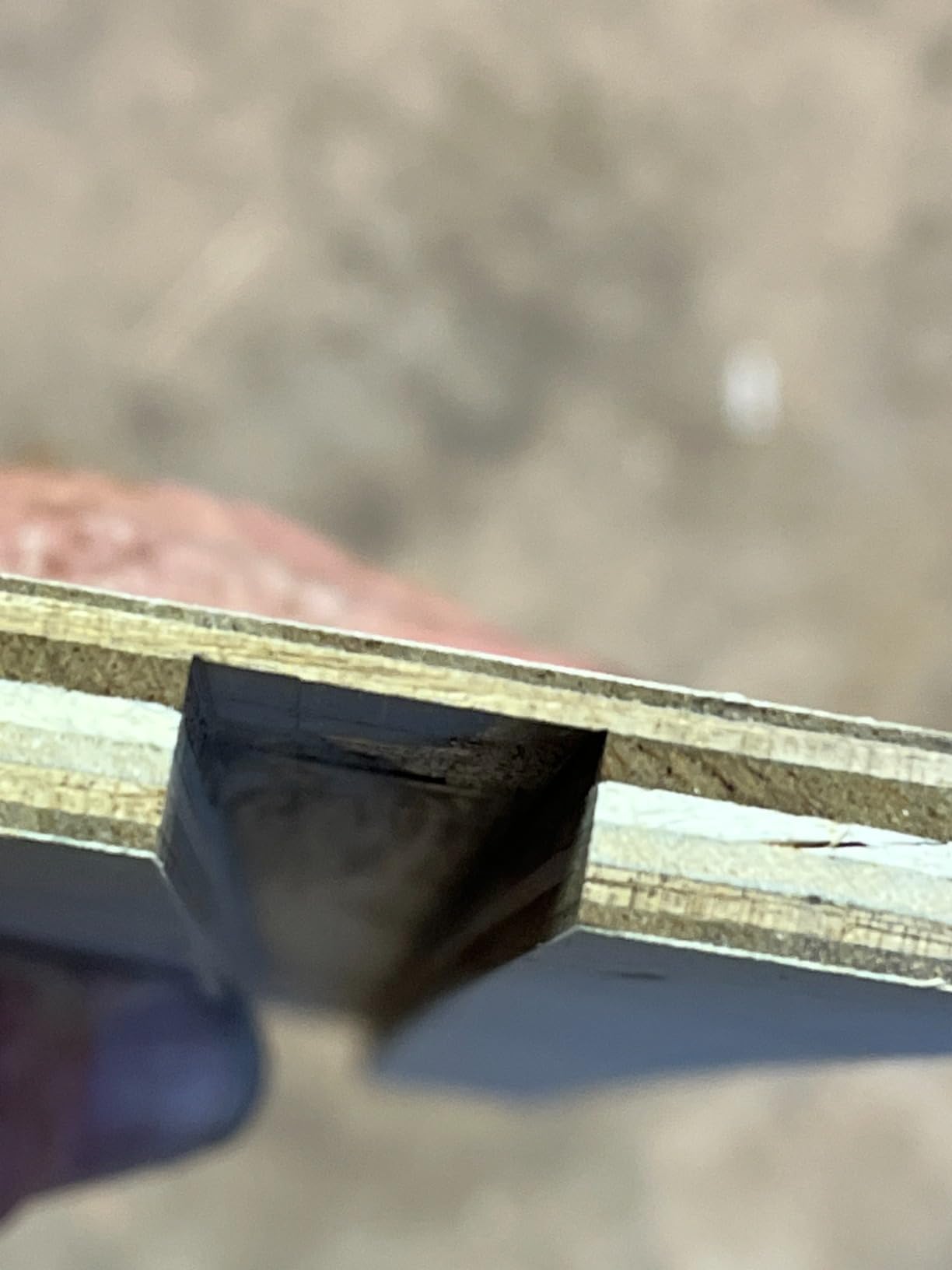
Best for matching an existing platform
Buying the set designed for your saw removes the guesswork around arbor length and stack weight, and for a lot of owners that is the deciding factor. The threads-to-spare fit means the arbor nut has room to clamp properly rather than bottoming out.
If you are building cabinets or working through ply, this is a practical, no-fuss set with a case that actually protects the teeth.
Setup notes before you cut
Two things to sort first. The shims have no visible thickness markings, so gauge them before assembly. And a replacement throat plate is needed for a clean dado cut on many table saws, because the standard plate opening is too narrow for a full stack and the plate rides up into the cut.
Budget a practice joint on scrap. First-time width dialling takes a little practice, but the flat, square results owners report after that first session are well worth it.
10. Freud SD308 8 Inch Safety Dado Set – Best for Wide Grooves
Freud SD308: 8″ Safety Dado Sets
22-tooth 8 inch outer blades
five chippers
0.004 inch adjustment
TiCo Hi-Density carbide
5/8 inch arbor
Pros
- Cuts wide and narrow grooves cleanly in posts
- 2x4s and oak with precise flat bottoms
- Sharp thick carbide produces no tear-out in Baltic birch cabinet ply
- Chippers lock securely into the main blades simplifying setup
- Shim range covers most widths with repeatable accuracy
- Works with SawStop saws fitted with the dado brake
Cons
- Full stack is heavy so arbor shaft length should be checked first
- One owner reported chatter and severe exit chip-out in maple
- Fewer teeth and two fewer chipper options than the SD508
The SD308 is the Freud configuration aimed at cabinet makers, and the 22-tooth outer blades with five chippers including four at 1/8 inch give it a wide reach per stack. That means fewer plates to add when you go to a wider groove, which is the configuration owners like most for drawer and carcass work.
Cabinet makers and shop teachers consistently point to fast, accurate setting and clean results in Baltic birch cabinet-grade plywood with no tear-out. The chippers lock into the main blades securely, so the stack holds position while you torque the arbor.
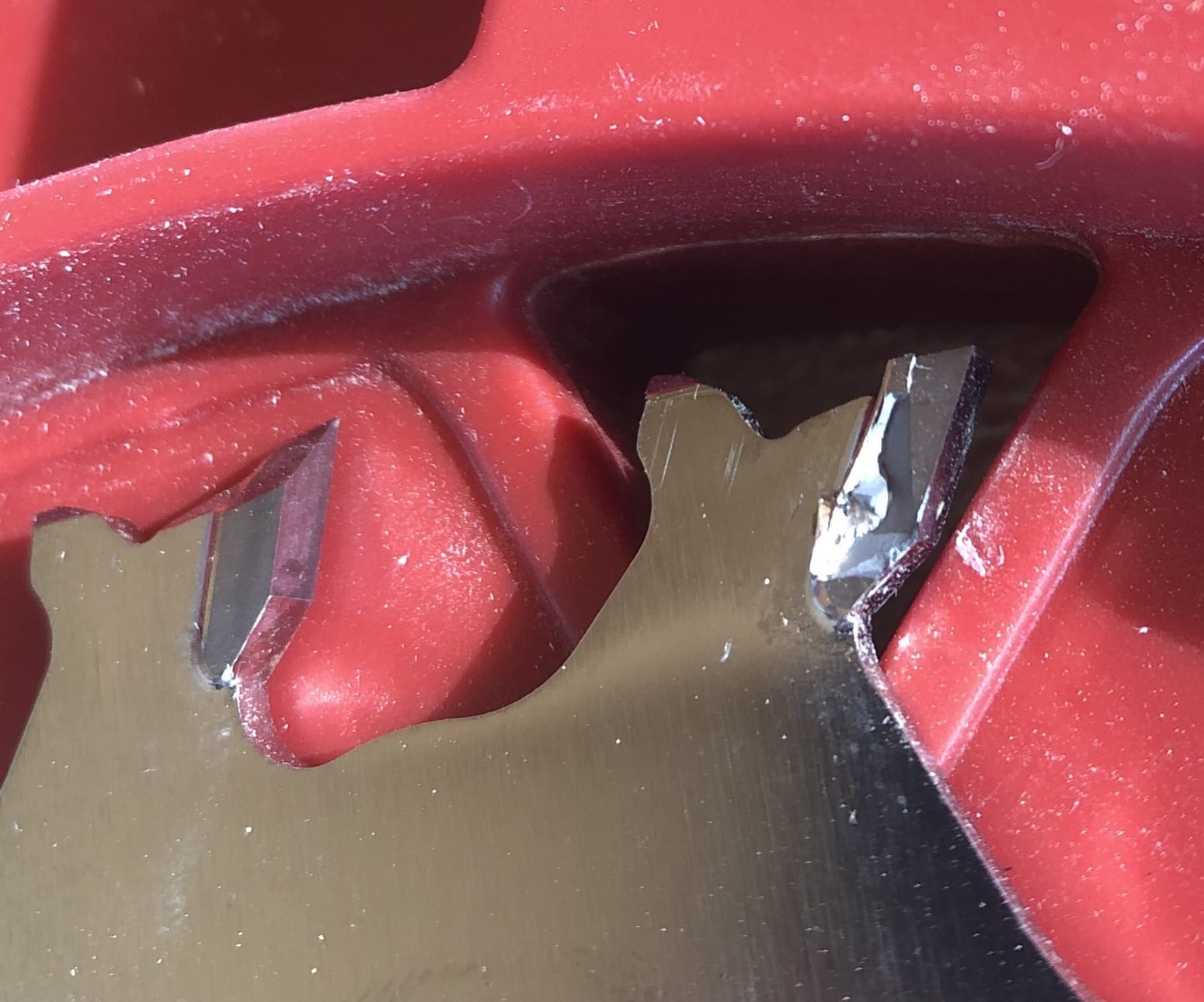
It is also listed as compatible with SawStop saws fitted with the dado brake, which widens the options for safety brake owners who want a brand stack rather than an aftermarket one.
Same TiCo Hi-Density carbide blend as the other Freud sets here, so edge retention and build-up resistance are in the premium tier.
Before you buy, check the arbor
This is the practical warning that recurs in reviews. The full stack is heavy, so check the arbor shaft length on your saw and confirm the saw manufacturer supports dado cuts before ordering. A saw that is not designed for a full stack may not have the shaft or the thrust bearing to carry it.
There is also an isolated report of chatter and severe exit chip-out in maple. Cut a test joint in your worst-case material before committing a full panel.
SD308 or SD508
Choose the SD308 when wide grooves matter more than the finest finish. It carries five chippers and reaches wide widths with fewer plates. Choose the SD508 when you want 24-tooth blades, more chippers and finer adjustment overall, and you are willing to carry a heavier stack.
Both are premium carbide. The SD508 has more teeth and a broader chipper selection, and it is the one most often named as the finest-cutting of the two.
How to Set Up a Dado Stack
Most disappointing first dado cuts are setup errors, not bad blades. This sequence takes about fifteen minutes the first time and two minutes thereafter.
Before you commit to a stack, make the point on your saw with something you already own, the way we cover routine machine setup in our [best table tennis robots for practice](https://austineubanks.com/best-table-tennis-robots-for-practice/) guide, so you know how your particular saw behaves before shims are involved.
Start by confirming the saw allows it. Check the manual for dado capability, and check that your arbor has enough length to clamp a full stack with threads to spare. A dado insert or zero-clearance throat plate is strongly recommended because the standard plate will ride up into the groove on any stack wider than a quarter inch.
Next, set blade height. The top of the outermost blade should sit roughly one third to one half inch above the surface for most work. Too high and the stack is unstable and the cut wanders; too low and you are asking the chippers to do all the work.
Then consider blade order. Chippers with reversed teeth must face the same direction as the outer blades, and cutting edge for cutting edge. A mis-oriented chipper will not cut, it will burn, and it will scorch the bottom of the groove. If your instructions are vague, this is the first thing to check when a cut looks wrong.
Install the stack on the arbor and snug the arbor bolt, then back it off and re-tighten. Blades must clamp against the arbor shoulder or they can throw off, which is what causes wandering grooves. Many builders find a second tighten-and-release cycle settles the stack.
Run a test cut in scrap of the same thickness and species as your actual material. Measure the width with calipers, add or remove shims, and repeat. Once the test groove matches your stock to within a few thousandths, mark the shim combination on the storage case and never search for it again.
Finally, remember that a dado cut is a crosscut, not a rip, and the workpiece should be held firmly against the fence and against the table with the outfeed side free. A dado that wanders almost always traces back to the workpiece moving, not the stack.
Choosing Diameter, Arbor and Stack Size
The short answer on diameter is: match the stack to your saw, not to your material. A 6 inch stack suits a 1.5 HP portable saw, an 8 inch stack is the standard for contractor and hybrid saws, and 10 inch stacks belong on 3 HP machines and above. Forum consensus is consistent on this point, and pushing a heavy stack through an undersized motor is the fastest route to burn marks and burnouts.
On arbor size, 5/8 inch is the overwhelming standard and every set on this page uses it. Some European and older industrial saws run a 1 inch arbor, so check before ordering.
Stacked set or wobble blade is the other common question. A single wobble blade is one part, cuts fast, and needs no shims, which makes it appealing for ripping and for one-off work. For precision joinery, forum users are broadly skeptical: the single blade throws a groove with a rounded or tapered bottom rather than a flat one, so shelves sit in it but do not seat square. If your joints need to be flat-bottomed and repeatable, a stacked set is the right answer.
Table saw or router table is the last comparison. The router table wins when you need grooves at an angle, in a corner, or stopped at an arbitrary point, and it changes cutters in seconds. The table saw wins on width accuracy, repeatability across a batch of identical parts, and speed on long grooves. Most cabinet and bookcase work is better served by the saw.
Finally, sizing the hardware to the job. A set with laser-marked shims saves an afternoon of trial and error, and a case with real dividers keeps chippers from disappearing. Mark every micro shim you own with a Sharpie and a micrometer on day one, because unlabeled 0.002 inch and 0.005 inch shims are impossible to tell apart once they are loose in a drawer.
While you are choosing, it is also worth a look at our [best train table sets for toddlers](https://austineubanks.com/best-train-table-sets-for-toddlers/) guide, which follows the same buy-once, use-for-years approach we take to shop tools like these.
Frequently Asked Questions
What is the best dado blade set?
The Mibro 14-piece 8 inch set is the best all-round choice for most joiners because twelve width combinations in 1/16 inch steps cover almost every groove a cabinet or bookcase needs. Choose the Freud SD208S for edge retention in hardwood, the Oshlun 42-tooth set for the smoothest visible bottoms, and the CMT Locked Dado Pro if you run a safety brake saw.
What size dado blade should I use on my table saw?
Match the stack to your saw horsepower rather than your material. A 6 inch stack suits a 1.5 HP portable saw, an 8 inch stack is standard for contractor and hybrid saws, and 10 inch stacks need 3 HP or more. Every set reviewed here is 8 or 10 inch with a 5/8 inch arbor, which covers most saws in circulation today.
Can you put dado blades on any table saw?
No. Check your saw manual first, because some benchtop and jobsite saws do not support dado cuts at all. You also need enough arbor length to clamp a full stack with threads to spare, and a zero-clearance insert or replacement throat plate, because the standard plate rides up into any stack wider than a quarter inch.
What are common dado blade mistakes?
The three most common are a chipper installed backwards, a stack not clamped flat against the arbor shoulder, and a throat plate that rides up into the groove. A reversed chipper burns instead of cutting, an unclamped stack wanders, and the wrong plate leaves a step in the bottom of every groove. Test cut in scrap first, every time.
Is a dado stack better than a wobble blade for joinery?
For precision joinery, yes. A stacked set cuts a flat-bottomed groove with square shoulders and a width you can repeat part to part, which is what a shelf or drawer divider needs in order to sit square. A single wobble blade is faster to set up and needs no shims, but the bottom is typically rounded rather than flat, so parts do not seat evenly.
Conclusion
After putting all ten stacks through carcass panels, drawer boxes and hardwood, the Mibro 14-piece 8 inch set is the one we recommend to most people. Its twelve width combinations, negative hook angle teeth and hard case with dividers cover the widest range of joinery, and it is the least likely to leave you guessing during setup once you learn the chipper orientation.
Buy the Freud SD208S if edge retention in solid hardwood and plywood matters more to you than maximum groove width. Buy the Oshlun 42-tooth set when the bottom of the groove will be visible and you want the finest finish available here. Buy the CMT Locked Dado Pro if you run a safety brake saw and want the stack to stay put, and the Diablo if your saw is old and underpowered.
Whatever you choose, spend the first ten minutes on setup rather than on speed. Confirm the saw supports dados, fit a zero-clearance insert, check the chipper direction, and make one test cut in scrap. That is the difference between a flat-bottomed joinery groove and an afternoon of sanding.