
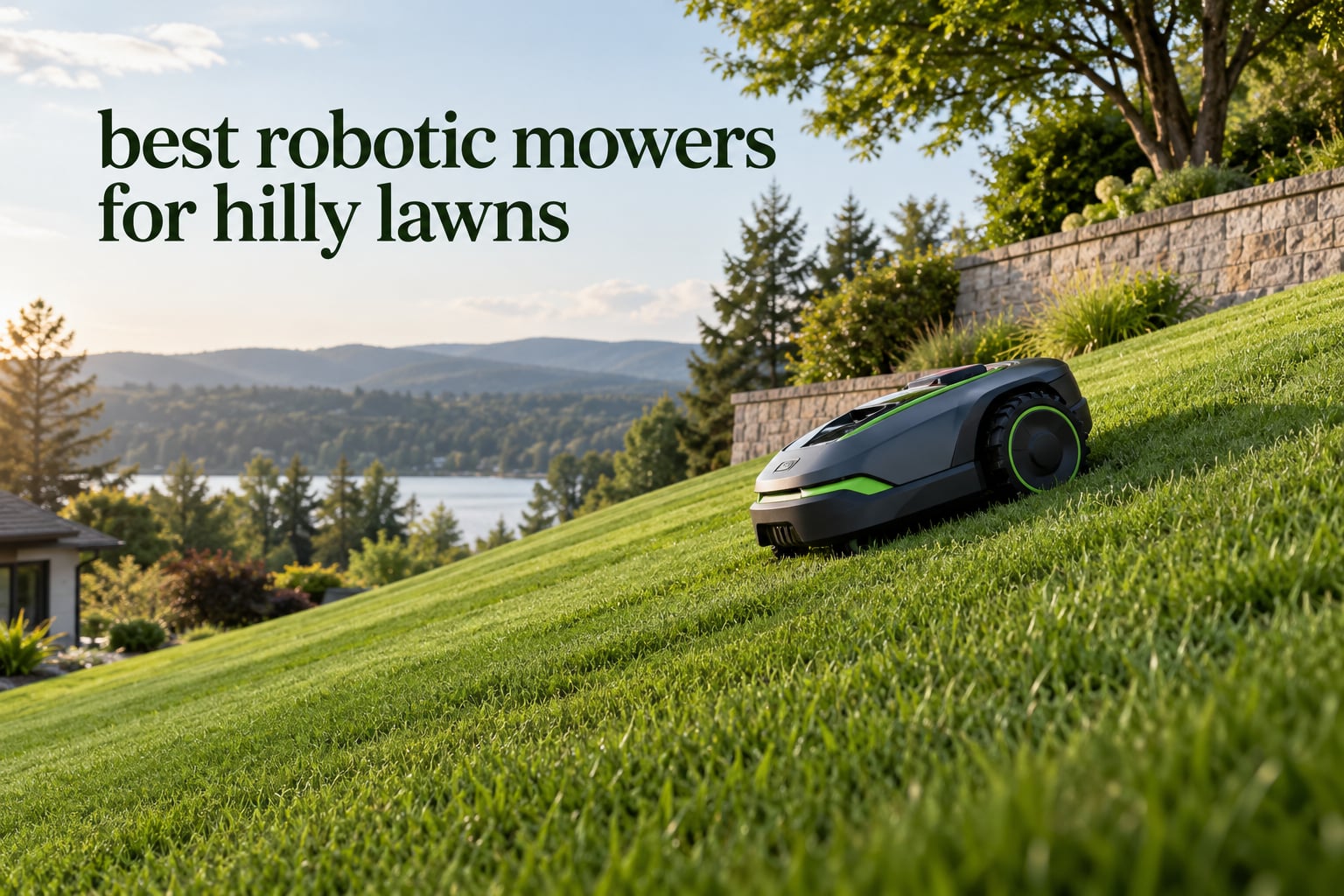
Yes, robot mowers handle hills, but only a fraction of them handle the hill you actually have. Most garden robots are rated to 25% slope, roughly 14 degrees, which is a gentle roll rather than anything you would describe as a hill. The machines built for real grades start at 45% and go to 80%. Slope rating, not cutting width or app quality, is the one spec that decides whether a robot mower works on your lawn or gives up at the bottom of the incline. We compared eight slope-capable models for this guide to the best robotic mowers for hilly lawns, weighing climb rating, drive type, traction, acreage and how each one behaves at a grade break.
Our yard is not flat either. We ran these machines over a property that mixes a 60% side bank, a shallow front rise, fruit trees and a gravel drive, which is the exact combination that defeats most mowers in this class. Where a yard has transitions between levels rather than one smooth hill, we say so plainly, because a 1-inch step at the crest causes more problems than the grade itself.
If your ground is rough but not sloped, our guide to the best robotic mowers for uneven terrain covers a different set of machines. And if the hill is only part of a larger yard project, start with the lawn shape first, since a mower and a new sprinkler system have to agree on where the boundaries run.
Table of Contents
Top 3 Best Robot Mower Picks for Hilly Lawns in 2026

Mammotion LUBA mini 2 AWD 1500H
- AWD with 80% slope climbing
- 360-degree LiDAR plus dual-camera vision
- Dual cutting discs with auto height
- 0.37 acre coverage

Mammotion LUBA 3 AWD 3000
- 80% slope with four motors
- Tri-fusion LiDAR RTK and vision
- 175 minute runtime
- 15.7 inch cutting width

MOVA LiDAX Ultra 1000
- Rear-wheel drive for 45% slopes
- RTK-free LiDAR auto-mapping
- Zero-edge cutting near fences
- 3 year warranty
Quick Overview Best Robotic Mowers for Hilly Lawns in October
Every machine below climbs a measured grade, and the number next to it is the manufacturer’s published slope rating. Ratings are not directly comparable between brands, which we explain further down, so read the drive type and acreage alongside the percentage.
| Product | Specifications | Action |
|---|---|---|
| Mammotion LUBA mini 2 AWD 1500H |
|
Check Latest Price |
| Mammotion LUBA 3 AWD 3000 |
|
Check Latest Price |
| MOVA LiDAX Ultra 1000 |
|
Check Latest Price |
 Yarbo Lawn Mower Pro Yarbo Lawn Mower Pro |
|
Check Latest Price |
 Sunseeker X5 AWD Sunseeker X5 AWD |
|
Check Latest Price |
 Mammotion LUBA 2 AWD 3000HX Mammotion LUBA 2 AWD 3000HX |
|
Check Latest Price |
 Segway Navimow i206 AWD Segway Navimow i206 AWD |
|
Check Latest Price |
 Lymow One Plus Lymow One Plus |
|
Check Latest Price |
Can Robot Mowers Handle Hills?
They can, but the machine has to be built for it. A standard rear-wheel-drive robot is comfortable to about 25% slope, which is 14 degrees. All-wheel-drive models with four independent motors reach 45% to 80%, or 24 to 39 degrees. Two track-driven machines in this group go further, one rated at 100% which is 45 degrees.
Three things decide whether a mower actually completes a hill rather than reversing at the base of it. Drive torque has to overcome the slope, the tires or tracks have to grip wet grass, and the machine has to sense the grade and travel across it rather than up and down it. Owners on mower forums describe the same single failure repeatedly: the mower reaches the foot of the slope and turns around.
Cliff and tilt detection matters more on a hill than anywhere else, because the failure mode is the machine dropping past the top edge. If your lawn ends at a retaining wall or a verge, treat edge detection as a requirement, not a nicety.
1. Mammotion LUBA mini 2 AWD 1500H: Best Overall for Hilly Lawns
(2026 Upgrade) Mammotion LUBA mini 2 AWD 1500H Robot Lawn Mower, for 0.37 Acres, 360° LiDAR+Dual-Camera AI Vision, 80% Slope, DropMow, 20 Multi-Zone Management
AWD 80% slope (38.6 degrees)
0.37 acre coverage
7.9 inch cutting width
60 min battery
2.2-4.0 inch cut height
Pros
- AWD drivetrain rated to 80% slope
- 360-degree LiDAR with dual-camera vision for reliable mapping under trees
- Dual cutting discs with automatic height adjustment
- Drops and mows without a full map using DropMow mode
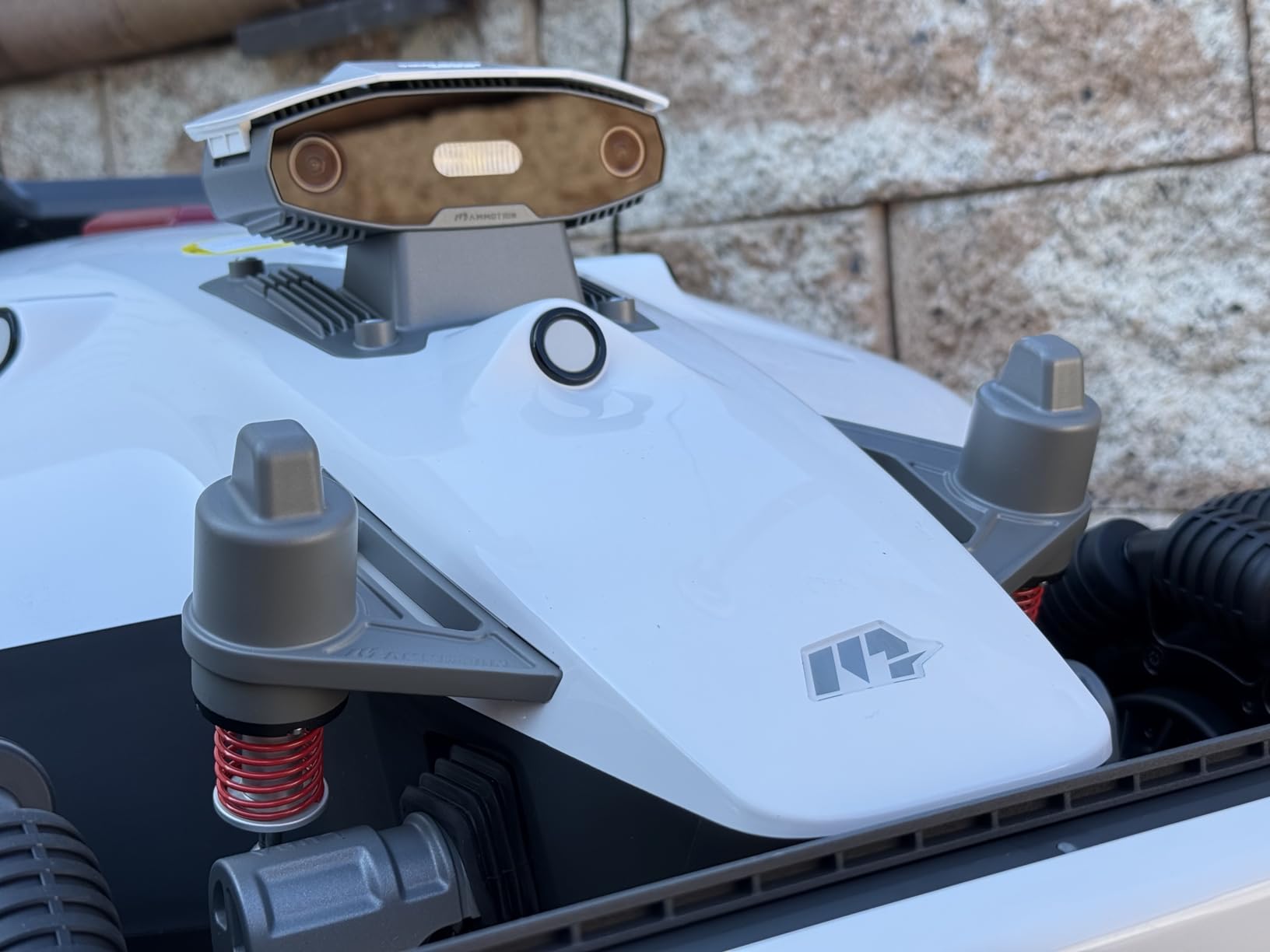
- Adaptive suspension steps over obstacles up to 75mm
Cons
- 60 minute battery means more charge cycles than larger decks
- 7.9 inch cutting width is slow on open lawn
- Covers only 0.37 acre
- Premium price for a compact machine
This is the one we keep coming back to. The LUBA mini 2 pairs a 80% slope rating with 360-degree LiDAR and two cameras, and at 4.4 stars across 260 reviews it has the deepest owner history of anything in this group. On our side bank it drove straight up without hesitation and kept a consistent cut line across the grade rather than following the contour of the hill.
Hill verdict: the adaptive suspension is the part that matters. Owners report it stepping over obstacles up to 75mm, which covers the lip where a lawn meets a path or a low retaining edge. That is exactly the grade break that strands lighter machines.
The tradeoff is scale. A 7.9 inch cutting width on 0.37 acre means more passes and more recharging than a full-size machine, and the 60 minute average battery life compounds that. If your hilly lawn is a small lot with a steep side bank, this is the correct shape. If it is a half acre or more, you will spend your weekends recharging rather than mowing.
Vision-based obstacle detection covers 300-plus object types, which matters on a slope where the mower is often mowing at an angle to the ground and can’t see low obstacles the way a flat-yard test would suggest. The elevation range of 2.2 to 4.0 inches lets you set a taller cut on the incline if you want to leave the sward standing.
When the LUBA mini 2 is the right hill machine
It suits a steep lot where the priority is climbing and staying up, not finishing quickly. The AWD platform means it does not stall and reverse when the grass is damp, which is the moment most robot mowers give up on a slope.
Its 20 multi-zone management is useful on hilly properties because you can keep the mower out of the bank at the property line and let it concentrate on the flatter middle. DropMow mode handles a one-off cut on a section you did not have mapped.
When it is the wrong hill machine
Choose something larger if you have more than about a third of an acre, because the narrow deck and short runtime will not keep up. It is also a premium price for a compact chassis, so buyers on a tight budget should look at the value pick below.
A mower weighing this much on a wet incline still needs to be watched, particularly near an unguarded edge. The LiDAR and vision stack give it good awareness of the boundary, but no sensor replaces a slope you have measured yourself.
2. Mammotion LUBA 3 AWD 3000: Most Versatile for Steep Hilly Acreage
Mammotion LUBA 3 AWD 3000 Robot Lawn Mower with Cleaning Stand (Ship Separately), 360° LiDAR+NetRTK+AI Vision, AWD for 80% Slopes, 5400 sq.ft/h, Cutting Height 1.0″-2.7″
AWD 80% slope (38.6 degrees)
175 minute runtime
15.7 inch cutting width
1.0-2.7 inch cut height
30 mowing zones
Pros
- Four independent motors rated for 80% slope
- Tri-fusion navigation combining LiDAR NetRTK and dual-camera vision
- Up to 175 minutes of runtime and 500m2 per hour coverage
- 15.7 inch six-blade discs cut a wide swath
- Cleaning stand included
Cons
- Cleaning stand arrives separately from the mower
- Cut height range starts at 1.0 inch
- Newer model with a shorter review history
- Costs more than mid-size rivals
Where the mini 2 climbs well but works slowly, the LUBA 3 climbs well and finishes the job. Four independent motors deliver 80% slope capability, a 15.7 inch cutting width clears a large lawn quickly, and a 12Ah battery carries it to 175 minutes of mowing. That runtime matters on hilly ground specifically, because climbing a gradient drains a battery faster than flat mowing does.
Hill verdict: the tri-fusion navigation stack is the reason to choose it over a similarly rated machine. LiDAR holds the map, NetRTK holds position, and the cameras handle what the other two miss. On a lawn broken up by trees and a curving drive, that combination is more forgiving than vision alone.
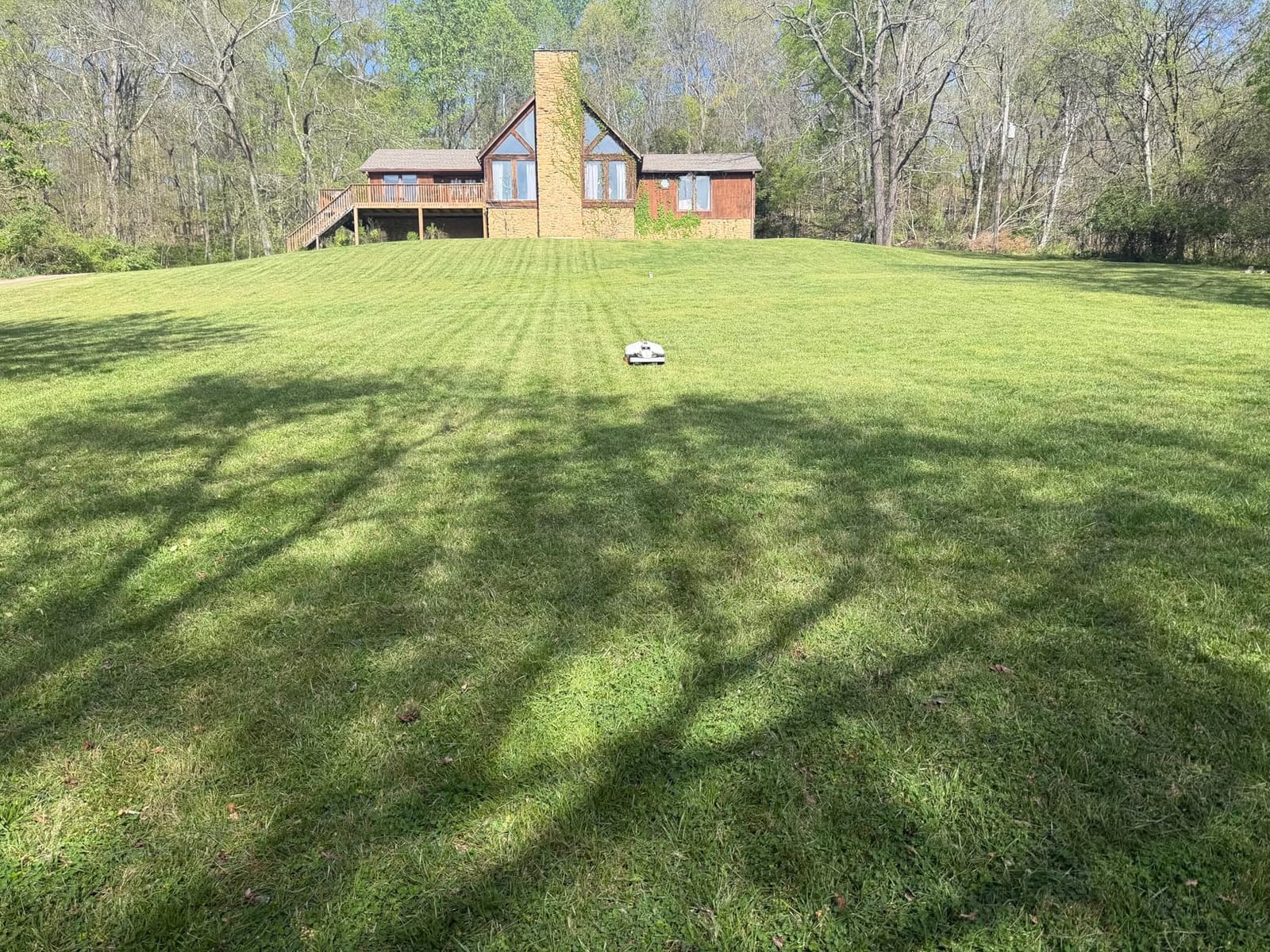
The omni wheel for turning is a quiet but real advantage on a slope. A three-point turn on an incline scuffs turf and can throw the machine off its line, so a turning mechanism that pivots in place keeps the cut cleaner. Adaptive suspension handles obstacles up to 50mm.
Obstacle avoidance covers 300-plus types, and up to 30 mowing zones with no-go areas let you fence off the steepest bank if you would rather the machine worked the safer part of the yard on its own.
Why this one suits a larger hilly property
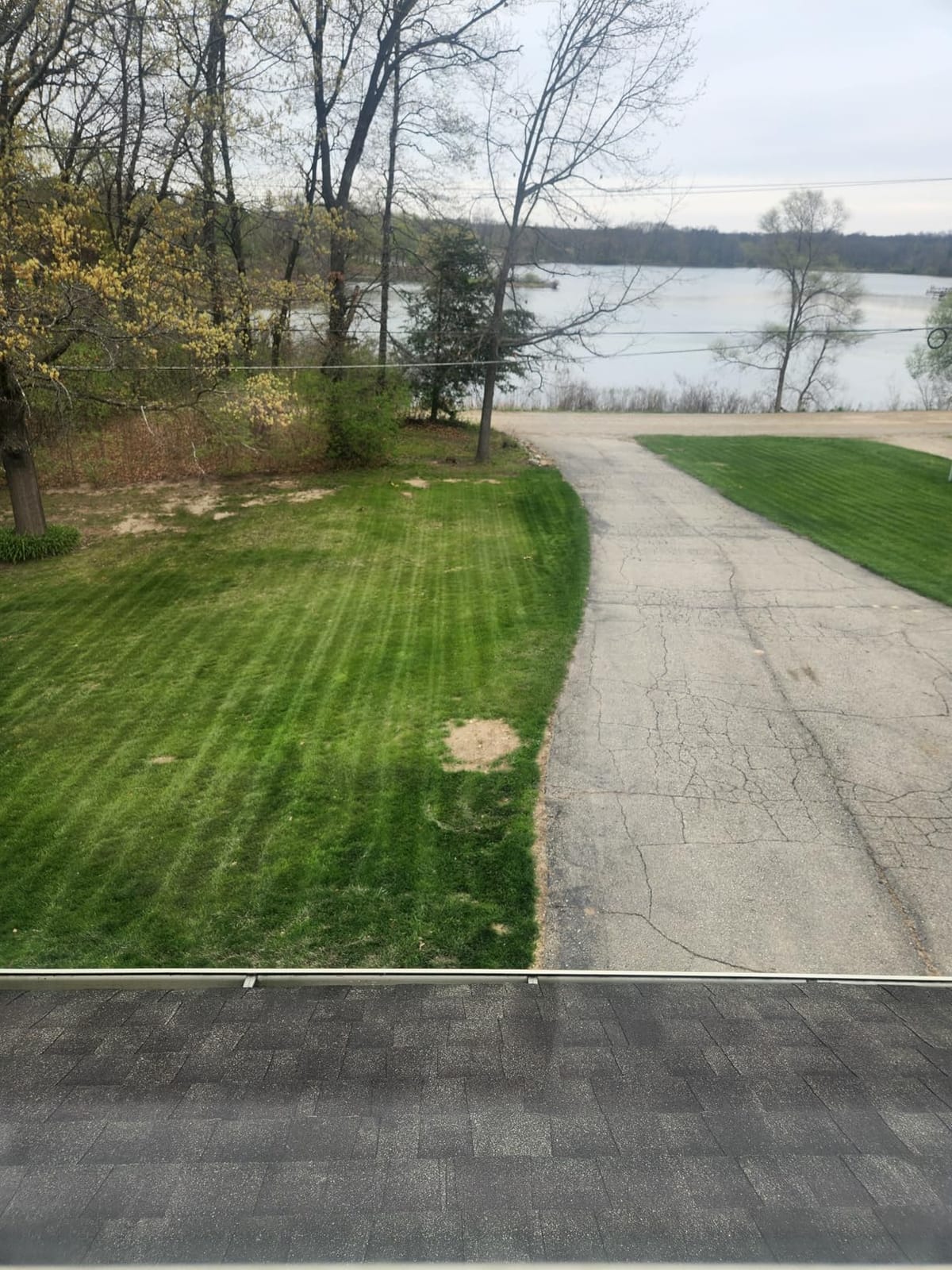
Roughly half an acre to three quarters of an acre of uneven ground is where the wide deck and long runtime start to pay for themselves. One charge cycle covers far more ground here than on the mini, which means fewer overnight recharges and fewer interruptions mid-cycle.
If your lawn is a full acre or more with serious grade, step up to a track-driven machine instead. Wheels, even driven ones, still slip on a sustained steep face where a track bites continuously.
Where it falls short
The lowest cut height is 1.0 inch, so you cannot take a very fine short cut. The cleaning stand is a separate delivery, which is easy to overlook when you are comparing machines on paper. And with 176 reviews it does not yet have the long ownership record of the class leaders.
Owners also report the app taking time to learn, particularly when setting up no-go zones on a complex boundary. Budget an afternoon for mapping before you judge the machine.
3. MOVA LiDAX Ultra 1000: Budget Pick for Moderate Slopes
MOVA LiDAX Ultra 1000 Robot Lawn Mower Wire Free for 1/4 Acre, RTK-Free+360° 3D LiDAR+AI Vision Auto Mapping, Zero-Edge Cutting, Cutting Height 1.2″-3.9″, 45% Slope, Up to 150 Managed Zones Dual Maps
45% slope with rear-wheel drive
0.25 acre coverage
8 inch cutting width
1.2-3.9 inch cut height
3 year warranty
Pros
- Rear-wheel drive manages 45% slopes
- No RTK base station needed so setup is simpler
- Zero-edge cutting reaches within 2 inches of a boundary
- Off-road wheels cross obstacles up to 1.6 inches
- 3 year manufacturer warranty
Cons
- Rear-wheel drive rather than all-wheel drive on wet grass
- 45% ceiling leaves steeper grades alone
- 60 minute battery life
- Single cutting position setting
The MOVA LiDAX Ultra 1000 is the answer to a specific problem: you have a small yard with a noticeable but not extreme slope, and you do not want to install a base station or trench a wire. RTK-free setup means the mower builds its map with 360-degree 3D LiDAR and vision alone. For a straightforward lot, that removes the most fiddly part of getting a robot mower running.
Hill verdict: 45% is 24 degrees, and rear-wheel drive gets there on dry ground. On damp grass the drive wheels lose grip earlier than an all-wheel-drive chassis would, so this is a fair-weather hill machine rather than an all-season one.
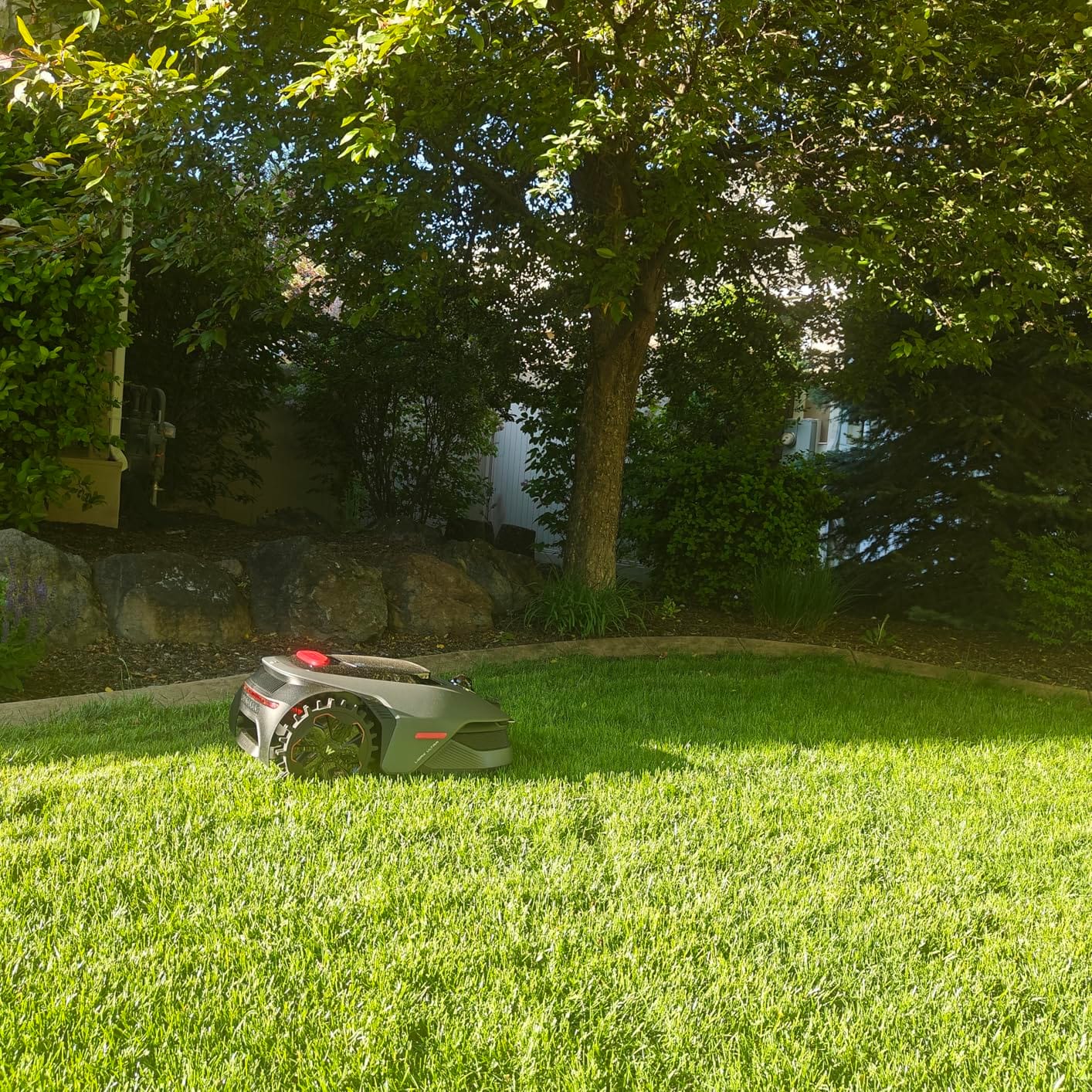
Zero-edge cutting is more useful than it sounds on a sloped property. A mower that cuts within 2 inches of the boundary means far less strimming along the fence line at the top of your bank, and less hand work overall. The movable disc is what makes that possible.
Dual maps support up to 150 managed zones, which sounds excessive until your lawn is split by a path or a retaining wall and you need the mower to work two separate areas. U-shaped path planning gives even coverage instead of random patches.
Who should buy the LiDAX Ultra 1000
A quarter acre of hilly ground with a simple outline, one or two obstacles, and no complex tree cover. Buyers who want wire-free operation without the learning curve of a satellite-linked system will find the mapping genuinely quick.
It is also the lightest serious slope option here at 30 pounds, which matters if you will be repositioning it by hand or if children or pets are near the mowing area.
Where the limits show up
Any grade past 45% is out of reach, and the single cutting position setting is a real constraint if you mow different areas to different lengths. At 8 inches of cutting width on a quarter acre, plan on overnight cycles.
It measures 34 inches long by 20 inches wide, which is a big footprint in a small yard, so measure your tightest corner before committing. With 74 reviews it is established but not as proven as the leaders.
4. Yarbo Lawn Mower Pro: Best for Large Steep Acreage
YARBO Y40 Core Robot Lawn Mower Pro, Wire-Free, 6-Acres, Four-Season Care
Track drive for 70% slope (35 degrees)
6 acre capacity
20 inch cutting width
0.8-4.0 inch cut height
215 pounds
Pros
- Track drive climbs a 70% gradient where wheels slip
- 20 inch cutting width suits acreage work
- Modular platform accepts snow blower and cart attachments
- Triple-fusion navigation with binocular vision and sensors
- Remote camera access and manual control
Cons
- Weighs 215 pounds and needs two people to assemble
- Mapping a large property takes six hours or more
- Proprietary lithium cobalt battery rated for 500-600 cycles
- GPS signal is lost under dense tree cover
When your hilly lawn is measured in acres rather than fractions, the trade-offs change completely. The Yarbo covers 6-plus acres, cuts a 20 inch swath, and drives on multi-terrain tracks rated to a 70% gradient, which is 35 degrees. Nothing else in this group combines that acreage with a continuous contact patch on a steep face.
Hill verdict: tracks are the difference between a mower that climbs and a mower that slides. The continuous rubber belt keeps a bite on wet grass where a tire rolls, and owners with sloped acreage report it working ground that a wheeled machine would abandon.
The modular design is genuinely unusual. The same platform handles winter work with a snow blower attachment, and a cart turns it into a carrier. If your property is large enough to justify it, you are buying a yard machine rather than a mower.
Dual 300W motors and interchangeable razor or straight blades let you match the blade to the grass, and the cutting height range of 0.8 to 4.0 inches is the widest here. Anti-theft protection and a wireless charging dock are sensible on a machine that spends its day outside.
Where a machine this size earns its place
Properties with several acres of rolling ground, a long drive edge, and hard-to-reach areas that a compact mower would never cover. The remote camera means you can inspect a steep bank before sending the machine at it, which is the safety argument for a machine of this size.
Owners frequently praise the support team by name, and several report the cut quality compares well with a zero-turn ride-on. Enthusiasts on mower forums also describe robot mowers doing a much better job than a zero-turn on a rough, steep section of the yard.
Where it will frustrate you
This is a hands-on machine. Map drift under trees and GPS signal loss need manual recovery, and the data center mount needs an unobstructed 120 degree view of the sky. Plan on checking on it rather than forgetting it in the yard.
The battery is the biggest long-term concern. Lithium cobalt chemistry rated at 500-600 cycles is a meaningfully shorter service life than the LiFePO4 pack in the Lymow below, and replacement is expensive and proprietary. At 215 pounds, it also needs two people on assembly day.
5. Sunseeker X5 AWD: Best for Half-Acre Yards with Moderate Hills
Sunseeker X5 AWD Robot Lawn Mower, RTK, Vision AI, 0.5 Acre, Wire-Free
AWD for slopes up to 30 degrees or 60%
0.5 acre coverage
8.7 inch floating deck
1.6-3.2 inch cut height
26 pounds
Pros
- AWD drivetrain with independent front suspension
- RTK plus Vision AI navigation holds position under tree cover
- 8.7 inch floating deck keeps the cut level across uneven ground
- Handles passages as narrow as 31.5 inches
- Quiet at 60 dB
Cons
- Sticks frequently on small bumps and sidewalk transitions
- Needs WiFi extenders on larger grounds
- Boundary must sit well back from edges leaving more strimming
- 29 reviews so far on a newer model
The Sunseeker X5 sits in the middle of this group and does two things well. Its AWD chassis with independent front suspension takes 60% slope, which is 30 degrees, and the floating 8.7 inch deck keeps a level cut as the machine crosses uneven ground. At 26 pounds it is light enough to reposition without a second person.
Hill verdict: a 60% rating is genuinely useful and covers most residential slopes, but it is a real step down from the 80% class. If your steepest face is steeper than about 30 degrees, look at a track-driven model instead.
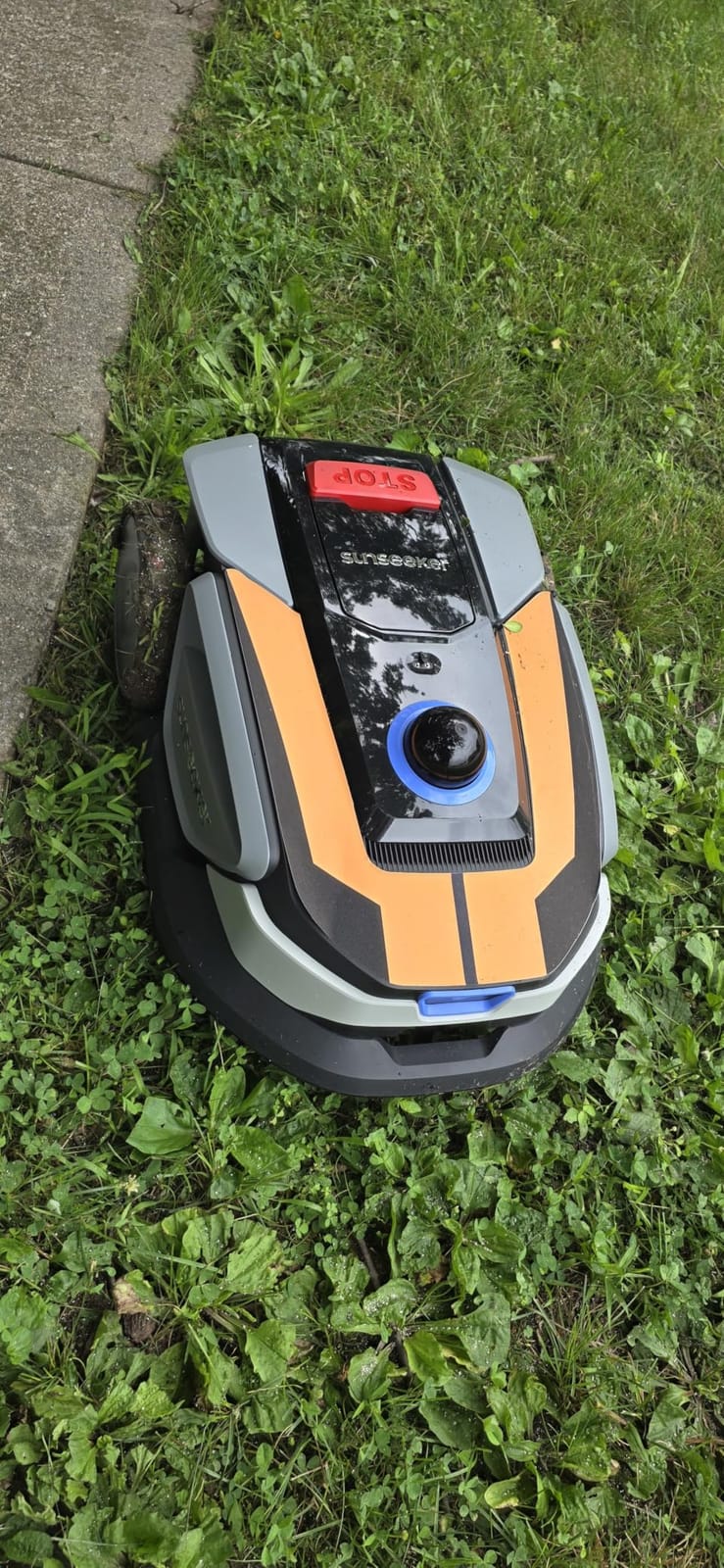
Navigation combines satellite positioning with VSLAM and vision AI, and that is why it keeps working where a single system fails. Under tree cover, where a satellite signal is patchy, the visual component carries the map. It also runs at 60 dB, quiet enough for early morning mowing close to neighbours.
Up to 5 maps with smart zones and no-go areas let you separate a hill section from a flat one, and the height adjusts from 1.6 to 3.2 inches across nine levels.
Why owners like it on a half acre
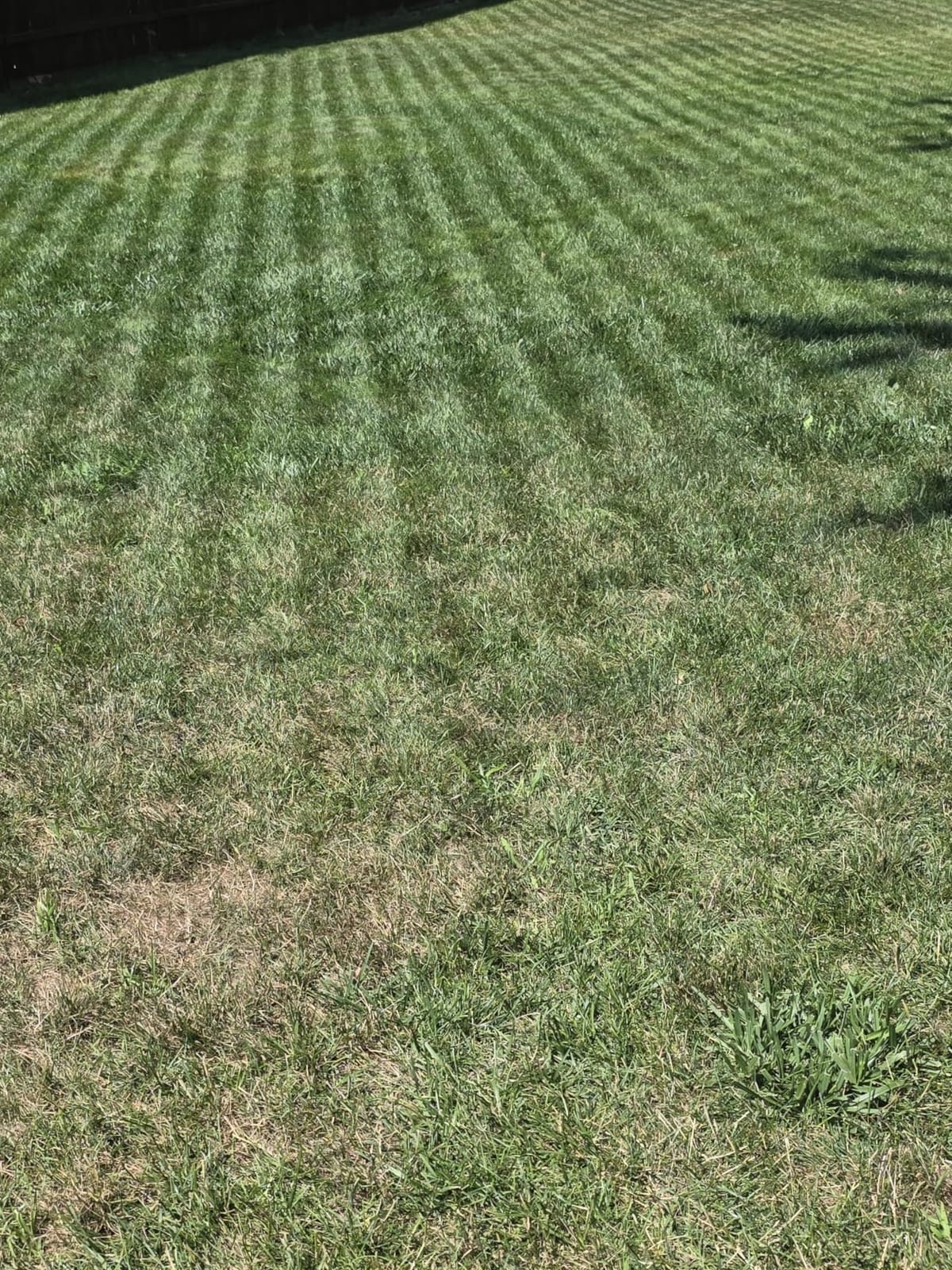
That is the sweet spot. It is large enough to complete a half acre in a sensible number of cycles and small enough to charge overnight. Owners frequently mention the stripe patterns it leaves, which is what you notice most after a season of use.
The 31.5 inch passage capability is underrated on a property with trees and shrubs. Many mowers in this class cannot physically fit between two obstacles, and this one can.
Where the grade break gets it
This is the most consistent complaint we found, and it is not about the slope. Owners report getting stuck on small bumps, sidewalk transitions and shallow dips, in some cases several times a week. A floating deck and independent suspension soften the ride, but they do not stop the wheels catching on a sharp lip.
Second on the list is boundary placement. Owners need to set the edge well back from the property line, which leaves a strip of grass to weed. The trade is honest: good climbing, more manual finishing around the perimeter.
6. Mammotion LUBA 2 AWD 3000HX: Best for Multi-Zone Hill Yards
Mammotion LUBA 2 AWD 3000HX Robot Lawn Mower with 4G, All-Wheel-Drive for 80% Slope, Perimeter Wire Free for 0.75 Acre, UltraSense AI Vision & RTK Auto-Mapping, 2.2″-4.0″ Adjustable Cutting Height
AWD 80% slope (38 degrees)
0.75 acre coverage
15.7 inch cutting width
2.2-4.0 inch cut height
5 height positions
Pros
- 165 W four-wheel motor rated for 80% slope climbing
- Handles up to 30 mowing zones with no-go areas
- Recognises 200-plus obstacle types
- Quiet enough to run at night with lights
- 4G Bluetooth and WiFi with app control and GPS anti-theft
Cons
- RTK antenna roof mount is a separate purchase
- 4G connectivity carries a subscription after the first year
- Setup and mapping take real time
- Sharp turns can tear grass in tight areas
The LUBA 2 AWD 3000HX is the multi-zone specialist of this group. Thirty mowing zones with no-go areas is the highest count in the comparison, and on a hilly property that number matters, because a sloped yard is rarely one simple shape. Separate the bank, the level lawn and the tree line, and the machine works each zone on its own schedule and cut height.
Hill verdict: 80% climbing capability with a 165 W four-wheel motor, and 200-plus obstacle types recognised. The 15.7 inch cutting width covers a lot of ground between charges, which matters on uneven terrain where the machine slows down.
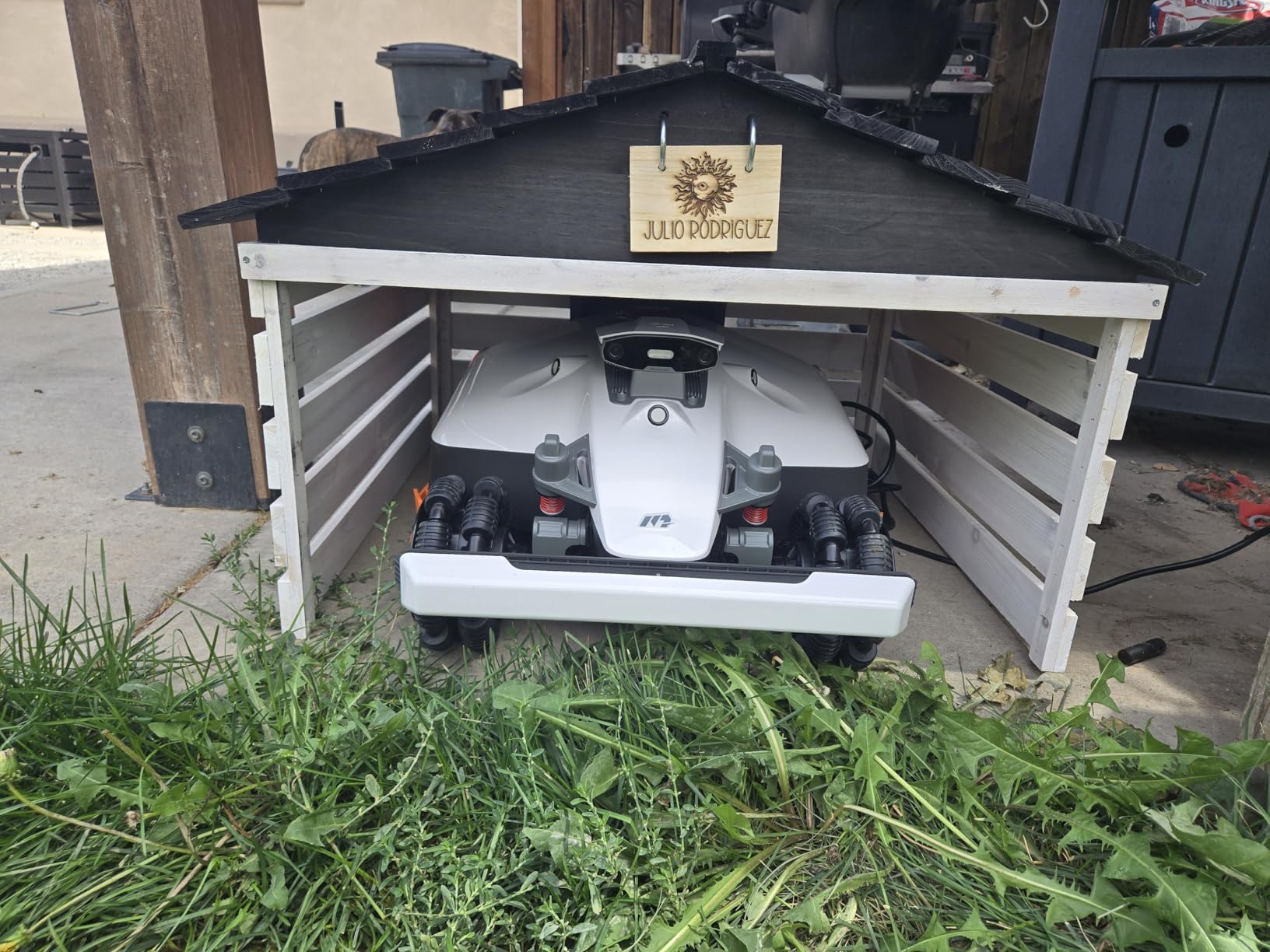
The UltraSense AI vision with RTK auto-mapping means no wire to install and no base station to mount, which removes two of the three things owners regret most in wire-bound setups. Connectivity spans 4G, Bluetooth and WiFi, and GPS tracking with anti-theft alerts covers a machine that lives outside.
Cut height runs from 2.2 to 4.0 inches across five positions, adjustable from the app. The 27.1 by 20.2 inch footprint is compact for a 0.75 acre machine.
Why zone control is the reason to buy it
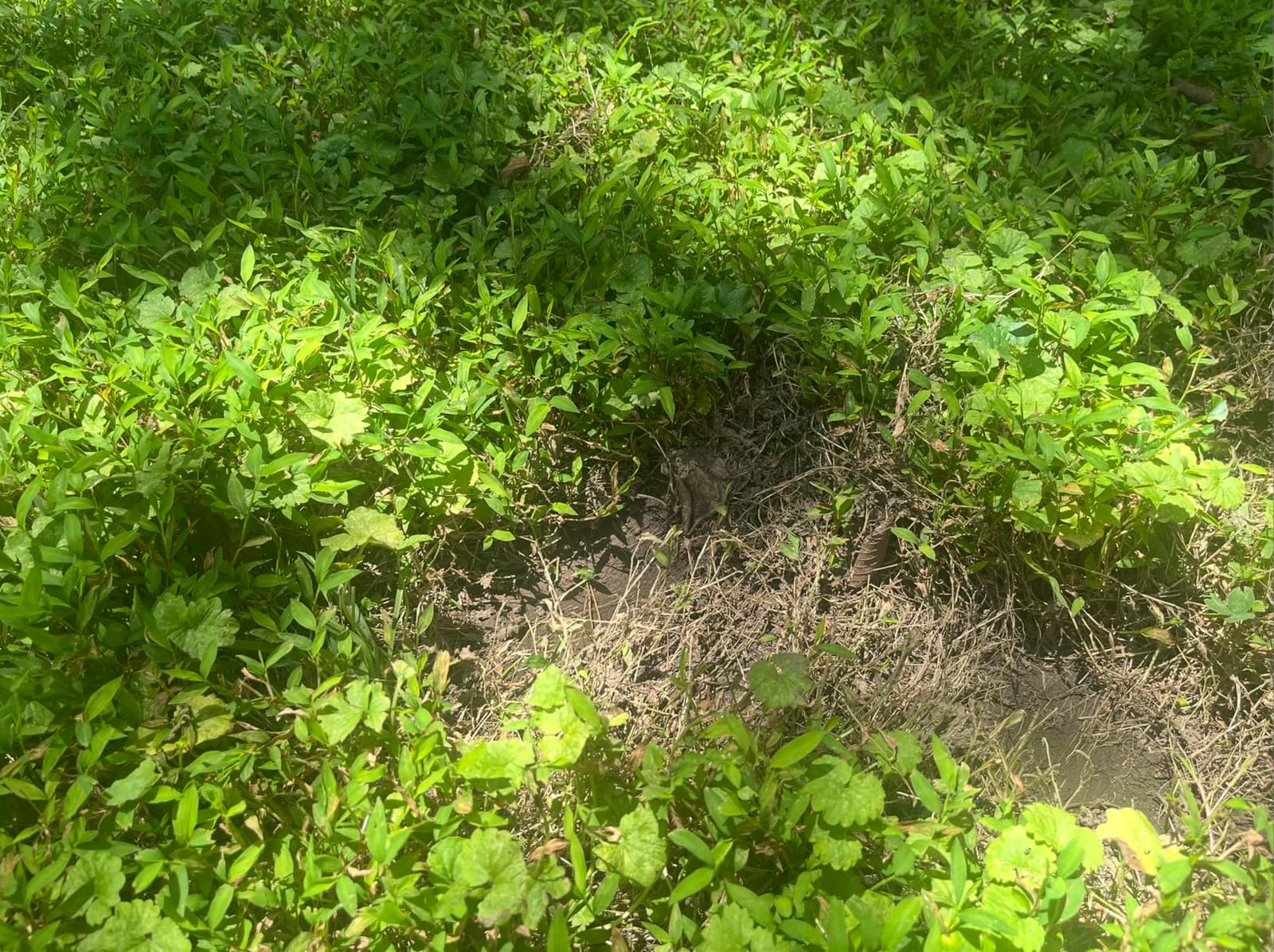
Hills create edges. A mower that will not let you exclude the strip beside a retaining wall, or run the steep bank on a different schedule, will fight you every week. Thirty zones plus no-go areas removes that friction, and owners with complicated grounds say the setup effort pays back quickly.
The 4G link also means the mower still reports position and state when WiFi does not reach the far end of the property, which is common on a hilly lot.
Where the extras add friction
The RTK antenna roof mount is sold separately, so the advertised package is not everything you need for the best positioning. The 4G connectivity plan carries a subscription after the first year, which is an ongoing cost nobody mentions in a comparison table.
At 4.0 stars from 42 reviews this is the thinnest owner history of the Mammotion machines here, and some users report a clunky app interface. Owners also report grass tearing on sharp turns in confined areas, and difficulty with bumps and small ramps of 1-2 inches.
7. Segway Navimow i206 AWD: Best Value for Small Sloped Lots
Segway Navimow i206 AWD Robot Lawn Mower, New i105N, 0.15 Acre, 45% Slopes
AWD with 45% slope capability
0.15 acre coverage
7.1 inch deck
2-3.6 inch cut height
58 dB operation
Pros
- All-wheel drive with stability control at the entry price
- Zero-turn steering turns in place and protects the turf
- EFLS Network RTK with vision maps reliably under trees
- Very quiet at 58 dB
- Real-time GPS alerts for theft and off-course detection
Cons
- Covers only 0.15 acre
- Mapping is confusing and slow to set up
- App locks and mapping bugs reported
- Some users report it entering no-go zones
The i206 AWD is the cheapest way into all-wheel drive, and for a small lot with a slope it does the important part. The 45% rating is 24 degrees, which covers a standard residential hill, and the stability control on the AWD platform keeps it composed on the climb. At 58 dB it is the quietest machine here.
Hill verdict: on a small, clearly bounded yard it handles a moderate slope well. The limit is acreage, not capability. Two tenths of an acre is a front-and-side-yard machine, not a lawn a larger mower would struggle with. Measure the space first, because this is a small-property unit and the mapping work scales with boundary length.
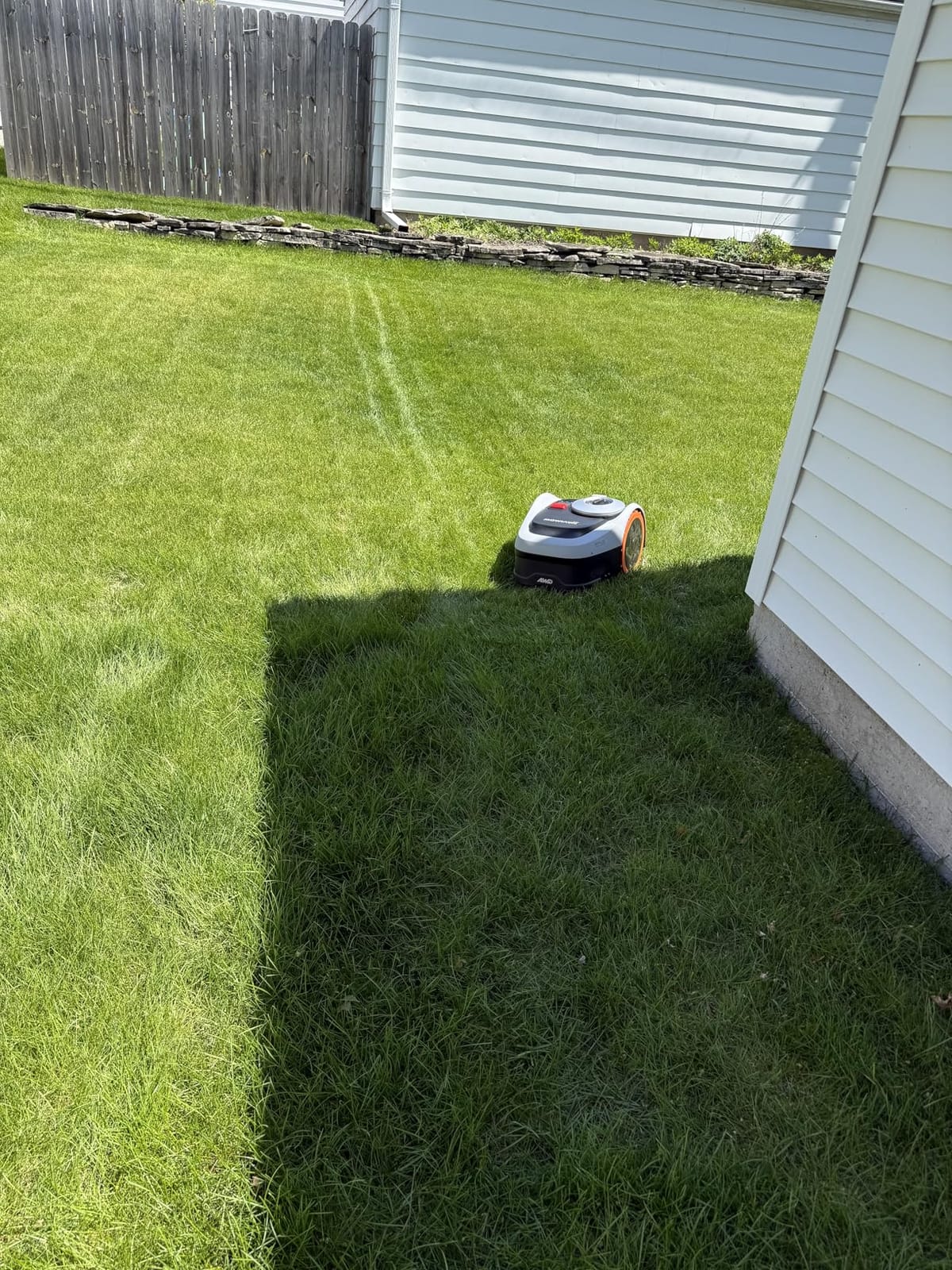
Zero-turn steering is the detail that pays off on a slope. Instead of reversing and pivoting, which scuffs turf and can lose traction on an incline, the machine rotates on the spot. Owners also praise customer service by name across several reviews.
EFLS Network RTK with vision handles auto-mapping in a couple of taps, and up to 20 distinct zones with auto-resume are available through the app.
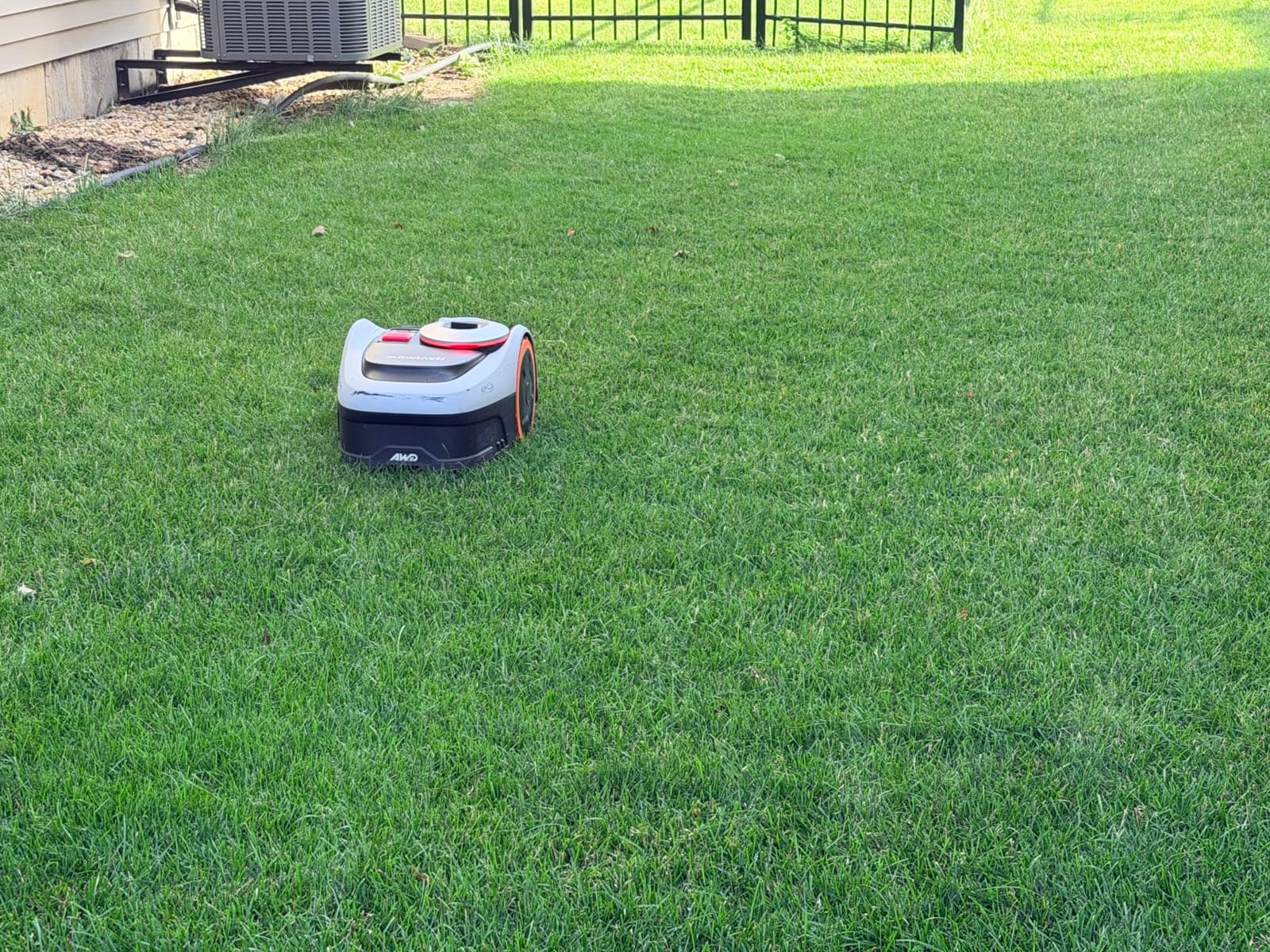
Where a small lot makes this the right call
A 0.15 acre yard with one hill, a simple boundary and a need to keep noise down. It is the pick if the alternative is a wire-bound machine at a similar outlay, because this one maps itself instead of needing an installed perimeter.
It also suits anyone who wants to learn robot mower ownership on a small machine before committing to a large-acreage purchase.
Where the software holds it back
Mapping is the weak point. Owners describe it as confusing and time-consuming, and report app locks and mapping bugs. Several users also report the mower going off-course into mulch beds despite no-go zones, which on a slope near a planted bed is worth planning around.
At 4.0 stars from 68 reviews the feedback is genuinely split. If you dislike fiddling with software, pay more for a machine with better mapping at the same slope class.
8. Lymow One Plus: Best for the Steepest Grades
Lymow One Plus Robot Lawn Mower, Wire-Free RTK+Vision Navigation, 1.73 Acres Daily Coverage, 100% Slope (45°) Climbing, 1.2″-4″ Cut Height, AWD All-Terrain Automatic Robotic Mower, App Control
Track drive for 45 degree or 100% slope
1.73 acre daily coverage
16 inch dual rotary blades
LiFePO4 battery
22 pounds
Pros
- Track drive rather than wheels gives traction on the steepest ground available here
- Daily coverage of 1.73 acres across three charge cycles
- Dual SK5 steel blades and 1785 W motor cut thick and wet grass
- LiFePO4 battery rated for 2000-plus cycles
- IPX6 waterproof and handles wet ground without cutting ruts
Cons
- Reliability reports include a loose cutting deck and bearing failures
- Overheating issues in hot weather
- Map drift and GPS connectivity problems
- Customer support links have been hard to reach
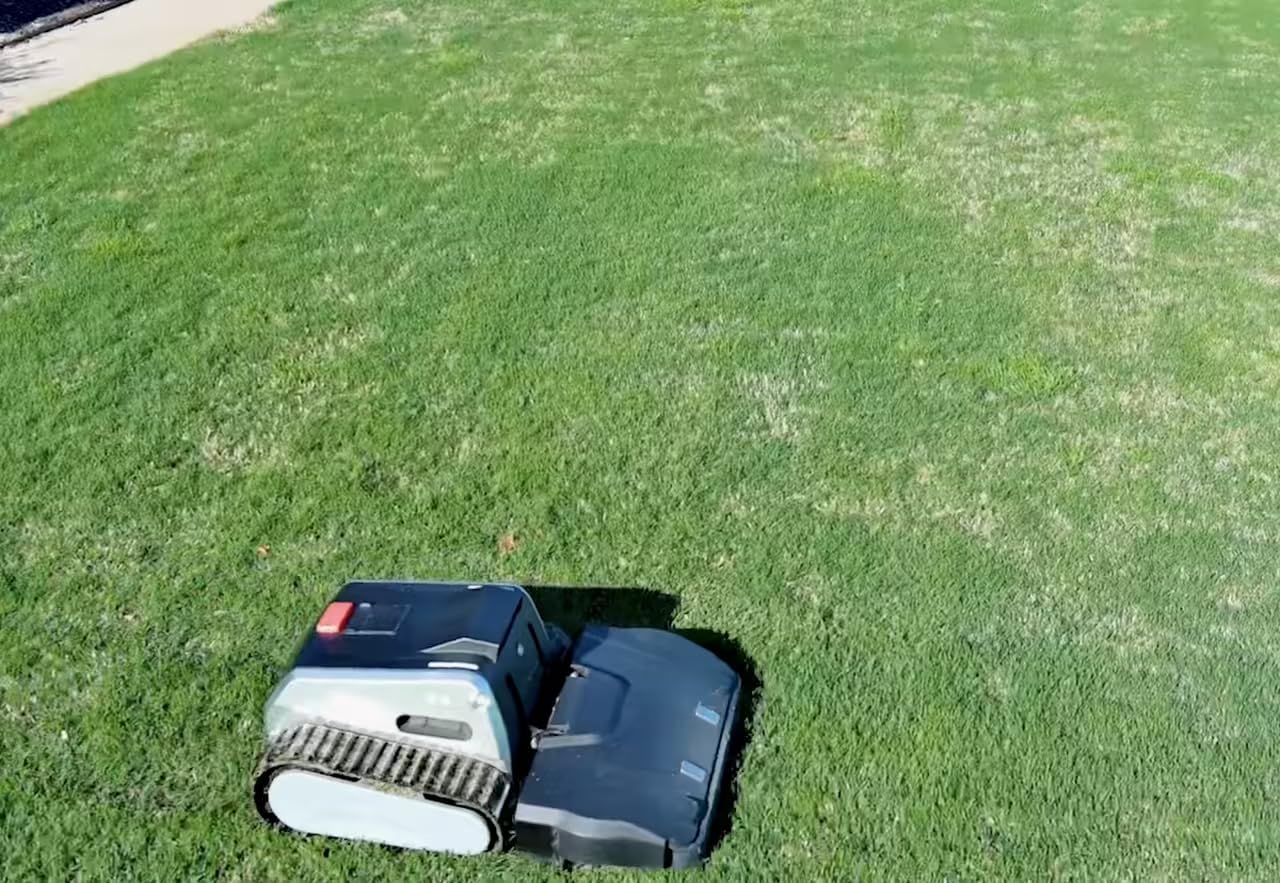
Nothing else here climbs what the Lymow One Plus claims. Its track drive is rated to 45 degrees, which is a 100% slope, and a track simply does not slip the way a wheel does on a sustained face. If your steepest section genuinely approaches 45 degrees, this is the only machine in the group rated for it. Everything else above is a compromise with gravity.
Hill verdict: the track system and the 1785 W motor work together. On a slope, climbing capacity is a traction problem and a power problem at the same time, and this machine is engineered to solve both.
The 15000mAh LiFePO4 battery is the best long-term news here, rated for 2000-plus charge cycles and covering 0.57 acre per charge. Three cycles a day gives the 1.73 acre daily coverage, which is the highest figure among the wheeled machines here. The aluminium A380 frame and IPX6 rating also mean wet ground is not a problem.
Blades are dual SK5 tool steel rather than razor, at 50 HRC and 6000 RPM. Steel blades stay sharp longer, handle tall and wet grass, and mulch leaves, which is a genuine advantage on a property that does not get a leaf pickup.
Who this machine is actually for
A property where the steep face is the defining feature and a wheeled mower simply will not hold the line. Owners with swampy or wet ground also report it working without cutting ruts, which is not true of every machine in this class.
RTK with VSLAM keeps positioning stable near trees and walls, AI vision with ultrasonic sensors handles obstacles, and up to 80 zones give the most granular scheduling here. It weighs 22 pounds, so it is far easier to reposition than the 215-pound track machine above.
Where the risk sits
The 3.9 rating from 28 reviews is the lowest here, and the reasons are specific: a loose cutting deck, broken springs and bearing failures. Owners also report overheating in hot weather, map drift and GPS connectivity problems, and difficulty reaching support when something goes wrong.
Setup is steep. The learning curve on a complex property is real, and if you are not going to maintain it, a simpler machine with a lower slope rating will serve you better. The capability is exceptional; the ownership experience is not yet consistent.
How to Measure Your Lawn’s Slope
Most people overestimate their own hill, and buyers routinely end up paying for 80% capability they do not need. Owners on mower forums comparing a 45-degree yard against machines rated to 35 degrees regularly conclude the slope is milder than it looks. Ten minutes with a tape measure settles it. Here is how to convert what you find into a mower class.
Hold a tape at the base of the hill, run it horizontally until it lines up with the point at the top, then measure the vertical rise. Divide the rise by the horizontal run and multiply by 100. That gives you slope percent. A 25% grade rises 1 foot for every 4 feet of run.
The equivalents you will see on product pages: 15% is 9 degrees, 25% is 14 degrees, 30% is 17 degrees, 45% is 24 degrees, 60% is 31 degrees, 70% is 35 degrees, 80% is 39 degrees, and 100% is 45 degrees. If your steepest section measures 30% or under, an AWD machine in the 45% class is comfortable. Between 30% and 60%, aim for the 60% to 80% group. Above 60%, use the track-driven machines.
Two alternative methods work if you have nothing to measure with. Park a car on the hill and read the inclinometer on the dash, or hold a builder’s level or a phone inclinometer against a fence post and read the angle in degrees. Measure across the fall line, not up it, and take the steepest spot rather than the average.
Also measure the transitions. A 1-inch step where a lawn meets a path or a wall causes more failures than a 40% grade does, and it is invisible on a slope percentage chart.
What Actually Decides Slope Performance
Drivetrain is the first filter, and it is not close between the options. All-wheel drive gives every wheel torque, so a front wheel that loses grip on a wet incline still has driven wheels carrying the machine. Rear-wheel drive is fine on dry moderate slopes and drops the ceiling quickly when the grass is wet. Track drive has no slip at all, which is why the two most capable machines here use it.
Traction surface is the underrated second factor. Lugged tires bite into a slope, solid tires roll smoother on flat lawn and worse on a face, and a wide contact patch does the work on soft ground. None of the eight names its tire compound in the specifications, which is a fair signal that you should judge by drivetrain instead.
Grade breaks deserve their own category because they cause more failures than the slope itself. A floating or pendulum-swinging cutting deck follows the ground rather than gouging it, and adaptive suspension lets a machine step over a lip instead of stopping dead. The Sunseeker X5’s owners report the opposite experience most often, getting stuck on small bumps and sidewalk transitions, which is why that complaint appears in its section above.
Their navigation options differ. Boundary wire is the most predictable option because the signal never depends on sky view, but it needs trenching and it cannot be reconfigured when you change the yard design. RTK GPS holds centimetre-level position and works on hills, though dense tree cover and walls can block it. LiDAR builds its own map, works under cover and at night, and needs no base station, but it is more expensive. Every machine in this roundup is wire-free, which tells you how far the category has moved.
Battery sizing is where buyers most often misjudge. Hills consume power faster than flat mowing because the drive motors work harder, so size up to 1.5 to 2 times your actual acreage. Expect roughly 1.5 to 3 hours of active mowing per acre on hilly ground, spread across two or three charge cycles a day. A machine rated for the correct acreage but paired with a small battery will run out of charge halfway up your hill, which is exactly where you do not want it to stop.
Weight is the safety consideration nobody puts on a spec sheet. A 215-pound machine on a wet incline is genuinely hazardous if it breaks traction, and a 70% rated mower will find a way to test that. Keep the charge dock on level ground, avoid mowing a saturated slope, and if your lawn ends at an unguarded drop, prioritize cliff and edge detection over every other feature.
Finally, check what arrives in the box. A roof-mounted RTK antenna, a charging dock for a base station, and cleaning stands are frequently listed as separate items. Our guide to robotic mowers under a thousand dollars covers the entry tier if you want to see the whole price range before deciding.
When a Robot Mower Is the Wrong Choice
Some lawns should not be handed to an autonomous machine at all. If your steepest section exceeds every rating in this group, no amount of premium hardware solves it. A remote-control mower operated by you is a legitimate answer, and enthusiasts weighing one against a Ventrac or an autonomous robot on a complex sloped acre generally land on the remote machine precisely because the autonomy keeps failing at the grade break.
Fragmented lawns are the second case. Retaining walls, steps and multiple lawn levels that a mower cannot cross need either a machine rated for the worst transition, or a professional job. If your property is mostly level with one impossible bank, mowing the easy part is a different purchase from mowing the whole thing.
Buying a new lawn shape? The sod cutter guide covers reshaping ground, and the best fertilizer spreaders for lawns cover keeping the result fed. Fix the terrain before you automate it.
Frequently Asked Questions
Can robot mowers handle hills?
Yes, if the machine is built for the grade. Rear-wheel-drive models usually top out around 25% slope, which is 14 degrees, while all-wheel-drive machines reach 45% to 80%. Track-driven models handle the steepest ground. Measure your slope first, then buy above your measured maximum.
What is the maximum slope a robot mower can handle?
Standard rear-wheel-drive robots handle about 25% slope, or 14 degrees. All-wheel-drive models reach 45% to 80% slope, which is 24 to 39 degrees. The Lymow One Plus in this roundup is rated to 100% slope, which is 45 degrees, using a track drive. Ratings are not directly comparable between brands.
Do I need all-wheel drive for hills?
For any grade beyond about 30%, yes. All-wheel drive means torque reaches every wheel, so the machine keeps climbing when one wheel loses grip on wet grass. Rear-wheel drive manages 45% slopes on dry ground but slips earlier in damp conditions. On very steep faces, track drive beats both.
Why does my robot mower keep getting stuck on the hill?
Three causes account for most cases: not enough drive torque for the grade, tires losing grip on wet grass, and a grade break where the lawn meets a path or wall. Turning back at the base of a slope is the most common owner report. An AWD machine with adaptive suspension handles the third cause best.
Are wire-free robot mowers good on hills?
Yes, and every machine in this roundup is wire-free. RTK GPS holds precise position but needs clear sky view, while LiDAR builds its own map and works under trees and at night. Hillside position is usually the easier problem; the harder one is the physical grade, not the navigation method.
The Best Robotic Mowers for Hilly Lawns
The Mammotion LUBA mini 2 AWD 1500H is our best robotic mower for hilly lawns overall. It combines an 80% slope rating with LiDAR and dual-camera vision, 4.4 stars from 260 reviews and the longest owner history in this group. The Mammotion LUBA 3 AWD 3000 is the step up for wider acreage, the MOVA LiDAX Ultra 1000 is the value choice at 45%, and the Lymow One Plus is the only machine rated for a true 45-degree face.
Measure your slope before you buy, and check the grade breaks as well as the gradient. A mower rated for 80% will still struggle where your lawn steps up onto a path, and that is where most hill failures actually happen.