
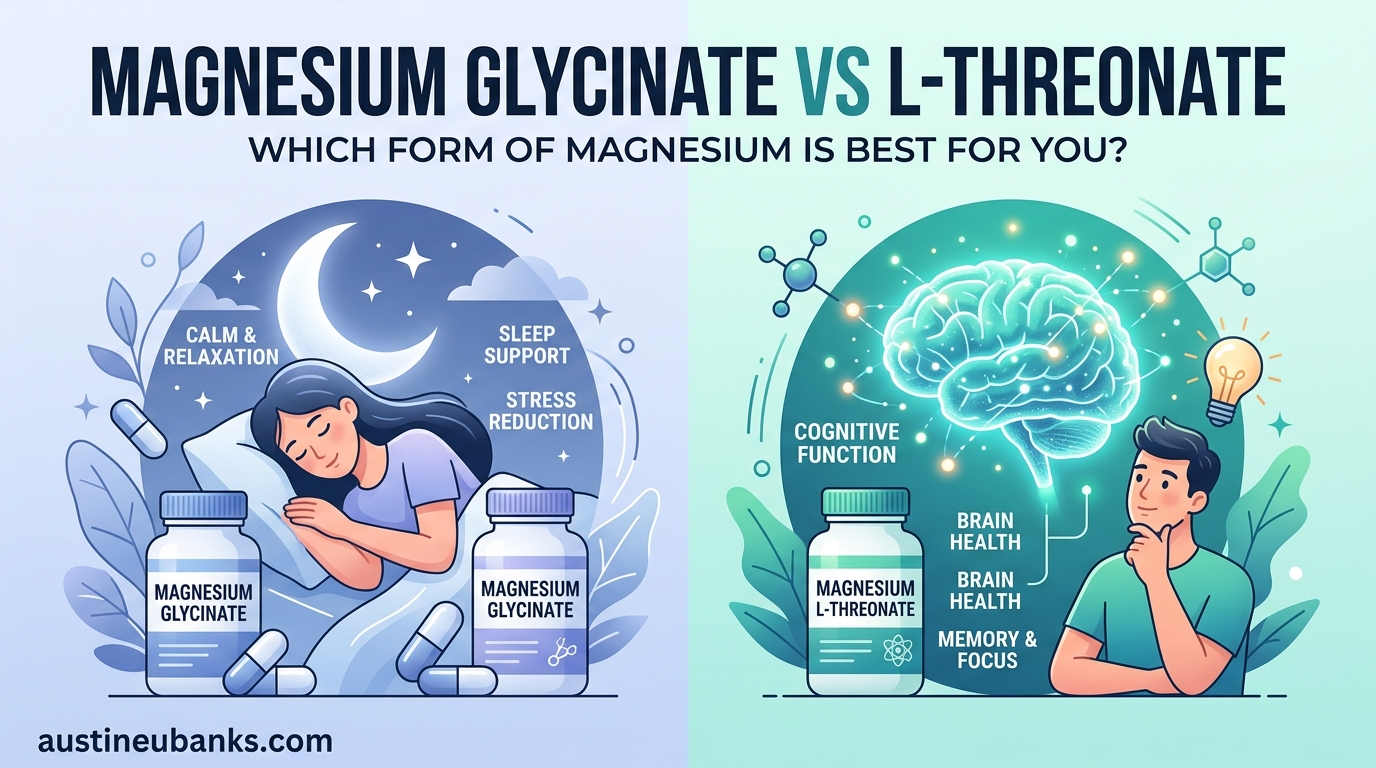
Walk into any supplement aisle in 2026 and you will see at least a dozen forms of magnesium staring back at you. Two of them keep showing up in every biohacker forum, sleep optimization thread, and cognitive health discussion: magnesium glycinate and magnesium L-threonate. They sound similar, they cost different amounts, and they do completely different things once they enter your body.
Understanding the difference between magnesium glycinate and L-threonate is not just academic trivia. Pick the wrong one and you might spend three months taking a brain supplement for a sleep problem, or take a relaxation aid when you actually need sharper focus. I have watched friends waste money on both forms because no one explained what each one actually does at a cellular level.
Our team spent weeks digging through clinical research, Reddit threads from r/Supplements and r/Biohackers, and real customer reviews to build this comparison. We looked at mechanism of action, onset time, stacking protocols, and honest price-to-value analysis. The goal is simple: by the end of this article you will know exactly which form fits your needs, or whether you should be taking both.
Table of Contents
Magnesium Glycinate vs L-Threonate: Quick Summary
The short version comes down to where each form does its work. Here is the cheat sheet that most articles bury on page three:
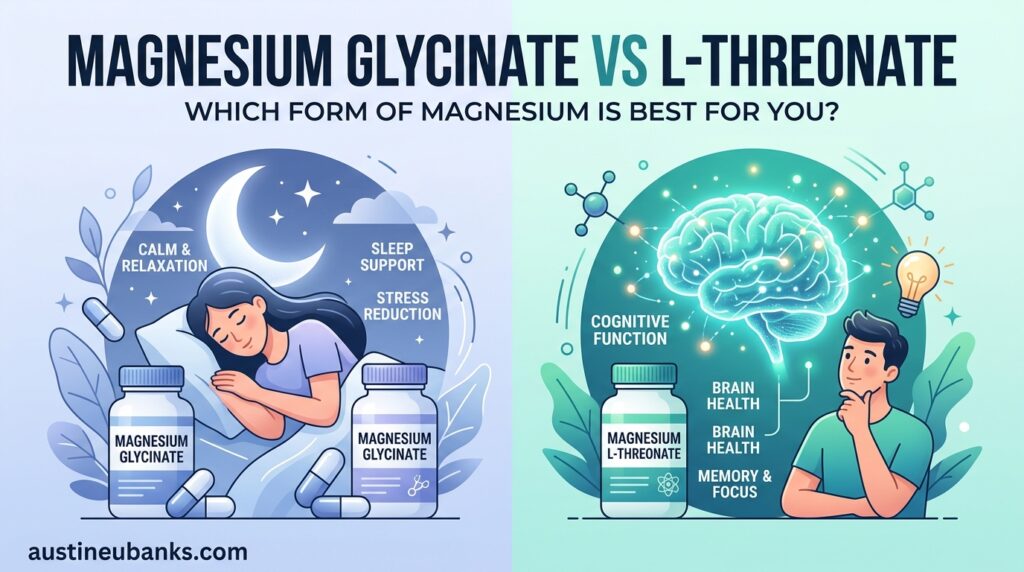
- Magnesium Glycinate: Primary use is sleep, relaxation, and muscle tension relief. It works by binding magnesium to the amino acid glycine, which activates GABA receptors in your nervous system. It is for you if you struggle with insomnia, anxiety, or muscle cramps. The main downside is that it does not cross the blood-brain barrier effectively, so it will not sharpen your cognition.
- Magnesium L-Threonate: Primary use is cognitive function, memory, and brain health. It works by binding magnesium to threonic acid, a compound small enough to cross the blood-brain barrier. It is for you if you want better focus, sharper memory, or protection against cognitive aging. The main downside is cost, as it is significantly more expensive per milligram of elemental magnesium.
That is the core difference in a nutshell. Now let us look at the actual products people are buying, then go deep on each form.
Quick Comparison: Top Products
| Product | Specifications | Action |
|---|---|---|
 Pure Encapsulations Magnesium Glycinate Pure Encapsulations Magnesium Glycinate |
|
Check Latest Price |
 Life Extension Neuro-Mag L-Threonate Life Extension Neuro-Mag L-Threonate |
|
Check Latest Price |
Both products represent the gold standard for their respective magnesium form. Pure Encapsulations holds the number one bestseller rank in magnesium supplements on Amazon with nearly 49,000 reviews. Life Extension’s Neuro-Mag sits at number eleven in the same category with over 24,000 reviews, which is impressive for a premium cognitive product.
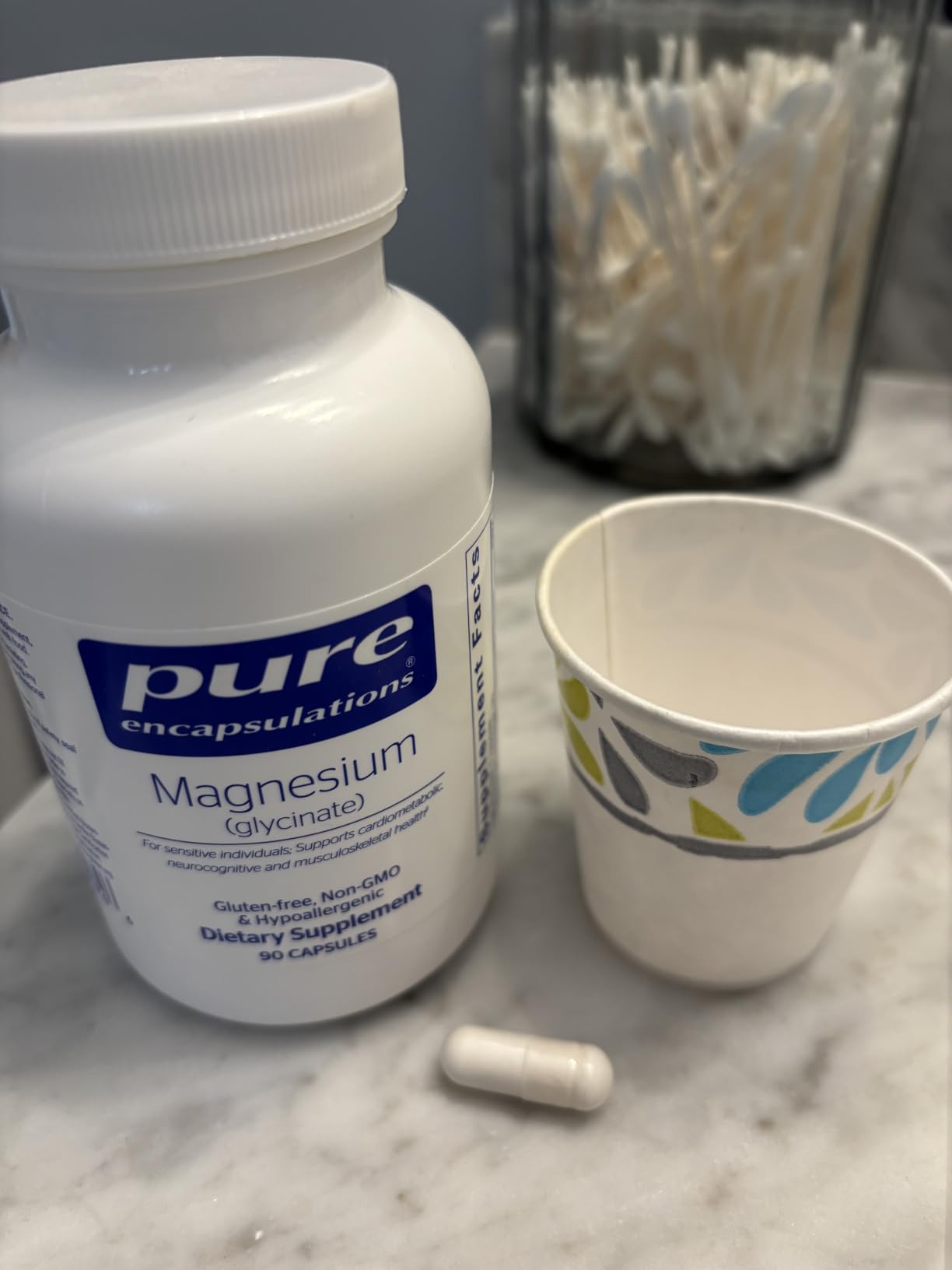
Magnesium Glycinate: The Body-Calming Sleep Champion
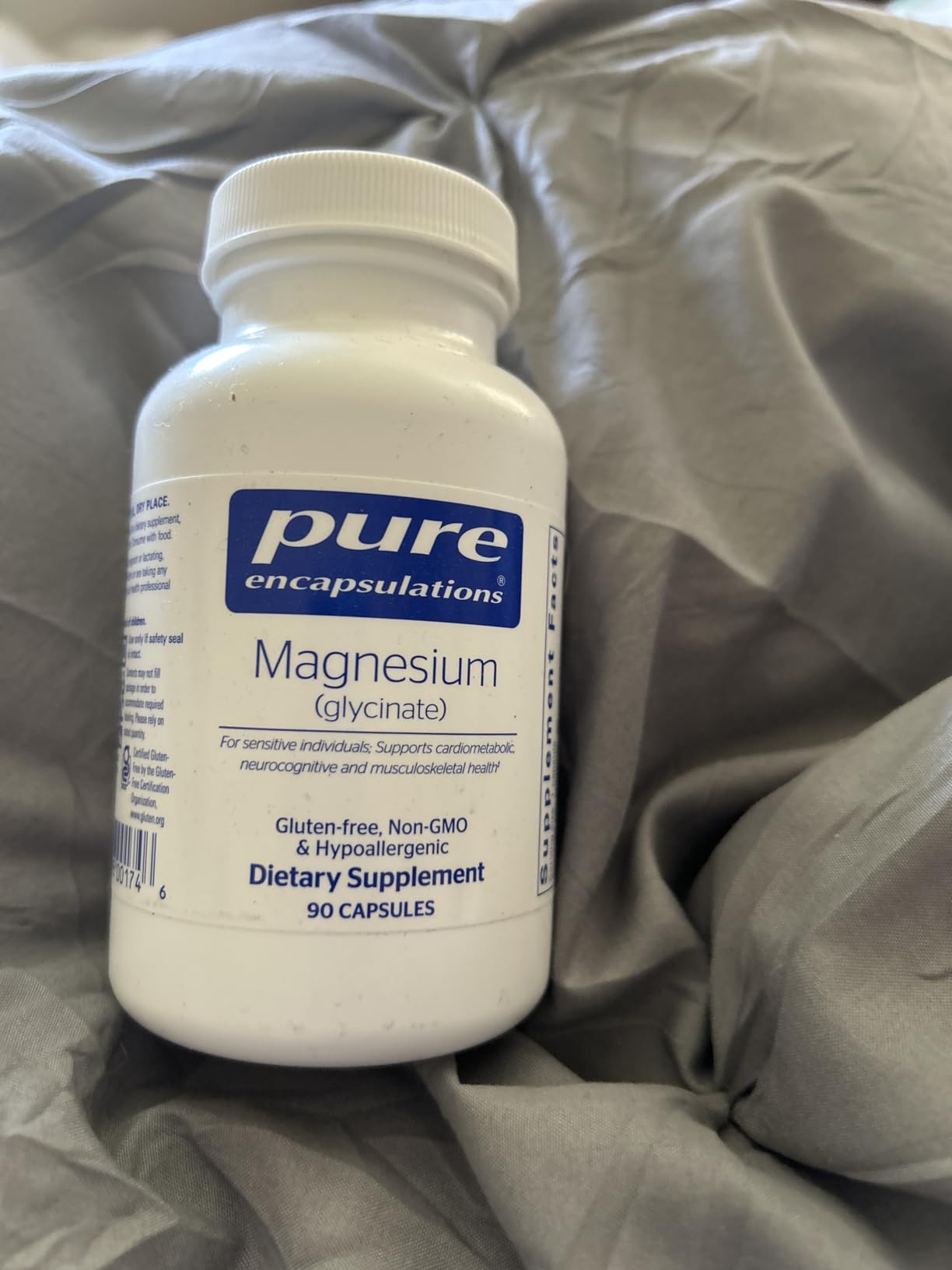
Pure Encapsulations Magnesium (Glycinate), 90 Capsules
90 capsules
Magnesium glycinate form
Supports sleep and stress relief
Allergen-free formula
Pros
- Helps users fall asleep faster and stay asleep longer
- Gentle on stomach with no digestive issues
- Clean ingredients free from fillers and GMOs
- Reduces muscle tension and stress
- Trusted third-party tested brand
Cons
- More expensive than drugstore brands
- Results may take 1-2 weeks to notice
What Is Magnesium Glycinate
Magnesium glycinate is a chelated form of magnesium, meaning the mineral is chemically bound to the amino acid glycine. This bond is what makes it special. Glycine is an inhibitory neurotransmitter on its own, meaning it naturally calms the nervous system. When you pair it with magnesium, you get a compound that delivers two relaxing agents in one molecule.
The chelation also improves absorption. Your body recognizes the glycine-amino acid complex as a protein fragment and absorbs it efficiently through intestinal amino acid transporters rather than standard mineral absorption channels. This is why glycinate rarely causes the digestive upset that magnesium oxide or citrate are known for.
How Glycinate Works in the Body
Once absorbed, magnesium glycinate goes to work on your peripheral nervous system. Magnesium blocks NMDA receptors, which are excitatory, and simultaneously supports GABA receptor activation, which is inhibitory. Think of it as turning down the volume on stress signals while turning up the volume on relaxation signals.
Glycine itself has been studied extensively for sleep. Research shows glycine supplementation improves sleep quality, reduces sleep onset latency, and helps people feel more rested the next morning without grogginess. The combination of magnesium plus glycine creates a synergistic calming effect that neither compound achieves alone.
Key Benefits Backed by Reviews
Looking at the 48,967 reviews for Pure Encapsulations Magnesium Glycinate, several patterns emerge clearly. Users consistently report falling asleep faster and staying asleep longer within the first one to three nights. Muscle tension, particularly in the neck and shoulders, decreases noticeably with regular use.
Anxiety reduction is another frequently mentioned benefit. Users describe feeling a gentle calm rather than a sedated feeling. No grogginess the next day is mentioned repeatedly, which distinguishes glycinate from melatonin or prescription sleep aids.
The stomach-friendly nature of this form comes up constantly. Many reviewers switched from magnesium oxide or citrate specifically because those forms caused diarrhea or cramping. The glycinate form solved that problem entirely.
Dosage and Timing
Each capsule of Pure Encapsulations Magnesium Glycinate provides elemental magnesium in a highly bioavailable form. Most users take one to three capsules daily, depending on their magnesium intake from food. For sleep specifically, taking glycinate 30 to 60 minutes before bed produces the best results.
One common point of confusion is elemental magnesium versus compound weight. The label shows the total weight of the magnesium-glycine compound, not just the elemental magnesium. The elemental magnesium content is what your body actually uses, and glycinate typically yields around 14 percent elemental magnesium by weight.
Potential Side Effects
Magnesium glycinate is one of the most well-tolerated forms available. Side effects are rare but can include mild drowsiness during the day if taken in the morning. At very high doses, any magnesium form can cause loose stools, though glycinate is the least likely to do this.
If you take blood pressure medication, antibiotics in the tetracycline or quinolone family, or bisphosphonates, talk to your doctor. Magnesium can interfere with absorption of these medications when taken simultaneously. Spacing them two to four hours apart usually resolves this.
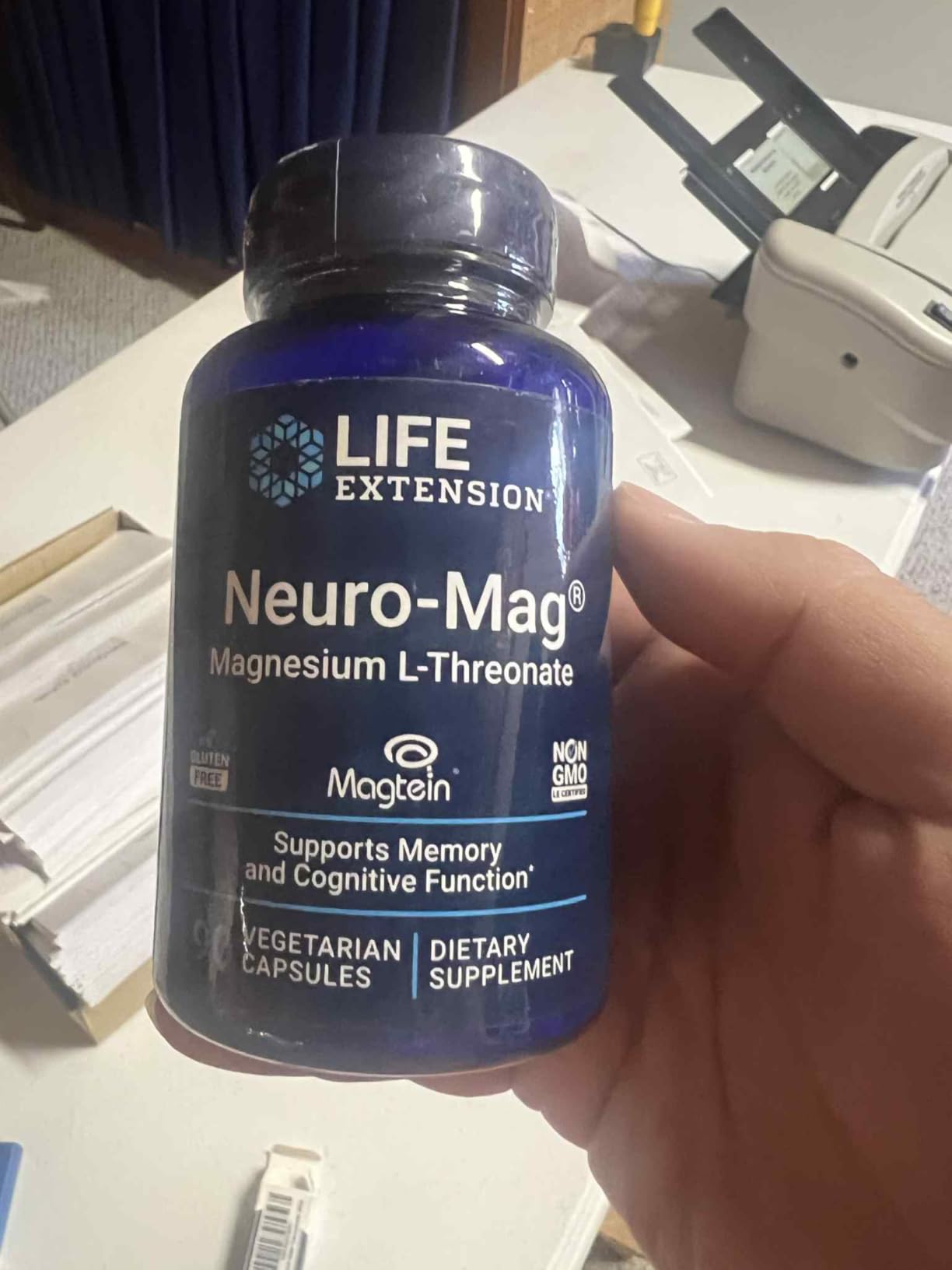
Magnesium L-Threonate: The Brain-Targeted Cognitive Booster
Life Extension Neuro-Mag Magnesium L-Threonate, 90 Vegetarian Capsules
90 capsules
Magtein L-threonate form
Crosses blood-brain barrier
Supports memory and focus
Pros
- Improves mental clarity and focus after 2-4 weeks
- Crosses blood-brain barrier for targeted brain delivery
- Clean vegetarian and non-GMO formula
- Supports working and short-term memory
- Reduces brain fog significantly
Cons
- More expensive than standard magnesium supplements
- Effects may take 6-12 weeks for full benefits
- Large capsule size may be difficult to swallow
What Is Magnesium L-Threonate
Magnesium L-threonate is a newer form of magnesium, developed by researchers at MIT in the late 2000s. The compound pairs magnesium with threonic acid, a metabolite of vitamin C. What makes this form unique is its molecular size and structure, which allows it to cross the blood-brain barrier with remarkable efficiency.
The blood-brain barrier is a protective membrane that prevents most substances in your bloodstream from entering brain tissue. This is generally a good thing, as it keeps toxins and pathogens out. But it also means most magnesium supplements never reach your brain in meaningful quantities. L-threonate is the exception.
The Blood-Brain Barrier Advantage
Why does crossing the blood-brain barrier matter so much? Your brain uses magnesium to regulate over 300 enzymatic reactions, many of which are critical for memory formation, synaptic plasticity, and neural signaling. When brain magnesium levels are suboptimal, cognitive performance suffers even if your blood magnesium levels test normal.
Research from MIT showed that magnesium L-threonate increased magnesium concentration in cerebrospinal fluid and brain tissue of animal models by approximately 15 percent after 24 days of supplementation. Other forms like oxide, citrate, and glycinate did not produce significant increases in brain magnesium levels at comparable doses. This is the core scientific rationale for threonate’s existence.
Increased brain magnesium has been associated with increased synaptic density in the hippocampus, the brain region central to learning and memory. More synapses mean more efficient neural communication, which translates to faster thinking and better recall in everyday life.
Key Benefits Backed by Reviews
With over 24,000 reviews for Life Extension Neuro-Mag, the cognitive benefits are well documented by real users. Mental clarity is the most commonly reported improvement, with reviewers describing reduced brain fog and sharper thinking after two to four weeks of consistent use.
Working memory improvements appear frequently. Users report better ability to hold information in mind during conversations, remember names and numbers, and track multiple tasks at once. Some reviewers with ADHD describe noticeable improvements in sustained attention, though results vary significantly between individuals.
Sleep benefits are mentioned too, but they differ from glycinate’s pattern. Users describe waking up feeling mentally refreshed rather than physically relaxed. Some users report vivid dreams, which makes sense given that brain magnesium affects REM sleep architecture. A minority of users find threonate too stimulating for nighttime use and prefer taking it in the morning.
Dosage and Timing
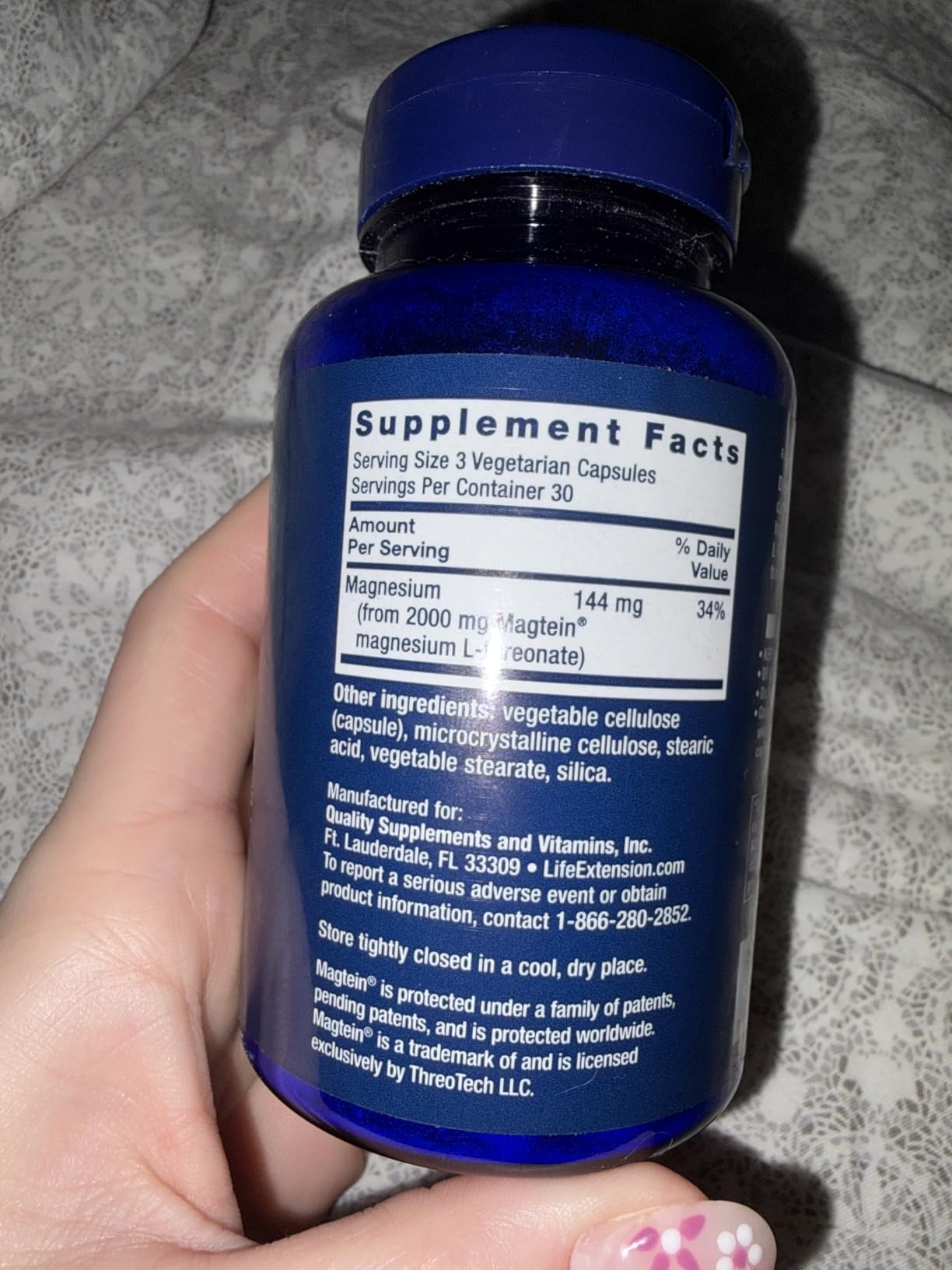
Life Extension Neuro-Mag provides 144 mg of elemental magnesium per three-capsule serving, derived from 2,000 mg of Magtein magnesium L-threonate. The recommended dose is three capsules daily, which can be split across the day or taken at once.
For cognitive benefits, most users take threonate in the morning or early afternoon. The Huberman protocol, popularized by neuroscientist Andrew Huberman, suggests taking magnesium L-threonate earlier in the day for cognitive support and reserving magnesium glycinate for the evening. This aligns with the circadian-timing logic: threonate supports daytime brain function, glycinate supports nighttime relaxation.
Patience is critical with threonate. While some users notice effects within two weeks, the full cognitive benefits typically require six to twelve weeks of daily use. Brain magnesium levels change slowly, and synaptic adaptations take time.
Potential Side Effects
The most common side effect of magnesium L-threonate is paradoxical for a sleep supplement: some people find it keeps them awake. This is why morning dosing is often recommended. If you experience insomnia after starting threonate, try shifting your dose to earlier in the day.
Vivid dreams are reported by a meaningful subset of users. This is generally harmless and some people actually enjoy the effect, but it can be unsettling if you are not expecting it. Other reported side effects include mild headaches during the first week and occasional digestive discomfort, though these are less common than with oxide or citrate forms.
The higher cost is worth addressing honestly. Magnesium L-threonate is a patented compound, and that patent drives the price up significantly. You are paying for the brain-barrier-crossing technology, not just the magnesium itself.
Magnesium Glycinate vs L-Threonate: Head-to-Head Comparison
Now that we have examined each form individually, let us put them side by side across the categories that matter most to people choosing between them.
Sleep: Who Wins
For pure sleep improvement, glycinate wins on speed and reliability. Users typically notice better sleep within one to three nights. The GABA-activating effect of glycine combined with magnesium’s natural muscle-relaxing properties creates a fast, reliable path to deeper sleep.
Threonate can also improve sleep, but through a different mechanism. By increasing brain magnesium levels, it supports healthy sleep architecture over weeks of use. If your sleep problems stem from racing thoughts or cognitive overstimulation rather than physical tension, threonate may actually be the better long-term choice.
Cognitive Function: Who Wins
This is not close. Magnesium L-threonate wins cognitive function by a wide margin because it actually reaches the brain. Glycinate does not cross the blood-brain barrier in meaningful quantities, so it cannot deliver the synaptic-density and neural-signaling benefits that threonate provides.
That said, glycinate’s calming effect can indirectly support cognition by reducing anxiety and improving sleep quality. A well-rested, calm brain performs better than a sleep-deprived, anxious one. But if cognitive enhancement is your primary goal, threonate is the clear choice.
Anxiety and Stress: Who Wins
Glycinate is the better option for acute anxiety and physical stress symptoms. The glycine component activates inhibitory pathways that calm the nervous system quickly. Users consistently report feeling a gentle wave of relaxation within 30 to 60 minutes of taking glycinate.
Threonate may help with anxiety over time by supporting healthy brain function and stress-response regulation, but it is not a quick-acting anxiolytic. If you need immediate calm, glycinate is your tool.
Onset Time: How Long Until Effects
This is one of the biggest practical differences and it rarely gets enough attention. Magnesium glycinate typically produces noticeable effects within one to three days. You will likely feel calmer and sleep better within the first week.
Magnesium L-threonate requires patience. Most users do not notice cognitive benefits for at least two weeks, and full effects can take six to twelve weeks. This longer onset corresponds to the time needed to raise brain magnesium levels and for synaptic changes to take hold.
Price-to-Value Analysis
Let us be straightforward about cost. Magnesium glycinate is more affordable per milligram of elemental magnesium. Pure Encapsulations, while premium within the glycinate category, still costs significantly less per day than threonate products.
Magnesium L-threonate commands a premium because it is a patented compound with clinical research behind it. You are paying for documented brain-barrier-crossing ability. Whether that premium is worth it depends entirely on whether you need brain-targeted effects. If you are taking magnesium for sleep and relaxation, glycinate gives you everything you need at a lower price. If cognitive function is your goal, threonate’s premium buys something no other form can deliver.
Bioavailability Comparison
Both forms are highly bioavailable, meaning they absorb well from the digestive tract into the bloodstream. The critical difference is not absorption into blood but delivery to target tissues. Glycinate delivers magnesium effectively to peripheral tissues, muscles, and the nervous system. Threonate delivers magnesium to the brain.
Think of it as delivery location rather than delivery efficiency. Both forms arrive at their destinations efficiently, but those destinations are different.
Can You Take Magnesium Glycinate and L-Threonate Together
Yes, and many people do exactly this. The most popular stacking protocol comes from the biohacker and longevity communities. The logic is simple: each form targets a different system, so combining them gives you comprehensive coverage.
Here is the stacking protocol our team has seen work well based on forum data and user reports. Take magnesium L-threonate in the morning or early afternoon to support daytime cognitive function and focus. Take magnesium glycinate 30 to 60 minutes before bed to support sleep onset and quality.
This morning-threonate, evening-glycinate split aligns with your natural circadian rhythm. Your brain needs to be sharp during the day and your body needs to relax at night. The two forms serve these complementary purposes without interfering with each other.
One important note on total daily magnesium intake. The recommended dietary allowance for magnesium ranges from 310 to 420 mg per day for most adults, depending on age and sex. Supplemental magnesium above 350 mg per day is the tolerable upper intake level for most adults. If you stack both forms, check your total elemental magnesium intake to stay within safe limits.
Which Magnesium Form Should You Choose in 2026
The difference between magnesium glycinate and L-threonate comes down to your primary goal. Use this decision guide to pick the right form for your situation.
Choose Magnesium Glycinate If
Your main concern is sleep quality, falling asleep faster, or staying asleep through the night. Glycinate delivers reliable results within days, not weeks.
You experience regular anxiety, muscle tension, or stress. The calming GABA-activating effect of glycine provides relief that most users feel quickly.
You want a well-tolerated daily magnesium supplement for general deficiency correction. Glycinate is gentle on the stomach and has the highest user-satisfaction ratings of any form.
Budget matters. Glycinate gives you excellent bioavailability at a lower cost per serving than threonate.
Choose Magnesium L-Threonate If
Your primary goal is cognitive enhancement, sharper memory, or better focus. No other magnesium form delivers magnesium to the brain as effectively.
You are concerned about cognitive aging or have noticed brain fog, slower recall, or reduced mental sharpness. Threonate addresses these directly at the synaptic level.
You have ADHD or attention issues and want to try a non-stimulant approach. Some users report meaningful improvements in sustained attention, though results vary.
You are willing to commit to six to twelve weeks of daily use before judging results. Patience is essential with threonate.
Choose Both If
You want comprehensive magnesium coverage for both brain and body. The morning-threonate, evening-glycinate protocol is popular for good reason.
You have both sleep issues and cognitive concerns. Many people in the biohacker community fall into this category and find that stacking both forms addresses both problems simultaneously.
Your budget allows for two supplements. If cost is a concern, prioritize based on which issue affects your daily life more.
Understanding Supplement Labels: Elemental vs Compound Magnesium
One of the most confusing things about magnesium shopping is the label. When a product says 1,000 mg of magnesium glycinate, you are not getting 1,000 mg of actual magnesium. The glycine molecule makes up most of that weight. Elemental magnesium, the amount your body actually uses, is typically only 8 to 14 percent of the compound weight depending on the form.
This matters when comparing products and forms. Magnesium L-threonate has an even lower elemental yield, around 7 percent, because the threonate molecule is large. Life Extension Neuro-Mag provides 144 mg elemental magnesium from 2,000 mg of compound. Always look for the elemental magnesium figure on the supplement facts panel to compare apples to apples.
Should You Get a Blood Test First
If you suspect magnesium deficiency, an RBC magnesium test is more informative than the standard serum magnesium test your doctor typically orders. Serum magnesium stays within normal range even when tissue levels are depleted, because the body pulls magnesium from bones and cells to maintain blood levels. RBC magnesium measures the magnesium inside red blood cells, giving a more accurate picture of tissue status.
This is not strictly necessary before starting supplementation, but it helps you understand whether you are deficient and track improvement over time. Some functional medicine practitioners recommend testing every six months if you are supplementing regularly.
FAQs
Is it better to take magnesium glycinate or threonate?
It depends on your primary goal. Magnesium glycinate is better for sleep, relaxation, anxiety relief, and muscle tension because it activates GABA receptors and works quickly, often within 1-3 days. Magnesium L-threonate is better for cognitive function, memory, focus, and brain health because it crosses the blood-brain barrier and increases magnesium levels in brain tissue. If you can only choose one, pick based on whether your bigger concern is sleep and body relaxation (glycinate) or mental sharpness and brain health (threonate).
Can I take magnesium glycinate and L-threonate together?
Yes, many people take both forms together safely. The most effective protocol based on user reports is to take magnesium L-threonate in the morning or early afternoon for cognitive support and magnesium glycinate 30-60 minutes before bed for sleep. This split aligns with your circadian rhythm and gives you brain-targeted benefits during the day and body-calming benefits at night. Just monitor your total daily elemental magnesium intake to stay below 350 mg from supplements.
Is there a downside to taking magnesium L-threonate?
The main downsides are cost and time to results. Magnesium L-threonate is a patented form and costs significantly more per serving than glycinate or citrate. Full cognitive benefits can take 6-12 weeks to appear, requiring patience and consistent daily use. Some users also report vivid dreams or difficulty falling asleep if they take threonate too close to bedtime, as increased brain magnesium can be mildly stimulating. Morning dosing usually resolves this issue.
Which magnesium crosses the blood-brain barrier?
Magnesium L-threonate is the form specifically designed and clinically studied for its ability to cross the blood-brain barrier. MIT researchers developed this form because threonic acid creates a molecular structure small enough to pass through the protective membrane surrounding brain tissue. Other forms like glycinate, citrate, and oxide do not cross the blood-brain barrier in meaningful quantities, which is why threonate is the preferred choice for cognitive and brain health goals.
Final Thoughts on Magnesium Glycinate vs L-Threonate
The difference between magnesium glycinate and L-threonate boils down to one question: where do you need magnesium to do its work? Glycinate delivers calming, sleep-supporting effects to your body and peripheral nervous system. Threonate delivers cognitive-enhancing effects directly to your brain by crossing the blood-brain barrier.
Neither form is universally better. They serve different purposes and excel in different contexts. The smartest approach is to identify your primary need and match the form to it. If that need is sleep and relaxation, Pure Encapsulations Magnesium Glycinate is the gold standard. If that need is cognitive function and brain health, Life Extension Neuro-Mag L-Threonate is the research-backed choice. And if you need both, the morning-threonate, evening-glycinate protocol gives you the best of both worlds.
Start with one form, give it the time it needs to work, and adjust based on real results. Your body and brain will tell you which form is the right fit.