
Have you ever felt your heart pound before a big presentation, or noticed your hands shake when someone startles you? That rush is your body’s fight or flight response in action. It is an ancient survival mechanism wired into every human being, and understanding how it works can change the way you handle stress, anxiety, and even trauma.
In this guide, we break down what the fight or flight response actually is, how your nervous system controls it, and why it sometimes misfires in everyday life. We also cover all four trauma responses, including the lesser-known fawn response, and share practical grounding techniques you can use the moment stress hits.
Whether you deal with chronic anxiety, are navigating trauma recovery, or simply want to understand why your body reacts the way it does, this guide is for you. Let’s unpack the science of survival, explained in plain language.
Table of Contents
What Is the Fight or Flight Response?
The fight or flight response is an automatic physiological reaction to perceived danger that prepares your body to either confront a threat or run away from it. It happens without conscious thought. Your brain detects danger, and within milliseconds, your body floods with stress hormones designed to keep you alive.
The concept was first described by physiologist Walter Cannon in 1915. Cannon observed that when animals face a threat, their bodies undergo rapid, coordinated changes in heart rate, breathing, and muscle readiness. He coined the term “fight or flight” to describe this instinctive survival reaction.
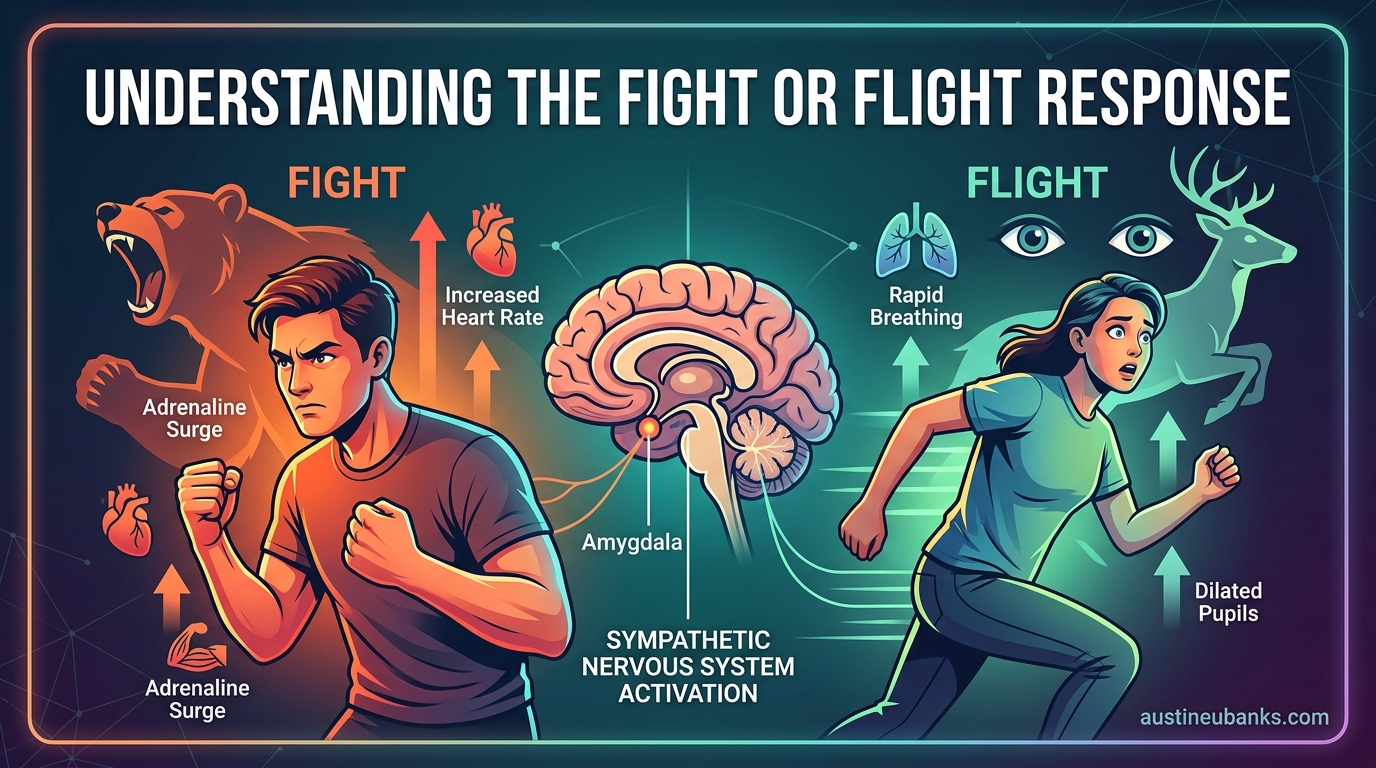
At its core, the response is your body’s alarm system. The brain perceives a threat, whether real or imagined, and triggers a cascade of physical changes. Adrenaline and noradrenaline surge through your bloodstream. Your heart races. Your muscles tense. Your senses sharpen. Everything non-essential, like digestion and creative thinking, takes a backseat.
This mechanism kept our ancestors alive against predators. The problem in 2026 is that the same response gets triggered by emails, deadlines, traffic, and social conflicts, situations where fighting or fleeing is not an option.
How the Nervous System Drives the Response
The fight or flight response is controlled by your autonomic nervous system, the part of your nervous system that regulates involuntary functions like heartbeat, breathing, and digestion. This system has two main branches that work in opposition to each other.
The sympathetic nervous system acts as the gas pedal. When danger is detected, it accelerates everything. Heart rate spikes, pupils dilate, blood rushes to your muscles, and energy stores mobilize. This is the system responsible for the surge you feel during acute stress.
The parasympathetic nervous system is the brake. It promotes rest, digestion, and recovery. After a threat passes, this system kicks in to calm the body down and return it to baseline. The balance between these two systems determines whether you feel relaxed or on edge.
The process starts in the amygdala, the brain’s emotional processing center. When it detects a threat, it sends a distress signal to the hypothalamus. The hypothalamus then activates the sympathetic nervous system and signals the adrenal glands to release adrenaline and cortisol. This entire chain happens in a fraction of a second, faster than conscious thought.
The Four Trauma Responses: Fight, Flight, Freeze, and Fawn
While most people have heard of fight or flight, the reality is more nuanced. Psychologists now recognize four distinct trauma responses that the body can deploy when facing perceived danger. Each one represents a different survival strategy, and understanding them can help you recognize your own patterns.
Fight Response
The fight response prepares you to confront a threat directly. When activated, your body channels energy toward aggression and self-defense. Your jaw tightens, your fists clench, and your voice may rise. You feel a strong urge to defend yourself or assert control over the situation.
Signs of the fight response include sudden anger, physical tension, clenched muscles, and a desire to argue or push back. In healthy doses, this response gives you courage and assertiveness. In overdrive, it can lead to disproportionate anger and conflict in situations that do not warrant it.
Flight Response
The flight response drives you to escape or avoid danger. Your body prepares to run. You may feel restless, fidgety, or overwhelmed by a strong urge to leave the room. Some people experience this as anxiety or panic, especially when escape feels impossible.
Common signs include racing thoughts, the need to keep moving, avoiding eye contact, and physically distancing yourself from the source of stress. Flight can be a smart survival strategy, but chronic avoidance can prevent you from addressing real problems in relationships and work.
Freeze Response
The freeze response occurs when neither fighting nor fleeing feels possible. The body essentially shuts down and goes numb. You may feel stuck, disconnected, or unable to move or speak. This response is especially common in situations where you feel trapped or overwhelmed.
Signs of freezing include a sensation of being paralyzed, blanking out, disconnection from your body, and a slowed heart rate rather than a racing one. The freeze response is often misunderstood as “doing nothing,” but it is actually an active survival strategy that predators in the wild trigger in prey animals.
Fawn Response
The fawn response is the least known of the four. Coined by therapist Pete Walker, it describes the tendency to appease a threat by people-pleasing, complying, or trying to keep the peace at your own expense. Instead of fighting, fleeing, or freezing, you try to make yourself useful or non-threatening to the source of danger.
Signs of fawning include over-apologizing, abandoning your own needs to please others, difficulty saying no, and losing your sense of self in relationships. This response often develops in childhood, particularly in homes where a caregiver was unpredictable or unsafe. Recognizing fawning as a trauma response can be a powerful step toward healthier boundaries.
Physical Symptoms of the Fight or Flight Response
When the fight or flight response activates, your body goes through a predictable set of physiological changes. These changes are designed to maximize your chances of survival, but they can feel uncomfortable or frightening if you do not understand what is happening.
Here are the most common physical symptoms:
- Rapid heart rate as blood pumps to major muscle groups
- Elevated blood pressure to deliver oxygen faster
- Rapid or shallow breathing to increase oxygen intake
- Dilated pupils to take in more visual information
- Sweating to cool the body during intense exertion
- Dry mouth as digestion slows and saliva production drops
- Muscle tension, especially in the jaw, shoulders, and neck
- Tunnel vision as the brain focuses on the perceived threat
These symptoms are harmless in short bursts. Your body is doing exactly what it evolved to do. But when the response stays activated for long periods, the constant flood of stress hormones takes a toll on your physical and mental health.
Everyday Triggers in Modern Life
Your brain cannot easily distinguish between a physical threat and a psychological one. A snarky email from your boss can trigger the same physiological cascade as a near-miss in traffic. This mismatch is at the heart of why chronic stress is so damaging in 2026.
Common modern triggers include work deadlines, financial worries, relationship conflicts, social media comparisons, public speaking, medical appointments, and even crowded spaces. The anticipation of a stressful event can be enough to activate the response before anything actually happens.
Sleep deprivation, caffeine, and alcohol also lower your threshold for stress. When you are already running on empty, your sympathetic nervous system fires more easily and takes longer to calm down. Recognizing your personal triggers is the first step toward managing your body’s response.
The key insight is that perception drives the response. Two people can face the same situation and have completely different physiological reactions depending on how their brain interprets the threat. This is why mindset, past experiences, and current stress levels all play a role.
When the Fight or Flight Response Becomes Problematic
The fight or flight response is not inherently bad. In genuinely dangerous situations, it saves lives. The problem arises when the response activates too frequently, too intensely, or fails to shut off when the danger has passed.
Chronic activation of the stress response is linked to anxiety disorders, panic attacks, insomnia, digestive issues, high blood pressure, and weakened immune function. When your body stays in survival mode, it cannot perform the maintenance and repair work needed for long-term health.
For people with post-traumatic stress disorder (PTSD), the alarm system becomes stuck in the “on” position. The amygdala remains hyperactive, treating ordinary stimuli as threats. Flashbacks, hypervigilance, and exaggerated startle responses are all signs that the fight or flight system has become dysregulated by trauma.
The good news is that the nervous system is adaptable. Through therapy, breathing exercises, and consistent practice, most people can retrain their stress response. Understanding what is happening in your body is the foundation of that work.
How to Calm the Fight or Flight Response: Grounding Techniques
Grounding techniques help bring your nervous system back into balance by activating the parasympathetic nervous system. These exercises work because they signal safety to your brain, which then reduces the flow of stress hormones. The more you practice them, the faster they work.
Here are five techniques you can use the moment you feel the fight or flight response activating:
Step 1: Box Breathing. Inhale for four seconds, hold for four seconds, exhale for four seconds, and hold empty for four seconds. Repeat this cycle four times. This technique is used by Navy SEALs and emergency responders to stay calm under pressure.
Step 2: The 5-4-3-2-1 Method. Name five things you can see, four things you can touch, three things you can hear, two things you can smell, and one thing you can taste. This sensory exercise pulls your attention out of your racing thoughts and into the present moment.
Step 3: Cold Water. Splash cold water on your face or hold an ice cube. Cold stimulation activates the mammalian dive reflex, which slows your heart rate and triggers the parasympathetic nervous system almost instantly.
Step 4: Progressive Muscle Relaxation. Starting from your feet and working up, tense each muscle group for five seconds, then release. This helps discharge the physical tension that builds up during the stress response.
Step 5: Orienting. Slowly look around your environment and let your eyes settle on objects in the room. This simple act tells your nervous system that you are safe and there is no immediate threat nearby.
Consistency matters more than perfection. Practicing these techniques when you are calm makes them more effective when you actually need them. Over time, they help rewire your nervous system to recover from stress more quickly.
FAQs
What are the 4 trauma responses?
The four trauma responses are fight, flight, freeze, and fawn. Fight involves confronting the threat, flight involves escaping it, freeze involves shutting down and going numb, and fawn involves appeasing the threat by people-pleasing or complying. Each response is an automatic survival strategy controlled by the nervous system.
What are the 5 F’s of survival?
The 5 F’s of survival are fight, flight, freeze, fawn, and faint. The first four are widely recognized trauma responses, while faint refers to the vasovagal response where a sudden drop in heart rate and blood pressure causes a person to lose consciousness during extreme stress.
How does the fight or flight response work?
When the amygdala detects a threat, it signals the hypothalamus, which activates the sympathetic nervous system. The adrenal glands release adrenaline and cortisol, causing rapid heart rate, increased breathing, muscle tension, and heightened alertness. This entire process happens in milliseconds, faster than conscious thought.
How long does the fight or flight response last?
The initial adrenaline surge lasts only a few minutes, typically peaking within 30 seconds. However, cortisol and other stress hormones can keep the body activated for 20 to 60 minutes after the threat passes. With chronic stress, the system can remain partially activated for days or weeks.
Can you control the fight or flight response?
You cannot stop the response from activating because it is involuntary. However, you can shorten its duration and intensity through breathing exercises, grounding techniques, therapy, and lifestyle changes. Regular practice of these tools helps retrain the nervous system to recover from stress more efficiently.
Conclusion
Understanding the fight or flight response gives you a powerful framework for making sense of your body’s reactions to stress. What once felt like random anxiety or unexplained physical symptoms now has a clear biological explanation rooted in millions of years of evolution.
The key takeaway is that your stress response is not broken. It is doing exactly what it was designed to do. The challenge in modern life is learning to work with it rather than against it. By recognizing your personal triggers, understanding which of the four trauma responses you tend to default to, and practicing grounding techniques consistently, you can build a calmer, more resilient nervous system.
If you find that your fight or flight response is interfering with daily life, consider speaking with a therapist who specializes in trauma-informed care. You do not have to navigate chronic stress alone, and professional support can make a meaningful difference in your recovery.