
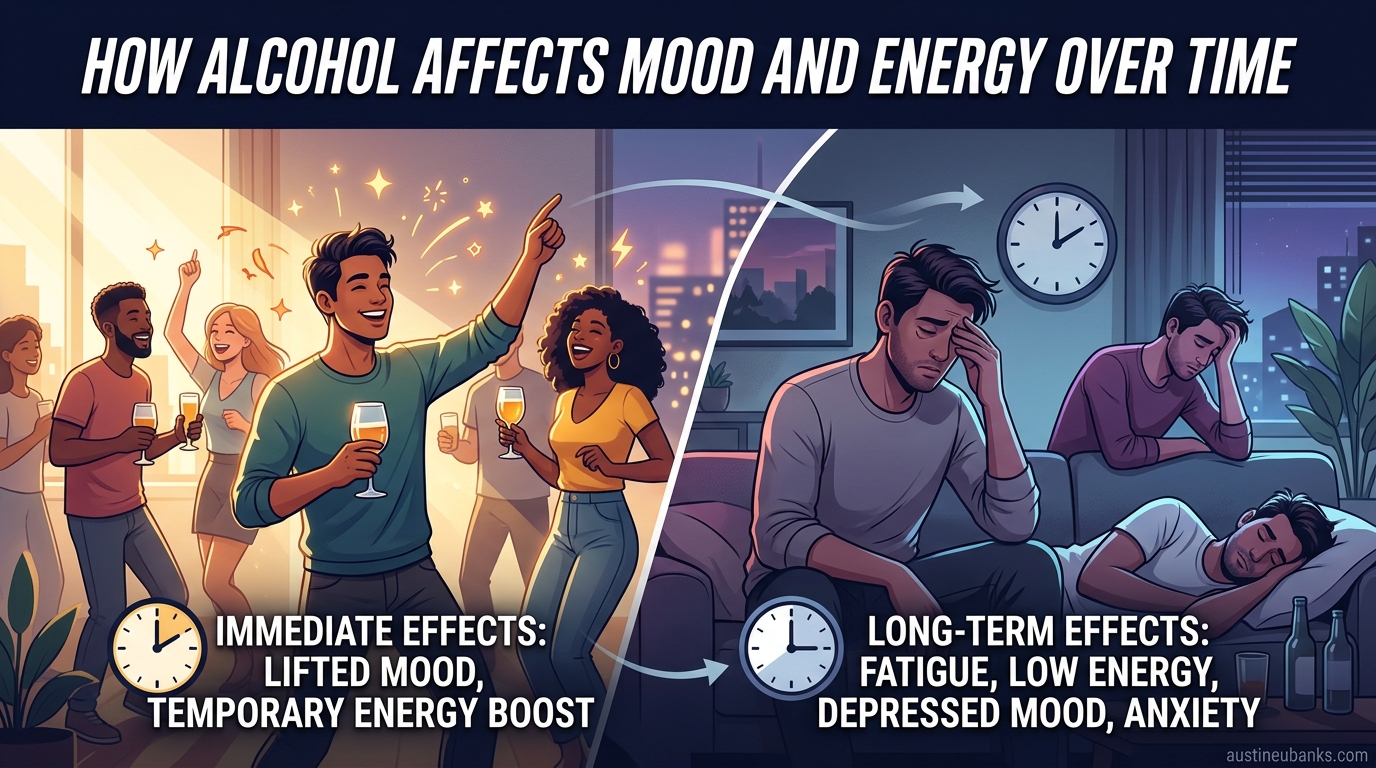
Alcohol is a central nervous system depressant that initially boosts mood and energy by increasing dopamine and serotonin, but over time it disrupts brain chemistry, leading to decreased mood stability, chronic fatigue, and a higher risk of depression and anxiety. When you drink, alcohol enhances GABA (your brain’s calming chemical) and triggers a dopamine rush, producing relaxation and euphoria. But the brain compensates by dialing back its own production of these chemicals, so when the alcohol wears off, your mood drops below baseline and your energy tanks.
If you have ever wondered why you feel amazing on a Friday night and miserable by Saturday morning, the answer lives in your neurotransmitters. In this guide, we break down exactly how alcohol affects mood and energy over time, from the first sip to the weeks after your last drink.
Our team spent weeks reviewing the latest peer-reviewed research from the National Institutes of Health, the Royal College of Psychiatrists, the Mental Health Foundation, and communities like r/stopdrinking where real people share real experiences. We pulled together the science and the stories so you can understand what is happening in your brain and body.
Whether you drink occasionally, every weekend, or daily, this article will help you connect the dots between alcohol and how you feel.
Table of Contents
Quick Summary: Key Takeaways
Here is what you need to know about how alcohol affects mood and energy over time, in brief.
- Alcohol is a central nervous system depressant. It mimics a stimulant at first by flooding the brain with dopamine, but its core effect is sedation.
- The initial mood boost is temporary. Within a few hours, mood and energy drop below your pre-drinking baseline.
- Over weeks and months of regular drinking, the brain reduces its natural production of serotonin and dopamine, making it harder to feel good without alcohol.
- Hangxiety is real. Next-day anxiety, low mood, and exhaustion are documented neurological responses, not character flaws.
- Sleep quality tanks after drinking. Even one or two drinks can reduce restorative REM sleep, leaving you depleted the next day.
- Recovery begins quickly. Most people notice mood and energy improvements within one to two weeks of cutting back or quitting.
- The relationship is bidirectional. People often drink to cope with low mood, but alcohol itself worsens the very symptoms they are trying to escape.
Now let us look at the science behind each of these points.
How Alcohol Affects Your Brain Chemistry
To understand how alcohol affects mood and energy over time, you need to know what happens in your brain at the chemical level. Alcohol interacts with at least four major neurotransmitter systems, and each one plays a role in how you feel.
Alcohol is classified as a central nervous system depressant. That means it slows down brain activity by enhancing the effects of GABA (gamma-aminobutyric acid), your brain’s primary calming neurotransmitter. At the same time, it suppresses glutamate, which normally excites the brain and keeps you alert. The combined effect is a general slowdown of brain function.
But there is a catch. Alcohol also triggers a release of dopamine in the reward pathway, which is why the first drink feels good. Dopamine is the chemical associated with pleasure, motivation, and reinforcement. This dopamine spike is what makes alcohol feel stimulating even though it is technically a depressant.
Serotonin, the neurotransmitter most associated with mood regulation, is also affected. Alcohol initially increases serotonin activity, which can produce a brief sense of wellbeing. But with repeated drinking, serotonin levels begin to fall below normal. This is one of the key reasons long-term drinkers experience low mood and depression.
Here is where it gets interesting. Your brain is built to maintain balance, a process called homeostasis. When alcohol repeatedly floods your brain with GABA and dopamine, your brain responds by producing less of these chemicals on its own and reducing the number of receptors that respond to them. This is called tolerance.
Once tolerance develops, you need more alcohol to get the same effect. And when the alcohol is gone, your brain is left with a deficit. Low GABA means anxiety. Low dopamine means anhedonia, the inability to feel pleasure. Low serotonin means depressed mood. This is the chemical foundation of how alcohol affects mood and energy over time.
Research published in the National Institutes of Health’s peer-reviewed literature shows that chronic alcohol use also affects the amygdala (the brain’s fear center) and the prefrontal cortex (responsible for decision-making and emotional regulation). Over time, these structural changes make it harder to manage stress and emotions without alcohol.
The Immediate Effects: Mood and Energy After One Drink
Within about 20 minutes of your first drink, alcohol crosses the blood-brain barrier and begins altering neurotransmitter activity. This is the basis of what some call the 20-minute rule for alcohol, the approximate window before you start feeling its effects.
The first thing most people notice is a sense of relaxation. Inhibition drops. Stress feels lighter. You might feel more talkative, more confident, even energized. This is the dopamine release at work, combined with GABA enhancement that quiets the background noise of anxiety.
For the first 30 to 60 minutes, as blood alcohol concentration rises, mood typically elevates above baseline. Many people report a warm, buzzy, euphoric feeling. This is the peak of alcohol’s rewarding effects.
Energy can also feel higher initially. Alcohol increases heart rate slightly and triggers a small adrenaline release. Combined with the social context of drinking, this can create a real sense of stimulation.
But the key word is initially. These effects are short-lived. As blood alcohol concentration continues to rise or begins to fall, the depressant effects of alcohol start to dominate. The same drink that made you feel alive 90 minutes ago starts making you feel sluggish, sleepy, or emotionally flat.
This transition from buzzed to drowsy is not a sign that something went wrong. It is exactly what a central nervous system depressant is supposed to do. The initial stimulation was the dopamine spike. The sedation is alcohol’s actual pharmacological effect.
The Crash: What Happens When Alcohol Wears Off
The crash is where most people get confused. You felt great last night, so why do you feel terrible today? The answer is that alcohol does not just bring you back to baseline. It drops you below it.
As your body metabolizes alcohol, the GABA enhancement fades. But your brain has not yet had time to restore its normal neurotransmitter balance. The result is a temporary state where GABA is low (causing anxiety), glutamate rebounds high (causing jitteriness), and dopamine has crashed (causing low motivation and pleasure).
This is the neurochemical basis of a hangover, and it affects mood just as much as it affects your stomach and head. Many people describe feeling sad, irritable, or emotionally raw the day after drinking, even after just a few drinks.
The crash can last anywhere from a few hours to a full day depending on how much you drank, your body weight, your genetics, and whether you slept well. And that last factor, sleep, is where alcohol does some of its most damaging work.
How Alcohol Disrupts Your Energy Levels
One of the biggest gaps in most content about alcohol and mental health is the energy dimension. People talk about mood changes all the time, but alcohol’s effect on energy is just as significant and often more noticeable in daily life.
Alcohol drains your energy through several interconnected mechanisms.
First, alcohol wrecks your sleep architecture. Even moderate drinking before bed reduces REM sleep, the stage responsible for cognitive restoration and emotional processing. It also fragments deep sleep, the stage where your body physically repairs itself. You might sleep for eight hours after a night of drinking, but the quality of that sleep is so poor that you wake up feeling like you slept for four.
Second, alcohol depletes B vitamins and magnesium. These nutrients are involved in energy production at the cellular level. Alcohol interferes with absorption and increases excretion of these vitamins, leaving your body less equipped to produce ATP, the energy currency of your cells.
Third, alcohol disrupts blood sugar regulation. Drinking can cause blood sugar to spike and then crash, especially if you have not eaten. This crash leaves you feeling shaky, tired, and irritable the next day.
Fourth, alcohol increases cortisol production. Cortisol is your body’s primary stress hormone. Drinking elevates cortisol levels, and chronically elevated cortisol leads to adrenal fatigue, persistent exhaustion, and a sense of being wired but tired.
Reddit users in r/stopdrinking describe this phenomenon vividly. Many report that alcohol initially gave them energy and motivation, but over time it “zapped all energy” and left them unable to do anything but sleep. This paradox, where a substance that feels energizing at first becomes the primary cause of exhaustion, is one of the most important things to understand about how alcohol affects mood and energy over time.
The good news is that energy levels typically recover faster than mood. Most people who cut back or quit drinking report noticeable energy improvements within the first week.
Hangxiety: The Next-Day Anxiety Phenomenon
Hangxiety is the informal term for the intense anxiety many people experience the day after drinking. While it sounds like internet slang, the phenomenon is well-documented in the scientific literature.
The mechanism is straightforward. Alcohol enhances GABA, which calms you down, and suppresses glutamate, which normally keeps you alert. When the alcohol leaves your system, your brain overcompensates. GABA activity drops below normal, and glutamate rebounds above normal. The result is a brain in a hyper-excitable state. You feel jittery, on edge, and anxious for no apparent reason.
For people who already struggle with anxiety, hangxiety can be particularly intense. Reddit users in r/mentalhealth and r/adhdwomen frequently report that even small amounts of alcohol trigger days-long anxiety spikes.
Hangxiety typically peaks about 12 to 16 hours after your last drink, which corresponds to the period when blood alcohol concentration has returned to zero but the brain has not yet restored its chemical balance. For most people, it resolves within 24 hours. But if you are drinking regularly, the anxiety may never fully go away because the brain never gets a chance to fully rebalance.
This is one reason people get caught in a cycle. They feel anxious after drinking, so they drink again to calm down. The next day, the anxiety is worse. So they drink again. This loop is at the heart of how alcohol affects mood and energy over time for many regular drinkers.
Long-Term Effects on Mood and Mental Health
How does alcohol affect mood long term? The answer involves both chemical and structural changes in the brain that accumulate over months and years of regular drinking.
Over time, alcohol fundamentally rewires the brain’s reward system. Natural rewards like food, exercise, social connection, and accomplishments produce less dopamine response because the brain has downregulated its dopamine receptors. This condition, sometimes called reward deficit syndrome, means that life feels flat and grey without alcohol.
The five major long-term effects of alcohol on mood and energy are:
- Clinical depression and anxiety disorders. Long-term drinking is strongly associated with higher rates of both. The relationship is bidirectional. Alcohol can cause depression, and depression can lead to increased drinking.
- Disrupted sleep and chronic fatigue. Years of poor sleep quality from regular drinking lead to a baseline of persistent exhaustion that many people mistake for aging or a busy lifestyle.
- Emotional numbness and reduced pleasure response. Activities that used to bring joy feel unrewarding because the dopamine system has been blunted.
- Increased irritability and mood swings. As the brain’s emotional regulation systems become impaired, small stressors trigger outsized emotional reactions.
- Alcohol dependence and withdrawal symptoms. The brain requires alcohol just to feel normal, and stopping produces physical and psychological withdrawal.
Research from the Royal College of Psychiatrists confirms that alcohol can also contribute to more severe mental health issues, including alcohol-induced psychosis in heavy drinkers and increased risk of suicidal ideation. The Mental Health Foundation notes that the link between alcohol and self-harm is particularly strong.
It is worth noting that some of these changes are reversible. The brain has remarkable neuroplasticity, and most mood and cognitive improvements begin within weeks of reducing or stopping alcohol intake.
The Timeline: How Alcohol Affects Mood and Energy Hour by Hour and Day by Day
No competitor provides a clear temporal framework for how alcohol affects you over time. So here it is, broken down by hour, day, and week.
Hour by Hour: A Single Night of Drinking
0-20 minutes: Alcohol enters the bloodstream and crosses the blood-brain barrier. No noticeable effect yet.
20-45 minutes: GABA enhancement begins. You feel relaxed, less inhibited, more sociable. Dopamine starts rising.
45-90 minutes: Peak blood alcohol concentration. Mood is at its highest. Energy feels elevated. This is the “sweet spot” most drinkers are chasing.
90-180 minutes: Dopamine begins to fall. The depressant effect becomes more prominent. You may feel drowsy, less coordinated, or emotionally flat.
3-6 hours after last drink: Blood alcohol is declining. The brain starts to experience the glutamate rebound. Sleep is fragmented. REM sleep is suppressed.
Day by Day: After a Night of Drinking
Day 1 (next day): Mood is below baseline. Hangxiety may peak around midday. Energy is low due to poor sleep quality and nutrient depletion. Irritability is common.
Day 2: Mood begins to recover but may still be below baseline. Sleep the night after drinking can still be disrupted. Many people report feeling emotionally raw or fragile.
Day 3: For most occasional drinkers, mood and energy return to near-baseline. If you only drink occasionally, your brain fully recovers within 48 to 72 hours.
Week by Week: Regular Drinking
After 2-4 weeks of regular drinking: Baseline mood may begin to subtly decline. You might notice you feel better when drinking than when not. This is early tolerance developing.
After 1-3 months of regular drinking: Dopamine and serotonin production begins to downregulate. Energy levels on non-drinking days are noticeably lower. Anxiety on non-drinking days may increase.
After 6-12 months of regular drinking: The contrast between “drinking mood” and “sober mood” becomes pronounced. Many people describe feeling “normal” only when drinking. This is a hallmark of the self-medication cycle.
Occasional vs Regular vs Heavy Drinking: How the Effects Differ
The impact of alcohol on your mood and energy depends heavily on your drinking pattern. Here is how the three main patterns compare.
Occasional drinking (1-2 times per month): The brain has ample time to fully recover between episodes. Mood and energy effects are temporary and self-limiting. Hangxiety may occur but resolves within a day or two. There is minimal long-term impact on neurotransmitter balance.
Regular drinking (3-5 times per week): The brain never fully rebalances between drinking days. Baseline mood gradually declines. Energy becomes inconsistent, with notable crashes on non-drinking days. Tolerance develops, requiring more alcohol to achieve the same mood boost. The self-medication cycle often begins at this level.
Heavy drinking (daily or near-daily, 8+ drinks per session): Significant neurochemical changes occur. The brain’s reward system is substantially blunted. Depression and anxiety rates are high. Physical withdrawal symptoms may appear between drinks. Energy levels are chronically low. Professional treatment is often needed to safely reduce or stop drinking.
Understanding where you fall on this spectrum is the first step toward understanding how alcohol is affecting your mood and energy.
The Self-Medication Cycle and Dependence
One of the most insidious aspects of how alcohol affects mood and energy over time is the self-medication cycle. It works like this.
You feel stressed, anxious, or down. You have a drink and feel better, at least temporarily. The next day, your mood is lower than before due to the neurochemical crash. So you drink again to feel better. The cycle repeats.
Over time, the brain adapts to the presence of alcohol by reducing its own production of mood-regulating chemicals. This means that the baseline mood you are trying to fix with alcohol is actually being caused, at least in part, by the alcohol itself.
This is why so many people in r/stopdrinking describe the experience of realizing that alcohol was the cause of the very problems they were using it to solve. The alcohol was not treating their anxiety. It was generating it.
The cycle can develop slowly. It often starts in social settings, where drinking is normalized and rewarded. Over months or years, drinking shifts from a social activity to a coping mechanism. Eventually, the brain begins to associate alcohol with emotional regulation, and the thought of facing difficult emotions without a drink feels impossible.
Breaking the cycle requires giving the brain time to restore its natural neurotransmitter balance. This is uncomfortable at first, because withdrawal symptoms like anxiety, irritability, and low mood are the brain’s way of demanding the chemical it has come to rely on. But the discomfort is temporary. The recovery is real.
Research from the NIH shows that the stress neurobiology of alcohol use disorder involves the HPA axis (hypothalamic-pituitary-adrenal axis), the system that regulates your body’s response to stress. Chronic drinking dysregulates the HPA axis, leading to chronically elevated cortisol and an exaggerated stress response. This makes everything feel more stressful, which drives more drinking. Understanding this biological loop can help remove the shame from the cycle.
What Happens When You Stop Drinking: The Recovery Timeline
One of the most common questions people ask is how long after quitting drinking mood improves. The answer is encouraging. The brain begins healing almost immediately, and most people notice significant improvements within the first few weeks.
12-24 hours after last drink: Blood alcohol returns to zero. The brain begins the process of rebalancing neurotransmitters. Sleep may still be disrupted. Mood may be volatile as withdrawal begins.
1-3 days: Physical withdrawal symptoms peak for heavy drinkers and then begin to subside. For moderate drinkers, this period may just involve cravings and mild anxiety. Energy is typically low.
3-7 days: Sleep begins to improve noticeably. Many people report their first night of genuinely restorative sleep in months or years. Energy levels start to climb. Mood is still stabilizing but may include periods of genuine wellbeing.
1-2 weeks: This is when most people report the most dramatic improvements. Anxiety levels drop significantly. Energy is noticeably higher. Sleep quality continues to improve. The brain fog lifts. Many people in r/stopdrinking describe this as the point where they suddenly realize how bad they had been feeling.
2-4 weeks: Mood stabilizes at a new, healthier baseline. The dopamine system begins to recover, meaning natural activities start feeling rewarding again. Cravings become less frequent and less intense. Most people report feeling better than they have in years.
1-3 months: The brain’s reward system continues to heal. Emotional regulation improves substantially. Many people report feeling more like themselves than they have since before they started drinking regularly. Cognitive function, including memory and focus, shows marked improvement.
6-12 months: For most people, the brain has substantially recovered its natural neurotransmitter balance. Mood is stable. Energy is consistent. Sleep is restorative. The self-medication cycle is broken.
It is important to note that heavy drinkers or people with alcohol use disorder should consult a medical professional before quitting abruptly, as severe withdrawal can be dangerous and even life-threatening. Medically supervised detox is the safest approach for anyone with significant dependence.
How to Protect Your Mood and Energy
If you are concerned about how alcohol affects your mood and energy over time, there are practical steps you can take right now.
Track your mood and energy for two weeks. Use a simple journal or app to rate your mood, energy, and anxiety level each morning. Note whether you drank the night before. Patterns will emerge quickly.
Experiment with alcohol-free days. Try taking 3-4 consecutive days off from drinking each week and see how you feel. Most people are surprised by how much better they feel after just a week.
Follow the 20-minute rule. When you feel a craving, wait 20 minutes before deciding whether to drink. Cravings are waves that typically peak and subside within that window. Often, the urge passes.
Replace the ritual. Much of drinking is habitual. If you always have a drink when you get home from work, replace it with something else, like a walk, a shower, or a non-alcoholic beverage. Breaking the behavioral pattern is half the battle.
Address the underlying issue. If you are drinking to cope with anxiety, depression, stress, or trauma, treating the root cause is more effective than simply trying to drink less. Therapy, medication, exercise, and mindfulness practices can all help.
Prioritize sleep. Since alcohol disrupts sleep so significantly, protecting your sleep is one of the fastest ways to improve both mood and energy. Stop drinking at least 3 hours before bed, and aim for 7-9 hours of sleep per night.
Get support. Communities like r/stopdrinking, SMART Recovery, and professional counseling can make an enormous difference. You do not have to figure this out alone.
Know when to seek professional help. If you find that you cannot stop drinking on your own, if you experience withdrawal symptoms, or if alcohol is affecting your relationships, work, or mental health, it is time to talk to a healthcare provider. Alcohol use disorder is a medical condition, and effective treatments are available.
Frequently Asked Questions
How does alcohol affect mood long term?
Alcohol disrupts the balance of neurotransmitters like serotonin and dopamine in the brain. Over time, this leads to increased anxiety, depression, and emotional instability. The brain becomes reliant on alcohol to regulate mood, creating a cycle of dependence where normal mood regulation becomes difficult without drinking. Chronic drinking also raises cortisol levels and impairs the brain’s stress-response systems.
What is the 20 minute rule for alcohol?
The 20-minute rule refers to the approximate time it takes for alcohol to be absorbed into the bloodstream and begin affecting the brain after your first drink. Within about 20 minutes, alcohol starts to cross the blood-brain barrier, affecting neurotransmitters and beginning to alter mood, inhibition, and cognitive function. It is also used as a craving management technique: wait 20 minutes and the urge often passes.
What are the 5 long-term effects of alcohol?
The five major long-term effects of alcohol on mood and energy are: (1) clinical depression and anxiety disorders, (2) disrupted sleep and chronic fatigue, (3) emotional numbness and reduced ability to feel pleasure, (4) increased irritability and mood swings, and (5) alcohol dependence and withdrawal symptoms. These effects result from changes in brain chemistry that accumulate over months and years of regular drinking.
How long does alcohol-induced anxiety last?
For occasional drinkers, alcohol-induced anxiety (hangxiety) typically lasts 12 to 24 hours and resolves as the brain restores its neurotransmitter balance. For regular drinkers, anxiety may persist for several days after the last drink. After quitting completely, anxiety levels usually begin to improve within one to two weeks as the brain’s GABA and glutamate systems normalize.
Why does alcohol make me depressed the next day?
Alcohol makes you depressed the next day because it depletes serotonin and dopamine while causing a rebound spike in glutamate. During drinking, your brain is flooded with calming and rewarding chemicals. When those wear off, your brain is left with a temporary deficit of mood-stabilizing neurotransmitters, resulting in feelings of sadness, emptiness, or depression that can last a day or more.
Does alcohol permanently affect your brain?
Alcohol does not necessarily cause permanent brain damage in moderate drinkers. The brain has remarkable neuroplasticity and can recover most of its function after a period of abstinence. However, years of heavy drinking can cause lasting structural changes, including reduced gray matter volume and impaired cognitive function. Most mood and energy improvements begin within weeks of stopping, with substantial recovery occurring over 6 to 12 months.
How long after quitting drinking does mood improve?
Most people notice the first mood improvements within 3 to 7 days of quitting drinking, primarily due to better sleep. Significant improvements typically occur within 1 to 2 weeks, including reduced anxiety and higher energy. Full mood stabilization and dopamine system recovery usually take 1 to 3 months. The brain continues healing for up to a year after the last drink.
Why does alcohol give me energy then make me tired?
Alcohol triggers a dopamine release that creates a temporary sense of energy and euphoria, usually peaking 45 to 90 minutes after the first drink. But alcohol is a central nervous system depressant, so as blood alcohol levels stabilize or decline, the sedative effects dominate. The initial stimulation was the dopamine spike, while the tiredness is alcohol’s actual pharmacological effect on GABA and glutamate.
Can one night of drinking affect your mood for days?
Yes. For some people, especially those with existing anxiety or mood conditions, a single night of drinking can disrupt mood for 2 to 3 days. This is because alcohol fragments sleep, depletes mood-stabilizing neurotransmitters, and triggers a cortisol response. The effects are more pronounced after binge drinking, which can cause mood instability for up to a week.
Is hangxiety a real medical phenomenon?
Yes. Hangxiety is a colloquial term for a well-documented neurological response. When alcohol enhances GABA during drinking, the brain compensates by reducing its own GABA production. When the alcohol wears off, GABA is low and glutamate is high, creating a hyper-excitable brain state that manifests as anxiety, jitteriness, and restlessness. It is particularly common in people with pre-existing anxiety disorders.
Conclusion
Understanding how alcohol affects mood and energy over time comes down to one central truth: alcohol borrows happiness from tomorrow and charges interest. The initial boost in mood and energy is a dopamine-driven illusion. The real cost is paid in depleted neurotransmitters, disrupted sleep, and a brain that gradually loses its ability to feel good on its own.
The encouraging news is that the brain heals. Whether you are an occasional drinker noticing a pattern of next-day anxiety, a regular drinker who has lost touch with what your baseline mood even feels like, or someone struggling with dependence, reducing or stopping alcohol gives your brain the chance to rebuild its natural chemistry. Most people feel measurably better within two weeks.
If you take away one thing from this guide, let it be this. The low mood, the anxiety, the exhaustion, these are not character flaws or permanent conditions. They are the predictable chemical consequences of a substance that disrupts the very systems responsible for keeping you feeling good. And those systems can recover.
If you are ready to make a change, start by tracking your mood and energy for two weeks. Try a few alcohol-free days. Notice the difference. Your brain will tell you everything you need to know.