
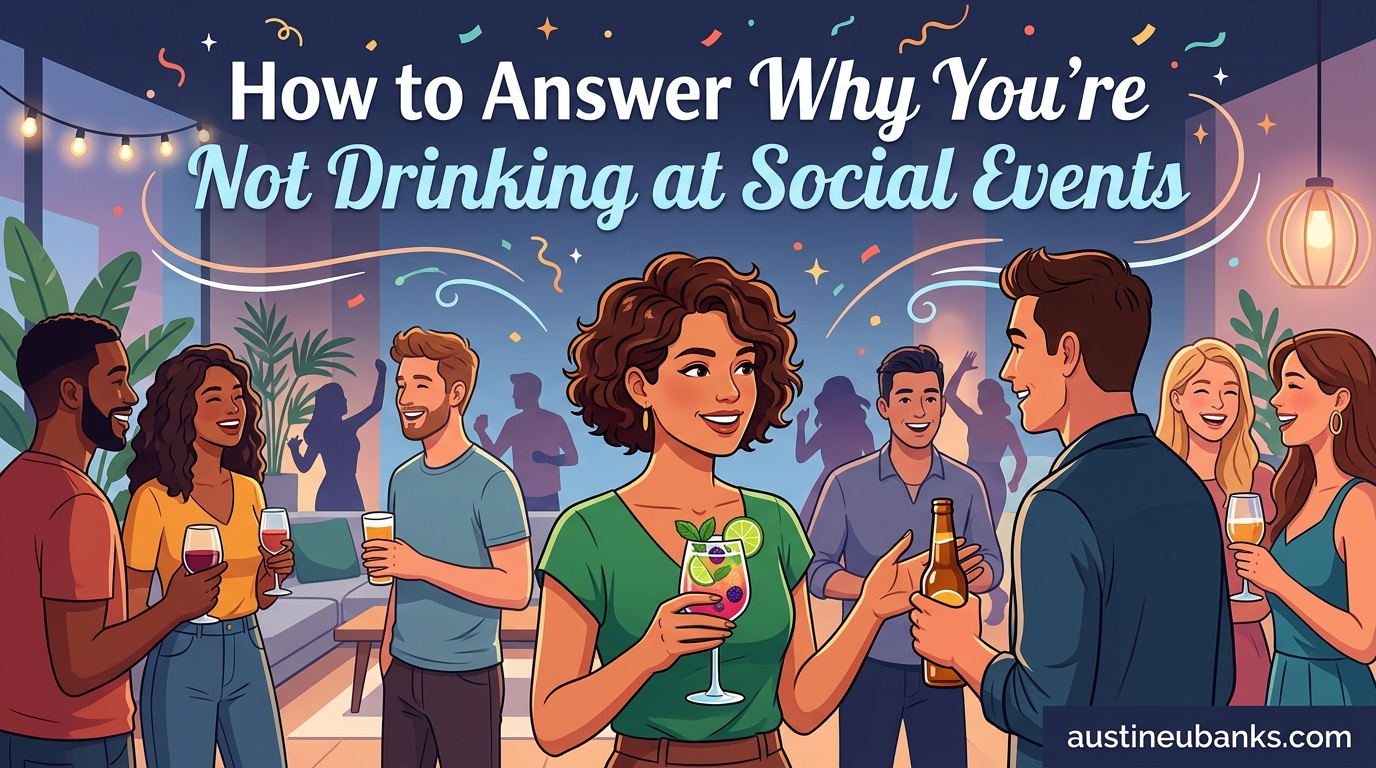
You are standing at a party holding a glass of sparkling water, and someone asks the question you have been dreading all night. Learning how to answer why aren’t you drinking at social events is a skill that takes practice, but once you have a few responses ready, the anxiety fades fast.
Most of the worry happens in your own head. The reality, as countless people on Reddit’s r/stopdrinking community will tell you, is that the conversation is almost always shorter and less awkward than you imagine. People rarely care as much as you think.
This guide gives you a complete toolkit of responses for any situation. Whether you are sober, taking a break, pregnant and not ready to share, on medication, or simply do not feel like it, you will find phrases here that sound natural and feel authentic to who you are.
Table of Contents
Quick Response Cheatsheet: 7 Things to Say
Here are seven ready-to-use responses you can memorize tonight. Each one works on its own without follow-up explanation.
- “I’m not drinking tonight.” Simple, firm, and complete. No explanation needed.
- “I’m taking a break from alcohol.” Sounds intentional and healthy without revealing too much.
- “I’m the designated driver.” Universally respected and ends the conversation immediately.
- “I have an early morning tomorrow.” Practical reason that nobody argues with.
- “I’m doing Dry January.” (Or Sober October, etc.) Gives a timeframe people understand.
- “I just don’t feel like it.” Honest and unapologetic. Most people respect this.
- “I’m sticking with water tonight, thanks.” Warm, casual, and moves the conversation along.
The key with every one of these responses is delivery. Say it with a relaxed smile, hold eye contact for a beat, then change the subject. Confident and brief beats apologetic and detailed every single time.
How to Answer Why Aren’t You Drinking at Social Events: Response Categories
Not every situation calls for the same answer. Below are the four main response styles, each suited to different audiences and comfort levels. Pick the one that fits the moment.
The Honest and Direct Approach
Honesty works when you are comfortable with your reasons and the people around you are safe. This approach builds trust and often deepens conversations.
Examples include: “I stopped drinking about six months ago and I feel great,” or “I’m in recovery, so alcohol isn’t part of my life anymore.” These responses work well with close friends, supportive family, and people you trust.
The bonus of honesty is that it often leads to genuine connection. Many people respond by sharing their own complicated relationship with alcohol, or they simply say “good for you” and move on.
The Deflecting Approach
Deflection is your friend when you do not want to explain yourself, especially around acquaintances, coworkers, or strangers. These responses answer the question without actually answering it.
Try: “Oh, I’m pacing myself tonight,” or “I’m not feeling great, so I’m sticking with water.” Another favorite from forum users: “I’ve got a thing tomorrow.” Vague but believable, and it shuts down follow-ups.
Deflection is not dishonest. You owe no one your full story at a casual gathering. A brief answer is a complete answer.
The Humor Approach
If you are naturally funny, humor disarms the question instantly. It signals that you are relaxed and not making a big deal of your choice.
Try: “I’ve already used up my lifetime supply,” or “My liver filed a complaint,” or “I’m annoying enough sober.” People laugh, the tension breaks, and everyone moves on.
The trick is to deliver the line lightly and then pivot to a new topic. Do not wait for them to probe further. Laugh, change the subject.
The Health or Medical Approach
This works when you want an answer that is completely bulletproof. Nobody argues with medical reasons.
“I’m on medication that doesn’t mix with alcohol” is airtight. So is “My doctor told me to cut back.” These responses end questioning fast because people do not feel entitled to push further.
This approach is especially useful at work events where you want to keep things professional and brief.
Scenario-Based Responses for Every Situation
Different settings call for different strategies. Here is how to handle the most common scenarios people ask about.
Work Events and Office Happy Hours
Professional settings are where many people feel the most pressure. You want to socialize and build relationships without drinking, and you do not want to make it a thing.
At work events, lean toward deflection or the health approach. “I’m sticking to water tonight, big week ahead” is perfect. It sounds responsible rather than rebellious. Offer to buy a round for others or suggest a toast with your soda water in hand.
If a coworker presses, keep it light: “Just taking it easy tonight!” then turn the conversation to work, sports, or whatever you usually discuss. Most colleagues take the hint immediately.
Family Gatherings
Family can be the toughest crowd because they feel entitled to your full story. They have known you for years and may remember when you did drink.
With family, decide ahead of time how much you want to share. If you are comfortable, honesty often works best: “I realized drinking wasn’t serving me anymore, and I’m happier without it.” If not, “I’m on a health kick” is usually enough.
For persistent relatives, try the broken record technique. Repeat the same short answer no matter how they rephrase the question. Eventually they move on.
Dinner Parties and Intimate Gatherings
Smaller settings mean fewer people but more sustained attention. If someone notices your wine glass is filled with sparkling water, they might ask directly.
The best move here is to bring a non-alcoholic drink you genuinely enjoy. A craft mocktail, kombucha, or nice sparkling water in a wine glass blends right in. Many people will not even notice you are not drinking.
If asked, keep it warm and brief: “I’m really enjoying this sparkling water tonight, but thank you.” Then ask them about the food, the host, or their latest project.
Bars and Nightlife
Bars are the environment most people worry about, but they are often easier than expected. Bartenders deal with non-drinkers constantly and are usually your allies.
Walk up to the bar confidently and order a soda with lime, a mocktail, or a non-alcoholic beer. Nobody at a busy bar is tracking what is in your glass. If someone asks, “I’m driving tonight” is universally accepted at bars.
Forum users consistently report that bars are far less awkward than they expected. The music, the crowd, and the energy carry the night regardless of what is in your hand.
Weddings and Celebrations
Weddings involve toasts, open bars, and Champagne flowing. The pressure here is celebratory rather than judgmental, but it can still feel intense.
For toasts, simply raise whatever glass you have. Sparkling cider or sparkling water works perfectly. Nobody is checking whether your flute has Champagne.
If asked, “I’m savoring the celebration with a clear head tonight” is a lovely response. It frames your choice as a positive, not a restriction.
The Drink-in-Hand Strategy: Your Best Defense
This is the single most effective tactic from every source we reviewed. Having a non-alcoholic drink in your hand dramatically reduces how often anyone asks the question at all.
People visually scan for empty hands and offer drinks. A full glass signals “I’m taken care of” without a word. This works at every type of event.
Great options to order or bring: soda water with lime (looks like a gin and tonic), craft mocktails, non-alcoholic beer, kombucha, flavored sparkling water, or ginger beer in a rocks glass.
Hold your drink comfortably at chest or waist level. Sip it naturally throughout the evening. This one habit alone eliminates most questions before they start.
Handling Pushy People and Follow-Up Questions
Most people accept your answer and move on. But occasionally you will meet someone who pushes, and you need a plan for that too.
When Someone Says “Come On, Just One”
This is peer pressure, even if it is delivered with a smile. Your response should be firm but not aggressive.
Try: “No really, I’m good, but thank you.” Say it with a smile, then immediately change the subject. Ask them a question about themselves. People love talking about themselves and will usually take the redirect.
If they push again, repeat your answer word for word. Same tone, same smile. The broken record technique shows you will not be worn down.
When Someone Gets Visibly Disappointed
This is a scenario almost no competitor covers, but forum users mention it often. Sometimes people react to your not drinking as if you have rejected them personally.
Remember that their reaction is about them, not you. They may feel self-conscious about their own drinking. Your choice holds up a mirror, and that makes some people uncomfortable.
Respond with warmth: “I’m still here celebrating with you! The drink doesn’t matter to me, the company does.” Reassure them you are present and having fun.
How to Change the Subject Gracefully
The pivot is your secret weapon. After giving your brief answer, immediately ask a question that redirects attention away from you.
Try these pivots: “How was your vacation last month?” or “Have you tried that new restaurant downtown?” or “Tell me about your new project at work.” Open-ended questions about the other person work every time.
When to Walk Away
If someone will not stop pushing after two or three firm responses, you owe them nothing. Excuse yourself to refill your drink, use the restroom, or go talk to someone else.
“I’m going to grab another water, catch you later” is all you need. Walk away with confidence. You are not being rude. They are.
Mindset Preparation Before the Event
The anxiety you feel before an event is usually worse than the event itself. Forum users say this over and over: the anticipation is the hardest part.
Before you go, take ten minutes to prepare. Pick two or three responses from this guide that feel natural to you. Say them out loud a few times until they roll off your tongue.
Remind yourself that not drinking is completely normal. Millions of people do not drink for countless reasons. You are not strange or boring for making this choice. You are actually ahead of the curve.
Reframe the evening as an opportunity rather than a test. You get to be fully present, remember every conversation, wake up clear-headed, and feel proud of yourself the next morning. That is a gift, not a sacrifice.
If anxiety runs high, arrive a little early so you can settle in before the crowd grows. Bring a friend who knows you are not drinking and can run interference if needed.
FAQs
What to say when people ask why you aren’t drinking?
Keep it brief and confident. Try “I’m not drinking tonight,” “I’m taking a break from alcohol,” or “I’m the designated driver.” Say it with a relaxed smile, then change the subject. Most people accept a short answer and move on without pressing further.
How do you respond when someone asks why you’re not drinking?
Respond with a short, firm answer and immediately pivot the conversation. Good responses include “I’m sticking with water tonight,” “I have an early morning,” or just “I don’t feel like it.” Confidence is key. The less you explain, the less there is to question.
How to enjoy social events without alcohol?
Focus on connection rather than the drink itself. Have a non-alcoholic beverage in hand, ask people questions, engage in activities like dancing or games, and appreciate being fully present. Many people report that social events are actually more fun and less stressful without alcohol.
What are good excuses for not drinking?
Believable options include being the designated driver, having an early morning commitment, being on medication, doing a wellness challenge like Dry January, or simply saying you are not in the mood. The best excuse is one that feels true to you and does not invite follow-up questions.
Do you lose friends when you stop drinking?
Some friendships built primarily around drinking may fade, but most genuine friendships survive and often deepen. Many people find that quitting alcohol actually improves their social lives because they form more authentic connections. You may lose drinking buddies, but you tend to gain real friends.
Wrapping Up: You Have Got This
Knowing how to answer why aren’t you drinking at social events comes down to three things: prepare a response or two, deliver it with confidence, and move on. The question is almost always smaller in reality than it is in your head.
Carry the cheatsheet with you. Practice your favorite lines. Keep a drink in your hand. And remember that walking into a room without alcohol does not make you less fun, less interesting, or less worthy of being there. It makes you someone who knows what they want and is not afraid to own it.
Every time you do this, it gets easier. The first event is the hardest. By the third or fourth, you will barely think about it at all. Walk in, be yourself, and enjoy the evening on your own terms.