
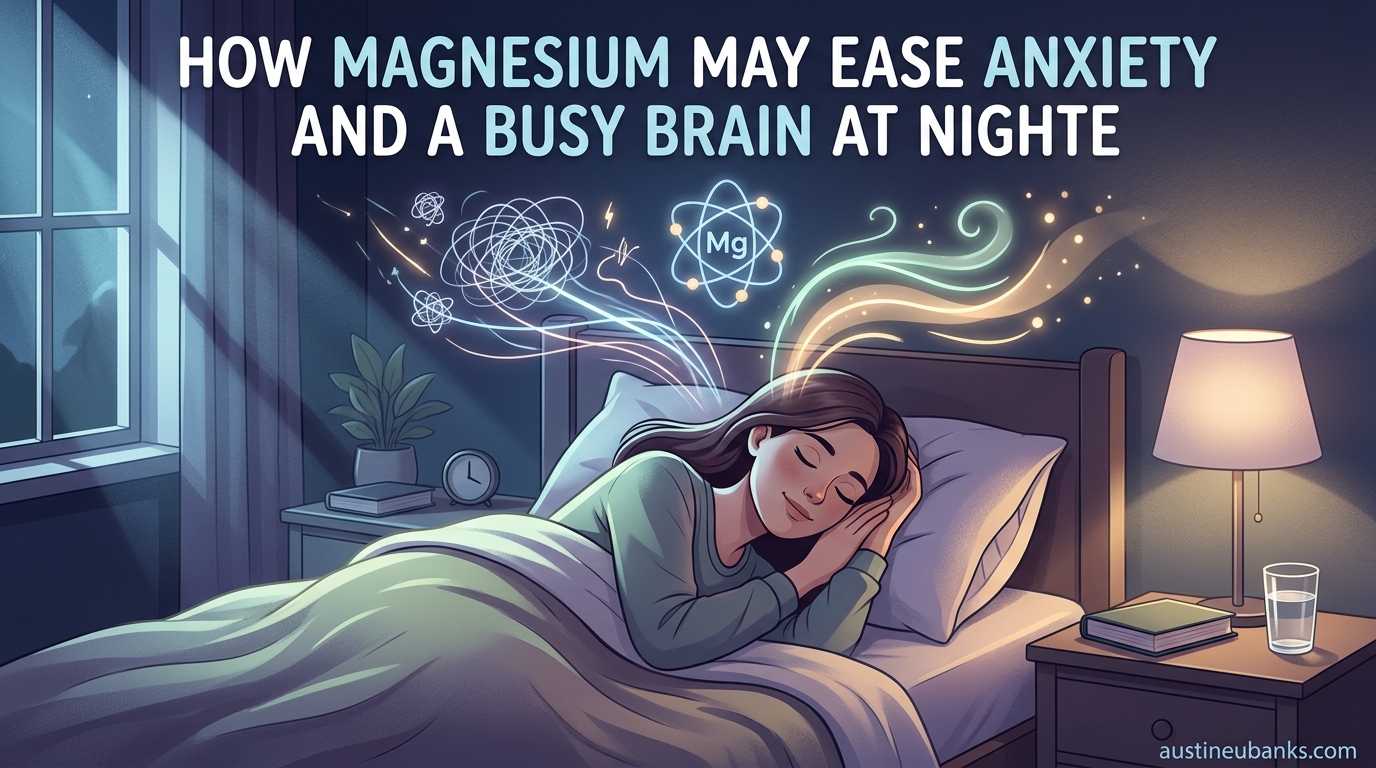
You know the feeling. It is 11 p.m., the house is quiet, and your brain decides this is the perfect time to replay every awkward conversation from the last decade. Or plan tomorrow’s to-do list. Or worry about something that hasn’t even happened yet. If your mind races the moment your head hits the pillow, you are far from alone.
This phenomenon, often called a “busy brain at night,” affects millions of people. The harder you try to sleep, the louder the thoughts become. Sleep aids leave you groggy. Meditation feels impossible when your thoughts are moving this fast. So what if a simple mineral already sitting in your body could help quiet the noise?
In this guide, we explore how magnesium may ease anxiety and a busy brain at night. We break down the actual science behind how magnesium interacts with your nervous system, which forms work best for anxiety versus sleep, realistic timelines for results, and what to do when magnesium alone is not enough. Whether you are dealing with occasional racing thoughts or chronic nighttime anxiety, understanding magnesium’s role in your brain could change your evenings for good.
Table of Contents
What Is Magnesium and Why Does It Matter for Anxiety?
Magnesium is the fourth most abundant mineral in the human body and is involved in over 300 enzymatic reactions. It helps regulate everything from muscle contractions and blood pressure to protein synthesis and nerve function. But one of its most fascinating roles is how it influences your brain and nervous system.
Your brain relies on a delicate balance of chemicals called neurotransmitters to function properly. Some neurotransmitters excite your brain into action, while others calm it down. Magnesium sits right at the center of this balancing act. Without enough of it, your brain tilts toward overstimulation, which can manifest as anxiety, irritability, and racing thoughts.
Here is the concerning part: research suggests that approximately 70% of Americans do not get enough magnesium from their diets. Modern farming practices have depleted magnesium from soil, meaning even people who eat plenty of vegetables may not get optimal amounts. Processed foods, stress, caffeine, and alcohol all further deplete magnesium stores.
When your magnesium levels drop, your body struggles to regulate stress responses properly. You may feel more on edge, your muscles may stay tense, and your brain may refuse to power down at night. Understanding this mineral’s role is the first step in seeing why magnesium for anxiety and a busy brain at night has become such a popular topic in wellness and medical communities.
How Magnesium Works on the Brain: The Science Explained
To understand how magnesium may ease anxiety and nighttime brain activity, we need to look at three key mechanisms: neurotransmitter regulation, cortisol management, and the blocking of overactive brain signals.
GABA Activation: Your Brain’s Brake System
GABA, or gamma-aminobutyric acid, is your brain’s primary inhibitory neurotransmitter. Think of it as the brake pedal for your nervous system. When GABA binds to receptors in your brain, it slows down nerve activity, producing a calming effect. This is the same system that anti-anxiety medications like benzodiazepines target.
Magnesium plays a direct role in supporting GABA function. It binds to and activates GABA receptors, helping your brain naturally wind down. When magnesium levels are adequate, your brain has an easier time shifting into a relaxed state. When they are low, your brain stays stuck in overdrive, making it hard to transition from wakefulness to sleep.
This is why low magnesium levels are frequently linked to difficulty falling asleep, staying asleep, and experiencing restorative deep sleep. Your brain literally needs this mineral to engage its built-in calming system.
Glutamate Regulation: Turning Down the Volume
On the opposite end of the spectrum from GABA is glutamate, your brain’s primary excitatory neurotransmitter. Glutamate stimulates brain activity and is essential for learning and memory. But too much glutamate leads to overstimulation, which can feel like a flood of thoughts you cannot control.
Magnesium acts as a natural blocker at NMDA receptors, which are activated by glutamate. By sitting inside these receptors, magnesium prevents excessive calcium from entering neurons. This keeps glutamate signaling in check and prevents the overstimulation that contributes to anxiety and racing thoughts. Without sufficient magnesium, these receptors fire too easily, and your brain becomes excessively reactive.
This mechanism is particularly relevant at night. As external distractions fade, the internal noise from overactive glutamate signaling becomes much more noticeable. That is why a magnesium-deficient brain can feel perfectly fine during a busy day but spiral into anxious thoughts the moment things quiet down.
Cortisol Regulation: Keeping Stress Hormones in Check
Cortisol is often called the stress hormone, and for good reason. When you face a stressor, your hypothalamic-pituitary-adrenal (HPA) axis triggers cortisol release. This prepares your body for action. But chronic stress keeps cortisol elevated, which interferes with sleep, increases anxiety, and creates a feedback loop that makes everything worse.
Magnesium helps regulate the HPA axis and dampen the stress response. Research published in the journal Nutrients shows that magnesium tends to diminish the stress response mediated by catecholamines and glucocorticoids. In simpler terms, magnesium helps prevent your stress hormones from running unchecked.
When magnesium levels are healthy, your cortisol response becomes more measured. You still react to stress, but the reaction does not spiral. When levels are low, even minor stressors can trigger a disproportionate cortisol spike, which keeps your brain wired and alert at exactly the wrong time.
Supporting Melatonin Production
Magnesium also plays a role in the synthesis of melatonin, the hormone that regulates your sleep-wake cycle. Melatonin tells your body when it is time to sleep by rising in the evening. Without adequate magnesium, melatonin production can become irregular, making it harder for your brain to recognize that it is time to shut down.
By supporting both GABA activity and melatonin production, magnesium addresses two of the most important pathways for transitioning from a busy, anxious brain into one that is ready for sleep. No single mechanism tells the whole story, but together they explain why this mineral has such a broad impact on nighttime anxiety.
Why Your Brain Gets Busy at Night (and How Magnesium Helps)
This is where most articles on magnesium and anxiety stop short. They explain the science but never connect it to the specific experience of lying in bed with a brain that refuses to quiet down. Let us fix that.
During the day, your brain is constantly processing external stimuli. Conversations, screens, traffic, tasks. These inputs occupy much of your cognitive bandwidth, leaving less room for anxious thoughts to surface. You may still feel stressed, but the busyness of life drowns out the internal chatter.
At night, all of that external input disappears. Suddenly, your brain has nothing to process except its own thoughts. For people with anxiety, this creates a vacuum that the brain rushes to fill with worries, replays of the day, and catastrophic predictions about tomorrow. The thoughts that were always there in the background now become deafeningly loud.
This effect is amplified by a phenomenon called the cortisol awakening response in reverse. In some people under chronic stress, cortisol levels can actually spike in the evening rather than tapering off. Instead of winding down, your body enters a state of heightened alertness right when you are trying to sleep.
Magnesium addresses this nighttime pattern from multiple angles. By supporting GABA activity, it helps your brain engage its natural braking system when external distractions fade. By regulating glutamate, it turns down the volume on excitatory signaling that fuels racing thoughts. By managing cortisol, it helps prevent the inappropriate evening stress spike that keeps you wired.
The result is not a sedative effect that knocks you out. Rather, magnesium helps create the neurological conditions that allow your brain to transition naturally from active processing to rest. For many people, this means fewer racing thoughts, less time lying awake, and a gentler slide into sleep.
It is also worth noting that magnesium supports physical relaxation. Many people with nighttime anxiety carry tension in their jaw, shoulders, or neck. Magnesium helps muscles release this tension, which sends a physical signal to the brain that it is safe to relax. The mind-body connection matters here: when your body feels physically safe and relaxed, your brain follows suit.
Types of Magnesium for Anxiety: Which One Is Right for You?
Not all magnesium supplements are created equal. The form you choose dramatically affects how well it is absorbed, what it targets, and what side effects you might experience. Here is a breakdown of the most relevant forms for anxiety and sleep.
Magnesium Glycinate: Best Overall for Anxiety and Sleep
Magnesium glycinate is magnesium bound to glycine, an amino acid that has its own calming properties. Glycine acts as an inhibitory neurotransmitter in the central nervous system, promoting relaxation and improving sleep quality. This makes the glycinate form a double threat for nighttime anxiety.
Because glycinate is highly bioavailable, your body absorbs it efficiently. It is also one of the gentlest forms on the digestive system, making it a good choice for people with sensitive stomachs. For anxiety and a busy brain at night, magnesium glycinate is the form we see recommended most often by both medical professionals and people sharing their personal experiences in online communities.
However, it is worth noting that some women with PMDD have reported that glycinate can paradoxically worsen their symptoms. This is not common, but it is a reminder that individual responses vary and no single form is universally perfect for everyone.
Magnesium Citrate: Good for Deficiency, Watch the Digestive Effects
Magnesium citrate is magnesium bound to citric acid. It is well-absorbed and effective for raising magnesium levels, which makes it a solid choice for correcting a deficiency. It is also one of the most affordable and widely available forms.
The catch is that citrate pulls water into the intestines, which means it can have a laxative effect. For some people, this is mild and manageable. For others, it causes diarrhea, cramping, and stomach upset that undermine the anxiety-relieving benefits. If you have a sensitive digestive system, citrate may not be the best choice for daily use.
Citrate can work well for sleep in people who tolerate it, but the digestive side effects are a frequent complaint in forums and communities. If you want to try it, start with a low dose and see how your body responds.
Magnesium Taurate: Best for Stress and Cardiovascular Support
Magnesium taurate combines magnesium with taurine, an amino acid that supports cardiovascular health and has calming effects on the nervous system. Taurine itself plays a role in GABA regulation, making this form particularly interesting for stress-related anxiety.
In online anxiety communities, some users report that taurate is the most effective form for reducing their anxiety symptoms. It tends to be well-tolerated without the digestive issues of citrate. While there is less clinical research on taurate compared to glycinate, the anecdotal evidence is strong enough that it is worth considering, especially if other forms have not worked for you.
Magnesium L-Threonate: Best for Brain and Cognitive Function
Magnesium L-threonate is a newer form specifically designed to cross the blood-brain barrier effectively. Research from MIT showed that this form can increase magnesium levels in the brain itself, which other forms struggle to achieve as efficiently.
For anxiety, this brain-targeting ability is theoretically appealing. If anxiety originates in overactive brain signaling, getting magnesium directly into brain tissue could be especially beneficial. L-threonate is also popular for cognitive support and memory, which makes it a favorite among people looking for brain-optimizing supplements.
The main downside is cost. L-threonate is significantly more expensive than other forms. If budget is not a concern and your primary goal is calming a busy brain, this form has unique advantages worth exploring.
Magnesium Oxide: What to Skip
Magnesium oxide is the form most commonly found in cheap supplements. It has very poor bioavailability, meaning your body absorbs only a small fraction of what you take. It is frequently used as a laxative rather than for nutritional supplementation.
If you have been taking magnesium oxide and noticed no improvement in your anxiety or sleep, the form may be the problem, not magnesium itself. Switching to a more bioavailable form like glycinate or taurate often makes a dramatic difference.
5 Signs You May Be Magnesium Deficient
Magnesium deficiency, also known as hypomagnesemia, is surprisingly common but notoriously hard to detect. Standard blood tests measure serum magnesium, which represents less than 1% of your body’s total magnesium. An RBC magnesium test, which measures magnesium inside red blood cells, gives a more accurate picture.
Here are five signs that your magnesium levels may be lower than optimal:
1. Frequent muscle cramps and twitches. Magnesium is essential for muscle relaxation. Persistent cramps, charley horses, eye twitches, or restless legs can signal low levels.
2. Difficulty falling or staying asleep. If you lie awake with racing thoughts or wake up at 3 a.m. unable to get back to sleep, insufficient magnesium may be contributing.
3. Persistent fatigue and low energy. Magnesium is involved in ATP production, your body’s energy currency. Low levels can leave you feeling drained despite adequate rest.
4. Increased irritability and anxiety. Without enough magnesium to regulate excitatory neurotransmitters, your nervous system stays in a heightened state. Small annoyances feel overwhelming.
5. Headaches and migraines. Magnesium deficiency is linked to increased frequency of tension headaches and migraines, particularly in people who also experience anxiety.
It is important to note that these symptoms overlap with many other conditions. If you are experiencing several of these signs consistently, consider asking your doctor for an RBC magnesium test before starting supplementation. Knowing your baseline helps you track whether magnesium is making a measurable difference.
Food Sources of Magnesium: Can You Get Enough From Diet Alone?
The best way to get any nutrient is from food, and magnesium is no exception. Foods high in magnesium include leafy green vegetables, pumpkin seeds, almonds, dark chocolate, black beans, avocados, and whole grains. A single ounce of pumpkin seeds contains about 150 milligrams of magnesium, roughly 37% of the daily recommended intake for most adults.
The challenge is that getting enough magnesium from diet alone has become increasingly difficult. Decades of intensive farming have depleted magnesium from agricultural soil. A carrot grown today contains less magnesium than a carrot grown fifty years ago. Water filtration systems strip magnesium from tap water, removing another traditional source.
If you eat a diet rich in whole foods, particularly leafy greens, nuts, seeds, and legumes, you can get meaningful amounts of magnesium. But if your diet includes significant processed foods, or if you are dealing with chronic stress that increases magnesium excretion, you may still fall short of optimal levels.
This is where supplementation comes in. Food should always be the foundation, but for many people dealing with anxiety and sleep issues, a magnesium supplement helps bridge the gap between dietary intake and the higher amounts needed during periods of stress. Think of supplementation as a tool to correct a deficit, not a replacement for eating well.
How to Take Magnesium for Anxiety and Better Sleep
If you decide to try magnesium for anxiety and a busy brain at night, the way you take it matters. Here is a practical guide to getting started.
Dosage Recommendations
The National Institutes of Health recommends the following daily magnesium intake for adults: 400 to 420 milligrams for men and 310 to 320 milligrams for women. Pregnant women should aim for 350 to 360 milligrams daily. These recommendations cover total intake from all sources, including food.
For anxiety and sleep purposes, many practitioners recommend starting with 200 to 300 milligrams from a supplement taken in the evening. This is enough to make a difference for most people without overwhelming the digestive system. You can gradually increase to 400 milligrams if needed and tolerated.
It is possible to get too much magnesium. The tolerable upper intake level for supplemental magnesium is 350 milligrams per day for adults. Doses significantly above this can cause diarrhea, nausea, abdominal cramping, and in extreme cases, magnesium toxicity. More is not always better.
Timing: When to Take Magnesium
For anxiety and sleep, the best time to take magnesium is 30 to 60 minutes before bed. This gives the mineral time to be absorbed and begin supporting GABA activity and muscle relaxation as you transition into sleep. Taking it with a small snack can improve absorption and reduce stomach upset.
Some people split their dose, taking half in the afternoon and half before bed. This can help maintain steadier magnesium levels throughout the evening. Experiment to find what works best for your body.
If you are taking magnesium primarily for daytime anxiety rather than sleep, a morning or afternoon dose may be more appropriate. Magnesium taurate or glycinate during the day can help maintain a calmer baseline without causing drowsiness.
Starting Low and Slow
A common mistake is starting with a high dose immediately. This increases the risk of digestive side effects and makes it harder to assess how your body responds. Start with 200 milligrams for the first week, then gradually increase.
It is also important to know that some people experience an initial adjustment period. A small number of users in anxiety communities report feeling slightly worse or more anxious during the first few days of supplementation. This is not universal, but if it happens, it typically resolves within a week as your body adapts. Starting with a low dose helps minimize this effect.
Stacking Magnesium With Other Supplements
Magnesium works well alongside other natural sleep and anxiety supports. Common combinations include magnesium with L-theanine (an amino acid that promotes relaxation without drowsiness), magnesium with ashwagandha (an adaptogen that helps regulate cortisol), and magnesium with vitamin B6 (which aids magnesium absorption).
Be cautious about stacking magnesium with other sedating supplements or medications without professional guidance. Combining multiple calming agents can amplify effects in ways that are not always predictable.
How Long Does Magnesium Take to Work for Anxiety?
This is one of the most common questions, and most resources give frustratingly vague answers. Here is what we can tell you based on the research and real-world reports.
Some people notice a difference the very first night. They take magnesium before bed and experience a subtle but noticeable easing of tension and a quieter mind. This immediate response is more common in people who are significantly deficient.
For most people, it takes two to three weeks of consistent daily use to feel meaningful changes. This is because magnesium needs time to accumulate in your tissues and correct an underlying deficit. Taking it sporadically will not produce the same results as daily use over several weeks.
A smaller percentage of people report no noticeable improvement even after a month. If this happens, several factors could be at play. You may be using a poorly absorbed form like oxide. You may have a co-existing condition that magnesium alone cannot address. Or your body may respond better to a different form, such as switching from glycinate to taurate.
Give magnesium a fair trial of at least four weeks at an appropriate dose before deciding whether it works for you. If you have not noticed any improvement after a month, reassess the form, dosage, and whether other factors like caffeine intake or sleep hygiene are undermining your progress.
Side Effects, Interactions, and Safety
Magnesium is generally safe when taken at recommended doses, but it is not without risks. Understanding potential side effects and interactions helps you use it responsibly.
Common Side Effects
The most common side effects are digestive. Magnesium draws water into the intestines, which can cause loose stools, diarrhea, and stomach cramping. This effect is strongest with magnesium citrate and oxide, and minimal with glycinate and taurate. Taking magnesium with food reduces digestive discomfort.
At very high doses, magnesium can cause low blood pressure, irregular heartbeat, nausea, and fatigue. These effects are rare at recommended supplement doses but can occur if someone takes significantly more than the upper limit.
People with kidney disease need to be especially careful. Healthy kidneys efficiently excrete excess magnesium, but compromised kidneys can allow magnesium to accumulate to dangerous levels. If you have any kidney condition, talk to your doctor before taking magnesium supplements.
Medication Interactions
Magnesium can interact with several common medications. It can reduce the absorption of certain antibiotics, particularly tetracyclines and fluoroquinolones. If you take these medications, separate them from magnesium by at least two hours.
Magnesium can also enhance the effects of blood pressure medications, potentially causing blood pressure to drop too low. If you take medication for hypertension, monitor your blood pressure when starting magnesium and consult your prescribing physician.
For people on GLP-1 medications like semaglutide, magnesium citrate is generally considered safe but may compound the digestive effects that some people experience with these medications. A gentler form like glycinate may be better tolerated. Always check with your healthcare provider about specific drug interactions.
If you take thyroid medication, be aware that magnesium can interfere with absorption. Space your magnesium supplement at least four hours apart from thyroid medication like levothyroxine. This is especially relevant for people with Hashimoto’s thyroiditis who are managing both thyroid function and anxiety.
Who Should Not Take Magnesium Without Medical Supervision
Certain groups should consult a healthcare provider before starting magnesium supplementation. These include people with kidney disease, those on multiple prescription medications, pregnant or breastfeeding women, and individuals with heart conditions such as heart block.
Magnesium is not a substitute for professional anxiety treatment. If your anxiety is severe, persistent, or interfering with daily functioning, supplementation should complement, not replace, evidence-based treatment from a qualified mental health professional.
Lifestyle Changes That Support Magnesium’s Anxiety-Reducing Effects
Magnesium works best when it is part of a broader approach to managing anxiety and improving sleep. In our research across anxiety communities, the most consistent success stories come from people who combine supplementation with lifestyle changes rather than relying on magnesium alone.
Here are the changes that make the biggest difference:
Reduce caffeine, especially after noon. Caffeine increases cortisol and adrenaline, directly counteracting magnesium’s calming effects. It also increases magnesium excretion through urine. If you drink coffee, keep it to the morning hours.
Limit alcohol. Alcohol disrupts sleep architecture, depletes magnesium, and increases anxiety the following day. Even moderate drinking can undermine the anxiety benefits you are trying to build with magnesium.
Establish a wind-down routine. Your brain needs signals that it is time to transition from active mode to rest mode. Dim lights, avoid screens for the last hour before bed, and do something calming like reading, gentle stretching, or journaling.
Move your body during the day. Regular exercise is one of the most effective natural anxiety treatments. It helps regulate cortisol, improves sleep quality, and gives your nervous system a healthy outlet for excess energy.
Consider your sleep environment. A cool, dark, quiet bedroom makes a significant difference. Use blackout curtains, keep the temperature between 60 and 67 degrees Fahrenheit, and consider a white noise machine if silence makes your racing thoughts more noticeable.
When Magnesium Is Not Enough: Recognizing When to Seek Help
Magnesium can be a powerful tool, but it is not a cure-all. Some people will not respond to magnesium at all, and others need additional support alongside it. Knowing when to seek professional help is just as important as knowing about supplementation.
Consider professional evaluation if your anxiety is severe enough to significantly impact your daily life, relationships, or ability to function. If you experience panic attacks, persistent depressive symptoms alongside anxiety, or thoughts of self-harm, reach out to a mental health professional immediately.
Cognitive Behavioral Therapy (CBT) is one of the most evidence-based treatments for anxiety and insomnia. It directly addresses the thought patterns that fuel racing thoughts and teaches practical skills for managing anxiety. For many people, combining CBT with magnesium supplementation produces better results than either approach alone.
There is no shame in using medication for anxiety. Some people need prescription support, at least temporarily, to get their symptoms under control. Magnesium can complement these treatments, but it should not replace professional medical advice for moderate to severe anxiety.
Frequently Asked Questions
Should I take magnesium at night for anxiety?
Yes, taking magnesium 30 to 60 minutes before bed is ideal for anxiety and sleep. This timing allows magnesium to support GABA activity and muscle relaxation as you transition into sleep. Magnesium glycinate is the most commonly recommended form for nighttime use due to its calming properties and gentle effect on digestion.
What medication is good for racing thoughts at night?
Magnesium supplements are a natural option many people try first for racing thoughts at night. For persistent or severe symptoms, prescription options may include certain antidepressants, anti-anxiety medications, or sleep aids. Always consult a healthcare provider before starting any medication, as the right choice depends on your specific symptoms and medical history.
How fast does magnesium help anxiety?
Some people notice improvements the first night, particularly if they are significantly deficient. However, most people need two to three weeks of consistent daily use to feel meaningful changes in anxiety levels. Magnesium needs time to accumulate in tissues and correct an underlying deficit. Give it at least four weeks at an appropriate dose before evaluating results.
Which magnesium is best for sleep and anxiety?
Magnesium glycinate is widely considered the best form for sleep and anxiety because it combines magnesium with glycine, an amino acid that promotes relaxation. Magnesium taurate is another excellent option, particularly for stress-related anxiety. Magnesium L-threonate may be beneficial for brain-specific effects but is more expensive. Avoid magnesium oxide, which has poor absorption.
Can magnesium make anxiety worse?
In rare cases, some people report increased anxiety when first starting magnesium, particularly with the glycinate form. This is not common and usually resolves within a week as the body adjusts. Starting with a low dose can minimize this effect. If anxiety worsens persistently, stop taking the supplement and consult your healthcare provider.
Can I take magnesium if I have Hashimoto’s thyroiditis?
Yes, but you need to time it carefully. Magnesium can interfere with the absorption of thyroid medications like levothyroxine. Take magnesium at least four hours apart from your thyroid medication. Many people with Hashimoto’s find magnesium helpful for managing stress and supporting overall thyroid function, but always discuss supplementation with your endocrinologist.
Can I take magnesium citrate while on a GLP-1 medication?
Magnesium citrate is generally safe with GLP-1 medications, but both can cause digestive effects. GLP-1 medications often slow digestion, while citrate can have a laxative effect. Consider starting with a low dose or switching to a gentler form like magnesium glycinate. Consult your prescribing physician for personalized guidance.
Does magnesium spray work for anxiety?
Topical magnesium sprays are marketed for anxiety and muscle relaxation, but evidence is limited. The skin is an effective barrier, and very little magnesium is absorbed transdermally according to available research. Oral supplementation is far more reliable for raising magnesium levels and supporting anxiety reduction. Sprays may provide localized muscle relief but are unlikely to significantly impact systemic magnesium levels.
Final Thoughts on Magnesium for Anxiety and a Busy Brain at Night
If you have been struggling with anxiety and a busy brain at night, magnesium offers a gentle, natural, and well-researched option worth exploring. It is not a magic cure, but for many people, it addresses a real physiological deficit that contributes directly to racing thoughts, muscle tension, and difficulty winding down.
The key takeaways are straightforward. Choose a bioavailable form like glycinate or taurate. Take it consistently for at least four weeks. Start with a low dose and adjust gradually. Combine it with sleep hygiene and lifestyle changes for the best results. And know when to seek professional help if your symptoms go beyond what a supplement can address.
Understanding how magnesium may ease anxiety and a busy brain at night empowers you to take a practical, science-based approach to an incredibly frustrating problem. Your brain deserves support, and sometimes that support starts with something as fundamental as giving your body the minerals it needs to function the way it was designed to.
Talk to your doctor before starting any new supplement, especially if you take medications or have underlying health conditions. Then give magnesium a fair trial. The quietest, most restful nights of your life might be a few weeks away.