
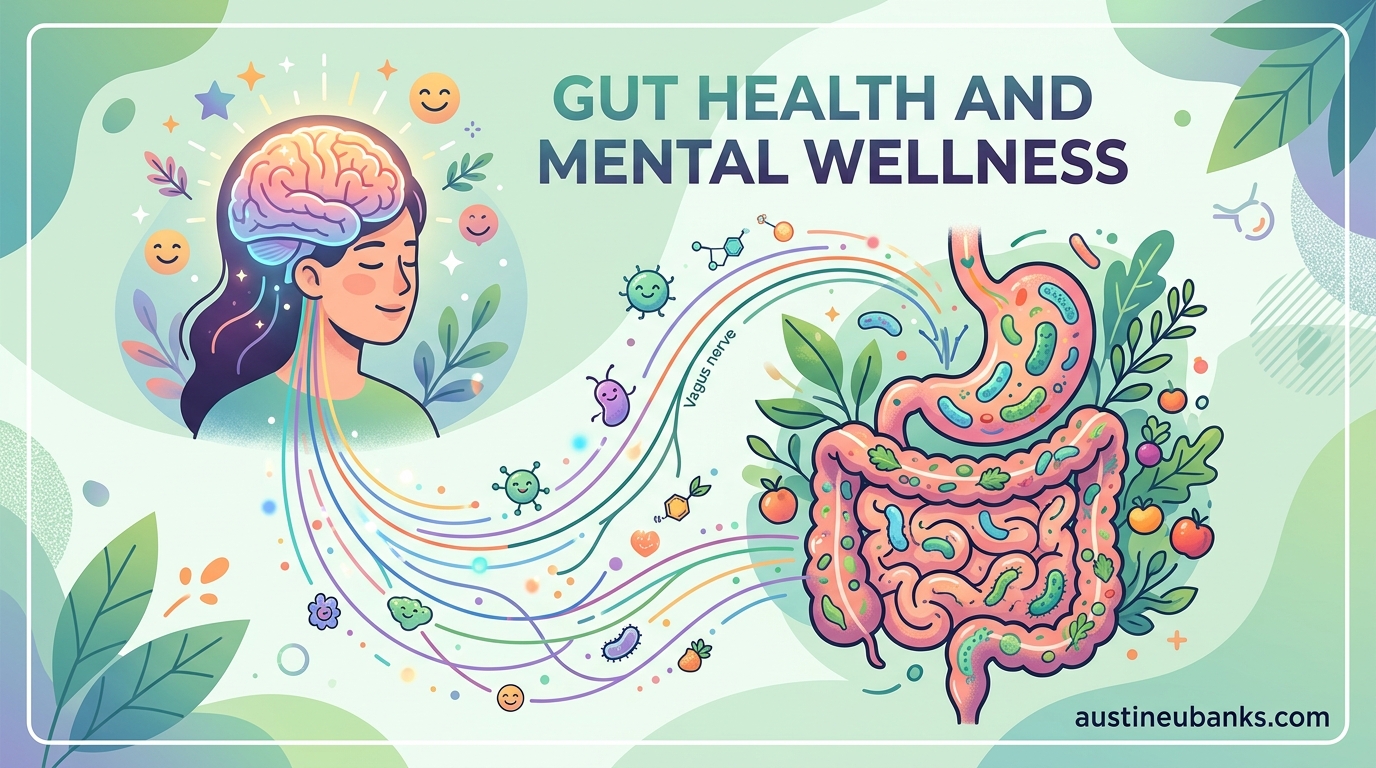
Have you ever felt butterflies in your stomach before a big presentation? Or noticed that your digestion seems to act up right when stress levels spike? That is not a coincidence. Understanding how gut health connects to mood and mental wellness begins with one simple truth: your gut and your brain are in constant conversation.
This conversation happens through what scientists call the gut-brain axis, a communication network so powerful that researchers now refer to the gut as your “second brain.” The implications are enormous. If your gut health influences your mood, then everyday choices about what you eat and how you live could matter just as much for your mental wellness as they do for your digestion.
In this guide, our team breaks down exactly how this connection works, what the latest research reveals, and which practical steps you can take starting today. Whether you are dealing with occasional anxiety, persistent digestive issues, or simply want to feel more balanced, the gut-brain connection offers a science-backed starting point.
The short answer: Your gut and brain communicate bidirectionally through the gut-brain axis, a network involving the vagus nerve, hormones, and neurotransmitters. Your gut produces about 90% of your body’s serotonin and 50% of its dopamine, two neurotransmitters that directly regulate mood. When your gut microbiome falls out of balance, it can trigger inflammation and disrupt these chemical signals, contributing to anxiety, depression, brain fog, and mood swings.
Table of Contents
What Is the Gut-Brain Axis?
The gut-brain axis is a bidirectional communication network that links your digestive system directly to your brain. This means signals travel in both directions: your gut sends information to your brain, and your brain sends information right back to your gut. It is not a one-way street. It is a continuous, two-way biochemical conversation happening every second of every day.
At the center of this network sits the enteric nervous system, or ENS. The ENS consists of two thin layers of more than 100 million nerve cells lining your gastrointestinal tract from your esophagus all the way down to your rectum. That is more nerve cells than you have in your spinal cord. This is why scientists call the gut your “second brain” — it can operate independently, controlling digestion without needing instructions from the brain in your head.
Think of the gut-brain axis like a telephone line between two offices. One office is your brain (the central nervous system), and the other is your gut (the enteric nervous system). They pick up the phone constantly to share updates. Your gut reports on what is happening in digestion, what nutrients have arrived, and whether harmful bacteria have been detected. Your brain sends back signals about stress levels, emotional states, and even whether you feel safe.
The primary physical cable connecting these two offices is the vagus nerve. This long cranial nerve runs from your brainstem all the way down to your intestines, carrying chemical and electrical signals in both directions. Research shows that when the vagus nerve is severed in animal studies, gut-brain communication breaks down — proving just how important this nerve is to the connection.
Beyond the vagus nerve, the gut-brain axis also communicates through hormones, the immune system, and the gut microbiome itself. Your gut bacteria produce neurotransmitters, short-chain fatty acids, and other compounds that travel through your bloodstream and cross into your brain. This is why what happens in your gut does not stay in your gut — it reaches your mind.
How Does the Gut Affect Mood and Mental Wellness?
The gut-brain axis influences your mood and mental wellness through several interconnected mechanisms. Understanding each one helps explain why supporting gut health has become a frontier in mental health research.
Serotonin: The Gut’s Mood Messenger
Here is a fact that surprises most people: approximately 90% of your body’s serotonin is produced in your gut, not in your brain. Serotonin is the neurotransmitter most commonly associated with mood regulation, happiness, and emotional stability. Many common antidepressants (SSRIs) work by increasing serotonin availability.
While gut-produced serotonin does not directly cross the blood-brain barrier, it plays a critical role in communicating with your brain through the vagus nerve and other signaling pathways. Gut serotonin also regulates digestion, sleep quality, and appetite — all of which indirectly affect how you feel mentally. When your gut microbiome is unhealthy, serotonin production can drop, and the signals reaching your brain change.
Dopamine and Other Neurotransmitters
Your gut also produces about 50% of your body’s dopamine, another key neurotransmitter involved in motivation, reward, and pleasure. Beyond serotonin and dopamine, gut bacteria produce other mood-relevant compounds including GABA (gamma-aminobutyric acid), which has a calming effect on the brain, and short-chain fatty acids like butyrate, which have been linked to reduced inflammation and improved brain function.
Specific bacterial strains have been shown to produce particular neurotransmitters. For instance, Lactobacillus and Bifidobacterium species are known GABA producers. This means the composition of your gut bacteria directly shapes the chemical environment that influences your emotional state.
The Inflammation Pathway
When your gut microbiome is out of balance — a condition called dysbiosis — harmful bacteria can multiply and produce toxins that damage your gut lining. This damage allows inflammatory compounds to leak into your bloodstream, a phenomenon sometimes called “leaky gut.” Systemic inflammation has been strongly linked to depression, anxiety, and cognitive decline.
Research published in leading medical journals shows that people with depression often have higher markers of inflammation and different gut microbiome compositions compared to people without depression. The inflammation pathway is one of the most direct links between poor gut health and poor mental health.
Your Vagus Nerve: The Gut’s Direct Line to the Brain
The vagus nerve acts as a superhighway carrying signals from your gut to your brainstem and beyond. Studies show that stimulating the vagus nerve can improve mood and reduce inflammation, while vagus nerve dysfunction has been linked to depression and anxiety. This nerve does not just report digestive status — it carries emotional and stress-related signals that shape how your brain responds to challenges.
You can influence vagus nerve activity through deep breathing, meditation, cold exposure, and even singing or humming. These activities activate the parasympathetic nervous system (your “rest and digest” mode), which calms both your gut and your mind simultaneously.
Signs Your Gut May Be Negatively Affecting Your Mood
Many people never connect their digestive symptoms with their emotional state. If you are experiencing any of the following signs, your gut health may be playing a bigger role in your mood than you realize:
- Persistent digestive issues: Chronic bloating, gas, constipation, or diarrhea that seems to flare alongside mood changes.
- Brain fog: Difficulty concentrating, forgetfulness, or mental sluggishness that worsens after certain meals.
- Food sensitivities: Developing reactions to foods that never bothered you before, accompanied by mood dips.
- Anxiety around eating: Feeling nervous about how food will affect your digestion, especially in social settings like restaurants or dates.
- Mood swings linked to digestion: Noticing that bad digestion days coincide with irritable, anxious, or low moods.
- Sugar cravings: Intense cravings for sugary or processed foods, which gut bacteria can actually influence by sending hunger signals to your brain.
- Poor sleep quality: Waking up tired despite adequate hours of sleep, since gut health affects melatonin and serotonin production that regulate rest.
If several of these signs resonate with you, it is worth paying closer attention to how your digestive patterns align with your emotional patterns. Tracking both in a simple journal for two weeks can reveal surprising connections.
The Gut Microbiome and Mental Health Conditions
The gut microbiome is the community of trillions of bacteria, viruses, and fungi living in your digestive tract. When this community is diverse and balanced, it supports digestion, immune function, and neurotransmitter production. When it becomes imbalanced — through poor diet, chronic stress, antibiotics, or illness — the consequences extend well beyond digestion.
Researchers have identified clear patterns connecting gut microbiome health to specific mental health conditions. In the scientific and wellness communities, this growing field is sometimes called “psychobiotics” — the study of how beneficial bacteria can influence mental wellness.
Anxiety and the gut: Studies show that people with anxiety disorders often have less diverse gut microbiomes compared to those without anxiety. In animal studies, transferring gut bacteria from anxious mice to calm mice made the calm mice exhibit anxious behavior — a striking demonstration of the gut-brain connection at work. In human trials, certain probiotic strains have shown modest anxiety-reducing effects, though research is still evolving.
Depression and dysbiosis: People with depression frequently show altered gut bacteria compositions and higher levels of gut-related inflammation. A landmark study published in Nature Microbiology identified specific gut bacteria that were consistently lower in people with depression. While this does not prove that gut imbalance causes depression, it strongly suggests the two are linked.
IBS and mental health comorbidity: Irritable bowel syndrome (IBS) overlaps significantly with anxiety and depression. According to research highlighted by Johns Hopkins Medicine, 30% to 40% of the population experiences functional bowel problems at some point, and a large percentage of these individuals also struggle with mood disorders. The bidirectional nature of the gut-brain axis means that gut distress can worsen mood, and mood distress can worsen gut symptoms — creating a cycle that can be difficult to break without addressing both sides.
The HPA axis and stress response: Your hypothalamic-pituitary-adrenal (HPA) axis controls how your body responds to stress. Gut bacteria influence HPA axis activity, meaning an unhealthy gut can amplify your stress response. When your HPA axis is overactive, you produce more cortisol (the stress hormone), which in turn can further disrupt your gut microbiome. This stress-inflammation-gut cycle is one reason chronic stress feels so physically and emotionally draining.
Emerging research on other conditions: Scientists are beginning to explore connections between gut health and conditions like ADHD, autism spectrum disorders, and cognitive decline. While this research is still in its early stages, the pattern is consistent: gut health appears to play a role in brain function beyond just mood. As one Reddit user in r/Microbiome put it, “healing my gut did not cure everything, but it made everything else easier to manage.”
How to Support Your Gut-Brain Connection Through Diet and Lifestyle
Knowing that your gut and brain are connected is only helpful if you can act on that knowledge. The good news is that some of the most powerful tools for supporting gut-brain health are things you can control: what you eat, how you manage stress, how well you sleep, and how much you move.
Eat More Fiber and Fermented Foods
Dietary fiber is the foundation of gut health. Your gut bacteria ferment fiber into short-chain fatty acids like butyrate, which reduce inflammation and support the gut lining. Aim for 25 to 35 grams of fiber daily from whole grains (oats, brown rice, quinoa), legumes (lentils, chickpeas, black beans), vegetables, and fruits.
Fermented foods introduce live beneficial bacteria directly into your digestive system. Excellent sources include yogurt with live active cultures, kefir, sauerkraut, kimchi, miso, kombucha, and tempeh. A Stanford University study found that eating six servings of fermented foods daily for ten weeks significantly increased microbiome diversity and decreased inflammatory markers.
Probiotics, Prebiotics, and Psychobiotics
Probiotics are live beneficial bacteria found in fermented foods and supplements. Prebiotics are the fibers that feed those bacteria. You need both — think of probiotics as seeds and prebiotics as the soil they grow in.
Prebiotic-rich foods include garlic, onions, leeks, asparagus, bananas, oats, and apples. These foods work best when eaten raw or lightly cooked, since excessive heat can break down some of the prebiotic fibers.
The term “psychobiotics” refers specifically to probiotics studied for their potential mental health benefits. Strains of Lactobacillus and Bifidobacterium have shown the most promise in early research for reducing anxiety and depressive symptoms. However, as users on Reddit frequently point out, probiotics alone are not a magic solution — they work best alongside dietary changes that create a hospitable environment for beneficial bacteria to thrive.
Nutrients That Matter: Polyphenols and Omega-3s
Polyphenols are plant compounds that gut bacteria convert into beneficial postbiotics. You can find them in berries, dark chocolate (70% cocoa or higher), green tea, olive oil, and nuts. These compounds have antioxidant and anti-inflammatory properties that support both gut lining integrity and brain health.
Omega-3 fatty acids, found in fatty fish (salmon, mackerel, sardines), walnuts, flaxseeds, and chia seeds, are essential for brain cell membrane health. Research links higher omega-3 intake with lower rates of depression and anxiety. Omega-3s also help reduce gut inflammation, making them a dual-action nutrient for the gut-brain axis.
Lifestyle Habits That Strengthen the Gut-Brain Axis
Stress management: Chronic stress raises cortisol levels, which damages the gut lining and reduces microbiome diversity. Practices like mindfulness meditation, yoga, journaling, and cognitive behavioral therapy (CBT) can lower stress hormones and improve both gut symptoms and mood simultaneously. Even five minutes of deep, slow breathing can activate your vagus nerve and signal your body to relax.
Sleep quality: Poor sleep disrupts your gut microbiome, and an unhealthy gut can interfere with sleep — another bidirectional loop. Aim for 7 to 9 hours of quality sleep per night. Research shows that even two nights of partial sleep deprivation can alter gut bacteria composition, so consistency matters.
Regular exercise: Physical activity increases microbiome diversity and promotes the growth of beneficial bacteria. You do not need intense workouts — even moderate activities like walking, swimming, or cycling for 30 minutes most days can make a measurable difference. Exercise also boosts endorphins and supports healthy dopamine function, compounding the mood benefits.
Limit processed foods and added sugars: Ultra-processed foods, excessive sugar, and artificial additives can feed harmful gut bacteria and increase inflammation. This does not mean you need to eliminate treats entirely, but making whole foods the foundation of your diet gives your gut-brain axis the best chance to function well.
What to Expect: Timeline for Gut-Brain Improvements
One of the most common frustrations people share on forums like Reddit is confusion about how long gut-focused changes take to improve mood. The honest answer is: it depends, but most people can expect a gradual process measured in weeks to months, not days.
Your gut microbiome begins shifting within 24 to 48 hours of dietary changes. Research shows that significant changes in microbiome composition can occur within three to four days of adopting a fiber-rich diet. However, these initial shifts are just the beginning.
For noticeable mood improvements, most research and community experiences suggest a timeline of 4 to 12 weeks of consistent dietary and lifestyle changes. Reddit users in r/Microbiome frequently report that it took two to three months of daily fermented foods and fiber increases before they noticed meaningful changes in anxiety or mood stability.
Consistency matters more than perfection. Small, sustainable changes — adding one serving of fermented food daily, swapping white rice for brown, or practicing ten minutes of deep breathing — will outperform drastic diets that are impossible to maintain. Track your food, digestion, and mood in a simple journal to identify patterns and stay motivated when progress feels slow.
If you have been consistent for three months without any improvement, it may be time to consult a healthcare provider or registered dietitian. They can help identify underlying issues like food intolerances, SIBO (small intestinal bacterial overgrowth), or nutrient deficiencies that dietary changes alone may not address.
FAQs
How does gut health affect mental health?
Gut health affects mental health through the gut-brain axis, a two-way communication network between your digestive system and brain. Your gut produces about 90% of your body’s serotonin and 50% of its dopamine, key neurotransmitters that regulate mood. An unhealthy gut microbiome can trigger inflammation and disrupt these chemical signals, contributing to anxiety, depression, and mood changes.
How does the gut-brain axis affect mental health?
The gut-brain axis is a bidirectional communication network linking the enteric nervous system in your gut with your central nervous system. Through the vagus nerve, hormones, and neurotransmitters, signals travel both ways. Your gut sends signals about digestion and bacterial balance to your brain, while your thoughts and emotions affect gut function, creating a continuous feedback loop.
How are gut health and mental health connected?
Gut health and mental health are connected because the trillions of bacteria in your gut produce neurotransmitters like serotonin and dopamine that affect mood. An imbalanced gut microbiome from poor diet, stress, or antibiotics can trigger inflammation, disrupt neurotransmitter production, and contribute to anxiety and depression. The connection runs both ways, as emotions also impact digestion.
Can gut issues cause mental problems?
Yes, gut issues can contribute to mental health problems. Research shows that gut irritation and microbiome imbalances send signals to the central nervous system that can trigger mood changes, anxiety, and depression. Conditions like IBS are linked to higher rates of depression and anxiety, and gut inflammation has been associated with various mental health conditions.
Does serotonin in the gut affect mood?
Yes, serotonin in the gut affects mood. About 90% of your body’s serotonin is produced in the gut, not the brain. While gut serotonin does not directly cross into the brain, it communicates through the vagus nerve and influences sleep, appetite, and digestion, all of which affect emotional well-being. An unhealthy gut can reduce serotonin production and disrupt these signals.
Do probiotics help with mood and mental health?
Probiotics may help with mood by supporting a balanced gut microbiome, which supports healthy neurotransmitter production. Studies suggest that certain probiotic strains, particularly Lactobacillus and Bifidobacterium species, may help reduce symptoms of anxiety and depression. However, probiotics work best alongside a fiber-rich diet and healthy lifestyle rather than as a standalone solution.
How long does it take to improve gut health for mood?
Most people see initial gut microbiome shifts within days of dietary changes, but noticeable mood improvements typically take 4 to 12 weeks of consistent effort. Reddit users in microbiome communities frequently report that it took 2 to 3 months of daily fermented foods and increased fiber before experiencing meaningful changes in anxiety or mood stability. Consistency matters more than intensity.
The connection between your gut and your brain is one of the most exciting frontiers in health science. Understanding how gut health connects to mood and mental wellness reveals something empowering: your daily choices about food, stress management, sleep, and movement directly shape both your digestive health and your emotional well-being.
You do not need to overhaul your entire life overnight. Start with one change — add a serving of yogurt to your breakfast, swap a processed snack for a handful of walnuts and berries, or try five minutes of deep breathing before bed. Small, consistent actions compound over time, and your gut-brain axis responds to patterns, not perfection.
If you are dealing with persistent anxiety, depression, or digestive issues, talk to a healthcare provider. The gut-brain connection is real and well-documented, but it is not a replacement for professional medical care. A doctor, gastroenterologist, or registered dietitian can help you develop a plan tailored to your specific needs and rule out underlying conditions that require targeted treatment.
Your gut has been talking to your brain your whole life. Now you have the knowledge to listen — and to give both of them what they need to thrive.