
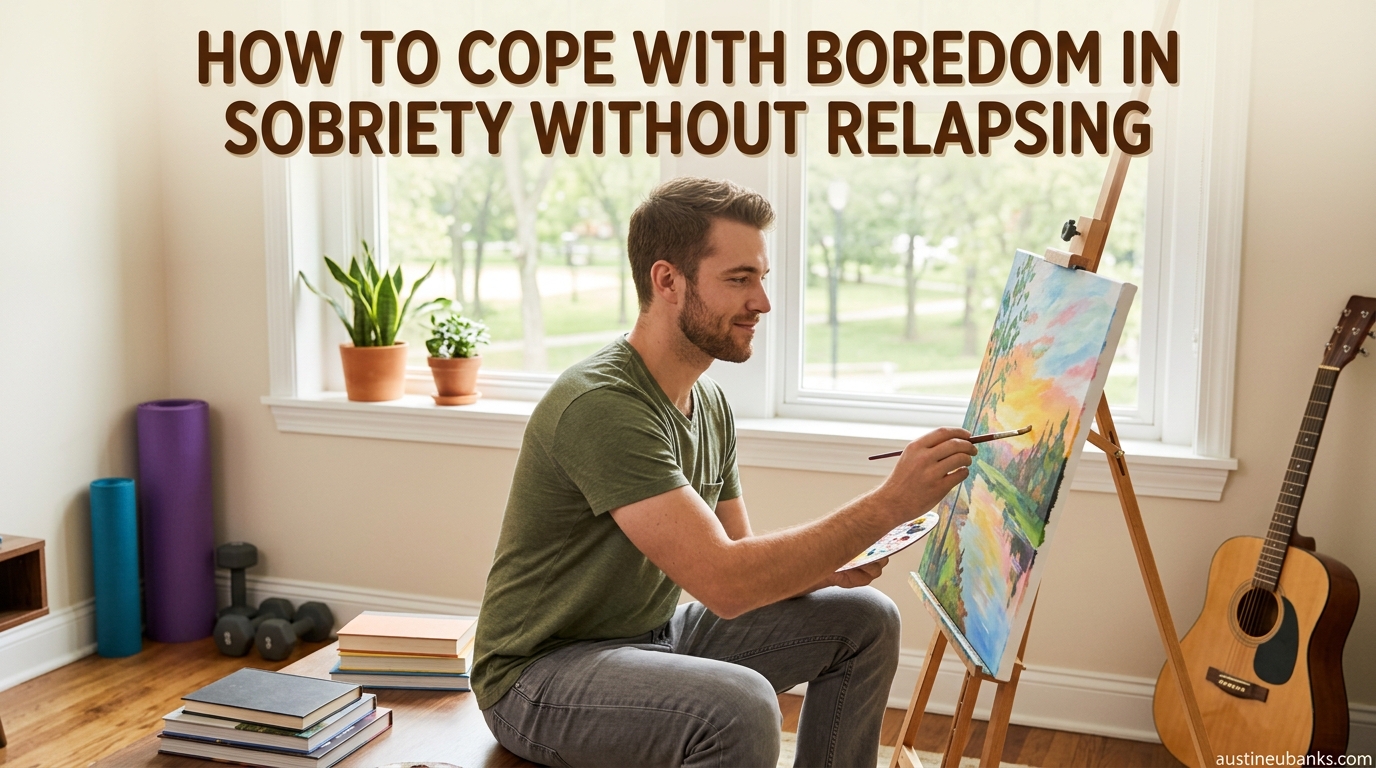
If you are sitting there thinking that sobriety feels flat, empty, or just plain boring, you are not broken. You are not doing recovery wrong. And you are definitely not alone. Learning how to cope with boredom in sobriety without relapsing is one of the hardest skills to build in early recovery, and almost everyone goes through it.
I have talked with countless people in recovery who describe the exact same feeling. Time crawls. Nothing feels exciting. The things that used to give you a rush, whether that was drinking, using, or the lifestyle around it, are gone. And what is left feels like a big, quiet void.
Here is what I want you to know right from the start: boredom in recovery is real, it has a biological cause, and it does not last forever. Your brain is healing. The dullness you feel is a temporary phase, not a permanent sentence. In this guide, I will walk you through exactly why boredom happens, why it is dangerous if left unmanaged, and ten practical strategies you can start using today to protect your sobriety.
This is not about toxic positivity or pretending everything is great. This is about giving you real tools to fill your time, rewire your brain’s reward system, and build a sober life that actually feels worth living. If you take one thing away from this article, let it be this: boredom is a relapse trigger you can beat with the right plan.
Table of Contents
Quick Action Steps: What to Do Right Now
If you are bored right now and feeling vulnerable, here are seven things you can do in the next five minutes to break the cycle.
- Call someone in your support network. A sponsor, a recovery friend, or a family member. Even a two-minute call disrupts the spiral.
- Change your physical location. Move to a different room, step outside, or take a walk around the block. Physical movement resets your mental state.
- Do something with your hands. Cook a meal, clean a room, draw, build something. Engaged hands quiet an idle mind.
- Get your heart rate up. Ten push-ups, a brisk walk, or a quick stretch session releases natural endorphins that mimic the feel-good chemicals your brain is craving.
- Write down what you are feeling. Grab a pen and jot down the emotion. Naming the feeling reduces its power over you.
- Go to a meeting. In person or online. There is likely one starting within the hour somewhere near you or on Zoom.
- Play the tape forward. Think through what would actually happen if you relapsed right now. Picture the consequences honestly. Most people find the fantasy loses its appeal fast.
These are not permanent fixes. They are circuit breakers. Use them to get through the next hour, then come back and read the deeper strategies below.
Why Boredom Happens in Recovery
Boredom in sobriety is not a character flaw. It is a biological event happening inside your brain.
When you were using alcohol or drugs, those substances artificially flooded your brain’s reward system with massive amounts of dopamine. Dopamine is the neurotransmitter responsible for motivation, pleasure, and reward. Substances hijack this system, releasing two to ten times the amount of dopamine that natural activities produce. Your brain adapted to that flood by reducing its own dopamine production and dialing down its receptor sensitivity.
When you stop using, the artificial dopamine surge is gone. But your brain’s natural dopamine system is still suppressed. Everyday activities like reading a book, having a conversation, or watching a movie produce a fraction of the dopamine your brain is used to. So those activities feel flat, dull, or pointless. This is the neuroscience behind what people in recovery call “the pink cloud fading” or simply feeling bored out of their minds.
This state has a clinical name: anhedonia. It is the reduced ability to feel pleasure, and it is extremely common in early recovery. Research published by the National Institute on Drug Abuse shows that dopamine receptor levels can take anywhere from a few months to over a year to return to normal, depending on the substance, duration of use, and individual factors.
How Long Does Recovery Boredom Last?
This is the question I hear more than any other. People want a timeline. Here is what the experience of long-term recovering individuals and clinical research suggest.
In the first 30 to 90 days, boredom is typically at its peak. Your brain is in active recalibration. Many people describe this period as feeling like time has slowed to a crawl. One person on Reddit’s r/stopdrinking community put it this way: “When I first stopped drinking, time went so slow. Too slow. I spent my days waiting for bedtime just so I could kill hours not being awake.”
Between months three and six, most people start noticing small improvements. A walk might actually feel refreshing. A conversation might feel genuinely interesting. These moments are fleeting at first, but they grow.
By the one-year mark, many people report that the persistent boredom has largely faded. A member of r/REDDITORSINRECOVERY shared: “The first two years of my recovery I struggled with boredom a lot. Literally, I don’t think I’ve been bored once in the last 7 years though.”
The key insight here is that boredom does not just passively disappear. The people who recover fastest are the ones who actively build new habits, try new activities, and engage their brains in novel ways. Passive waiting makes it worse. Active engagement makes it better.
Boredom vs Anhedonia: What Is the Difference?
This is a distinction that trips up a lot of people in recovery, so let me clear it up.
Boredom is a feeling of restlessness or lack of interest. You want to be doing something, but nothing appeals to you in the moment. It is frustrating but situational. A good activity, a change of scenery, or a conversation can break through it.
Anhedonia is a clinical symptom where the ability to feel pleasure is neurologically diminished. Even activities you used to love feel emotionally flat. It is not about being bored with your current options. It is about your brain being temporarily unable to register enjoyment.
Anhedonia is common in early recovery and usually resolves as the brain heals. But if it persists for months and is accompanied by persistent low mood, sleep disruption, or hopelessness, it may be a sign of depression that warrants professional attention. More on that distinction later.
The Link Between Boredom and Relapse
Boredom is not just uncomfortable. It is one of the most frequently cited relapse triggers in addiction recovery research. A landmark study published in the Journal of Substance Abuse Treatment found that boredom, along with loneliness and anger, ranks among the top three emotional states preceding relapse episodes.
Here is the danger cycle. Boredom creates a sense of emptiness. That emptiness turns into restlessness. Restlessness turns into cravings, because your brain remembers that substances filled that void instantly. The craving feels urgent. And if you do not have a coping plan ready, relapse can happen fast.
What makes boredom especially dangerous is that it is a slow-burn trigger. It does not hit you like an intense emotional crisis. It creeps in during quiet moments and gradually wears down your resolve.
High-Risk Times for Boredom-Driven Relapse
Certain windows of time are more dangerous than others. Based on what people in recovery consistently report, here are the highest-risk periods:
- Friday and Saturday nights. The cultural association between weekends and drinking or using is deeply ingrained. Empty weekend evenings feel excruciating when you are newly sober.
- The after-work window (5 PM to 8 PM). This was often drinking or using time. Without that ritual, the hours feel hollow.
- Holidays and celebrations. Social events where substances are present amplify both boredom and social pressure.
- Lazy Sunday afternoons. The combination of unstructured time and the dread of Monday creates a vulnerability window.
- Periods of transition. Job changes, breakups, moving, or any disruption to routine leaves time gaps that boredom rushes to fill.
Knowing your danger zones lets you prepare. If Friday night is your weak point, do not wait until Friday at 7 PM to figure out a plan. Schedule something in advance.
How to Cope with Boredom in Sobriety Without Relapsing: 10 Proven Strategies
These strategies are drawn from clinical research, peer experiences in recovery communities, and the practices that consistently work for people who maintain long-term sobriety. None of them require money. All of them require action.
1. Build a Structured Daily Routine
Structure is the single most effective weapon against boredom. When your day has a framework, there is less empty space for restlessness to creep in.
Write out a simple hourly schedule for your typical day. Include wake-up time, meals, work, exercise, recovery activities (meetings, journaling, reading), social time, and bedtime. Leave buffer time, but do not leave large unstructured gaps, especially during your high-risk hours.
A recovery routine does not need to be rigid. It needs to be consistent enough that your brain knows what comes next. Predictability reduces anxiety, and a filled schedule leaves less room for the “what do I do now” spiral that leads to cravings.
2. Use Urge Surfing to Ride Out Cravings
Urge surfing is a technique from mindfulness-based relapse prevention. Instead of fighting a craving or giving in to it, you observe it like a wave. Cravings build, peak, and then subside, usually within 20 to 30 minutes.
When boredom triggers a craving, do not try to suppress it. Notice it. Name it. Tell yourself: “I am having an urge. It is strong right now. It will pass.” Breathe through it. Distract yourself with something engaging. Most people find that the urge weakens significantly if they can just ride out the peak.
This technique gets easier with practice. Every craving you surf through without relapsing strengthens your confidence and your neural pathways for self-regulation.
3. Get Moving: Physical Exercise as Natural Reward
Exercise is one of the fastest ways to boost your brain’s natural dopamine and endorphin production. It directly counteracts the reward system deficit that causes boredom in recovery.
You do not need to run a marathon. A 30-minute walk, a bodyweight workout in your living room, a bike ride, or a swim all work. The key is consistency. Research from the National Institutes of Health shows that regular aerobic exercise can accelerate dopamine receptor recovery in people recovering from substance use disorders.
Start small if you need to. Even ten minutes of movement changes your brain chemistry. The goal is to make it a daily habit, not an occasional event.
4. Learn Something Completely New
Novelty is the antidote to boredom. When you learn a new skill, your brain forms new neural pathways and releases dopamine as a natural reward for discovery.
Pick something you have zero experience with. A new language, an instrument, coding, woodworking, cooking a specific cuisine, photography, gardening. The learning curve itself is engaging. You cannot be bored when you are struggling to figure out something genuinely challenging.
Free resources make this accessible to anyone. YouTube tutorials, library apps like Libby, free courses from major universities on Coursera or edX, and community workshops all offer structured learning without cost.
5. Build a Sober Support Network
One of the biggest contributors to boredom in recovery is the loss of your old social circle. If your previous friendships were built around drinking or using, getting sober often means those connections fade. The time you spent with those people becomes empty time.
Building a new social network takes effort, but it is one of the most powerful protective factors against relapse. Attend AA or NA meetings regularly. Join online recovery communities. Try sober meetups through apps like Meetup or In The Rooms. Volunteer alongside other people.
You do not need dozens of new friends. Even two or three people who understand what you are going through and can text or call when things get tough makes a massive difference.
6. Practice Mindfulness and Meditation
Mindfulness is not about emptying your mind or achieving zen. It is about learning to sit with discomfort without reacting to it. That is an incredibly useful skill when boredom hits.
Start with five minutes a day. Sit quietly, focus on your breathing, and when your mind wanders, gently bring it back. Apps like Insight Timer, Headspace, and Calm offer free guided meditations specifically designed for recovery.
Over time, mindfulness helps you notice the early signs of boredom before it spirals into a craving. You learn to observe the restlessness without automatically reaching for a substance to fix it.
7. Track Your Boredom Patterns
Knowledge is power. If you know exactly when your boredom hits hardest, you can preempt it with planned activities.
Keep a simple log for one week. Note the time of day, what you were doing, what you were feeling, and how strong the urge was on a scale of one to ten. Most people discover clear patterns. Maybe it is always between 5 PM and 7 PM. Maybe it is worst on Sunday mornings. Maybe it spikes when you are alone in the house.
Once you see the pattern, you can schedule a specific activity into that exact time slot. You are not guessing anymore. You are planning strategically.
8. Give Back Through Volunteering
Volunteering shifts your focus outward. When you are helping someone else, your own boredom loses its grip. It also builds self-worth, connection, and purpose, three things that substances never truly provided.
Animal shelters, food banks, community gardens, youth programs, and recovery organizations all need volunteers. Even a few hours a week fills time meaningfully and connects you with people who share your values.
Many people in recovery say that volunteering was the turning point where sobriety stopped feeling like a sacrifice and started feeling like a life they actually wanted.
9. Replace the Ritual, Not Just the Substance
Drinking and using were not just chemical experiences. They were rituals. Maybe it was the act of opening a bottle after work, the routine of meeting friends at a bar, or the ritual of rolling and lighting. When you remove the substance, you also remove the ritual, and that leaves a behavioral void.
Replace it intentionally. If 6 PM was your drinking time, make 6 PM your tea-and-a-book time. If Friday night was party night, make Friday night your movie night with a specific friend. Build new rituals around new activities until they feel as automatic as the old ones did.
This takes time. A new habit takes an average of 66 days to feel automatic. Stick with it through the awkward phase.
10. Practice Gratitude Daily
It sounds cliché, but gratitude is one of the most researched tools in psychology for shifting brain chemistry. The practice of actively identifying things you are grateful for trains your brain to notice positive stimuli instead of fixating on what is missing.
Write down three specific things each day. Not generic items like “my health” but specific moments: “the coffee tasted especially good this morning” or “a stranger held the door for me.” Specificity matters because it forces your brain to actively scan for positives.
Over weeks and months, this practice literally rewires your neural pathways toward a more positive baseline. It is one of the simplest and most effective things you can do for long-term recovery.
Sober Activity Ideas by Category
One of the biggest content gaps I found when researching this topic is that most resources give vague advice like “find a hobby.” That is not helpful when you are staring at a wall feeling bored. So here is a concrete, categorized list of activities you can turn to.
Free and Indoor
- Learn a new language with Duolingo or free YouTube courses
- Start a journal or creative writing practice
- Try origami, drawing, or adult coloring books
- Read fiction from a genre you have never explored
- Do a free online yoga or fitness class
- Reorganize a room or declutter your space
- Call or video chat with someone you have not spoken to in a while
- Listen to recovery podcasts while cooking
- Play strategy games like chess or Sudoku
Outdoor and Physical
- Go for a hike on a trail you have never tried
- Ride a bike through a new neighborhood
- Start a vegetable or herb garden
- Try geocaching, a free real-world treasure hunting game
- Take up running with a Couch to 5K program
- Go swimming at a local pool or beach
- Photograph nature in your area
- Explore a nearby town or district on foot
Social and Community
- Join a local book club or start one
- Attend a free community event, concert, or farmers market
- Volunteer at an animal shelter or food pantry
- Join a recreational sports league
- Host a game night or potluck with sober friends
- Take a group class at a community center
- Go to an open mic night or community theater performance
Creative and Skill-Building
- Learn to cook a specific cuisine, like Thai or Italian
- Take up knitting, crochet, or embroidery
- Start learning an instrument with free YouTube tutorials
- Try woodworking or home improvement projects
- Take a free coding course on freeCodeCamp
- Start a blog or podcast about your recovery experience
- Learn photography with your phone camera
- Try painting with acrylics or watercolors
Print this list. Tape it to your fridge. When boredom hits and your brain says “there is nothing to do,” you will have a menu of options ready to go.
What to Avoid When You Are Bored in Recovery
Not all distractions are created equal. Some activities actually make boredom worse and increase your relapse risk. Here is what to steer clear of when you are feeling vulnerable.
Avoid passive screen time as your primary coping method. Scrolling social media, binge-watching shows, or mindlessly browsing the internet numbs you temporarily but leaves you feeling emptier afterward. Many people in recovery communities report that screen time does not actually relieve boredom, it just postpones it while letting the mind keep wandering toward using.
Avoid old people and old places. If certain bars, neighborhoods, or people are associated with your substance use, they are off-limits during your most vulnerable hours. Even if you feel strong, the environmental cues can trigger cravings at a subconscious level.
Avoid isolation. Boredom thrives in solitude. If you catch yourself alone at home with nothing to do during a high-risk time, get out. Go to a coffee shop. Head to a meeting. Call someone. Do not sit alone with a restless mind.
Avoid HALT triggers. HALT stands for Hungry, Angry, Lonely, Tired. These four states amplify boredom and weaken your resistance to cravings. If you are feeling bored, check in: are you actually hungry? Sleep-deprived? Feeling lonely? Address the underlying need first.
Avoid impulsive spending. One thing that surprised me in the research is how often boredom-driven relapse starts with other impulsive behaviors. Overspending, risky decisions, and thrill-seeking are all replacement behaviors that can spiral. If you suddenly feel the urge to buy something expensive or make a drastic life change out of boredom, slow down and talk to someone first.
Boredom vs Depression vs Anhedonia: Knowing the Difference
This distinction matters because it changes what you should do about it.
Boredom is situational. You feel restless and unengaged, but you can identify activities that might interest you. A change of activity, environment, or social connection usually breaks through it. Boredom comes and goes.
Anhedonia is neurological. It is the reduced ability to feel pleasure from activities that used to bring joy. Nothing sounds appealing, not because you are bored with your options, but because your brain’s reward system is temporarily suppressed. Anhedonia is common in early recovery and usually improves over weeks to months as the brain heals.
Depression is persistent. If you feel empty, hopeless, or unable to enjoy anything for more than two weeks straight, and these feelings do not improve with activity, connection, or routine, you may be dealing with depression. Other warning signs include sleep disruption, appetite changes, difficulty concentrating, and thoughts of self-harm.
If you suspect depression, seek professional help. Call the SAMHSA National Helpline at 1-800-662-4357 for a free, confidential referral. Co-occurring depression and substance use disorder are common and treatable.
Track Your Boredom: A Simple Framework
I mentioned boredom tracking as one of the ten strategies. Here is a simple template you can use starting today. Grab a notebook or create a note on your phone.
Create four columns: Time, Trigger/Situation, Boredom Level (1-10), and What I Did.
Each time you feel bored, log it. After one week, review your entries. You will likely see patterns that were invisible before. Maybe your boredom peaks between 5 PM and 8 PM every day. Maybe it spikes when you are alone at home. Maybe Sundays are your worst day.
Once you have identified the pattern, you can build your defense. If 5 PM to 8 PM is your danger zone, that becomes your scheduled exercise time, your meeting time, or your social time. You are no longer reacting to boredom. You are preventing it.
Here is an example entry to show you how simple this is:
- Time: 6:15 PM, Wednesday
- Trigger/Situation: Alone at home after work, nothing planned
- Boredom Level: 7/10
- What I Did: Called my sponsor, went for a 20-minute walk, then started cooking dinner
After the walk and call, boredom dropped from a 7 to a 3. That is useful data. It tells you that physical activity and connection are your most effective tools.
When to Seek Professional Help
Most boredom in early recovery is normal and manageable with the strategies in this guide. But there are times when what looks like boredom is actually something that needs professional attention.
Seek help from a therapist, counselor, or addiction specialist if you experience any of the following:
- Boredom that does not respond to any activity or strategy for more than two weeks
- Increasingly frequent or intense cravings that you struggle to manage
- Feelings of hopelessness, worthlessness, or thoughts of self-harm
- Persistent sleep problems (insomnia or oversleeping)
- Withdrawal from all social contact, including meetings and support groups
- A growing sense that relapse is inevitable
These are not signs of weakness. They are clinical indicators that you may need additional support, whether that means therapy, medication, a higher level of care, or treatment for a co-occurring mental health condition. The SAMHSA National Helpline at 1-800-662-4357 is available 24/7, 365 days a year for free, confidential treatment referrals.
FAQs
How to fight boredom in sobriety?
Fight boredom in sobriety by building a structured daily routine, exercising regularly, learning new skills, connecting with a sober support network, practicing mindfulness, and using urge surfing when cravings hit. The key is active engagement, not passive distraction. Schedule specific activities during your highest-risk boredom hours, especially evenings and weekends.
Why am I so bored when I’m sober?
You feel bored because substances artificially flooded your brain with dopamine, and your brain reduced its natural dopamine production in response. When you stop using, everyday activities do not produce enough dopamine to feel rewarding yet. This creates the experience of boredom or anhedonia. As your brain’s reward system recalibrates over weeks to months, normal activities begin to feel pleasurable again.
What do sober people do when bored?
Sober people fill boredom with engaging activities: exercise, learning new skills, attending meetings, volunteering, cooking, reading, creative hobbies, outdoor adventures, and social connection with other sober friends. The most effective activities require active participation rather than passive consumption like scrolling or binge-watching.
How long does boredom last in recovery?
Boredom is typically most intense in the first 30 to 90 days of sobriety as your brain adjusts. Most people notice meaningful improvement between months three and six. By the one-year mark, many report that persistent boredom has largely faded. Active engagement with new habits, activities, and connections speeds up this process significantly.
Is boredom a sign of impending relapse?
Boredom is one of the most common relapse triggers, but it is not automatically a sign that relapse is imminent. It becomes dangerous when left unmanaged, because it creates restlessness that can lead to cravings. The key is recognizing boredom early and using coping strategies before it escalates into an urge to use.
What is anhedonia in recovery?
Anhedonia is the reduced ability to feel pleasure from activities that used to be enjoyable. It is a common neurological symptom in early recovery caused by the brain’s suppressed dopamine system after substance use stops. Unlike regular boredom, anhedonia means your brain cannot fully register enjoyment yet. It typically improves as the brain heals over several months.
How do you build a routine in early recovery?
Start by writing out an hourly schedule for your typical day. Include wake-up time, meals, work, exercise, recovery activities like meetings or journaling, social time, and a consistent bedtime. Pay special attention to your highest-risk hours, usually evenings and weekends. Fill those gaps with planned activities. Keep the routine flexible but consistent enough that your brain knows what comes next.
What is rule 62 in sobriety?
Rule 62 is a common saying in Alcoholics Anonymous that means ‘don’t take yourself too damn seriously.’ It reminds people in recovery that excessive self-serenity, rigidity, and overthinking can be counterproductive. Laughter, lightness, and the ability to find humor in everyday life are important tools for maintaining perspective and reducing the intensity of boredom and stress in recovery.
You Can Get Through This
Boredom in sobriety is real. It is biological. And it is temporary. Your brain is healing from a massive chemical disruption, and that healing takes time. The strategies in this guide are not quick fixes. They are tools that, used consistently, will help you fill your time, rewire your reward system, and build a life that feels genuinely worth staying sober for.
If there is one thing I want you to take away from learning how to cope with boredom in sobriety without relapsing, it is this: do not wait for boredom to pass on its own. Take action. Build your routine. Move your body. Connect with people. Try something new. Track your patterns. And when the cravings hit, ride the wave knowing it will pass.
You are not boring. Your life is not boring. Your brain is just recalibrating. Give it time, give it engagement, and give yourself credit for doing the hard work of recovery. Every day you stay sober through the boredom is a day your brain gets a little closer to feeling like itself again.