
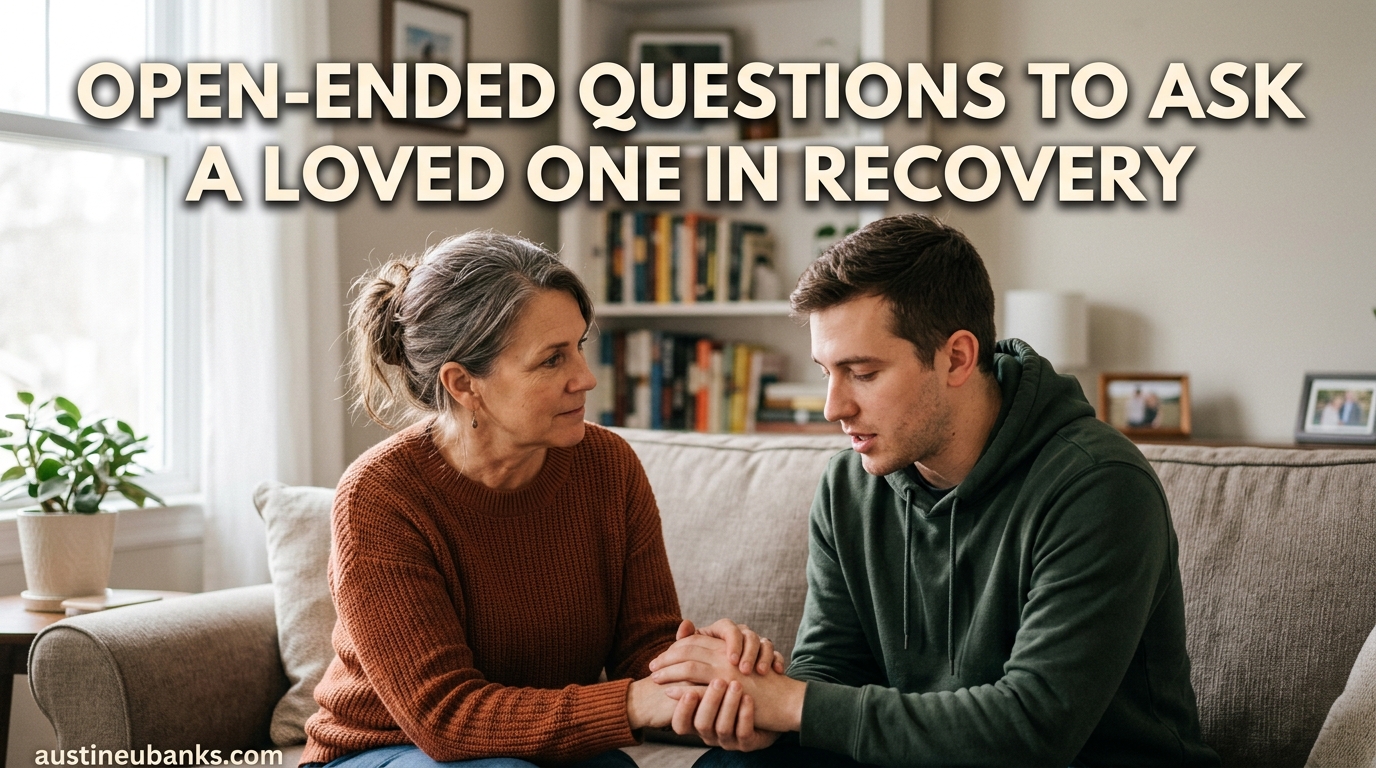
When someone you love is in recovery from addiction, finding the right words can feel impossible. You want to show support without crossing a line. You want to check in without sounding like you are interrogating them. Open-ended questions to ask a loved one in recovery are the bridge between silence and genuine connection. They invite honest dialogue instead of one-word answers. They give your loved one the space to share on their own terms.
I have spent years studying how communication shapes the recovery journey. What I have learned, both from research and from real families navigating substance use recovery, is that the questions you ask matter far less than how you ask them. Still, having the right questions ready can make all the difference.
This guide gives you more than 30 open-ended questions organized by category, recovery stage, and relationship type. You will also learn what to avoid saying, how to create a safe space for conversation, and what to do when the conversation does not go the way you expected.
Table of Contents
What Are Open-Ended Questions (and Why They Work in Recovery)
Open-ended questions are questions that cannot be answered with a simple yes or no. They start with words like “what,” “how,” “tell me about,” or “what was that like.” Instead of boxing someone into a corner, they open a door and let the person walk through it at their own pace.
In the context of addiction recovery, open-ended questions serve a specific purpose. They help your loved one process emotions, reflect on progress, and feel heard without feeling judged. A question like “Are you staying sober?” demands a yes or no and carries an undercurrent of doubt. A question like “What has been helping you stay on track lately?” invites reflection and signals genuine curiosity.
Closed-ended questions have their place. They work well for quick check-ins or confirming logistics. But when it comes to meaningful conversations about the recovery journey, open-ended questions are the tool that builds trust.
Here is a side-by-side comparison to show the difference:
- Closed: “Did you go to your meeting today?” / Open: “What stood out to you in today’s meeting?”
- Closed: “Are you feeling okay?” / Open: “How have you been feeling this week compared to last?”
- Closed: “Do you need help?” / Open: “What kind of support would feel most helpful right now?”
- Closed: “Are you staying clean?” / Open: “What has been the most rewarding part of your recovery so far?”
The open versions communicate something powerful: I see you as a whole person, not just someone I am monitoring. People in recovery consistently report that this distinction matters more than most loved ones realize.
7 Go-To Questions You Can Use Today
If you only take away a handful of questions from this guide, make it these. They work across situations, recovery stages, and relationship types. Each one is designed to open a conversation without pressure.
- “How are you feeling about things right now?”
- “What has been going well for you lately?”
- “Is there anything you need from me that I am not already doing?”
- “What has been on your mind that you haven’t had a chance to talk about?”
- “What is something you are proud of from this past week?”
- “How can I best support you right now?”
- “What is one thing you are looking forward to?”
These questions work because they are simple, non-threatening, and genuinely open-ended. They do not center on substances or sobriety. Instead, they treat your loved one as a person first, which is exactly what people in recovery say they need most.
Open-Ended Questions to Ask a Loved One in Recovery: Full Categorized List
Below are over 30 open-ended questions to ask a loved one in recovery, organized by theme. You do not need to use all of them. Pick one or two from a category that fits the moment, and let the conversation unfold naturally.
Questions About Recovery Milestones and Progress
Recovery milestones deserve recognition. But the way you acknowledge them matters. These questions help your loved one reflect on how far they have come without making the conversation feel like a performance review.
- “What positive changes have you noticed in yourself since starting recovery?”
- “What has been one of your biggest successes so far?”
- “How has your perspective on recovery changed since you first started?”
- “What is something you can do now that felt impossible six months ago?”
- “What moment from your recovery journey are you most proud of?”
- “How do you feel about the progress you have made compared to where you started?”
Questions About Daily Life and Routines
People in recovery often appreciate when loved ones take interest in their daily life rather than fixating solely on recovery milestones. These questions show you care about the whole person, not just their sobriety status.
- “What does a typical day look like for you right now?”
- “What part of your daily routine brings you the most peace?”
- “How do you like to spend your free time these days?”
- “What is something new you have tried or discovered recently?”
- “How are you sleeping and eating lately?”
- “What does your self-care routine look like right now?”
Questions About Feelings and Emotions
Emotional processing is a core part of healing. These questions invite your loved one to talk about what they are feeling without requiring them to justify or defend those emotions. The key is to listen without rushing to fix anything.
- “How have you been feeling emotionally this week?”
- “What emotions have been coming up for you lately?”
- “When you feel stressed or overwhelmed, what helps you get through it?”
- “What has been the hardest emotional challenge in recovery?”
- “Are there feelings you are working through that you haven’t shared yet?”
Questions About the Future and Goals
People in recovery frequently mention that they appreciate questions about their future goals far more than questions about their past mistakes. Forward-looking questions communicate hope and belief in their potential.
- “What are you looking forward to in the coming months?”
- “What goals are you working toward right now?”
- “Where do you see yourself in a year, and how does that feel?”
- “What is something you have always wanted to do that recovery is making possible?”
- “What kind of life are you building for yourself?”
- “What dream feels more achievable now than it did before recovery?”
Questions About How You Can Help
One of the most powerful things you can do is ask how your loved one wants to be supported. People in recovery are the experts on their own needs. These questions put them in the driver’s seat.
- “What does support look like to you right now?”
- “Is there anything I do that unintentionally makes things harder for you?”
- “How can I check in with you in a way that feels supportive rather than intrusive?”
- “What is the best way for me to show up for you when you are having a tough day?”
- “Are there topics you would rather I not bring up, and if so, how will I know?”
- “What is one thing I could do differently that would make a real difference for you?”
Questions About Gratitude and Positives
Gratitude practices are common in recovery programs for good reason. These questions help your loved one notice and name what is going well, which reinforces the motivation to keep going.
- “What are you most grateful for right now?”
- “Who in your life has been a meaningful source of support?”
- “What is something small that brought you joy this week?”
- “What is something about your life today that you would not trade for anything?”
Questions About Challenges and Struggles
Recovery is not a straight line. These questions acknowledge that struggle is part of the process and give your loved one permission to be honest about the hard parts. Approach these with extra gentleness and be prepared for anything.
- “What has been the most challenging part of recovery lately?”
- “Are there situations or triggers you are navigating that I should be aware of?”
- “What coping strategies have been working best for you when things get tough?”
- “When things feel difficult, what helps you stay grounded?”
- “Is there anything you are struggling with that you haven’t talked about yet?”
Questions About Self-Reflection and Growth
Self-reflection is a skill that strengthens over time in recovery. These questions encourage your loved one to explore how they are changing and what they are learning about themselves. They work best in quiet, unhurried moments.
- “What is something you have learned about yourself through this process?”
- “How has your relationship with yourself changed since entering recovery?”
- “What old patterns are you working to change, and how is that going?”
- “What does healing mean to you personally?”
- “What advice would you give to someone just starting their recovery journey?”
Questions for Different Stages of Recovery
Recovery is not a single experience. What someone needs in their first 30 days is very different from what they need after a year of sobriety. Adapting your questions to where your loved one is in their journey shows that you are paying attention. It also prevents you from asking things that feel overwhelming or irrelevant.
Few guides address this distinction, but families who have been through it consistently say it makes a real difference in how conversations land.
Early Recovery (First 90 Days)
In early recovery, your loved one is likely dealing with intense emotions, physical adjustment, and a steep learning curve. The best questions here are simple, low-pressure, and focused on the present moment. Avoid anything that asks them to plan too far ahead or reflect too deeply before they are ready.
- “How are you feeling today?”
- “What is helping you get through the day right now?”
- “What has been the biggest adjustment so far?”
- “Is there anything making today harder than it needs to be?”
- “What would make this week a little easier for you?”
- “How are you taking care of yourself day to day?”
People in early recovery often describe feeling overwhelmed by well-meaning but constant questions about their progress. Keep your check-ins brief and let them lead the depth of the conversation.
Established Recovery (6 Months and Beyond)
Once your loved one has built some stability, you can ask deeper questions about growth, relationships, and long-term vision. They have more capacity for reflection and are more likely to welcome conversations about the bigger picture.
- “How has your recovery changed the way you see yourself?”
- “What relationships in your life feel different now?”
- “What are you working toward that excites you?”
- “What have you learned about what you need to stay healthy?”
- “How do you want to use what you have learned to help others?”
- “What does a fulfilling life look like to you now?”
These questions acknowledge that recovery is about more than avoiding substances. It is about building a life that feels worth staying sober for.
Questions for Specific Relationships
Every relationship has its own dynamic, and the way you talk about recovery should reflect that. A spouse needs different questions than an adult child. A sibling conversation sounds different from a check-in between friends. Here are tailored questions for each type of relationship.
Questions for a Spouse or Partner
When your partner is in recovery, the relationship itself is part of the healing process. Trust may need rebuilding. Intimacy may look different. These questions address the relationship directly without being confrontational.
- “How can I support our relationship while you focus on your recovery?”
- “What do you need from me as a partner that might be different from what you need from friends?”
- “How are you feeling about us and where we are headed?”
- “What is one thing we could do together that would feel good for both of us?”
- “How can we rebuild trust in a way that feels right for you?”
Questions for Your Adult Child
Parenting an adult child in recovery means balancing your instinct to protect with their need for autonomy. These questions respect their independence while showing that you are still there.
- “What is working well for you in your recovery right now?”
- “How can I support you without overstepping?”
- “What is something you wish I understood about what you are going through?”
- “What boundaries would help you feel more comfortable when we talk?”
Questions for a Sibling
Sibling relationships often carry a unique blend of closeness, rivalry, and shared history. These questions lean into that bond while creating room for honesty.
- “How has recovery changed the way you see our family?”
- “What is something you want me to know that you haven’t said yet?”
- “How can I be a better sibling to you through this?”
- “What do you need from me that is different from what you need from our parents?”
Questions for a Friend
Friends play a vital role in recovery support. These questions are casual enough for everyday friendship but open the door to deeper conversation when the moment is right.
- “How are you really doing?”
- “What has been the best part of your week?”
- “Is there anything you need right now, even if it is just someone to hang out with?”
- “What can we do together that feels good and supportive?”
Questions to Avoid (What NOT to Ask)
Knowing what not to say is just as important as knowing what to ask. Some questions, even when well-intentioned, can trigger shame, defensiveness, or emotional distress. Based on feedback from people in recovery and their family members, here are questions to avoid and what to ask instead.
Avoid: “How could you let this happen?”
This question carries blame and assumes a choice was made to develop addiction. Addiction is a complex disease, not a moral failing.
Ask instead: “What has your recovery process been like so far?”
Avoid: “Why can’t you just stop?”
This oversimplifies addiction and dismisses the real difficulty of recovery. It makes your loved one feel misunderstood.
Ask instead: “What has been the hardest part of making changes?”
Avoid: “Do you still hang out with those people?”
This sounds like an accusation and assumes poor judgment. It puts your loved one on the defensive immediately.
Ask instead: “How are your social connections feeling these days?”
Avoid: “How much money did you spend on drugs?”
Questions about specifics of past substance use can be triggering and serve no constructive purpose in a supportive conversation. People in recovery consistently report that being asked about details of their addiction causes distress.
Ask instead: “What are you doing differently with your life now?”
Avoid: “Are you sure you are really sober?”
This question communicates distrust and can undermine the progress your loved one has made. If you have concerns, address them through honest dialogue, not pointed questions.
Ask instead: “How are you feeling about your recovery right now?”
Avoid: “Don’t you think you should be further along by now?”
Recovery has no timeline. Comparing your loved one’s progress to expectations or to other people is damaging and demoralizing.
Ask instead: “What progress feels meaningful to you?”
The pattern is consistent. Questions that judge, accuse, or demand justification will shut down conversation. Questions that express genuine curiosity and care will open it up.
How to Create a Safe Space for Honest Conversation
Even the best open-ended questions fall flat if the environment feels unsafe. Creating a safe space is not about grand gestures. It is about small, consistent signals that tell your loved one they can be honest without consequences.
Choose the right time. Avoid starting conversations about recovery when either of you is tired, stressed, or rushing. A calm, unhurried moment makes honest sharing much more likely.
Pick the right setting. Some people open up more on a walk. Others prefer sitting side by side rather than face to face. Pay attention to where your loved one seems most relaxed and choose that setting when you want to talk.
Practice active listening. This means giving your full attention, maintaining eye contact, and resisting the urge to interrupt or jump in with advice. When your loved one finishes speaking, try reflecting back what you heard before responding. A simple “It sounds like that was really overwhelming” shows that you are truly listening.
Stay non-judgmental. If your loved one shares something difficult, your reaction sets the tone for future honesty. A startled or disappointed response can close the door. Take a breath, thank them for trusting you, and respond with compassion.
Let silence happen. Pauses are natural in meaningful conversations. Resist the urge to fill every gap. Sometimes your loved one needs a moment to gather their thoughts before answering.
What to Do When They Shut Down or Get Angry
Even with perfect timing and the gentlest approach, conversations about recovery can hit walls. Your loved one might go silent, change the subject, or react with anger. This is one of the most common pain points families describe, and it is completely normal.
When your loved one shuts down, do not push. Silence often means they are overwhelmed, not that they do not care. Try saying, “You don’t have to answer right now. I just want you to know I am here whenever you are ready.” Then follow through by being available without pressuring them.
If your loved one reacts with anger, stay calm. Anger in recovery can stem from shame, feeling exposed, or feeling misunderstood. Do not argue or defend yourself in that moment. Acknowledge their feelings, back off, and revisit the conversation later when emotions have cooled.
If deflection becomes a pattern, name it gently. You might say, “I notice that whenever I bring up recovery, the conversation shifts. I am not trying to make you uncomfortable. I just want to understand what you need from me.” This opens the door without forcing it.
Remember that your loved one’s reaction is not always about you. Recovery stirs up intense emotions, and sometimes you are simply in the line of fire. Taking it personally will only make future conversations harder for both of you.
Taking Care of Yourself While Supporting Someone in Recovery
Supporting a loved one through addiction recovery can be emotionally exhausting. If you burn out, you cannot show up the way you want to. Self-care for the supporter is not selfish. It is a necessary part of being able to provide consistent, patient support.
Consider connecting with your own support system. Organizations like Al-Anon and SMART Recovery Family and Friends are specifically designed for people who love someone in recovery. Talking with others who understand what you are going through can reduce isolation and give you practical tools.
Set boundaries that protect your own mental health. You can be supportive without being available 24 hours a day. You can show compassion without absorbing every crisis. Healthy boundaries are not walls. They are the structure that makes sustainable support possible.
Give yourself permission to feel your own emotions. Anger, grief, fear, and exhaustion are all normal responses to loving someone through addiction. You do not have to be stoic to be supportive.
Frequently Asked Questions
What are open ended questions for recovery?
Open-ended questions for recovery are questions that cannot be answered with a simple yes or no. They invite the person in recovery to share their thoughts, feelings, and experiences in their own words. Examples include “What has been most helpful in your recovery so far?” and “How have you been feeling about your progress?” These questions encourage honest dialogue, emotional processing, and deeper connection.
What are good questions to ask someone in recovery?
Good questions to ask someone in recovery include: “What positive changes have you noticed since starting recovery?”, “How can I best support you right now?”, “What has been one of your biggest successes?”, “What coping strategies have worked best for you?”, and “What do you find most challenging about recovery?” The best questions show genuine curiosity, avoid judgment, and give your loved one space to share honestly at their own pace.
What are the 5 P’s of recovery?
The 5 P’s of recovery are Purpose, Practice, Perseverance, Prayer, and Praise. This framework provides a structured approach to maintaining long-term recovery by helping individuals set meaningful goals, build consistent healthy habits, persist through challenges, connect with spiritual or reflective practices, and celebrate progress along the way. The 5 P’s can guide the types of questions you ask your loved one.
What are recovery supporting questions?
Recovery supporting questions are open-ended inquiries that help someone in recovery reflect on their progress, identify challenges, and feel seen and heard. Examples include “What did you do today to strengthen your recovery?”, “What is one thing you could improve?”, and “How can I help you right now?” For loved ones, supporting questions focus on emotions, goals, and practical ways to help rather than monitoring or policing behavior.
Conclusion
Asking open-ended questions to ask a loved one in recovery is not about having the perfect script. It is about showing up with genuine curiosity, a willingness to listen, and the patience to let conversations unfold at their own pace. The questions in this guide are starting points. They give you language when you feel uncertain and direction when you want to connect but do not know how.
Remember that your loved one is the expert on their own recovery. The most powerful question you can ask is often the simplest: “How can I best support you right now?” Then listen to the answer and follow through.
If you or your loved one need additional support, organizations like SAMHSA’s National Helpline (1-800-662-4357), Al-Anon, and SMART Recovery offer free resources for individuals and families navigating addiction recovery. You do not have to figure this out alone.