
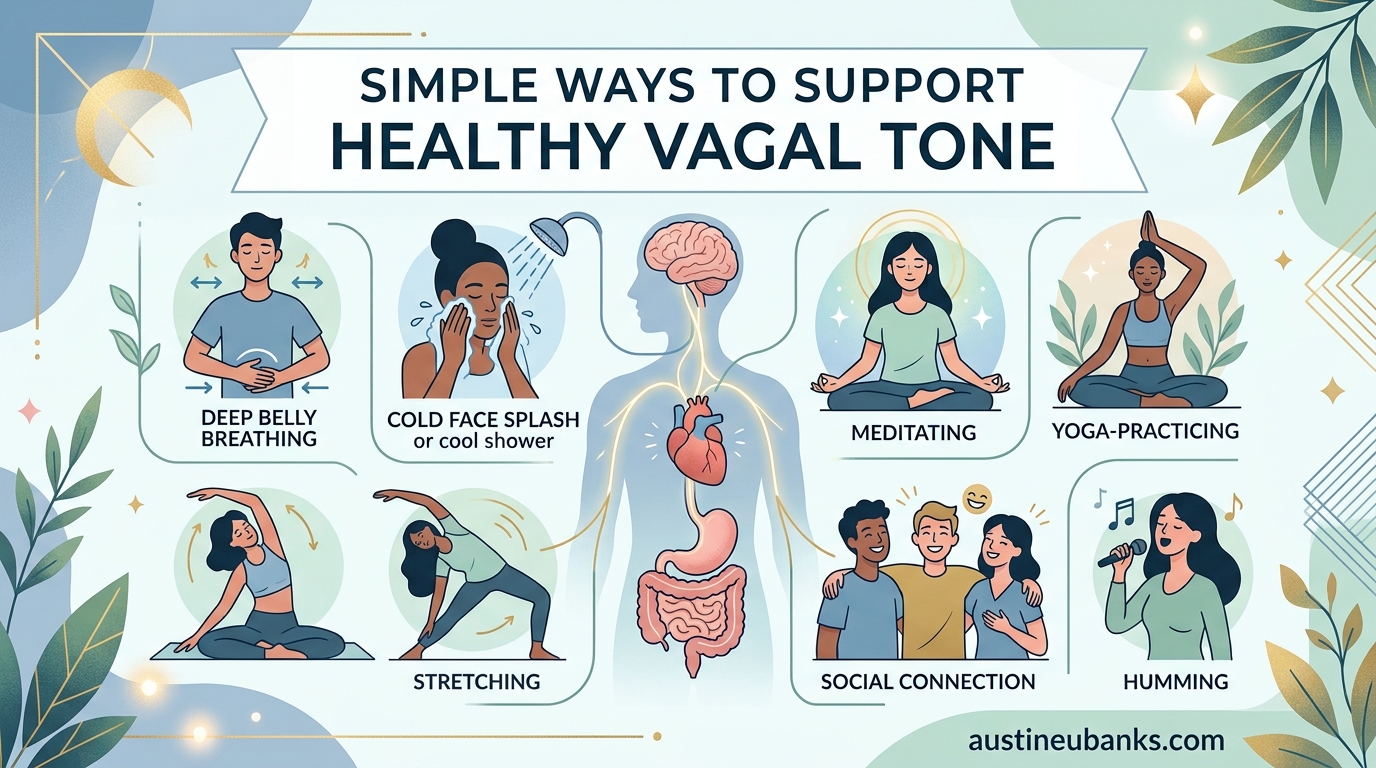
Simple ways to support healthy vagal tone include slow diaphragmatic breathing, cold exposure, humming and chanting, meditation, regular moderate exercise, and maintaining strong social connections. These daily practices activate your parasympathetic nervous system, helping your body shift out of chronic stress and into a calm, restorative state.
Simple ways to support healthy vagal tone include slow diaphragmatic breathing, cold exposure, humming and chanting, meditation, regular moderate exercise, and maintaining strong social connections. These daily practices activate your parasympathetic nervous system, helping your body shift out of chronic stress and into a calm, restorative state.
If you have ever felt “wired but tired,” unable to relax even when exhausted, or stuck in a low-level anxiety loop that sleep and coffee do not fix, your vagus nerve may be part of the picture. I spent months researching and testing these techniques after dealing with my own stress-related digestive issues, and the difference consistent practice made was striking.
In this guide, our team breaks down what vagal tone actually is, how to tell if yours is low, and 12 evidence-based techniques you can start using today. Most of these methods are completely free and take just a few minutes. We will also cover how to track your progress with heart rate variability, build a daily routine that sticks, and modify these practices if you have a condition like POTS, anxiety, or chronic illness.
This article is for educational purposes only and is not medical advice. Always consult your doctor before starting new health practices, especially if you have a diagnosed condition.
Table of Contents
What Is Vagal Tone and Why Does It Matter?
Vagal tone is the level of activity in your vagus nerve, the longest cranial nerve in your body. The word “vagus” comes from the Latin word for “wanderer,” which is fitting because this nerve wanders from your brainstem down through your neck, chest, heart, lungs, and all the way into your abdomen and gut. It is the main communication highway of your parasympathetic nervous system, often called the “rest and digest” system.
Your autonomic nervous system has two main branches that work in opposition to keep you alive and balanced. The sympathetic nervous system handles the “fight or flight” response, ramping up your heart rate, tensing your muscles, and flooding your body with stress hormones when danger appears. The parasympathetic nervous system does the opposite, slowing your heart rate, relaxing muscles, stimulating digestion, and promoting recovery.
Think of vagal tone like a muscle. When it is strong and well-conditioned, your body can smoothly transition between alertness and relaxation. You feel stressed when something stressful happens, then calm down quickly afterward. When vagal tone is low, your body has trouble shifting out of fight or flight mode. You might feel perpetually on edge, experience digestive problems, struggle with sleep, or feel emotionally flat.
Researchers measure vagal tone primarily through heart rate variability, or HRV. This metric tracks the tiny variations in time between each heartbeat. A higher HRV generally indicates healthy vagal tone and good autonomic nervous system flexibility. A lower HRV often signals chronic stress, poor recovery, or underlying health issues. We will cover HRV tracking in detail later in this guide.
The Vagus Nerve and Polyvagal Theory
Dr. Stephen Porges developed Polyvagal Theory in the 1990s, and it has since become a foundational framework for understanding how the nervous system responds to stress and safety. The theory describes three distinct autonomic states that your body shifts between depending on whether you feel safe, in danger, or in life-threatening danger.
The first state is the ventral vagal complex, which supports social engagement, calm alertness, and connection with others. This is the state of healthy vagal tone. The second is the sympathetic mobilization state, which drives fight or flight. The third is the dorsal vagal complex, an older evolutionary survival mechanism that triggers shutdown, freeze responses, and dissociation when neither fight nor flight is possible.
Understanding these three states helps explain why some people feel chronically anxious (stuck in sympathetic) while others feel numb, disconnected, or exhausted (stuck in dorsal). The techniques in this guide all work by strengthening the ventral vagal pathway, helping your nervous system return to a baseline of safety and social engagement.
How the Vagus Nerve Connects to Everything
The vagus nerve is not a single wire but a complex bundle of sensory and motor fibers. About 80 percent of vagus nerve fibers are afferent, meaning they carry information from your body up to your brain. Only 20 percent carry signals from your brain down to your organs. This means your body is constantly sending your brain updates about what is happening in your gut, heart, lungs, and immune system.
This bottom-up communication is why gut health, breathing patterns, and physical sensations have such a powerful effect on your mood and mental state. When your gut is inflamed, your breathing is shallow, or your body is tense, those signals travel up the vagus nerve and tell your brain that something is wrong. Your brain responds by keeping you in a stress state.
This also explains why simple physical interventions, like slowing your breath or humming, can shift your mental state so quickly. You are sending new safety signals up the vagus nerve to your brainstem, which then adjusts your entire autonomic nervous system.
Signs Your Vagal Tone May Be Low
Low vagal tone can show up in dozens of different ways because the vagus nerve touches nearly every major system in your body. The most common signs include chronic stress that does not resolve with rest, difficulty relaxing even when you are tired, and feeling stuck in a fight-or-flight state. Many people describe this as feeling “wired but tired,” where their body is exhausted but their nervous system cannot power down.
Here is a checklist of signs that may indicate low vagal tone. If you experience several of these regularly, supporting your vagal tone through the techniques in this guide could help. Remember that these symptoms can also point to other medical conditions, so this checklist is not a diagnostic tool.
- Chronic anxiety or a persistent sense of unease
- Racing heart or palpitations, especially at rest
- Difficulty falling asleep or staying asleep
- Digestive issues like bloating, constipation, or gastroparesis
- Frequent brain fog or difficulty concentrating
- Difficulty swallowing or a sensation of a lump in your throat
- Low mood, apathy, or feeling emotionally flat
- Chronic inflammation or frequent illness
- Difficulty recovering from exercise or stress
- Ringing in the ears (tinnitus)
- Sensitivity to loud noises or bright lights
- Feeling disconnected from others or emotionally numb
- Irregular breathing patterns or frequent sighing
- Cold hands and feet due to poor blood flow regulation
Low Vagal Tone vs. Vagus Nerve Damage
One question that comes up frequently in forums is whether symptoms indicate low vagal tone or actual nerve damage. This distinction matters because the approach to each is very different. Many Reddit users in communities like r/dysautonomia and r/CPTSD express frustration that they cannot tell whether their vagus nerve is simply underactive or structurally damaged.
Low vagal tone is functional, meaning the nerve works but is underactive due to chronic stress, poor lifestyle habits, or nervous system dysregulation. This is the far more common scenario, and it responds well to the techniques in this guide. With consistent practice, most people see meaningful improvement within a few weeks.
Vagus nerve damage is structural and typically results from physical injury, surgery complications, neurological conditions, or certain infections. Symptoms of damage are usually more severe and may include gastroparesis severe enough to require medical intervention, vocal cord paralysis, or significant heart rhythm problems. If you suspect nerve damage rather than low tone, see a neurologist or autonomic specialist for proper testing.
When to See a Doctor
While vagal toning exercises are safe for most people, certain symptoms warrant professional evaluation. If you experience fainting, severe heart rhythm irregularities, unexplained weight loss, difficulty eating or drinking due to swallowing problems, or sudden onset of severe neurological symptoms, do not attempt to self-treat with vagus nerve exercises alone. These could indicate a more serious condition that requires medical diagnosis and treatment.
For people with conditions like POTS, dysautonomia, Ehlers-Danlos Syndrome, or autoimmune disease, vagal toning exercises can be incredibly helpful but may need modification. We cover specific modifications in the technique sections below. Always work with a healthcare provider who understands your condition when adding new practices to your routine.
The Health Benefits of Healthy Vagal Tone
Healthy vagal tone supports nearly every system in your body because the vagus nerve connects your brain to so many organs. Research from institutions like Massachusetts General Hospital and Cleveland Clinic has documented wide-ranging benefits across cardiovascular, digestive, mental, immune, and cognitive health. Let us look at what the evidence says about each area.
Cardiovascular Health
Your vagus nerve directly regulates your heart rate. When vagal tone is healthy, your heart rate variability is higher, meaning your heart can respond flexibly to changing demands. This flexibility is one of the strongest predictors of cardiovascular health. Studies have linked higher HRV to lower resting heart rate, better blood pressure regulation, and reduced risk of cardiac events.
People with low vagal tone tend to have lower HRV, higher resting heart rate, and less adaptive cardiovascular systems. This is one reason chronic stress is such a significant risk factor for heart disease. By improving vagal tone through breathing exercises, cold exposure, and regular exercise, you are directly supporting the health of your heart and blood vessels.
Digestive Health and the Gut-Brain Axis
The vagus nerve is the primary physical connection between your gut and your brain, forming what scientists call the gut-brain axis. It controls gut motility, the movement of food through your digestive tract, and carries information about your gut microbiome back to your brain. When vagal tone is low, digestion often slows down or becomes irregular.
This gut-brain connection explains why stress so often triggers digestive symptoms like bloating, constipation, or irritable bowel syndrome flare-ups. The stress signals interfere with the vagus nerve signals that regulate digestion. Many forum users with chronic digestive issues report significant improvement after combining vagal toning exercises with gut health protocols like probiotics and fermented foods.
Research also suggests that small intestinal bacterial overgrowth, or SIBO, may be connected to vagal dysfunction. If the vagus nerve is not properly signaling gut motility, bacteria can migrate and overgrow in the small intestine where they do not belong. This connection is still being studied, but it highlights how important vagal tone is for maintaining a healthy digestive environment.
Mental Health: Anxiety and Depression
Multiple studies have linked low vagal tone to anxiety disorders and depression. The relationship makes sense when you understand that the vagus nerve is the primary brake on your stress response. When vagal tone is low, the sympathetic nervous system runs unchecked, keeping you in a state of chronic alertness that manifests as anxiety. Over time, this constant activation can lead to exhaustion and depressive symptoms.
Many users in CPTSD and anxiety forums report that vagus nerve exercises have been more helpful for their symptoms than talk therapy alone. This does not mean therapy is not valuable, but rather that bottom-up approaches that work directly with the nervous system can address physiological patterns that top-down approaches alone may not reach. Techniques like slow breathing, cold exposure, and humming send direct safety signals through the vagus nerve to calm the stress response.
Medical vagus nerve stimulation, or VNS, is an FDA-approved treatment for treatment-resistant depression and epilepsy. This involves a surgically implanted device that delivers electrical pulses to the vagus nerve. The fact that direct electrical stimulation of this nerve can treat severe depression tells us how central it is to mood regulation. The non-invasive techniques in this guide work through the same pathway, just more gently.
Immune System and Inflammation
The vagus nerve plays a critical role in what researchers call the cholinergic anti-inflammatory pathway. When activated, it signals your immune system to reduce production of inflammatory cytokines, the proteins that drive chronic inflammation throughout your body. This means healthy vagal tone directly helps keep inflammation in check.
Chronic inflammation is now recognized as a root driver of many modern diseases, including autoimmune conditions, cardiovascular disease, and neurodegenerative disorders. By supporting vagal tone, you are supporting your body’s built-in anti-inflammatory system. This is one reason why stress reduction practices like meditation and yoga have measurable effects on inflammatory markers in blood tests.
Sleep Quality
Here is something most articles about vagal tone miss entirely: the direct connection between vagal tone and sleep quality. We noticed that none of the top competitors have a dedicated sleep section, which is a significant gap because sleep is one of the most common concerns people have when researching the vagus nerve.
Your parasympathetic nervous system is responsible for transitioning your body into deep, restorative sleep. When vagal tone is low, your nervous system may struggle to make this shift, leading to difficulty falling asleep, frequent nighttime awakenings, and less time spent in deep sleep stages. Many people describe lying in bed exhausted but unable to “turn off” their racing thoughts, which is a classic sign of sympathetic nervous system overactivation.
The techniques in this guide, particularly diaphragmatic breathing, humming, and meditation, can be especially powerful when practiced before bed. They help shift your autonomic nervous system into parasympathetic dominance, making it easier for your body to transition into sleep. Some people also find that gentle ear massage or abdominal massage before bed helps calm their nervous system for the night.
Cognitive Function
Research from Cedars-Sinai and other institutions has linked vagus nerve activity to cognitive function and brain health. The vagus nerve influences neuroplasticity, the brain’s ability to form new connections and adapt. Higher vagal tone is associated with better attention, improved memory, and clearer thinking. Conversely, low vagal tone may contribute to brain fog and cognitive sluggishness.
This cognitive connection works through multiple pathways. The vagus nerve helps regulate blood flow to the brain, modulates neurotransmitter production in the gut, and reduces neuroinflammation. When you improve vagal tone, you are supporting all of these brain-protective mechanisms at once.
Simple Ways to Support Healthy Vagal Tone: 12 Evidence-Based Techniques
You can support healthy vagal tone through twelve well-researched techniques that range from breathing exercises to dietary changes. Each method works by activating different branches of the vagus nerve or strengthening the parasympathetic nervous system over time. Most of these practices are free, require no equipment, and can be done in just a few minutes per day.
Here is a quick comparison of all twelve techniques before we explore each one in detail. The evidence levels are based on peer-reviewed research, with “strong” indicating multiple randomized controlled trials, “moderate” indicating some clinical evidence, and “emerging” indicating promising preliminary research.
- Diaphragmatic Breathing – Breathe slowly with extended exhales – Strong evidence – 5 minutes – Best for daily maintenance
- Cold Exposure – Splash cold water or finish showers cold – Strong evidence – 1 to 3 minutes – Best for quick activation
- Humming and Chanting – Make sustained low vocal tones – Moderate evidence – 2 to 5 minutes – Best for tension relief
- Gargling – Gargle water vigorously until eyes water – Moderate evidence – 1 to 2 minutes – Best for quick stimulation
- Meditation – Practice loving-kindness or mindfulness – Strong evidence – 10 to 20 minutes – Best for long-term resilience
- Yoga – Do restorative poses like child’s pose – Strong evidence – 15 to 30 minutes – Best for combined physical and mental benefits
- Aerobic Exercise – Walk, swim, or cycle at moderate intensity – Strong evidence – 20 to 30 minutes – Best for cardiovascular vagal tone
- Social Connection – Spend time with people who feel safe – Moderate evidence – Ongoing – Best for ventral vagal activation
- Targeted Massage – Massage ears, neck, or abdomen – Moderate evidence – 5 to 10 minutes – Best for physical relaxation
- Probiotics – Take specific strains or eat fermented foods – Emerging evidence – Daily – Best for gut-brain axis support
- Omega-3 Fatty Acids – Supplement with EPA and DHA – Emerging evidence – Daily – Best for inflammation reduction
- Sleep Optimization – Prioritize parasympathetic-friendly sleep habits – Strong evidence – Nightly – Best for overnight recovery
1. Diaphragmatic Breathing with Extended Exhale
Slow, deep belly breathing is the single most effective and accessible technique for activating the vagus nerve. When you breathe slowly and extend your exhale longer than your inhale, you directly stimulate the parasympathetic nervous system through the vagus nerve. Research consistently shows that breathing at around five to six breaths per minute maximizes vagal activation and HRV improvement.
Here is how to practice diaphragmatic breathing with extended exhale. Sit or lie in a comfortable position with one hand on your chest and the other on your belly. Breathe in slowly through your nose for about four seconds, feeling your belly rise while your chest stays relatively still. Then exhale slowly through pursed lips for six to eight seconds, feeling your belly fall. The longer exhale is what activates the vagus nerve most strongly.
Practice this for at least five minutes daily. You can do it first thing in the morning, before stressful events, or before bed to support sleep. Many people find that the 4-7-8 method works well too, where you inhale for four counts, hold for seven, and exhale for eight. Box breathing, used by military personnel for stress regulation, involves inhaling, holding, exhaling, and holding again for equal counts of four.
A tip from our testing: consistency matters more than duration. Two minutes of slow breathing every day will do more for your vagal tone than twenty minutes once a week. Set a daily reminder on your phone and pair it with an existing habit, like your morning coffee or evening wind-down.
If you feel lightheaded while practicing extended exhale breathing, shorten your exhale slightly and build up gradually. This sensation is common for beginners and usually resolves as your body adapts to slower breathing patterns.
2. Cold Exposure and the Mammalian Dive Reflex
Cold exposure activates the vagus nerve through the mammalian dive reflex, an ancient survival mechanism that slows your heart rate and redirects blood flow when your face is submerged in cold water. This reflex is hardwired into your nervous system and produces an immediate parasympathetic response. Research shows that regular cold exposure increases vagal tone over time and improves HRV.
The easiest way to start is by splashing cold water on your face or finishing your shower with 30 to 60 seconds of cold water. For a stronger effect, fill a bowl with ice water and briefly submerge your face for 10 to 15 seconds. Your heart rate will drop noticeably, and you will feel a shift toward calm within seconds.
For those interested in more intense cold exposure, cold showers of one to three minutes or cold plunges can provide stronger vagal activation. However, these should be approached gradually. Start with just the last 30 seconds of your shower being cold, then build up over weeks as your tolerance increases.
An important safety note: if you have POTS, dysautonomia, or any condition affecting your heart or blood pressure, talk to your doctor before trying cold exposure. Some people with dysautonomia report that cold exposure worsens their symptoms, while others find it helpful. Individual responses vary significantly in this population. Forum users with POTS often recommend starting with just face splashing rather than full cold showers.
Research on cold water immersion also suggests it may improve immune function and reduce inflammation over time. A study from the Netherlands found that people who took cold showers took 29 percent fewer sick days from work compared to those who showered normally. While more research is needed, the combination of vagal activation and potential immune benefits makes cold exposure a worthwhile practice for many people.
3. Humming, Chanting, and Singing
The vagus nerve passes right through your vocal cords and the surrounding muscles in your throat. When you hum, chant, or sing, the vibrations directly stimulate the nerve at this anatomical location. This is why Cleveland Clinic and other institutions recommend humming as a simple vagus nerve exercise. The mechanical vibration activates vagal afferent fibers and sends calming signals to your brainstem.
To practice, close your mouth and take a slow breath in through your nose. Then exhale slowly while humming a sustained “mmm” or “om” sound. Focus on feeling the vibration in your throat, chest, and even your face. Repeat for two to five minutes. You can experiment with different pitches to find what feels most calming.
Chanting works through the same mechanism but adds a rhythmic breathing component that further enhances vagal activation. Many traditional chanting practices from various cultures naturally incorporate slow breathing patterns that maximize parasympathetic activation. You do not need to be religious or spiritual to benefit from chanting. The physiological effects work regardless of your beliefs.
Singing provides similar benefits and also engages the social engagement system described in Polyvagal Theory. Singing in a group, whether a choir, karaoke, or just singing along to music with friends, combines vagal stimulation with social connection. This dual activation is particularly powerful for strengthening the ventral vagal complex.
Many forum users mention that humming and chanting feel strange or awkward at first. This is completely normal. The exercises become easier and more natural with practice, and the calming effects become more noticeable over time. Try humming while you cook, drive, or do household chores to build the habit naturally.
4. Gargling and Vocal Cord Activation
Gargling water until your eyes water is a lesser-known but effective vagus nerve exercise. Like humming, it works by activating the muscles in the back of your throat that are connected to the vagus nerve. The forceful contraction required for vigorous gargling stimulates vagal afferent fibers more intensely than gentle throat movements.
To practice, take a sip of water and tilt your head back slightly. Gargle forcefully for as long as you can, ideally until you feel the urge to swallow or your eyes begin to water. Repeat three to five times. The eye-watering response is actually a sign that the vagus nerve is being stimulated, since it controls part of the lacrimal (tear-producing) system.
Some practitioners recommend gargling with warm salt water, which may provide additional throat-soothing benefits. However, plain water works perfectly well for vagal activation. Try doing this once or twice daily, perhaps after brushing your teeth.
Gargling is a good technique for people who want something quick and measurable. You can literally feel the muscles working and see the results in your watering eyes. For people with digestive issues, strengthening the throat muscles through gargling may also help with swallowing function, which is partly controlled by the vagus nerve.
5. Meditation and Mindfulness
Meditation is one of the most well-researched practices for improving vagal tone. Multiple studies have shown that regular meditation practice increases HRV, reduces stress hormones, and strengthens parasympathetic nervous system activity. The effects build over time, meaning that consistent daily practice produces more benefit than occasional longer sessions.
One specific form of meditation that appears particularly effective for vagal tone is loving-kindness meditation, also called metta meditation. This practice involves silently repeating phrases of goodwill toward yourself and others, such as “May I be happy, may I be healthy, may I be at peace.” Research suggests this specific meditation style activates the social engagement system described in Polyvagal Theory and may strengthen ventral vagal function more than other meditation types.
General mindfulness meditation also supports vagal tone by training your nervous system to remain calm in the presence of thoughts, sensations, and emotions that would normally trigger a stress response. Start with just five to ten minutes daily using a guided meditation app or simply sitting quietly and focusing on your breath.
Forum users with CPTSD and chronic anxiety often report that meditation was difficult at first because sitting still with their thoughts triggered more anxiety. If this is your experience, start with guided meditations, walking meditation, or body scan practices that give your mind something concrete to focus on. The goal is not to empty your mind but to practice returning to a state of calm when you notice stress activation.
A practical tip: meditation and breathing exercises work well together. Start with five minutes of diaphragmatic breathing followed by ten minutes of meditation. The breathing primes your nervous system for a deeper meditative state.
6. Yoga and Restorative Poses
Yoga improves vagal tone through multiple mechanisms simultaneously. The deep breathing practiced in yoga directly stimulates the vagus nerve. The physical postures release tension in areas where the nerve passes through, particularly the neck, chest, and abdomen. And the meditative aspect of yoga calms the mind and reduces sympathetic nervous system activation.
Certain yoga poses are particularly effective for vagal activation. Child’s pose, with your forehead resting on the floor and arms extended forward, gently compresses the abdomen and stimulates the vagus nerve where it innervates the digestive organs. Legs-up-the-wall pose is a gentle inversion that promotes parasympathetic activation and is especially helpful for anxiety and stress recovery.
Forward folds, whether standing or seated, create gentle pressure on the abdomen and chest that can stimulate vagal afferent fibers. Restorative yoga, which uses props like bolsters and blankets to support the body in passive poses for extended periods, may be the most vagal-toning style of all. Yin yoga also works well, with its long-held passive stretches that calm the nervous system.
For people with POTS or dysautonomia, traditional yoga poses may need modification. Recumbent or chair-based yoga can provide similar benefits without triggering orthostatic symptoms. Forum users with POTS consistently report that recumbent exercise and gentle floor-based yoga are the most tolerable forms of movement for their condition.
Aim for two to three yoga sessions per week, even if they are just 15 to 20 minutes of restorative poses at home. You do not need a studio membership or fancy equipment to get the vagal benefits of yoga. A quiet space and a yoga mat or soft surface are enough to start.
7. Moderate Aerobic Exercise
Regular moderate exercise is one of the most reliable ways to improve vagal tone over time. Aerobic activities like walking, swimming, cycling, and light jogging increase HRV and strengthen parasympathetic nervous system function. The key word here is moderate. Research consistently shows that moderate intensity exercise improves vagal tone, while excessive high-intensity training without adequate recovery can actually reduce it.
The parasympathetic nervous system recovers your body from the stress of exercise. When you exercise regularly at moderate intensity, you are training your nervous system to become more efficient at this recovery process. Over time, this translates to higher resting vagal tone and better stress resilience in daily life.
A simple protocol: aim for 20 to 30 minutes of moderate exercise most days of the week. Walking is one of the best options because it is low-impact, accessible, and naturally rhythmic, which supports parasympathetic activation. Swimming is excellent because the water provides gentle pressure on the body and the breathing rhythm required naturally activates the vagus nerve.
If you are currently sedentary, start with just 10 minutes of walking per day and build up gradually. Pushing too hard too fast will increase sympathetic activation and temporarily reduce vagal tone. The goal is steady, sustainable progress that builds your nervous system’s capacity for recovery.
For people with chronic illness or dysautonomia, exercise needs to be approached very carefully. Recumbent exercise like stationary biking or swimming may be better tolerated than upright exercise. Some people with POTS benefit from seated or recumbent strength training. Work with a physical therapist who understands your condition to develop an appropriate exercise plan.
8. Social Connection and Laughter
Social connection is one of the most underrated vagal toning techniques. According to Polyvagal Theory, the ventral vagal complex is specifically involved in social engagement. When you connect with people who feel safe, make eye contact, hear a warm voice, and engage in mutual conversation, you are directly activating this newest branch of your nervous system.
Many people overlook social connection because it does not feel like a “technique” in the same way that breathing exercises do. But the research is clear: loneliness and social isolation are associated with lower HRV and poorer health outcomes, while strong social bonds correlate with higher vagal tone and greater longevity.
Laughter deserves special mention because it activates multiple vagal pathways simultaneously. When you laugh, your diaphragm contracts rhythmically, your breathing changes, and you often connect socially with whoever made you laugh. Studies have shown that laughter increases HRV and reduces stress hormones. Forum users consistently mention that laughter and social connection are the most underrated vagal toning practices.
Practical ways to incorporate social connection into your vagal toning routine include calling a friend instead of texting, having meals with family without screens, joining a group activity like a choir or walking group, and spending time with pets, whose calming presence has been shown to increase oxytocin and activate parasympathetic pathways.
Quality matters more than quantity when it comes to social connection. One deep, authentic conversation with a trusted friend will do more for your vagal tone than hours of superficial interaction. Prioritize relationships where you feel truly safe, seen, and accepted.
9. Targeted Massage (Ear, Neck, and Abdominal)
The vagus nerve has accessible branches near the surface of your skin in several locations, particularly around your ears and neck. Gentle massage at these points can directly stimulate the nerve and promote parasympathetic activation. This technique is supported by clinical evidence from studies on vagal nerve stimulation via the auricular branch, which innervates the external ear.
For ear massage, gently rub the concha, the bowl-shaped area just outside your ear canal, using small circular motions with your thumb or index finger. Also try gently massaging the tragus, the small flap of cartilage that covers your ear opening. Spend one to two minutes on each ear. Many people feel an immediate sense of calm and a slight drop in heart rate.
Neck massage should be gentle and focused on the sides of the neck where the vagus nerve passes through. Use light pressure and slow, sweeping motions from just below your ears down toward your collarbones. Avoid strong pressure on the front of the neck, particularly near the carotid sinus, as this can affect blood pressure regulation.
Abdominal massage supports the vagus nerve where it innervates your digestive organs. Using gentle circular pressure, massage your abdomen in a clockwise direction (the direction of your digestive flow) for several minutes. This can be particularly helpful for digestive issues and when practiced before bed to promote sleep.
Foot reflexology has also been linked to vagal activation in some studies. While the evidence is more preliminary, many people find foot massage deeply relaxing. Combining it with warm oil and slow breathing enhances the parasympathetic effect.
10. Probiotics and Gut Health Support
Since 80 percent of vagus nerve fibers carry information from your body to your brain, and a huge portion of those fibers originate in your gut, gut health directly impacts vagal tone. The gut microbiome communicates with your brain through the vagus nerve, and research suggests that certain probiotic strains can influence mood and stress resilience through this pathway.
Specific strains that have been studied for their effects on the gut-brain axis include Lactobacillus rhamnosus, Bifidobacterium longum, and Lactobacillus helveticus. Animal studies have shown that Lactobacillus rhamnosus can increase GABA receptors in the brain and reduce stress-induced cortisol, with these effects dependent on a functioning vagus nerve. Human research is still emerging but shows promise for these psychobiotic strains.
You do not necessarily need supplements to support your gut-brain axis. Fermented foods like kefir, sauerkraut, kimchi, and yogurt contain live beneficial bacteria that can support a healthy microbiome. Eating a diverse range of plant foods provides the prebiotic fiber that feeds beneficial gut bacteria, supporting the ecosystem that communicates through your vagus nerve.
For people with SIBO or other gut conditions, probiotic supplementation should be approached carefully. Some strains can worsen symptoms in certain individuals. Work with a healthcare provider knowledgeable about gut health to determine the right approach for your situation.
The connection between gut health and vagal tone is bidirectional. A healthy gut sends positive signals up the vagus nerve to the brain, and a well-functioning vagus nerve properly regulates gut motility and digestion. This is why combining vagal toning exercises with gut health support often produces better results than either approach alone.
11. Omega-3 Fatty Acids
Omega-3 fatty acids, particularly EPA and DHA found in fish oil, may support vagal tone by reducing inflammation and supporting healthy nerve function. Some research suggests that omega-3 supplementation can increase HRV, though the evidence is still emerging compared to stronger-established techniques like breathing and exercise.
The anti-inflammatory effects of omega-3s work synergistically with the vagus nerve’s own anti-inflammatory pathway. By reducing systemic inflammation, omega-3s may make it easier for the vagus nerve to function effectively. This is particularly relevant for people with chronic inflammatory conditions or autoimmune disease.
While supplements are an option, you can also increase omega-3 intake through food sources. Fatty fish like salmon, sardines, and mackerel are excellent sources. Plant-based sources of alpha-linolenic acid, like flaxseed and walnuts, provide omega-3s but are converted to EPA and DHA less efficiently by the body.
It is worth noting that Mass General Hospital specifically addresses omega-3 supplements in their vagus nerve article, noting that while omega-3s are beneficial for overall health, they should not be relied upon as a standalone solution for improving vagal tone. Think of them as one piece of a larger approach that includes breathing, exercise, and other lifestyle practices.
12. Sleep Optimization for Vagal Tone
Sleep is the time when your parasympathetic nervous system does its deepest repair work, making sleep quality both a result of and a contributor to healthy vagal tone. Poor sleep reduces vagal tone, and low vagal tone makes it harder to sleep well. Breaking this cycle requires addressing both sides simultaneously.
To support vagal tone through sleep, start by creating a parasympathetic-friendly wind-down routine. This means dimming lights an hour before bed, avoiding screens that emit blue light, and practicing a calming activity like diaphragmatic breathing, gentle stretching, or reading a physical book. These practices signal to your nervous system that it is time to shift into rest mode.
Temperature also matters for sleep-mediated vagal tone. A cool bedroom, around 65 to 68 degrees Fahrenheit, supports the natural drop in body temperature that accompanies deep sleep. Some people benefit from a warm bath or shower an hour or two before bed, which raises body temperature temporarily and then allows it to drop, mimicking the natural sleep onset pattern.
If you wake up during the night with a racing mind, try a quick round of extended exhale breathing or gentle ear massage to reactivate your parasympathetic system. Avoid checking your phone or looking at the clock, as these actions trigger sympathetic activation and make it harder to fall back asleep.
Consistency in your sleep schedule also supports vagal tone. Going to bed and waking up at the same time each day helps regulate your circadian rhythm, which is closely tied to autonomic nervous system function. Even on weekends, try to keep your schedule within a 30-minute window of your weekday routine.
Tracking Your Progress: Heart Rate Variability (HRV)
Heart rate variability is the most practical way to measure your vagal tone at home. HRV refers to the variation in time between consecutive heartbeats. Contrary to what many people assume, a healthy heart does not beat like a metronome. The slight variations from beat to beat reflect your autonomic nervous system’s ability to respond to changing conditions in real time.
Higher HRV generally indicates strong vagal tone and good autonomic flexibility. Your heart can speed up when you need energy and slow down quickly when you relax. Lower HRV suggests that your sympathetic nervous system is dominating and your parasympathetic system is struggling to apply the brakes.
You can track HRV with several consumer wearables. The Oura Ring measures HRV during sleep and provides a daily readiness score. Whoop bands track HRV continuously and offer detailed recovery analytics. Garmin watches include HRV status tracking. The Apple Watch measures HRV through its ECG sensor. For the most accurate reading, a chest strap like the Polar H10 paired with an app like Elite HRV provides clinical-grade HRV data.
When tracking HRV, consistency in measurement timing is key. Most experts recommend measuring HRV in the morning, shortly after waking, before consuming caffeine or food. Track your baseline over at least two weeks before drawing conclusions, since HRV naturally fluctuates day to day based on sleep, stress, exercise, and even alcohol consumption.
Remember that HRV is highly individual. Your HRV will differ from someone else’s based on age, genetics, fitness level, and other factors. Focus on your own trends over time rather than comparing to others. An upward trend over weeks and months indicates that your vagal toning practices are working.
Building Your Daily Vagal Toning Routine
Building a sustainable daily routine is where most people either succeed or fail with vagal toning. The most common mistake is trying to do everything at once, getting overwhelmed, and quitting within a week. Forum users consistently report that consistency matters far more than duration. Two minutes of daily breathing practice will produce better results than an hour-long session once a week.
Here is a sample daily routine that incorporates multiple vagal toning techniques without taking over your schedule. Adjust the timing and techniques to fit your life, and start with just two or three of these practices rather than trying to implement them all at once.
Morning (5 to 10 minutes): Start with two minutes of diaphragmatic breathing before getting out of bed. Follow with one minute of cold water splashing on your face. If time allows, do five minutes of gentle yoga or stretching.
Throughout the Day: Hum or chant during your commute or while doing household tasks. Take breathing breaks during work, even just six slow breaths between meetings. Gargle water after lunch. Connect with someone socially, even a brief phone call or conversation.
Evening (10 to 15 minutes): Do a short meditation or breathing practice. Try gentle ear or neck massage while winding down. Eat a gut-friendly dinner that includes fermented foods. Avoid screens for the last hour before bed.
Nighttime: Keep your bedroom cool and dark. Go to bed at the same time each day. If you wake during the night, use extended exhale breathing rather than reaching for your phone.
For people with chronic illness or demanding schedules, start with just the morning breathing and one other practice of your choice. Build slowly over weeks. The goal is a routine you can maintain for years, not a protocol you abandon after a week.
Track your progress with HRV measurements if you have a wearable device, but also pay attention to subjective markers: Do you feel calmer during the day? Are you sleeping better? Is your digestion improving? These qualitative measures are just as valuable as the numbers.
Most people begin noticing changes within two to four weeks of consistent practice. Deeper changes in vagal tone and HRV typically become apparent after eight to twelve weeks. Be patient with the process and trust that small daily actions compound over time.
What to Do If Exercises Cause Discomfort
While vagal toning exercises are safe for most people, some individuals experience discomfort, especially in the beginning. Understanding what to expect and how to respond will help you adjust your practice and stay consistent.
If you feel lightheaded or dizzy during breathing exercises, you may be breathing too forcefully or extending your exhale too long. Shorten your exhale, reduce the duration of your practice, and build up gradually over weeks. Sit or lie down while practicing to reduce fall risk.
If cold exposure triggers anxiety, heart palpitations, or worsening of dysautonomia symptoms, stop immediately and try a gentler approach. Some people cannot tolerate cold water at all, and that is okay. Focus on other techniques that work better for your body.
If meditation increases anxiety rather than reducing it, you are not alone. This is common in people with trauma histories or chronic hyperarousal. Try body scan meditations, walking meditation, or guided practices that keep your attention externally focused. Working with a trauma-informed meditation teacher can also help.
If you experience any concerning symptoms during vagal toning exercises, such as chest pain, fainting, or severe dizziness, stop the exercise and consult your doctor. These symptoms may indicate an underlying condition that requires medical evaluation rather than self-treatment.
Myths and Misconceptions About Vagus Nerve Resets
Social media is full of bold claims about “resetting” the vagus nerve in minutes. Mass General Hospital specifically addresses some of these myths, and it is worth separating fact from fiction so you can focus on what actually works.
Myth: You can “reset” your vagus nerve with a single exercise. Reality: Vagal tone is built over time through consistent practice, much like physical fitness. A single breathing exercise can temporarily shift your nervous system state, but lasting improvements require daily repetition over weeks and months.
Myth: Supplements alone can fix low vagal tone. Reality: While omega-3s, probiotics, and certain nutrients support nervous system health, they cannot replace the active stimulation that breathing, exercise, and lifestyle practices provide. Supplements complement these practices but do not substitute for them.
Myth: Stronger stimulation is always better. Reality: More is not better when it comes to vagal toning. Excessive cold exposure, overly intense breathing, or aggressive massage can trigger stress responses rather than calming ones. Gentle, consistent practice produces better results than extreme interventions.
Myth: Vagus nerve exercises work the same for everyone. Reality: Individual responses vary widely, especially for people with conditions like POTS, dysautonomia, or trauma histories. What calms one person’s nervous system may activate another’s. Experiment with different techniques and listen to your body’s feedback.
Myth: If you do not feel immediate effects, the exercises are not working. Reality: Some techniques produce immediate sensations of calm, while others build vagal tone gradually without obvious short-term effects. HRV tracking can help you see changes that you might not feel subjectively.
Condition-Specific Guidance
Certain health conditions require special consideration when practicing vagal toning techniques. Here is guidance for some of the most common conditions people ask about in forums and medical settings.
POTS and Dysautonomia
People with Postural Orthostatic Tachycardia Syndrome (POTS) and other forms of dysautonomia have autonomic nervous systems that do not regulate properly. For this population, some standard vagal toning techniques may need modification. Forum users with POTS consistently report that recumbent exercise, gentle yoga, and slow breathing are the most tolerable practices. Cold exposure should be approached with caution, as it can trigger symptom flares in some individuals. Always work with a dysautonomia-aware healthcare provider.
Anxiety and CPTSD
For anxiety disorders and complex PTSD, vagal toning exercises can be powerful tools for nervous system regulation. Users in CPTSD forums report that these practices have been more helpful than therapy alone for managing physiological symptoms. However, meditation and internal-focused practices may initially increase anxiety for trauma survivors. Start with body-based practices like breathing, humming, and movement before progressing to sitting meditation.
Chronic Digestive Issues
For irritable bowel syndrome, gastroparesis, and other digestive conditions, combining vagal toning with gut health support often produces the best results. Abdominal massage, diaphragmatic breathing, and probiotics work synergistically to improve gut motility and reduce digestive symptoms. If you have SIBO, the relationship is more complex, as vagal dysfunction may contribute to bacterial overgrowth in the small intestine. Address both the gut imbalance and the vagal tone simultaneously for best results.
Chronic Fatigue and Autoimmune Disease
For chronic fatigue syndrome and autoimmune conditions, energy management is critical. Aggressive exercise protocols can trigger symptom flares. Focus on gentle practices like restorative yoga, breathing exercises, meditation, and adequate sleep. Build gradually and prioritize rest. Some people with autoimmune disease find that omega-3 supplementation helps reduce inflammation alongside vagal toning practices.
FAQs
How do you strengthen your vagal tone?
You can strengthen your vagal tone through daily practices that activate your parasympathetic nervous system. The most effective methods include slow diaphragmatic breathing with extended exhales, cold exposure like splashing cold water on your face, humming or chanting, regular moderate exercise, meditation, yoga, and maintaining strong social connections. Consistency matters more than duration, so practicing for just a few minutes daily produces better results than longer sessions done occasionally.
What is the 7 minute vagus nerve reset?
The 7 minute vagus nerve reset typically refers to a short sequence of exercises designed to quickly shift your nervous system from sympathetic activation to parasympathetic calm. A common version includes two minutes of diaphragmatic breathing, one minute of cold water face splashing, two minutes of humming or chanting, one minute of gentle ear massage, and one minute of gargling. While this sequence can temporarily calm your nervous system, lasting improvements in vagal tone require consistent daily practice over weeks and months.
Can SIBO affect the vagus nerve?
Yes, there is growing evidence that SIBO (small intestinal bacterial overgrowth) may be connected to vagal dysfunction. The vagus nerve controls gut motility, the movement of food and bacteria through your digestive tract. When vagal tone is low and gut motility slows, bacteria can overgrow in the small intestine where they do not belong. This creates a cycle where poor vagal tone contributes to SIBO, and gut inflammation further impairs vagal signaling through the gut-brain axis.
How to tell if your vagus nerve is struggling?
Common signs that your vagus nerve may be struggling include chronic anxiety, racing heart at rest, difficulty sleeping, digestive issues like bloating and constipation, brain fog, difficulty swallowing, feeling emotionally flat or disconnected, frequent illness, poor exercise recovery, and sensitivity to stress. If you experience several of these symptoms regularly, supporting your vagal tone through breathing exercises, meditation, and lifestyle changes may help. For severe or concerning symptoms, consult a healthcare provider.
How long does it take to improve vagal tone?
Most people begin noticing subjective improvements like better sleep, reduced anxiety, and calmer digestion within two to four weeks of consistent daily practice. Measurable changes in heart rate variability typically appear after four to eight weeks. Deeper, lasting improvements in vagal tone generally require eight to twelve weeks of regular practice. The key is consistency. Two minutes daily will produce better results than twenty minutes once a week.
Can you overstimulate the vagus nerve?
Yes, it is possible to overstimulate the vagus nerve, though this is rare with gentle daily practices. Signs of overstimulation can include dizziness, lightheadedness, nausea, or feeling faint. These symptoms are more likely with aggressive breathing exercises, very cold water exposure, or intense massage. If you experience discomfort, reduce the intensity and duration of your practice. People with POTS, dysautonomia, or low blood pressure should be especially cautious and consult their doctor before starting.
Putting It All Together
Supporting healthy vagal tone is not about finding a single magic technique. It is about building a daily practice that consistently activates your parasympathetic nervous system through breathing, movement, connection, and nutrition. The simple ways to support healthy vagal tone outlined in this guide, from diaphragmatic breathing to social connection, are most powerful when combined into a routine you can sustain over time.
Start small. Pick two or three techniques that resonate with you and practice them daily for two weeks. Track how you feel, and if you have a wearable device, monitor your HRV trends. As these practices become habits, layer in additional techniques gradually. Remember that your nervous system took years to develop its current patterns, and it will take consistent effort to create new, healthier ones.
The most important takeaway from all the research and real-world experience we reviewed is this: consistency beats intensity every time. Two minutes of daily breathing practice, a short walk with a friend, humming while you cook, and getting to bed on time are not flashy interventions. But done consistently over weeks and months, they can meaningfully improve your stress resilience, digestion, sleep, mood, and overall health.
If you found this guide helpful, consider bookmarking it and returning as you build your routine. Listen to your body, adjust as needed, and do not hesitate to seek professional guidance if you have underlying health conditions. Your vagus nerve is one of the most powerful allies you have for long-term health and well-being. Treat it well, and it will support you in return.
Disclaimer: This article is for informational and educational purposes only. It is not intended as medical advice, diagnosis, or treatment. Always consult with a qualified healthcare provider before beginning any new health practices, especially if you have a diagnosed medical condition or are taking medication.