
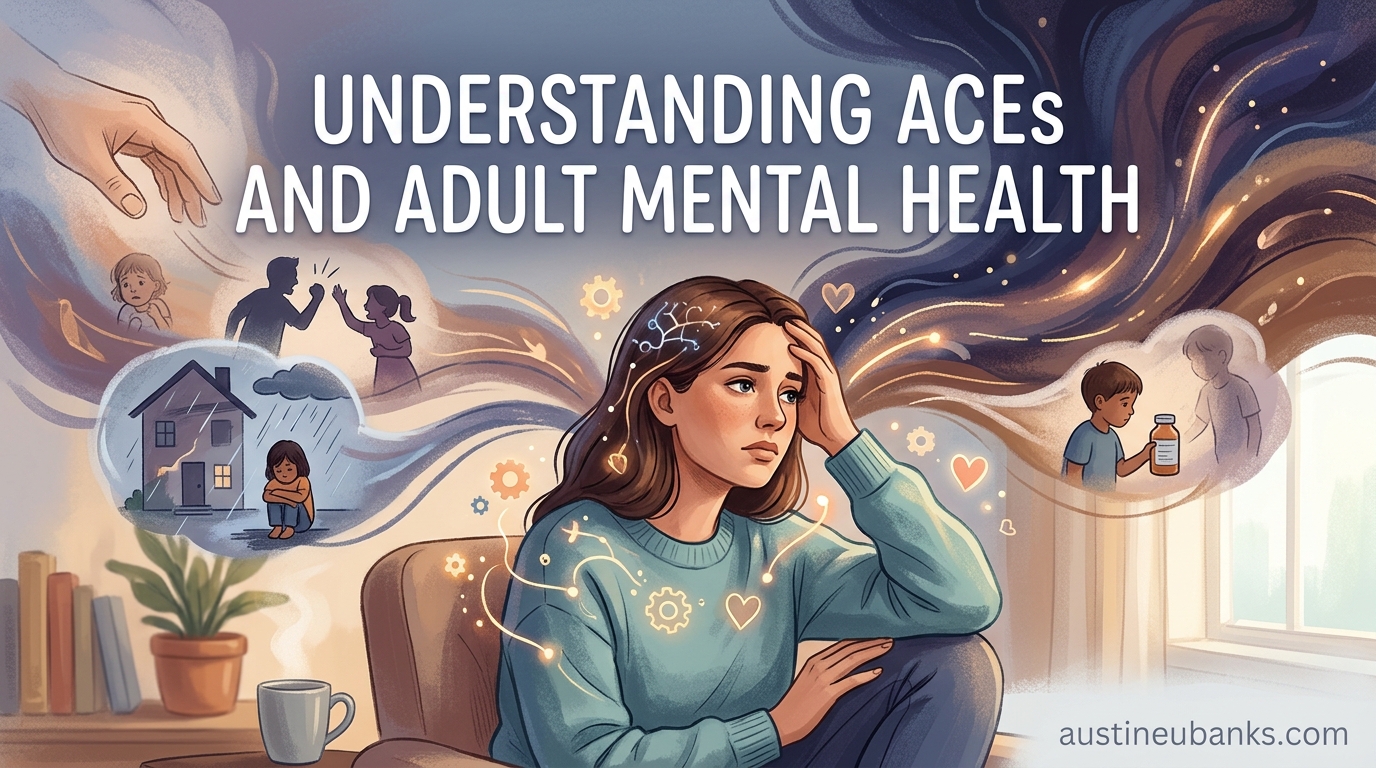
Nearly 6 in 10 adults have experienced at least one adverse childhood experience, and the mental health consequences can follow you for decades. If you have ever wondered why anxiety or depression seems to surface without an obvious cause in adulthood, the answer may lie in what happened long before you had words for it.
The connection between ACEs and adult anxiety and depression is one of the most well-documented findings in modern mental health research. Decades of studies from the CDC, NIH, and institutions like JAMA Psychiatry have shown that childhood adversity physically reshapes the developing brain, alters stress hormones, and dramatically increases the risk of mood and anxiety disorders later in life.
I have spent years studying this topic through the lens of both clinical research and real human experiences shared in therapy communities and support groups. What I have learned is that understanding this connection is not about labeling yourself as damaged. It is about finally having a framework that explains why you feel the way you do and, more importantly, what you can do about it.
In this guide, we will walk through exactly what ACEs are, how they change the brain, why they lead specifically to anxiety and depression in adulthood, and what the science says about healing. Whether you are someone with a high ACE score trying to understand your own mental health, a parent working to break generational cycles, or a healthcare provider looking for accessible explanations for patients, this article covers the full picture.
Our team has compiled research from peer-reviewed journals, CDC data, and community discussions to create a resource that bridges the gap between dense scientific studies and practical everyday understanding. By the end, you will have a clear picture of how childhood experiences shape adult mental health and what steps you can take toward recovery.
Table of Contents
What Are ACEs? Understanding Adverse Childhood Experiences
Adverse Childhood Experiences, commonly called ACEs, are potentially traumatic events that occur between birth and age 17. The original ACE Study conducted by Kaiser Permanente and the CDC in the late 1990s identified 10 specific types of childhood adversity that cluster into three main categories: abuse, neglect, and household dysfunction.
The original 10 ACEs include the following. Under abuse: physical abuse, emotional or verbal abuse, and sexual abuse. Under neglect: physical neglect and emotional neglect. Under household dysfunction: growing up with a parent who has a mental illness, living with someone who has a substance use problem, having a parent who is incarcerated, witnessing domestic violence in the home, and losing a parent to separation or divorce.
Since the original study, researchers have expanded the definition to include additional experiences such as community violence, poverty, racism, bullying, and involvement in the foster care system. However, the foundational 10 ACEs remain the most widely studied and validated set across decades of research.
What makes ACEs so significant is their extraordinary prevalence. According to CDC data, approximately 64 percent of adults in the United States report at least one ACE, and about 17 percent report four or more. These are not rare experiences affecting a small fraction of the population. They are woven into the fabric of millions of childhoods across every demographic group.
ACEs do not discriminate by income, race, or geography. While certain social factors can increase exposure, childhood adversity touches every community. This universality is why understanding the connection between ACEs and adult anxiety and depression matters for public health on a massive scale.
One key insight from the research is that ACEs are cumulative. It is not just whether a child experienced adversity, but how many types of adversity they faced. This cumulative effect, known as the dose-response relationship, is the heart of why ACEs have such a powerful link to adult mental health outcomes.
The ACE Score: Measuring Cumulative Risk
The ACE score is a simple 10-question assessment that counts how many of the original 10 adverse childhood experiences a person has faced. Each yes answer counts as one point, with a maximum score of 10. Despite its simplicity, this score has proven to be a remarkably powerful predictor of adult mental and physical health outcomes.
Research has consistently shown a dose-response relationship between ACE scores and mental health risk. This means that as the number of ACEs increases, the probability of developing anxiety, depression, and other mental health conditions increases right alongside it. The relationship is not random or subtle. It is strong, consistent, and dose-dependent.
One landmark analysis published in the National Institutes of Health literature found that a single one-point increase in ACE score was associated with a 24 percent increase in the risk of depressive and anxiety symptoms. That means someone with an ACE score of 4 faces dramatically different odds than someone with a score of 1, even though both experienced childhood adversity.
Here is how the risk typically breaks down by ACE score range. People with a score of 0 are considered baseline risk. Those with a score of 1 to 3 show moderate elevations in anxiety and depression risk. Individuals with a score of 4 or higher face the steepest risks, including significantly higher rates of clinical depression, anxiety disorders, substance use, and even suicide attempts compared to those with a score of 0.
Specifically, CDC data shows that people with 4 or more ACEs are approximately 2.2 times more likely to experience depression and 1.7 times more likely to experience anxiety compared to those with zero ACEs. At the extreme end, individuals with 6 or more ACEs have been found to have a 30-fold increase in suicide attempts compared to those with none.
It is worth emphasizing that the ACE score is a screening tool, not a diagnosis. A high score does not guarantee you will develop mental illness, and a low score does not mean you will never struggle. The score identifies statistical risk patterns in populations, but individual outcomes depend on many interacting factors including genetics, protective relationships, timing of the adversity, and access to support.
How ACEs Affect the Brain: The Science of Toxic Stress
To understand why ACEs lead to adult anxiety and depression, you have to understand what happens inside the brain when a child is exposed to chronic adversity. The answer centers on a concept called toxic stress, and it changes everything about how the developing brain gets wired.
Not all stress is harmful. Positive stress, like the nervousness before a test, helps children develop resilience. Tolerable stress, like the grief after losing a loved one, can be managed when a child has supportive relationships. But toxic stress is different. It occurs when a child experiences prolonged, severe adversity without the buffer of a stable, caring adult relationship.
When a child faces ongoing abuse, neglect, or household chaos, their body activates the stress response system constantly. The brain perceives threat as ever-present, and it stays locked in fight-or-flight mode. This chronic activation floods the developing brain with stress hormones, particularly cortisol, in amounts and durations that the system was never designed to handle.
The central mechanism involves the HPA axis, which stands for hypothalamic-pituitary-adrenal axis. This is the body master stress response system. In a healthy individual, the HPA axis activates during danger and then shuts off when the threat passes. In a child experiencing toxic stress, the HPA axis becomes dysregulated. It either stays switched on, producing excessive cortisol, or it becomes blunted, producing too little cortisol in situations where a stress response would actually be appropriate.
This dysregulation has profound effects on brain structure. The amygdala, which processes fear and threat detection, becomes hyperactive and enlarged in children with high ACE exposure. This means the brain literally becomes more sensitive to perceived threats, which directly translates to the heightened anxiety and hypervigilance many ACE survivors experience in adulthood.
Meanwhile, the hippocampus, which is critical for memory formation and learning, can actually shrink under prolonged cortisol exposure. Studies have shown reduced hippocampal volume in adults who experienced severe childhood trauma, which may contribute to the memory difficulties and cognitive symptoms that often accompany depression.
The prefrontal cortex, responsible for executive function, decision-making, and emotional regulation, also develops differently under conditions of toxic stress. When this region is impaired, it becomes harder to regulate emotions, suppress inappropriate fear responses, and think clearly under pressure. This is why adults with high ACE scores often describe feeling emotionally hijacked or unable to calm themselves down once anxiety takes hold.
Beyond structural changes, ACEs also trigger epigenetic modifications. These are changes in how genes are expressed without altering the underlying DNA sequence. Research has shown that early trauma can alter the expression of genes that regulate the stress response, and these changes can persist for decades. This means that the biological effects of childhood adversity are literally encoded into how your cells function throughout your life.
Allostatic load is the term researchers use for the cumulative wear and tear on the body from chronic stress. Over years and decades, the constant overactivation of stress systems damages not just the brain but the cardiovascular system, immune system, and metabolic processes. This is why ACEs are linked to physical health problems like heart disease, autoimmune conditions, and chronic pain alongside their well-documented mental health effects.
Understanding this science matters because it reframes adult anxiety and depression from character flaws or random misfortune into understandable biological consequences. If toxic stress rewired your brain to be more reactive to threats and less efficient at regulating emotions, then your anxiety and depression are not signs of weakness. They are the predictable outcome of what your nervous system went through.
The Connection Between ACEs and Adult Anxiety and Depression
This is the question at the heart of this entire article. How exactly does childhood adversity translate into the specific experience of anxiety disorders and depressive disorders in adulthood? The answer involves both shared and distinct pathways, and understanding both can help you make sense of your own symptoms.
The connection between ACEs and adult anxiety and depression operates through several interconnected mechanisms. ACEs alter brain architecture through toxic stress, dysregulate the HPA axis and cortisol production, impair the development of emotional regulation skills, shape negative core beliefs about self and others, and increase reliance on maladaptive coping strategies. Each of these mechanisms contributes to the development of anxiety, depression, or both.
Anxiety and ACEs are linked primarily through the fear-processing system. When the amygdala is hyperactive from chronic childhood stress, the adult brain remains on high alert for danger even when none exists. This manifests as generalized anxiety, panic attacks, social anxiety, and post-traumatic stress. The brain learned early that the world is unsafe, and it never fully unlearned that lesson.
People with high ACE scores often describe a constant feeling of being on edge, an inability to relax, and an exhausting hypervigilance about potential threats. They may scan rooms for exits, feel intense anxiety when someone is angry, or experience panic attacks that seem to come from nowhere. These are not random symptoms. They are the adult expression of a nervous system that was trained during childhood to never let its guard down.
Depression and ACEs follow a related but somewhat different pathway. Chronic stress during brain development can deplete neurotransmitters like serotonin and dopamine, impair the reward circuitry that makes life feel meaningful, and shape deeply negative core beliefs about self-worth. Children who experience abuse or neglect often internalize the message that they are unlovable or fundamentally flawed, and these beliefs persist into adulthood as the cognitive foundation of depression.
The relationship between ACEs and depression also involves learned helplessness. Children in abusive or neglectful environments often have no control over what happens to them. Over time, the brain learns that effort does not change outcomes, which becomes a cognitive pattern that directly fuels depressive symptoms in adulthood. Why try, the brain has learned, when nothing I do makes a difference?
Research published in JAMA Psychiatry in 2024 confirmed that ACEs are associated with increased risk of multiple psychiatric disorders in adulthood, including depression, anxiety, and posttraumatic stress disorder. Importantly, this study controlled for genetic and familial factors, meaning the association between ACEs and adult mental illness persists even when you account for inherited risk. The childhood experiences themselves are driving the outcome.
It is also common for anxiety and depression to co-occur in adults with high ACE scores. When the fear system is overactive and the reward system is underactive simultaneously, you get the miserable combination of constant worry and persistent low mood. Studies show that comorbid anxiety and depression are significantly more likely in individuals with 4 or more ACEs compared to those with lower scores.
The specific types of ACEs a person experiences can also influence which mental health outcomes are most likely. Emotional abuse and emotional neglect tend to be particularly strongly linked to depression, while physical abuse and witnessing domestic violence are more strongly associated with anxiety and PTSD symptoms. Sexual abuse is associated with elevated risk for nearly all mental health conditions.
Understanding that different ACEs can lead to different symptom profiles can be validating. If your anxiety looks different from someone else’s, it may be because your childhood experiences were different. There is no single ACE story, and there is no single way that childhood adversity manifests in adulthood.
Statistics: ACEs and Mental Health by the Numbers
The statistics surrounding ACEs and adult mental health are staggering. I want to share the key data points because numbers have a way of making the scope of this issue concrete in a way that general statements cannot.
According to CDC research, approximately 64 percent of adults report at least one ACE. Nearly 1 in 6 adults, about 17 percent, have experienced four or more ACEs. That translates to tens of millions of adults in the United States alone who carry the highest level of childhood adversity risk.
One NIH-backed study analyzing data from the National Survey of Children’s Health found that children with 4 or more ACEs were significantly more likely to have diagnosed anxiety and depression compared to children with no ACEs. The odds ratios were substantial even after controlling for demographic factors like income, race, and insurance status.
Research published in 2024 examining Swedish population data found that adults who experienced multiple ACEs had elevated rates of depression, anxiety, PTSD, and substance use disorders even after adjusting for family confounding factors. This means the childhood experiences themselves, not just genetic predisposition, were driving the mental health outcomes.
Another major study estimated that ACEs cost the United States economy approximately $14.1 trillion annually in combined healthcare costs, lost productivity, and criminal justice expenses. That figure alone illustrates why the CDC has designated ACE prevention as a public health priority.
On the prevention side, the CDC reports that effective prevention strategies could reduce suicide attempts by up to 89 percent among those who would otherwise have high ACE exposure. This statistic is enormously important because it demonstrates that the ACE-mental health connection is not a fixed destiny. Prevention and intervention work.
Globally, the World Health Organization has found similar patterns across cultures. ACEs are not uniquely American. Studies from Europe, Asia, and Africa all document the same dose-response relationship between childhood adversity and adult mental illness, confirming that this is a fundamental human biology issue rather than a cultural one.
How ACEs Shape Daily Adult Life: Relationships, Work, and Physical Health
The mental health statistics are powerful, but they do not capture what it actually feels like to live with the effects of ACEs day to day. Many people with high ACE scores do not just experience anxiety and depression as discrete symptoms. They navigate a web of interconnected challenges that touch every corner of their adult lives.
In relationships, the effects can be profound. Children who experienced abuse, neglect, or household instability often develop insecure attachment styles that persist into adulthood. This can manifest as difficulty trusting partners, fear of abandonment, people-pleasing behaviors, or pushing people away before they can hurt you. Many adults with high ACE scores describe a painful contradiction: they desperately crave connection but feel terrified of vulnerability.
Intimacy can feel particularly fraught. If the people who were supposed to care for you in childhood were the sources of your fear, then closeness itself becomes associated with danger. This can lead to patterns of relationship anxiety, avoidance, or repeatedly choosing partners who recreate familiar dynamics from childhood, even harmful ones.
At work, ACE-related anxiety and depression can create real challenges. Difficulty concentrating, irritability, and emotional reactivity can strain professional relationships and limit career advancement. Some adults with high ACE scores become overachievers, using perfectionism as a coping mechanism to maintain a sense of control. Others struggle with motivation and consistency because their nervous system is exhausted from chronic stress activation.
For parents, ACEs create a particularly complex challenge. Many adults who experienced childhood adversity carry a deep fear of repeating the cycle with their own children. This fear is valid, because the stress of parenting can reactivate old trauma responses. But awareness is itself a powerful protective factor, and many ACE survivors become deeply intentional, empathetic parents precisely because of what they went through.
The physical health consequences of ACEs are equally significant. The same toxic stress that damages the brain also affects the body. Adults with high ACE scores have elevated rates of heart disease, autoimmune disorders, chronic pain, sleep disturbances, and metabolic conditions. The inflammation caused by chronic stress activation damages tissues throughout the body over decades.
Substance use is another area where ACEs cast a long shadow. Many adults with high ACE scores turn to alcohol, drugs, or compulsive behaviors as a way to manage the anxiety, depression, and emotional pain they carry. These coping mechanisms are often maladaptive, but they make sense when you understand that they developed as survival strategies in environments where healthy coping was never modeled.
I want to be clear that describing these challenges is not about painting a hopeless picture. It is about validation. If you are struggling in these areas, it is not because you are broken or lazy or fundamentally flawed. You are navigating the very real consequences of experiences that reshaped your nervous system before you had any say in the matter.
Signs You May Be Experiencing the Effects of ACEs
One of the most common questions people ask in therapy and in online communities is how to know whether their anxiety or depression is connected to childhood experiences. While only a qualified mental health professional can make a diagnosis, there are patterns and signs that suggest ACE-related mental health effects may be at play.
Consider whether any of these signs resonate with your experience. Persistent anxiety that seems disproportionate to your current circumstances, as if your body is reacting to threats that are not actually present in the moment.
A tendency toward hypervigilance, constantly scanning your environment for signs of danger, conflict, or someone becoming upset with you. This might look like reading micro-expressions on people’s faces, bracing for bad news, or feeling unable to relax even in safe situations.
Difficulty identifying or expressing your emotions, sometimes called alexithymia. Children who grow up in environments where emotions were ignored, punished, or unsafe often grow into adults who do not know what they are feeling or how to communicate it.
Chronic low-grade depression or a persistent sense of emptiness that does not fully respond to changes in circumstances. You might function well on the surface but feel a hollowness underneath that no achievement or relationship seems to fill.
Patterns of intense self-criticism or a core belief that something is fundamentally wrong with you. If you grew up being criticized, neglected, or made to feel like a burden, that message can become an internal voice that undermines your self-worth for decades.
Difficulty trusting others, even those who have demonstrated reliability. This might show up as testing relationships, expecting betrayal, or keeping an emotional distance even from people you love.
A strong startle response or physical anxiety symptoms like a racing heart, shallow breathing, or muscle tension that activate quickly and take a long time to calm down. This reflects a sensitized nervous system that learned to react to threats rapidly.
Patterns of people-pleasing or difficulty setting boundaries, often rooted in a childhood survival strategy of managing other people’s emotions to stay safe.
Substance use or behavioral patterns that function as emotional numbing, whether that is alcohol, excessive screen time, overworking, or compulsive behaviors that help you escape uncomfortable feelings.
Recognizing these signs is not about self-diagnosis or dwelling on the past. It is about building the self-awareness that makes healing possible. When you understand where your patterns come from, you can start to work with them instead of against them.
Protective Factors and Resilience: Why ACEs Are Not Destiny
This is perhaps the most important section in this entire article, so I want to be absolutely clear. Having a high ACE score does not guarantee you will develop anxiety, depression, or any other mental health condition. Many people with significant childhood adversity grow into healthy, resilient adults. The research on protective factors explains why.
Protective factors are the conditions, relationships, and resources that buffer against the negative effects of childhood adversity. They are the reason two people can experience similar childhoods and have very different adult outcomes. And importantly, protective factors can be developed at any point in life, not just during childhood.
The single most powerful protective factor identified across decades of research is the presence of at least one stable, caring, and supportive relationship with an adult during childhood. This could be a grandparent, a teacher, a coach, a neighbor, or a mentor. Even one consistent, trustworthy relationship can dramatically reduce the impact of ACEs on long-term mental health.
Positive Childhood Experiences, or PCEs, are the counterbalance to ACEs, and research on them has grown significantly. A 2019 study found that adults who reported higher levels of PCEs, such as feeling able to talk to their family about feelings, feeling supported by family during difficult times, having a sense of belonging in school, and having at least two non-parent adults who cared about them, showed significantly lower rates of adult depression and poor mental health, even when they also had high ACE scores.
Individual resilience factors also play a major role. These include emotional regulation skills, problem-solving abilities, a sense of self-efficacy, and the capacity to maintain perspective during difficult times. Some of these develop naturally in supportive environments, but all of them can be deliberately strengthened through therapy, practice, and self-work at any age.
Community and social support matter enormously. Adults with strong social connections, whether through friendships, support groups, faith communities, or therapy groups, are better equipped to manage the effects of childhood adversity. Isolation amplifies ACE effects, while connection mitigates them.
Access to mental healthcare is another critical protective factor. Adults who receive trauma-informed therapy, whether for acute symptoms or for ongoing personal growth, tend to have significantly better outcomes than those who try to manage alone. The type of therapy matters, and we will discuss specific approaches in the next section.
Physical health behaviors also serve as protective factors. Regular exercise, adequate sleep, good nutrition, and limiting substance use all support the nervous system and brain health. These sound basic, but their impact on the stress response system is significant, especially for people with ACE-related HPA axis dysregulation.
Here is the bottom line. Your ACE score is a risk indicator, not a verdict. It tells you something about what your nervous system has been through, but it does not determine your future. Neuroplasticity, the brain’s ability to rewire itself, persists throughout your entire life. The same brain that was changed by adversity can be changed by healing experiences.
Breaking the Cycle: Treatment and Coping Strategies for ACE-Related Anxiety and Depression
Understanding the connection between ACEs and adult anxiety and depression is important, but understanding alone does not change anything. What actually helps is taking specific, evidence-based steps to address the root causes and manage the symptoms. The good news is that there are more effective treatments available now than at any point in history.
Trauma-Focused Cognitive Behavioral Therapy, or TF-CBT, is one of the most widely researched approaches for addressing the effects of childhood adversity. It helps individuals identify and reframe the negative thought patterns that developed from early experiences, gradually process traumatic memories, and build practical skills for managing anxiety and depression. CBT has strong evidence for both ACE-related anxiety and depression.
Eye Movement Desensitization and Reprocessing, or EMDR, is a therapy specifically designed to help the brain reprocess traumatic memories so they no longer trigger intense emotional reactions. For adults whose anxiety and depression are rooted in specific childhood events, EMDR can be particularly effective. The approach uses bilateral stimulation, typically through guided eye movements, to help the brain integrate and calm the emotional charge of stored memories.
Somatic therapies work with the understanding that trauma is stored not just in thoughts but in the body. Approaches like Somatic Experiencing and Sensorimotor Psychotherapy help individuals tune into physical sensations associated with stress and trauma, learn to regulate their nervous system, and release stored tension. For people whose anxiety manifests primarily as physical symptoms, somatic approaches can be transformative.
Dialectical Behavior Therapy, or DBT, teaches specific skills for emotional regulation, distress tolerance, interpersonal effectiveness, and mindfulness. For adults with high ACE scores who struggle with intense emotions, impulsive behaviors, or relationship difficulties, DBT provides a practical toolkit for navigating daily life more effectively.
Internal Family Systems, or IFS, is an increasingly popular approach for ACE-related issues. It works with the idea that the mind is made up of different parts, some of which carry pain from childhood experiences and others that developed protective roles. IFS helps individuals understand and heal these internal dynamics with self-compassion rather than self-judgment.
Beyond formal therapy, there are many self-directed strategies that support recovery. Mindfulness meditation has been shown to reduce amygdala reactivity and strengthen the prefrontal cortex, directly counteracting some of the brain changes caused by toxic stress. Even 10 to 15 minutes a day of consistent practice can produce measurable benefits over time.
Journaling, particularly expressive writing about childhood experiences, has demonstrated benefits for mental health. Research by Dr. James Pennebaker and others has shown that writing about difficult experiences for 15 to 20 minutes over several days can improve both psychological and physical health outcomes. It helps the brain process and organize fragmented memories into coherent narratives.
Building a toolkit of grounding techniques for anxiety episodes is essential. These might include box breathing, the 5-4-3-2-1 sensory technique, progressive muscle relaxation, or cold water exposure. The goal is to have practiced these skills during calm moments so they are accessible when anxiety spikes.
Connecting with others who share similar experiences can be deeply healing. Support groups, both in-person and online, provide the peer validation that forum research identified as a top trust signal. Knowing you are not alone, that others have walked this path and found their way through, is itself a form of therapy.
For people who cannot access or afford traditional therapy, there are growing options. Many community mental health centers offer sliding-scale services. Online therapy platforms have made treatment more accessible. There are also excellent self-help books, workbooks, and apps specifically designed for trauma recovery and anxiety management. The ACEs framework originated with a self-administered questionnaire, and self-education remains a valid and valuable starting point.
Knowing when to seek professional help is important. If your anxiety or depression is interfering with your daily functioning, relationships, or ability to work, that is a clear signal to reach out. If you are having thoughts of self-harm, seek immediate help through crisis resources like the 988 Suicide and Crisis Lifeline. You do not have to wait until things become unbearable to ask for support.
Intergenerational Trauma: Understanding the Cycle
One of the most painful concerns adults with high ACE scores express is the fear of passing their trauma to their children. This concern reflects a deeply held desire to break generational cycles of pain, and it deserves honest attention.
Intergenerational trauma refers to the ways that the effects of adverse experiences can transmit from one generation to the next. This happens through multiple mechanisms. Parents who experienced ACEs may struggle with emotional regulation, substance use, or relationship patterns that create stressful environments for their own children. Epigenetic changes from trauma can potentially be passed through generations. And the behavioral patterns learned in childhood often repeat unconsciously in parenting.
The CDC reports that children of parents with high ACE scores are themselves at elevated risk for experiencing ACEs. This does not happen because traumatized parents do not love their children. It happens because unhealed trauma creates real challenges in providing the consistent, regulated, emotionally safe environment that children need.
But here is the critically important counterpoint. Awareness changes everything. When adults understand their ACE history and actively work on healing, they dramatically reduce the likelihood of passing trauma forward. Simply recognizing that your reactions are shaped by your own childhood experiences gives you the ability to pause, choose differently, and break the pattern.
Parents who are in therapy, who practice emotional regulation skills, and who are honest with themselves about their triggers are already breaking the cycle. Research shows that even imperfect parenting, when paired with genuine emotional presence and a willingness to repair after mistakes, produces healthy outcomes for children.
The goal is not perfection. It is awareness, repair, and growth. Children do not need parents who never make mistakes. They need parents who can acknowledge mistakes, apologize, and model the process of healing. That modeling is itself one of the most powerful protective factors a parent can provide.
FAQs
What are ACEs and how do they affect mental health?
ACEs (Adverse Childhood Experiences) are potentially traumatic events that occur before age 18, including abuse, neglect, and household dysfunction. They affect mental health by triggering toxic stress that dysregulates the brain’s stress response system, alters brain structures like the amygdala and hippocampus, and increases vulnerability to anxiety, depression, and other mental health conditions in adulthood.
How do adverse childhood experiences lead to anxiety and depression in adulthood?
ACEs lead to adult anxiety and depression through several mechanisms: chronic toxic stress rewires the fear-processing amygdala to be hyperactive (causing anxiety), impairs the reward circuitry and depletes neurotransmitters like serotonin and dopamine (causing depression), shapes negative core beliefs about self-worth, and impairs emotional regulation. A one-point increase in ACE score is associated with a 24 percent increase in risk for depressive and anxiety symptoms.
What is the relationship between childhood trauma and adult mental health?
The relationship is dose-dependent, meaning more childhood adversity leads to higher risk of adult mental health problems. CDC data shows that people with 4 or more ACEs are approximately 2.2 times more likely to experience depression and 1.7 times more likely to experience anxiety compared to those with zero ACEs. Nearly 64 percent of adults report at least one ACE, making this a widespread public health issue.
How does the ACE score correlate with mental health outcomes?
The ACE score shows a clear dose-response relationship with mental health outcomes. A score of 0 represents baseline risk. Scores of 1 to 3 show moderate elevations in anxiety and depression risk. Scores of 4 or higher significantly increase risk for clinical depression, anxiety disorders, substance use, and suicide attempts. However, the score is a screening tool for statistical risk, not a guarantee of individual outcomes.
What are the long-term effects of ACEs on brain development and stress response?
ACEs cause toxic stress that permanently alters brain development. The amygdala becomes hyperactive, increasing fear and anxiety responses. The hippocampus can shrink, affecting memory and learning. The prefrontal cortex develops differently, impairing emotional regulation and decision-making. The HPA axis becomes dysregulated, leading to abnormal cortisol patterns. These changes also increase risk for physical health problems including heart disease, autoimmune conditions, and chronic pain.
Can the effects of ACEs be reversed or healed?
Yes, the effects of ACEs can be significantly improved through evidence-based treatment. Approaches like trauma-focused CBT, EMDR, somatic therapy, and DBT help reprocess traumatic memories and build emotional regulation skills. Neuroplasticity means the brain can rewire itself throughout life. Protective factors like supportive relationships, mindfulness practice, and healthy lifestyle habits further support recovery. A high ACE score is a risk indicator, not a life sentence.
Conclusion: Understanding Is the First Step
The connection between ACEs and adult anxiety and depression is real, well-researched, and deeply personal for millions of people. Childhood adversity reshapes the developing brain through toxic stress, dysregulates the body’s stress response systems, and significantly increases the risk of anxiety disorders, depression, and a host of related challenges that can echo through decades of adult life.
But the most important takeaway from all of this research is that understanding the connection between ACEs and adult anxiety and depression is the beginning of healing, not the end of hope. The brain that was changed by adversity is capable of being changed by recovery. Protective factors, therapy, self-awareness, and supportive relationships all work to counteract the effects of childhood trauma at any age.
If you recognize yourself in this article, the next step is simple but significant. Talk to someone. Whether that is a therapist, a doctor, a trusted friend, or a support group, reaching out is itself an act of resilience. Your ACE score does not define you. What defines you is what you choose to do with the understanding you now have.