
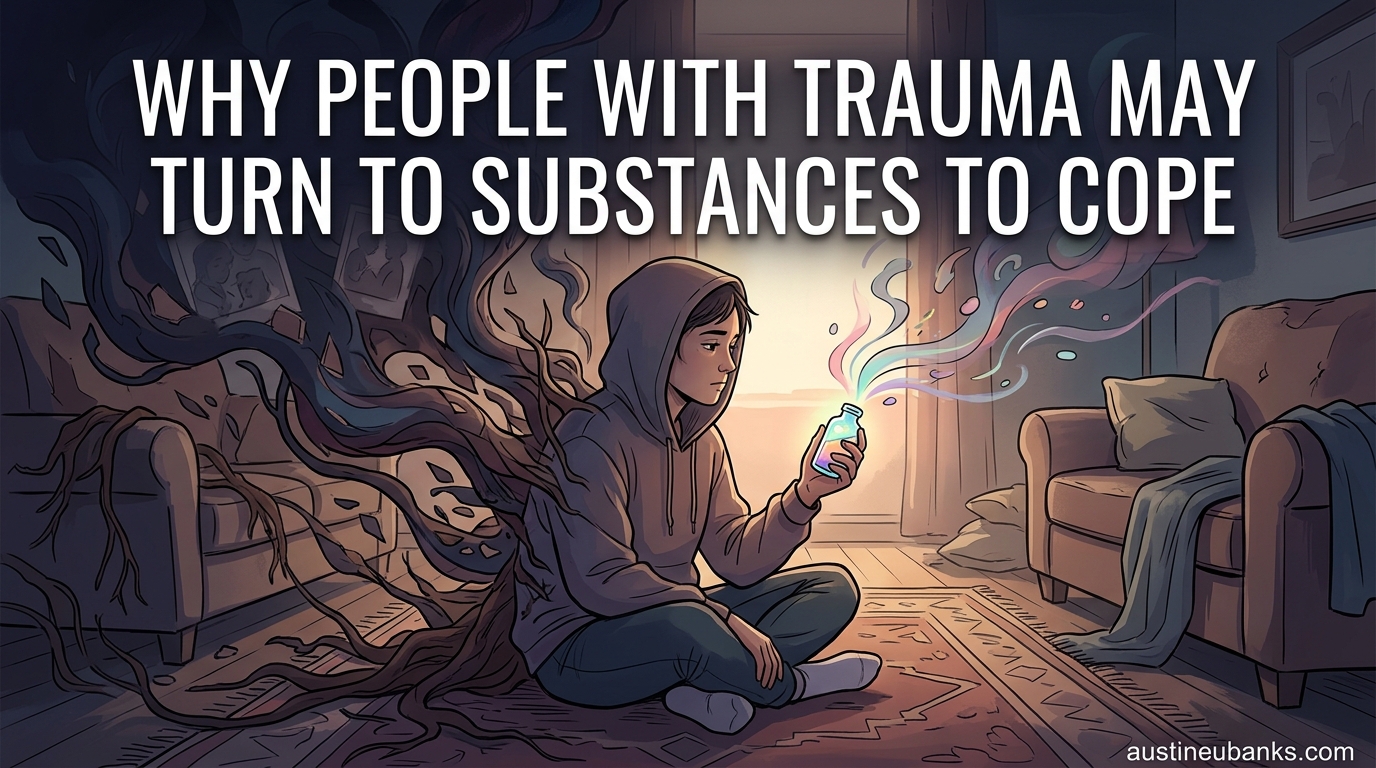
Trauma changes how the brain processes stress, emotions, and even everyday experiences. When someone lives through a deeply distressing event, their nervous system does not simply reset once the danger passes. Instead, the body and mind stay primed for threat, sometimes for years or decades. This is one of the clearest reasons why people with trauma may turn to substances to cope, they are searching for relief from a constant state of alarm.
Our team has spent years researching the connection between psychological trauma and substance use. What we have found, again and again, is that self-medication is rarely about recklessness. It is about survival. People reach for alcohol, prescription drugs, or other substances because, in the moment, those substances quiet the noise that trauma has created inside them.
In this guide, we break down exactly why this happens. We cover the self-medication hypothesis, the neurobiological changes trauma triggers, the statistics behind co-occurring disorders, and the evidence-based treatments that help people heal from both trauma and addiction at the same time. Whether you are trying to understand your own experience or support someone you love, this article offers a clear, compassionate, and science-backed explanation.
Table of Contents
Quick Answer: Why People With Trauma May Turn to Substances to Cope
People with trauma often turn to substances because drugs and alcohol temporarily reduce distressing symptoms like flashbacks, hypervigilance, anxiety, and insomnia. This pattern, known as the self-medication hypothesis, describes how substances briefly dull overwhelming emotions by activating the brain’s reward pathways. Over time, this coping mechanism can develop into a substance use disorder, especially when the root trauma goes unaddressed.
Roughly 45% of people with post-traumatic stress disorder (PTSD) also struggle with substance use problems. The two conditions feed each other in what clinicians call a vicious cycle. Understanding this connection is the first step toward effective, integrated treatment.
The Self-Medication Hypothesis: A Survival Strategy, Not a Moral Failing
Self-medication is not a clinical diagnosis. It is a framework that explains why people with trauma may turn to substances to cope. The idea is straightforward: substances provide short-term relief from unbearable symptoms, even though they create long-term harm.
Imagine living with flashbacks that hit you without warning. Picture your heart racing at ordinary sounds because your brain has classified them as threats. Consider what it would feel like to dread sleep because nightmares replay the worst moment of your life every single night. Now imagine that a drink, a pill, or another substance offers thirty minutes of peace from that torment.
That is the core of the self-medication hypothesis. It does not excuse harmful behavior, but it explains the logic behind it. People are not using substances because they want to destroy their lives. They are using substances because, in the absence of safer tools, substances feel like the only option that works.
Research supports this. The PTSD National Center notes that people with PTSD frequently use alcohol or drugs to manage symptoms such as flashbacks, hypervigilance, and emotional numbing. The relief is real but temporary, and the cost compounds over time. What begins as a coping strategy can become its own source of suffering.
This is why shame-based approaches so often fail. When we treat substance use as a character defect rather than a desperate attempt at emotional regulation, we miss the underlying wound. Healing requires addressing the trauma that drives the need for substances in the first place.
How Trauma Rewires the Brain: The Neurobiological Connection
To truly understand why people with trauma may turn to substances to cope, we need to look at what trauma does to the brain. The changes are not imagined or voluntary. They are measurable, biological, and they directly increase vulnerability to addiction.
The HPA Axis and the Dysregulated Stress Response
The hypothalamic-pituitary-adrenal (HPA) axis is the body’s central stress response system. Under normal conditions, it kicks into gear when you face a threat and winds down once the danger has passed. Trauma disrupts this system. The HPA axis becomes chronically activated, flooding the body with stress hormones like cortisol and adrenaline even when no actual threat exists.
This dysregulated stress response leaves trauma survivors in a near-constant state of hypervigilance. They feel on edge, irritable, and physically exhausted because their body is perpetually bracing for impact. Substances, particularly depressants like alcohol and opioids, counteract this hyperarousal by depressing the nervous system and forcing a temporary state of calm.
Reward Pathways and Dopamine Depletion
Trauma also damages the brain’s reward circuitry. Chronic stress depletes dopamine, the neurotransmitter responsible for motivation, pleasure, and feelings of reward. When dopamine levels drop, everyday activities stop feeling enjoyable. Life becomes flat, gray, and difficult to endure.
Substances flood the brain with dopamine, creating a surge of pleasure that the trauma-affected brain cannot produce on its own. This is why substances feel so rewarding to someone with trauma, they are filling a neurochemical gap. Unfortunately, repeated use further damages the reward system, requiring more of the substance to achieve the same effect. This is the biological foundation of tolerance and dependence.
Emotional Numbing and the Prefrontal Cortex
Trauma impairs the prefrontal cortex, the brain region responsible for decision-making, impulse control, and emotional regulation. When this area is compromised, people struggle to manage overwhelming emotions and make choices that serve their long-term wellbeing. Substance use further weakens prefrontal cortex function, making it even harder to resist cravings or choose healthier coping strategies.
Emotional numbing, a common PTSD symptom, also plays a role. Many trauma survivors describe feeling disconnected from their emotions, unable to access joy, sadness, or even fear in a healthy way. Substances can temporarily restore emotional intensity or, conversely, provide a more complete numbness that feels safer than the alternative.
Types of Trauma Most Strongly Linked to Substance Use
Not all trauma carries the same risk for substance use. Research consistently shows that certain types of traumatic experiences are more likely to lead to substance misuse. Understanding these patterns helps explain why some trauma survivors develop addiction while others do not.
1. Childhood Abuse and Neglect
Childhood physical, sexual, and emotional abuse is one of the strongest predictors of adult substance use disorders. When trauma occurs during critical periods of brain development, it shapes how the nervous system responds to stress for the rest of a person’s life. Children who experience abuse or severe neglect often grow up without healthy coping models, making substance use a default strategy when emotions become overwhelming.
The Adverse Childhood Experiences (ACEs) study provides striking data on this connection. Researchers found a powerful dose-response relationship: the more ACEs a person has, the higher their risk for substance use disorders. Individuals with four or more ACEs are roughly five times more likely to engage in heavy alcohol use and up to nine times more likely to misuse prescription opioids compared to those with zero ACEs.
2. Domestic Violence and Interpersonal Trauma
Experiencing or witnessing domestic violence creates chronic, inescapable stress. Unlike a single traumatic event, domestic violence often involves repeated trauma from someone the victim knows and may depend on. This pattern erodes trust, safety, and the ability to self-soothe.
Survivors of domestic violence frequently turn to substances to manage the anxiety, hypervigilance, and emotional pain that persist long after the relationship ends. Alcohol is particularly common in this population because it is legal, accessible, and socially accepted, making it easy to use without drawing immediate concern.
3. Combat and Military Trauma
Military veterans face some of the highest rates of co-occurring PTSD and substance use disorders. According to the Department of Veterans Affairs, veterans with PTSD are roughly two to three times more likely to have a substance use disorder compared to veterans without PTSD. Combat exposure involves life-threatening situations, moral injury, and the loss of comrades, all of which can produce trauma symptoms that persist for decades.
Alcohol is the most commonly misused substance among veterans, followed by prescription opioids and, increasingly, cannabis. Many veterans describe using substances to sleep, to quiet intrusive memories, or to numb the guilt and grief that combat leaves behind.
4. Sexual Assault and Rape
Sexual assault survivors have significantly elevated rates of substance use disorders. The trauma of sexual violence involves a profound violation of bodily autonomy, trust, and safety. Survivors often experience intense shame, self-blame, and dissociation, emotions that substances can temporarily suppress.
Research shows that women who experience sexual assault are particularly vulnerable to developing alcohol use disorders. The intersection of gender-based violence and substance use is an area where cultural and systemic factors compound individual trauma, making recovery more complex without specialized, trauma-informed care.
5. Community Violence and Systemic Trauma
Exposure to community violence, including shootings, gang activity, and chronic neighborhood danger, creates a sustained state of fear. This is especially relevant for adolescents growing up in under-resourced environments. Unlike a single-incident trauma, community violence is ongoing, which means the nervous system never fully exits threat mode.
Systemic factors like racism, poverty, and discrimination add another layer. These are not one-time events but chronic stressors that accumulate over a lifetime. When we talk about why people with trauma may turn to substances to cope, we have to include these structural realities. They create the conditions in which substance use becomes a logical, if harmful, response to unrelenting stress.
The Statistics: How Common Is the Trauma-Addiction Link?
The numbers tell a sobering story about how deeply trauma and substance use are intertwined. These are not fringe cases. The connection is widespread, well-documented, and consistent across populations.
Approximately 45% of people with PTSD also meet criteria for a substance use disorder. This includes about 28% with alcohol use disorder and 22% with drug use disorder. Among people seeking treatment for substance use disorders, roughly 30 to 40% also meet criteria for PTSD.
The ACE study, conducted by Kaiser Permanente and the CDC, surveyed over 17,000 participants and found that ACEs dramatically increase the risk of addiction. Someone with five or more ACEs has a significantly higher risk of becoming an alcoholic, using illicit drugs, and attempting suicide compared to someone with zero ACEs. The dose-response relationship means there is no safe threshold, each additional adverse experience compounds the risk.
Among adolescents, the data is equally concerning. Teens who have experienced trauma are significantly more likely to initiate substance use at an earlier age, which in turn increases the risk of developing a substance use disorder in adulthood. Early intervention is critical because the adolescent brain is still developing, particularly in the prefrontal cortex where impulse control and decision-making are managed.
The Vicious Cycle: How Trauma and Addiction Feed Each Other
The relationship between trauma and substance use is not a straight line. It is a loop. Understanding this vicious cycle helps explain why breaking free is so difficult without comprehensive, trauma-informed treatment.
Here is how the cycle typically works. Trauma produces distressing symptoms like flashbacks, nightmares, hypervigilance, and emotional numbness. These symptoms feel unbearable, so the person uses substances to find relief. The substances work temporarily, but as they wear off, the symptoms return, often worse than before. This is because substances disrupt sleep, alter mood chemistry, and impair the brain’s ability to process traumatic memories naturally.
As substance use increases, it creates new problems: relationship conflict, financial stress, legal issues, and declining physical and mental health. These consequences often become new traumas themselves, adding to the original wound. The person then uses more substances to cope with the fallout of their substance use, deepening the cycle.
Withdrawal adds another layer. When someone stops using substances, their trauma symptoms surge with full force. The brain, accustomed to chemical suppression, suddenly has to face raw, unmedicated pain. This is why relapse rates are so high when trauma is not addressed concurrently with addiction treatment.
Trauma Triggers and Cravings: The Hidden Link
One of the most challenging aspects of recovery is the connection between trauma triggers and substance cravings. A trauma trigger is anything that reminds the brain of the original traumatic event. This could be a smell, a sound, a time of year, a type of interaction, or even a body sensation. When a trigger fires, the nervous system reacts as though the trauma is happening again in real time.
For someone with a history of using substances to manage trauma symptoms, a trigger does not just produce anxiety or a flashback. It produces a craving. The brain has learned that substances make the distress stop, so when distress returns, the brain screams for the substance it associates with relief. This learned association is incredibly powerful and explains why people can feel suddenly, intensely drawn to substances even after long periods of abstinence.
This is also why people in early recovery sometimes find that starting trauma therapy triggers more cravings. As therapy brings traumatic memories to the surface, the brain’s old coping mechanism activates. Without the right support, this can lead to relapse. Integrated treatment that addresses both trauma and substance use simultaneously is designed to break exactly this pattern.
Gender Differences in the Trauma-Substance Use Pathway
Men and women often experience the trauma-addiction connection differently, and understanding these differences matters for effective treatment. Women are more likely to experience interpersonal trauma, particularly sexual violence and domestic abuse, and they tend to develop PTSD at higher rates than men despite experiencing fewer traumatic events overall.
Women with substance use disorders are also more likely than men to have a co-occurring PTSD diagnosis. They often report that substance use began as a direct response to trauma, fitting the self-medication hypothesis closely. Alcohol and prescription drugs are the most common substances involved, and women tend to progress from first use to dependence more quickly than men, a phenomenon researchers call telescoping.
Men, by contrast, are more likely to experience combat trauma, physical assault, and accidents. They may externalize trauma symptoms through aggression or risk-taking before substances become the primary coping mechanism. These differences do not apply to everyone, but they highlight why personalized, gender-responsive treatment matters.
How to Break the Cycle: Actionable Steps
Breaking the cycle of trauma and substance use is possible, but it requires addressing both issues at the same time. Here are the steps that research and clinical experience consistently support.
Step 1: Recognize the Pattern
The first step is simply understanding that your substance use is connected to your trauma. This awareness removes shame and replaces it with context. You are not broken, weak, or morally defective. You developed a coping strategy that made sense given what you experienced, and now you are learning to replace it with something better.
Ask yourself: Do I reach for substances when I feel triggered, anxious, or emotionally overwhelmed? Do my cravings intensify around anniversaries of traumatic events or in situations that remind me of the past? If the answer is yes, your substance use may be deeply tied to trauma.
Step 2: Seek Integrated, Trauma-Informed Care
Look for treatment that addresses trauma and substance use together, not sequentially. Sequential treatment, which tackles addiction first and trauma later (or vice versa), often fails because each untreated condition sabotages recovery from the other. Integrated treatment models like Concurrent Treatment of PTSD and Substance Use Disorders Using Prolonged Exposure (COPE) have strong evidence behind them.
Trauma-informed care means providers understand the link between trauma and addiction, avoid re-traumatizing practices, and prioritize safety, choice, and collaboration. It means you will not be judged for using substances to cope. You will be supported in finding healthier alternatives.
Step 3: Build New Coping Skills
Recovery is not just about stopping substances. It is about building a toolkit of coping strategies that address the same needs substances were meeting. This includes grounding techniques for dissociation and flashbacks, breathing exercises for hypervigilance, sleep hygiene practices for insomnia, and healthy social connection for isolation and shame.
Dialectical behavior therapy (DBT) skills, mindfulness practices, and somatic therapies like yoga and trauma-sensitive movement have all shown promise in helping trauma survivors regulate their nervous systems without substances.
Step 4: Address Triggers Proactively
Work with a therapist to identify your trauma triggers and develop a plan for managing cravings when they activate. This might involve avoiding certain high-risk situations early in recovery, creating a list of people to call when cravings hit, or practicing specific grounding exercises that interrupt the trigger-craving-use cycle.
Step 5: Build Protective Factors
Protective factors reduce the risk of relapse and support long-term healing. These include strong social support, meaningful daily activities, stable housing, physical health, spirituality or a sense of purpose, and connection to a recovery community. The more protective factors you build, the more resilient you become.
Evidence-Based Treatments for Co-Occurring Trauma and Substance Use
Treatment for co-occurring PTSD and substance use disorders has advanced significantly in recent years. The following therapies have the strongest evidence base.
Cognitive Processing Therapy (CPT): A 12-session trauma-focused therapy that helps people identify and challenge unhelpful beliefs formed by trauma, such as self-blame and a sense of permanent danger. CPT has been successfully adapted for people with co-occurring substance use disorders.
Prolonged Exposure (PE) and COPE: Prolonged exposure helps people gradually confront trauma memories and triggers they have been avoiding. COPE combines prolonged exposure with substance use counseling so both conditions are treated simultaneously. Studies show COPE reduces PTSD symptoms and substance use without increasing relapse risk.
Eye Movement Desensitization and Reprocessing (EMDR): EMDR uses bilateral stimulation, typically eye movements, to help the brain reprocess traumatic memories so they lose their emotional charge. Many people find EMDR particularly helpful because it does not require detailed verbal description of the trauma.
Medication-Assisted Treatment (MAT): For opioid and alcohol use disorders, medications like buprenorphine, methadone, naltrexone, and acamprosate can reduce cravings and support recovery. These medications can be safely combined with trauma-focused psychotherapy.
Peer Support Groups: Programs like Alcoholics Anonymous (AA), Narcotics Anonymous (NA), and SMART Recovery offer ongoing community and accountability. Some groups specifically address trauma and addiction, and many people find that combining peer support with professional therapy produces the best outcomes.
When to Seek Help: Warning Signs
If you are wondering whether your substance use is connected to trauma, that question itself is meaningful. Here are some signs that it may be time to reach out for professional support.
You use substances specifically to manage anxiety, sleep problems, flashbacks, or emotional numbness. Your substance use has increased over time. You have tried to cut back or stop but could not. You feel shame or guilt about your substance use but cannot imagine facing your emotions without it. Your substance use is affecting your relationships, work, or health. You have experienced a traumatic event and notice that substance use helps you avoid thinking about it.
None of these signs mean you are beyond help. They mean you are human, and you are dealing with something that requires support. The SAMHSA National Helpline at 1-800-662-4357 is free, confidential, and available 24/7. You can also text HOME to 741741 to connect with the Crisis Text Line.
FAQs
Why do people with PTSD use drugs?
People with PTSD use drugs to temporarily manage distressing symptoms such as flashbacks, hypervigilance, nightmares, and emotional numbing. This pattern, known as self-medication, provides short-term relief but can lead to a substance use disorder. Approximately 45% of people with PTSD also struggle with substance use problems.
What is an example of a dual diagnosis?
A dual diagnosis, also called a co-occurring disorder, is when someone has both a mental health condition and a substance use disorder at the same time. A common example is a combat veteran with PTSD who also has an alcohol use disorder. Another example is a sexual assault survivor with PTSD and prescription opioid dependence.
Do people with PTSD self-medicate?
Yes, self-medication is extremely common among people with PTSD. Many use alcohol, prescription drugs, or other substances to reduce anxiety, quiet intrusive memories, improve sleep, or numb emotional pain. While substances provide temporary relief, they ultimately worsen PTSD symptoms and create a vicious cycle that makes both conditions harder to treat.
What is the most effective treatment for addiction?
The most effective treatment for addiction, especially when trauma is involved, is integrated care that addresses both conditions simultaneously. Evidence-based approaches include Cognitive Processing Therapy, Prolonged Exposure, COPE therapy, EMDR, and medication-assisted treatment. Combining professional therapy with peer support groups like AA or SMART Recovery produces the strongest long-term outcomes.
Conclusion: Recovery Is Possible
Understanding why people with trauma may turn to substances to cope changes everything. It replaces judgment with compassion. It replaces confusion with clarity. And most importantly, it points the way toward treatment that actually works.
The connection between trauma and substance use is not a life sentence. Every day, people heal from both. They do it through integrated treatment that honors the full picture of what they have been through. They do it by building new coping skills that address the same needs substances once met. And they do it by connecting with communities that understand the link between trauma and addiction.
If you or someone you love is caught in this cycle, reach out. Call the SAMHSA Helpline at 1-800-662-4357, text HOME to 741741, or contact a trauma-informed treatment provider in your area. The first step is not about willpower or punishment. It is about finding people who understand that your substance use has a story behind it, and that story can have a different ending.
We will continue updating this guide as new research on trauma and substance use emerges. The science is evolving, treatments are improving, and recovery is more achievable now than ever before.