
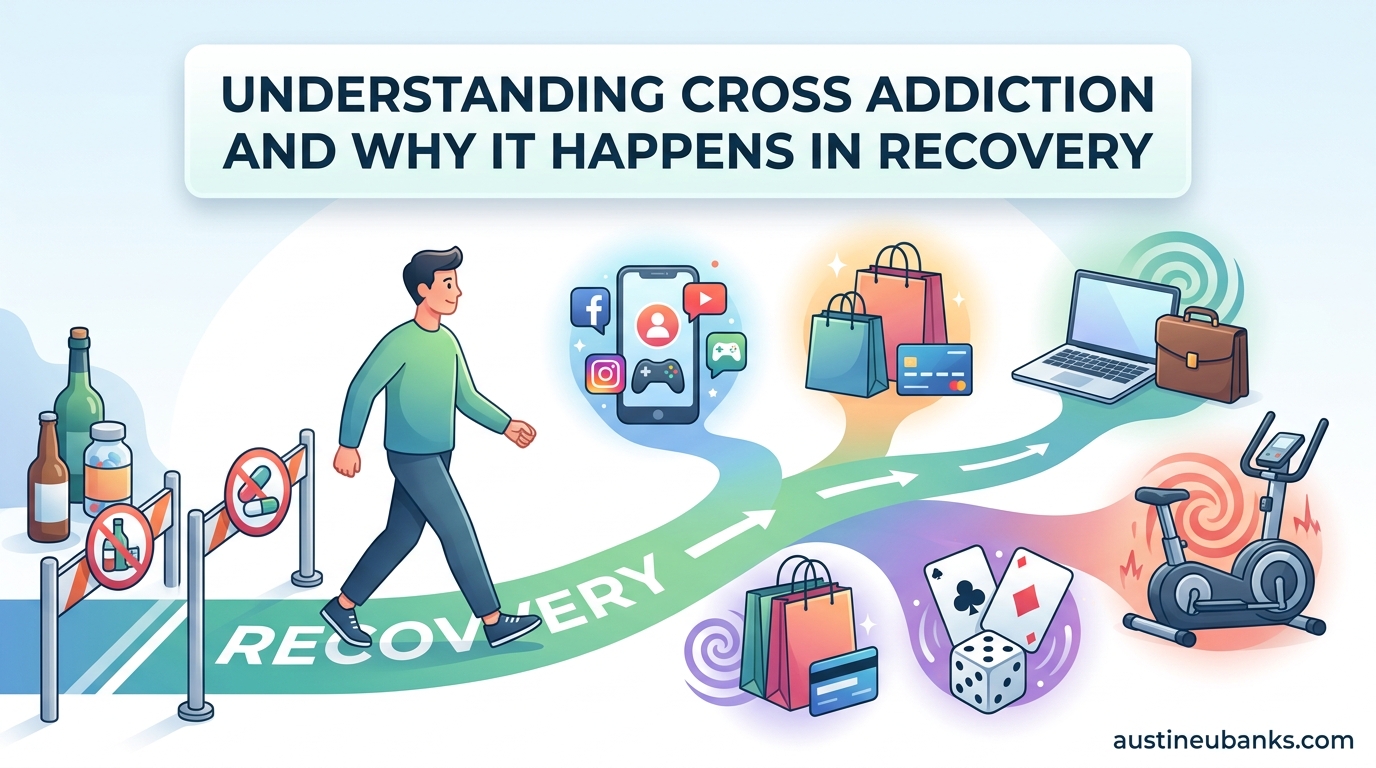
Cross-addiction is when a person recovering from one addiction develops a new addiction to a different substance or behavior. It is also called addiction transfer or Addiction Interaction Disorder. Our team has seen this pattern repeatedly in recovery communities, and it leaves people feeling confused, frustrated, and sometimes ashamed that their hard work in sobriety seems to have led somewhere unexpected.
If you have ever wondered why someone who worked the steps, completed rehab, or built months of sobriety suddenly finds themselves compulsively gambling, chain-smoking, or depending on a new substance, you are asking the right question. Understanding cross-addiction and why it happens in recovery is not about assigning blame. It is about recognizing how the brain, psychology, and environment interact during the recovery process.
This guide breaks down what cross-addiction really is, the neuroscience behind why it happens, the most common patterns we see, and practical steps to prevent or address it. Whether you are in recovery yourself or supporting someone who is, this information can help you navigate one of the most misunderstood aspects of the sobriety journey.
Table of Contents
What Is Cross-Addiction?
Cross-addiction refers to the phenomenon where a person who has overcome dependence on one substance or compulsive behavior develops a new, different addiction. For example, someone who achieves sobriety from alcohol might later develop an addiction to prescription painkillers, gambling, or even compulsive exercise. The original addiction is gone, but a new one has taken its place.
The clinical term for this is Addiction Interaction Disorder, a concept formally recognized in addiction medicine. It describes how multiple addictive behaviors can interact with and reinforce each other. The term “addiction transfer” captures the same idea from a different angle: the addictive drive has not disappeared. It has simply moved to a new target.
Our team wants to be clear about something important. Cross-addiction is not a sign of weakness, failure, or a flawed recovery program. It is a recognized clinical pattern that reflects how deeply addiction affects the brain’s wiring. Understanding it as a medical and psychological phenomenon, rather than a moral shortcoming, is the first step toward addressing it effectively.
Cross-Addiction vs. Cross-Dependence
Many people confuse cross-addiction with cross-dependence, but they are distinct concepts. Cross-addiction involves developing a new addiction to a completely different substance or behavior. Cross-dependence, on the other hand, refers to a situation where someone who has developed tolerance to one substance also shows tolerance to a related substance, even if they have never used it.
For example, a person addicted to heroin may show cross-dependence to other opioids like methadone or fentanyl because the brain’s opioid receptors have already adapted. Cross-dependence is about physiological tolerance. Cross-addiction is about the behavioral and psychological shift to a new addictive pattern.
Understanding this distinction matters because it changes how professionals approach treatment. Cross-dependence requires careful medical management of tolerance and withdrawal. Cross-addiction requires deeper work on the psychological and neurological patterns that drive addictive behavior itself.
Why Cross-Addiction Happens in Recovery
The question we hear most often in recovery forums is simple but painful: “I did everything right in my program, so why did this happen?” The answer lies in three interconnected areas: brain chemistry, psychological factors, and environmental triggers. No single cause explains every case, but together they paint a clear picture of why cross-addiction is so common in recovery.
The Neuroscience: Your Brain Is Still Wired for Reward
Addiction physically changes the brain’s reward system, particularly the mesolimbic dopamine pathway. This is the circuit that evolved to reinforce survival behaviors like eating and social bonding. Substances and addictive behaviors hijack this system by flooding it with dopamine at levels far beyond what natural rewards produce.
When a person stops using their primary substance, the dopamine system does not immediately reset to normal. Research shows that dopamine receptor levels can remain altered for months or even years after the last use. This means the brain is still craving high levels of stimulation, and it will find new ways to chase that dopamine rush.
This is the core neurological driver of addiction transfer. The brain has been conditioned to seek intense rewards. When the original source is removed, the brain gravitates toward whatever else can fill that gap, whether it is a different substance, gambling, compulsive shopping, or another behavior that activates the same reward circuitry.
Psychological Factors: Unresolved Pain Seeks New Outlets
Many people enter recovery having addressed the surface problem, the substance use, without fully processing the underlying emotional pain that drove it. Trauma, anxiety, depression, grief, and low self-worth do not disappear simply because someone stops drinking or using drugs. If these root causes remain unaddressed, the psychological need for escape and numbing remains active.
Forum discussions across recovery communities consistently reveal this pattern. People describe feeling blindsided when, months into sobriety, they find themselves compulsively engaged in behaviors they never had problems with before. The underlying need for coping had not gone away. It had simply found a new channel.
This explains why cross-addiction can happen even after completing a 12-step program or residential treatment. These programs are powerful tools, but they may not fully resolve every psychological wound within their typical timeframe. Recovery is an ongoing process, not a one-time fix.
Environmental Triggers: Stress, Transition, and Vulnerability
The transition from a structured treatment environment back to daily life creates a high-stress window. Post-rehab, people often face financial pressure, relationship repair, employment challenges, and the raw reality of navigating life without their previous coping mechanism. This stress load activates the very brain circuits that addiction altered, increasing vulnerability to new addictive patterns.
Social environments play a role too. Someone who removes themselves from a drug-using social circle might still encounter environments where other addictive behaviors are normalized. A recovery community member might avoid bars but find themselves in settings where gambling, compulsive shopping, or other behaviors are socially accepted and even encouraged.
Early recovery is also a period of identity reconstruction. People are building a new sense of self without their substance, and this vulnerability can make any new behavior that provides comfort or identity feel compelling in ways it would not have before.
Common Examples of Cross-Addiction
Cross-addiction can take many forms. Our team has compiled the most frequently reported patterns from clinical literature, recovery forums, and treatment professionals. Understanding these examples helps with early recognition.
Substance-to-Substance Cross-Addiction
This is the most recognized form. Common patterns include:
- Opioids to alcohol: Someone recovering from prescription painkiller or heroin addiction begins drinking heavily, often justifying it because alcohol is legal and socially accepted.
- Alcohol to marijuana: A person who achieves alcohol sobriety starts using cannabis daily, believing it is harmless compared to their previous drinking.
- Stimulants to benzodiazepines: Someone recovering from cocaine or methamphetamine addiction begins using anxiety medications in ways that escalate beyond prescribed use.
- Nicotine intensification: Many people in recovery from other substances see smoking or vaping increase dramatically, sometimes framed as the “acceptable” remaining vice.
Forum members frequently express frustration about this pattern. They describe doing everything their recovery program suggested, only to find that stopping one substance simply opened the door to another. The guilt and confusion are real, but so is the neurological explanation for why it happens.
Substance-to-Behavioral Cross-Addiction
Behavioral cross-addictions are particularly tricky because the new behavior may initially appear healthy or at least harmless. Common examples include:
- Compulsive gambling: The variable reward structure of gambling activates dopamine circuits in ways remarkably similar to substance use, making it one of the most common cross-addictions.
- Shopping and spending: The rush of acquiring new things can fill the dopamine gap left by substance removal, often leading to serious financial consequences.
- Exercise addiction: While exercise is generally positive, compulsive exercise to the point of injury, social isolation, or emotional distress when unable to work out is a recognized cross-addiction pattern.
- Gaming and internet addiction: The designed reward loops in video games and social media platforms exploit the same dopamine pathways that substances do.
- Sex and relationship addiction: Early recovery can be a vulnerable time for intense, compulsive new relationships that serve as emotional escape mechanisms.
- Work addiction: Throwing oneself into career success can mask an addictive drive, especially when work becomes the primary source of self-worth and emotional regulation.
Behavioral-to-Substance Cross-Addiction
Less commonly discussed but equally real, people recovering from behavioral addictions can develop substance use issues. Someone who overcomes a gambling addiction might start drinking to manage the financial and emotional stress left in its wake. The direction of transfer goes both ways because the underlying neural and psychological mechanisms are the same.
Warning Signs of Cross-Addiction
Recognizing cross-addiction early can prevent it from escalating. The challenge is that some warning signs overlap with normal recovery adjustment, making it hard to know when a behavior has crossed the line from coping strategy to addiction. Here are the patterns our team recommends watching for.
Behavioral Warning Signs
The most telling sign is a shift in focus. If you notice that a new activity, substance, or behavior is becoming the central focus of your day, that is worth paying attention to. Are you planning your schedule around it? Do you feel anxious or irritable when you cannot engage in it? These are the same thought patterns that characterized your original addiction, just wearing different clothes.
Other behavioral signs include hiding the extent of the new behavior from loved ones, continuing despite negative consequences, and feeling unable to cut back despite wanting to. If the behavior is causing problems in your relationships, work, or finances, and you cannot stop, those are strong indicators that addiction transfer may be occurring.
Emotional and Psychological Signs
Watch for the return of emotional patterns you associated with your original addiction. These include mood swings, irritability when the behavior is interrupted, defensiveness when someone mentions it, and the familiar cycle of craving, indulgence, guilt, and repeat. If you feel the same emotional rollercoaster you felt with your primary substance, your brain may be running the same addiction script with a new cast.
Another sign is the return of rationalization. “At least I am not using drugs” is a common internal narrative. While it may be factually true, if it is being used to justify a behavior that is otherwise causing harm, it mirrors the denial patterns of active addiction.
Physical and Social Indicators
Physical signs vary depending on the new addiction but can include changes in sleep patterns, weight, energy levels, and overall health. Social signs include withdrawing from recovery communities, spending less time with supportive people, or gravitating toward environments that enable the new behavior.
If you are asking yourself whether you might have cross-addiction, that question itself is worth taking seriously. The people most likely to develop cross-addiction are often the least likely to recognize it in themselves, which is why external feedback from trusted support networks matters so much.
How to Prevent Cross-Addiction in Recovery
Prevention starts with understanding that cross-addiction is a known risk, not a rare fluke. Our team has built a comprehensive framework based on what we have seen work in recovery communities and clinical settings. No single strategy guarantees prevention, but combining these approaches significantly reduces risk.
Address Root Causes Deeply and Ongoing
The single most effective prevention strategy is ongoing therapeutic work on the underlying causes of your original addiction. This means working with a therapist trained in trauma, cognitive behavioral therapy, or dialectical behavior therapy to process the emotional pain, trauma, and unmet needs that drove your substance use in the first place.
One-time treatment is rarely enough. Many people benefit from continued therapy well beyond their initial recovery program. The goal is not just abstinence from a substance but building genuine emotional regulation skills that do not require any external source, whether chemical or behavioral, to function.
Build Multiple Healthy Coping Mechanisms
When you remove an addiction, you create a void. If that void is not intentionally filled with healthy coping strategies, the brain will fill it on its own, often with another addictive pattern. Prevention means proactively building a toolkit of healthy ways to manage stress, celebrate, process emotions, and fill time.
Effective coping strategies include mindfulness meditation, creative expression, physical activity practiced in moderation, journaling, time in nature, and meaningful social connection. The key is variety. Relying on a single new activity, even a healthy one, risks transforming it into a replacement addiction.
Maintain Active Connection to Support Systems
Recovery communities, 12-step programs, therapy groups, and sober living environments provide ongoing accountability and early warning systems. When people around you know what to watch for, they can flag concerning behaviors before they escalate. Isolation is one of the strongest predictors of cross-addiction, while connection is one of the strongest protectors against it.
Many people who experience cross-addiction describe pulling away from their support network before the new behavior took hold. Staying engaged, even when you feel stable, is one of the most powerful prevention moves you can make.
Practice Honest Self-Monitoring
Regular self-assessment is critical. Ask yourself periodically: Am I developing any patterns that concern me? Is any behavior becoming central to my emotional regulation? Am I being honest with my support network about my full range of behaviors, or am I selectively sharing? A sponsor, therapist, or trusted recovery friend can help you conduct these check-ins with honesty that self-reflection alone often cannot achieve.
The goal is not to live in fear of cross-addiction but to stay awake to the possibility. Awareness is not paranoia. It is a practical tool that keeps you actively engaged in your own recovery rather than passively assuming the work is done.
FAQs
What is an example of a cross addiction?
A common example of cross addiction is someone who achieves sobriety from alcohol but later develops a compulsive gambling habit. Another frequent example is a person recovering from opioid addiction who begins using marijuana daily. Cross-addiction can also involve behaviors like excessive shopping, gaming, or exercise replacing a substance addiction.
What causes cross addiction?
Cross addiction is caused by a combination of neurological, psychological, and environmental factors. The brain’s dopamine reward system remains altered after the original addiction is removed, creating a drive for new high-reward stimulation. Unresolved trauma, unaddressed mental health conditions, and the stress of post-rehab transition also contribute. When the root causes of addiction are not fully treated, the brain and psyche seek new outlets for the same needs.
What is the 3 3 3 rule for addiction?
The 3 3 3 rule is a simple mindfulness guideline used in recovery. It encourages people to pause and evaluate by naming 3 things you can see, 3 things you can hear, and 3 things you can physically feel. This grounding technique helps interrupt craving cycles and emotional impulses by bringing attention back to the present moment, making it a useful tool for managing triggers that can lead to cross-addiction.
What does cross addiction and cross dependence mean?
Cross addiction means developing a new addiction to a different substance or behavior after recovering from an original addiction. Cross dependence refers to developing physiological tolerance to a related substance without necessarily becoming addicted to it. For example, a heroin-dependent person may show cross-dependence to other opioids like methadone due to shared brain receptor adaptations. Cross addiction involves behavioral and psychological shift, while cross dependence involves physiological tolerance.
Moving Forward With Awareness and Hope
Understanding cross-addiction and why it happens in recovery transforms it from a source of shame into a recognized challenge with known solutions. The brain’s reward system, unresolved psychological pain, and environmental stress all contribute to this pattern. But none of these factors mean recovery has failed. They mean recovery is continuing to ask for your attention.
If you recognize cross-addiction patterns in yourself or someone you love, reach out to a therapist, sponsor, or treatment professional. The same courage that drove the initial decision to recover is exactly what is needed now. Cross-addiction is not the end of recovery. It is an invitation to go deeper into it.