
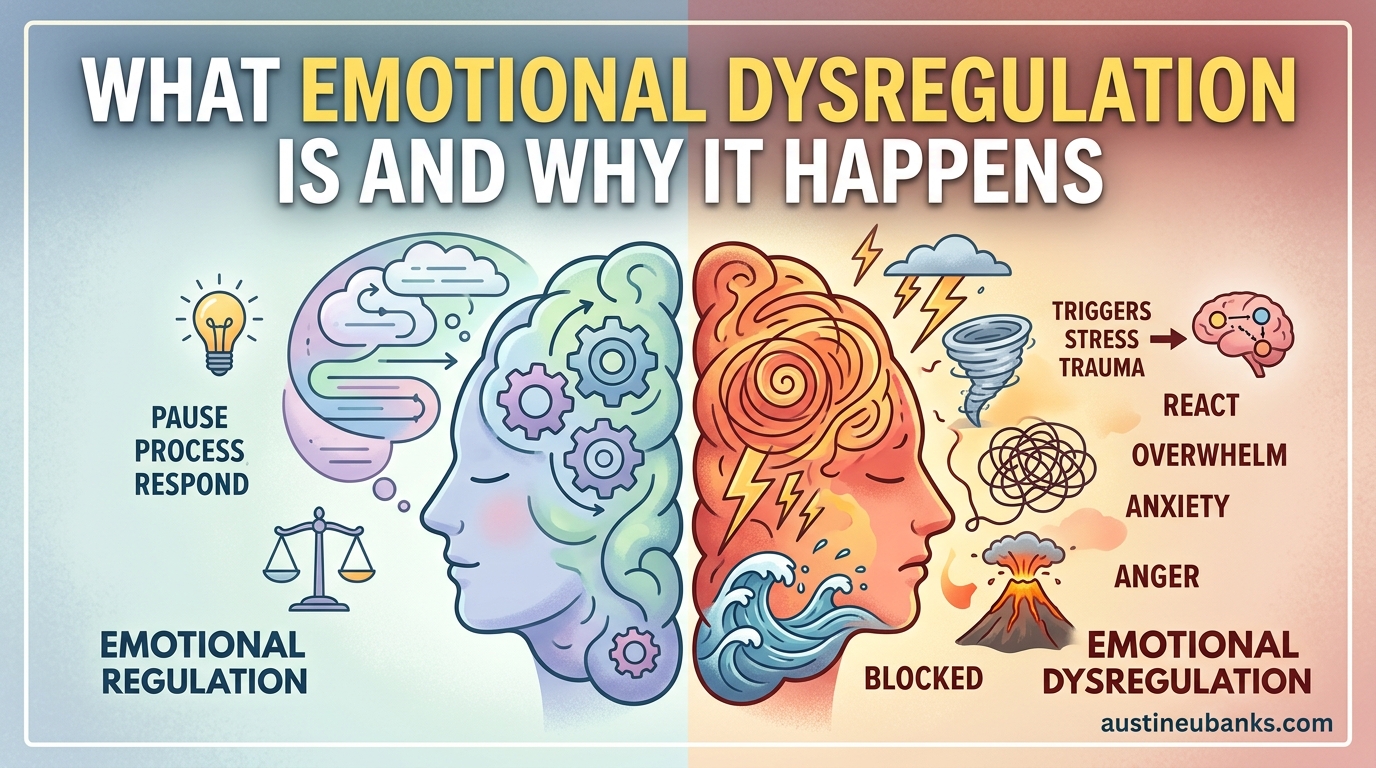
Emotional dysregulation is the inability to manage or control the intensity and duration of your emotional responses. When something small goes wrong, your reaction feels enormous, lasts far longer than it should, and you cannot seem to bring yourself back to baseline no matter how hard you try. If you have ever felt like your emotions have a mind of their own, you are not alone. Millions of people struggle with this experience every single day, and understanding what is happening in your brain is the first step toward feeling better.
Our team has spent months researching the science behind emotional regulation, combing through clinical studies, forum discussions, and expert sources to put together a guide that actually makes sense. We noticed that most articles either drown you in medical jargon or skim the surface with vague advice. This guide does neither. We break down what emotional dysregulation is, why it happens in your brain, what conditions are linked to it, and what genuinely helps.
Whether you are here because you Googled your symptoms at 2 AM, or a therapist mentioned the term and you want to understand it better, you are in the right place. We will walk through the signs, the causes, the treatment options, and practical strategies you can start using today. The most important thing to know up front: emotional dysregulation is not a character flaw. It is a measurable brain function issue, and it is treatable.
Table of Contents
What Emotional Dysregulation Is and Why It Happens
Emotional dysregulation happens when the brain systems responsible for managing emotional intensity stop working the way they should. Think of your emotions like a car with an accelerator and brakes. Most people can press the gas when something upsetting happens and then apply the brakes to slow down. Someone with emotional dysregulation has a stuck accelerator and faulty brakes. The emotional response ramps up quickly and will not come back down on its own.
The science comes down to two key brain regions working against each other. The amygdala, a small almond-shaped structure deep in your limbic system, acts as your emotional alarm system. It detects threats and triggers the fight-or-flight response before you even consciously process what is happening. The prefrontal cortex, the area right behind your forehead, acts as the rational manager that evaluates whether a threat is real and tells the amygdala to stand down when it is not.
In someone experiencing emotional dysregulation, the connection between these two regions is weak, slow, or temporarily offline. Research shows that under stress, the prefrontal cortex loses its ability to override the amygdala’s alarm signals. Certain neurotransmitters, including serotonin and dopamine, may not function effectively to calm the body. The result is an emotional response that is disproportionate to the situation and stubbornly persistent.
This is not a matter of willpower or emotional weakness. Brain imaging studies confirm that people with emotional dysregulation show measurable differences in how these neural pathways activate and communicate. Your brain is literally wired to keep the alarm ringing longer than it needs to, and no amount of telling yourself to calm down will fix a neural pathway that is not functioning properly.
Emotional lability, the technical term for rapidly shifting emotions, is a core feature. You might go from calm to furious to tearful within minutes. These rapid shifts are exhausting, and many people in online communities describe feeling wrung out after an episode. One Reddit user in r/ADHD described it as feeling everything turned up to eleven, with no volume knob in sight.
Signs and Symptoms of Emotional Dysregulation
Recognizing emotional dysregulation starts with knowing what it looks like in daily life. The signs can show up differently depending on your age, your underlying conditions, and your environment. Here are the most common symptoms that mental health professionals look for.
Common signs include:
- Emotional reactions that seem far more intense than the situation warrants
- Emotions that last much longer than they should, sometimes hours or days
- Rapid mood swings between different emotional states
- Difficulty calming down once you are upset, even when you want to
- Impulsivity, acting on emotions without thinking through consequences
- Frequent temper outbursts or anger that feels uncontrollable
- Crying easily or feeling overwhelmed by sadness that seems disproportionate
- Sensitivity to perceived rejection or criticism, even when none is intended
- Difficulty identifying or labeling what you are actually feeling, a condition called alexithymia
Severe symptoms require immediate attention. These include thoughts of self-harm, suicidal ideation, dissociation where you feel disconnected from reality, or episodes where you act in ways that are dangerous to yourself or others. If you are experiencing any of these right now, call 988 (the Suicide and Crisis Lifeline) or go to your nearest emergency room. You do not have to wait for things to get worse before reaching out.
In children, emotional dysregulation often looks like severe temper tantrums that continue well past the age when most kids outgrow them. A child might have meltdowns over seemingly minor things, struggle to transition between activities, or react to small disappointments with extreme distress. Teachers and parents often describe these children as having short fuses. In adults, the same underlying issue might show up as road rage, snapping at coworkers, or shutting down completely during disagreements.
Many people we heard from in forum discussions said the hardest part is not recognizing the dysregulation while it is happening. They only realize what occurred after the emotional storm has passed, often accompanied by intense guilt and shame. One person shared that it feels like watching yourself from the outside, unable to stop the reaction even though part of you knows it is too much.
Real Examples of Emotional Dysregulation
Abstract definitions only go so far. Sometimes the best way to understand emotional dysregulation is to see what it actually looks like in everyday situations. Here are some examples that people in therapy and online communities frequently describe.
At work, imagine your manager sends a brief email asking to schedule a quick chat. A regulated response would be mild curiosity or slight nervousness. Emotional dysregulation turns that same email into a full-blown crisis. Your heart pounds, your mind spirals through every possible mistake you have ever made, and you spend the next three hours convinced you are about to be fired. By the time the meeting happens, you are emotionally drained, and it turns out your manager just wanted to ask about a project timeline.
In relationships, emotional dysregulation often shows up as rejection sensitive dysphoria. A partner takes an hour to reply to a text message, and suddenly you feel abandoned, unloved, or angry. You might send a string of anxious messages, pick a fight, or withdraw completely. When your partner finally responds, confused and unaware that anything was wrong, you feel embarrassed by your own reaction but cannot seem to stop it from happening again next time.
In daily life, it might look like crying in the grocery store because they were out of your usual brand of coffee. Or spending an entire weekend in bed because a friend canceled plans and your brain interpreted that as proof that no one cares about you. These reactions feel completely real in the moment, and the intensity of the emotion makes it impossible to see that the situation does not match the feeling.
People in online support groups often describe the exhaustion that comes with these cycles. One Reddit user wrote about how emotional dysregulation feels like being on an emotional rollercoaster that they never bought a ticket for. The unpredictability is what wears you down over time. You start avoiding situations, people, or conversations because you are afraid of triggering another episode.
What Causes Emotional Dysregulation
There is no single root cause of emotional dysregulation. Instead, it is typically the result of a combination of biological, psychological, and environmental factors. Understanding which of these factors are at play for you can help guide treatment decisions. Here is a breakdown of the most common causes.
Mental Health Conditions
Several mental health conditions have emotional dysregulation as a core feature. Borderline personality disorder (BPD) is perhaps the most well-known, with chronic emotional instability and intense reactions to real or perceived abandonment. But BPD is far from the only condition involved.
Depression and anxiety both involve disrupted emotional regulation systems. Anxiety keeps your brain in a constant state of heightened alert, making every stimulus feel like a potential threat. Depression can flatten emotional responses or amplify negative ones while muting positive emotions. PTSD develops after trauma and causes the amygdala to remain hyperactive, constantly scanning for danger even in safe situations.
Obsessive-compulsive disorder (OCD) can also contribute to emotional dysregulation through the distress caused by intrusive thoughts and compulsive behaviors. The cycle of obsession, anxiety, and compulsion creates emotional volatility that can be difficult to manage without targeted treatment.
Neurodivergent Conditions
ADHD is one of the most common conditions associated with emotional dysregulation, yet this connection is often overlooked. The American Psychological Association has highlighted that emotion dysregulation in ADHD is linked to differences in brain processes that govern attention and impulse control. People with ADHD often experience rejection sensitive dysphoria, a specific type of emotional pain triggered by real or perceived rejection.
Autism spectrum disorder (ASD) is another neurodivergent condition where emotional dysregulation is common. Autistic individuals may experience emotions with incredible intensity but struggle with the communication and processing steps needed to regulate them. Meltdowns, which are neurological events rather than behavioral choices, are a manifestation of the brain becoming overwhelmed beyond its capacity to cope.
In both ADHD and autism, emotional dysregulation is not a secondary symptom. It is part of how the brain is wired. The neural pathways that filter sensory input, manage attention, and regulate emotional responses operate differently, which means the standard advice to just calm down does not work because the underlying wiring is different.
Trauma and Environmental Causes
Early childhood trauma is one of the most significant risk factors for emotional dysregulation. When a child grows up in an environment where emotions are invalidated, ignored, or punished, their brain does not learn healthy regulation skills. The systems that should develop during childhood to help manage stress and emotion never get properly calibrated.
Chronic invalidation, even without overt abuse, can be deeply damaging. If a child consistently hears messages like you are overreacting or stop crying, there is nothing to be upset about, they learn that their emotions are wrong. This pattern, described extensively in DBT literature, contributes to lasting difficulties with emotion regulation in adulthood.
Complex PTSD (C-PTSD), which results from prolonged or repeated trauma, involves particularly severe emotional dysregulation. People with C-PTSD often describe feeling trapped in emotional loops, unable to process or move past triggering experiences. Recovery is absolutely possible, as many people in support communities like r/CPTSD can attest, but it typically requires trauma-focused therapy.
Brain Conditions and Injuries
Traumatic brain injury (TBI), particularly to the frontal lobe where the prefrontal cortex lives, can cause sudden onset emotional dysregulation. Someone who was previously emotionally stable may find themselves experiencing intense mood swings, irritability, or crying spells after a head injury. Frontal lobe disorders in general, including certain types of dementia, can impair the brain’s ability to regulate emotional responses.
Neurodegenerative conditions and stroke can also damage the neural circuitry involved in emotion regulation. In these cases, the dysregulation has a clear physical cause and may require a combination of medical treatment, therapy, and environmental accommodations to manage effectively.
How to Deal With Emotional Dysregulation: Treatment Options
The good news about emotional dysregulation is that it responds well to evidence-based treatment. You do not have to just live with it. Here are the most effective treatment approaches, backed by clinical research and recommended by mental health professionals.
Dialectical Behavior Therapy (DBT)
DBT was specifically developed to treat emotional dysregulation, originally for people with borderline personality disorder. It has since been adapted for many other conditions and is considered the gold standard treatment. DBT teaches four core skill modules: mindfulness, distress tolerance, emotion regulation, and interpersonal effectiveness.
These skills work together to give you a toolkit for managing intense emotions. Mindfulness helps you notice what you are feeling before it spirals out of control. Distress tolerance provides techniques for surviving emotional crises without making things worse. Emotion regulation teaches you how to change the intensity and duration of your emotional responses. Interpersonal effectiveness helps you navigate relationships without triggering emotional spirals.
Many people in online communities describe DBT as life-changing. One Reddit thread in r/CPTSD asked whether anyone had successfully learned to regulate their emotions, and the most upvoted responses were from people who credited DBT with giving them their lives back.
Cognitive Behavioral Therapy (CBT)
CBT takes a different approach by focusing on the relationship between thoughts, feelings, and behaviors. It helps you identify and challenge the thought patterns that amplify emotional reactions. For example, if you tend to catastrophize (assuming the worst possible outcome from any situation), CBT teaches you to recognize that pattern and reframe your thinking.
While CBT is less specifically targeted at emotional dysregulation than DBT, research shows it can be effective, especially when combined with other approaches. Many therapists use elements of both DBT and CBT in their practice, tailoring the approach to each individual’s needs.
Medication
Medication can play an important role in treatment, particularly when emotional dysregulation is connected to an underlying condition. For ADHD, stimulant medications can improve the brain’s ability to regulate attention and impulse control, which in turn helps with emotional regulation. Antidepressants, including SSRIs and SNRIs, may help when depression or anxiety is amplifying emotional responses.
Mood stabilizers are sometimes prescribed for severe emotional lability, and certain antipsychotic medications can help reduce the intensity of emotional reactions. Medication decisions should always be made with a qualified psychiatrist who understands your full clinical picture. No single medication works for everyone, and finding the right one often involves some trial and error.
The 4 R’s of Emotion Regulation
If you are looking for a simple framework to remember, many therapists teach the 4 R’s of emotion regulation. These four steps provide a quick mental checklist you can use in the moment when emotions start to escalate.
- Recognize: Notice and name the emotion you are feeling. Simply labeling an emotion reduces its intensity, a phenomenon researchers call affect labeling.
- Reduce: Lower the physical intensity of the emotion through grounding techniques, deep breathing, or stepping away from the trigger.
- Replace: Shift your attention to something incompatible with the intense emotion, like a physical activity or a sensory focus.
- Respond: Choose a deliberate response instead of reacting impulsively. This might mean waiting 10 minutes before sending that text or taking a walk before continuing a conversation.
Self-Help Strategies and Coping Techniques
Professional treatment is important, but what you do between therapy sessions matters just as much. Here are practical strategies you can start using today to manage emotional dysregulation. These are not replacements for therapy, but they can make a real difference in your day-to-day experience.
In-the-Moment Calming Techniques
When you feel an emotional reaction building, the goal is to engage your prefrontal cortex before the amygdala takes over completely. These techniques work by forcing your brain to shift from emotional mode to processing mode.
The 5-4-3-2-1 grounding technique is one of the most popular. Name five things you can see, four things you can physically feel, three things you can hear, two things you can smell, and one thing you can taste. This sensory exercise pulls your attention into the present moment and interrupts the emotional spiral. It sounds simple, but it works because it demands cognitive resources that the amygdala was trying to monopolize.
Cold water exposure is another effective tool. Splashing cold water on your face or holding an ice cube triggers the mammalian dive reflex, which slows your heart rate and activates your parasympathetic nervous system. It is a physical reset button for your nervous system, and many people in DBT programs use this technique during acute emotional crises.
Box breathing, where you inhale for four counts, hold for four, exhale for four, and hold for four, directly counteracts the fight-or-flight response. Slow, controlled breathing signals to your brain that you are safe, which helps deactivate the alarm system.
Daily Maintenance Strategies
Managing emotional dysregulation is not just about what you do in the heat of the moment. What you do every day to build your emotional regulation capacity matters enormously. Think of it like building muscle. You cannot wait until you need to lift something heavy to start exercising.
Consistent sleep is non-negotiable. Sleep deprivation directly impairs prefrontal cortex function, making emotional regulation significantly harder. If you are not getting 7 to 9 hours of quality sleep, your emotional brakes will not work properly no matter what else you do. Many people find that simply fixing their sleep schedule reduces the frequency and intensity of dysregulation episodes.
Regular physical exercise burns off excess stress hormones and strengthens the neural pathways involved in emotional regulation. Even a daily 20-minute walk can make a measurable difference. Mindfulness meditation, practiced consistently, has been shown to increase the thickness of the prefrontal cortex and improve its connection to the amygdala over time.
Journaling helps you build the self-awareness needed to recognize patterns. Tracking your emotions, triggers, and responses over a few weeks can reveal patterns you would never see otherwise. Many people are surprised to find that certain times of day, types of interactions, or physical states consistently precede their worst episodes.
Self-Assessment Indicators
One content gap we found in our research is that no major competitor offers a simple self-assessment tool. While this is not a substitute for professional evaluation, ask yourself these questions to gauge whether emotional dysregulation might be affecting your life.
- Do my emotional reactions regularly feel more intense than the situation seems to warrant?
- Do my emotions last significantly longer than those of people around me in similar situations?
- Do I frequently feel out of control when I am emotional?
- Do I act impulsively when upset and regret it later?
- Do loved ones tell me my reactions seem disproportionate?
- Do I avoid certain people, places, or conversations because I am afraid of my emotional response?
If you answered yes to three or more of these, consider talking to a mental health professional. Emotional dysregulation is common, it is treatable, and you do not have to figure it out alone.
How Emotional Dysregulation Impacts Daily Life
The effects of emotional dysregulation extend far beyond the moments when emotions spike. Over time, unmanaged dysregulation can reshape your relationships, your career, and your sense of who you are. Understanding these impacts can help motivate you to seek treatment and practice coping strategies.
In relationships, emotional dysregulation can create cycles of conflict that are confusing and painful for both partners. One person reacts intensely, the other responds defensively, and the situation escalates. Partners may describe walking on eggshells, never knowing what will trigger the next episode. Many people in support forums for partners of people with ADHD express frustration that they did not recognize emotional dysregulation sooner, mistaking it for intentional behavior rather than a neurological issue.
The guilt and shame that follow dysregulation episodes can be devastating. People describe lying awake at night replaying everything they said and did, convinced they have damaged relationships beyond repair. This shame cycle actually makes future episodes more likely, because shame is itself a powerful emotional trigger. Breaking this cycle often requires both individual therapy and open communication with loved ones.
At work or school, emotional dysregulation can lead to missed deadlines, conflict with colleagues, and avoidance of challenging tasks. The constant emotional volatility is exhausting, and many people describe feeling drained by the effort of trying to appear functional while internally struggling. Over time, this exhaustion can contribute to burnout and secondary mental health conditions like depression and anxiety.
The recovery outlook, however, is genuinely hopeful. Research shows that with proper treatment, most people see significant improvement in their ability to regulate emotions within 6 to 12 months of starting DBT or other targeted therapies. Many people who once felt controlled by their emotions go on to build stable relationships, successful careers, and a sense of self they are proud of. The brain’s neuroplasticity means that with consistent practice, you can actually strengthen the neural pathways that help you regulate emotions.
When to Seek Professional Help
Knowing when to seek professional help can feel confusing, especially if you have been living with emotional dysregulation for a long time and it feels normal to you. The general rule is simple: if emotional dysregulation is interfering with your relationships, your work, your daily functioning, or your quality of life, it is time to talk to a professional.
Some specific signs that it is time to reach out include emotional reactions that are regularly damaging your relationships, episodes that are becoming more frequent or more intense, using alcohol or substances to manage your emotions, thoughts of self-harm or suicide, or feeling like your emotions are completely out of your control. None of these mean something is wrong with you as a person. They mean your brain needs support, and that support is available.
If you are in crisis right now, please call or text 988 to reach the Suicide and Crisis Lifeline. They are available 24 hours a day, 7 days a week, and the call is free. You can also text HOME to 741741 to connect with the Crisis Text Line. If you are outside the United States, please contact your local emergency services or mental health crisis line.
When you talk to a doctor or therapist, be honest about what you are experiencing. Many people minimize their symptoms out of embarrassment or fear of being judged. A good mental health professional will not judge you. They have heard it all before, and their job is to help, not to evaluate your worth as a person. Describe your symptoms, how they affect your daily life, and what you have tried so far. Ask specifically about DBT and other emotion regulation therapies.
If you are concerned about a child, talk to their pediatrician or school counselor. Early intervention makes a significant difference, and children can learn emotion regulation skills much more easily than adults. The earlier a child gets support, the better their long-term outcomes.
FAQs
What is the root cause of emotional dysregulation?
There is no single root cause. Emotional dysregulation typically results from a combination of factors including mental health conditions (depression, anxiety, BPD, PTSD), neurodivergent conditions (ADHD, autism), early childhood trauma or chronic invalidation, and brain injuries affecting the prefrontal cortex. The common thread is that the brain’s emotional regulation system, specifically the connection between the amygdala and prefrontal cortex, is not functioning effectively.
What can be mistaken for emotional dysregulation?
Emotional dysregulation can be mistaken for several things including hormonal imbalances, thyroid disorders, bipolar disorder mood episodes, personality conflicts in relationships, intentional bad behavior, or simply having a difficult personality. It can also be confused with normal emotional responses to genuinely difficult situations. A mental health professional can help differentiate emotional dysregulation from these other conditions through proper assessment.
What are the 4 R’s of emotion regulation?
The 4 R’s of emotion regulation are Recognize (notice and name the emotion you are feeling), Reduce (lower the physical intensity through grounding or breathing techniques), Replace (shift your attention to something incompatible with the intense emotion), and Respond (choose a deliberate action rather than reacting impulsively). This framework is commonly taught in therapy and helps create a structured approach to managing emotional reactions.
How do you fix emotional dysregulation?
Emotional dysregulation is treated through a combination of approaches. Dialectical behavior therapy (DBT) is the gold standard treatment and teaches specific skills for mindfulness, distress tolerance, emotion regulation, and interpersonal effectiveness. Cognitive behavioral therapy (CBT) can help identify and challenge thought patterns that amplify emotions. Medication may help when an underlying condition like ADHD, depression, or anxiety is present. Daily habits like consistent sleep, regular exercise, and mindfulness practice strengthen your brain’s regulation capacity over time. Most people see significant improvement within 6 to 12 months of starting treatment.
Is emotional dysregulation a disorder?
Emotional dysregulation is not a standalone disorder in the DSM-5. It is a transdiagnostic construct, meaning it appears across many different mental health conditions. It is most commonly associated with ADHD, borderline personality disorder, PTSD, autism spectrum disorder, anxiety, and depression. Severe emotional dysregulation in children is sometimes diagnosed as disruptive mood dysregulation disorder (DMDD). Regardless of whether it is formally classified as a disorder, it is a real and treatable condition that significantly impacts daily life.
How do you help someone with emotional dysregulation?
To help someone with emotional dysregulation, stay calm during their emotional episodes, validate their feelings without necessarily agreeing with their interpretation of events, avoid telling them to calm down or that they are overreacting, give them space if they need it, and encourage them to seek professional help. Learn about their triggers and warning signs. Do not take their reactions personally during episodes. Set healthy boundaries for yourself while remaining supportive. Most importantly, remember that their reactions are driven by neurological differences, not by intentional choices to be difficult.
Conclusion
Understanding what emotional dysregulation is and why it happens changes everything about how you approach it. This is not a willpower problem or a personality flaw. It is a brain function issue with clear neurological underpinnings, known causes, and proven treatments. The amygdala fires too hard, the prefrontal cortex cannot keep up, and emotions spiral beyond what the situation calls for.
Whether your emotional dysregulation stems from ADHD, trauma, anxiety, depression, BPD, or another condition entirely, the path forward is similar. DBT and other therapies teach you the skills your brain did not develop on its own. Daily habits like sleep, exercise, and mindfulness strengthen your neural pathways over time. Medication can help when an underlying condition is driving the dysregulation.
If you take away one thing from this guide, let it be this: recovery is real. People who once felt controlled by their emotions learn to manage them every day. Your brain can change, your relationships can heal, and you can build a life where emotions feel manageable. The first step is reaching out for help, and you have already taken that step by reading this far.