
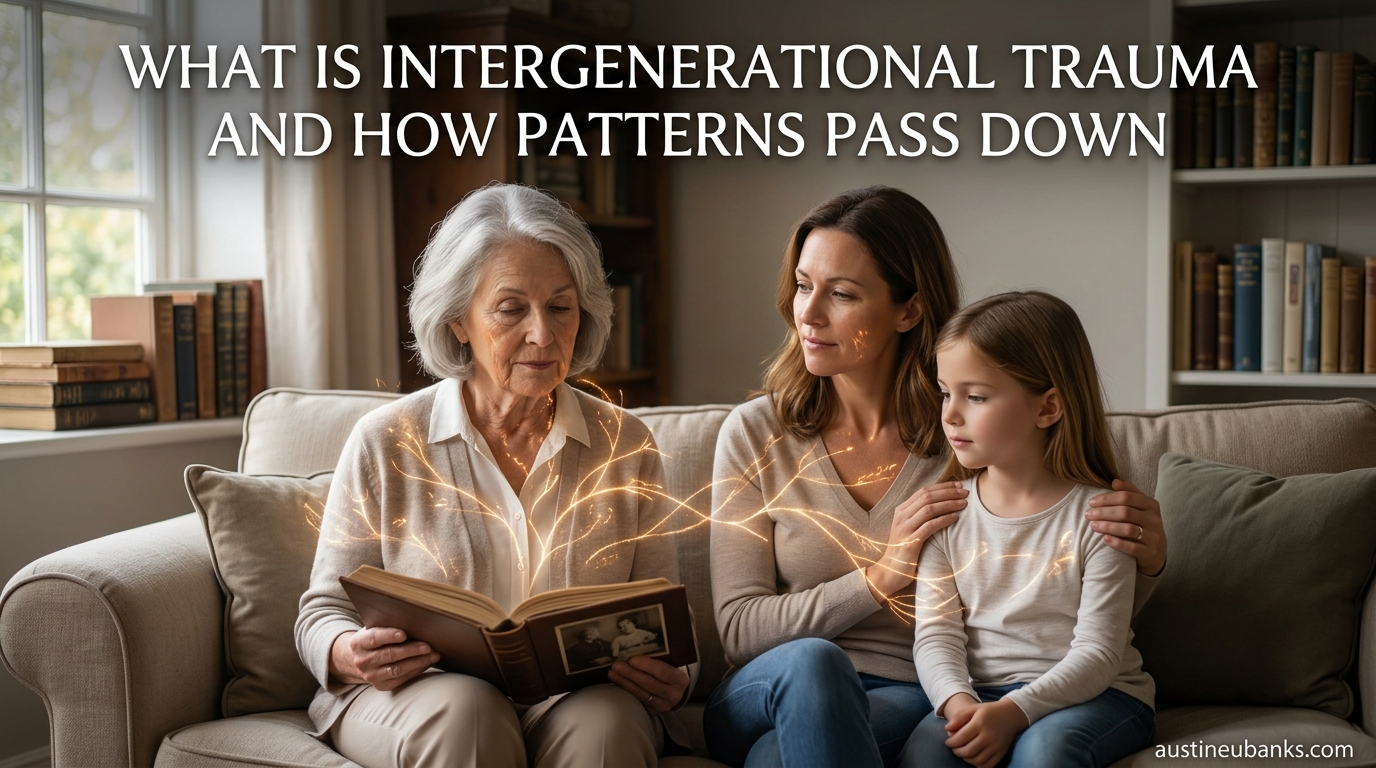
Intergenerational trauma is when traumatic experiences, stress responses, and emotional wounds are passed from one generation to the next through genetic changes, learned behavior, and family patterns. The effects show up as anxiety, depression, hypervigilance, and relationship difficulties that seem to run in families without an obvious cause in the current generation.
Our team spent weeks digging through clinical research, survivor forums, and expert guidance to understand how this actually works. What we found is that intergenerational trauma is not a fringe theory. It is a well-documented phenomenon backed by decades of research in epigenetics, psychology, and neuroscience.
Understanding what intergenerational trauma is changes how you see your family. It explains why your mother reacted the way she did. It explains why you feel anxious in situations that never hurt you personally. And most importantly, it gives you a roadmap for making sure the pattern stops with you.
Whether you are reading this because you suspect generational trauma runs in your family, or you simply want to understand the science behind inherited stress, this guide walks you through everything you need to know about what intergenerational trauma is and how patterns pass down.
Table of Contents
What Is Intergenerational Trauma?
Intergenerational trauma refers to the transmission of traumatic stress responses from parents to children across multiple generations. It happens when a person experiences something overwhelmingly negative, and the effects of that experience ripple outward to their children, grandchildren, and beyond.
The term gets used alongside several related concepts. Generational trauma means essentially the same thing. Transgenerational trauma is another synonym, though some researchers use it specifically for trauma that extends three or more generations deep. Multigenerational trauma emphasizes the family-system aspect. For practical purposes, these terms all describe the same core phenomenon.
Here is what makes intergenerational trauma different from regular stress or a difficult childhood. When someone experiences severe trauma, whether that is war, abuse, displacement, starvation, or systemic oppression, their body and brain change. Their stress response system shifts into a heightened state of alert. Their nervous system learns to expect danger. And those adaptations, which were originally survival mechanisms, get passed to the next generation through biological and behavioral channels.
The children then inherit not just the stories but the actual physiological stress patterns. They may be born with elevated cortisol levels. They may develop an anxious attachment style without experiencing any direct trauma themselves. They may find themselves reacting to neutral situations as though they were dangerous, and they cannot figure out why.
This is not about weak character or poor coping skills. It is about a nervous system that learned, across generations, that the world is unsafe. That learning is powerful, and it is also changeable.
How Trauma Passes Down: The Three Pathways
Researchers have identified three primary ways that trauma travels from one generation to the next. Understanding these pathways helps explain why generational trauma is so persistent and also points to where healing can intervene.
The three pathways work together rather than in isolation:
1. Epigenetic and biological transmission. Trauma changes how genes are expressed, and those changes can be inherited. This is not about DNA mutations but about chemical tags that turn genes on or off in response to stress.
2. Behavioral and learned transmission. Traumatized parents develop coping mechanisms, parenting styles, and emotional patterns that their children absorb through daily interaction and observation.
3. Cultural and environmental transmission. Families and communities pass down trauma through stories, silence, cultural norms, and ongoing systemic conditions like poverty or discrimination.
Let us look at each pathway in detail.
Pathway 1: Epigenetic and Biological Transmission
This is where the science gets truly fascinating. Epigenetics is the study of how environmental factors change the way genes are expressed without altering the underlying DNA sequence. Think of your DNA as a piano keyboard and epigenetic markers as the sheet music that tells the pianist which keys to press and how hard. The keyboard stays the same, but the music changes based on the instructions.
When someone experiences severe or prolonged trauma, their body adds chemical tags called epigenetic markers to certain genes. The most studied of these is DNA methylation, which essentially attaches a methyl group to DNA and changes how actively that gene functions. In the context of trauma, these markers tend to affect genes involved in the stress response system.
The specific system at play is called the HPA axis, short for the hypothalamic-pituitary-adrenal axis. This is your body’s central stress response network. When it detects a threat, it releases stress hormones including cortisol to prepare your body for fight or flight. In a healthy system, cortisol levels spike during danger and then return to normal once the threat passes.
In people who have experienced chronic trauma, the HPA axis gets dysregulated. Cortisol levels stay elevated or become blunted in abnormal patterns. Their baseline stress hormone profile shifts. And here is the critical finding: these epigenetic changes can be passed to offspring through both sperm and eggs, meaning children can be born with an altered stress response system.
This does not mean the child’s DNA is damaged. It means the instruction set for how their stress genes operate has been modified. Studies on the descendants of Holocaust survivors, for example, have found distinct epigenetic patterns in genes related to cortisol regulation compared to control groups. Similar findings have emerged from studies of children whose mothers experienced severe stress during pregnancy.
The Three Generations in One Pregnancy Concept
Here is a fact that stopped me in my tracks when I first encountered it. When a pregnant woman carries a child, and that child is female, the eggs that will eventually become her grandchildren are already forming inside the developing fetus. This means a pregnant woman is essentially carrying fragments of three generations simultaneously: herself, her child, and the biological material for her grandchildren.
The implications are profound. Severe stress experienced during pregnancy does not just affect the mother and the baby. It can influence the epigenetic markers on the eggs developing inside that fetus, potentially affecting the next generation as well. This is one reason trauma effects can appear to skip a generation.
Prenatal development is a particularly sensitive window. Maternal stress hormones cross the placenta, and the developing fetal brain is highly responsive to the chemical environment. Babies born to mothers who experienced extreme stress during pregnancy often show differences in birth weight, stress reactivity, and temperament from their very first days of life.
Pathway 2: Behavioral and Learned Transmission
Even if you set aside the biology entirely, intergenerational trauma would still persist through behavior. This pathway is the one most people can recognize in their own families, even if they have never heard the term epigenetics.
When parents carry unhealed trauma, it shapes every aspect of how they interact with their children. Not because they are bad parents, but because their nervous systems are operating from a place of survival. A father who grew up with food insecurity might hoard supplies and become anxious about waste. A mother who experienced emotional neglect might be overprotective to the point of smothering. Neither parent intends to pass on fear, but their behavior teaches the child that the world is a place to be managed rather than enjoyed.
Children are extraordinary pattern detectors. They absorb not just what their parents say but the emotional temperature of every interaction. They learn which feelings are safe to express and which get shut down. They learn whether the world is fundamentally trustworthy or fundamentally dangerous. And they carry those lessons into every relationship they form as adults.
Attachment Styles and Intergenerational Trauma
One of the clearest behavioral transmission mechanisms is attachment. Attachment theory, developed by John Bowlby and Mary Ainsworth, describes how the bond between a child and their primary caregiver shapes that child’s expectations of relationships for life.
When a parent has unresolved trauma, their ability to be emotionally present and responsive to their child can be compromised. They might dissociate when their child cries. They might become disproportionately angry over minor issues. They might be physically present but emotionally checked out. The child adapts to these patterns by developing an attachment style that keeps them as safe as possible.
The result is anxious attachment, where the child learns to cling and perform for love. Or avoidant attachment, where the child learns to need nobody. Or disorganized attachment, where the child cannot find a consistent strategy and oscillates between approaches. These attachment styles then play out in the child’s adult relationships, and when that child becomes a parent, the cycle continues.
Parentification: When Children Become Caregivers
A particularly painful manifestation of behavioral transmission is parentification. This happens when a traumatized parent relies on their child for emotional support, practical help, or even basic regulation. The child becomes the parent’s therapist, confidant, or emotional anchor.
On mental health forums, this experience comes up constantly. One person described it this way: they had been their mother’s only friend and emotional support since they could speak. They absorbed adult problems, adult emotions, and adult responsibilities before they were developmentally ready. The result was a child who appeared mature for their age but was actually carrying a burden no child should hold.
Parentified children grow up with a distorted sense of responsibility. They struggle to identify their own needs because they were trained to prioritize everyone else’s. They often become high achievers who cannot rest. And when they become parents, they may swing in the opposite direction, overcompensating in ways that create a new set of patterns for the next generation.
Coping Mechanisms That Become the Problem
Traumatized parents also pass down coping mechanisms. Some of these are obvious: substance use, emotional outbursts, withdrawal. Others are more subtle. A parent who copes with anxiety through perfectionism teaches their child that love is conditional on performance. A parent who copes through people-pleasing teaches their child that boundaries are dangerous.
Even avoidance is a transmission mechanism. When families refuse to talk about difficult experiences, the silence itself becomes a message. Children learn that certain emotions are so dangerous they cannot be named. They grow up without a vocabulary for their own pain and without permission to seek help.
Pathway 3: Cultural and Environmental Transmission
The third pathway operates at the level of family culture, community norms, and systemic conditions. Trauma gets encoded in the stories families tell, the stories they refuse to tell, and the environments they create for their children.
Family Narratives and Silence
Every family has a story about who they are and where they came from. In families with unresolved trauma, that story often has gaps. Grandparents who immigrated under traumatic circumstances may never discuss what they left behind. Parents who survived abuse may present a sanitized version of their childhood. The missing pieces are felt by children even when they are never spoken.
Children are perceptive. They notice when certain topics cause visible discomfort. They notice which relatives are never mentioned. They notice the emotional charge around specific places, people, or time periods. The unspoken narrative becomes its own form of transmission, teaching children that some things are too dangerous to acknowledge.
Cultural Transmission Versus Genetic Transmission
It is important to distinguish cultural transmission from genetic transmission, because the distinction matters for healing. Genetic or epigenetic transmission involves biological changes to gene expression that affect the stress response system. Cultural transmission involves learned beliefs, values, behaviors, and emotional patterns that get handed down through family and community life.
Both are real. Both contribute to intergenerational trauma. But they respond to different types of intervention. Biological stress patterns may benefit from body-based therapies that regulate the nervous system. Cultural patterns require conscious awareness, new skills, and deliberate changes in how family members communicate and behave.
Systemic and Racial Trauma
Intergenerational trauma is not just an individual family issue. Entire communities can carry collective trauma passed down through generations. The descendants of enslaved people carry the inherited effects of centuries of dehumanization and violence. Indigenous communities carry the trauma of colonization, forced displacement, and cultural erasure. Refugee families carry the trauma of war, persecution, and the loss of homeland.
What makes systemic trauma different is that the traumatic conditions often persist. It is not just that the original trauma was never processed. It is that the ongoing experience of discrimination, economic marginalization, and institutional bias continues to activate the stress response in each new generation. The trauma is simultaneously historical and current.
This is why discussions of intergenerational trauma must include the context of racial and systemic trauma. For many families, the patterns are not just personal. They are embedded in social structures that have never fully dismantled the conditions that created the trauma in the first place.
Types and Sources of Intergenerational Trauma
Intergenerational trauma can originate from many different types of experiences. Understanding the common sources helps people identify whether their family history might be relevant.
Historical and collective trauma: War, genocide, the Holocaust, slavery, colonization, forced displacement, and famine. These large-scale events affect entire populations and can leave epigenetic and cultural marks that persist for generations.
Systemic and structural trauma: Poverty, racism, discrimination, institutional abuse, and forced assimilation policies like residential and boarding schools. These are ongoing conditions rather than single events, which means the trauma is continually reinforced.
Family-level trauma: Physical, emotional, or sexual abuse; domestic violence; substance addiction; incarceration; sudden loss of a parent; divorce involving high conflict. These are the most common sources people recognize in their own families.
Medical and environmental trauma: Medical crises, chronic illness in a parent, natural disasters, community violence, and forced relocation. These experiences can be just as destabilizing as interpersonal trauma and often go unrecognized as sources of generational patterns.
Adverse Childhood Experiences, commonly called ACEs, deserve special mention here. The landmark ACE Study conducted by Kaiser Permanente and the CDC identified ten specific types of childhood adversity, including abuse, neglect, and household dysfunction. The research found a powerful dose-response relationship between the number of ACEs a person experienced and their risk for both mental and physical health problems in adulthood.
People with four or more ACEs showed dramatically higher rates of depression, anxiety, substance use, heart disease, and early death. The ACE framework helps explain why trauma is not just a psychological issue. It is a whole-body health issue that affects cardiovascular function, immune response, and even life expectancy.
Signs and Effects of Generational Trauma
Recognizing the signs of intergenerational trauma can be a powerful and validating experience. Many people go through life feeling broken or defective without understanding that their reactions have a context. Here are the most common ways generational trauma manifests.
Mental Health Effects
Anxiety is one of the most pervasive symptoms. Not just occasional worry, but a persistent sense of dread or foreboding that something terrible is about to happen. This is the inherited stress response system firing in the absence of an actual threat. The body learned, across generations, that vigilance equals survival.
Depression frequently co-occurs. It can look like chronic low motivation, difficulty experiencing joy, or a pervasive sense of emptiness. Complex PTSD, which develops from repeated or prolonged trauma rather than a single event, is increasingly recognized as a common outcome of intergenerational trauma patterns.
Hypervigilance is another hallmark sign. This is the inability to relax, the constant scanning of the environment for danger, the startle response that seems disproportionate. People with hypervigilance often describe feeling like they can never fully let their guard down, even in safe situations.
Emotional dysregulation shows up as intense mood swings, difficulty managing anger, or sudden emotional flooding that seems to come from nowhere. Codependency patterns, where a person consistently prioritizes others’ needs to the point of self-abandonment, are also common.
Physical Health Impacts
The body keeps the score, as the saying goes. Chronic stress from inherited trauma patterns takes a measurable toll on physical health. Elevated cortisol levels over time contribute to inflammation, which is linked to heart disease, diabetes, autoimmune conditions, and digestive disorders.
Chronic pain with no clear medical cause is another frequent complaint. Tension headaches, back pain, irritable bowel syndrome, and fibromyalgia all have documented connections to chronic stress and trauma. Sleep disturbances are nearly universal, including difficulty falling asleep, staying asleep, and experiencing restorative rest.
The ACE research showed that people with high ACE scores have significantly elevated risks of heart disease, cancer, liver disease, and other chronic conditions. The biological pathways are clear. Chronic stress keeps the inflammatory response activated, wears down regulatory systems, and accelerates cellular aging.
Relationship and Behavioral Patterns
Generational trauma profoundly shapes how people relate to others. Common relationship patterns include fear of abandonment that leads to clinging behavior, or fear of engulfment that leads to pushing people away. Many people find themselves repeatedly drawn to partners who recreate familiar dynamics from their family of origin, even when those dynamics are painful.
Self-sabotage is another frequent pattern. Just as things are going well, something inside resists. A promotion triggers anxiety rather than celebration. A healthy relationship feels boring compared to the familiar drama of a chaotic one. Success itself can feel dangerous because it is unfamiliar, and the nervous system interprets unfamiliarity as risk.
Difficulty trusting others, a tendency to isolate during stress, people-pleasing at the expense of personal boundaries, and difficulty identifying or expressing emotions are all patterns that can trace back to generational trauma. The encouraging news is that all of these patterns are workable with awareness and support.
Real Voices: What Intergenerational Trauma Feels Like
Clinical definitions are important, but they do not capture the lived experience of generational trauma. In mental health communities, people describe this phenomenon in ways that are raw, specific, and deeply human.
One theme that appears repeatedly is the feeling of being the end of the line. People describe carrying the accumulated weight of generations of pain and feeling personally responsible for making it stop. One person shared that they felt like the final period at the end of a long sentence of trauma and abuse in their family line. They described shouldering the responsibility of fighting for a life that previous generations never got to have.
Another recurring theme is parentification and its long shadow. Adults describe having served as their parent’s sole emotional support system from childhood, functioning as therapist, confidant, and advice-giver before they were old enough to understand the issues they were being asked to weigh in on. These individuals often struggle to identify their own needs as adults because their entire developmental history trained them to focus outward.
Perhaps the most poignant theme is the gap between awareness and change. Multiple people describe the painful experience of understanding their trauma patterns intellectually but still finding themselves repeating those patterns. Awareness alone does not prevent harm. One parent shared the heartbreak of catching themselves reacting to their child in the exact way their own parent had reacted to them, despite years of knowing it was harmful.
This gap between knowing and changing is one of the most important things to understand about intergenerational trauma. Healing is not a light switch. It is a practice. And every time you catch yourself and choose a different response, you are doing the work of breaking the cycle, even when it feels imperfect.
How to Break the Cycle of Intergenerational Trauma
Breaking the cycle of intergenerational trauma is one of the most meaningful things a person can do, not just for themselves but for every generation that follows. It is also some of the hardest work you will ever undertake. Here is what the research and lived experience tell us about how to do it.
Start With Self-Assessment
Before you can change a pattern, you need to see it clearly. Ask yourself these questions honestly:
What emotional patterns do I share with my parents and grandparents? What reactions do I have that feel bigger than the situation warrants? What did my family treat as normal that I now recognize as harmful? What topics were forbidden in my household? How did the adults around me handle stress, conflict, and difficult emotions?
These questions are not about blaming your family. They are about mapping the territory so you know where to focus your healing work. Awareness is not the finish line, but it is the essential starting point.
Find the Right Therapeutic Support
Trauma-informed therapy is the most effective tool for breaking intergenerational patterns. Several therapeutic approaches have strong evidence for working with trauma:
Cognitive Behavioral Therapy (CBT) helps identify and change the thought patterns that drive anxious and depressive responses. It is practical, structured, and widely available.
EMDR (Eye Movement Desensitization and Reprocessing) uses bilateral stimulation to help the brain reprocess traumatic memories. It is particularly effective for single-event trauma and is increasingly used for complex and developmental trauma.
Somatic experiencing and body-based therapies work directly with the nervous system. Because trauma lives in the body as much as in the mind, approaches that address physiological stress patterns can be especially helpful for inherited stress responses.
Internal Family Systems (IFS) works with the different parts of yourself that carry pain, protective strategies, and learned patterns. It can be especially helpful for people who feel stuck despite years of insight-oriented work.
Trauma-focused therapy is a broader category that includes several evidence-based approaches designed specifically for processing traumatic experiences and their downstream effects.
The right therapy depends on your specific history, symptoms, and preferences. What matters most is finding a practitioner who understands trauma and makes you feel safe.
Parent Differently
If you have children, parenting is where the cycle gets either repeated or broken. This does not mean being a perfect parent. It means being a parent who is willing to notice when old patterns activate and choose a different response.
Practical steps include learning emotion coaching skills so you can help your child name and process big feelings. Practicing co-regulation, which means using your own calm nervous system to help your child calm theirs. Repairing after rupture, which means going back and making things right after you lose your temper or make a mistake. And getting your own support so you are not asking your children to carry your emotional weight.
The research on attachment shows that parents do not need to be perfect. They need to be good enough, which means being emotionally available most of the time and willing to repair when they are not. Every repair strengthens the attachment bond and models for the child that relationships can survive conflict.
Build Community and Break the Silence
Trauma thrives in isolation. Healing happens in connection. Breaking the silence about your family history, even with just one trusted person, reduces the power of the unspoken narrative.
Support groups, both in person and online, can be incredibly validating. Hearing other people describe experiences that mirror your own helps dissolve the shame that says something is uniquely wrong with you. It also provides practical strategies from people who are further along in their healing journey.
Cultural and community practices matter too. For some people, reconnection with cultural traditions that were disrupted by historical trauma is itself a form of healing. For others, building chosen family networks provides the stability and warmth that was missing from their family of origin.
Accept That Healing Is Nonlinear
One of the hardest truths about breaking intergenerational trauma is that progress is not a straight line. You will have periods of real growth and periods where old patterns resurface. You will have moments of pride in how far you have come and moments of despair that anything has changed at all.
This is normal. Trauma patterns were built over generations, and they will not be dismantled in a few months of therapy. What matters is the trajectory. Each time you notice a pattern and make even a slightly different choice, you weaken that pattern’s grip on the next generation.
FAQs
Does trauma get passed down through DNA?
Trauma itself does not change your DNA sequence, but it can change how your genes are expressed through epigenetic mechanisms like DNA methylation. These epigenetic markers affect the stress response system, including cortisol regulation, and research shows they can be inherited by offspring through both sperm and eggs. This means children may be born with altered stress reactivity patterns even if they never directly experienced the original trauma.
What is intergenerational trauma and how is this passed on?
Intergenerational trauma is the passing of traumatic stress responses from one generation to the next. It is passed on through three main pathways: epigenetic changes that affect gene expression and stress hormone regulation, learned behaviors and parenting patterns that children absorb through daily family interaction, and cultural transmission through family narratives, silence around difficult topics, and ongoing systemic conditions like poverty or discrimination.
Is epigenetics the same as generational trauma?
No, epigenetics and generational trauma are not the same thing. Epigenetics is the biological mechanism through which environmental factors, including trauma, change gene expression without altering the DNA sequence. Generational trauma is the broader phenomenon of trauma effects being passed down through families. Epigenetics is one of several pathways involved in generational trauma, alongside behavioral learning and cultural transmission.
What are the different types of intergenerational trauma?
The main types include historical trauma from events like war, genocide, slavery, and colonization; systemic trauma from ongoing racism, poverty, and institutional discrimination; family-level trauma from abuse, addiction, domestic violence, and incarceration; and medical or environmental trauma from chronic illness, natural disasters, or forced relocation. Many families experience multiple types simultaneously.
Conclusion
Understanding what intergenerational trauma is and how patterns pass down is the first step toward changing the story. Trauma travels through families via epigenetic changes that alter stress gene expression, learned behaviors that shape attachment and coping, and cultural patterns that dictate what can and cannot be spoken. Each pathway is real, documented, and treatable.
If you recognize yourself or your family in this guide, you are not broken. You are carrying patterns that were built across generations, and you have the capacity to shift them. The fact that you are reading this, asking questions, and seeking understanding means you are already doing the work that previous generations may not have had the resources or awareness to do.
Start where you are. Find a trauma-informed therapist who feels like a good fit. Practice noticing your patterns without judgment. Build connections with people who support your growth. And remember that every time you choose a different response, you are not just changing your own life. You are changing what the next generation inherits.
Breaking the cycle of intergenerational trauma is not about erasing the past. It is about making sure the future gets a different starting point. That work is hard, it is ongoing, and it is some of the most important work you will ever do.