
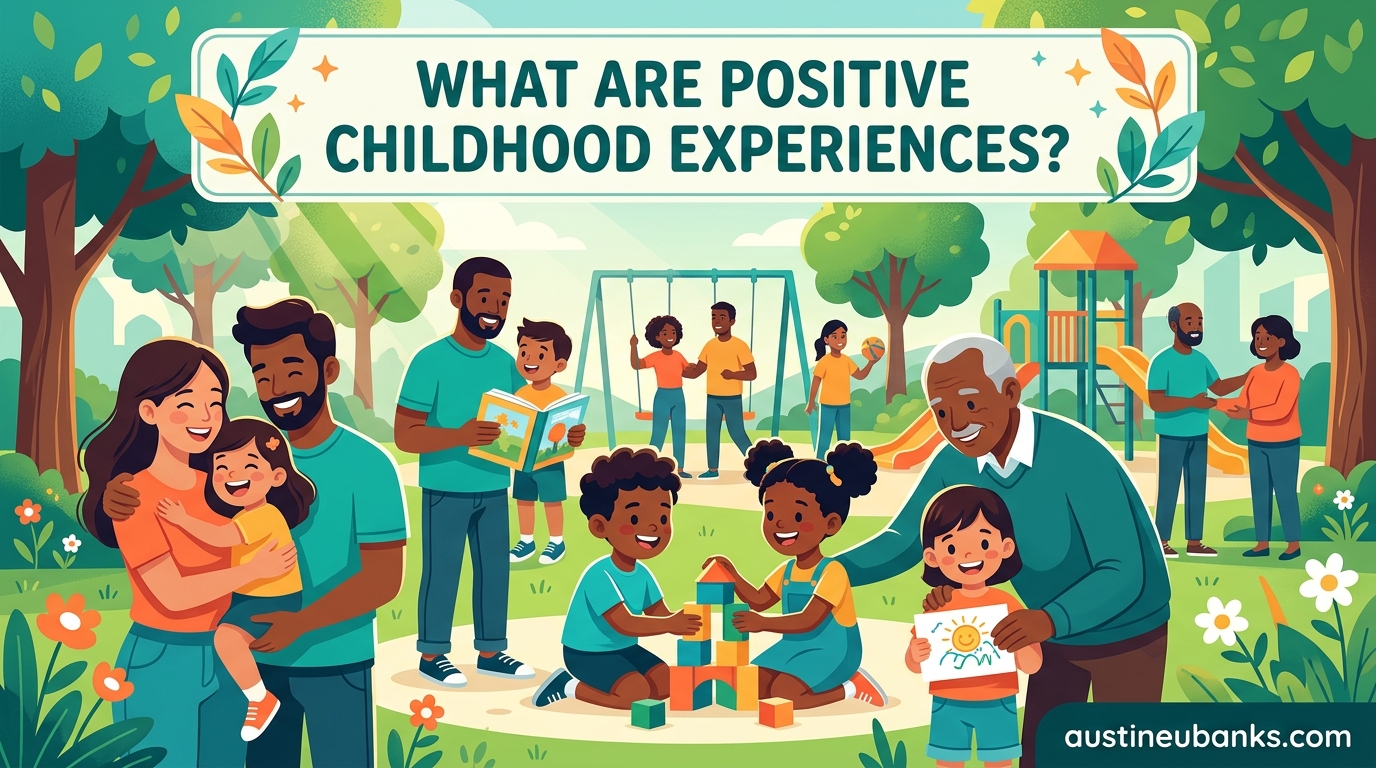
For years, we have heard about adverse childhood experiences (ACEs) and the lasting damage they can cause. But there is another side to that story, one that rarely gets the attention it deserves. Positive childhood experiences (PCEs) are the relationships, routines, and moments of connection that help children feel safe, valued, and supported. And research shows these experiences do more than just create happy memories. They actively build resilience, shape brain development, and protect against the long-term effects of trauma.
The concept of positive childhood experiences emerged from the same research tradition that gave us the ACEs framework. Scientists realized that studying only what goes wrong in childhood tells only half the story. By examining what goes right, they discovered that certain protective factors can buffer children against adversity and set them on a path toward healthy adult outcomes.
In this guide, we break down what positive childhood experiences are, walk through the seven PCEs identified in landmark research, explain how PCEs build resilience at the neurological level, and share practical ways that parents, educators, and communities can intentionally foster these experiences. Whether you are a parent looking to give your child the best possible foundation or an adult reflecting on your own upbringing, understanding PCEs can change how you think about childhood and resilience.
Table of Contents
What Are Positive Childhood Experiences (PCEs)?
Positive childhood experiences (PCEs) are the supportive relationships, safe environments, and community connections that help children feel valued, protected, and capable. They function as protective factors that buffer against stress and adversity, strengthening a child’s capacity for emotional regulation, healthy relationships, and lifelong mental health. Unlike simple happy memories, PCEs are specific, measurable experiences that researchers have linked to measurable improvements in adult well-being.
The term gained prominence through research conducted by Dr. Christina Bethell and colleagues, published in JAMA Pediatrics in 2019. Their work drew on data from the Behavioral Risk Factor Surveillance System (BRFSS), a massive health survey conducted across multiple U.S. states. The researchers identified seven specific experiences that, when present during childhood, correlated strongly with better mental health and emotional resilience in adulthood.
It is important to distinguish PCEs from the general idea of a happy childhood. A child can experience significant adversity and still accumulate meaningful positive experiences. In fact, that is partly the point. PCEs are not about eliminating all hardship. They are about ensuring that children have the relational and community scaffolding they need to process difficulty, develop coping mechanisms, and emerge stronger.
Think of PCEs as the building blocks of resilience. Each positive experience, whether it is a trusted teacher who believed in a child, a family tradition that created a sense of belonging, or simply the feeling of safety at home, adds another layer of protection. Research calls this the dose-response relationship. The more PCEs a child has, the greater their resilience becomes.
This is also where PCEs differ from just having fun or enjoying childhood activities. Going to an amusement park might create a fond memory, but the experiences that build resilience are relational and structural. They involve feeling seen, heard, and supported by the people and institutions around you.
What Positive Childhood Experiences Are and How They Build Resilience
Understanding what positive childhood experiences are and how they build resilience requires looking at both the specific experiences and the mechanisms through which they protect developing brains. The seven PCEs identified by research represent a framework for measuring the supportive conditions children need, while the science of resilience explains exactly how those conditions produce lasting benefits.
Each of the seven PCEs contributes to resilience through overlapping pathways. Emotional openness at home teaches children to regulate their feelings. Family support during crises builds a sense of safety. Community traditions create belonging. School connectedness fosters engagement. Peer support develops social skills. Mentorship from non-parent adults provides perspective and validation. Home safety establishes the foundation for all other development. Together, these experiences create a web of protection that strengthens a child’s capacity to navigate adversity throughout life.
The 7 Positive Childhood Experiences
Research identified seven specific positive childhood experiences that are statistically linked to better emotional and mental health in adults. These seven items form the PCEs scale used in studies and clinical settings. Each one represents a different dimension of support, connection, and safety.
Here are the 7 positive childhood experiences, along with what each one looks like in everyday life:
1. Able to Talk With Family About Feelings
This PCE is about emotional openness within the family unit. Did the child grow up in a home where they could express sadness, anger, fear, or joy without being shut down or punished? Children who learn that their feelings are valid and discussable develop stronger emotional regulation skills. They learn to name what they feel, which is the first step in managing those feelings.
In practice, this might look like a parent who sits down and asks, “How was your day, really?” and then listens without jumping to fix or minimize. It could be a family dinner table where everyone shares a high point and a low point from their day. The specific ritual matters less than the underlying message: your feelings matter here.
2. Felt That Family Stood by Them During Difficult Times
This experience measures family as a source of unwavering support. When a child faces a crisis, whether it is a failing grade, a friendship falling apart, or a major life transition, do they feel like their family has their back? This PCE is about perceived solidarity. The child knows they are not alone.
One adult we spoke with described it this way: “When I got in trouble at school, my mom didn’t yell at me. She asked what happened, and then she went to the school with me and dealt with it together.” That experience taught this person that family is a team, not a tribunal. It became a template for how they handle conflict in adult relationships.
3. Enjoyed Participating in Community Traditions
Community traditions give children a sense of belonging to something larger than themselves. This could mean religious services, cultural celebrations, neighborhood events, holiday rituals, or regular family traditions that connect to a broader community. The key word is participation. The child is not just present but actively involved.
Community traditions create what researchers call social embeddedness. The child feels woven into a fabric of relationships and shared meaning. This sense of belonging is a powerful protective factor against isolation and loneliness, both in childhood and later in life.
4. Felt a Sense of Belonging in School
School is where children spend a massive portion of their waking hours. Feeling connected at school, having friends, feeling liked by teachers, and feeling like part of the community is a significant PCE. School belonging predicts academic engagement, emotional well-being, and even long-term outcomes like employment and civic participation.
This does not mean the child needs to be the most popular kid in class. It means they need to feel like school is a place where they are known, accepted, and valued. A single teacher who takes an interest can make the difference between a child who feels invisible and one who feels seen.
5. Felt Supported by Friends
Peer relationships are a critical source of support, especially as children move into adolescence. This PCE measures whether the child had friends they could count on, confide in, and turn to during hard times. Friendships teach children reciprocity, empathy, conflict resolution, and trust.
Research consistently shows that positive peer relationships in childhood predict healthier social functioning in adulthood. Children who learn to build and maintain friendships develop a relational toolkit they carry for life.
6. Had at Least Two Non-Parent Adults Who Took Genuine Interest
This is one of the most powerful and often surprising PCEs for people learning about the framework. Having at least two non-parent adults who took a genuine interest in them as a child is a strong predictor of resilience. These could be grandparents, aunts, uncles, teachers, coaches, religious leaders, mentors, or neighbors.
On forums like Reddit’s r/psychology and r/mentalhealth, adults frequently reflect on how a single teacher, coach, or family friend changed the trajectory of their life. One person shared: “I had a rough home life, but my soccer coach believed in me from age 10 through high school. He was the reason I believed I was worth something.” Non-parent adults provide perspective, validation, and sometimes a safe haven that parents alone cannot always offer.
7. Felt Safe and Protected by an Adult in the Home
This PCE gets to the most fundamental layer of childhood experience. Did the child feel physically and emotionally safe at home? Was there an adult in the household who made them feel secure? Safety is the foundation upon which all other development rests. Without it, the brain stays in a state of heightened alert, and the capacity for learning, connection, and growth is compromised.
Feeling safe does not require a perfect home. It requires at least one adult who is consistently present, predictable, and protective. Research on resilience consistently finds that a single secure relationship can anchor a child’s development, even in the midst of significant adversity.
How PCEs Build Resilience
Understanding what positive childhood experiences are is only the first step. To appreciate their true value, we need to understand how PCEs build resilience at a biological, psychological, and social level. The answer involves brain development, stress response systems, attachment theory, and the development of coping skills.
At the neurological level, positive experiences literally shape the developing brain. When a child feels safe, supported, and connected, their brain allocates resources to learning, memory, and emotional regulation rather than survival. The prefrontal cortex, which governs executive function and decision-making, develops more robustly. The hippocampus, critical for memory and learning, is protected from the shrinkage associated with chronic stress.
PCEs also regulate the stress response system. When children face adversity without adequate support, their bodies produce prolonged spikes of cortisol, the primary stress hormone. Over time, this constant activation damages physical and mental health. Positive experiences act as a buffer. A supportive adult who helps a child process a frightening event can prevent that event from becoming toxic stress. The child’s stress response is activated, but then it returns to baseline rather than staying chronically elevated.
This is what researchers call the buffering effect. PCEs do not prevent adversity from happening. Instead, they provide the relational and emotional resources that allow a child’s nervous system to recover. The experience is stressful, but it does not become toxic.
Secure attachment plays a central role in this process. When a child has a reliable, responsive caregiver, they develop what psychologists call a secure attachment style. This means they learn to trust that their needs will be met, that the world is generally safe, and that other people can be sources of comfort and support. Secure attachment is one of the strongest predictors of lifelong emotional health.
At the psychological level, PCEs build resilience by developing specific competencies. Children who experience emotional openness at home learn to identify and manage their feelings. Those who participate in community traditions develop a sense of identity and belonging. Those who feel supported by friends learn social skills and reciprocity. Each PCE contributes a different piece to the resilience puzzle.
The 7 Cs of Resilience
Dr. Kenneth Ginsburg, a pediatrician and resilience researcher, developed a complementary framework known as the 7 Cs of resilience. While PCEs describe the experiences that build resilience, the 7 Cs describe the qualities that result. Together, the two frameworks provide a complete picture.
The 7 Cs are: Competence (the ability to handle situations effectively), Confidence (belief in one’s own abilities), Connection (strong ties to family, friends, and community), Character (a fundamental sense of right and wrong), Contribution (understanding that one can make a difference), Coping (healthy strategies for managing stress), and Control (awareness that one can make choices and influence outcomes).
PCEs directly feed each of these seven qualities. Talking about feelings at home builds coping skills. Family support during hard times builds confidence. Community traditions build connection and character. Non-parent adult mentors build competence and contribution. The frameworks are deeply interconnected.
The Research Behind PCEs
The evidence base for positive childhood experiences has grown substantially since the concept was first introduced. Several key studies form the foundation of what we know about PCEs and their relationship to resilience and adult mental health.
The landmark study was published in JAMA Pediatrics in 2019 by Dr. Christina Bethell and colleagues. Using data from the Behavioral Risk Factor Surveillance System (BRFSS) across multiple states, the researchers surveyed thousands of adults about their childhood experiences. They found that even after accounting for ACEs, higher PCE scores were associated with significantly lower rates of depression and better overall mental health in adulthood. In fact, adults who reported six or seven PCEs had dramatically lower odds of depression compared to those who reported zero to two.
This was a critical finding because it showed that PCEs have an independent effect. They do not just matter for children who experienced ACEs. They matter for everyone. Even in the absence of adversity, more positive experiences lead to better outcomes.
A systematic review published in 2023 examined over 40 studies on PCEs and adult outcomes. The review confirmed that higher levels of PCEs predicted more positive psychosocial functioning across multiple domains. People with more PCEs reported higher self-esteem, greater psychological resilience, and healthier relationship patterns. The review also found that PCEs played a dual role. They were both promotive, directly building positive outcomes, and protective, buffering against the effects of adversity.
More recent research, including a 2025 study published in JAMA Network Open, expanded the evidence further. This study looked at the economic impact of PCEs and found that positive childhood experiences are associated with approximately $3.1 billion in savings related to reduced healthcare costs, improved productivity, and lower rates of mental health conditions. This economic data adds a policy dimension to the conversation, suggesting that investing in PCEs is not just a health imperative but an economic one.
The dose-response relationship is one of the most consistent findings across all PCE research. Each additional positive experience adds measurable protection. The relationship is linear and cumulative. This means that every PCE a child receives contributes to their resilience, regardless of how many they already have. There is no threshold or ceiling effect. More is always better.
Importantly, PCEs research has also shown that positive experiences can offset some of the damage caused by ACEs. Children who experience adversity but also have strong PCEs show better outcomes than children who experience adversity without positive experiences. This does not mean PCEs erase trauma. But it does mean that building positive experiences is a powerful intervention, even after adversity has occurred.
PCEs vs ACEs: Two Sides of the Coin
To fully understand positive childhood experiences, it helps to understand their counterpart: adverse childhood experiences. The two frameworks are complementary, and together they offer a complete picture of how childhood shapes adult outcomes.
Adverse childhood experiences (ACEs) were first identified in the landmark 1998 study by Dr. Vincent Felitti and Dr. Robert Anda through Kaiser Permanente and the CDC. ACEs include 10 specific categories of childhood adversity, including physical, emotional, and sexual abuse; physical and emotional neglect; and household dysfunction such as substance abuse, mental illness, incarceration, domestic violence, and parental separation.
The ACEs study revealed a powerful dose-response relationship between childhood adversity and adult health problems. Higher ACE scores predicted higher rates of heart disease, cancer, depression, substance use, and a host of other conditions. The study fundamentally changed how the medical community understood the origins of disease.
But the ACEs framework, while groundbreaking, has a limitation. It only measures what goes wrong. PCEs fill that gap by measuring what goes right. The two frameworks are mirror images, and research shows they interact in important ways.
Here is a side-by-side comparison of the key differences:
- Focus: ACEs measure childhood adversity and risk factors. PCEs measure childhood support and protective factors.
- Origin: ACEs were identified in 1998 through the Kaiser Permanente-CDC study. PCEs were identified in 2019 through the BRFSS data published in JAMA Pediatrics.
- Scale: ACEs include 10 items across three categories (abuse, neglect, household dysfunction). PCEs include 7 items focused on relationships, belonging, and safety.
- Outcomes: Higher ACE scores predict worse health outcomes. Higher PCE scores predict better health outcomes, even after controlling for ACEs.
- Intervention approach: ACEs prevention focuses on reducing adversity. PCEs promotion focuses on increasing positive experiences.
- Interaction: PCEs can buffer against the negative effects of ACEs, reducing the odds of depression and poor outcomes even in children who have experienced adversity.
The most hopeful finding from this research is that PCEs and ACEs are not a simple zero-sum game. A child with a high ACE score is not destined for poor outcomes if they also has meaningful positive experiences. And an adult who grew up with significant adversity can still benefit from recognizing the PCEs they did have. Many people who learn about the PCEs framework are surprised to discover they had more positive experiences than they realized.
This reframing is not about minimizing adversity. It is about recognizing the full picture. Both ACEs and PCEs contribute to who we become, and understanding both gives us a more complete toolkit for healing and growth.
The HOPE Framework and Four Building Blocks
Building on the PCEs research, Tufts Medicine developed the HOPE framework. HOPE stands for Healthy Outcomes from Positive Experiences. It is both a research initiative and a practical approach to promoting PCEs in families, schools, healthcare settings, and communities.
The HOPE framework identifies Four Building Blocks that capture the essence of positive childhood experiences. These building blocks provide a practical structure for anyone who wants to intentionally create positive experiences for the children in their lives.
Building Block 1: Relationships
The first building block focuses on nurturing, supportive relationships within and outside the family. This includes parent-child bonds, sibling relationships, connections with extended family, friendships, and relationships with teachers, coaches, and mentors. The research is clear that relationships are the single most important factor in building resilience. Every PCE on the seven-item list, in some way, involves a relationship.
To strengthen this building block, families can prioritize one-on-one time with each child, maintain connections with extended family, and actively seek out mentorship opportunities. Schools and community programs can train adults to build authentic connections with young people.
Building Block 2: Environment
The second building block addresses the physical and emotional environments where children live, learn, and play. A safe, stable, and nurturing environment allows children to relax, explore, and develop without constant vigilance. This includes physical safety at home and school, emotional safety to express feelings, and predictable routines that create a sense of order.
Creating positive environments does not require wealth or resources. It requires consistency, responsiveness, and attention. A home where children know what to expect, where their basic needs are met, and where they are treated with respect provides the environmental safety that resilience requires.
Building Block 3: Engagement
The third building block involves children’s active engagement in social, civic, and recreational activities. This includes participating in community traditions (one of the 7 PCEs), joining clubs or teams, volunteering, and developing interests and hobbies. Engagement gives children a sense of purpose, belonging, and contribution.
When children participate in activities that matter to them and to their community, they develop a sense of agency. They learn that their actions have impact, that they can contribute something valuable, and that they are part of a larger whole. This is closely tied to the Contribution element of the 7 Cs of resilience.
Building Block 4: Emotional Growth
The fourth building block focuses on opportunities for emotional growth through play, self-reflection, and emotional expression. Children need safe spaces to experience and process their feelings, to play freely, and to develop a sense of self. This building block directly supports the PCE about being able to talk with family about feelings.
Emotional growth happens when children are allowed to feel what they feel without judgment, when they are given words for their experiences, and when they see adults modeling healthy emotional regulation. Play is a critical component of this process, as it allows children to process complex emotions and practice social skills in a low-stakes environment.
Together, the Four Building Blocks of HOPE provide a practical roadmap for creating the conditions that allow PCEs to flourish. They translate research into action, giving parents, educators, and community leaders concrete areas to focus on.
Practical Ways to Foster Positive Childhood Experiences
Knowing about PCEs is valuable, but the real impact comes from putting that knowledge into practice. Whether you are a parent, teacher, coach, community leader, or caring neighbor, there are concrete steps you can take to create positive childhood experiences for the young people in your life.
For Parents and Caregivers
Start with emotional openness. Make it a daily habit to check in with your children about their feelings. Ask open-ended questions like, “What was the best part of your day?” and “Was there anything hard about today?” Listen without rushing to fix or lecture. The goal is to signal that all feelings are welcome and discussable in your home.
Be the steady presence during hard times. When your child faces a challenge, whether it is a conflict with a friend, a disappointing grade, or a scary life event, position yourself as their teammate. Say things like, “We will figure this out together.” Your consistency during difficult moments is one of the most powerful PCEs you can provide.
Create and maintain family traditions. These do not need to be elaborate. Weekly pizza nights, annual camping trips, holiday rituals, bedtime stories, Sunday morning pancakes. What matters is the repetition, the shared experience, and the sense of belonging these traditions create.
Actively connect your child with other caring adults. Encourage relationships with grandparents, aunts, uncles, trusted neighbors, teachers, coaches, and mentors. Remember that having at least two non-parent adults who take a genuine interest is one of the seven PCEs. You cannot be everything to your child, and you should not have to be.
Help your child build and maintain friendships. Facilitate playdates, encourage participation in group activities, and model healthy friendship behaviors. When friendship conflicts arise, help your child navigate them rather than solving them yourself.
For Educators and School Staff
School belonging is a PCE that educators can directly influence. Greet students by name. Learn about their interests outside of academics. Create classroom traditions that build community. Address bullying promptly and create a culture where every student feels valued.
Be that non-parent adult for students who need one. You may not know which of your students does not have a supportive adult at home. Treating every student with genuine interest and care ensures that those who need a mentor find one in you.
Teach emotional literacy explicitly. Many children do not learn to identify and express feelings at home. Schools that incorporate social-emotional learning give students tools they will use for the rest of their lives.
For Communities and Policy Makers
Communities play a vital role in providing PCEs. Invest in public spaces where children can play safely. Support youth programs, mentorship initiatives, after-school activities, and community events. Ensure that families facing economic hardship have access to resources that allow them to provide stability and enrichment for their children.
Recognize that systemic barriers, including poverty, racism, housing instability, and food insecurity, make it harder for some families to provide PCEs. Addressing these barriers is not separate from promoting PCEs. It is a prerequisite. Policy interventions that reduce family stress and increase community resources directly contribute to the conditions PCEs require.
Healthcare providers can incorporate PCEs screening alongside ACEs screening. The BCEs (Benevolent Childhood Experiences) scale and similar tools allow providers to identify strengths as well as risks. This balanced approach gives families a more hopeful and actionable picture of their situation.
For Adults Reflecting on Their Own Childhoods
One of the most powerful insights from forum discussions is the value of adults reflecting on their own PCEs. If you grew up with adversity, it can be easy to focus only on what was missing. But most people, even those with difficult childhoods, can identify at least some positive experiences.
Maybe it was a teacher who saw potential in you. A coach who pushed you to try harder. A grandparent who made you feel special. A friend who stood by you when things were hard. These experiences counted. They contributed to your resilience, even if you did not have a name for them at the time.
Recognizing your own PCEs can serve as a template. Many parents who had difficult childhoods intentionally use their positive experiences, however few, as models for what they want to create for their own children. One Reddit user put it simply: “My grandmother showed me what unconditional love looked like. I didn’t get it from my parents, but I knew what it felt like. And that is what I give my kids now.”
It is also never too late to build resilience. The brain maintains neuroplasticity throughout life. While childhood is a critical window, adults can continue to build secure relationships, develop coping skills, and create the supportive environments that PCEs represent. Therapy, mentorship, community involvement, and intentional relationship-building all contribute to ongoing resilience development.
FAQs
What is the best example of a positive childhood experience that promotes resilience?
One of the most powerful examples is having at least one non-parent adult who took a genuine interest in the child. Research shows this single experience, whether it comes from a teacher, coach, mentor, or grandparent, significantly predicts resilience. A trusted adult outside the family provides perspective, validation, and sometimes a safe haven that supports healthy development.
What are examples of positive childhood experiences?
Examples include talking openly with family about feelings, feeling that family stood by you during hard times, participating in community traditions, feeling a sense of belonging at school, having supportive friends, having at least two non-parent adults who cared about you, and feeling safe and protected by an adult at home. These are the seven PCEs identified in the 2019 JAMA Pediatrics study.
What are the 7 positive childhood experiences?
The 7 positive childhood experiences are: (1) able to talk with family about feelings, (2) felt family stood by them during difficult times, (3) enjoyed participating in community traditions, (4) felt a sense of belonging in school, (5) felt supported by friends, (6) had at least two non-parent adults who took genuine interest, and (7) felt safe and protected by an adult in the home. These seven items form the PCEs scale used in research.
What are the 7 Cs of resilience for children?
The 7 Cs of resilience, developed by Dr. Kenneth Ginsburg, are Competence, Confidence, Connection, Character, Contribution, Coping, and Control. These seven qualities describe the internal strengths that positive childhood experiences help develop. Each PCE directly supports one or more of the 7 Cs, making the two frameworks complementary.
Can positive childhood experiences counteract ACEs?
Yes, research shows that PCEs can buffer against the negative effects of adverse childhood experiences. While PCEs do not erase trauma, higher PCE scores are associated with lower rates of depression and better mental health outcomes even in people who experienced significant ACEs. The dose-response relationship means that each additional PCE adds measurable protection.
How do PCEs affect adult mental health?
Studies show that adults with higher PCE scores have significantly lower rates of depression, anxiety, and other mental health conditions. The 2019 JAMA Pediatrics study found that adults reporting six or seven PCEs had dramatically lower odds of depression compared to those reporting zero to two PCEs, even after controlling for adverse childhood experiences.
Conclusion
Positive childhood experiences are not just feel-good moments. They are measurable, research-backed protective factors that shape brain development, build emotional resilience, and predict healthier outcomes across the lifespan. The seven PCEs identified by researchers, along with the HOPE framework and the 7 Cs of resilience, give us a practical roadmap for what children need to thrive. Whether you are a parent creating these experiences for your own children, a professional working with young people, or an adult reflecting on your own story, the message is clear. Every positive experience matters. Every caring relationship adds protection. And it is never too early, or too late, to start building resilience through connection, safety, and belonging.