
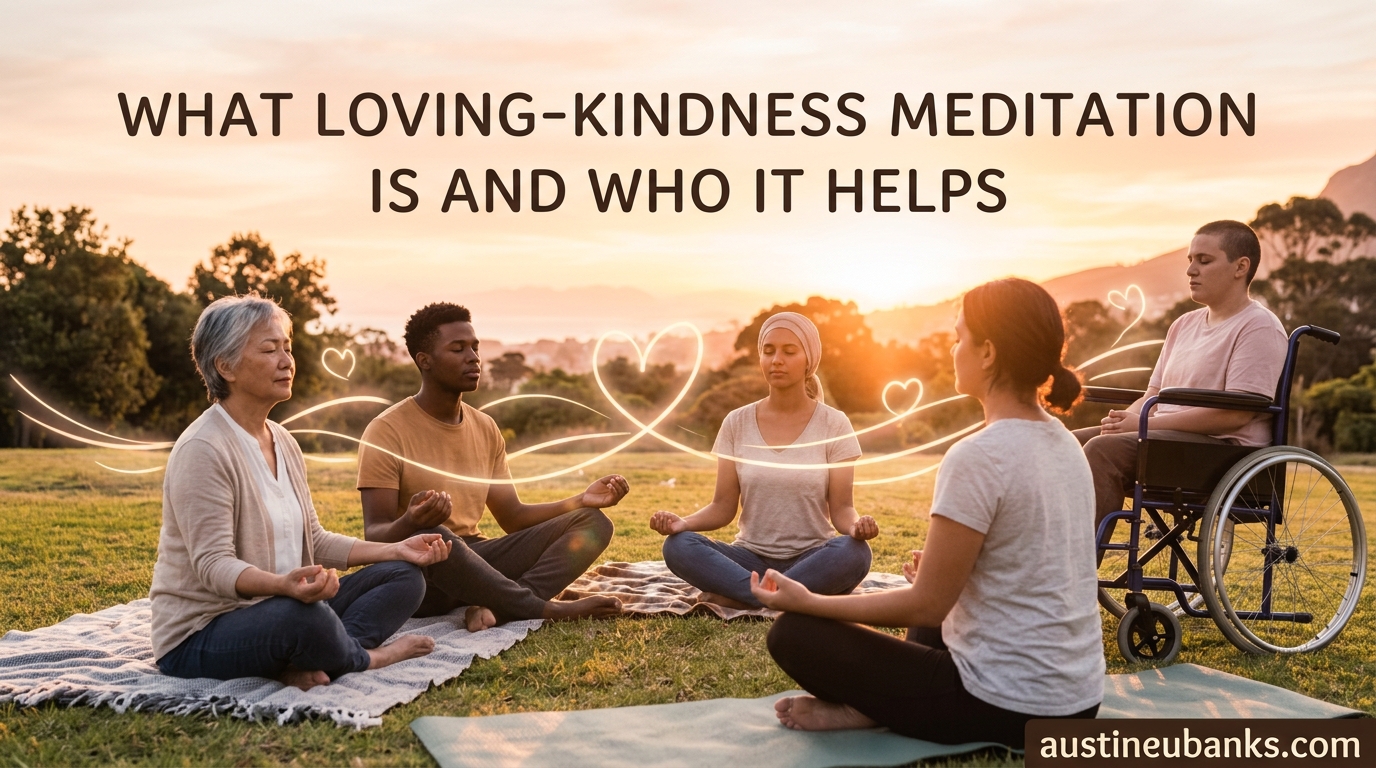
Loving-kindness meditation is a practice that involves silently repeating phrases of goodwill and warmth, first toward yourself and then outward to others. Also known as metta meditation, it comes from Buddhist tradition and has been studied extensively by modern researchers for its wide-ranging effects on mental health. If you have ever struggled with self-criticism, strained relationships, or a sense of disconnection from the people around you, this practice offers a structured way to cultivate genuine warmth and compassion. In this guide, we break down exactly what loving-kindness meditation is, where it comes from, how to practice it step by step, and the specific groups of people who stand to benefit the most.
Table of Contents
What Is Loving-Kindness Meditation?
Loving-kindness meditation is a heart-centered practice focused on generating feelings of goodwill, kindness, and warmth toward yourself and others. Unlike some forms of meditation that train attention on the breath or bodily sensations, this practice actively cultivates positive emotional states through repeated silent phrases.
The word “metta” comes from the ancient Pali language, spoken in the region that is now Nepal and northern India. Metta translates roughly to “loving-kindness” or “unconditional friendliness.” It refers to a quality of heart that can be intentionally developed through practice, rather than something you either have or lack.
Loving-kindness is one of four heart-centered practices in Buddhist tradition, alongside compassion (karuna), sympathetic joy (mudita), and equanimity (upekkha). Together, these four are sometimes called the “divine abodes” or “sublime attitudes.” While they are related, each develops a slightly different quality of heart and mind.
What makes loving-kindness meditation distinct is its directional nature. You do not simply sit and wait for warm feelings to arise. You actively direct phrases of well-being in an expanding circle, starting with yourself and moving outward. This structured approach gives the mind something concrete to work with, which many beginners find more accessible than open-ended meditation.
The Origins of Loving-Kindness Meditation
Loving-kindness meditation traces back over 2,500 years to the earliest Buddhist teachings. The practice is rooted in the Metta Sutta, a discourse attributed to the Buddha that describes metta as a quality to be cultivated like a mother’s love for her only child. The text encourages practitioners to radiate friendliness in all directions, without exception.
In the Pali canon, metta holds a central place as one of the four sublime states. Monks and lay practitioners in Theravada Buddhist countries like Sri Lanka, Myanmar, and Thailand have maintained this practice continuously for centuries. It forms part of daily chanting and retreat schedules across these traditions.
The practice crossed into Western awareness largely through teachers like Sharon Salzberg, Jack Kornfield, and Joseph Goldstein, who studied in Asia in the 1970s and brought insight meditation to American audiences. Salzberg’s 1995 book “Lovingkindness: The Revolutionary Art of Happiness” introduced the practice to hundreds of thousands of readers and remains a foundational text.
In the decades since, loving-kindness meditation has been adopted in secular settings, from hospital wellness programs to corporate mindfulness trainings. Researchers at universities including Stanford, Emory, and the University of Wisconsin have studied its effects extensively, giving the practice a strong evidence base that extends well beyond its religious origins.
How to Practice Loving-Kindness Meditation: The 5 Steps
The traditional loving-kindness meditation follows a five-stage progression. You move from the easiest target (yourself) to the most challenging (all living beings), building emotional momentum along the way. Here is how each step works.
Step 1: Offer Loving-Kindness to Yourself
Begin by sitting comfortably with your eyes closed. Bring your attention to your heart center or your breath for a few moments. Then silently repeat the four metta phrases, directing them toward yourself: “May I be happy. May I be healthy. May I be safe. May I live with ease.”
This first stage is often the hardest. Many people feel resistance or self-consciousness when offering themselves kindness. If negative thoughts arise, simply notice them and return to the phrases. You are not trying to force a feeling, just planting the seeds of intention.
Step 2: Offer Loving-Kindness to a Loved One
Next, bring to mind someone you love deeply and easily. This could be a child, a pet, a close friend, or a mentor. Picture them clearly and direct the same phrases toward them: “May you be happy. May you be healthy. May you be safe. May you live with ease.”
For most people, this stage flows more naturally than the first. The feelings of warmth you generate here build the emotional foundation for the more challenging steps ahead.
Step 3: Offer Loving-Kindness to a Neutral Person
Now bring to mind someone you neither like nor dislike, someone you see regularly but do not know well. This might be a cashier at your local store, a neighbor you nod to in passing, or a coworker from another department. Direct the same phrases to them.
This step can reveal how quickly the mind categorizes people as important or invisible. Offering the same quality of kindness to a stranger that you gave to a loved one helps dissolve those artificial boundaries.
Step 4: Offer Loving-Kindness to a Difficult Person
This is the step that challenges most practitioners. Bring to mind someone who has caused you difficulty or frustration. Start with someone mildly irritating rather than someone who has caused serious harm, especially if you are new to the practice.
Direct the same phrases toward them. This does not mean you approve of their behavior or that you will not set boundaries. You are simply wishing them well, which loosens the grip of resentment and anger on your own mind.
Step 5: Offer Loving-Kindness to All Beings
In the final stage, expand your awareness outward as far as it can reach. Include your community, your city, your country, and eventually all living beings everywhere. Silently repeat: “May all beings be happy. May all beings be healthy. May all beings be safe. May all beings live with ease.”
Many practitioners report that this stage feels the most expansive and natural, as the accumulated warmth from the earlier steps carries forward into this wider field of awareness.
The 4 Metta Phrases
The four traditional metta phrases serve as the backbone of loving-kindness meditation. Each one targets a slightly different dimension of well-being, and together they cover the essential wishes most people hold for themselves and those they care about.
May I be happy. This phrase wishes for genuine emotional well-being, not just fleeting pleasure. It acknowledges that happiness is something everyone deserves, including you.
May I be healthy. This covers physical, mental, and emotional health. It is a wish for the body and mind to function well and for healing when needed.
May I be safe. This phrase addresses the fundamental human need for security and protection from harm, both internal and external.
May I live with ease. This final phrase wishes for a life free from unnecessary struggle. It does not mean avoiding all difficulty, but rather moving through challenges without constant friction and resistance.
Some teachers use slightly different phrasing. Common variations include “May I be free from suffering,” “May I be peaceful,” or “May I be filled with lovingkindness.” The specific words matter less than the intention behind them. Choose phrasing that resonates with you personally.
Who Does Loving-Kindness Meditation Help?
One of the most common questions people ask is whether loving-kindness meditation is right for them. The short answer is that this practice can benefit almost anyone, but certain groups have shown particularly strong results in both clinical research and real-world experience.
People Who Struggle With Self-Criticism
If your inner voice tends toward harshness, loving-kindness meditation directly targets that pattern. By repeatedly directing goodwill toward yourself, you gradually rewire the self-talk that runs in the background of your mind. Research from Dr. Kristin Neff and others has shown that self-compassion practices reduce self-criticism more effectively than self-esteem building alone.
Many practitioners on meditation forums describe the shift in concrete terms. One Reddit user on r/Meditation shared that after consistent practice, they noticed their internal monologue becoming noticeably gentler during stressful situations, even when they were not actively meditating.
People Managing Anxiety and Depression
Multiple studies have found that loving-kindness meditation reduces symptoms of anxiety and depression. A landmark study by Dr. Barbara Fredrickson at the University of North Carolina showed that seven weeks of loving-kindness practice increased positive emotions, which in turn built personal resources ranging from mindfulness to social support.
Unlike some interventions that focus on reducing negative symptoms, loving-kindness works partly by building positive emotional resources. This makes it a strong complement to therapy and medication rather than a replacement for them.
Caregivers, Healthcare Workers, and First Responders
People in caregiving roles face high rates of burnout and compassion fatigue. Loving-kindness meditation helps by replenishing the emotional reserves that constant caregiving depletes. Studies with nurses, social workers, and therapists have shown reduced burnout symptoms and improved patient interactions after structured loving-kindness programs.
First responders, including firefighters and emergency medical personnel, have also benefited. The practice gives them a tool to process difficult experiences without becoming emotionally shut down or overwhelmed.
Couples and People Working on Relationships
If you want to improve your relationships, loving-kindness meditation offers a direct route. By practicing goodwill toward others, including difficult people, you train your mind to respond with patience rather than reactivity. Couples who practice together or individually often report softer communication and less escalation during conflicts.
The Step 4 practice of extending kindness to a difficult person can be especially powerful for people navigating family conflicts, workplace tensions, or strained friendships. It does not resolve the external situation, but it changes your internal relationship to it.
Trauma Survivors
For trauma survivors, loving-kindness meditation can be a gentle way to rebuild a sense of safety and self-worth. However, this group should approach the practice with care. Sitting in silence and focusing on emotions can sometimes trigger traumatic memories. Working with a trauma-informed meditation teacher or therapist is strongly recommended.
Some trauma-informed teachers modify the practice, suggesting that survivors begin with a benefactor or pet rather than themselves, or keep their eyes open during practice. The goal is to make the practice feel safe and nourishing, not destabilizing.
Anyone Feeling Disconnected or Lonely
Loneliness has reached epidemic levels in many countries, and loving-kindness meditation addresses it at a root level. By actively cultivating a sense of connection to others, even in their absence, the practice helps practitioners feel less isolated. Research has shown that loving-kindness meditation increases perceived social connection and reduces the subjective experience of loneliness.
What the Research Says: Benefits of Loving-Kindness Meditation
The scientific literature on loving-kindness meditation has grown substantially since the early 2000s. Researchers have documented benefits across emotional, social, and even physical domains. Here are some of the most well-supported findings.
Increased positive emotions. Dr. Barbara Fredrickson’s research demonstrated that loving-kindness practice reliably increases positive emotions like joy, gratitude, hope, and amusement. These increases compound over time, building what she calls the “upward spiral” of well-being.
Reduced negative emotions. Studies have documented decreases in anger, contempt, and defensiveness among regular practitioners. People who practice loving-kindness report less reactivity to daily stressors and faster recovery from negative emotional states.
Pain reduction. Research from Dr. Fadel Zeidan at Wake Forest University found that loving-kindness meditation reduced both the intensity and unpleasantness of chronic pain. This effect appeared distinct from the pain relief associated with mindfulness meditation, suggesting that the emotional component of the practice plays a direct role.
Improved vagal tone. Loving-kindness practice has been linked to improved vagal tone, a measure of how well the parasympathetic nervous system functions. Better vagal tone correlates with reduced inflammation, improved heart health, and greater emotional resilience.
Slowed biological aging. A fascinating 2013 study by Dr. Elissa Epel and colleagues found that loving-kindness meditation was associated with slower shortening of telomeres, the protective caps on chromosomes that tend to shrink as we age. While this research is still developing, it suggests that the stress-reduction benefits of the practice may reach all the way down to the cellular level.
Social connection and empathy. Multiple studies have found that loving-kindness meditation increases feelings of social connection and improves empathy. One notable study showed that practicing loving-kindness made people more likely to help someone in distress, even when no one was watching.
How Loving-Kindness Meditation Differs From Other Practices
People new to meditation often ask how loving-kindness compares to other styles they may have heard about. The differences come down to focus and technique.
Versus mindfulness meditation. Mindfulness meditation trains you to observe your present-moment experience without judgment. You notice thoughts, sensations, and emotions as they arise and pass away. Loving-kindness meditation, by contrast, actively generates specific emotional states through repeated phrases. Many practitioners combine the two, using mindfulness as a foundation and loving-kindness to cultivate the heart.
Versus compassion meditation (tonglen). Compassion meditation, particularly the Tibetan practice of tonglen, involves breathing in the suffering of others and breathing out relief. Loving-kindness focuses on generating goodwill and well wishes rather than working directly with suffering. Both develop the heart, but through different mechanisms.
Common Challenges (and How to Work Through Them)
Like any meditation practice, loving-kindness comes with its own set of common difficulties. Forum discussions on Reddit’s r/Meditation and other communities reveal several recurring themes. Knowing about these challenges in advance can help you navigate them.
Feeling Phony or Awkward
The most common complaint from beginners is that the phrases feel fake or forced. One Reddit user described the initial experience as feeling “phony” when saying positive things toward themselves. This reaction is completely normal and does not mean the practice is not working.
The key insight is that you are planting seeds of intention, not trying to manufacture a feeling. If saying “may I be happy” feels hollow, that observation itself is valuable data about your current relationship with yourself. Over time, usually within a few weeks of regular practice, the phrases begin to feel more genuine.
Difficulty Extending Kindness to a Difficult Person
Step 4 trips up many practitioners. Extending genuine goodwill to someone who has hurt or frustrated you can feel impossible at first. If this stage feels like too much, try starting with someone only mildly annoying, like a coworker who talks too loudly.
Remember that offering metta to a difficult person does not excuse their behavior or obligate you to maintain a relationship. You are simply choosing not to carry the weight of resentment in your own mind. Many practitioners find that this step brings the most relief once they can approach it honestly.
Unexpected Physical Sensations
Some people experience intense physical sensations during loving-kindness practice. Forum users have described waves of warmth, spontaneous crying, laughter, and even feelings of catharsis during early sessions. These responses tend to be most common in the first few sessions and usually settle with continued practice.
If physical or emotional sensations feel overwhelming, slow down. Open your eyes, take a few grounding breaths, or shorten your session. There is no prize for pushing through discomfort, and gentleness with yourself is part of the practice itself.
Uncertainty About Whether It Is Working
Many beginners wonder how long it takes to see results. The honest answer is that benefits accumulate gradually. Some people notice shifts in their mood or reactivity within the first week. For others, meaningful change takes several weeks or months of consistent practice.
The most reliable way to gauge progress is to notice how you respond to small daily stressors. Do you snap back at a rude comment less quickly? Does your self-talk sound slightly kinder? These subtle shifts are often the first evidence that the practice is taking root.
What are the 5 steps of loving-kindness meditation?
The five steps progress outward in an expanding circle of kindness. Step 1: Offer loving-kindness to yourself. Step 2: Offer it to a loved one. Step 3: Offer it to a neutral person you neither like nor dislike. Step 4: Offer it to a difficult person. Step 5: Extend it to all living beings everywhere.
What are the 4 metta phrases?
The four traditional metta phrases are: May I be happy. May I be healthy. May I be safe. May I live with ease. When directing the phrases toward others, you change the pronoun to ‘you’ or ‘all beings.’ Some traditions use slight variations, but these four capture the core wishes.
How long should I do loving-kindness meditation?
Most teachers recommend starting with 10 to 15 minutes per session, practicing daily or at least several times per week. Research studies typically use protocols of 20 to 25 minutes daily over 7 to 8 weeks. Even shorter sessions of 5 minutes can be beneficial, especially when you are building the habit.
What are the results of loving-kindness meditation?
Research shows that regular practice increases positive emotions, reduces negative emotions and self-criticism, improves social connection, reduces pain, and may even slow cellular aging. Many practitioners also report improved relationships, greater empathy, reduced anxiety, and a deeper sense of inner peace.
Does loving-kindness meditation really work?
Yes, according to dozens of peer-reviewed studies. Research from universities including Stanford, Emory, UNC Chapel Hill, and the University of Wisconsin has documented measurable changes in emotion, brain activity, social behavior, and even physical health markers. The practice has one of the strongest evidence bases of any meditation style.
Bringing It All Together
Loving-kindness meditation is a structured, evidence-based practice for cultivating goodwill toward yourself and others. By repeating the four metta phrases through the five progressive stages, you train your heart to respond with warmth rather than reactivity. Whether you are working through self-criticism, managing anxiety or depression, navigating difficult relationships, or simply feeling disconnected from the people around you, this practice offers a concrete and accessible path forward.
The research is clear: regular practice changes how your brain processes emotion, how your body responds to stress, and how you relate to the people in your life. Start small with five or ten minutes a day. Be patient with the process, especially in the early stages when the phrases may feel awkward. The benefits accumulate gradually, and the shifts you notice over weeks and months may surprise you.