
Table of Contents
Quick Answer: The Most Important Do’s and Don’ts
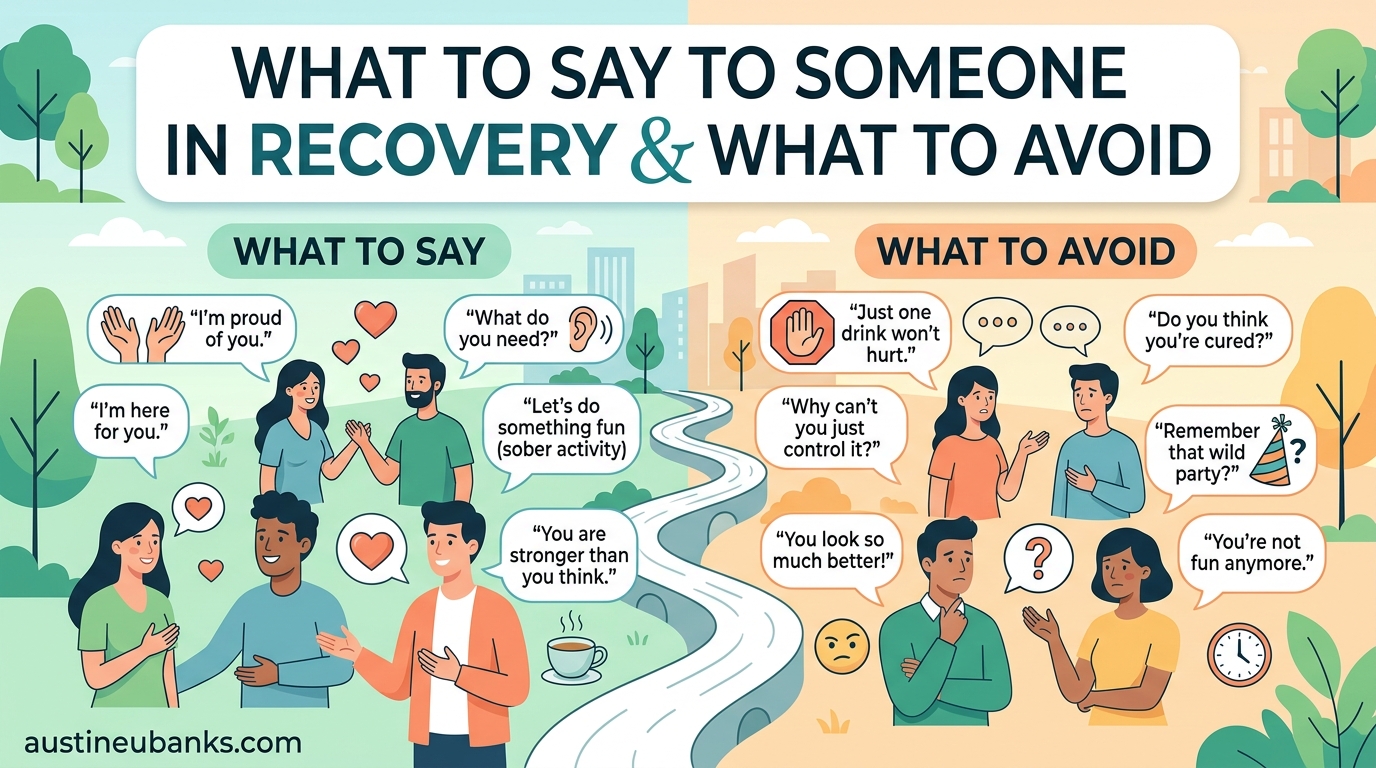
DO say: “I love you. How can I help you in your recovery?” | “I’m proud of you.” | “You are not alone.” | “What you’re doing takes courage.”
DON’T say: “Can’t you just stop?” | “I know what you’re going through.” | “You look so much better now.” | “If you loved me, you’d quit.”
Remember: Listen more than you talk. Use person-first language (“person in recovery,” not “addict”). Show up consistently without hovering. Celebrate small wins.
When someone you care about is in recovery from addiction or mental health challenges, the words you choose carry real weight. A single careless comment can trigger shame, defensiveness, or even a relapse. A thoughtful phrase, on the other hand, can remind someone they are valued, capable, and not alone.
Learning what to say and what to avoid saying to someone in recovery is not about walking on eggshells. It is about communicating with intention, empathy, and respect. The good news is that supportive communication is a skill anyone can develop.
I have spent years researching recovery communication, drawing on guidance from organizations like SAMHSA and NIDA, insights from licensed counselors, and the lived experiences of people in recovery themselves. This guide breaks down exactly what phrases help, which ones hurt, and how to show up for someone you love during one of the hardest chapters of their life.
Understanding What Recovery Really Means
Before we talk about specific phrases, it helps to understand what recovery actually feels like from the inside. Addiction is not a moral failing or a lack of willpower. It is a chronic, treatable medical condition that affects brain chemistry, decision-making, and emotional regulation.
People in recovery are often fighting battles you cannot see. They may be dealing with intense cravings, anxiety, depression, guilt about past actions, and the challenge of rebuilding relationships. Many describe early recovery as feeling raw, exposed, and emotionally unpredictable.
People in recovery consistently report that the most helpful thing supporters can do is simply be present without judgment. They want to be treated as a whole person, not defined by their substance use disorder. When you understand this, the right words start to come naturally.
What NOT to Say: Harmful Phrases That Can Damage Recovery
Well-meaning comments can still cause harm. Here are the phrases to avoid, along with why each one is damaging and what happens when someone hears it during a vulnerable time.
1. “Can’t you just stop?”
This phrase oversimplifies addiction and implies that quitting is simply a matter of willpower. It ignores the reality of physical dependence, brain chemistry changes, and the psychological grip of substance use disorder. People in recovery already battle self-doubt. This question reinforces the false idea that their struggle is a personal weakness.
2. “I know exactly what you’re going through.”
Unless you have personally experienced addiction recovery, you do not know what they are going through. Even if you have, every person’s recovery journey is deeply individual. This phrase can feel dismissive, as though you are minimizing their unique pain. A better approach is to say, “I cannot fully understand, but I want to be here for you.”
3. “If you loved me, you would quit.”
This is perhaps one of the most damaging things you can say. It weaponizes love and implies that continued substance use means the person does not care about you. Addiction does not work that way. People can deeply love their family and still struggle with substance use disorder. This phrase piles on guilt without offering any actual support.
4. “You do not look like an addict.”
There is no single way an addiction looks. This statement reinforces harmful stereotypes and suggests that only certain people develop substance use disorders. It can also come across as a backhanded compliment that minimizes the seriousness of what the person has been through.
5. “Why can you not just have one drink?”
For someone recovering from alcohol use disorder or substance misuse, moderation is rarely an option. This question shows a misunderstanding of how addiction works. It can also plant a dangerous seed of doubt about whether abstinence is truly necessary, which can lead to relapse.
6. “You should be over this by now.”
Recovery has no set timeline. Some people heal in months, while others navigate the process for years. Statements like this create pressure and shame, both of which are triggers for relapse. Recovery is not linear, and setbacks are part of the process, not signs of failure.
7. “I am ashamed of you.”
Shame is one of the most powerful triggers for relapse. People in recovery often already carry enormous guilt about past actions. Hearing that a loved one is ashamed of them can push them toward isolation and substance use rather than away from it. Express concern and love instead of shame.
8. “You just need to hit rock bottom.”
The idea that someone must reach their lowest point before they can recover is both dangerous and false. Many people recover without ever hitting a so-called rock bottom. Waiting for things to get worse before offering help can have devastating, even fatal, consequences. Early intervention saves lives.
9. “Are you sure you are okay?” (asked constantly)
Repeatedly checking on someone can feel like surveillance rather than support. Many people in recovery report that constant questioning makes them feel distrusted. It is fine to check in regularly, but let them lead the conversation about their recovery.
10. “You have changed. I miss the old you.”
Recovery changes people, and that is often a positive thing. Nostalgia for the person they were during active addiction can feel confusing and hurtful. The “old” version of them may have been fun at parties, but they were also suffering. Celebrate the person they are becoming.
11. “I cannot believe you are actually an addict.”
This phrase, even when meant with surprise rather than malice, carries stigma. It treats addiction as a shocking identity rather than a medical condition. It can also make the person feel like you see them differently now, which deepens feelings of isolation.
12. “Everyone drinks. What is the big deal?”
Minimizing someone’s decision to stay sober ignores the very real danger that substances pose to their recovery. Social drinking may be fine for most people, but for someone in recovery, it can be life-threatening. Respect their boundaries without making them feel excluded.
What TO Say: Supportive Phrases That Actually Help
Now for the phrases that make a genuine difference. These are the words that people in recovery consistently say helped them most. Use them sincerely, not as scripts. The authenticity behind the words matters more than the words themselves.
1. “I love you. How can I help you in your recovery?”
This phrase, recommended by HealthPartners and echoed by recovery experts nationwide, does two things at once. It affirms your unconditional love, and it puts the person in the driver’s seat by asking what they actually need. It respects their autonomy while signaling that you are ready to be a recovery partner.
2. “I believe in you.”
People in early recovery often doubt themselves. Hearing that someone they trust believes in their ability to heal can be a powerful anchor. This phrase is short, direct, and memorable. Use it often.
3. “I am proud of you.”
Recovery is hard, thankless work. Many people in recovery feel like their efforts go unnoticed. Acknowledging their effort, even for small milestones like a week of sobriety or attending a support group meeting, reinforces their motivation.
4. “You are not alone in this.”
Isolation is both a cause and a consequence of addiction. Reminding someone that they have a support system helps counter the loneliness that so often accompanies recovery. Back this statement up by showing up consistently.
5. “What you are going through takes real courage.”
Recovery requires facing pain, making amends, and rebuilding a life from the ground up. Acknowledging that courage validates their effort. It also shifts the narrative from weakness to strength.
6. “I am here whenever you want to talk.”
This is an open door with no pressure. It lets the person know they can come to you without forcing a conversation they may not be ready for. Follow through by being available when they reach out.
7. “Tell me more about how you are feeling.”
This invitation encourages emotional expression without judgment. People in recovery need safe spaces to process complex feelings. Asking open-ended questions shows you care about their inner world, not just their sobriety.
8. “It is okay to have hard days.”
Normalizing difficult emotions reduces shame. Recovery is not a steady upward line. Letting someone know that bad days are part of the process can prevent them from interpreting a setback as total failure.
9. “Your past does not define your future.”
Many people in recovery carry deep shame about things they did during active addiction. This reminder helps separate who they were from who they are becoming. It reinforces hope without minimizing accountability.
10. “What do you need from me right now?”
Sometimes the best support is simply asking. This question respects their autonomy and avoids assuming you know what is best. It also opens the door for honest communication about boundaries and expectations.
11. “I am glad you are here.”
For someone who may have contemplated suicide or felt like a burden during their addiction, knowing their presence matters can be lifesaving. This simple phrase affirms their inherent worth.
12. “You are so much more than your addiction.”
This phrase directly counters the shame and identity crisis that often accompanies recovery. It reminds the person that they are a complete human being with talents, relationships, and a future that extends far beyond substance use disorder.
Harmful Phrase vs. Better Alternative: Quick Reference
| Instead of saying… | Try saying… |
|---|---|
| “Can’t you just stop?” | “I know this is incredibly hard. How can I support you?” |
| “I know exactly what you’re going through.” | “I can’t fully understand, but I’m here to listen.” |
| “If you loved me, you’d quit.” | “I love you, and I’m worried about your health.” |
| “You should be over this by now.” | “Recovery takes time. I’m here for the long haul.” |
| “Are you sure you’re okay?” (constantly) | “Just checking in. No pressure to talk.” |
| “Everyone drinks. What’s the big deal?” | “I respect your choice not to drink. How can I help?” |
| “You don’t look like an addict.” | “I’m glad you’re taking care of yourself.” |
The Power of Person-First Language
The words we use shape how we think. Calling someone “an addict” or “a drug abuser” reduces their entire identity to their medical condition. This kind of labeling language increases stigma and can make people less likely to seek treatment.
Person-first language puts the individual before the condition. Instead of “addict,” say “person with a substance use disorder.” Instead of “clean” (which implies that using makes someone dirty), say “in recovery” or “not currently using.” Instead of “former addict,” say “person in long-term recovery.”
Both SAMHSA and NIDA recommend person-first language in all communications about addiction. Research shows that even medical professionals change their treatment recommendations based on whether a patient is described as “a substance abuser” versus “a person with a substance use disorder.”
Making this shift costs you nothing and costs the person in recovery their dignity if you do not. It is one of the simplest, most impactful changes you can make in how you communicate about and with someone in recovery.
Active Listening: The Skill That Matters Most
Often the most supportive thing you can say is nothing at all. Active listening, the practice of fully focusing on and understanding what someone is sharing, is the single most underrated recovery support skill.
People in recovery frequently say they do not need advice or solutions. They need someone who will sit with them in their feelings without trying to fix everything. Active listening provides exactly that.
How to Practice Active Listening in Recovery Support
Step 1: Put away distractions. Phone down, TV off, eye contact in. Your full attention tells the person they matter.
Step 2: Listen to understand, not to respond. Resist the urge to formulate your reply while they are still talking. Let their words land fully before you speak.
Step 3: Reflect back what you hear. Say things like “It sounds like today was really overwhelming” or “I’m hearing that you feel frustrated with the pace of things.” This shows you are truly absorbing what they share.
Step 4: Ask before offering advice. Say “Do you want me to just listen, or are you looking for ideas?” This respects their autonomy and prevents unsolicited guidance that can feel patronizing.
Step 5: Sit with silence. Pauses are not awkward. They give the person space to process emotions and gather thoughts. Do not rush to fill every quiet moment.
Supporting vs. Enabling: Where to Draw the Line
One of the hardest parts of loving someone in recovery is knowing where support ends and enabling begins. Enabling means doing things that shield the person from the consequences of their actions, which ultimately makes it easier for them to continue harmful patterns.
Supporting, on the other hand, means encouraging their recovery while letting them take responsibility for their own choices, growth, and accountability. The line between the two is not always obvious, but it matters enormously.
Signs You May Be Enabling
You might be enabling if you find yourself lying to cover for their absences, giving them money repeatedly without knowing where it goes, making excuses for their behavior to others, or taking over responsibilities that they should handle themselves. Enabling often comes from a place of love and fear, not malice.
You might also be enabling if you avoid difficult conversations to keep the peace, drop boundaries the moment they push back, or prioritize their comfort over your own well-being on a consistent basis.
What Healthy Support Looks Like
Healthy support means holding boundaries even when it is uncomfortable. It means encouraging professional help without forcing it. It means celebrating their recovery efforts without taking credit for them.
Healthy support also means saying no when something crosses your boundaries. You can say “I love you, and I cannot lend you money” without it being a rejection. Boundaries protect the relationship and the recovery.
Setting boundaries is not punishment. It is a way of defining what you can and cannot do as a supporter. Clear boundaries reduce resentment on both sides and create a healthier dynamic for long-term recovery.
What to Say at Different Stages of Recovery
Recovery is not a single event. It is a process that unfolds in stages, and the right words change depending on where someone is in that process. No competitor in the current search results covers this distinction, so let me break it down clearly.
Early Recovery (First 90 Days)
Early recovery is the most vulnerable period. The person is adjusting to life without substances, navigating withdrawal symptoms, and facing raw emotions they may have been numbing for years. They need encouragement, patience, and a judgment-free presence.
Helpful phrases include “One day at a time,” “I am here for you,” and “It gets easier.” Avoid asking probing questions about their past or pressuring them to make big life decisions. Keep things steady and supportive.
Offer to spend time together in substance-free environments. Go for walks, cook a meal, or watch a movie. Normal, low-pressure connection is incredibly grounding during early recovery.
Ongoing Recovery (3+ Months)
As recovery stabilizes, people often want to start rebuilding their life. They may be looking for work, repairing relationships, or exploring new interests. This is a time for encouragement and celebrating growth.
Helpful phrases include “I have noticed how hard you have been working,” “What are you excited about lately?” and “How can I support your goals?” Acknowledge specific positive changes you have observed rather than offering generic praise.
Continue to respect their boundaries around substances. Even months into recovery, being around alcohol or drugs can be challenging. Ask before inviting them to events where substances will be present.
After a Relapse
Relapse is devastating for everyone involved. For the person in recovery, it can feel like all progress has been erased. For supporters, it can bring up anger, fear, and exhaustion. These feelings are valid, but how you respond matters.
Avoid saying “I knew this would happen,” “You ruined everything,” or “How could you do this to me?” These responses add shame, which makes relapse more likely to continue. Instead, focus on safety, support, and next steps.
Helpful phrases include “I am glad you are safe,” “This does not erase your progress,” and “What do you need right now?” Relapse is a bump in the road, not the end of the journey. Research shows that many people who experience relapse go on to achieve long-term recovery.
Digital Communication: Texting and Social Media
Most of our communication happens through screens now, but no major resource addresses how to text or message someone in recovery. Here are some practical guidelines for digital communication.
Keep check-in texts low pressure. A simple “Thinking of you, no need to reply” can be a lifeline for someone who is having a rough day but does not have the energy to respond. It shows you care without demanding interaction.
Avoid sending photos or references to substance use, even as jokes. A picture from a night out with drinks visible, or a meme about being hungover, can be an unexpected trigger. This does not mean you can never post about your own life. Just be mindful when messaging someone directly.
Respect their privacy on social media. Do not post about their recovery, attendance at support group meetings, or treatment without explicit permission. Recovery is their story to share, not yours.
If they go quiet, do not panic or bombard them with messages. Send one supportive text and wait. Silence does not always mean relapse. They may simply need space.
Taking Care of Yourself While Supporting Others
You cannot pour from an empty cup. Supporting someone through recovery is emotionally demanding, and many supporters experience burnout, anxiety, and their own mental health challenges as a result.
It is common to feel anger, grief, fear, and exhaustion all at once. These emotions do not make you a bad person or a bad supporter. They make you human. Acknowledging your own feelings is essential to being able to show up for someone else.
Consider joining a support group for family members and friends of people in recovery. Programs like Al-Anon, Nar-Anon, and SMART Recovery Family and Friends offer community, guidance, and a safe space to process your experience with people who understand.
Therapy can also be incredibly valuable. A licensed therapist can help you navigate boundaries, process grief, and develop coping strategies. Supporting someone in recovery is easier when you have your own support system in place.
Set aside time for activities that recharge you. Exercise, hobbies, friendships, and rest are not selfish. They are the foundation that allows you to be a steady, patient presence for someone in recovery.
FAQs
What not to say to a recovering addict?
Avoid phrases that shame, minimize, or oversimplify addiction. The most damaging things to say include: ‘Can’t you just stop?’, ‘I know what you’re going through’, ‘If you loved me you’d quit’, ‘You should be over this by now’, ‘You don’t look like an addict’, and ‘Everyone drinks, what’s the big deal?’ Each of these dismisses the medical reality of substance use disorder and can trigger shame that hinders recovery. Instead, use person-first language and focus on support rather than judgment.
What to say to someone in recovery from addiction?
The most powerful things to say are simple and genuine: ‘I love you. How can I help you in your recovery?’, ‘I believe in you’, ‘I’m proud of you’, ‘You are not alone in this’, ‘What you’re going through takes courage’, and ‘I’m here whenever you want to talk.’ The key is listening more than talking, using person-first language, and letting the person lead the conversation about their own recovery.
What is the 3 3 3 rule for addiction?
The 3-3-3 rule is a grounding technique for managing anxiety during addiction recovery. It involves naming 3 things you can see, identifying 3 sounds you can hear, and moving 3 parts of your body. This simple exercise helps redirect focus away from cravings or anxious thoughts and back to the present moment. Supporters can suggest this technique or practice it alongside someone who is struggling.
What are some coping skills for recovery?
Key coping skills for addiction recovery include practicing deep breathing and meditation, waiting before reacting to emotional triggers, being honest with yourself and others, maintaining a daily routine, journaling, building a sober support network, exercising regularly, and engaging in meaningful hobbies. The 3-3-3 grounding technique and mindfulness practices are also effective. Supporters can encourage these skills without pressuring someone to adopt all of them at once.
Conclusion: Your Words Have Power
Knowing what to say and what to avoid saying to someone in recovery is one of the most practical ways you can support their healing. The words you choose can either reinforce shame or build someone up. They can either trigger old patterns or help create new ones.
You do not have to be perfect. You will say the wrong thing sometimes. What matters is that you keep showing up, keep learning, and keep treating the person you love with dignity and respect. Recovery is a marathon, not a sprint, and your consistent, compassionate presence is one of the most powerful gifts you can offer.
If you or someone you know needs immediate help, the SAMHSA National Helpline is available 24/7 at 1-800-662-4357 (HELP). It is free, confidential, and available in English and Spanish. You can also text 988 to reach the Suicide and Crisis Lifeline for mental health crises.
Recovery is possible. And with the right words, you can be part of what makes it happen.