
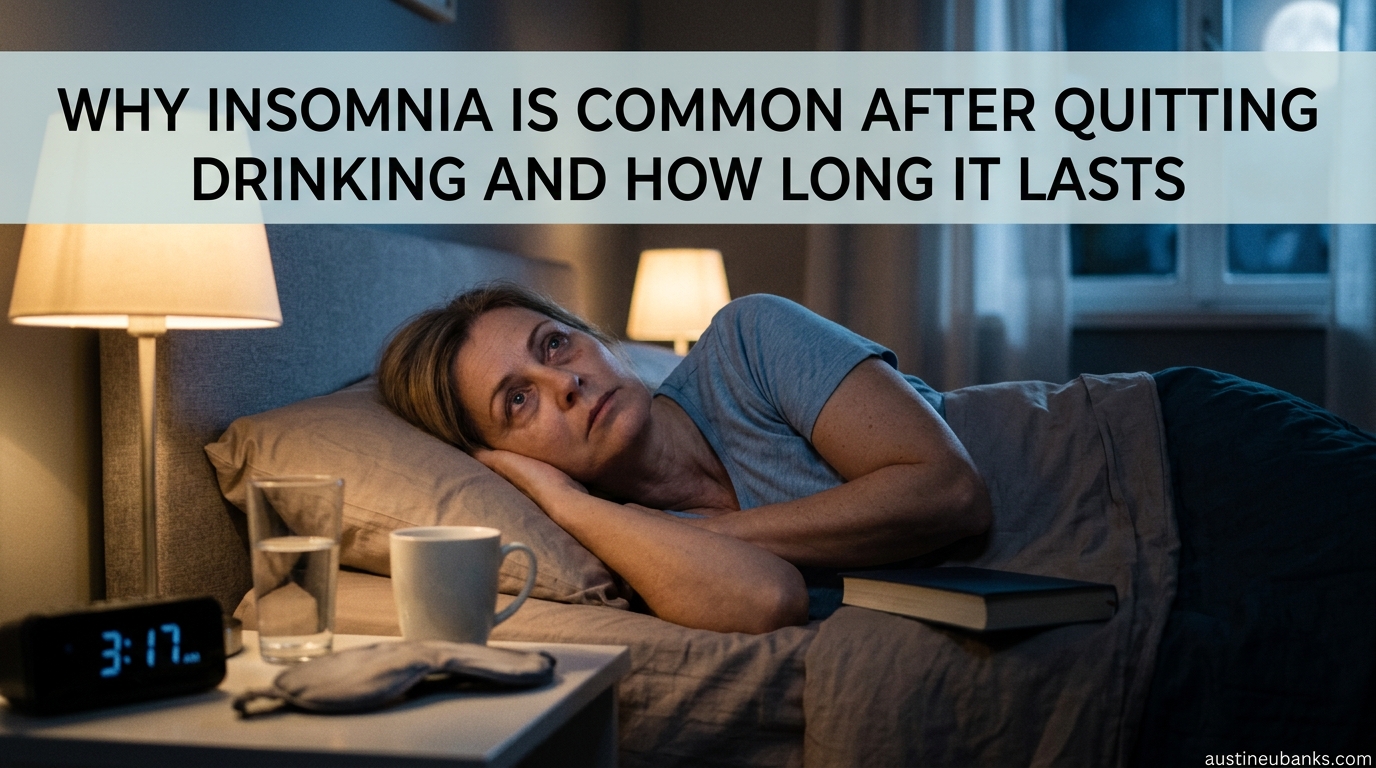
If you recently stopped drinking and you are lying awake staring at the ceiling at 3 AM, you are not alone. Insomnia after quitting drinking is one of the most common and frustrating experiences in early sobriety. Countless people describe the same thing: the first few nights (or weeks) without alcohol feel like sleep is impossible, and the exhaustion starts to wear you down.
The good news is that this is a well-understood phenomenon with a predictable timeline. Your brain and body are recalibrating after months or years of alcohol’s sedative effects, and that adjustment period comes with real sleep disruption. Understanding why this happens and when it ends can make the difference between pushing through and giving up.
In this guide, our team breaks down exactly why insomnia after quitting drinking happens, what it feels like, how long it typically lasts, and what you can do to get through it. We have pulled insights from peer-reviewed research, recovery forums, and clinical guidelines to give you a clear picture of what to expect.
Table of Contents
The Short Answer
Insomnia after quitting drinking occurs because alcohol suppresses REM sleep and enhances GABA (your brain’s calming neurotransmitter). When you remove alcohol, your brain experiences a rebound effect: too much REM activity, too little natural GABA signaling, and a disrupted circadian rhythm. This leads to difficulty falling asleep, fragmented sleep, vivid dreams, and early morning waking.
For most people, acute sleep problems peak during the first week of abstinence and gradually improve over 2 to 6 weeks. Research published in the journal Alcoholism: Clinical and Experimental Research found that sleep disturbances can persist for several months in some individuals, particularly heavy or chronic drinkers. According to the Journal of Addiction Medicine, people in early recovery experience insomnia at roughly five times the rate of the general population.
Why Insomnia Is Common After Quitting Drinking: The Science
Alcohol has a deceptive relationship with sleep. Many people drink specifically because it helps them fall asleep faster. That sedative effect feels like a benefit, but it comes with a hidden cost. Alcohol fundamentally alters your sleep architecture, and when you stop, your brain has to relearn how to sleep on its own.
Here is what is happening inside your brain when you quit drinking and why it triggers insomnia.
How Alcohol Changes Your Brain Chemistry
Alcohol works primarily by enhancing GABA receptors in your central nervous system. GABA is your brain’s main inhibitory neurotransmitter, responsible for calming neural activity. When you drink, alcohol binds to GABA receptors and amplifies their calming effect, which is why you feel relaxed and drowsy.
At the same time, alcohol suppresses glutamate, your brain’s primary excitatory neurotransmitter. This dual action slows down brain activity significantly. With regular drinking, your brain adapts by reducing its natural GABA production and increasing glutamate receptors to compensate. Essentially, your brain learns to rely on alcohol for calm.
When you quit, that external sedative is gone. Your brain is now operating with too few natural GABA signals and too much glutamate activity. The result is hyperarousal, restlessness, anxiety, and an inability to wind down at night. This neurochemical imbalance is the core reason why insomnia after quitting drinking is so common.
The REM Rebound Effect
REM (rapid eye movement) sleep is the stage associated with dreaming, memory consolidation, and emotional processing. Alcohol is a powerful REM suppressant. While you were drinking, your brain was getting less REM sleep than it needed night after night.
When you stop drinking, your brain tries to make up for lost REM sleep. This phenomenon is called REM rebound, and it is one of the most striking features of early sobriety. Your brain floods into REM sleep aggressively, producing intensely vivid dreams and sometimes nightmares.
This is why so many people in recovery report wild, cinematic dreams in the first weeks of abstinence. Night sweats, nightmares, and waking up in a panic are all tied to REM rebound. The intensity of this effect can make sleep feel anything but restful.
Circadian Rhythm Disruption
Your circadian rhythm is your body’s internal 24-hour clock, and it regulates when you feel sleepy and when you feel alert. Alcohol disrupts this rhythm in multiple ways.
First, drinking late in the evening delays the release of melatonin, your body’s natural sleep hormone. Second, alcohol causes blood sugar spikes and crashes that can wake you up in the middle of the night. Third, chronic drinking raises cortisol levels, your body’s stress hormone, which keeps your nervous system on high alert.
When you quit drinking, your circadian rhythm is out of sync. Your body needs time to reset its melatonin production cycle, stabilize cortisol patterns, and reestablish a natural sleep-wake cycle. That reset takes weeks, not days, which is why consistent sleep problems linger well past the initial detox period.
The Glutamate Surge and Brain Hyperarousal
Remember that glutamate your brain overproduced to compensate for alcohol’s suppressive effects? When alcohol is removed, that excess glutamate does not disappear overnight. Your brain is temporarily stuck in an overactive state.
This glutamate surplus manifests as racing thoughts at bedtime, physical restlessness, anxiety, and a persistent feeling of being wired but tired. Your central nervous system is essentially in mild overdrive. Until neurotransmitter levels rebalance, which research suggests takes 1 to 2 weeks for acute changes and longer for full normalization, sleep will be difficult.
What Sleep Problems Look Like in Early Sobriety
Sleep problems after quitting alcohol are not a single experience. People in recovery forums describe a range of different symptoms, and research confirms that withdrawal affects multiple aspects of sleep. Here are the five most common types of sleep disturbances you might encounter.
1. Sleep Onset Insomnia
This is the classic inability to fall asleep. You lie in bed for hours, your mind racing, unable to drift off. This is driven primarily by the glutamate surge and reduced GABA signaling we discussed above. For many people, this is the dominant problem in the first week of sobriety.
2. Sleep Maintenance Insomnia and Fragmented Sleep
Even if you fall asleep, you might wake up every hour or two. Fragmented sleep prevents you from completing full sleep cycles, which means you never reach the deep, restorative stages of sleep. This is extremely common in early recovery and leaves you feeling unrefreshed no matter how long you stay in bed.
3. Vivid Dreams and Nightmares
The REM rebound effect produces intensely vivid dreams. Some people describe them as cinematic, bizarre, or even disturbing. Nightmares are also common and can wake you up in a sweat with a racing heart. While this is a sign that your brain is healing, it can make sleep feel exhausting rather than restful.
4. Early Morning Waking
Many people in early recovery report waking up at 4 or 5 AM wide awake, despite feeling exhausted. This pattern is linked to cortisol dysregulation and circadian rhythm disruption. Your body’s stress hormone peaks too early, pulling you out of sleep before you are ready.
5. Daytime Exhaustion and Brain Fog
Poor nighttime sleep inevitably leads to daytime impairment. People describe difficulty concentrating, memory lapses, and a heavy physical exhaustion that makes even simple tasks feel like a challenge. One forum user at 72 hours sober described the mental fogginess as making simple tasks feel like climbing a mountain.
This daytime exhaustion is not just uncomfortable. It is one of the most dangerous aspects of early sobriety because sleep deprivation increases alcohol cravings and makes relapse feel like an easy solution. Recognizing that this exhaustion is temporary is essential for staying the course.
How Long Does Insomnia Last After Quitting Drinking?
This is the question everyone asks, and the answer depends on several factors: how much you drank, how long you drank, your age, your overall health, and whether you have any pre-existing sleep conditions. That said, research and clinical experience point to a fairly predictable timeline.
Days 1 to 7: The Acute Phase
The first week is typically the worst. Sleep problems are at their peak intensity. Many people report getting only 2 to 4 hours of sleep per night during this period. Vivid dreams, night sweats, and physical restlessness are most pronounced. For heavy drinkers, this period may also include actual alcohol withdrawal symptoms like tremors, anxiety, and elevated heart rate, which further disrupt sleep.
Multiple forum users confirm that the first few days are the hardest. One user described day 6 as the point where sleep started to feel possible again, even if it was still poor quality. The key message: push through this period. It is temporary.
Weeks 2 to 3: Gradual Improvement
Sleep begins to stabilize for most people during this window. You may still experience fragmented sleep and vivid dreams, but the intensity starts to decrease. Falling asleep becomes somewhat easier as GABA and glutamate levels begin to normalize.
Users on recovery forums frequently report a turning point around the 2-week mark. One user noted that sleep started regulating around 3 weeks, while others describe week 2 as the point where they stopped dreading bedtime. Consistency with a sleep schedule during this phase appears to accelerate improvement.
Weeks 4 to 6: Significant Recovery
By the one-month mark, many people notice a substantial improvement in sleep quality. Deep sleep stages begin to return, and REM sleep normalizes rather than rebounding aggressively. Vivid dreams typically fade, and sleep becomes more consolidated.
This is also when the benefits of quitting alcohol for sleep start to become visible. People report waking up feeling genuinely rested for the first time in years. Energy levels improve, mental clarity sharpens, and the motivation to stay sober strengthens.
Months 2 to 6: Long-Term Normalization
Research from the National Institute on Alcohol Abuse and Alcoholism indicates that sleep architecture can take 3 to 6 months to fully normalize after chronic drinking. Some individuals experience a milder form of sleep disturbance known as PAWS (Post-Acute Withdrawal Syndrome), which can include intermittent sleep problems for several months.
However, the trend is consistently positive. A study published in Sleep Medicine found that by 6 months of abstinence, most recovering individuals show sleep patterns comparable to non-drinkers. The key is patience and consistency.
How Drinking Severity Affects the Timeline
Not everyone experiences the same timeline. Here is how drinking severity typically impacts insomnia duration.
Light to moderate drinkers (1 to 2 drinks per night) often experience minimal sleep disruption, with problems resolving within 1 to 2 weeks. Heavy drinkers (5 to 8 drinks per night) typically see acute insomnia for 1 to 3 weeks, with gradual improvement over 4 to 8 weeks. Chronic, long-term heavy drinkers (8 or more drinks per night for years) may experience sleep problems for 1 to 6 months, with some requiring medical support during detox.
Pre-Existing Sleep Disorders
If you had a sleep disorder before quitting drinking, such as sleep apnea, restless leg syndrome, or chronic insomnia, your recovery timeline may differ. Alcohol often masks underlying sleep issues by forcing unconsciousness, so removing it can reveal these conditions.
This is an important distinction that no competitor covers. If your sleep problems persist beyond 6 to 8 weeks despite good sleep hygiene, consider consulting a sleep specialist. You may have an underlying condition that was previously hidden by alcohol use.
How to Manage Insomnia During Early Recovery
While you cannot fast-track your brain’s neurochemical rebalancing, you can take concrete steps to improve your sleep during the adjustment period. The following strategies are backed by clinical evidence and consistently recommended by recovery communities.
1. Establish a Strict Sleep Schedule
Go to bed and wake up at the same time every day, including weekends. This helps reset your circadian rhythm and trains your brain to expect sleep at a specific time. Forum users who maintained a consistent schedule reported faster improvement than those who slept irregularly.
2. Optimize Your Sleep Environment
Your bedroom should be cool, dark, and quiet. Invest in blackout curtains if early light is waking you up. Use a white noise machine or fan to mask disruptive sounds. Keep the temperature between 60 and 67 degrees Fahrenheit, which research shows is optimal for sleep.
Remove screens from your bedroom entirely. The blue light from phones and TVs suppresses melatonin production, which is already compromised during early sobriety. Charge your phone in another room and use an old-fashioned alarm clock.
3. Cut Caffeine After Noon
Caffeine has a half-life of 5 to 6 hours, meaning that afternoon coffee or energy drink is still active in your system at bedtime. During early recovery, your nervous system is already hyperaroused. Adding caffeine makes falling asleep significantly harder.
Switch to decaf or herbal tea after lunch. If you absolutely need caffeine, limit it to before 10 AM.
4. Build a Wind-Down Routine
Spend the last hour before bed doing calming activities. Read a physical book (not on a screen), take a warm bath, practice gentle stretching, or try meditation. These activities activate your parasympathetic nervous system, which counteracts the glutamate-driven hyperarousal keeping you awake.
Multiple forum users specifically credit reading before bed as one of the most effective strategies during their worst sleep period.
5. Exercise Daily, But Not Before Bed
Physical activity is one of the most effective natural sleep aids available. Exercise reduces cortisol over time, increases natural endorphin production, and helps normalize your circadian rhythm. Aim for at least 30 minutes of moderate activity daily.
However, avoid vigorous exercise within 3 hours of bedtime. It raises your core body temperature and heart rate, which can interfere with sleep onset.
6. Consider Evidence-Based Natural Remedies
Several natural supplements have research support for improving sleep during recovery. Melatonin (low dose, 0.5 to 1 mg) can help reset your circadian rhythm. Magnesium glycinate (200 to 400 mg) supports GABA function and reduces physical restlessness.
CBT-I (Cognitive Behavioral Therapy for Insomnia) is considered the gold standard non-pharmacological treatment for chronic insomnia. Multiple studies show it is more effective than sleep medication long-term. If your sleep problems persist beyond a few weeks, seek out a CBT-I practitioner.
7. Manage Sugar Intake
Many people in early recovery develop strong sugar cravings as their brain seeks replacement dopamine sources. High sugar intake, especially in the evening, causes blood sugar spikes and crashes that disrupt sleep.
Try to satisfy sweet cravings with fruit or small portions of dark chocolate rather than candy or baked goods. If you eat before bed, choose protein-rich snacks that stabilize blood sugar.
8. Use Short Naps Strategically
If daytime exhaustion becomes overwhelming, short naps of 20 to 30 minutes can help without interfering with nighttime sleep. Avoid napping longer than 30 minutes or after 3 PM, as this can deepen your circadian disruption.
When to Seek Professional Help
If you were a heavy or chronic drinker, do not attempt to quit cold turkey without medical supervision. Alcohol withdrawal can be dangerous, and in severe cases, life-threatening. Symptoms like seizures, hallucinations, and delirium tremens require immediate medical attention.
For sleep specifically, consult a healthcare provider if your insomnia persists beyond 6 to 8 weeks, if it is causing significant daytime impairment, or if you are experiencing symptoms of depression or anxiety that interfere with daily life. A doctor may recommend short-term sleep medication, CBT-I, or a sleep study to rule out underlying disorders.
The Connection Between Sleep and Relapse Risk
This cannot be overstated: chronic sleep deprivation is one of the strongest predictors of relapse. The Journal of Addiction Medicine reports that individuals with insomnia in early recovery are significantly more likely to return to drinking. Sleep deprivation increases cravings, reduces impulse control, and makes alcohol feel like the only way to get relief.
Understanding that your insomnia is temporary and treatable is itself a protective factor. Knowing the timeline, having coping strategies, and seeking support when needed all reduce the risk that sleep problems will drive you back to drinking.
FAQs
Can alcohol withdrawal cause insomnia?
Yes. Alcohol withdrawal insomnia is one of the most common symptoms of early sobriety. When you stop drinking, your brain experiences a rebound effect from suppressed REM sleep, disrupted GABA and glutamate balance, and circadian rhythm disruption. Research shows people in early recovery experience insomnia at roughly five times the rate of the general population.
How long does alcohol withdrawal insomnia last?
For most people, acute insomnia peaks during the first week and improves significantly within 2 to 6 weeks. Heavy and chronic drinkers may experience sleep problems for 1 to 6 months. Full normalization of sleep architecture can take up to 6 months, but improvement is gradual and consistent over time.
How to treat withdrawal insomnia?
Effective treatments include maintaining a strict sleep schedule, optimizing your sleep environment (cool, dark, quiet), cutting caffeine after noon, exercising daily, and building a wind-down routine. Natural remedies like low-dose melatonin and magnesium glycinate can help. CBT-I is the gold standard for persistent insomnia. Consult a doctor if sleep problems last beyond 6 to 8 weeks.
How to sleep better after quitting alcohol?
Focus on consistency: same bedtime every day, no screens before bed, regular exercise, and a cool dark bedroom. Avoid sugar in the evening, limit caffeine to mornings, and try relaxation techniques like reading or meditation. Short naps of 20 to 30 minutes can help with daytime fatigue without disrupting nighttime sleep.
When does sleep get better after quitting drinking?
Most people notice gradual improvement starting around week 2, with significant recovery by weeks 4 to 6. By the one-month mark, deep sleep stages begin returning and vivid dreams typically fade. Long-term sleep quality often exceeds pre-quit levels, with many people reporting the best sleep of their lives after 3 to 6 months of sobriety.
The Bottom Line
Insomnia after quitting drinking is normal, predictable, and temporary. Your brain is healing from months or years of chemical disruption, and that healing process comes with real sleep challenges. The science is clear: GABA and glutamate imbalances, REM rebound, and circadian rhythm disruption all contribute to sleep problems in early sobriety.
The timeline is equally clear. Acute insomnia peaks in the first week, improves over 2 to 6 weeks, and resolves for most people within a few months. Heavy and chronic drinkers may face a longer recovery, but the direction is always toward better sleep. Many people eventually experience the deepest, most restorative sleep of their lives after sustained sobriety.
If you are in the thick of it right now, hold on. Use the strategies in this guide, lean on your support system, and remember that every sleepless night is your brain getting closer to natural, healthy rest. Understanding why insomnia happens after quitting drinking is the first step toward getting through it. You are not broken, and your sleep will return.