
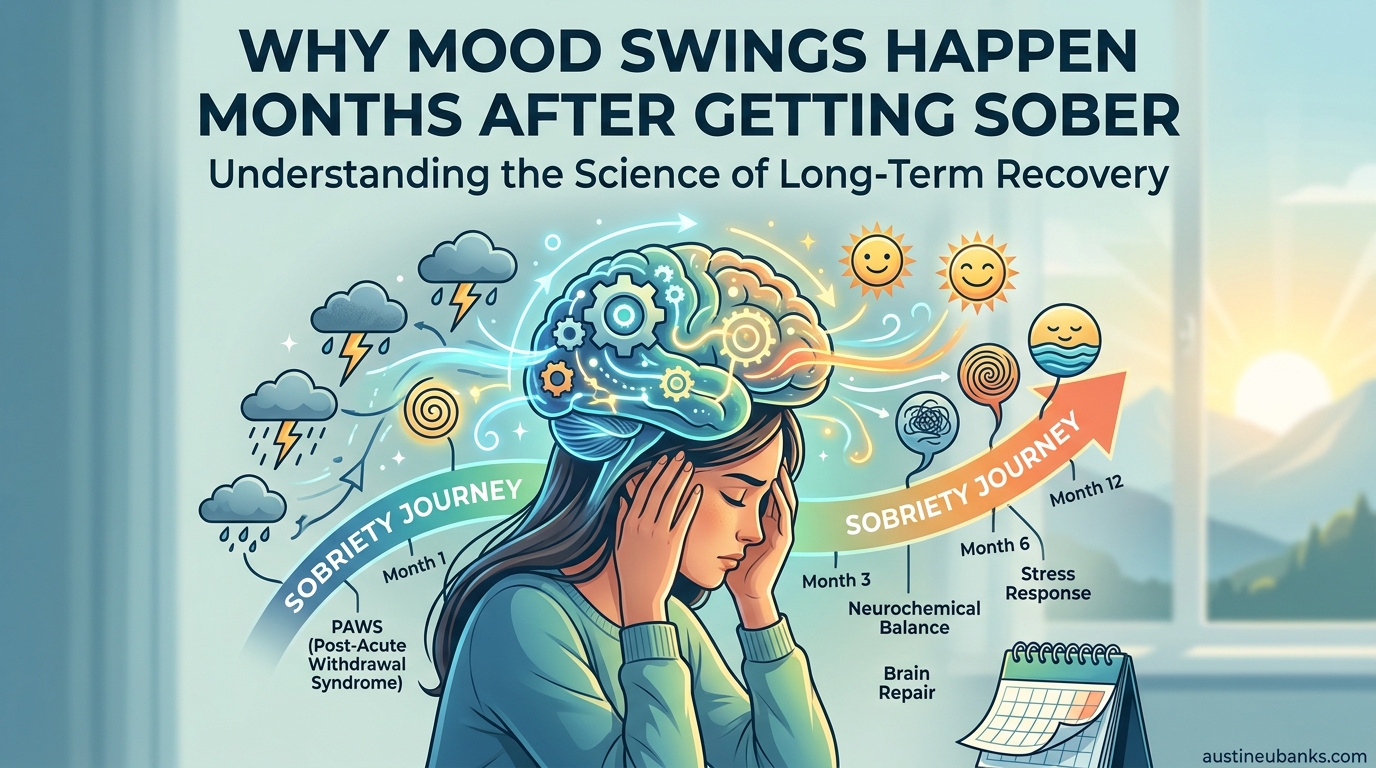
You did the hard part. You put down the drink, the pill, the substance that was running your life. You got through detox, survived the acute withdrawal, and started building a life in recovery. And then, three months in, or six months, or maybe even a year later, you find yourself crying in the grocery store parking lot for no reason. Or snapping at someone you love over something small. Or feeling a wave of anxiety so intense it makes you question whether sobriety is even working.
If that sounds familiar, you are not broken. You are not failing at recovery. What you are experiencing has a name, and understanding why mood swings happen months after getting sober can be the difference between pushing through and giving up.
The truth is that most treatment programs and detox centers focus on the first few weeks. They prepare you for the shaking, the sweating, the physical danger of acute withdrawal. But very few people talk about what comes next. The emotional rollercoaster that can last for months. The mood swings that show up unannounced at 90 days sober, at 6 months, at a year. And because nobody warned you, it feels like something is wrong.
Nothing is wrong. Your brain is healing. And that healing process, while uncomfortable, is one of the most important things your body will ever do. In this article, we are going to break down exactly why mood swings happen months after getting sober, what to expect at each stage of recovery, and how to tell the difference between normal post-acute withdrawal and something that needs professional attention.
Table of Contents
The Short Answer: Why Mood Swings Happen Months After Getting Sober
Mood swings persist months after getting sober because the brain is slowly recalibrating its neurotransmitter systems after prolonged substance use. Drugs and alcohol artificially alter dopamine, serotonin, GABA, and glutamate levels, and when those substances are removed, the brain must rebuild its natural chemical equilibrium through a process called neuroplasticity. This recalibration takes months to two years, causing fluctuating mood, anxiety, irritability, and emotional sensitivity as the reward pathways and stress response systems gradually normalize.
This condition is known as Post-Acute Withdrawal Syndrome, or PAWS. It affects an estimated 25 to 40 percent of people in recovery from alcohol, and similar percentages for other substances. The mood swings are not a sign that something has gone wrong. They are a sign that your brain is doing exactly what it needs to do to heal.
What Is Post-Acute Withdrawal Syndrome (PAWS)?
Post-Acute Withdrawal Syndrome (PAWS) is a cluster of psychological and emotional symptoms that persist after the acute physical withdrawal phase ends. While acute withdrawal involves the physical symptoms most people associate with quitting, like tremors, nausea, sweating, and in severe cases seizures, PAWS involves the emotional and cognitive symptoms that linger long after the body has detoxified.
Think of it this way. Acute withdrawal is the body’s crisis response to the sudden absence of a substance. It typically lasts from a few days to a couple of weeks. PAWS is the brain’s long-term remodeling project. It can last for months, and in some cases, years.
The concept of PAWS was first described in the clinical literature in the 1980s and 1990s by researchers studying protracted alcohol withdrawal. Since then, it has been recognized across virtually every category of substance use, including alcohol, opioids, benzodiazepines, stimulants, and cannabis. The specific symptoms and timeline vary somewhat depending on the substance, but the underlying mechanism is the same: the brain is repairing itself.
PAWS is also sometimes referred to as protracted withdrawal syndrome or extended withdrawal. Regardless of the name, the experience is similar. You feel emotionally raw, cognitively foggy, and mentally exhausted, even though your body has long since cleared the substance.
The Science: How Your Brain Heals After Getting Sober
To understand why mood swings happen months after getting sober, you need to understand what substances actually do to the brain. This is not about willpower or moral failing. This is about neurochemistry, and the changes are profound.
Dopamine: The Reward System Reset
Dopamine is often called the “feel-good” neurotransmitter, but that description barely scratches the surface. Dopamine is the chemical that tells your brain “this is worth repeating.” It drives motivation, pleasure, and reward-seeking behavior. Every time you eat good food, accomplish a goal, or connect with someone you love, dopamine fires and reinforces that behavior.
Drugs and alcohol hijack this system. They cause dopamine releases that are far larger and more powerful than anything the brain evolved to handle. A hit of cocaine can produce dopamine levels 5 to 10 times higher than a natural reward. Alcohol and opioids similarly flood the system. Over time, the brain adapts by reducing its natural dopamine production and reducing the number of dopamine receptors. This is called downregulation.
When you stop using substances, the brain is left with a dopamine deficit. Fewer receptors, lower natural production. This is why early sobriety can feel flat, joyless, and gray. The clinical term for this is anhedonia, the inability to feel pleasure. And it takes months for dopamine receptors to regenerate and for natural production to resume normal levels.
During that rebuilding period, dopamine levels fluctuate wildly. Some days you feel almost normal. Other days you feel like nothing will ever bring you joy again. That fluctuation is the neurological basis for the mood swings.
Serotonin: The Mood Stabilizer
Serotonin regulates mood, sleep, appetite, and emotional stability. Alcohol and many drugs disrupt serotonin signaling, and when you remove the substance, serotonin levels take time to normalize. Low serotonin is associated with depression, anxiety, irritability, and sleep disturbances, all classic PAWS symptoms.
Research shows that serotonin receptor changes can persist for months after the last use. This is why antidepressants, particularly SSRIs (selective serotonin reuptake inhibitors), are sometimes prescribed during PAWS. They can help bridge the gap while the brain restores its own serotonin function. However, they are not a cure, and they work best as part of a comprehensive treatment approach.
GABA and Glutamate: The Anxiety Equation
GABA (gamma-aminobutyric acid) is the brain’s primary calming neurotransmitter. Glutamate is its counterpart, the brain’s primary excitatory neurotransmitter. Think of GABA as the brake and glutamate as the gas pedal. Alcohol and benzodiazepines enhance GABA activity, which is why they produce relaxation and sedation.
When you use these substances chronically, the brain reduces its natural GABA production and increases glutamate activity to compensate. This is called the GABA-glutamate imbalance, and it is the root cause of the intense anxiety, panic, and irritability that many people experience in early and extended recovery. Your brain has essentially been driving with the gas pedal pressed down and the brakes worn out.
Restoring GABA-glutamate balance takes months. During that time, the pendulum swings between anxiety and exhaustion, between feeling wired and feeling wiped out. These swings are not random. They reflect the brain’s ongoing attempt to find equilibrium.
Neuroplasticity: Why Healing Takes So Long
Neuroplasticity is the brain’s ability to reorganize itself by forming new neural connections. It is the mechanism behind all recovery from addiction. When you stop using substances, the brain begins to rewire itself, creating new pathways that do not depend on the artificial stimulation of drugs or alcohol.
This rewiring is not an overnight process. Neural pathways that were strengthened over months or years of substance use do not simply disappear. They have to be weakened through disuse while new, healthier pathways are built through repetition. The timeline for meaningful neuroplastic change is typically measured in months, not days or weeks.
This is why PAWS mood swings follow a wave-like pattern rather than a steady linear improvement. Some weeks the new pathways are firing well and you feel good. Other weeks the old pathways reassert themselves and you feel terrible. Over time, the good weeks get longer and the bad weeks get shorter. But the process is non-linear, and that non-linearity is one of the most confusing and frustrating aspects of recovery.
The Month-by-Month PAWS Timeline
One of the most common questions people ask is: how long will this last? The honest answer is that it varies significantly from person to person. But there are patterns, and knowing what to expect at each stage can reduce anxiety and prevent the “why am I not better yet?” spiral.
What follows is a general timeline based on clinical research and the lived experiences shared in recovery communities. Your experience may differ, and that is normal.
Months 1 to 2: The Initial Rollercoaster
In the first one to two months after getting sober, the brain is in its most volatile state. Acute physical withdrawal may be over, but the chemical chaos is at its peak. Dopamine levels are at their lowest. GABA and glutamate are maximally imbalanced. Serotonin is disrupted.
During this phase, mood swings tend to be intense and frequent. You might feel okay in the morning and devastated by afternoon. Anxiety is often at its worst. Sleep is typically poor, with insomnia and vivid dreams being common. Cravings can be strong, and the brain’s reward system is screaming for stimulation.
This is the phase where the risk of relapse is highest. The brain is not yet capable of producing natural rewards, and the gap between “using felt good” and “sobriety feels terrible” is at its widest. Many people in recovery describe this period as the hardest thing they have ever done.
What helps during months 1 to 2: Intensive support, structure, accountability, and patience. This is when inpatient treatment, intensive outpatient programs, or daily recovery meetings can make the biggest difference. Focus on simply getting through each day.
Months 3 to 4: The False Plateau
Many people report feeling significantly better around the 90-day mark. The brain has made its first real progress in neuroplastic remodeling. Dopamine receptors are beginning to regenerate. Sleep may be improving. You might start to experience moments of genuine enjoyment again.
This improvement can feel like you are “through the woods.” And in many ways, you are making real progress. But this phase also carries a hidden danger. Feeling better can lead to complacency. People may start skipping meetings, abandoning coping strategies, or convincing themselves they do not need support anymore.
Then the mood swings return. Not as intensely as before, but enough to feel discouraging. This pattern, improvement followed by a return of symptoms, is the wave-like nature of PAWS. It is not a setback. It is the brain continuing to recalibrate in fits and starts.
What helps during months 3 to 4: Consistency. Keep doing what got you here. This is also a good time to start building a longer-term recovery plan, including therapy, support groups, and lifestyle changes that support ongoing brain health.
Months 5 to 6: The Brain Fog Phase
At the five to six month mark, many people in recovery notice a shift in their symptoms. The intense anxiety and emotional volatility of the early months may have eased, but cognitive symptoms often become more prominent. Brain fog, difficulty concentrating, memory issues, and mental fatigue are common complaints.
Emotionally, this phase can feel like a gray zone. The worst mood swings may have passed, but you are not yet feeling consistently good either. Some people describe a persistent low-grade sadness or emotional flatness. This is the dopamine system still working to rebuild, and it can feel discouraging.
The Reddit community on r/stopdrinking frequently discusses the 6-month mark as a turning point. Some users report feeling dramatically better at this stage, while others find they are still struggling. This variation is normal. It reflects differences in substance history, brain chemistry, genetics, and overall health.
What helps during months 5 to 6: Cognitive engagement. Reading, puzzles, learning new skills, and other mentally stimulating activities can support neuroplasticity. Exercise becomes increasingly important as it naturally boosts dopamine and serotonin. This is also when therapy can be especially valuable for processing the emotional work of recovery.
Months 7 to 12: The Gradual Climb
From months seven through twelve, most people experience a noticeable upward trend. The good days start outnumbering the bad days. Mood becomes more stable. Cognitive function improves. Sleep patterns normalize for many people, though some continue to struggle with insomnia.
This does not mean mood swings disappear entirely. They become less frequent, less intense, and shorter in duration. Instead of a bad week, you might have a bad afternoon. Instead of a full depressive episode, you might feel down for a day or two.
One forum user on r/leaves described their experience at this stage as “the fog lifting in layers.” Each month brought slightly more clarity, slightly more stability, slightly more capacity to feel like themselves again. But the progress was gradual, not sudden.
What helps during months 7 to 12: Deepening your recovery. This is when many people start to address underlying issues that contributed to substance use, such as trauma, anxiety disorders, or relationship patterns. Long-term therapy, meaningful connections, and purpose-driven activities become the focus.
Months 12 to 24: The New Normal
By the one-year mark, the majority of PAWS symptoms have significantly diminished for most people. The brain has made substantial progress in rewiring its reward pathways. Neurotransmitter systems are functioning much closer to their pre-adduction baseline.
That said, some people continue to experience occasional mood swings, mild anxiety, or sleep disturbances into the second year. This is more common with certain substances, particularly benzodiazepines and heavy, long-term alcohol use. It does not mean recovery has failed. It means the brain needs more time.
The forum user who shared their “PAWS reflections at 27 months” noted that their symptoms were about 80 percent anxiety and 20 percent depressive spells. By the two-year mark, these symptoms had become rare and manageable rather than constant and overwhelming.
What helps during months 12 to 24: Maintaining the foundations you have built while continuing to grow. Many people in long-term recovery describe the second year as when they truly started to thrive rather than just survive. The mood swings that once felt unbearable become distant memories.
PAWS Mood Swings vs. Clinical Depression: How to Tell the Difference
One of the most common questions in recovery communities is some version of: how do I know if this is PAWS or if I actually have depression? This is an important question, and the answer matters because the treatment approaches differ.
The confusion is understandable. PAWS mood swings and clinical depression share many symptoms: persistent sadness, irritability, loss of interest in activities, sleep disturbances, and fatigue. But there are key differences that can help you and a professional distinguish between them.
PAWS mood swings are characterized by their wave-like pattern. They come and go. You might feel terrible on Tuesday and relatively fine on Thursday. The lows are real, but they are punctuated by periods of normal or even positive mood. PAWS symptoms also tend to improve gradually over months, even if the progress feels frustratingly slow.
Clinical depression, on the other hand, tends to be more persistent and pervasive. The low mood does not come in waves. It is consistently present, day after day, week after week. There is no pattern of improvement over time without treatment. If anything, symptoms may worsen.
Another distinguishing factor is anhedonia. In PAWS, the inability to feel pleasure is typically temporary and improves as dopamine receptors regenerate. In clinical depression, anhedonia is often a core, persistent symptom that does not resolve on its own.
Here is the most important thing to understand: PAWS and clinical depression are not mutually exclusive. Many people in recovery have both. Substance use can mask underlying mental health conditions, and when the substance is removed, those conditions become visible. Having PAWS does not mean you cannot also have clinical depression, anxiety, or another co-occurring disorder.
If your mood symptoms are severe enough to interfere with daily functioning, if they persist without any improvement for several weeks, or if you have any thoughts of self-harm, seek a professional evaluation. A mental health professional can help determine whether you are dealing with PAWS alone, a co-occurring condition, or both.
Substance-Specific Mood Swing Patterns
While the underlying mechanism of PAWS is similar across substances, the specific symptoms, timeline, and intensity can vary depending on what you were using. Here is a breakdown of how mood swings typically present for different categories of substances.
Alcohol
Alcohol is the most commonly studied substance in PAWS research. Because alcohol affects GABA, glutamate, and dopamine systems simultaneously, the mood swings during alcohol recovery can be particularly intense. Anxiety and irritability tend to dominate in the first few months, followed by a longer period of emotional flatness and mild depression. The timeline for significant improvement is typically 6 to 12 months, with some residual symptoms possible into the second year.
Opioids
Opioid recovery, whether from prescription painkillers or heroin, is associated with severe dopamine disruption. The anhedonia can be profound, lasting for months. Many people describe feeling like they will never enjoy anything again. Cravings can also be intense during the PAWS phase. Medication-assisted treatment with medications like buprenorphine or methadone can significantly reduce PAWS severity for opioid recovery.
Benzodiazepines
Benzodiazepine withdrawal is known for producing some of the most prolonged and difficult PAWS symptoms. Because benzodiazepines directly act on GABA receptors, the recovery of natural GABA function can take many months or even years. Anxiety, panic attacks, mood swings, and cognitive symptoms are often severe. Tapering slowly under medical supervision, rather than stopping abruptly, can reduce the severity and duration of PAWS.
Stimulants
Stimulant recovery (cocaine, methamphetamine, prescription stimulants) is characterized by extreme dopamine disruption. The initial phase often involves a crash, with profound depression and exhaustion. PAWS for stimulants can include intense cravings, prolonged anhedonia, and episodes of irritability or anger. The mood swings can be sharp and sudden, reflecting the volatile nature of dopamine fluctuations during recovery.
Cannabis
Cannabis PAWS is increasingly recognized as research expands. While the symptoms are generally milder than those from alcohol or opioids, they can still be distressing. Mood swings, irritability, vivid dreams, and sleep disturbances are common. Cannabis PAWS tends to resolve more quickly, often within 3 to 6 months, but heavy, long-term users may experience symptoms for longer.
Common Symptoms Beyond Mood Swings
Mood swings are often the most noticeable PAWS symptom, but they are rarely the only one. Understanding the full range of symptoms can help you make sense of what you are experiencing and avoid the fear that comes from not knowing what is happening.
Brain fog is one of the most commonly reported symptoms. It feels like your thinking is sluggish, your memory is unreliable, and simple tasks take more mental effort than they should. This cognitive impairment is a direct result of neurotransmitter imbalances and typically improves over months.
Sleep disturbances are nearly universal in early recovery. Insomnia, difficulty staying asleep, and vivid or distressing dreams are all common. Alcohol and many drugs disrupt sleep architecture, and the brain takes time to restore healthy sleep cycles.
Cravings can persist well into recovery, often intensifying during periods of stress or emotional volatility. They are driven by the brain’s reward system seeking the dopamine surge it used to get from substances. Cravings are not a sign of weakness. They are a neurological response.
Stress sensitivity means that situations you used to handle easily may feel overwhelming. The brain’s stress response system, which was dampened by substances, is recalibrating and often overactive. This can make everyday stressors feel unbearable.
Poor impulse control can manifest as irritability, snap decisions, or difficulty managing emotional reactions. The prefrontal cortex, which governs impulse control and emotional regulation, is one of the last brain regions to fully recover.
Physical symptoms can include fatigue, headaches, digestive issues, and general malaise. The body is also recovering, not just the brain, and physical healing takes time.
How to Cope With Mood Swings During Recovery
Knowing why mood swings happen is important, but knowing what to do about them is what gets you through the day. The coping strategies below are grounded in clinical research and the collective wisdom of recovery communities.
1. Exercise Regularly
Exercise is one of the most effective natural interventions for PAWS mood swings. Physical activity stimulates dopamine and serotonin release, helps regulate sleep, reduces anxiety, and supports neuroplasticity. You do not need to become a marathon runner. Even 30 minutes of moderate exercise, like walking, swimming, or cycling, can make a measurable difference in mood stability.
Research has shown that aerobic exercise can increase dopamine receptor availability, essentially speeding up the brain’s healing process. It also promotes the release of endorphins and brain-derived neurotrophic factor (BDNF), a protein that supports the growth of new neural connections.
2. Prioritize Sleep
Sleep is when the brain does much of its repair work. Poor sleep worsens every PAWS symptom, from mood swings to brain fog to cravings. Establishing good sleep hygiene is one of the highest-leverage things you can do for your recovery.
This means going to bed and waking up at the same time every day, creating a wind-down routine, avoiding screens before bed, and keeping your sleeping environment cool and dark. If sleep problems persist despite good habits, talk to a healthcare provider. There are non-habit-forming options that can help bridge the gap.
3. Eat for Brain Health
Your brain needs specific nutrients to rebuild neurotransmitter systems. Protein provides the amino acids needed for dopamine and serotonin production. Omega-3 fatty acids support neural membrane health and reduce inflammation. B vitamins are essential for neurotransmitter synthesis. Magnesium supports GABA function and can reduce anxiety.
A whole-food diet rich in vegetables, fruits, lean proteins, healthy fats, and complex carbohydrates gives your brain the raw materials it needs to heal. Avoiding excess sugar and processed foods can also help stabilize mood, since sugar causes its own dopamine spikes and crashes.
4. Practice Mindfulness and Stress Reduction
Chronic stress worsens PAWS symptoms by keeping the brain’s stress response system activated. Mindfulness practices, including meditation, deep breathing exercises, and progressive muscle relaxation, can help calm the nervous system and reduce the intensity of mood swings.
Cognitive Behavioral Therapy (CBT) is one of the most evidence-based interventions for PAWS. CBT helps you identify and reframe the thought patterns that amplify emotional reactions. It teaches you to recognize the difference between a feeling and a fact, and to respond to mood swings with awareness rather than reactivity.
5. Build a Support System
Recovery does not happen in isolation. The brain’s social reward system is part of its healing process, and connection with others actually stimulates dopamine and oxytocin release. Whether it is a 12-step program like AA or NA, a SMART Recovery meeting, a therapy group, or a trusted circle of friends, having people who understand what you are going through makes a measurable difference.
Forum data consistently shows that peer support is cited as the single most helpful resource during PAWS. People who have been through it themselves can offer validation, practical advice, and something that clinical descriptions cannot: the lived experience of coming out the other side.
6. Track Your Mood
Keeping a daily mood journal can help you see patterns that are invisible in the moment. You might notice that your mood dips every Tuesday, or that exercise consistently improves your outlook, or that poor sleep predicts the worst days. This data can help you make targeted adjustments and, perhaps more importantly, can show you that progress is happening even when it feels glacially slow.
There are many free mood-tracking apps available, or you can simply use a notebook. The method matters less than the consistency.
7. Be Patient With Yourself
This may be the hardest strategy and the most important. The brain heals at its own pace, and no amount of frustration or self-criticism will speed up neuroplasticity. What you are going through is normal, temporary, and a sign of healing, not brokenness.
One recovery community member put it well: “The idea that our bodies need to recalibrate to life without constant substance additives is so logical and eye opening.” When you frame PAWS as recalibration rather than punishment, it becomes easier to endure.
How to Support a Loved One Through PAWS Mood Swings
If you are reading this because someone you love is in recovery and struggling with mood swings, your role matters more than you might realize. Family members and partners are often the first line of support, and how you respond to PAWS symptoms can significantly affect the recovery process.
First, educate yourself. The fact that you are reading this article is a good start. Understanding that mood swings are a neurological phenomenon, not a choice or a character flaw, changes how you respond to them. When your loved one snaps at you or seems inexplicably down, you can recognize it as a PAWS symptom rather than a personal attack.
What to say: “I know this is hard, and I am proud of you.” “Your brain is healing, and this will pass.” “Do you need space, or do you want to talk?” Simple, non-judgmental acknowledgment of their experience can be incredibly validating.
What not to say: “You should be over this by now.” “Maybe you need to try harder.” “Are you sure you are really sober?” These statements, even when well-intentioned, can trigger shame and increase the risk of relapse.
Set healthy boundaries. Supporting someone through PAWS does not mean accepting abusive behavior or abandoning your own needs. It is okay to say, “I love you and I support your recovery, and I need a break right now.” Boundaries protect both you and your loved one.
Encourage professional support. If your loved one is not already connected with a therapist, a recovery program, or a support group, gently encourage them to seek those resources. Offer to help them find options or attend a meeting with them if they want the company.
Take care of yourself. Loving someone in recovery can be emotionally taxing. You cannot pour from an empty cup, and your own wellbeing matters. Consider seeking your own support, whether through a therapist, a support group for family members, or trusted friends.
When to Seek Professional Help
While PAWS mood swings are a normal part of recovery, there are situations where professional intervention is necessary. Knowing the warning signs can literally save lives.
Seek immediate help if you or your loved one experiences any of the following: thoughts of self-harm or suicide, severe depression that does not lift, inability to care for oneself, hallucinations or loss of contact with reality, or a return to substance use that feels out of control.
The risk of suicide is elevated during early recovery, particularly for people recovering from alcohol or opioid use. If you have any thoughts of ending your life, call 988 (the Suicide and Crisis Lifeline) or go to the nearest emergency room immediately. This is not a sign of weakness. It is a medical emergency, and it is treatable.
Consider professional help if your symptoms are not improving after several months, if they are getting worse, or if they are interfering with your ability to work, maintain relationships, or function in daily life. A mental health professional can help determine whether you are dealing with PAWS alone, a co-occurring mental health condition, or both.
Treatment options for PAWS include therapy (particularly CBT), medication when appropriate, intensive outpatient programs, and residential treatment. Antidepressants, anti-anxiety medications (non-habit-forming), and other psychiatric medications can be helpful when prescribed and monitored by a qualified professional. They are not a substitute for recovery work, but they can provide a chemical bridge that makes recovery work possible.
If you used benzodiazepines or alcohol heavily, medical supervision during early recovery is especially important. Withdrawal from these substances can be dangerous, and professional detox significantly reduces risks.
Tapering, or gradually reducing substance use under medical supervision rather than stopping abruptly, can reduce the severity of PAWS for some substances. This is particularly relevant for benzodiazepines, alcohol, and certain opioids. If you have not yet started your recovery journey and are concerned about PAWS, talk to a healthcare provider about whether a medically supervised taper is appropriate for you.
FAQs
How long do mood swings last after getting sober?
Mood swings from acute withdrawal typically last 3 to 6 weeks. However, mood swings caused by Post-Acute Withdrawal Syndrome (PAWS) can persist for months to two years. Most people see significant improvement by the 6 to 12 month mark, with symptoms becoming less frequent and less intense over time as the brain’s neurotransmitter systems gradually normalize.
Do PAWS ever go away?
Yes, PAWS does go away. For most people, symptoms significantly diminish within 6 months to 2 years of sustained abstinence. The brain’s neuroplasticity allows it to rebuild neurotransmitter systems and reward pathways over time. While the timeline varies by individual and substance, PAWS is a temporary condition, not a permanent state.
How long does emotional withdrawal last?
Emotional withdrawal, the psychological component of withdrawal, lasts much longer than physical withdrawal. While physical withdrawal symptoms typically resolve within days to weeks, emotional symptoms including mood swings, anxiety, and irritability can last for months through PAWS. Most emotional withdrawal symptoms improve significantly within 6 to 12 months of sobriety.
Can antidepressants help with PAWS?
Antidepressants, particularly SSRIs, can help manage PAWS symptoms for some people, especially those with co-occurring depression or anxiety. They work by supporting serotonin function while the brain heals. However, antidepressants are not a cure for PAWS and are most effective when combined with therapy, lifestyle changes, and peer support. Always consult a healthcare provider before starting any medication.
Can PAWS last for years?
While uncommon, PAWS symptoms can persist for more than a year, particularly for people recovering from long-term benzodiazepine or heavy alcohol use. Most cases resolve within 6 to 24 months. If symptoms persist beyond two years, a thorough evaluation for co-occurring mental health conditions is recommended, as the symptoms may indicate a separate issue rather than ongoing PAWS.
What are PAWS at 5 months sober?
At 5 months sober, common PAWS symptoms include lingering anxiety, emotional flatness, brain fog, difficulty concentrating, mild depressive spells, and sleep disturbances. The intense mood swings of early recovery may have eased, but emotional volatility can still occur. This is a normal phase as the brain continues rebuilding dopamine and serotonin systems. Cognitive symptoms often become more noticeable during this period.
Does tapering help with PAWS?
Gradual tapering under medical supervision can reduce the severity of PAWS symptoms, particularly for benzodiazepines, alcohol, and opioids. Tapering allows the brain to adjust more gradually to reduced substance levels, which can minimize the neurotransmitter disruption that causes PAWS. However, tapering may not prevent PAWS entirely. It is most effective when supervised by a healthcare professional.
How long do mood swings last in recovery?
Mood swings in recovery follow a wave-like pattern that gradually diminishes over time. In the first 1 to 2 months, they are typically intense and frequent. By months 3 to 6, they become less severe but may still occur. By months 6 to 12, most people experience occasional, milder mood swings. By the one-year mark, emotional stability has significantly improved for most people in sustained recovery.
Conclusion: Your Brain Is Healing
If you take one thing from this article, let it be this: understanding why mood swings happen months after getting sober changes everything about the recovery experience. These mood swings are not evidence that you are failing. They are evidence that your brain is doing the slow, difficult, vital work of healing itself.
Your dopamine system is rebuilding. Your serotonin is stabilizing. Your GABA and glutamate are finding balance. Your neural pathways are rewiring themselves for a life that does not depend on substances. This is profound biological work, and it takes time.
The wave-like pattern of PAWS, the good weeks and bad weeks, the sudden mood crashes after periods of feeling fine, the brain fog that lifts and returns, all of it is part of the process. Every bad day is not a step backward. It is your brain recalibrating, adjusting, finding its new equilibrium.
Recovery is not just about putting down the substance. It is about giving your brain the time, support, and care it needs to rebuild. Exercise, nutrition, sleep, connection, therapy, patience. These are not optional add-ons. They are the tools your brain needs to heal.
If you are in the thick of it right now, feeling like the mood swings will never end, hear this from the countless people who have walked this path before you: it gets better. Not overnight, not on a schedule you can predict, but it gets better. Your brain is capable of extraordinary healing. And every day you stay sober, you are giving it the chance to do exactly that.
If you are struggling, reach out. Call a friend, attend a meeting, contact a therapist, or call 988 if you are in crisis. You do not have to do this alone, and you were never meant to.